Georgette Dee: Between singing and saying

*Die Zeit* calls her Europe’s greatest «diva.» Georgette Dee. A stage diva, an artist walking the fine line between inner freedom and the harsh realities of life. She gave m&k three hours of her life.

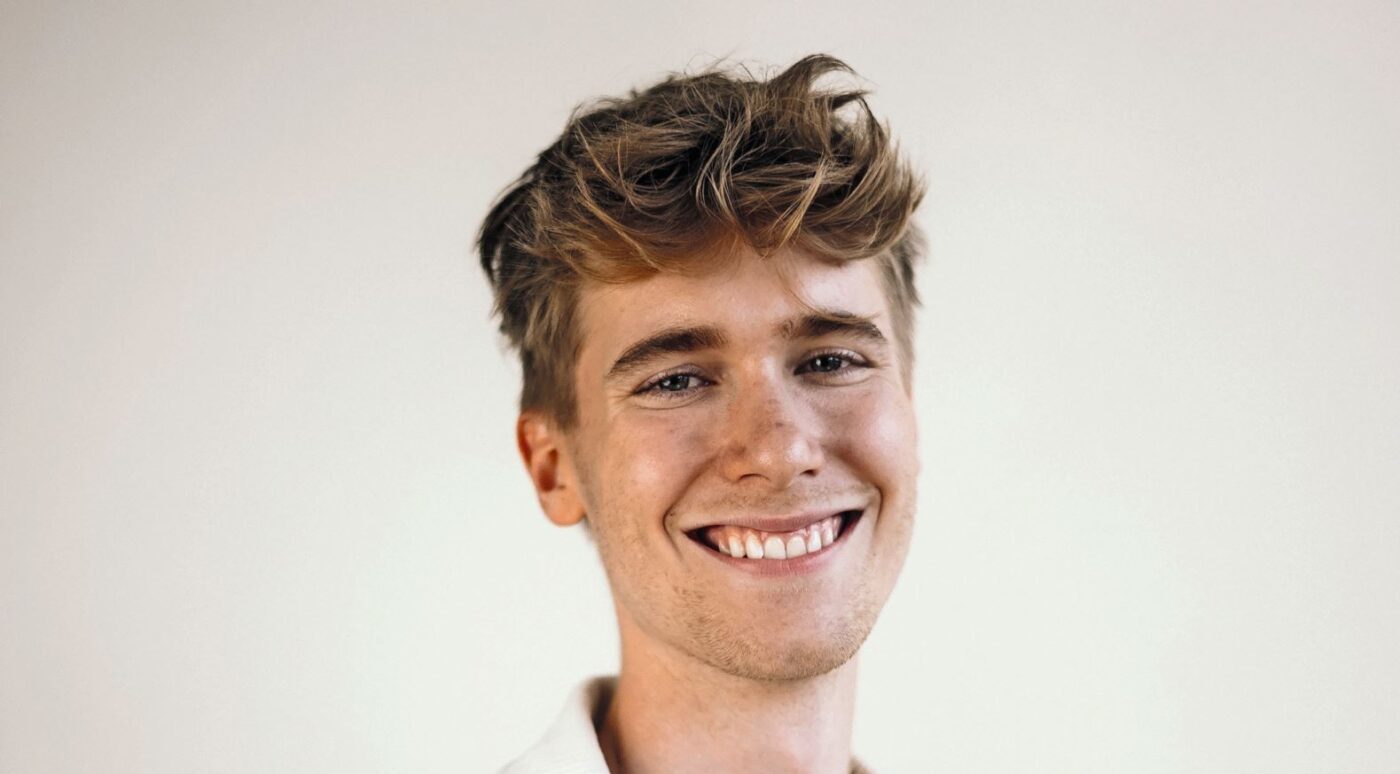
Georgette Dee in ihrem Lieblings-Outfit mit den Füssen im Pool. Sie geniesst ihren Garten.
Georgette Dee in her favorite outfit with her feet in the pool. She enjoys her garden.

Georgette Dee has invited me to her house in Berlin-Gatow. I stand in awe in front of the corner plot. I am early, walk along the hedge and admire the variety of plants and flowers that surround the house. Like an enchanted place, the garden gate with the words "Peace be with you" invites me to enter. "A mantra against anger," she will tell me later with a laugh.

I knock on the front door and there she is in front of me. The one I saw on stage at the Schiller Theater in Berlin in 1992 and haven't been able to get out of my heart since. Despite her linen shirt and baggy trousers, Georgette Dee has the aura of a queen. She asks me if I would like some coffee. I nod and look around. We are standing in the kitchen, which doubles as a living room. There are two armchairs by the window, facing the garden, where we sit down, both with a steaming cup in our hands. It's been raining in Berlin, it's damp and chilly. It gets to her bones, she says and sits down differently. A lot has changed since a year ago. I sit and listen, I have forgotten all the questions on my note, she has completely captivated me, without a stage or spotlight.

Life is already a theater, she begins. When will the curtain fall, I ask. I recite this sentence from one of her shows. She looks at me, understands and says seriously: "Yes, that's been my theme for a year." After a heart attack last July, things actually went smoothly again, but she notes that she has been incredibly angry ever since, she doesn't know why. It's terrible that she hasn't cared about anything since the operation. When she hears the news, she thinks they're out of their minds. But the impulse to rebel against it, to want to change something, is gone. "We humans don't seem to learn anything," she concludes. She means everything. Wars, hatred, inhumanity, greed for power. But she also reflects. "I include myself in that seamlessly, I stopped smoking when I was on the operating table and had a bypass."

A new show is planned for the fall; she is currently working on and with texts by Walt Whitman. His main work, the collection of poems "Leaves of Grass", which he repeatedly expanded and changed from 1855 until shortly before his death in 1892, impresses Georgette Dee and she finds potential for the stage in the verses.

Einer der Lieblingsplätze von Georgette Dee in ihrem verwunschenen Garten.
One of Georgette Dee's favorite spots in her enchanted garden.

"The stage - the magical place"

Georgette has been increasingly struggling with her ability to pick up on moods recently. She can assess people, she knows about their problems and senses vibrations. This has recently become too much for her, especially now that so many people are in a bad way. Then she withdraws. Needs distance. What is it like with her audience? That's something completely different. She feels at home on stage, it's a magical place, she says. "Something happens to me there," is how she puts it. She is aware of the people in the audience, but she herself spreads the atmosphere with her program and so the personal vibrations of the people do not reach her, but the resonance of her show wafts through the room. This is magical and gives her endless strength. Even when she had her first heart attack, but didn't know it yet because she only felt this diffuse pain in her chest area and just carried on, out of habit and well, because until then only others had ever had things like heart problems or strokes. You think you're immune until it happens, she reflects. So, despite chest pains and dizzy tiredness, Georgette played for another two weeks. Unbelievable. Then she called the doctor, who immediately referred her to hospital. She sat at the table in her kitchen in Gatow, smoked one last cigarette and left.

She misses smoking, somehow it was part of it, even on stage she used the cigarette as a means of expression. Just like wine. She has to laugh as she thinks back for a moment. "You can't imagine," she says, "how many shows I drove to the wall because I had one." She must have lost a lot of audiences, people who simply never came to a show again. Yes, she muses, things have changed. Wine is also history. A glass now and then, but ... well, that's just the way it is. She says, tossing back her white hair. What the heck, life goes on. She's a pensioner now, she jokes, which feels surreal.

Georgette Dee crosses her legs. I look at her and am impressed by this diva. Even here, in the kitchen, in her gardening look, she radiates a dignity that is in no way inferior to that of a queen. There's no pretense, no coquetry, just humanity. We are silent. It is a beautiful silence. She takes a sip of coffee and looks at me.

Georgette Dee, 1992, bei ihrem legengären Konzert im Berliner Schillertheater.Bild: Elke Günzler
Georgette Dee, 1992, at her legendary concert in Berlin's Schillertheater. (Picture: Elke Günzler)

This is stagecraft

I am overwhelmed by memories. In 1992, I was 22 years old and studying dance, singing and acting at the Berlin University of the Arts. Our drama teacher gets us tickets for the Schiller Theater, he says we should see what stagecraft is. We could learn a lot there. Who is performing that evening? Georgette Dee, of course. The hall goes dark and here she comes. An elemental force, curls, a cigarette between her teeth, a glass of wine nearby. She throws her hair back as a matter of course and throws us off course. We laugh, we cry, we shake our heads in bewilderment, it's a party. Frenetic applause after every song, the air is on fire, the energy is electrifying. The curtain falls, the show is over, the crowd doesn't want to leave, wants more, there are encores, they remove their make-up on stage, smoke a cigarette and finally release us into the Berlin night air.

All this goes through my mind and I am overcome with great affection, I would like to get up and hug this great artist, but I don't dare.

Instead, I ask whether she sees her career as an act of social activism. Whether it was her way of showing that everyone loves, suffers and laughs, regardless of their lifestyle, gender, skin color and sexual orientation. After all, I say, she went her own way with a defiant naturalness when being LGBTQI+ was by no means mainstream. She laughs out loud, grinning that at some point every letter in the alphabet will be added and there will always be someone who doesn't feel addressed. No, no, she can't do anything with that and doesn't want to be a role model. She has simply always gone her own way, despite all the resistance. She never questioned herself, she just lived. She always wanted to be on stage and sing. Her family didn't support her, she moved from Bergen, where she grew up, to London, then to Berlin. Georgette always found people who supported her, who encouraged her, the rest ... was life. So simple. And yet so complex. Social activism? No, she leaves that to others. Like the climate campaigners, for whom she feels empathy and whose radicalism she can relate to.

Georgette Dee listens to the radio, which is one of her sources of inspiration. She never watches television. She can't stand it, all the faces, the noise, all the stupidity. She also used to watch television, she says. But she couldn't get used to the banality of the camera. There was no audience, the magic was completely missing, so she abandoned the idea of "Georgette goes TV". Other artists would have gilded their shows on television. That never interested her.

Pool-Gespräche: Georgette Dee und Co-Chefredaktorin Anna Kohler im Garten beim Plaudern.
Poolside chats: Georgette Dee and Anna Kohler, co-editor-in-chief of m&k Werbewoche, chatting in the garden.

Time for the camera

The photographer rings the doorbell, it's time to return to reality. We go into the garden, the sun is coming through, the garden is steaming with moisture, which is now being displaced by the sun. She has asked for this photographer, they have known each other for a long time. As soon as the camera is pointed at Georgette Dee, it's as if the spotlights have gone on. The eyes flash, the body builds up a different tension, the facial expressions are greater. While the shutter clicks again and again, she talks about writing with sweeping arm movements. She prefers to invent her texts and stage shows away from home. The distance has always helped her to create dramaturgical arcs. Places like Marrakech are magical, she says, where she sat on the roof terrace of a café for a week and turned the head of the crunchy waiter. Out of sheer desperation at the sexually charged atmosphere, he repeatedly sank onto his prayer mat, much to Georgette's delight. She laughs. And the photographer pulls the trigger. I want to know which living artist impresses her. She immediately thinks of Peter Fox. He can create great images with his song lyrics, he describes the city where they both live and where I come from perfectly in the song "Schwarz zu blau", but songs like "Toskana Fan Boy" are also simply great.

Because I ask her to, Georgette Dee changes again. Out of her house suit and into her stage outfit. She affectionately calls it "my official robe". Without further ado, she sits down in the pool, the black velvet of the dress wet on the water. Just like a diva. She smells one of the flowers and briefly forgets that the spotlights are on. Click, the picture is in the can. After a few more poses, the audience is over. I say goodbye to this oasis, read "Peace be with you", close the garden gate and Gatow has me again.


Moments in Georgette Dee's life:

1958: Georgette Dee was born in Lüneburg Heath as the fifth child of a family from Pomerania on the Baltic Sea.

1979: After three years of training as a nurse, a pianist friend encouraged him: "You have to sing."

1980: Georgette Dee moves to Berlin. She gives her first concerts in classic gay venues. She feels at home in Berlin.

1992: A star is born: Georgette Dee gives her most legendary concert to date at the sold-out Schillertheater in Berlin. From then on, she gave countless concerts and released a CD almost every year.

2001: Georgette Dee and her longtime pianist Terry Truck decide to go their separate ways.

2009: Georgette Dee and Terry Truck are still working together today.
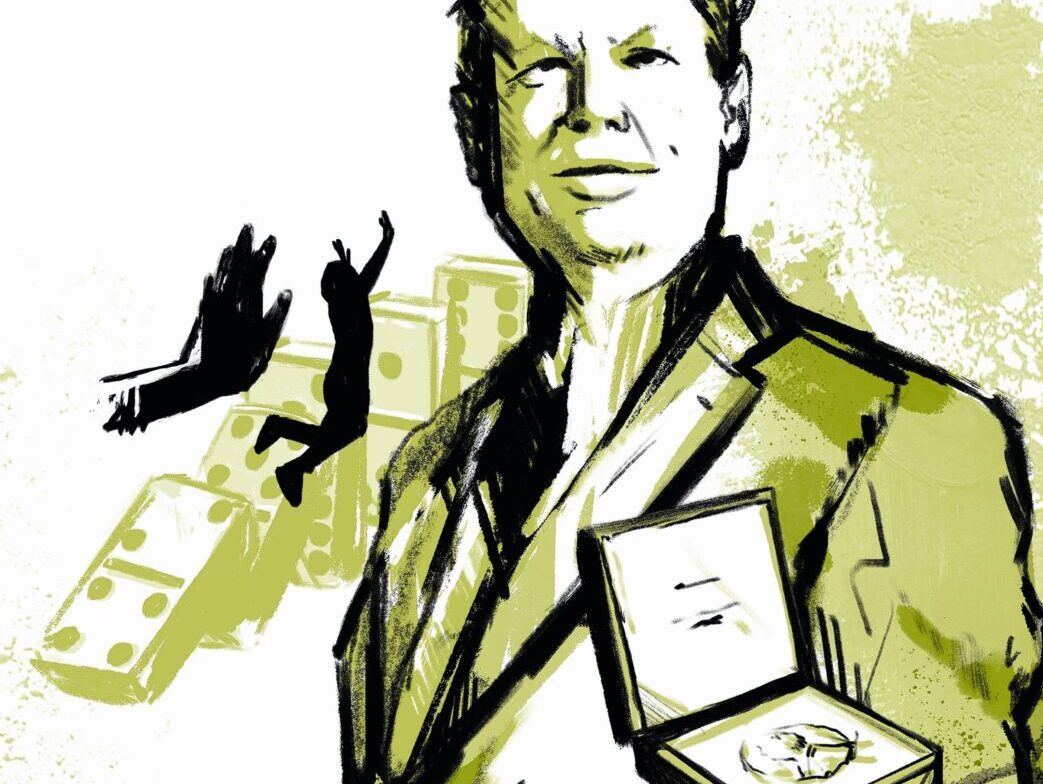
Nudging: A little nudge...

… is often enough to encourage people to do something good for themselves in the long run: Professor Richard Thaler was awarded the Nobel Prize in Economics in 2017 for this insight. The «father of behavioral economics» discussed the essence of his «nudging theory» with us—and shared his thoughts on the use of the term in marketing.

(Illustrations: Silvan Borer)

m&k: Richard Thaler, your work on behavioral economics in general and on «nudging» in particular has influenced both the academic and non-academic worlds in a way that few other Nobel laureates have. Why do you think that is?

Prof. Richard Thaler: What I do is probably more accessible. There are different approaches in economics: one is very formal, mathematical, and essentially incomprehensible to the layperson. The other is less formal, more intuitive, and therefore more appealing to the layperson. But that doesn’t mean a less formal approach is always better: When Elon Musk launches his rockets into space, I want him to do so based on perfect mathematical calculations. (laughs) The same applies to certain areas of traditional economics—I’ve often relied on them in my own work as a «benchmark.» But formal, rigorous economics has a weakness: it views humans as «perfect individuals» who—within a certain range—behave in accordance with the scientists« hypotheses. However, Cass Sunstein—with whom I co-authored *Nudge: Improving Decisions About Health, Wealth, and Happiness*—and I have found countless data points that reveal inconsistencies in human behavior: We are far from always doing what we »should« do according to economic theories. How can this be explained? Behavioral economics—the field I’ve devoted most of my professional career to—seeks to answer this question.


In fact, you are often referred to as the «father of behavioral economics.» However, when you received the Nobel Prize in 2017, you said in an interview that you did not see yourself as the «inventor» of the discipline, but rather that you had simply brought it back into the public eye. What do you mean by that?

I have often said—and I am happy to repeat it—that the entire field of economics used to be behaviorally oriented. If you take a look at the work of Adam Smith, whose book *The Wealth of Nations* is the undisputed foundation for everything my colleagues and I do today, you’re sure to discover his work *The Theory of Moral Sentiments* as well. That is, for the most part, pure behavioral economics! Smith discusses phenomena such as excessive self-confidence or the problem many people have with acting in a disciplined manner. We can also jump forward to the 1930s, when John Maynard Keynes published *The General Theory of Employment, Interest, and Money*. The book features a fictional beauty pageant. Keynes plays with the idea that the readers of a newspaper—who are, of course, all men; it’s a rather sexist thought experiment—are presented with the contestants in a beauty pageant. And they’re asked to express their opinion on who the contest’s jury will ultimately declare the winner. To reiterate: they are not asked who they consider to be the prettiest woman in the contest, but rather what other people might think about the contestants« attractiveness. Keynes arrives, in my opinion, at a rather ingenious punchline and says: That’s basically how the stock markets work, too! Look, Mr. Hapig: When you and I try to estimate how much a Tesla share might be worth at a given point in time, it’s not particularly relevant what you and I think about the company’s actual value. Nor is it all that important how we assess our fellow citizens» views on this topic. The only thing that matters is this: How do we assess what the people pulling the levers on the stock market think about the people who buy and sell Tesla stock? We’re trying to predict the predictions of stock traders. We’re pondering the thoughts of people who, in turn, are pondering the thoughts of other people! That sounds incredibly complicated right now, but in essence, it’s… behavioral economics à la John Maynard Keynes.

«I've often said that the entire field of economics used to be behaviorally oriented.»

When did the field of behavioral economics lose momentum?

I would say … after World War II, when people like Paul Samuelson began to shape the discourse and advocated for economics to become more mathematical. Of course, there were economists who complained about this, but they were always met with the following argument: «If people occasionally make ‚mistakes‘ that don’t align with our theories, that’s okay. These are minor inconsistencies in the statistics that we can ignore.» Two of my mentors, Daniel Kahnemann and Amos Tversky, however, observed: These «errors» in human behavior—the moments when we do not act in accordance with the ideals of formal, traditional economics—are not random. And that was the foundation upon which Cass Sunstein and I later built our theorems.


It seems to me that now is the perfect time to talk about your work. It revolves around the concept of a “nudge.” [Translation: Nudge, Push (Editor's note)]. What exactly is a nudge?

Before I began working at the University of Chicago—in the 1970s—that institution was a bastion of traditional economics. That is to say, the vast majority of professors held the view that people normally behave in a completely rational manner, with the aforementioned statistical errors here and there. One could say that my colleagues at the time were convinced that everyone would behave as if they were the son or daughter of an economics professor. (laughs) And then Cass Sunstein and I came along and offered a different perspective: «What if people aren’t actually that smart, don’t have that much self-control, do get angry sometimes, act impulsively … and that these factors influence their decisions, sometimes to a dramatic extent? Can we help them?» We were convinced from the outset that forcing people to do anything—even if it were for their own good—wouldn’t work, because it would provoke rejection and resistance. But perhaps we could nudge people in the right direction to protect them from the long-term consequences of a decision made on the basis of momentary impulses?!


You've mentioned in various interviews that a GPS is a good example of a nudge. In what way?

Of course, this is quite different from the use of nudges in the context of retirement planning or personal health. Getting lost is usually just a minor inconvenience and not something that affects the rest of one’s life. Still, GPS is a good example of a nudge because it suggests a specific direction to me. Of course, I’m free to choose a different route. However, if I do, I might never reach my destination. (laughs) GPS can't force me to do anything—it just helps me if I'm open to it.

«Maybe we could nudge people in the right direction (...) to protect them?»


You just mentioned nudges in the context of retirement savings. We all know we should be setting money aside for retirement—and yet many of us struggle to do so. Where does the nudge come into play here?

I consider the fact that we were able to motivate a huge number of U.S. citizens to invest a portion of their income in private retirement savings to be the greatest, most tangible success that Cass and I have ever achieved through our work. Here’s how it happened: We had noticed that there were many people in the United States who, although they had steady jobs and a regular income, had nevertheless failed to save a significant amount of wealth to be able to retire comfortably in—let’s say—two or three decades. Traditional economics argued: «Eventually, people will optimize their planning. Things will sort themselves out; after all, we’re dealing with rational actors. They’ll realize they need to save for retirement—some a little sooner, some a little later.» But the data that Cass and I had analyzed showed that this was simply wrong. Yes, people knew what they should do… but they still didn’t do it! And we’re talking exclusively about people who could afford to save for retirement—not those who lacked the money to do so. Rationality isn’t the only force driving us—that’s what Cass and I realized back then. Now, in the U.S., there were heavily government-subsidized retirement plans for people in permanent employment, but signing up involved a lot of paperwork and a lot of effort. That deterred many people, and they put it off—for years or even decades. So we said: Why don’t we pass a law to automatically enroll all Americans who start a new job in a subsidized retirement plan—and at the same time give them the right to opt out?! No coercion, no pressure—just a nudge in the form of simplification and a reversal of the process. It worked wonderfully.


The nudges described in your book are benevolent in nature and fall more into the realm of «public governance.» However, marketing experts also use the term when discussing how to persuade customers to buy certain products. That contradicts the nature of «your» nudges, doesn’t it?

After the first edition of our book hit the market, I always signed copies with the phrase «Nudge for Good!» That was my appeal: Here’s our work—read the book, and then please put it to good use. Cass and I never tire of emphasizing, however, that we didn’t invent nudging—the serpent gave Eve a little nudge, Eve gave Adam a little nudge… and so on. Every company is free to adapt the toolkit we describe and try to make money with it. I just wouldn’t call that «nudge» anymore; I’d say that we’re moving into the realm of “sludge” [Translation: mud, sludge, slime (Editor's note)] push forward.


But is everything that happens in the private sector just malicious sludging?

"Malicious" is such a strong word… Look, I wouldn’t condemn it if, for example, it made it easier for people to subscribe to a magazine. A simplified customer experience can certainly be a nudge. If I can sign up for a subscription with a single click on my phone, complete the payment process right then and there, and so on… then it’s possible that both readers and publishers stand to benefit. Okay. However, I have a problem with the fact that it’s often very easy to enter into a commitment—but complex to get out of it. After all, the latter usually can’t be done with a quick click. You have to call somewhere, send a fax or a letter, have a confirmation sent to you, and so on. And that doesn’t make life any easier for customers. It only benefits those who are counting on the fact that many people won’t bother and will just pay for another year. Unfortunately, that works often enough. Joe Biden’s administration is currently working on a bill that aims to standardize the process for signing up for and canceling subscription services by law. I would very much welcome that.


Your research sometimes seems to venture into gray areas; it doesn't always seem easy to distinguish between right and wrong. Or does it?

That’s true. One could even argue that gray areas are hidden within the details of what are essentially positive nudges—we see this when we think again about retirement savings. How much should people set aside each month? Saving money for the future is excellent, as is maximizing one’s pension through heavily subsidized government programs… but how much should Person X or Person Y contribute individually toward that goal? I can’t give you any exact figures on that. I can only rely on statistics and offer an estimate. It’s the same when people are «nudged» to be more mindful of the environment or to change their diet—it’s all fluid; it’s always a case-by-case decision.

«»Nudge for Good!’ That was my appeal: Here’s our work—read the book, and then please do something with it.”


Your work has certainly been criticized in the past; nudging, for example, has been described as «liberal paternalism.» And as far as «public governance» is concerned, I could imagine that there are people—especially in the U.S.—who aren’t the biggest advocates of interventionist policies. How do you deal with such criticism?

Well, if we take the subscription law developed by the Biden administration as an example, one could certainly say, «The government is meddling in the private sector—this has to stop!» But some people in the private sector are crooks, and some use behavioral economics to maximize their profits—without any regard for what’s good or bad for their customers. If we can protect ordinary people—who are busy, who can’t always stay informed, who may not be as educated as some economics professors—from such crooks, then I’m all for it and can live with the criticism. But, at the risk of repeating myself: I don’t want to generalize, neither in one direction nor the other. In the end, we’re always talking about case-by-case decisions.


A few months ago, I spoke with your colleague Robert J. Shiller about his theory of narrative economics, for which he won the Nobel Prize in 2013. In that context, I couldn’t help but wonder whether you represent the «great generation» of economists—and whether there will be scholars of your caliber in the future.

I wouldn't worry about that. The next generation has already stepped up and is doing an excellent job—perhaps you just haven't seen the results yet. To give just one example, I’m a huge admirer of the work Raj Chetty is doing at Stanford. He’s studying the factors that promote or limit social mobility. Raj is only 44 years old, and we can expect great things from him in the future. There are also dozens, if not hundreds, of very smart women and men in their thirties—at universities all over the world—who want to contribute to the discourse. Some of them still face resistance because their work transcends the current mainstream. But Bob Shiller, myself, and others have faced exactly the same resistance. And it has made us better—or at least more resilient. It’s charming that you think my generation of economists is unique, but… we’re not. And that’s a good thing.

«When in doubt, it's always best to choose what brings joy to you and others.»


When you type your name into Google, you’ll see that you’ve worked on many topics that seem quite entertaining. You’ve brought everyday life into the field of economics—with a certain degree of, yes, playfulness. Has that helped or hindered your career?

When we started this conversation, you were holding up the «Final Edition» of Cass’s and my book. Calling it that is a joke in itself—because it sounds like an episode of ‘Star Wars.« But honestly: When we were considering revising the book, we set one condition for ourselves. We would only do it if it was fun—in other words, we would only add new chapters that were a joy to both write and read. We had some pretty intense discussions about which chapters could clear that hurdle and which couldn’t. (laughs) In the end, though, I’d say it all turned out pretty well. So: Did having fun help or hurt my career? I’d say it helped. When you enjoy what you do and don’t take yourself too seriously, life is just so much better. I understand that not everyone in the academic world likes my style; that there are some who think, «He’s not a serious person, so his work can’t be serious either.» But I’ve met people like George Stigler, who could come across as very, very serious when it came to his work and his political views—much more right-wing than mine! (laughs) – went. At the same time, George had a brilliant sense of humor. One doesn’t rule out the other. My verdict: It’s perfectly fine to have fun. When in doubt, it’s always best to choose what brings joy to you and others.


Richard H. Thaler is an American economist and professor at the Booth School of Business at the University of Chicago. He is considered one of the world's leading behavioral economists and has served as an advisor to, among others, former U.S. President Barack Obama. In 2017, Thaler was awarded the Alfred Nobel Memorial Prize in Economic Sciences.


Podcast on the topic

The Zurich-based agency Bühler&Bühler has launched a podcast on the topic of «nudging.» In 10 episodes, each 30 minutes long, «In a Nudgeshell» offers insights into our daily creative work in a natural way. Advertisingweek.ch has spoke with Becca Knobel and Clemens Fachinger of Bühler&Bühler.


This interview can be found in the August–September 2023 issue of m&k, which will be published on September 4, 2023.

Coffee and buying mood

Researchers have found that coffee boosts the desire to shop—not good news for those who enjoy drinking it but still want to save money.

Illustration: Silvan Borer.
(Illustration: Silvan Borer)

For me, coffee and shopping go hand in hand. Before I walk into a store, I have a cup of coffee—and maybe another one once I’m inside. Even online shopping doesn’t work for me without it; I usually sit in front of the screen with a cup of coffee. I intuitively understand how coffee affects my body. Dopamine is released, my blood pressure goes up, I’m less tired and more alert. On good days, this can even boost my athletic performance. At first glance, however, coffee has nothing to do with my shopping trip. Or does it?

Want to shop smarter and more mindfully?

One argument could be that coffee makes me shop more smartly and attentively. With this increased focus, I can actually stick to my shopping list and buy only the items I really need.

Think again! A team of researchers has shown that this argument doesn’t hold up. In fact, coffee boosts the desire to shop. Coffee releases dopamine, which raises energy levels and lowers self-control. At the same time, it increases impulsivity. As a result, coffee drinkers spend more money and buy more products—including those not on their shopping list. This effect works particularly well with hedonistic goods such as scented candles or perfume.

Increased Sales Thanks to Coffee Enjoyment

For stores, coffee is therefore a great way to boost sales. However, customers shouldn’t be offered too much coffee—otherwise, their desire to shop will actually diminish. And people who drink coffee regularly aren’t as likely to be in the mood to shop either. For my wallet, my minimalist mindset, and my sustainability concerns, coffee isn’t really a smart idea after all. So my resolutions for my next shopping trip are clear: Don’t go shopping on an empty stomach, and don’t drink coffee beforehand. And no other caffeinated drinks either, like energy drinks or black tea!

What else can this brew do?

Of course, it’s still unclear to me what other effects coffee might have. If coffee already has the «ability» to put me in the mood to shop, how does it affect other marketing variables? For example, can coffee also increase consumer loyalty to a brand? Do consumers have a more positive attitude toward a store when under the influence of coffee? Or do consumers perceive advertising messages more positively when under the influence of coffee?


Prof. Dr. Johanna Gollnhofer She is an associate professor of marketing and one of the co-directors of the Institute for Marketing and Customer Insight at the University of St. Gallen (IMC-HSG). In our magazine, she writes monthly about exciting, sensational, or curious marketing studies, case studies, and books from around the world. This month’s topic:

The sense of meaning

«Purpose» is on everyone’s lips—both in business and in people’s personal search for meaning (see, among other things, countless LinkedIn posts by C-level executives about «spiritual retreats»). But where does this fascination with meaning and purpose come from? Has it always existed, or is it a phenomenon of the modern age? A brief digression.

Bild: unsplash.com / Peyman Shojaei.
(Image: Unsplash.com / Peyman Shojaei)

Health, sustainability, authenticity, and transparency are defining values of our time. They have taken the advertising world by storm and have long since replaced traditional sales pitches such as indulgence and quality. «Purpose» is the buzzword of modern marketing: The climate-friendly SUV, fair-trade coffee beans from local roasters, feminine hygiene products that promote women’s self-confidence, Oeko-Tex-certified clothing that protects the environment… Because those who can afford it treat themselves to luxury paired with a clear conscience: Consumption that’s good for one’s own health, good for the environment—and good for companies« bottom lines. For growing target groups like the »Glamour Greens,” “eco” doesn’t mean sacrifice, but rather conscious consumption. And if it also serves a good cause, people are happy to pay a little more, as numerous studies now confirm. The almost irresistible promise of purpose-driven marketing: enjoyment that does good—too good to be true?

The Big Question

The search for a guiding principle that serves as a basis for action is as old as humanity itself. However, the purpose behind an action depends on a broader horizon of meaning. Gainful employment, for example, can serve the purpose of material gain or pursue other goals, such as giving life meaning. The problem, however, is that every statement of meaning raises the question of meaning anew: For what purpose do we go to work? Why increase profits? Why go on vacation with the wages we’ve earned—perhaps only to work more efficiently when we return? This chain of questions can be extended indefinitely. It compels us to ask a final and all-encompassing question: Is there an inescapable supreme good, an absolute, for the sake of which all action has meaning? Or does meaning lie solely in one’s own freedom to act?

«Why go to work in Wessentwillen? Why increase profits?»

Meaning is Power

Many people like the idea that their answer to the big question—the question of the meaning of it all—is entirely individual. Certainly, the origins of society’s store of meaning can also be found in the subjective conceptions of individuals. But the individual search for meaning is inextricably linked to that of our surroundings: we inevitably orient ourselves toward our fellow human beings—our parents, friends, teachers, and role models. And through this mutual orientation, patterns of behavior emerge. This means that multiple individuals react in similar ways to similar situations. In short, communities and cultures arise whose members orient themselves toward related horizons of meaning.

The community-building aspect of the search for meaning is a prerequisite for meaning to be institutionalized. The major world religions are a striking example of this: by articulating certainties and ethical guidelines, they provide a larger community of believers with stability and guidance in their daily lives. And this gives them power: for whoever holds the authority to define meaning can direct actions. Religious wars clearly demonstrate the immense power that a shared higher goal can unleash in people: for the sake of an abstract goal, people were willing, in droves, to die and to kill.

A Reflection of Society

The institutionalization of meaning implies a hierarchical power imbalance between role models that guide action and the individuals who act in accordance with them. Accordingly, institutions such as the church—whose primary tasks have always included the creation of meaning—were linked to the political apparatus of power in many cultures. In our cultural sphere, the church has increasingly lost this interpretive authority. New institutions have emerged—the most powerful among them being the mass media and large corporations, whose systems of meaning can no longer be separated from their commercial foundations. Modern providers of meaning thus differ fundamentally from religious or ethical guides in one respect: they are part of a free market economy. With the goal of strengthening their position in commercial competition, they vie for the favor of an audience that, given the abundance of options, is looking for clear statements and transparent information. That is why the sense of purpose offered by companies also echoes a societal demand: Especially in the context of the oversupply characteristic of our affluent society, many people are grateful when they are provided with guidance for their daily actions in the simplest way possible. In this case, purpose marketing also offers support in an overwhelming, saturated market.

Those who fly high …

However, the success of purpose marketing is not solely due to the free market economy. As the example of the church shows, the search for meaning is linked to deeply rooted structures of the human psyche. For example, shared values create a sense of belonging: People who share the same sense of purpose feel connected to one another and trust one another. This also applies to communication between companies and their target audiences: Purpose-driven campaigns create an immediate sense of closeness with like-minded people. And that’s the bottom line: I trust those who share my sense of purpose—and I buy from and remain loyal to those I trust.

Another entrepreneurial factor in creating meaning is the establishment of identity: Just as people with firm ethical principles are seen as having character and are accorded respect, a company with a corporate purpose is also perceived almost as a personality: trustworthy, and above all, not easily imitated. This is a competitive advantage that is becoming increasingly crucial given the interchangeability of products.

Purpose marketing can thus build trust, foster a sense of identity, and in this way retain customers and increase sales … But all of this comes with a significant risk: If the values being promoted are not actually lived out and embedded in the corporate culture, this will come to light sooner or later. The numerous greenwashing scandals have caused quite a stir—such as Volkswagen’s «Clean Diesel» campaign or IKEA’s «Waldpositiv» label, which was strongly called into question, in particular, by two documentaries from SRF and BR.

The increased public attention on marketing scandals—especially those related to sustainability—shows just how crucial it is for a society to have accessible sources of meaning—and just how closely the authenticity of the values being promoted is scrutinized. After all, for a purpose-driven campaign to succeed, it is crucial that the purpose it communicates is actually put into practice.

Bild: unsplash.com / Peyman Shojaei.
(Image: Unsplash.com / Peyman Shojaei)

The sense of meaning

In the long run, authenticity is essential for meaningful advertising. The problem, however, remains that every company’s necessary purpose is always revenue and profit. Thus, the purpose of purpose-driven marketing is to pursue an economic goal through a non-economic one. This leads to a contradiction, particularly when it comes to environmental protection: purpose marketing is like marketing that isn’t supposed to look like marketing. But it would be too simplistic to dismiss this as a ploy driven purely by economic interests. The wave of scandals would have brought about the end of this marketing trend long ago. Rather, companies’ “purpose-driven” approach is also a commercialized response to the demands of a society that is latently searching for meaning in an information-overloaded and overwhelming world. Seen in this light, purpose marketing is a social phenomenon—a response to the individual search for meaning in a globalized, disenchanted world.


Books for Those Seeking Meaning

«Man's Search for Meaning» by Viktor E. Frankl: Viktor E. Frankl became world-famous as a physician and psychologist. In this rediscovered classic, he writes about the sources that can give our lives meaning every day, even after the most painful events. Highly recommended reading!

«What's the Point of It All?» by Christian Uhle: What is life really all about? Christian Uhle shows how philosophy can serve as our compass. In search of meaning and direction, the philosopher embarks on a journey to discover the things that truly matter and offers philosophical answers to the big questions.

«Purpose + Profit» by George Serafeim: Meaning and profit don't have to be mutually exclusive—as Harvard Professor George Serafeim demonstrates in this seminal work on the subject. Especially valuable for «professionals»!


Sustainability tastes so sweet

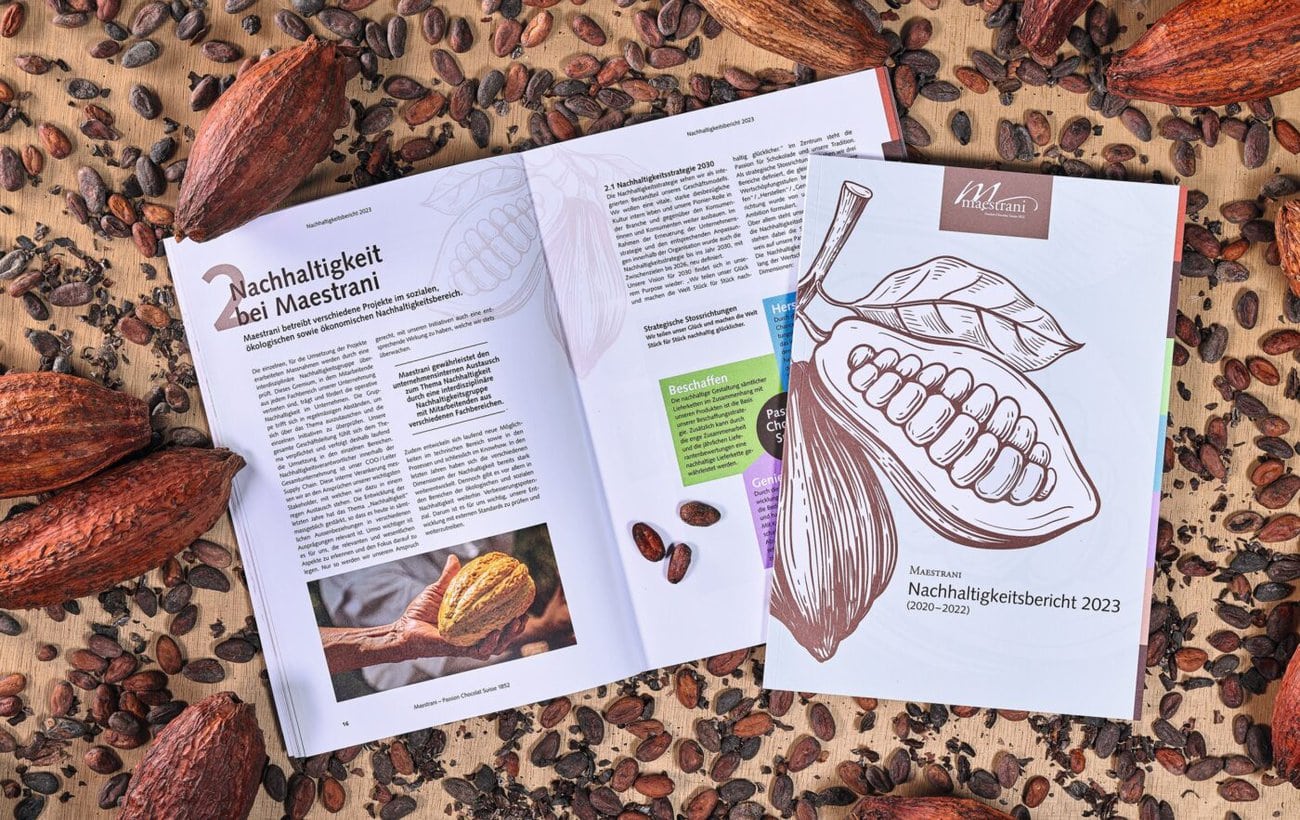
Swiss chocolate manufacturer Maestrani presents its new sustainability report. In an interview, CEO Christoph Birchler explains the background.

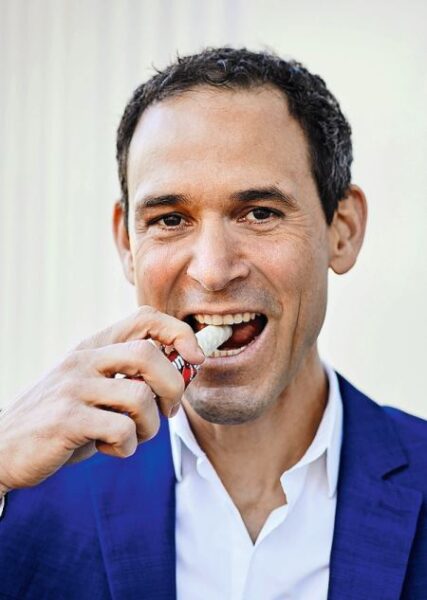
Christoph Birchler, CEO von MaestraniBilder: zVg. Maestrani
(Photos: Courtesy of Maestrani)

m&k: Christoph Birchler, your company, Maestrani, published its new sustainability report a few months ago. As CEO, which findings surprised you the most—in a positive way?

Christoph Birchler: Because this issue is important to us, we on the executive board personally drafted the sustainability report—so any surprises would have been unwelcome. (laughs) I was impressed by the fact that we have invested heavily in sustainability in recent years and have therefore already achieved a very high level of sustainability. This is by no means a given for an SME. As a family-owned business, sustainability is not a new topic for us. Real people have always stood behind the company and thus borne responsibility toward society and the environment. Today, we are proud to publish our fifth GRI-certified sustainability report.


Are there any areas where you still see room for improvement?

Absolutely. We view sustainability as an ongoing journey—a journey in which the status quo must continually be challenged. Through our value chain, and especially our strategic raw materials such as cocoa and hazelnuts, we are confronted with the major issues currently facing both the Global North and the Global South. We, too, source cocoa from West Africa and invest a great deal of energy and money into creating supply chains that are as sustainable and ethically sound as possible. In doing so, we work with established and recognized partners, such as Fairtrade Max Havelaar. They have local networks and closely monitor the cooperatives and farmers. But have we done enough, and is the system perfect? Unfortunately not yet, but it’s the best we can do right now. And if all chocolate manufacturers applied these high standards, the world would be a different place.

«True enjoyment is only possible if the ethics behind the product are right.»


Chocolate is one of the Swiss people’s favorite treats—how important is sustainability to your customers? Have you noticed an increased awareness of this issue in recent years?

Our products appeal to the general public in Switzerland: The unique taste of our products is always the primary reason for purchase. However, there is a growing number of consumers for whom sustainability is important. Awareness of this issue has clearly increased. As a result, sustainability is now a basic requirement for many people, and in the best-case scenario, it determines their preference for a product. However, it is difficult to justify a price premium for standard products.


How do you tailor your marketing communications to this topic? What aspects of sustainability do you particularly emphasize to consumers?

Sustainability is a multifaceted and, at times, somewhat complicated topic. Internally, we refer to it as «Fair Taste»: First and foremost, our products must deliver great taste. And true enjoyment is only possible if the ethics behind the product are right as well. That’s why we at Maestrani have brought our initiatives together under an «All Natural» emblem. This umbrella term encompasses natural ingredients such as Fairtrade cocoa, CO2 offsetting, and the conscious decision to avoid palm oil. These are the most important attributes for consumers and are therefore easy to understand.


What sustainability issues will Maestrani be addressing in the coming years?

We will join the SBTi later this year [Science Based Targets Initiative (Editor's note)] join this effort and, as a result, reduce our CO2 emissions by more than 50% by 2030. This is a challenge because our Scope 2 emissions are already at zero. In addition, we’ll be focusing on implementing the counterproposal to the Responsible Business Initiative and addressing issues related to packaging. In this sense, sustainability is a journey of continuous improvement, and I’m confident that we’ll have exciting initiatives to share in our sustainability report three years from now.


If you'd like to know which sustainability criteria Maestrani prioritizes—and how this traditional Swiss SME is preparing for the future in this area—you can find the company's full sustainability report here.

Christoph Birchler, CEO von MaestraniBilder: zVg. Maestrani
Christoph Birchler is the CEO of Maestrani. (Photo: Courtesy of Maestrani)

Let's build bridges

A new report shows that Swiss agencies play a role in sustainability communication that is as challenging as it is important.

Illustration: Silvan Borer.
(Illustration: Silvan Borer)

In late August, Publicis Switzerland, Grownate, and the University of St. Gallen (HSG) published a study that sets new standards for sustainability communication in Switzerland: The SCOPES (Swiss Consumer Perception of Sustainability) Report is the first to examine how «sustainable» the Swiss public considers the country’s large companies to be—and, through qualitative interviews, provides these companies« »internal perspective” for comparison. (Werbewoche.ch reported). In this column, I would like to discuss (in a highly condensed form) two points—and their implications for the communications industry.

Complexity versus Clarity

The SCOPES Report shows that the Swiss public is particularly interested in the environmental aspect of sustainability (such as how much greenhouse gas is being reduced, what measures are being taken to address waste, whether products are recyclable, etc.). Companies are generally aware of this, but often struggle to tailor their complex initiatives to the public’s needs in their communications. Certificates and seals are of little help, as they are abundant and often difficult for consumers to understand; while building a positive image through collaboration with NGOs or experts is useful, it is not always practically feasible. So what can be done?

A (big) challenge for agencies

Based on the report, we find that agencies specializing in communications in Switzerland play a special role when it comes to sustainability—a role that will become even more important in the coming years: They must serve as «bridge builders» between companies and consumers.

This works by first raising companies« awareness of the critical scrutiny they face from the public (consumers, the media, etc.) and emphasizing that under-communication—such as out of fear of accusations of greenwashing—cannot be a solution in an era of global warming. Agencies must then work with their clients to develop strategies that present achieved (interim) goals with confidence yet pragmatism and outline a roadmap for the future—always with an eye toward balancing idealistic aspirations with practical feasibility. If necessary, they must also intervene in the organizational structure of these clients and consider how silos can be broken down within that structure—so that communications and sustainability managers work together rather than alongside one another. Finally, the actual »communication effort”—tailored to the various target groups in Switzerland—takes place, deconstructing myths (glass is always better than plastic…), highlighting positive aspects, and enhancing the clients’ reputation.

When agencies do this—and thereby fulfill their responsibilities—they ultimately do a great service not only to their clients and consumers, but also to the environment. And personally, I think that’s worth every effort.


Alexander Haldemann is the CEO of Publicis Groupe Switzerland.

For more information on the SCOPES report by Publicis Switzerland, Grownate, and HSG St. Gallen, see here.

Present with message

Are promotional items still relevant in this age of sustainability? Yes—because when they’re well-designed and used correctly, they actually have a few advantages over other media.

Bild: unsplash.com / Alex Shuper
(Image: Unsplash / Alex Shuper)

When people think of promotional items, they think of cheap plastic ballpoint pens, the 16th shopping cart token, useless lanyards with logos, or stickers with advertising slogans. No wonder—after all, for a long time, those were the top products when it came to corporate promotional gifts. But we’re living in times of transformation—the world is changing. Sustainability and climate change are ever-present, consumers are becoming more critical, and today they expect one thing above all else from brands: a stance. What role do promotional items still play in this context?

Let’s get this out of the way first: a big one. Because the industry is proving—with an enormous amount of creativity and a high degree of adaptability—that it has long been at the heart of this transformation—and that promotional items today no longer have to be useless single-use plastic products that end up directly in the trash. On the contrary: with sustainable alternatives, they highlight companies« sense of responsibility and show that there are alternatives to plastic and the like. For example, a Berlin-based startup is redefining promotional giveaways today: With »Seed Confetti,” companies can have small bags printed with their branding, filled with handmade, compostable confetti containing seeds for various wildflower species, from field bellflowers to wild pansies. Anyone who gives this confetti as a gift not only gets their company logo out there and promotes biodiversity on people’s lawns, but also shows that we no longer put plastic in our bags.

Trash Monsters & Co.

Articles like Simcla AG’s «Trash Monster» convey a similar message: a glassine bag with a logo that can be used to collect trash. Glass drinking bottles with wooden lids, made in Switzerland, backpacks made from denim paper, or kitchen towels made from ocean plastic—the selection of sustainable promotional gifts is huge. And they’re no longer a niche product but a staple in suppliers’ portfolios.

«Promotional items like these are a great opportunity for companies to position themselves more sustainably,» says Michael Mätzener, founder and managing director of diewerbeartikel gmbh. Consumers have become more discerning, paying closer attention to meaningful products made from sustainable materials, and the market is adapting. «That flood of pointless items we used to see is a thing of the past,» says the expert. And while companies used to supply the masses with tens of thousands of cheap items, they now prefer to focus on higher-quality products for select target groups where these gifts actually make a difference.

Less is more—a saying that may sound trite, but is more relevant than ever. Thomas Harder, CEO and owner of Swiss Brand Experts, agrees. Cheap mass-produced items have had their day, says the branding expert. «You’re better off saving the francs you’d spend on run-of-the-mill products that aren’t sustainable. After all, a promotional item that isn’t sustainable isn’t a good promotional item.» Harder advises investing in quality instead—and communicating that fact. After all: «Every message a company sends—including the distribution of promotional gifts—sends a signal.»

Net advertising revenue is rising

And advertisers don’t want to do without this tool—quite the contrary. According to the Advertising Statistics Foundation, net advertising revenue for promotional products in Switzerland totaled CHF 870 million in 2022—an increase of more than 26 percent over the previous year. Promotional items are popular because they work. According to the latest promotional item effectiveness study by the German Promotional Products Association (GWW), more than 90 percent of recipients use promotional items, and 60 percent continue to use them for more than a year. And that’s the second aspect of sustainability where these media shine. They’re durable, whereas every other advertising message—such as those online—usually fizzles out quickly. And yet it still has an impact on the environment: For example, the website Medium.com has calculated that a single ad impression is comparable to the impact of an LED light bulb burning for between 30 and 700 seconds.

Tactile Experience as a Counterpoint to the Digital Deluge

On top of that, media such as online platforms are intangible, «yet that is the most important aspect when it comes to reaching people,» says Thomas Harder. According to the branding expert, promotional gifts are a logical complement, especially for service companies that also have nothing tangible to offer.

A logical complement—and at the same time a counterpoint to the flood of digital advertising that surrounds us every day. Sarah Beringer, CEO and owner of Simcla AG, calls it the «transition from the digital world to the real world.» They appeal to different senses. They allow corporate values and advertising messages to be experienced in a different way.« And: They offer an alternative to single-use advertising materials like flyers or brochures. »Well-thought-out, high-quality giveaways with real practical value are used over the long term and can therefore also be described as sustainable.” That’s why Simcla’s website features an entire section dedicated to sustainability, showcasing products that are fairly produced, certified, Swiss-made, or recycled.

«Thoughtful gifts touch the hearts of those who receive them.»

Does it always have to be «Swiss-made»? Not necessarily, because when it comes to new materials in particular, many ideas come from the Far East, explains Michael Mätzener. “It’s more a matter of production facilities complying with the necessary regulations and committing to sustainability,” adds Sarah Beringer. What matters most is traceability and transparency in the supply chain—not just the product’s origin.

1001 Emotions

Those who give well-thought-out gifts also reach recipients in a way that many other advertising messages cannot: in the heart. To back this up with numbers, the GWW launched its largest campaign to date last fall, «#1001Emotion,» through which the association sought to demonstrate the emotional impact promotional items have on target audiences. The result: Promotional items «go off the emotional scale,» the association reported, noting that everything is possible—from «a flirtation to a solid relationship between a person and a brand.» This is especially true when the item is high-quality: Respondents rated this impression as a highlight and viewed the sender of a premium item as more attractive, relevant, and likable. At first glance, this might seem more expensive. But for companies that communicate credibly and rely on creative, meaningful—and sustainable—products, the investment is worth it. And who knows—maybe this approach will even earn them a «thank you» from their target audience for their advertising.


The Touch Promotional Items Day is the trade show that brings together creatives, manufacturers, and promotional product partners to exchange ideas and find inspiration. It will take place on September 27 at the Umweltarena Spreitenbach and is organized by the Promoswiss Association.

Quite green

For many years, design followed certain dogmas: an object was either designed to be practical or to be aesthetically pleasing. Now, however, sustainability has emerged as another dimension of design. What does that mean?

Bild: unsplash.com / Yanapi Senaud
(Image: Unsplash / Yanapi Senaud)

When it comes to climate protection, design is often the target of criticism: As an attractive shell, it makes objects seem desirable even though we may not actually need them. – Certainly. But that’s only one side of the coin. Behind its beautiful appearance, good design can be much more than mere decoration: As a reflection of current modes of production and ways of life, it can connect economic interests with lifestyle, manufacturing technology, the natural sciences, and ethical and social values. What role can design play in society as a whole? And can the design of objects—in a society that has recognized excessive consumption and resource use as one of its core problems—also contribute to sustainability? Or is design ultimately reduced to the task of constantly inventing new forms for the same old needs?

«Is design limited to the task of constantly inventing new forms to meet the same old needs?»

Thinking in Cycles and Beyond

Following nature’s example, the circular economy has become increasingly established as the ideal model for a waste-free economy. We now know that using recycled materials in manufacturing can reduce CO2 emissions by up to 30%. In some cases, a raw material—such as glass or aluminum—can be melted down and reused without any significant loss of quality—though this process also consumes a great deal of energy. However, recycling often also means downcycling: the recycled materials are transformed into less high-performance materials that are used for simpler tasks and are thus returned to the recycling process more quickly—until the product, having reached the end of its life, can no longer be reused.

Good design comes into play when the recycling process creates something new rather than simply reproducing the same thing. The furniture manufacturer Vitra, for example, recognized with its Tip Ton chair that the use of recycled materials opens up new design possibilities: Its grayish color is intentionally different from the Tip Ton version made of virgin plastic. «I think that makes it even more interesting and broadens our perspective on plastics,» says Chief Design Officer Christian Grosen: «The slightly unique character of the recycled material gives it (the chair, ed.) depth and character—much like the grain of wood reveals something about a tree’s growth cycles.» The visible use of recycled materials adds aesthetic value here.

«Through a circular economy, high-quality materials, and timeless design, design can create sustainable products.»

Younger companies and female designers find themselves in a different situation. They can incorporate sustainability right from the design phase without being bound by established, iconic designs. For example, in the 1990s, brothers Markus and Daniel Freitag began sewing shoulder bags from old truck tarps on their mother’s sewing machine. Here, recycling led to upcycling: the result was a new design icon. The first Freitag messenger bag from 1993 can now be admired at MoMA in New York. With these bags made from discarded truck tarps, the exterior appearance is just as sustainable as the material itself, because it contributes significantly to the bags’ longevity: The “used” look has become an indispensable hallmark of the brand. Every bag is one-of-a-kind from the very beginning, and the longer it’s used—the more scratches and signs of wear it accumulates—the greater the emotional value it holds for its owner.

Good design and environmental protection are not mutually exclusive: Recycled materials can reduce the carbon footprint of manufacturing, shape a design’s aesthetic, and extend a product’s lifespan.

Less, but for longer

The longer an item is used, the better its environmental footprint becomes. In this sense, repair is usually more resource-efficient than manufacturing a new product. Take, for example, a great-grandfather’s carefully maintained watch—measured by how long it has been in use—it is almost irrelevant how many resources were used in its manufacture. «A Patek Philippe never really belongs to you alone… you’re actually preserving it for the next generation.» Masterful watchmaking, paired with timeless design, is intended to encourage the consumer to preserve this beautiful object for as long as possible.

In the context of longevity and environmental protection, it is interesting to note that the sustainability trend is currently going hand in hand with growth in the luxury market. Millennials and Generation Z, in particular, are drawn to the premium market—and are, in a sense, turning it on its head: They don’t seek prestige or social status in luxury, but rather durability and high quality, which they associate with mindfulness, authenticity, and aesthetic discernment. Secondhand luxury goods, in particular, are viewed by these generations as sustainable investments. This is illustrated by eBay’s remarkable entry into the luxury sector: the growing demand for pre-owned luxury goods was estimated at 43 billion euros in 2022 alone.

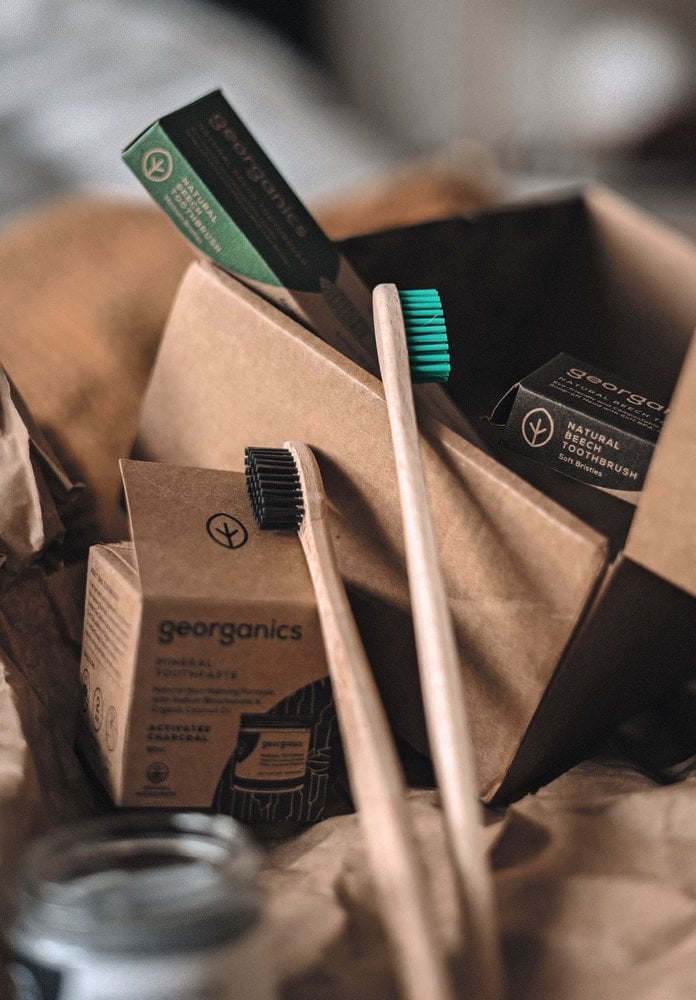
Nachhaltiger Minimalismus zeigt sich im Design der Zahnbürsten von «Georganics» ... Bild: unsplash.com / Toa Heftiba
Sustainable minimalism is evident in the design of «Georganics» toothbrushes … (Image: Unsplash.com / Toa Heftiba)
... ebenso wie in den kultigen Taschen der Schweizer Marke «Freitag». Bild: media.freitag.ch/de
… as well as in the iconic bags from the Swiss brand «Freitag.» (Image: Freitag.ch)

Mine and yours

Through a circular economy, high-quality materials, and timeless design, design can create sustainable products that break free from the cycle of the same old thing in ever-changing guises. However, it is still traditionally conceived as the process of shaping physical objects. Now, design could be interpreted more broadly. What if, for example, it weren’t the son or grandson, but the neighbor who got to wear the Patek Philippe next year? What if the car, the large soup pot, and the backyard grill were shared with the neighborhood and made available on a rental basis to many rather than just a few? Then design would extend into many areas of our daily lives, considering user behavior, organizational structures, and sharing infrastructure as well.

«Good design can bring about a paradigm shift.»

With successful providers like Uber, Airbnb, MyCamper, and Mobility, the sharing economy has long since become an established concept. However, there is still plenty of room for growth here: Although interest in collective ownership is on the rise, private ownership remains a deeply ingrained part of our culture. – It doesn’t have to be that way: Just think of the success Tesla had with the message that even driving eco-friendly cars can be fun. Especially in the realm of sustainability, good design can continue to bring about paradigm shifts in the future: Instead of designing a car, we can ask ourselves how we can get around in an entertaining way. Or how can sharing things be fun for the general public? Is an app like the one from the Swiss sharing platform Sharely enough? If we reframe the questions, design is more than just a pretty shell for individual enjoyment. In this way, design can become a driver of social change.

«At »Freitag,' recycling has become upcycling."

Design as a Social Challenge

If sustainability is viewed not merely as “green” etiquette but as a societal challenge that encompasses all stages of a product’s life cycle, the process of design reveals an unexpectedly broad potential. Good design, then, does not begin with the creation of an attractive exterior —it draws on a holistic perspective that scrutinizes the raw materials from which an object is made just as closely as its actual purpose, its lifespan, the potential reuse of the materials, and social conventions. This design approach is far from simply providing ever-new answers to the same old question. If we dare to imagine it, sustainable design might one day cause the physical shell to disappear entirely.

Expand instead of replace

Artificial intelligence is not a fleeting trend—it is an expression of a digital revolution that is transforming the (working) world. Still, there is no need to fear this technology: A commentary on a key topic of DirectDay 2023.

AI expert Prof. Thilo Stadelmann will be speaking at DirectDay 2023. (Images: Unsplash, courtesy of Swiss Post/Thilo Stadelmann)

This article could have been written by a machine—and there’s a chance, dear readers, that you wouldn’t even notice it (at least upon a cursory reading). With the widespread adoption of ChatGPT and a veritable universe of tools that has sprung up around this language- and text-based bot, it’s not just journalists who are grappling with the question of what purpose they actually serve anymore.

«If humans always remain the point of reference for AI, it is absolutely safe and can become as intelligent as we want.»

In marketing and communications, too, a certain sense of unease is spreading alongside fascination; there is debate over whether some professions will become obsolete in the future (and if so, which ones?). It’s understandable that this gives rise to certain concerns—even fears. But there are signs indicating that AI isn’t here to replace us, but rather to enrich and expand our work. You’ll find some of this evidence in our latest magazine, while other insights will be presented at DirectDay 2023 by AI experts such as ZHAW Professor Thilo Stadelmann.

Text: A Digital Parrot

First, it should be noted that artificial intelligence—when it generates text—often appears «smarter» than it actually is: «ChatGPT and Google Bard are not intelligent. They merely simulate intelligence,» notes author and communications expert Matthias Zehnder in a guest article on the topic (see page 28). «Because we humans are conditioned to infer intelligence from eloquence—that is, to judge a speaker’s intelligence based on their language—we fall for the verbosity of chatbots and mistake them for being intelligent. But they aren’t. They’re just fast and know a lot of words,» Zehnder states. That’s why AI-generated articles often come across as stilted and boring, and upon closer inspection, people find them «soulless.» Those who earn a living by writing need not worry as long as they continue to produce new, creative content—but in the future, the computer will increasingly take over tasks such as creating variations, editing existing texts, or rearranging content (for example, for different platforms). This will disrupt some business models, but the majority of writers are likely to be pleased to have more time for what really matters—namely, working on good ideas.

Image: No Output Without an Idea

The same applies to (moving) images: Midjourney, DALL-E 2, or AI-powered Adobe applications seem to turn anyone into an illustrator. Yet the analogy to text is obvious. The programs don’t work unless they’re fed prompts and specifications. What they «create» actually always originates in a human mind—and must, in turn, be evaluated by humans. Tedious tasks that used to be done manually (such as creating a poster in 30 shades of color, etc.) may well be a thing of the past; but even here, the «human touch» isn’t becoming obsolete—it’s simply being channeled in different directions.

Stadelmann: A Message of Hope

In this vein, ZHAW Professor Thilo Stadelmann—who will be appearing at DirectDay 2023 as one of the leading AI experts in the German-speaking world—is also expected to deliver a message of hope rather than one of concern. In interviews, for example, he makes it clear how important linguistic precision is to avoid misjudging the capabilities of AI: «AI is distinct from natural intelligence; it is a different kind of intelligence that is not designed to develop consciousness on its own, but rather to be a helpful tool,» Stadelmann emphasizes. And: «The point of reference for AI must always be humans, so that it serves them. If we continue to develop AI according to this principle, it will be absolutely safe and can become as intelligent as we want.»

Cult cops from the Valais

The Swiss cult series «Tschugger,» centered on village police officers Bax and Pirmin, is the talk of the town. The first two seasons have captivated Swiss audiences, and fans are eagerly awaiting the next installment. m&k visited the set and spoke with creators Sophie Toth and David Constantin ahead of the duo’s appearance at DirectDay.

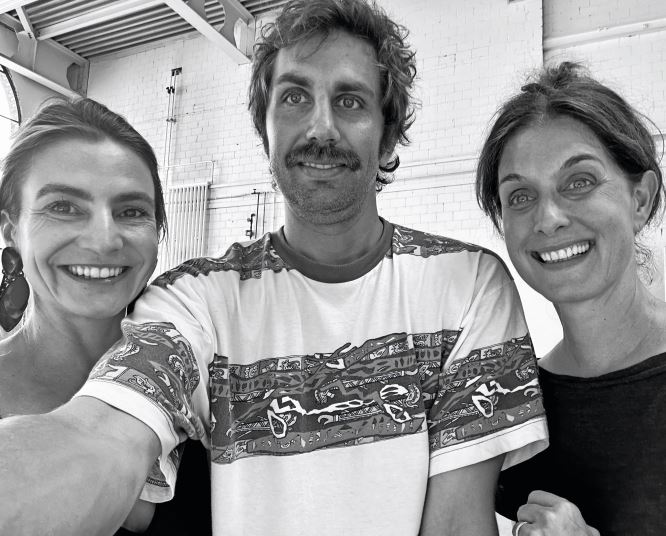
Sophie Toth, David Constantin und Co-Chefredaktorin Anna Kohler am Set von TschuggerKleines Bild: David Constantin
Sophie Toth, David Constantin, and Anna Kohler, co-editor-in-chief of m&k, on the set of Tschugger (from left to right). (Photo: David Constantin)

The camper van is parked in a large hall in Schlieren. Seasons 3 and 4 of the hit SRF series «Tschugger,» centered on Bax and Pirmin, the village police officers from Valais, are almost finished filming. The final scenes inside the van will be completed today. It’s hot, and the crew is working intently. Sophie Toth, the producer, leads David Constantin and me into an adjoining room—wonderfully cool—for our 30-minute interview.

«The freedom to let your creativity run wild is much greater with a series than with commissioned work.»

David Constantin is the director, lead actor, and writer of the series «Tschugger.» All rolled into one. What immediately stands out is his serious demeanor. Had I expected a rowdy Bax? No, certainly not, but this shy seriousness stands in stark contrast to the character of the clueless, disorganized, and chaotic Bax he plays in the series. Very reserved, almost shy, and professionally respectful, he answers my questions about the cult series—especially its continuation in Seasons 3 and 4. Sophie and David both say they’ve crafted a completely new script. The story was structured to span two seasons; the show’s success made them both proud and happy, but of course, that also increased the pressure to meet expectations. Both are grateful that almost everything is now in the can. But the black hole into which they’ll both fall once filming wraps is already opening up. Laughing, but with a slightly melancholic undertone, they emphasize how empty the first few days—and even weeks—felt after they’d finished filming the first and second seasons. But they’re prepared and are already thinking about launching new projects. Because one thing is clear to Sophie Toth: in her view, the freedom to let her creativity run wild is much greater in a series than in commissioned work, and both definitely want to work together again. Who knows, maybe even seasons 5 and 6? The two look at each other, grin, and remain silent.

Review

David Constantin and Sophie Toth have been working together for more than ten years now. David remembers their first meeting well. «I saw Sophie sitting at her desk at the production company Shining Film and knew right away that I absolutely wanted to work with her. She’s so enthusiastic and highly motivated.» Sophie has been with Shining Film for ten years and has been on the executive board since 2017; she has over 15 years of experience as a producer and post-production manager. Shining Film’s commissioned projects regularly win awards at the prestigious Edi Awards.

A lot has changed for Sophie, too, since David Constantin came into her life. She has gained a creative partner with whom she can bring her ideas to life—even beyond the production of traditional commercials. Early on in their collaboration, the two ventured into bold web miniseries like «Rocco» and «Hamster,» both of which they produced for Swisscom. The response online was huge and encouraged them to keep thinking along those lines. «When it comes to fictional work and producing series, we have much more creative freedom than when working on commercials,» says Sophie Toth. And David adds: «We can come up with the craziest things and situations, and the only goal is to entertain with the content. In advertising, there are far more restrictions.»

Hauptdarsteller, Autor und Regisseur in einer Person: David Constantin
Lead actor, writer, and director all in one: David Constantin. (Photo: Courtesy of the source.)

«I'm not exciting»

David Constantin grew up in Valais and developed an interest in art, music, sports, business, and a thousand other things at an early age. He struggled to find his focus for a long time and eventually studied business administration—in part to put his father’s mind at ease. Today, he’s glad he pursued those studies. «I learned a lot—including about marketing, project work, and business management—and that still helps me today.» After a few months at film school in New York, his path as a director began to take shape; his interest in culture and art, along with his sense of exaggerated humor, are evident in his work. In his personal life, he’s rather shy and insecure, and needs plenty of time to reflect on his surroundings. «I don’t find myself very interesting,» he concludes.

«Both have new ideas for the post-Tschugger era; the planning is in full swing and now just needs to be »finalized.'"

Even as a teenager, David realized that he could express a different side of himself on stage. Whether with his school band or in the military, whenever he had to slip into a role, he was able to distance himself from who he really was. His short film «Panzerkinder,» which he shot during a refresher course in the military, caused a stir and got him into trouble. He sensed that he could make a difference with the power of the camera.

How much of David is there in Bax?

David and Sophie also had a specific actor in mind for the role of Bax, the village cop from Valais. «We were looking for a guy, a face—not a professional actor—but we couldn’t find anyone who could fill the role the way David himself could,» says the producer. And so David takes on the role himself. The rest is history: the cult series «Tschugger» thrives on the over-the-top, unrestrained, life-loving, and chaotic Bax, who has his heart in the right place but time and again fails spectacularly because of his exuberant nature. By the end of the second season, he’s the hero he always wanted to be—he makes it onto the long-awaited front page of the village newspaper, he’s saved the Valais, but his budding romance with Mrs. Botz, played by singer Anna Rossinelli, seems to be falling apart. A hero with a broken heart? Hopefully, we’ll find out in the coming seasons. «Bax is a kind of therapy for me,» says David Constantin with a smile.

Bax is always accompanied by his police partner, Pirmin. The actor, Dragan Vujic, is also a close childhood friend in real life. The two spent a lot of time together on the soccer bench or at the skate park, and when a role became available in the web series ‘Tschutter,« David didn’t hesitate to call his friend and offer him the part—a collaboration that then continued in »Tschugger.« »We had so much fun filming—since we’ve known each other for so long, there were hilarious moments when we felt just like we used to.« An anecdote, please: »Even back at the skatepark, I was more of a daredevil who was always falling flat on my face. Dragan was the stick-to-the-rules skater: from morning till night, he practiced the kick-flip and was focused on his style. I jumped off the civil defense shelter and sprained my ankle. Even back then, the contrasts were already apparent—the ones we’re now playing out on camera as Bax and Pirmin.«

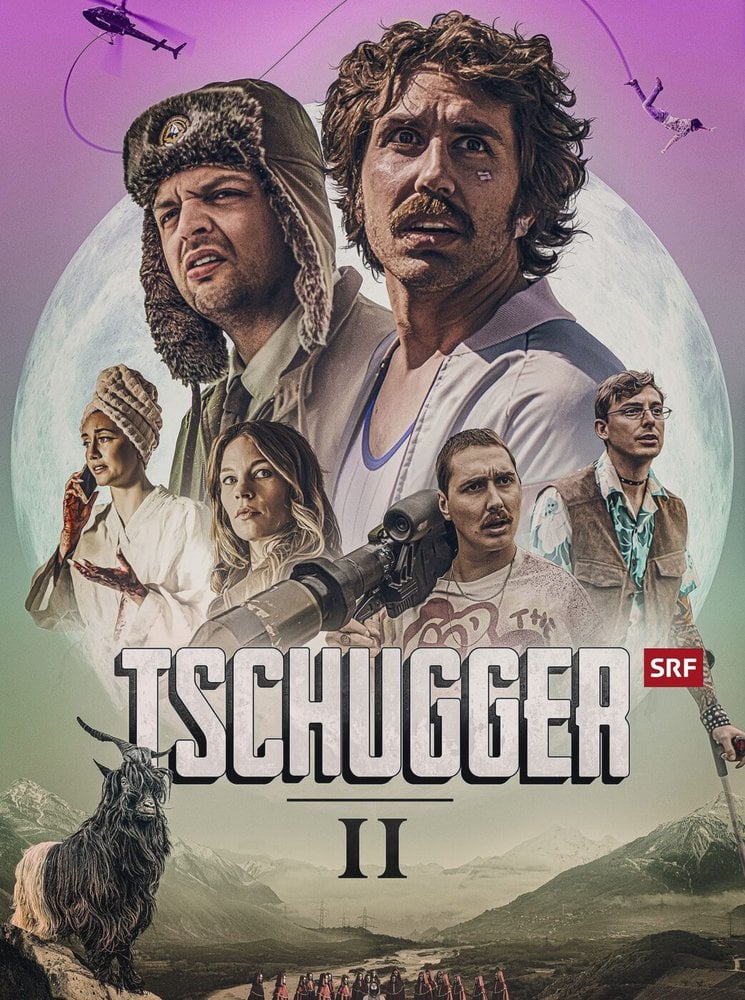
Plakat der zweiten Staffel von TschuggerBilder: SRF
Poster for the second season of "Tschugger." (Image: Courtesy of SRF)

«We stick to the things we find funny»

The scenes have been shot; now it's time for editing, which both David and Sophie are really looking forward to. Starting in late fall, fans of «Tschugger» on SRF will be able to enjoy the new seasons.

She says SRF had already issued a few guidelines, even before it was clear that a collaboration would take place. The topics included profanity and narcotics. There were repeated discussions about these issues. But: «It also makes sense to discuss boundaries and talk about humor,» says Sophie Toth. Perseverance and the courage not to compromise too much—that’s roughly how they both sum it up. David Constantin is convinced that this struggle also has its positive side. You question things, try to make them even better, and that helps the development process. Both have new ideas for the post-Tschugger era; the planning is in full swing and now needs to be «nailed down,» as the producer puts it. In concrete terms, that means pitching the ideas, raising funds, and getting the green light. That will also help counteract the black hole.

After exactly 30 minutes, Sophie Toth glances at her watch and stands up. That means time is up; the two of them head back to the set to shoot the final scenes. As I step out onto the grounds of the Fotohalle in Schlieren, the heat hits me, and reality sets in once again.

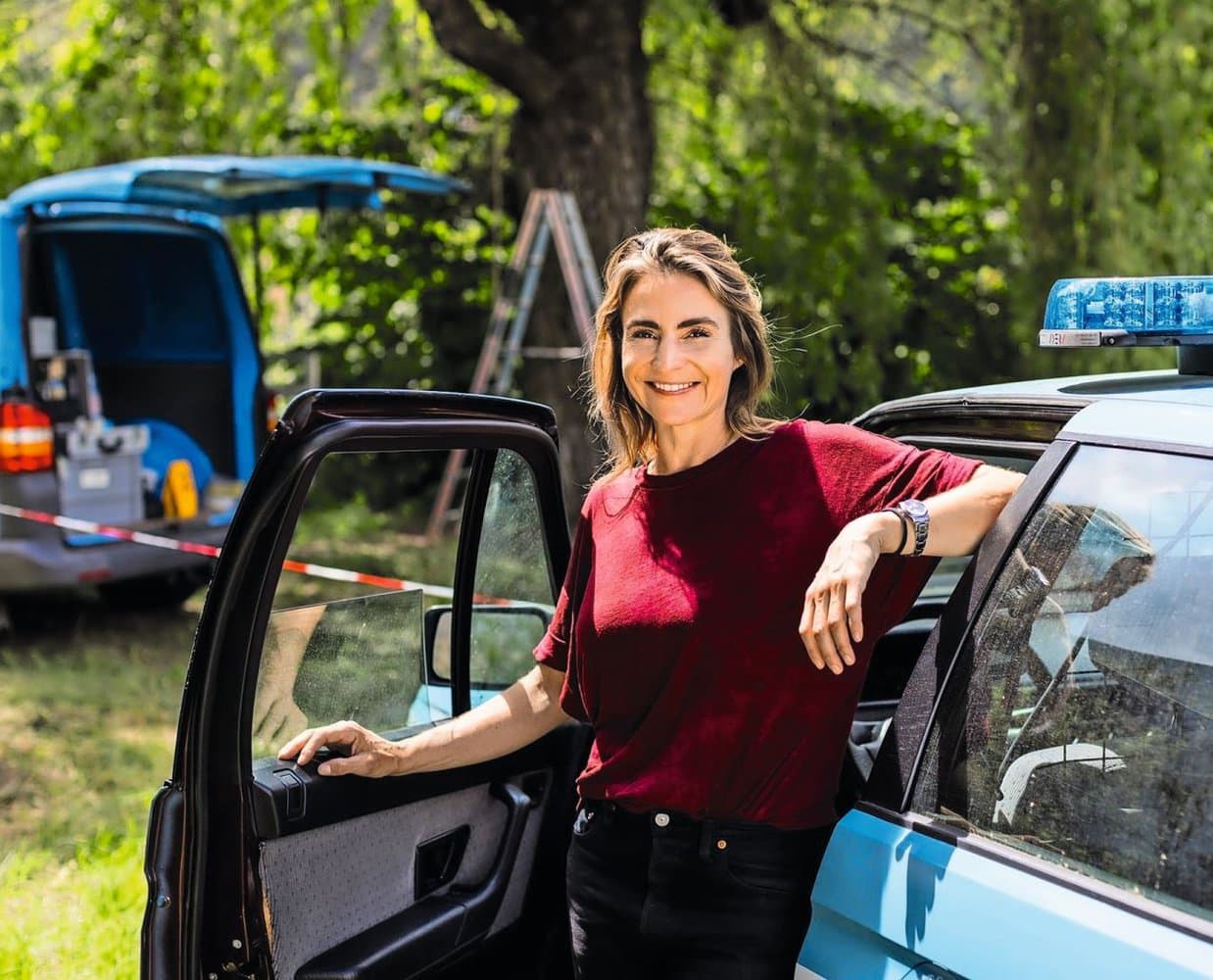
Produzentin Sophie Toth
Producer Sophie Toth. (Photo: Courtesy of the publisher.)

Carter's comeback

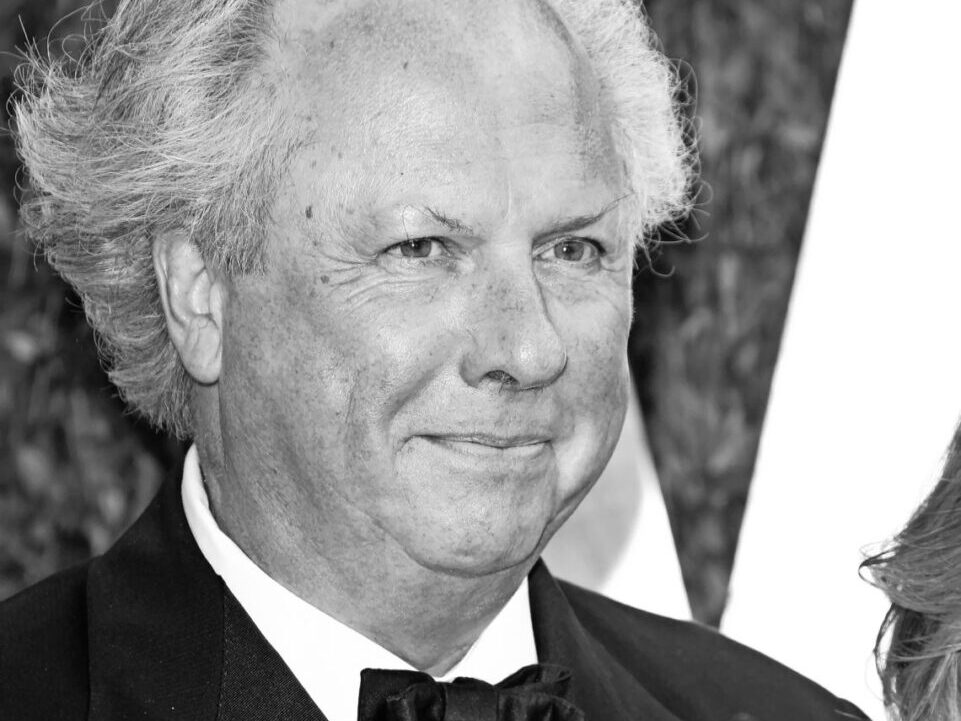
As editor-in-chief of *Vanity Fair*, Graydon Carter became one of the world’s leading society journalists. He then went on to achieve success in the digital realm with *Air Mail*—and is now considering launching a new print magazine. A conversation with someone who still has big plans.

(Illustrations: Silvan Borer)

m&k: Graydon Carter, you were the editor-in-chief of *Vanity Fair* for more than two decades. What did you enjoy most about your job?

Graydon Carter: If I had to narrow it down to one thing, I'd say that this job has allowed my wife and me to have five children. (laughs). We already had three when I started at *Vanity Fair*, and the magazine paid me the salary we needed to «afford» a fourth child—our daughter, who is now 30 years old. But of course, working as editor-in-chief had other wonderful aspects as well: Condé Nast was an outstanding publisher, and the people I had the privilege of working with were brilliant. After all, it’s usually the people you miss the most when you look back. Fortunately, I was able to bring quite a few colleagues from back then on board at «Air Mail» …


… your new editorial project, which has been thriving since its launch in 2019. But before we talk about that, let me ask you this: When you started your career, did you aspire to become one of the world’s most renowned society journalists? Or did it just «happen»?

I grew up in Canada and had this … obsession with moving to New York City to become either a playwright or a magazine writer. I didn't have a concrete plan for how to make that happen, but I set out anyway (laughs). And lo and behold, I landed a job at *Time*. From then on, things happened in rapid succession—I wrote for *Life*, founded *Spy* with Kurt Andersen, became editor-in-chief of the *New York Observer*, and finally, in 1992, took over Tina Brown’s position at *Vanity Fair*.

«Sure, *Vanity Fair* usually had a movie star on the cover, but that was more like the gift wrapping.»

The publications you co-founded or worked on seem to be quite diverse. Is there a common thread?

I’m not sure I’d agree with your assessment. The publications weren’t actually that different: outstanding writing has always been particularly important to me, and there was plenty of it in every medium we’ve listed. Sure, *Vanity Fair* usually had a movie star on the cover, but that was more like the gift wrapping designed to get the magazine from the newsstand into readers« homes. That said, *Vanity Fair* was a truly in-depth, serious publication that focused on well-researched and compellingly written stories.


What criteria must a story meet to be published in a magazine you circulate or an online publication like «Air Mail»?

Above all, readers should be entertained. Intellectual stimulation can be entertaining; humor and satire can be entertaining; surprising news can be entertaining as well. What you should avoid, however, is boring your audience with constant moralizing or political rants. Otherwise—access that no one else has is usually well-received; so is the portrayal of conflicts. And: It can’t hurt if the story has a proper beginning, middle, and end. (laughs).


Journalists—myself included—tend to describe the period when you were at *Vanity Fair* as a «golden age» of print journalism. Is there any truth to that, or are we glorifying a past that never actually existed?

The sad truth is that you never know how good times are until they suddenly change. Looking back, print journalism in the United States—I prefer to speak only about the market in which I worked rather than offer a universal verdict—has experienced several «peaks»: in the 1920s and early 1930s, in the late 1950s and early 1960s, and then again in the last three decades of the 20th century. «Vanity Fair» was the only «general interest» publication in the country at the time, so it sometimes came out as thick as a phone book (laughs). We were blessed with many, many ads, which I always appreciated immensely. We wanted to produce world-class journalism, and thanks to our clients, we had the funds to make that journalism possible. So the answer to your question is: Those were good years. But we still had to work hard.

«Above all, a good story should entertain readers. Access that no one else has is usually well-received.»


You’re credited with turning *Vanity Fair* into a global brand that extended far beyond the magazine itself—for example, with your infamous Oscar party. Was there a strategy behind it, a kind of «master plan»?

Oh, no, there was no grand plan for the brand. Really. What you’re mentioning happened step by step and often more by chance. Take the Oscar party, for example: I had attended the last of Swifty Lazar’s traditional Oscar soirées. Then he passed away, and I thought: It would be nice if we continued this gathering of interesting people. The first party we hosted took place in a fairly intimate setting; then it got a little bigger and bigger, until it eventually became «the» event in Hollywood. But—can I be honest?


Sure.

Don't be fooled by the pictures and videos you find on Google. The day of the *Vanity Fair* Oscar party was always one of the most exhausting days of the year for me. I’m not really the type for cocktail parties—but I had to force myself to be there from three in the afternoon until the early hours of the next morning and mingle with the crowd. What I probably liked best about it was that I could bring my kids along, and so it gradually became a «family affair.» We drove to Los Angeles; they were allowed to skip school for a few days and got a fantastic, real-world education instead, because they experienced the whole Hollywood circus up close. (laughs).

«Even celebrities feel insecure and worry. Life doesn't necessarily get any easier when you're famous.»


You just said, «Don’t let the images fool you.» Since you know almost every Hollywood star—and knew many of those who have already passed away—what is the biggest misconception we have when we look at famous actors and actresses from the outside?

That they aren’t like the rest of us—at least in many ways. Because that’s exactly what they are. They may be struggling with different problems, but they still have problems. Even stars feel insecure and worry. Life doesn’t necessarily get any easier when you’re famous. In Hollywood, just like everywhere else, you find extraordinary personalities. My good friend Robert De Niro has influenced my life the most, I’d say—but there are also a lot of relatively boring characters. Speaking of character: You could perhaps say that there are far fewer eccentric people in Hollywood in 2023 than there used to be… a certain era has definitely come to an end, if you ask me.


Well, no era is meant to last forever—not even your time as editor-in-chief of *Vanity Fair*. You left the magazine in 2017, but you never really thought about retiring, did you?

That’s … a bit more complicated. I left the magazine, yes, and then I went to Europe, where my family has been spending several weeks—sometimes months—a year for decades. I was in the south of France and remembered an idea I’d had ages ago but had never acted on: Even before the internet existed, I’d thought about repackaging European stories for an American audience and sharing them with our friends back home. For the most part, they didn’t know what was being reported outside the «bubble» of the *Washington Post* and the *New York Times*. In 2017, I revisited this idea and began writing a private, very simple email newsletter. In it, I compiled a few topics I’d read about or that had otherwise been on my mind. The audience grew organically, much faster than I’d expected—people were forwarding the newsletter back and forth, and soon I had virtually no control over it anymore (laughs). By 2019, the whole thing had grown so much that I asked a former colleague named Alessandra Stanley to help me transform the newsletter into a weekly online publication called «Air Mail.» She agreed, and the project was born. «Air Mail» started as a hobby and is now a company with paying subscribers and advertisers; we employ about 60 people.

«»Air Mail’ started as a hobby and grew organically—I soon had no real control over it at all.”

«The Evening Standard» recently reported that you are considering launching a new print publication. Is that true—are you returning to the arena you know best?

A few major brands approached Alessandra and me and asked if it would be possible to print «Air Mail» a few times a year and distribute it worldwide. Financing wouldn’t be a problem—those brands would cover it—but I argued: «We’ll only do this if we have an idea that’s so good, so interesting, that it can’t fail.» We only go to such lengths if we can create something that’s different from anything else on the market—in terms of the writing, but also in terms of the visual aesthetic. We set incredibly high standards for ourselves. But a particular idea has now taken shape, and I’m leaning toward giving it a chance.


A bold undertaking at a time when, supposedly, «no one reads print media anymore.».

I’ve noticed that people—including younger people—do read magazines and are willing to pay for them. However, magazines must be of high quality, they must be aesthetically appealing, and they must cover topics that are relevant. Print media is not dead, and it will not die if we take the right steps to keep it alive.


Let’s return to the digital realm for a moment: Under the «Air Mail» umbrella, you launched the «Arts Intel Report» in September. What exactly is it?

That's another thing I hadn't planned on (laughs)! A while back, I met Elvis Costello and Diana Krall, and she told me that she had performed a concert with Tony Bennett the night before. I hadn't known anything about the concert; otherwise, I would have done anything to get tickets. I love Diana on the piano, I loved Tony’s voice, so I was pretty disappointed that I’d missed it. And then I thought: «There’s no search engine, no digital platform where you can simply enter that you’re in London or Los Angeles and want to attend a jazz concert—and then receive a curated list of suggestions for which concerts or alternatives are taking place.» The «Arts Intel Report» offers you exactly that—and more. For example, select the combination «London, Restaurants,» and we’ll show you where our editors go to eat when they’re in town. Or select «New York City, Stage,» and you’re guaranteed not to miss Diana Krall—as I, unfortunately, did.

You’re 74 years old. You’ve had a career that others can only dream of. And yet you’re talking to me about newsletters and digital platforms, planning a return to print … where do you find the motivation to keep creating something new, even now?

The secret is simple: I surround myself with young people. Two-thirds of the employees at «Air Mail» are in their twenties or thirties, and it does me a world of good to exchange ideas with them. The team gives me energy. So do my kids. I’ll be honest with you: If I didn’t have all that—and if my wife were to leave me, too—then I’d probably spend every evening watching movies about World War II, listening to vintage jazz or classical music… and, well, slowly wither away.


With all your vast experience, isn't it difficult to entrust a brand like «Air Mail» to millennials?

If I didn’t trust the people I hire myself, that would—to put it mildly—be a sign that I have very limited leadership qualities. The team knows what it’s doing, and it knows many things much better than I do. I rely on my instincts; I make many of the day-to-day decisions, but I’m a realist: I couldn’t scale «Air Mail» without support, and I could never build something like the «Arts Intel Report» on my own.


Although you advised against overly political content in magazines earlier, I greatly appreciate your critiques of contemporary society—whether in *Spy*, as a guest columnist in global media, or today in *Air Mail*. That’s why I’d like to wrap up by talking about politics: When you look at the political landscape in the U.S., what do you see?

I see a group of people who are all too old for their jobs. Yes, I’m 74 and still working, as you’ve kindly pointed out (laughs), but I’m not sure I could keep up with the pace of *Vanity Fair*—let alone the pace of a presidency! I think the «sweet spot» in most professions lies somewhere between the age of 48 and, say, the age of 63. That’s when you have energy, enthusiasm, knowledge, and connections. Our country urgently needs a breath of fresh air at the top. Please don’t get me wrong: Joe Biden is an outstanding president. He had to take on a difficult legacy and has done a great deal to get the economy back on its feet. But I don’t think he should run for re-election—he should enjoy the final stretch of his presidency as a fitting conclusion to an extraordinary political career, and then make way for a new face.


Will he do that?

Probably not. I also think Donald Trump could run again, and the Republicans would lose again with him. That is, of course, assuming he isn't in prison by the end of 2024.


Don't you think Trump remains a threat to American democracy?

I don’t want to underestimate him, but if the Republicans really let him run, the events of 2020 will repeat themselves. In 2016, no one really knew who Donald Trump was—a businessman, a TV star, someone who would bring a «breath of fresh air» to the political scene; that’s how many Americans viewed him. Then he showed his true colors—and with all the charges and lawsuits that are now pending… he would fail even more spectacularly in 2024.


There was a time when Donald Trump tweeted about you quite regularly. And not exactly in a friendly way.

I once wrote a profile on him for the American edition of GQ, back when he wasn’t getting as much media attention yet. He was, of course, thrilled about the request, and I was able to spend quite a bit of time with him. While I was there, I noticed that his hands… well, they’re just way too small for his body. In my article, I described him as «short-fingered and vulgar»—sorry, but that was my impression! And that drove him absolutely crazy (laughs). He really, really hated that, and he hated me for it. He even sent me pictures to the office where he’d drawn circles around his hands with a marker… I guess he wanted to demonstrate that they were—as Trump would say—«HUGE.» I always sent the photos back, along with my own comment. Anything else would have been rude, after all (laughs).


Judging by his tweets, he has never forgiven you.

All in all, he posted something related to me, to *Vanity Fair*, or to both about 50 times. Childish, incredibly stupid messages—but they were good for business. Because every time he publicly claimed that I was an incompetent editor-in-chief and that *Vanity Fair* would surely be shut down soon, we gained a lot of new subscribers. Maybe I should have thanked him?!

«The team knows what it's doing, and it knows a lot of things much better than I do.»


Of all the people I’ve interviewed in the U.S. over the past few years, you seem to me to be the most optimistic. Am I right about that—and if so, why is that?

I mentioned earlier that I am an immigrant. I left Canada of my own free will and had good reasons for moving to New York City. I believed in the United States back then, and I still do. The attitude of many people here is positive; they’re willing to get involved. If there is such a thing as a «collective spirit» of the country, then it may be bent, but it cannot be broken. And the pendulum that swings to one side will also swing back to the other.


In these times of populism, are you just as optimistic about the future of journalism?

It’s interesting that you ask me that, because just recently someone said to me, «Investigative journalism has seen better days.» I replied, «Quite the opposite is true!» Just look at how well the *New York Times*, the *Washington Post*, and other investigative media outlets are doing. Sure, they’ve had to reinvent part of their distribution strategy, but that doesn’t change the fact that readers are still willing to pay for good stories. With in-depth, well-researched reporting—the kind that only journalists can master—it’s still possible to make money in 2023. There have been changes, and there will be more. But do I fear for the survival of our industry? No. Not at all.


Edward Graydon Carter is a Canadian journalist who served as editor-in-chief of *Vanity Fair* from 1992 to 2017. Prior to that, he was, among other roles, editor-in-chief of the *New York Observer* and co-founded the satirical monthly magazine *Spy* with Kurt Andersen and Tom Phillips. In 2019, Carter launched a weekly newsletter called «Air Mail,» which was expanded in 2023 to include the «Arts Intel Report.».

Bild: shutterstock.com / Phil Stafford.
(Image: Shutterstock / Phil Stafford)

Young talent in business

Michèl Kessler, 25, is Head of Creative at the agency Zeam. He leads a team of over 20 young talents and bridges the gap between their way of thinking and the established business world. A report on working with young creative talent.

(Illustration: Oleksii Demianiuk)

The world of work is evolving and changing rapidly. One question clearly takes center stage: How can young talent in large companies develop their skills and take on responsibility? Often, young people are held back by traditional structures and hierarchical mindsets—or, in the worst cases, even burn out.

A study conducted by Zeam shows that about one-third of young people feel they aren’t taken seriously at work. But that’s not all: Marketing concepts and strategies for the younger generation are often devised by teams in which no one is actually part of the target audience. This issue led to the core idea and foundation of Zeam: building bridges between the business world and young mindsets. Specifically, we help companies reach Generation Z. Marketing is losing young customers, and People & Culture departments are struggling to attract young talent. But the solution is actually simple: you have to talk with young people, not about them.

«My call is clear and passionate: Give young people the responsibility they deserve.»

Building and Breaking Down Structures

At 25, I’m the Head of Creative at Zeam. While that title sounds pretty «fancy» (as I or other Gen Zers would say), it also comes with a lot of responsibility. The creative department at our company consists of just under 25 talented individuals whom I have the privilege of coordinating. I’m not exaggerating when I say that every single one of them is a real force to be reckoned with, and it’s especially rewarding for me to be able to work with so many young and dedicated people. My main goal is to give young talent the opportunity to showcase their skills while working with established companies. In an era where the economy is driven by agility and innovation, putting young mindsets front and center and fostering them has a huge impact.

The biggest challenge here is building new structures while simultaneously breaking down old ones. We’ve all seen it: In large companies, workflows and processes are so entrenched that it’s difficult to implement new ideas and approaches. But this isn’t all bad: Well-functioning structures are solid, and mistakes rarely happen. That makes sense. However, innovative approaches are often lost due to this «precaution.» At Zeam, I was the first full-time employee; in the spring of 2021, there were still only three of us. We were able to coordinate and exchange ideas dynamically and with ease; there wasn’t much need for formal structures at that point. But with an increasingly growing team and exciting new client projects that were getting bigger and bigger, these structures had to be created urgently. At that time, I was 23 and had just finished my studies. Yaël Meier and Jo Dietrich, the co-founders of Zeam, handed over responsibility for the creative team to me. Within a few months, this department grew from a one-man show to a team of more than five people; the average age back then (and even today) was 21. I probably wanted to prove not only to myself but also to our clients that age doesn’t matter when it comes to professional work. To this day, the idea of «being able to prove that it can work» still motivates me immensely, even though many doubt it.

«Building a bridge between young minds and the established business world is a bold undertaking.»

The collaboration between Zeam and large corporations is characterized by mutual trust and shared goals. While we contribute fresh ideas and innovative approaches, the established companies bring their experience and resources to the table. This symbiotic relationship leads to results that often far exceed expectations and yield valuable lessons every time. Of course, mistakes happen. It would be a lie to claim that our processes have always run flawlessly. Errors can occur, communication can break down, and misunderstandings can arise. I still regularly sit down with my team to refine our processes so they can operate more efficiently and with fewer errors.

When the team grows from 5 to 20

Over the past year, the size of my team has quadrupled once again. Whereas I used to manage projects and clients directly, I’ve now been able to delegate these responsibilities to the team. To be honest, delegating responsibility was a challenge, but it was also urgently needed, as the complexity of the campaigns we run had increased enormously. This year, we took on our most sophisticated and multifaceted project to date: a crowdsourcing campaign for a new M-Budget product. For the market launch of the new mini-cookies—which the M-Budget community could vote on via social media—we were entrusted with the concept, implementation, and overall responsibility. As a “Migros kid,” I was thrilled about this opportunity, but the demands were equally immense. The campaign is also being rolled out in French and Italian, and we’re collaborating with a total of over 30 creators. We’re working alongside an M-Budget team of about 10 people. If you have any questions, input, or comments, I’m your direct point of contact—alongside my incredibly capable project manager, Chiara, who, at 24, is also doing an excellent job. Believe me: I did feel a little nervous at times, especially in the beginning, when it came to getting my bearings in the complex processes typical of a huge company like Migros.

«As a Migros kid, I was thrilled, but the demands were enormous.»

To date, nearly ten shoots have been organized and carried out, beats have been produced with Swiss musician Nemo, music videos have been filmed, animations have been created, and—with over ten videos published—a significant number of votes have been gathered from the community to help determine the new Mini Cookie flavor. Teamwork, along with meticulous preparation and a healthy dose of confidence in their own abilities, ultimately yielded the desired results. With over 192,000 votes cast in total, the cornflake mini-cookies won the contest at the end of July and will hit Migros shelves starting in late September.

Ein Bild vom Set der M-Budget Mini-Cookie Kampagne, von links: Alex Afonso (Creative Tech Lead bei Zeam) Influencerin Nathistyle zusammen mit Content Creator Prinz Norin und Michèl Kessler (Head of Creative bei Zeam)Bild: zVg Zeam
A photo from the set of the M-Budget Mini-Cookie campaign: Alex Afonso (Creative Tech Lead at Zeam), influencer Nathistyle, content creator Prinz Norin, and Michèl Kessler (Head of Creative at Zeam) (from left to right). (Photo: Courtesy of Zeam)

A Win-Win Situation: Both Newcomers and Established Players Benefit

The call from Zeam and me is clear and passionate: Give young people the responsibility they deserve. This message extends far beyond Zeam—it is a call to the entire business world to recognize and nurture the potential of young talent. Case studies, such as the Gucci Shadow Board case in the Harvard Business Review, suggest that companies are more successful in winning over the young target audience when they involve young people in decision-making processes. The win-win situation created by this approach not only leads to better results for companies but also enriches young employees by providing valuable learning and experiential opportunities. It is a call for change, for collaboration, and for the creation of a work environment that offers space for creativity, innovation, and growth.

«Every now and then I did feel a little nervous, especially at the beginning, when I had to get used to the complex processes involved in a huge company like Migros.»

Building a bridge between young minds and the established business world is a bold undertaking. But it’s also a necessary step to ensure that the world of work can keep pace with changing demands. I hope to prove, together with my team and our drive, that it can work. I’m always blown away when I realize just how much trust our customers place in us. Because that’s the only way it can work: together.


Founded in 2020 by Yaël Meier and Jo Dietrich, the Gen Z agency is building Zeam Building bridges between young business talent and companies. Zeam’s motto: Talk to young people, not about them.

Michèl Kessler studierte Multimedia Production in Chur mit dem Schwerpunkt «Journalismus Multimedial» und ist seit 2021 bei Zeam. Bild: Dominik Lindegger
Michèl Kessler studied multimedia production in Chur, specializing in «multimedia journalism,» and has been with Zeam since 2021. (Photo: Dominik Lindegger)
get_footer();