Basel West: New booklet for Apple shop-in-shops

The corporate publishing agency Basel West has produced a booklet that showcases the wide range of applications for Apple mobile devices, from controlling a DJI drone to monitoring a home with Netatmo.

Apple is expanding its presence in Switzerland with shop-in-shops at Media Markt and other retailers. Customers benefit on the one hand from the product know-how of Apple experts and on the other hand from the broad complementary range with products that can be controlled via iPhone or iPad. The booklets created by Basel West are distributed to customers by Media Markt.

Apple_Booklet_1
Apple_Booklet_2
Apple_Booklet_3

Responsible at Apple Switzerland, Zurich: Marco Weber, Nirina Gutiérrez. Responsible at Basel West Corporate Communications: Thomas Aerni (consulting); Markus Siegenthaler (text); Manuel Bürli, Sinia Brugger (design).

IPMZ study: Swiss mainly inform themselves via the Internet

In 2015, 88 out of 100 Swiss people used the Internet—spending more and more time online and doing so significantly more often while on the go. The Internet is now the most important source of information, and many online applications have become part of daily life, yet concerns about online privacy are on the rise.

Furthermore, according to self-assessment, internet skills have deteriorated, especially among women. These are the findings of a survey conducted by the Institute of Mass Communication and Media Research (IPMZ) at the University of Zurich.

Unbenannt-1_101
Two thirds of Swiss people are also online while on the move (Image: StockSnap)

"Switzerland's top result for internet access is clouded by disadvantaged population groups and growing concerns about privacy. Internet access is not everything," says Michael Latzer from the Media Change & Innovation department of the IPMZ at the University of Zurich. He and his team conducted the "World Internet Project - Switzerland" for the third time after 2011 and 2013. The representative survey revealed that 88 out of 100 Swiss people use the internet, while a further 5 benefit from asking relatives or friends to do something for them online. This means that just 7 - mostly those with a low level of education, low income and unemployment - have no internet access at all.

Regional differences have largely disappeared in recent years due to higher growth in Ticino. There has been strong growth in mobile internet use, which has tripled since 2011 (63%), mainly thanks to smartphones. The frontrunners here are 14 to 29-year-olds: Over 90% of them are also online on the move, for example on social networks such as Facebook.

Women lag behind in access, use and skills

A gender gap has opened up again in the last two years: Internet access has increased among men, but not among women. The latter are also behind in terms of mobile use (58% vs. 67%) and have a low usage intensity. 22 out of 100 Swiss women are online for less than 5 hours per week - twice as many as men. According to their self-assessment, women's internet skills have also deteriorated more significantly than those of men: 41% of women (2013: 27%) rate their skills as poor or sufficient. For men, this is only around a quarter. "This is problematic because we can also see from the data that poor internet skills correspond to feeling less part of the information society and being less active in data (self-)protection," explains Prof. Michael Latzer.

Usage time doubled, mobile usage tripled

At an average of 22 hours per week, the Swiss spend more than twice as long online than in 2011. 72% of internet users are also online while on the move - around three times as many as in 2011 (26%). E-mails and search engine queries are used the most and have established themselves as a daily routine. Although e-commerce is widespread, for example three quarters of users shop online, it is used comparatively rarely. Chatting (71% of users) has exploded, mainly thanks to WhatsApp, although young people are far more active there. The proportion of online gamers among the less educated is twice as high as among university graduates. Overall, information purposes continue to outweigh entertainment, where music applications (69%) and TV usage (time-shifted: 46%; live: 43%) have grown particularly strongly.

22 hours per week...? Please note our survey on the right!

Internet the most important source of information for the first time

For the first time, the Internet is the most important source of information for the Swiss population. Print media, radio and television are clearly lagging behind. Just under two thirds of the population consider half of the Internet content to be credible, especially that of the SRG, newspapers and public authorities. Content from online social networks enjoys only a low level of trust, especially among younger people. All sources of information, including websites, show a year-on-year decline in credibility.

Public service mission still important in the age of the Internet

Two thirds of the Swiss population agree with the statement that a public service mandate is also important in the age of the Internet (67%). 38% even strongly agree with this statement. In Ticino, people with a higher age, income and level of education, as well as men, value the public service more highly. There is less agreement with the fulfillment of the mandate: 44% think that the SRG fulfills this mandate very well, 13% strongly agree. 20 to 29-year-olds agree the least (8% strongly agree) and men overall more than women.

Major doubts about digital democratization

Since 2011, the search for political information online (43% of the population) has increased more than participation in discussions (6%) or digital protest activities (5%). Political debates, on the other hand, continue to be conducted exclusively offline (67%) rather than online (7%). Scepticism towards increasing democratization through the internet has decreased since 2011, but still predominates overall. The strongest positive effect of the internet is still assumed to be a better understanding of politics (42% agreement).

Skepticism about freedom of expression on the rise

In general, fewer respondents feel comfortable saying everything they think about politics (45%, -6 percentage points since 2013). Skepticism regarding freedom of expression online is also increasing year-on-year. Significantly more people than in 2013 believe that it is not safe to say everything you think about politics on the internet (63%, +15 percentage points). Nevertheless, internet users in 2015 are much more in favor of being able to freely criticize their government on the internet (55%, +9 percentage points). Free expression of opinion on the internet is most strongly supported by 20 to 29-year-olds.

Belief in own control decreases and concerns about data protection

Half of the Swiss population is concerned that companies are violating their privacy online. Concern about data protection violations by the government is lower at 40%. Concern has risen sharply among 14 to 19-year-olds, but remains at a lower level than among older people. A large majority (82%) state that they are very concerned about protecting their own privacy. Interestingly, the oldest and youngest age groups, low users and those with poor skills believe most strongly that they can control their privacy online.

World Internet Project

The World Internet Project (WIP) is a comparative long-term study that records the spread and use of the internet in 30 countries in an international comparison and analyzes the social, political and economic implications of network development. The WIP-CH project has been carried out by the Media Change & Innovation department of the Institute of Mass Communication and Media Research (IPMZ) at the University of Zurich under the direction of Prof. Michael Latzer since 2011 and is based on a representative telephone survey of 1121 people aged between 14 and 84, which was conducted by the LINK Institute in May/June 2015. Members of the project team are Moritz Büchi, Natascha Just and Noemi Festic. The WIP-CH project is supported by the Dean's Office of the Faculty of Arts and Humanities at the University of Zurich and the Federal Office of Communications (Bakom).

All topic reports are available on Mediachange.ch available for download.
 

Intimidate and silence critical voices

54 full-time media professionals—including one woman—are currently being held hostage, 35 percent more than at the same time last year. This is according to figures published by Reporters Without Borders in the first part of its annual report.

Most of the kidnappings occurred in Syria (26), Yemen (13), Iraq (10) and Libya (5), areas where armed non-state groups use this method to intimidate and silence critical voices. Ninety-five percent of the currently kidnapped media workers are from the respective countries; only five percent are foreign reporters. 18 of the current kidnappings are attributable to IS, 9 journalists were abducted by the Huthi rebels in Yemen and 4 by the Al-Nusra Front in Syria.

For the first time, ROG's annual report also documents the number of disappeared media workers about whose current situation no reliable information is available. These "disappearances" occur in conflict regions where research into their fate is difficult. Most such cases - five out of eight worldwide - occurred in Libya during 2015, where four Libyan journalists and an Egyptian cameraman from the private TV station Barqa TV disappeared.

Most media professionals imprisoned: China, Egypt, Iran, Eritrea, Turkey

There are currently 153 full-time media professionals imprisoned for their work, 23 of them in China, 22 in Egypt, 18 in Iran, 15 in Eritrea and 9 in Turkey. Looking at the total number of arrests over the year, Turkey stands out as the country with the most cases - 11 percent of all arrests of media professionals worldwide - clear evidence of the increase in state repression there. In addition to full-time media professionals, other information disseminators around the world are also being persecuted; for example, 161 citizen journalists and 14 media workers are currently in prison.

"Safety Guide" for Media Professionals

With the annual review, ROG also publishes a new edition of the "Safety Guid for Journalists" before. This handbook, published jointly with Unesco, contains practical advice for media professionals in crisis and conflict regions, as well as recommendations for protecting digital data and communication channels when researching in sensitive environments; it is downloadable in English, French, Spanish and Arabic.

TV duel before Spanish election turns into a "mud fight" without a winner

Ahead of the parliamentary election, Spanish Prime Minister Mariano Rajoy engaged in an unusually heated televised debate with the Socialist opposition leader, Pedro Sánchez.

Media commentators compared the eagerly awaited debate on Tuesday to a "mud fight". There was no clear winner. The challenger Sánchez used the duel just six days before the election to launch sharp attacks on the conservative head of government, accusing him of the series of corruption scandals in his People's Party (PP). For the leading candidate of the Socialists (PSOE), the debate was virtually the last chance to make up for his party's deficit in the polls. According to polls, the PSOE can only hope for 20 to 22 percent of the vote, the PP 25 to 30 percent.

Demand for resignation draws Rajoy out of his reserve

Sánchez was very aggressive and never missed an opportunity to bring up the names of PP politicians Rodrigo Rato and Luis Bárcenas, who were involved in corruption scandals. Rajoy initially reacted calmly to the attacks and pointed out that his government had led Spain out of the crisis and helped it achieve new growth. However, the smart PSOE party leader then managed to draw the head of government out of his shell. "You should have resigned two years ago," Sánchez reproached his counterpart. "A prime minister should be decent, and you're not." Rajoy was taken aback for a moment, but then struck back, describing the accusations as "mean, vile and miserable". Conservative commentators accused Sánchez of using the wrong tone. The opposition leader rejected this. "I have no regrets about what I said", he emphasized after the debate. "I only said what millions of Spaniards think about the corruption in the PP."

"Merciless boxing match"

The duel was the only TV debate Rajoy will face before the election next Sunday. The head of government had declined to take part in a debate with the candidates from the up-and-coming liberal party Ciudadanos (Citizens) and the new left-wing party Podemos (We Can). The liberal newspaper El Mundo found: "The leading candidates fought a merciless boxing match in which there were plenty of low blows." The debate lacked concrete proposals, but there were insults in abundance. "Ciudadanos and Podemos were the big winners of the TV debate, even though they didn't even take part," the newspaper concluded. Their party leaders Albert Rivera and Pablo Iglesias had shown in other debates that it is possible to debate without insulting rivals. (SDA)

Tollkirsch develops film campaign for Jobcloud

The Winterthur-based agency Tollkirsch is developing a ten-part video campaign for Jobcloud. The animated illustrations showcase the «CVcloud» recruitment tool.

The key figure in the individual spots is Max, who embodies the all-simplifying CV database. He appears as an abstract figure - with the head and facial features of a dog.

JobCloudAG_Max_02
JobCloudAG_Max_01

The reason: many of the advantages of CVcloud are reminiscent of the abilities of a sniffer dog. CVcloud faithfully supports HR managers, searches for suitable candidates and recognizes early on who is well suited to a position.

https://www.youtube.com/watch?v=-S-Q9kFnTJ8

The short commercials address the challenges faced by HR managers on a day-to-day basis. They show how difficult it can be to fill a position with the right candidate. Sometimes time is lost for interviews with unsuitable candidates, sometimes there are simply too many application documents that have to be sorted out. Fortunately, Max rushes in every time and helps out of the misery.

https://www.youtube.com/watch?v=QS92w2GLQIU

The campaign was launched in September 2015 and will run until summer 2016. The films are included in the newsletters that JobCloud AG sends to its HR contacts. The clips are also available on Go-cvcloud.ch as well as on Youtube and Vimeo.

https://www.youtube.com/watch?v=x7aE7gtVl-M

Responsible at Jobcloud :Lena Schwerzmann (Marketing). Responsible at Tollkirsch: Laurenz Zellweger (concept/direction), Simon Keller (concept/direction/illustration) .
 

Gastrosuisse campaigns for direct bookings

Gastrosuisse, the Swiss restaurant and hotel association, is supporting a Europe-wide campaign to promote direct bookings of hotel rooms. The «Book Direct» campaign is aimed at countering the rise of online platforms such as Booking.com and Expedia.

The European umbrella organization of hotels, restaurants and cafés in Europe (Hotrec) is launching the "Book Direct" campaign on Tuesday (today). Gastrosuisse is supporting the campaign with the aim of drawing the attention of hoteliers and their guests to the advantages of direct bookings, according to the association, which claims to represent 20,000 members, including 3,000 hotels. As early as 2013, every fifth overnight stay was booked via a platform such as Booking.com, HRS or Expedia, according to a survey conducted by the University of Applied Sciences Western Switzerland Valais on behalf of Hotrec last year. Since then, this proportion has continued to increase, as Gastrosuisse Director Remo Fehlmann told the sda news agency. Hotels pay a commission for the bookings they broker. "This has to be charged and budgeted for," explains Fehlmann. This is reflected either in a lower scope of services or higher prices for guests.

direkt-buchen

Get a room through direct booking

In contrast, direct booking leads to an increase in added value. AndFehlmann points out a number of other advantages: In direct contact with the guest, hoteliers can respond better to requests. Many hoteliers are also more accommodating, as there is more leeway than on a platform, Fehlmann explains. Loyal customers can be rewarded in this way. According to the Gastrosuisse Director, direct bookers may also be able to get hold of rooms that are no longer available on booking platforms. If the contingent for the intermediary platforms is exhausted, it is worth making a call, as hotels often keep a few rooms back. To draw guests' attention to direct bookings, Hotrec provides hoteliers with a campaign logo that can be incorporated into the website, for example. Fehlmann is counting on the hoteliers to implement this quickly. "Even if guests book via online platforms, they often check directly on the hotel's website." The icon can then achieve its effect there.

Unbenannt-3_110
Pictures: Hotrec.com

Travel agencies hardly affected

Swiss travel agencies, on the other hand, are unlikely to be affected by the campaign. In the 2013 survey, bookings of overnight stays via travel agencies and tour operators accounted for less than five percent. Domestic travel agencies also mainly arrange trips abroad. "The fact that some hotel bookings bypass travel agencies is a reality," explains Managing Director Walter Kunz on request. This is particularly the case for individual overnight stays due to their simplicity. When putting together more complex trips, on the other hand, the advice and time saved by the travel professional is worth a lot to customers. (SDA)

Leo Burnett Switzerland: Where culture meets politics

Leo Burnett Switzerland is running a campaign to promote the new culture section of the Woz.

The left-wing weekly Woz is known above all for its critical reporting on domestic and foreign policy issues. But every week there is also a lot of interesting stuff from the culture/knowledge section. Recently, even more and in a different way. Since mid-November, the left-wing weekly has been published with a larger feature section and has expanded its editorial staff. What was right in the past is even more right today: culture meets politics in the Woz. This is advertised with spots in which Leo Burnett Switzerland and the Woz let Swiss cultural figures, namely the musician Evelinn Trouble, the sound artist Julian Sartorius, the death metal band All Life Ends and the dancer Gabriel Stoyanov interpret political topics. The results are idiosyncratic and unconventional films that are used online as well as in cinemas.

Responsible at the Woz: Culture/Knowledge Editorial Office, Woz Marketing (Claudia Gillardon, Camille Roseau). Responsible at Leo Burnett Switzerland: David Hugentobler, Pedro Moosmann (Creation), David Fischer (CD), Martin Stulz (ECD), Fernando Gort (Consulting), Suzana Kovacevic (Agency Producer), Jovica Radisavljevic (Director), Aron Marty (Camera).
 

Federal Council targets high roaming tariffs and annoying advertising calls

The Federal Council is getting serious and declaring war on high roaming charges and unwanted advertising calls. The focus should be on customers, who will be able to use offers from foreign providers more cheaply and filter advertising calls in future.

The end of high roaming charges is the main objective of the partial revision of the Telecommunications Act, writes the Federal Council in a press release on Friday. "Swiss customers should be able to benefit from lower prices, better conditions and more choice in future." The setting of price caps "within the framework of international agreements is also possible in principle". In addition, the Federal Council should be given the authority to require providers to bill calls to the second and to round data consumption to a maximum of ten kilobytes. Currently, providers round these values up in some cases.

Not much happens

The Federal Council also wants to oblige Swiss providers in Switzerland to allow customers abroad to use roaming services from third-party providers. According to the Federal Council, these measures are necessary for various reasons. According to the explanatory report on the partial revision, competition in the mobile telephony sector in Switzerland is not very pronounced. "Despite price reductions, the price level in Switzerland is still very high compared to other countries."

No spam by phone

The government also wants to target unwanted advertising calls. To this end, it is planning various measures. For example, providers are to be obliged to filter such unsolicited calls with the consent of the customers called. The Federal Council also hopes that this will help to combat calls from abroad more efficiently. "People should only receive advertising calls that they actually want to receive." This should also apply to people without a telephone directory entry - and not only to those who currently enjoy the protection of an asterisk entry. The Federal Council does not want a blanket ban on unwanted calls. However, the administration should examine "whether an additional provision in the Criminal Code is needed to curb this".

Increased child protection

The practices of some telecoms providers who only offer bundled subscriptions continue to be a thorn in the government's side. Anyone who buys a television subscription often also has to purchase telephone or Internet services from the same provider. If the Federal Council has its way, all providers should also be required to offer the services individually in future. In addition, children and young people should be better protected from the dangers of telecommunications services. The Federal Council would like to retain the option of issuing corresponding protective provisions - especially if the industry's self-regulatory measures alone are not sufficient or there is a lack of corresponding efforts on the part of providers. In contrast, the Federal Council wants to abolish the general reporting obligation for providers. It writes that this has led to unequal treatment of domestic and foreign market participants. In future, therefore, only those who use radio frequencies or blocks of telephone numbers subject to licensing should be registered.

More rights for Comcom

In the consultation draft on the partial revision of the Telecommunications Act, the Federal Council also proposes strengthening the Federal Communications Commission (Comcom). In future, it should be able to intervene on its own initiative if it observes behavior that clearly contradicts regulation. Furthermore, the use of radio frequencies is to be liberalized and network access for market participants improved.

Long road to revision

In recent years, various parties have called for a revision of the Telecommunications Act. Consumer advocates in particular criticized the excessively lax regulations for telecoms providers and the excesses in the sector. However, the Federal Council saw no immediate need for action despite admitting the shortcomings. This has apparently changed. "The telecommunications market has developed extremely dynamically in recent years," is how the government justifies the proposed amendments that have now been presented. The preliminary draft is the first of two stages. Interested parties have until March 31, 2016 to comment on the draft. (SDA)

Frontwork builds for Coop Reindeer

As part of Coop's new "Freud schänke" Christmas campaign, Frontwork recreated forty life-size reindeer.

So that the Christmas campaign could be launched as a surprise, the customer placed the order under strict secrecy, according to the statement. The brief was to produce a 3-D animal model that looked like a cow. Only a narrow circle of employees directly involved knew that it was a reindeer.

2_18

The models are life size, with defined eyes, horns and fur. Frontwork made a polyester mold, which was painted by airbrush. The details were worked out by a make-up artist and the animal model was partially decorated with fake fur. According to the press release, the time pressure was great: the team produced a total of forty animal models in ten weeks and delivered them on time to Coop stores throughout Switzerland.

3_17
4_14
5_10
6_7

The project could only be realized within this short period of time because the decision-making channels were short and everyone involved worked together easily and with commitment.

7_5
8_6

Responsible at Coop: Carole Burri (main project manager, advertising), Cassandra Zamorano (project manager, advertising), Basel. Client: Yjoo Communications, Zurich . Manufacture: Frontwork, Maurizio Ghiotto, Wallisellen
 

Last but not least: No matter

With «I don’t care,» yet another company in Germany is winning over the public in a viral way.

The Berlin public transport company BVG is not really popular. There is a lot of grumbling about prices, controls, this and that. The phenomenon is also familiar here in Germany. A little image cultivation can never hurt. The easiest way to do this today is with a viral spot that, unlike the company, really gets across. See, for example, Edeka ("Super cool", Christmas grandpa). Jung von Matt/Elbe is now perfecting the BVG campaign #weilwirdichlieben - which was launched at the beginning of the year and initially triggered a veritable shitstorm among dissatisfied customers. In the meantime, the tactic of responding to the displeasure and criticism expressed on social media with loving patience seems to be bearing fruit. Kazim Akboga has contributed a lot to this. He landed a cult hit with his appearance on "Deutschland sucht den Superstar" and the song "Is mir egal". The song was subsequently viewed over twelve million times on YouTube.

Incidentally, this is a former copywriter for Heimat Berlin. But it doesn't matter. Now he is presenting a new version of the hit in the BVG commercial. The message of tolerance: "Only we love you the way you are". With so much love, there is almost only love in return. (hae)

Critics choose "Taxi Tehran" and "Chrieg" as the best films of the year

Swiss film critics voted "Chrieg" the best Swiss film of 2015, while "Taxi Tehran" was named best international film.

For the fifth time, the members of the Swiss Association of Film Journalists (SVFJ) are awarding the "Swiss Film Critics' Prize" to two films that have made a particularly positive impression on them in the last twelve months.

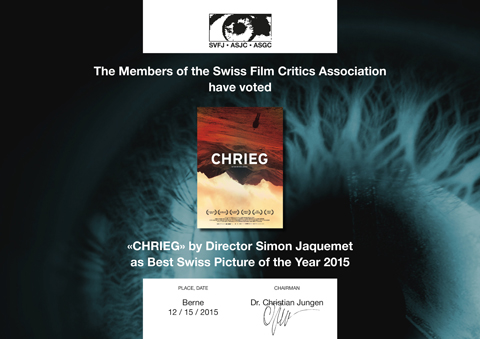
In the "Best Swiss Film 2015" category, the members chose "Chrieg". The drama by Simon Jaquemet is about a rebellious teenager who is sent to an educational camp against his will. In his first statement, Jaquemet says: "The award is an honor. I'm really pleased that the film was so well received by the critics." The award will be presented to the director at the SVFJ AGM at the beginning of the year.

Foto_Award_SVFJ_Chrieg_420x297

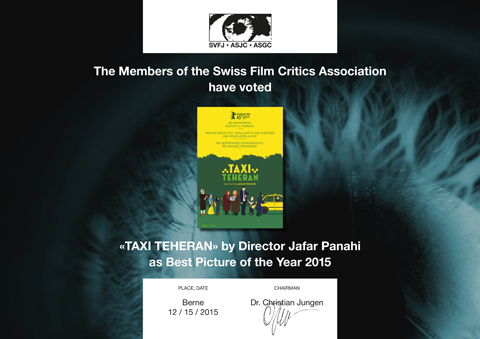
The film critics voted "Taxi Tehran" by Jafar Panahi as the best international film. At the center of this drama is a cab driver (played by Jafar Panahi himself) and his passengers. It captures the mood of Iranian society with a great deal of humor. The award will be sent to the director via the Swiss distributor Filmcoopi. The SFVJ is the association of Swiss film critics and has 170 members from all language regions of Switzerland.

Foto_Award_SVFJ_Teheran_420x297
 

Wirz Wietlisbach Dialog: Jörg Bewersdorff new CEO

Copywriter and Creative Director Jörg Bewersdorff will take over as head of the Wirz Group’s Dialog Marketing agency effective January 1, 2016, continuing to serve on the three-member executive board alongside Creative Director Stefan Dätwyler and Managing Director Nadine Vasella.

Since mid-2012, Jörg Bewersdorff, now 44, has headed the text department of Wirz Wietlisbach Dialog as Creative Director. Since 2014, he has been a member of the Executive Board, which he will now chair as of January 1, 2016. He thus indirectly succeeds Guido Wietlisbach, who co-founded the agency in 2011 as the then CEO and moved to the Board of Directors in mid-2014.

Joerg-Bewersdorff_RGB_klein-g

Jörg Bewersdorff, who has won international awards at the Direct Lions, LIAA, New York Festival AME, Echo, Caples and Red Dot Awards, among others, has a strong background in dialog, as his previous agency stations also show. Before moving to Zurich, he worked at Ogilvy One, Mech Berlin, Springer & Jacoby Direct and Tequila, the CRM agency of the TBWA Group.

Geri Aebi, as CEO Wirz Group also VRP of Wirz Wietlisbach Dialog, is convinced: "With his strategic, consulting and creative skills as well as his distinctive entrepreneurial spirit, which naturally fits best to Wirz, Jörg Bewersdorff brings the ideal prerequisites to successfully lead our dialog agency, which has grown gratifyingly this year, into the future together with his GL partners."

Jörg Bewersdorff responds to this with a twinkle in his eye: "As a creative, I am naturally quite vain. Normally only in relation to my work, but when praise also extends to my person, it somehow also feels extremely pleasant. But seriously, of course I'm very happy about this appointment and the new, additional tasks and challenges that come with it. And will do my utmost to continue to make our agency a top Swiss brand for successful dialog marketing."
 

get_footer();