Zurich Citizens' Initiative for Modern Film Funding Submitted

Just under six months after its launch, the association «Zürich für den Film» and the Swiss Game Developers Association (SGDA) submitted their popular initiative on Wednesday calling for a modern film funding program in the canton of Zurich.

About 9,000 signatures were collected. A total of 6,000 signatures are required for the initiative to proceed. According to a statement from the initiators, the fact that this minimum requirement has been far exceeded clearly demonstrates that there is broad public support for film and media production. The initiative calls for the legal enshrinement of support for film, gaming, and interactive media art in the Canton of Zurich. In the initiators’ view, film and media funding in the canton is no longer up to date. They argue that the current patchwork of various funding programs must be consolidated to better reflect the diversity and innovative power of individual works.

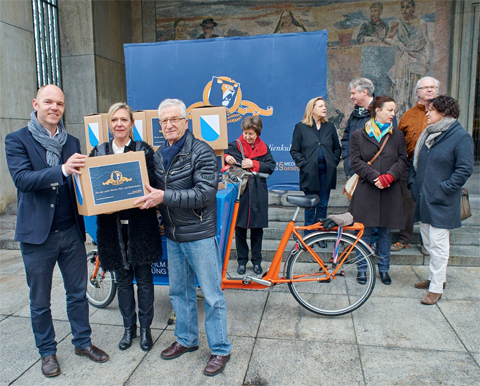
filmzuerich
Photo: Facebook.com/Zürich for the movie

A Film and Media Promotion Act would provide a solid legal foundation for the promotion of innovative and culturally relevant film and interactive media works. This would ensure the continuity of existing film funding while paving the way for new artistic formats of the digital age. According to the initiators, the canton of Zurich is not only Switzerland’s film and media center but also a hub of innovation in digital culture. About two-thirds of all audiovisual works in Switzerland are developed and produced by Zurich-based film and media professionals. The initiative committee, which enjoys broad political support, includes, among others, National Council members Doris Fiala (FDP) and Kathy Riklin (CVP), as well as Council of States member Daniel Jositsch (SP). (SDA)

Alpha 245: "Primeli" commercial for Jumbo

The new Alpha 245 campaign commercials look as if they were shot by Jumbo employees themselves. The premiere: the "Primeli" campaign.

Since winning the pitch two years ago, Alpha 245 has successfully given the Swiss DIY store Jumbo a new corporate identity and a striking print advertising presence. This includes flyers, magazines, advertisements and, as the main medium, posters. Now the blue elephant is taking another huge step in communication. With commercials on TV and the Internet. The task was to publicize particularly great price promotions. The implementation: the commercials look as if they were shot by Jumbo employees in the warehouse themselves. On the one hand, special price offers should appear more credible if the commercial also comes across as price-conscious. On the other hand, Jumbo is a DIY store - do it yourself.

Responsible at Jumbo Switzerland: Jérôme Gilg (CEO), Fabian Rauber (Head of Marketing). Responsible at Alpha 245: Patrick Senn, Patrick Beeli (CD), Patrick Senn (lyrics), Barney Rees (AD), Sylvia Kohler, Inma Mendiola (consulting), Plan B (film production) Chris Niemeyer (director), Niels Vije (producer).


"Echo der Zeit": Nicoletta Cimmino to be new presenter

The political current affairs program «Echo der Zeit» is getting a new host, Nicoletta Cimmino. The 41-year-old journalist will be moving from the domestic news desk to the «Echo der Zeit» team at Radio SRF in June 2016.

She succeeds Simone Fatzer, who is moving to the foreign desk. Cimmino completed a bilingual traineeship at Radio Canal 3 in Biel/Bienne after completing commercial school. She then moved to Radio 24 in Zurich as an editor, presenter and reporter. She joined DRS 1 in 2004 as a daily producer. Nicoletta Cimmino started in the information department of Radio SRF as a news editor, after which she presented the programs "Info 3" and "Heute Morgen". She has been a member of the domestic editorial team since 2014.

Unbenannt-1_116

Nicoletta Cimmino: "I am delighted to be working with the "Echo" team to ensure that the "flagship" continues to sail with a tailwind - in the knowledge that I am following in the footsteps of gifted journalists who have shaped the "Echo der Zeit". I am taking on this challenge with great enthusiasm and curiosity."

Streaming overtakes downloads in US music business

In the U.S. music market, revenue from streaming directly from the Internet exceeded revenue from song downloads for the first time in 2015.

Streaming revenues jumped by 29 percent to 2.4 billion dollars, as the industry association RIAA announced late on Tuesday. This resulted in a 34.3 percent share of total revenue. Downloads, which were recently the most important source of money in the US music industry, still accounted for 34 percent of revenues after a decline. So-called physical sound carriers such as CDs and vinyl still contributed 28.8 percent.

The growth of the streaming business in the USA was primarily due to the jump in subscription revenues by half to 1.22 billion dollars. Revenues from advertising in free streaming offerings were put at 385 million dollars - compared to 295 million in 2014. According to the RIAA, the music business in the USA grew by 0.9 percent to seven billion dollars last year - the falling sales of downloads and CDs largely offset the growth in streaming. The well-known providers in the music streaming business include Spotify, Apple Music, Napster, Google Music and Deezer. In Switzerland, the 35 or so music labels that are members of the IFPI Switzerland industry association generated total sales of 81.8 million Swiss francs last year. This was 3.5 percent less than in the previous year. Streaming services increased by 30 percent to 15.3 million Swiss francs. Sales in the download business fell by four percent to 24.6 million Swiss francs. (SDA)

Renzen: New corporate design for Gastrosocial

The Aarau-based agency Renzen has created a new website for the social insurance provider Gastrosocial.

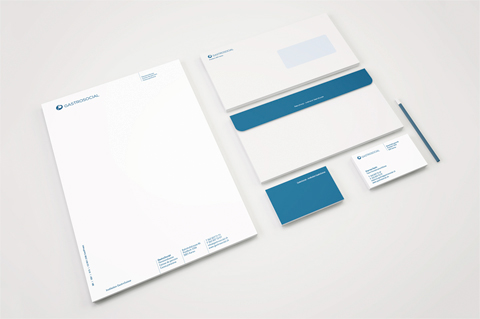
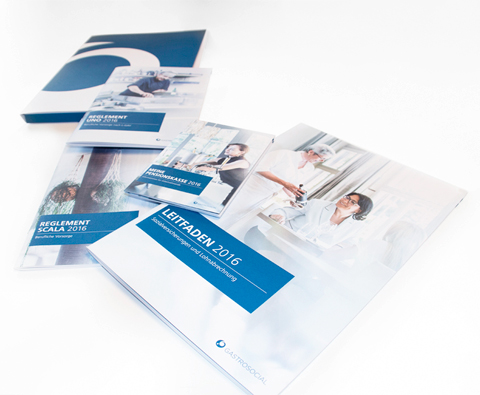
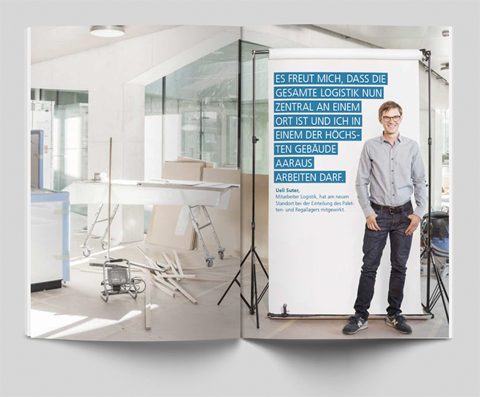
With 20,000 customers and 160,000 insured persons in the hotel and catering industry, Gastrosocial is one of the most important social insurance companies in Switzerland. Just in time for the opening of the new headquarters in Aarau, the Aarau-based communications agency Renzen designed a new corporate identity. In addition to the logo, all communication measures had to be developed - from the letterheads and building signage to all brochures and flyers. The website was also redesigned.

Unbenannt-2_135
Unbenannt-3_133
Unbenannt-4_148
Unbenannt-5_137

Responsible at Gastrosocial, Aarau: Simon Köbeli (Head of Marketing), Linda Keller (Head of Communications). Responsible at Renzen Communications, Aarau: Achim Kaufmann (AD), Patricia Belser (graphics), Hanno Lietz (text), Frédéric Renzen (consulting).
 

Exxtra: The new Audi Q2 is #untaggable

Digital maturity: Large companies catching up

The University of St. Gallen, the consulting firm Crosswalk, and Best of Swiss Web have once again examined the digital maturity of companies.

The second edition of the "Digital Maturity & Transformation Report 2016" shows: Large companies have caught up significantly compared to the previous year, management is more interested in digital transformation and: Digitally mature companies assess the economic effects of their transformation more positively than less mature ones.

The digitization of the business world is advancing in leaps and bounds, making it a necessity to regularly review one's own business model. Nevertheless, not all companies are yet clear about what it really takes to survive in the new digital competition. There are also differing opinions about a company's own digital maturity. The "Digital Maturity Model" developed by the University of St. Gallen (IWI-HSG), the strategy consulting firm Crosswalk and 'Best of swiss Web' and the "Digital Maturity Check", an online survey based on it, address this problem: The two instruments enable statements to be made about a company's digital maturity and show where there is a need for action. For the second time, the two partners University of St. Gallen and Crosswalk invited companies from various industries to participate in the survey. With almost 550 participants, they were able to more than double the number of participants compared to the previous year - the interest in a location assessment around the topic of digitization has increased once again.

Now the results are available, summarized in the "Digital Maturity & Transformation Report 2016".

Key findings:

Large companies have caught up: While companies with fewer than 100 employees achieved the highest maturity levels last year, large companies now have the best scores on average.

The digital transformation is definitely in the Management awareness arrived: Two-thirds of survey participants work at the executive or department head level.

Companies from the Communication and information industry are best equipped - industry still has some catching up to do: As in the previous year, companies in the manufacturing sector achieve only low levels of maturity.

The topics Process digitization and customer experience still receive little attention: The maturity levels for these topics are the lowest in the entire survey.

Digitally mature companies assess the Achieving economic goals positive: Participants from companies with a high degree of maturity are significantly more positive in their assessment of the success of the digital transformation than survey participants from digitally less mature companies.

The second edition of the report with information on the model, the results of the survey including industry-specific evaluations and recommendations for action can be downloaded free of charge at Crosswalk.ch/dmtr2016 be ordered.

Who will win the "Swiss Digital Transformation Award"?

Also for the second time, the "Swiss Digital Transformation Award" will be presented at the Best of Swiss Web awards gala on April 7, 2016. The prize goes to companies or organizations that have particularly improved their digital maturity. The jury bases the award on the "Digital Maturity Model", among other things. The first winner in 2015 was SBB.

The nominees for the Swiss Digital Transformation Award

Between last November and the end of January this year, around 400 companies and organizations completed the comprehensive "Digital Maturity Check" questionnaire from the IWI at the University of St. Gallen. This self-declaration was also the qualification requirement for the "Swiss Digital Transformation Award" business prize. In a multi-stage qualitative assessment process by the expert jury, the following nine companies finally made it onto the shortlist (Werbewoche.ch reported): Alpha Sprachwelt, Axa Winterthur, Interio, Medela, Post CH, Sanitas, Swiss Life, Victorinox, Wincasa.

The jury's comments on the 2016 nominations:

Alpha language world

Education and further training are among the most important foundations for Switzerland's economic success. Innovative companies like Alpha Sprachwelt therefore play an important role in the modernization of the education system. By digitizing its core processes with the help of an innovative industry solution, Alpha Sprachwelt has demonstrated how even a small company can benefit from digital transformation.

Axa Winterthur

The digital transformation is in full swing at Axa Winterthur and is being driven forward with many different measures. For example, in the area of organizational development (e.g. with a department for transformation and market management) or product innovation (drive recorder, connected home, hackathons, cooperation with start-ups, etc.). This, and in particular the commitment shown by senior management and the broad support for the program within the organization, were praised by the jury.

Interio

Furniture retailing is also becoming increasingly digital. For some time now, Interio has been consistently focusing on digital marketing: good content, high-performance campaigns and numerous features on the website support the web store. Top management supports the corresponding initiatives - resources are increasingly being shifted from traditional marketing to digital. Social media and various touchpoints are actively managed and used as a dialog tool. For the jury, Interio is a good example of online-active multichannel

Medela

As part of the digital transformation, Medela is constantly expanding its relationships with target groups. On the one hand, new customers are being addressed with a cross-channel concept, and on the other hand, the duration of contact with customers is being intensified and extended. As a result, Medela is already generating significantly higher online sales.

Post CH

Swiss Post has made significant progress in the area of digital transformation. This not only refers to new innovative solutions at various interfaces to the end customer, such as the new Twint payment system, the new online portal or the autonomously driving PostBus shuttles, but there is also a great deal of digitization within the Group.

Sanitas

Sanitas convinces 'digitally' with its far-sighted and very well-structured approach led by the Board of Directors and the Management Board. In addition, with analytics on the one hand and two-speed IT (or agile IT) on the other, Sanitas is betting on the important horse for the future in terms of big data and fast implementation.

Swiss Life

Swiss Life's digital transformation is particularly impressive due to its high stringency in the dimensions of strategy and transformation management, but also in terms of culture and expertise. Swiss Life is one of the very few companies surveyed to include the topic of digitalization in the overarching strategic goals approved by the Board of Directors (keyword "Swiss Life Strategy 2018").

Victorinox

The transformation of Victorinox into a multi-channel retailer is a very exciting development - so the entry belongs on this year's shortlist. Precisely because the company, with its brand and product history, would actually be predestined to live "digitization at your fingertips," it could even become a veritable success story of dealing with adversity, situational agility, and upholding brand values in the medium term.

Wincasa

At Wincasa, a great deal of further development is evident in terms of strategic maturity. One of the key factors here is the management's clear commitment to the digital transformation. The cases successfully implemented to date in the areas of process optimization and digitization are an important proof of concept in the view of the jury. Wincasa is also on a very good path in terms of IT alignment.

The jury members of the "Swiss Digital Transformation Award

Bramwell Kaltenrieder, Crosswalk (Jury President)
Martin Armand, Infocentric Research
Sabine Berghaus, Institute of Information Systems, University of St. Gallen
Beat Bühlmann, Yourposition
Patrick Comboeuf, Swiss Life
Dr. Tim Dührkoop, Namics
Dr. Florian Hamel, AXA Winterthur
Andreas Eggimann, Swiss Post
Milos Radovic, Swisscom
Stephan Odermatt, UBS


SWA Annual Meeting 2016 : "Communications in the age of disruption".

Disruption is sweeping the entire advertising and media world—but not at the SWA: More members than ever, more guests than ever, and unity and strength within the Swiss Association of Advertising Clients (SWA).

President Roger Harlacher was in a correspondingly good mood when he welcomed a good 300 guests to the annual meeting on Tuesday afternoon, and especially the 14 new SWA members since the last AGM. There was spontaneous applause for: Banque Pictet, Group Mutuel, Swiss Recycling, brack.ch, Automobil Club der Schweiz, Amplifon, Swissquote, Schweizer Obstverband, FRANKE, Dabso, Les Ambassadeurs, Parship, Brita and Continental Suisse. Harlacher went on to explain the SWA's 5 most important tasks - fighting for advertising freedom and media transparency, realistic media research, European-compatible prices and expanding members' expertise - and then came to the topic of the day.

"Clever Data and Clever Communication are more important than Big Data. Clever business often emerges from this. And today, clever business is usually intensively linked to clever communication," said Harlacher, using the example of Uber to show how cab use has been disrupted. Founded in 2010 in Silicone Valley, Uber is now active and very successful in 68 countries and 370 cities.

With that, he passed the floor to the conference moderator, Matthias Ackeret, editor-in-chief and publisher of Persönlich. The first speaker was Christoph Tonini, CEO of Tamedia, who was pleased with 2015 as his company's best business year. He explained how a private company copes best with disruption through constant adaptation and improvement: In 2004, Tamedia still consisted primarily of the Tages-Anzeiger, Switzerland's third-largest daily newspaper. Today, the media Tages-Anzeiger, 20 Minuten, Newsnet National and Tamedia Classifieds, Local.ch and Search.ch, Ricardo.ch, Homegate.ch, Tutti.ch etc. form a high-reach digital portfolio. It is astonishing that the classic titles Tages-Anzeiger and Tribune de Genève were still able to increase their overall reach. And "20 Minuten" now reaches a whopping 60 percent of the Swiss population. The latest highlight was the successful launch of the #12 app in fall 2015: the 12 best articles from the Tamedia media combined on one app every day.

Thomas Koch, "Mr. Media" from Germany and doyen of the German media world, said in his presentation "The end of media as we know it": "We're talking about disruption today - and it's about time. Our world is in a state of upheaval. Unfortunately, advertising is not quite ready for it. And certainly not media strategies. Hand on heart: your media plans still look like last year's!". Koch lamented that, in view of the collapse of their usual structure, the media are only beating on each other, that everyone is breaking into the business model of the others, and suggested: "We urgently need a discussion - along the lines of: 'Is this digital, or can it go away? Do we really need digital? The best thing is to have this discussion before digitization and its algorithms destroy everything of value in a blind rage that we possibly wanted to and should preserve!"

Konstanze Kossack from the Hamburg-based innovation consulting agency Futurecandy showed in her presentation "Digital Transformation" that the future is already here. And this despite the fact that, according to her experience, the question "Quo vadis digital?" has not yet been internalized in 60% of German boardrooms. Everyone says: Sure, it's coming - but that's usually all it will be! A digital Edeka advertisement of the consulting agency, which registered 4.3 million clicks in 2 days, shows that it actually works. The company's concept for Vodafone's appearance, the Cebit Oculus Project, which mainly consisted of a virtual reality LTE game for visitors, also became known.

The innovation consultant is dedicated to all questions concerning future work technologies and the possibilities that can already be implemented today - from "Smart Life" and "Connectivity" to the "New Technology Wave". Anyone who listens to Ms. Kossack soon comes to the firm conclusion that the real Silicone Valley is not in California, but on the Elbe.

The subsequent roundtable discussion with Matthias Ackeret (personal), Christoph Tonini (Tamedia), Martin Schneider (Publisuisse) and Thomas Schwetje (Coop Switzerland) focused - as was to be expected - on disruption in communications and the planned SRG/Ringier/Swisscom joint venture (Admeira). It is one thing that the media wheel of time cannot be turned back and that the joint advertising platform opens up new multi- and cross-media paths. The SWA is also aware that such an advertising alliance probably also has disadvantages. Nevertheless, the association welcomes the innovative offers and the competition for advertising clients. However, Tamedia CEO Christoph Tonini's political arguments that state-owned and semi-state-owned companies such as the fee-financed SRG and Swisscom should not simply create a fait accompli cannot be dismissed out of hand. The next court decision on this matter is now with the Federal Administrative Court, after the Competition Commission and the Federal Department of the Environment, Transport, Energy and Communications (DETEC) had already given the project the green light.

New and previous board members in SWA

Immediately before the Annual Meeting, the 67th General Meeting of the Association took place. Andreas Schönenberger, CEO of Sigvaris, was confirmed as a member of the board for a further term of office of 3 years. Newly elected to the board were Mr. Roman Reichelt, Head of Marketing Communications, at Migros Genossenschafts-Bund , Mr. Thomas Schwetje, Head of Marketing/Services at Coop Switzerland and Mr. Marc Werner, COO and Member of the Group Executive Board, Swisscom. The three gentlemen replace Oliver Schwegmann (L'Oréal), Marc Engelhard (Migros) and Jürg Pauli (Swisscom), who are stepping down from their positions for professional and private reasons. Finally, the president thanked the entire board, the director, Roland Ehrler and the team in the office for their tireless efforts in the past anniversary year 2015. (pd)
 

Last but not least: Cat jury

In a new TV commercial, ADC Germany has cats evaluate advertisements. The jury is less than enthusiastic.

Cats are the undisputed queens of the internet when it comes to viewer interest, attention and reach. Where it says "Cat Content" on it, success is usually pre-programmed. No wonder the two judgment cats have nothing but contempt for the award-winning, profound Hornbach commercial "Gothic Girl" by Heimat Berlin (see below). Even if it has been viewed over 5.3 million times on YouTube to date and has caused a stir worldwide. Conclusion: "I get more when I lick my balls". With the commercial created by Grabarz & Partner, ADC Germany alludes to the content marketing motto of this year's ADC Festival, "The Battle of Content". More real, less superficial cat content. (hae)

Amnesty: Weakening of encryption threatens human rights

Amnesty International has sided with Apple in the dispute over iPhone encryption. The human rights organization insists that encryption of online communication is an «indispensable safeguard» for privacy and freedom of expression.

Everyone worldwide must be entitled to encryption of communications and personal data, Amnesty writes in its report published on Tuesday. That's because encryption is a crucial requirement for privacy and freedom of expression, it said. "Banning encryption is like banning envelopes or curtains," Sherif Elsayed-Ali, deputy director for global issues at Amnesty, was quoted as saying in a statement Tuesday. This, he said, prevents people from keeping their private lives private. The weakening of privacy online could have devastating consequences for open societies, especially for human rights activists, journalists and lawyers, according to the organization. Amnesty warned against forcing companies to build so-called "backdoors" into encryption software. Such measures "not only threaten privacy and have a chilling effect on free expression, they also expose online communications and personal data to security risks," it added.

The U.S. technology company Apple had been ordered by court order to help the FBI unlock an iPhone 5C used by the San Bernardino bomber. He and his wife had shot dead 14 people in the California town in early December. Apple is refusing to comply with the California court's order, saying it sets a dangerous precedent. In this case, the request to access the data of a single iPhone may be justified, Amnesty notes. However, the method of accessing data - by circumventing security regulations - poses dangers. "In opening a back door for a government, you risk opening the door also for cyber criminals, as well as for repressive regimes that want to monitor and persecute their critics," Elsayed-Ali said. (SDA)

Goldbach Audience launches Goldbach Crossfactory

Goldbach Audience is launching Goldbach Crossfactory. The online marketing agency’s new brand offers clients the ability to centrally book short-term inventory across all digital media.

By centrally marketing the short-term inventory of TV, online, mobile, digital out of home and digital audio, Goldbach Crossfactory fulfills a need of advertisers, Goldbach writes in a press release. The combination of all genres with Goldbach Crossfactory enables a high reach and a large campaign presence on all electronic media.


New look for the Toppharm Pharmacy Guidebook

At the turn of the year, the Basel-based agency Kreisvier revised the Toppharm Pharmacy Guide and gave the entire layout a more modern and fresh look.

In particular, the results of a qualitative and quantitative study conducted in summer 2015 were taken into account. According to the press release, it was important for the new overall appearance that the graphic adjustments better reflect the reading behavior of customers and that the Toppharm Health Coach, which is a central element in Toppharm's communication, is more strongly integrated into the Pharmacy Guide. The regularly published customer magazine conveys a high level of competence in all matters relating to health. In this way, the Apotheken Ratgeber carries the image of the TopPharm health coach to the outside world.

TPH0033-slider-desktop-ratgeber_01-16-slide-1
TPH0033-slider-desktop-ratgeber_01-16-slide-4

Responsible at TopPharm: Caroline Kuster (project management), Christoph Baumgartner (editing). Responsible at Kreisvier Communications: Nannette Graf (Management, Consulting), Simone Brutsche (Consulting), Martin Friedlin (Art Direction), Stefanie Thöni (DTP), Bianca Kury (Text).

get_footer();