Last but not least: Invasion of the ski instructors

On Thursday, more than 100 ski instructors from Davos Klosters were on duty in Zurich—they wanted to «thank» Zurich’s guests “for their loyalty.”.

An important place for the ski instructors was the Sihlcity shopping center: as parking attendants, they handed out tickets, helped customers pack their shopping and were on hand in the sports store to advise customers on the purchase of winter equipment. They also lent a helping hand to the city cleaning service and collected litter from the streets.

The campaign was organized by Davos Klosters Bergbahnen and Destination Davos Klosters. The aim was to thank Zurich guests for their loyalty, the organizers said in a press release. The ski instructors' thank-you invasion was also used to draw attention to the "Ski pass as a gift" campaign. (Until December 23, 2012, the ski pass is included for stays of one night or more). The organizers have already posted some impressions of the ski instructors' visit to Zurich. online and placed on the Facebook page of Davos Klosters documented.

If you've already forgotten what it was all about, here's the summary again: In Zurich, the ski instructor is also a parking attendant. (uma)
 

Divio designs new website for Verit

The Zurich-based web agency Divio has redesigned the websites for Verit Immobilien and Verit Investment Management. Visual appeal plays just as central a role as ease of website administration.

With the slogan "With you. For you." and a large picture gallery, Verit Immobilien's new website invites interested parties to find out more about its services. In addition to appealing impressions, the site offers a reference section with a filter function. The two companies are now united on one page, allowing content to be both edited and managed in a simple and uniform manner. The same applies to
Microsites for special projects.

Special at the new appearance is also the "soon" range, so the agency. Because in this range the enterprise can make additionally differentiated object presentation, while under "renting" and "buying" a direct binding to Homegate exists.

Like every website implemented by Divio is based on Verit.ch is based on the Enterprise Open Source CMS "django CMS" and is arbitrarily extendable.

verit_1

Media concentration in Ticino is progressing

Media concentration in Ticino is on the rise: The private television station Tele Ticino and the private radio station 3i are now both indirectly owned by the publishing company that publishes the Corriere del Ticino.

The Federal Department of the Environment, Transport, Energy and Communications (DETEC) approved the license transfers. The Uvek justified its approval with two arguments, as it announced on Thursday: Firstly, SRG offers a significant alternative to the private broadcasters Tele Ticino and Radio 3i in both the television and radio sectors. In addition, Radio Fiume is a second private radio station licensed in Ticino. On the other hand, the new owners of the private stations have committed themselves to maintaining the independence of the individual editorial offices. The diversity of offerings and opinions will not be affected by the economic transitions, writes the Uvek.

The new media situation in Ticino came about as follows: Timedia Holding has acquired a majority stake in TeleTicino. Within Timedia Holding, Società Editrice del Corriere del Ticino in turn now holds a majority stake. As Radio 3i is already owned by Timedia Holding, Radio 3i, Tele Ticino and Corriere del Ticino are united under the same roof. The Chairman of the Board of Directors of Timedia Holding is Ticino CVP member of the Council of States Filippo Lombardi.

In 2007, Radio 3i and Tele Ticino received a license from DETEC to broadcast FM radio and regional television programming respectively. The licenses are valid until the end of 2019. (SDA)
 

A section becomes a cult

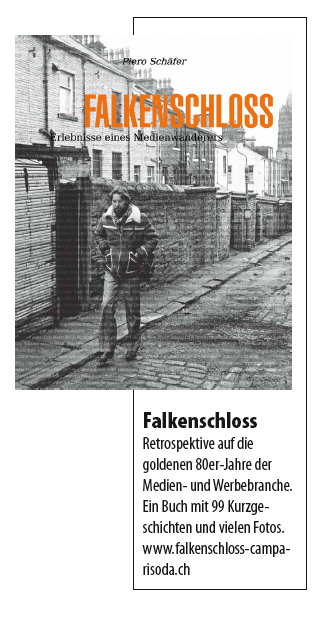
Piero Schäfer was one of the first editors-in-chief of *Werbewoche* from 1985 to 1989. Now he has written a book. It is not intended to be a biography, but rather a retrospective with autobiographical elements that spans a period of 40 years. Exclusively in *Werbewoche*, here is an excerpt from the chapter «Im Storchen getroffen» (“Met at the Storchen”), a column he created back then for *Werbewoche*.

The personal ignorance had to be remedied quickly. And that's when I came up with an idea that, in retrospect, proved to be extremely successful and efficient: I created a weekly column which, on the one hand, would provide background on a current event and, at the same time, enable me to make acquaintances quickly. I called the new section "Im Storchen getroffen" ("Met at the Storchen") in reference to the "In Zürich getroffen" ("Met in Zurich") section, for which I had provided content at the NZZ for many years. In the leather-upholstered bar of the Hotel Storchen on Weinplatz, just opposite my office in the Samen-Mauser-Haus, I met an exponent or representative of the advertising and media industry every week for four and a half years (except during vacation periods) for a topical discussion. The only exceptions were when I was in the military or otherwise unavailable. I was represented twice by Christian Gerig and Bänz Lüthi, and five times by my editorial colleague Urs Steiner, who later joined Cash and has now been working for the NZZ for many years.

Within a short space of time, "Im Storchen getroffen" achieved cult status and attracted a great deal of attention. From Jean Etienne Aebi, my first discussion guest, to SRG Director General Leo Schürmann, the most important personalities in the industry were, so to speak, holding the bar door in their hands. In all these years, not a single guest has turned down the invitation. And Prof. Matthias Steinmann came to the date despite having a high temperature. However, one guest did cause some turbulence: young publisher Marc Frey refused to have the conversation in the bar. I had to interview him on Edenstrasse. At least I managed to persuade the arrogant gentleman to take the photo in the bar. So we met at the Storchen for a few minutes and photographer Sabine Dreher, who took most of the photos alongside Michael Sieber and Jules Vogt, captured the not particularly cooperative Mr. Verleger on film. I particularly remember the interview with the then SRG Director General Leo Schürmann: hotel manager Jean-Philippe Jaussi was already nervously pacing the thick carpets long before the interview because he wanted to give the distinguished guest a personal welcome. And when the SRG boss emerged, Jaussi rushed to meet him, radiating a professional welcome. Before he could even shake his hand, photographer Jules Vogt greeted the SRG boss with a grin and the rude words: "But don't go picking my nose again, Mr. Director General. " Leo Schürmann, remembering an earlier photo session with Vogt, took it in his stride, while Jaussi and I stood off to the side, slightly indignant.

What is remarkable from a journalistic point of view is the fact that none of the 200 portraits gave rise to a serious complaint. Schawinski will explain this with the fact that the column was too well-behaved, but he of all people refused to be criticized. The order of the interviews was decided by topicality, but sometimes it was also a phone call. After Geneva-based Jean-Claude Nicole, publisher of "La Suisse", had chatted about various plans in the Storchen, his Vaud market partner Pierre Lamunière immediately got in touch. He would soon be in Zurich, the publisher said, and therefore suggested meeting me at the Storchen. Obviously, he didn't want to let his competitor Nicole advertise to Swiss-German advertisers unchallenged.

It is exciting to compare today and then. Who of the 200 guests at the Storchen is still active? Who has made a name for themselves or is even famous? From a literary point of view, the answer is simple: Martin Suter. The successful author was in the Storchenbar in July 1985 together with Robert Stalder. The topic: the expansion of their agency Stalder & Suter to Zurich.

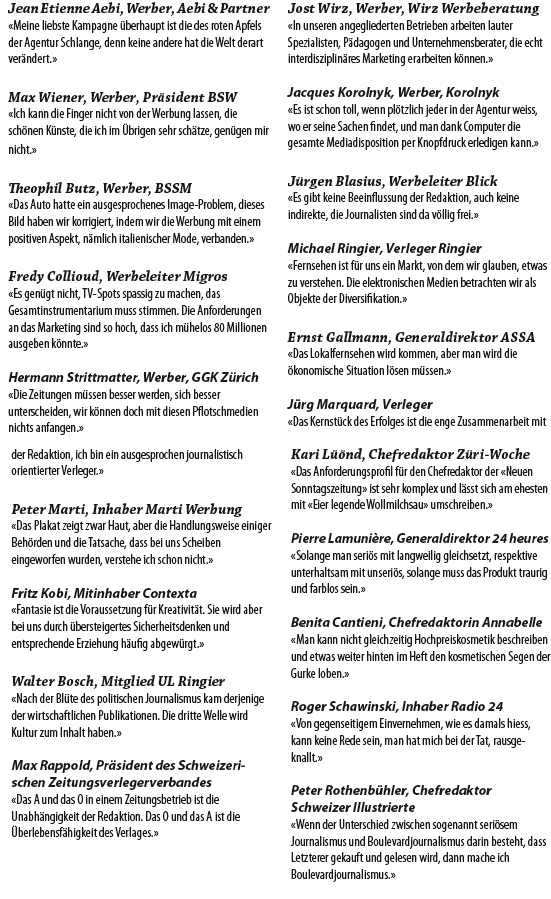
Statements by some Storchen guests (company and function at the time of the talks 1985 to 1989).

zitate
fs-buch
 

Profeta realizes customer mailing for Schuler Weine

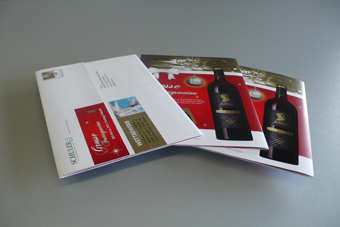
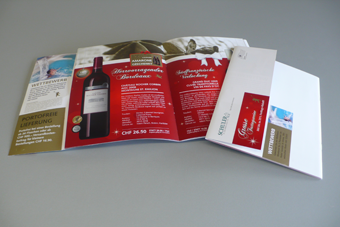
Profeta Kommunikation designed a Christmas customer mailing for Schuler Weine. A direct self-mailer with 16 pages of content was realized.

The mailing serves to promote sales and includes Christmas gifts from Terra Nuova. It is intended to stimulate existing customers to buy wine for the Christmas season, the agency said in a statement on Thursday. The mailing was sent to existing customers in mid-November.

Responsible at Profeta Communication: Eugen Profeta (concept, consulting and texts), Beni Kurz (art direction), Claudia Schneiter (texts). Responsible at Schuler Weine: Robert Hoehn. Responsible at Engelberger Druck: Sandro Blättler, Edi Engelberger.

profeta2
profeta1

Evoq: Pimp my Smartphone

Evoq has relaunched the myPhone brand and store. In the myPhone accessories store, cell phone fans will find everything for their smartphone or iPad: covers, restyles and a variety of accessories.

In addition, almost everything from iPhone to Galaxy can be repaired at myPhone Repairs. Accordingly, the brand appears with the two subbrands "Accessories" and "Repairs". In addition to the brand, Evoq also developed the new store design and created the flagship store at Shoppi Tivoli.

The conversion was accompanied by numerous campaigns and appropriate communication. In addition to the stores in Zurich, Chur, and Spreitenbach, there are also
Switzerland further myPhone stores are being planned.

Responsible at myPhone: Adrian Schaffner (Consulting) Serkan Genc. Christoph Stalder (Creative Direction), Stephanie Locher (Design). Realization Shop: Diprint, Urdorf.

Ericsson study: 3.3 billion smartphones by the end of 2018

The world is on the verge of a smartphone boom that will far eclipse previous growth spurts. Ericsson, the world's largest telecommunications equipment supplier, forecasts that the number of smartphones in use will triple to 3.3 billion by the end of 2018.

In Western Europe and North America, practically all cell phones will then be computer cell phones - in Africa, Asia and the Middle East, however, only one in three will be. According to a study published on Wednesday, there will be a total of 9.3 billion mobile phone connections in six years' time. By the end of 2012, this figure is likely to be around 6.6 billion - although Ericsson believes that the number of actual users will only be 4.3 billion, as many people have several devices in use. This year, 1.1 billion smartphones were connected to the network, compared to 750,000 the year before.

The Swedish company, which sells equipment for network operators, emphasized that data volumes will also explode with the spread of mobile broadband connections. From 2011 to 2012 alone, mobile data traffic doubled. In 2018, it will be twelve times as high as it is today. Growth is particularly steep in Asia. The main driving force is video, which accounts for up to 40 percent of transmitted data.

Ericsson expects 6.5 billion mobile broadband connections in 2018 compared to the current 1.5 billion. The amount of data per device will also multiply over the next six years. Ericsson expects a jump from an average of 450 megabytes to 1.9 gigabytes per month for smartphones and from 600 MB to 2.7 GB for tablet computers.

New data technology

Ericsson expects the super-fast new LTE data radio to be available to around half of the world's population in five years' time. The number of LTE connections is expected to rise from the current 55 million to 1.6 billion by 2018.

The GSM connections that dominate today will be on the decline with the rise of smartphones and tablets. Ericsson estimates that their number will fall to 2.4 billion by 2018 from the current 4.6 billion. However, all these forecasts do not include communication between machines without human intervention, which is seen as a major future market. (SDA)

Teaser image: Keystone

Kudelski ventures into the cloud

Encryption specialist Kudelski is expanding its business to the Internet. The Vaud-based company plans to advise customers who move and store their data in the cloud.

This is necessary as access to data is becoming increasingly dynamic and mobile due to smartphones and laptops, writes Kudelski in a press release on Wednesday. The offer initially includes the monitoring and assessment of threats and security leaks as well as the securing of data. The company intends to provide appropriate technology, legal advice, investigations and communication in the event of a crisis.

To this end, Kudelski is establishing the Cyber Security division, which will offer security packages for companies, financial institutions, public administrations and media customers. Initially, the focus will be on Europe, but the Group intends to offer its security solutions worldwide at a later stage. (SDA)

Teaser image: Keystone

KSB: "One Two We" - counted in together for sustainability

The SV Group has set a goal of reducing CO2 emissions by 10 percent annually by 2015. KSB developed the communication strategy for this initiative.

In collaboration with WWF Switzerland, together with experts and the hotel's own clients, climate protection is to be successfully integrated into management and operational processes. With the sustainability program "One Two We", clients as well as guests and staff are involved. A mailing was used to invite guests to the event in the Umwelt Arena. The program was presented there for the first time. The communication package also includes customer brochures and communication throughout the guest and staff areas.

Responsible at SV Group: Patrick Camele (CEO, overall responsibility), Peter Lutz (Marketing Management), Isabel Gherbal (Marketing Communications), Julia Negri (Corporate Communications), Ronnie Kohler, Tatjana Mitschjeta, Kornell Otto (Project Management). Responsible at KSB war Schlupp Bürge: Daniel Krieg (Creative Director), Sascha Borsai (Text), Dani Kobi (Art Director), Rea Ammann (Graphics), Rémy Müller (Consulting).

Jobsource.ch in a new look

The Jobsource.ch job platform has undergone a design refresh. As part of this, the featured jobs have also been structured more effectively.

In keeping with the media, communication and marketing industry, designer Sara Nenzi has used a stylistic device that combines a contemporary look with an emphasis on the essentials: "The chosen blog style with lots of white space and structuring lines gives each job title the space and aura it deserves," according to a press release on Wednesday. And the content is at the center without creating a wasteland of lead.

The aesthetics are also retained on mobile devices. As Markus Zehnder from the internet agency Webtuning explains: "Responsive web design takes particular account of the rapidly growing proportion of mobile users. The impression is identical in appearance from smartphone to tablet to widescreen and tailor-made in form." At the same time, the mobile-friendly site is also a priority for Google.

In addition to the job groups - according to activities - jobseekers can also make a selection according to the type of employer: Media house, web platform, production company, agencies, marketers, production companies or miscellaneous (mostly communication and marketing departments in companies and institutions).

Last but not least: Klara Klever and "The stolen identity"

Starting next week, Inspector Klara Klever will be on the case, working to put a stop to criminals. Everyone can join in the fun.

In her first case, "The Stolen Identity", Inspector Klara Klever has to deal with evil villains who are making life difficult for a long-established family business in Dietikon. Without spoiling the whole story, it is about an entrepreneur who fears for his reputation, his credibility and even his very existence. This is after he has lost his entire fleet of trucks and the products stored in them. The fact that the thieves are now doing business in his name with inferior goods shakes the businessman to the core - he hopes to find salvation in the person of Inspector Klara Klever.

The radio play was developed on the occasion of Kupferschmied's three-year company anniversary as part of a diploma thesis by young Swiss copywriters. Nadja Röthlin's thesis included the concept and accompanying measures as well as a complete script for the crime drama radio play. Klara Klever gets her voice from the blogger and filmmaker Mona Hinnen, alias Monah. Another unusual feature is that the perpetrators are not revealed. Listeners can try their hand at being detectives themselves and, with a bit of luck, win a prize.

Klara Klever will be investigating her first case, "Die geklaute Identität", from November 26, 2012. The three-part Mitrate crime thriller is available as a radio play on the Internet. (uma)

To the Klara Klever website

Epica on the tracks of the Silk Road

It’s happening in the East. That’s why this award, which originally focused on Europe, has now expanded its horizons toward the rising sun. Recently, advertising from India and China has also been competing in Paris alongside 155 ideas from 12 Swiss agencies. *Werbewoche* is on the scene.

"There are more and more award shows in Europe, so we had to find a new profile in order to continue to have a future," explains Andrew Rawlins. In 1987, the president of the then global agency D'Arcy Masius Benton & Bowles DMB&B founded the Epica competition. After its 25th anniversary in 2011, he has now sold his life's work to AdForum. 

In his last "year in office", Andrew Rawlins can or must whip 3893 submissions from 648 agencies from 62 countries through a daily twelve-hour jury marathon this week from Tuesday to Friday. The work will be judged by representatives from the editorial offices of international trade journals such as "Briefing" from Portugal, "Brand News" from Italy, "Marketing Türkiye", "New Moment" from Serbia and "Werbewoche" from Switzerland. A total of the following are currently in Paris 41 magazines or websites from 34 countries represent.

Epica has won six new titles from Canada, India, Singapore, China, Australia and the Philippines for its round. In sync with this global opening, 78 agencies from 18 new countries submitted work for the first time. The entries from the new nations added in 2012 already account for 14 percent of the total submissions. Thanks to this opening, the festival was also able to record growth in 2012, although the campaigns from the traditional Epica countries fell by 4 percent.
"I am curious to see where the general development of creative competitions will take us now that Scholz & Friends in Germany, for example, has decided to do without competitions not only for financial but also for non-material reasons. Jung von Matt only wants to take part every second year," wonders Michael Weinzettl, the jury representative from Lürzer's Archive in Paris. "For us, the interest in such competitions is enormous. There is a real gold-rush atmosphere in advertising," says Annurag Batra from India, who is responsible for several publications in his country, such as our Advertising Week.

With its appearance in Paris, Switzerland is among the front runners with 155 entries. There are 44 entries from Austria, 721 from Germany, 194 from the USA, 358 from the UK and 87 from Italy. Puerto Rico, Cyprus, Cambodia and Nigeria are playing the underdog role that Switzerland has usually had to play in the European Song Contest in recent years with just one entry each. But when it comes to advertising, our voice can no longer be ignored.

On Friday evening, Werbewoche will announce which of the 155 entries from 12 agencies in Switzerland will be honored with an Epica Award. The bronze and silver winners, which are more complicated to determine in the electronic voting, should be calculated by next Wednesday.

Andreas Panzeri
 

get_footer();