When a click is no longer enough
More and more consumers are getting their answers directly from AI without visiting a website. As a result, a key metric in digital marketing is losing its significance: the click. It’s becoming harder for companies to determine which advertising impressions are generating demand and which are simply tapping into existing demand.



For a long time, the click was the most convenient link between interest and action. Anyone looking for a product would click on a result, visit a website, and make a purchase. Reporting painted a picture of a seemingly seamless chain: costs here, sales there. According to the Swiss Advertising Statistics Foundation, search engine advertising in Switzerland has, for the first time, surpassed the combined volume of all domestic electronic media: approximately 1.42 billion Swiss francs compared to approximately 1.38 billion Swiss francs. Search and social media combined total more than two billion Swiss francs. This means that a significant portion of the Swiss advertising market is accounted for by digital environments, whose usage and measurement dynamics are changing.
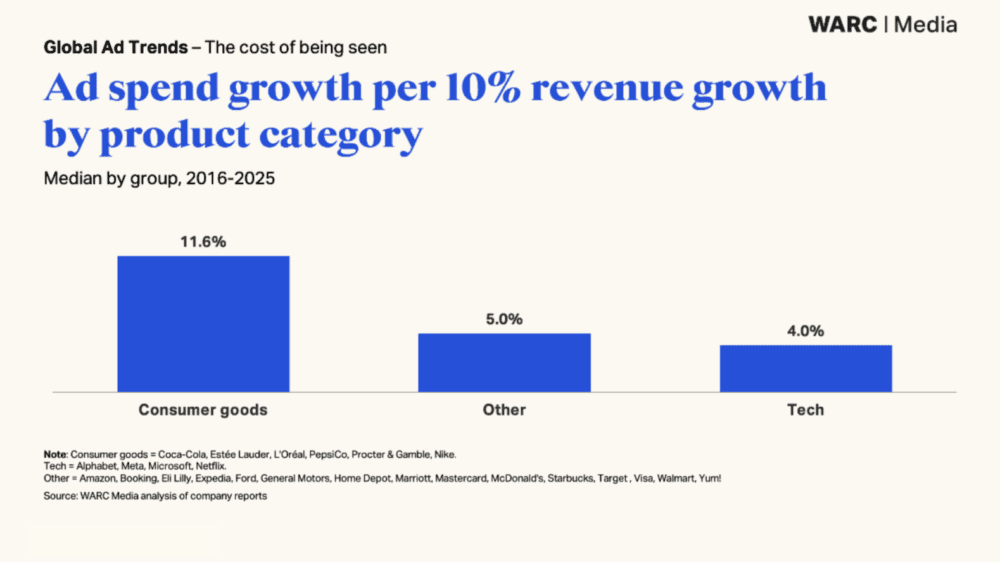
At the same time, budget pressures are mounting. According to the LSA/SWA Industry Indicator 2026, only 15 percent of the companies surveyed plan to increase their communications budgets, while about one-third expect a decline. On average, 57 percent of media budgets are expected to be allocated to digital channels. Discussions with clients consistently reveal that what can be measured quickly and is easier to justify internally is given greater weight. What appears on the dashboard also shapes the media plan.
When the search ends without a click
Since Google introduced AI Overviews in Switzerland in March 2025, some information searches have ended directly on the results page. The search engine summarizes relevant content and provides links to additional sources. Users who find the answer they’re looking for right there no longer need to visit a website. A Sistrix analysis of more than 100 million Google keywords in Germany illustrates the scale of the impact: For search terms with AI-generated answers, the click-through rate to the first organic result dropped from 27 to 11 percent. Extrapolated, this amounts to approximately 265 million fewer organic clicks per month, though the impact varies significantly depending on the category.
Some Swiss media outlets are also observing this effect. According to their own reports, SRF and Swissinfo are seeing more of their content appear in search results, while click-through rates are declining. According to the IGEM Digimonitor 2025, 60 percent of the internet-using population between the ages of 15 and 75 also use AI tools at least occasionally. AI is therefore no longer a niche phenomenon in this country either. These figures pertain to organic search, not Google Ads conversion tracking. The gap arises before measurement even begins: part of the information-gathering phase ends on the search results page. Fewer organic clicks therefore do not automatically mean less demand or revenue. A familiar part of the customer journey simply becomes visible less frequently than a website visit. Paid search remains important. It capitalizes on existing search intent and can measurably guide users all the way to conversion. Where organic traffic is becoming scarcer, paid visibility may even gain in importance. However, those who focus their budget heavily on existing demand will face fiercer competition for the same search queries. Rising click prices are a possible consequence. And if insufficient interest is generated earlier in the process, brand- or offer-related search demand is also likely to grow more slowly.
The result is not a shift away from search. The key is making a distinction: Which part of the budget captures existing demand, and which part builds future demand? Without this distinction, interactions that occur close to the visible action are given greater weight, while earlier contributions to impact are overlooked in reporting.
Every contact needs a task
People don’t engage with a brand based on the logic of a media plan. Yet campaigns are planned and evaluated exactly that way: along individual channels, with clearly assigned tasks. This provides clarity but only partially reflects the decision-making process. The key is not to use as many channels as possible, but to assign a clear role to each touchpoint. The contribution a touchpoint makes depends on the target audience, the message, the timing, and the usage context. The same channel can fulfill a different role depending on the starting point and the objective. Three questions help determine this role.
What demand already exists, and what demand still needs to be created?
A high number of search queries and conversions can be a sign of a well-managed campaign—or simply indicate that the brand is already well-known and the category is in high demand anyway. When allocating the budget, it should therefore be clear which portion captures existing demand and which builds new interest. A practical starting point: Which measures respond to already visible interest, and which ones create awareness, relevance, or a reason to search in the first place? A touchpoint shortly before a purchase can trigger immediate action. Awareness, recall, and trust usually take more time. If both objectives are evaluated within the same short measurement window, the contact closest to conversion will almost inevitably come out on top. The numbers may add up, yet still provide a distorted picture of the actual impact.
What is the purpose of this contact?
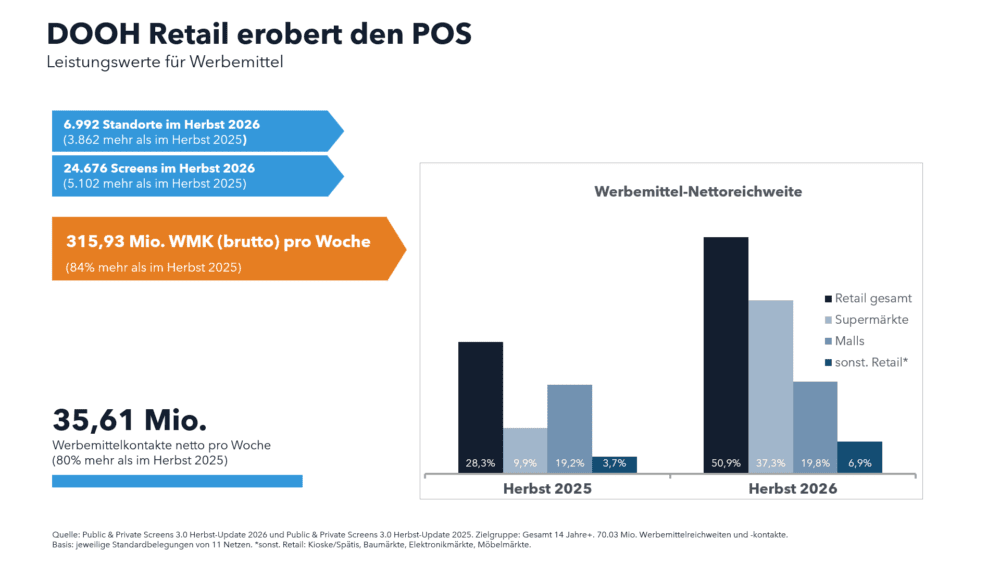
The context in which a message is viewed plays a key role in determining whether people pay attention to it, skim over it, or click away. An offer that requires an explanation takes more time than a short-term price promotion. Some products need to be experienced. A reminder, on the other hand, assumes that interest already exists. Before a campaign is launched, it should therefore be clear what each touchpoint is intended to achieve. Different advertising formats create different conditions for this. In a survey of 2,005 people commissioned by Swiss Post Advertising and conducted by intervista, outdoor advertising on billboards and digital screens, direct mail, and television were among the most frequently noticed forms. When it comes to the statement «I take the time for this,» direct mail performs the best. The survey measures perception, not sales, and does not assign fixed roles to the channels. However, it shows that the medium and the usage situation play a role in determining how intensively people can engage with a message.

Do the metric and measurement period match the task?
A contact intended to trigger immediate action requires different metrics than one designed to prepare a decision. The CMC Print Mailing Study 2026 demonstrates just how critical the time frame is: The Collaborative Marketing Club and Deutsche Post analyzed 858,490 mailings from 35 German online stores. Forty-six percent of the orders attributed to the mailings were not received until the fifth week after mailing. The measurement period belongs in the campaign plan, not in the post-campaign analysis. The study examines a clearly defined use case from a mail-related context and cannot be applied indiscriminately. Nevertheless, the result highlights what short measurement windows overlook: Anyone who had taken stock after four weeks would have missed nearly half of the orders attributed later.
Measurement begins before playback
Effective measurement doesn’t start with reporting—it begins before the campaign launches. A campaign therefore needs not only a goal but also a clear logic of impact. Marketing managers, agencies, and advertising providers must define what contribution individual contacts are expected to make and how this contribution can be realistically assessed later on. Equally important is transparency regarding what can actually be attributed to the campaign and where there is only a plausible correlation. There is no universally applicable budget allocation. However, every budget proposal should separately identify which portion builds demand and which captures existing demand. This distinction alone shows which portion of the investment captures short-term reactions and which creates the conditions for future demand. With the increasing use of AI, this distinction is becoming even more important. Systems consistently optimize for the goals they are given. This makes it all the more important for marketing to carefully decide whether a campaign should build brand awareness, explain an offer, or capture existing demand. Clicks remain an important metric, but they are not the sole proof of advertising effectiveness. With generative search, this metric becomes even less reliable.
Not every impact results in a click. Those who invest too heavily in what gets clicks today are sacrificing tomorrow's interest and demand.
The author
Sabrina Wettstein is the Head of Sales at Swiss Post Advertising. Together with her team, she assists companies with questions regarding targeted, data-driven, and effective marketing communications.