How can media budgets be generated alternatively?
Book advertising—and pay not only with money but also with your own products. Limmatkontor, an agency founded in 2013, makes this possible. In this interview, the managing directors explain how it works.


WW: Limmatkontor refinances media services, i.e. you buy products from companies in return for media services. Why media services in particular?
Christoph Schneider CS: This goes back to our previous work in the media industry. Claudio Lumbiarres was most recently at Tamedia as Head of Sales & Business Development at Newsnet, and I was in my last position as Advertising Market Manager Online at Axel Springer Schweiz. From time to time, advertisers would tell us that their media budget had been cut due to sales problems. One product didn't run, another was only worth half as there was already a successor product on the market... For these budget problems, we looked for a solution - and found it abroad.
Where.
CS: In the USA, the "corporate trading" business model has been around for many years. It means something like: Give me goods and you get media in return. Or vice versa: You buy media from me and pay for it proportionately with goods. In German-speaking countries, a few companies are active in this field, including Rheinkontor in Cologne. With Limmatkontor, we are now bringing this service to Switzerland - together with our partner Rheinkontor, which has been active in corporate trading and the refinancing of media services for over ten years.
What media services are involved?
Claudio Lumbiarres CL: Geographically, we focus primarily on the Swiss media. However, we also have the possibility to organize international campaigns especially in Germany and Austria. In terms of media, we are neutral: online, print, mobile, billboard, radio, TV - we offer all genres.
Can customers determine which services they receive?
CL: We work with clients to find a solution that fits their brand strategy and reaches the target audience with the least wasted coverage, and optimize everything in coordination with the agency.
Especially in the TV and online sector, remaining seats can be bought very cheaply. Does Limmatkontor work with such offers?
CL: We do not sell filler or remnant advertising, but offer media services in all areas.
CS: In doing so, we are bound neither to a publisher nor to a genre.
So Limmatkontor does not deal in media remnants?
CS: No, we are not a remnant marketer. We do not have any pre-packaged or residual space that we offer to the customer. For us, each project is unique. We analyze the goods with the customer and set the price for them - if the goods are already depreciated, the customer can generate an extraordinary return. In any case, we find a fair market price for both parties. Then we go into campaign planning with the marketing manager and with the agency and look for opportunities in the media to place the advertising in the best possible way. Here, we benefit from the network of relationships we have built up over many years. We see ourselves as partners of the client and the agency.
Can you describe a customer project?
CS: We promise our customers confidentiality. They come to us with problems. We do not want to make these public. But I can describe a case to you.
Gladly.
CS: We resolved a merchandise issue with an electronics supplier late last year. Due to downstream products, the value of the electronic goods dropped. We took them off the customer's hands at their selling price and resold them, outside of their distribution network. Our customers always give us restrictions on resale. In this case, we were not allowed to sell the goods in Switzerland. It was finally sold in a non-German speaking country.
Do the goods end up on the free market in each case?
CS: The goods do not enter the B2C market directly. It doesn't show up at the POS or on a bargain portal in our customer's country of distribution. We are always looking for new distribution channels, e.g. closed user groups, such as a large company doing an employee incentive. Thanks to our Cologne partner Rheinkontor, we have access to a unique international trade network.
Where are foods with a short shelf life sold?
CS: These reach institutions such as universities or hospitals, for example, meaning that the end customer ultimately does not consume the goods via the brand.
How does Limmatkontor earn its money?
CL: On the one hand with commissions of the media services, on the other hand with the resale of the goods.
Why should companies hire Limmatkontor? You could also give the goods to a dealer and finance an agency with the proceeds...
CL: If I give the goods to the remnant dealer, I usually get a very low price and have to write off the loss. The marketing measures are then bought from a second supplier with money. With us, customers receive a higher price for their goods in the form of a credit note. As a rule, there is no depreciation for the customer. Future marketing services can be paid for proportionately with the credit bill.
CS: What's more, when companies hand over goods - at a big discount - to a remnant retailer, they often end up on online platforms or on bargain tables. This cannibalizes the future business. We sell the goods where they are not sold. And in return, customers receive a credit that can be used for investments in the future, i.e. advertising budget.
In which cases is it worthwhile to engage Limmatkontor?
CS: It is advantageous if a company offers products or services and at the same time is active in advertising. Usually we have customers who have a commodity problem and want to advertise new products, but lack the money to do so.
Is cooperation with agencies conceivable?
CS: We want to remain as neutral as possible and not be tied to a single agency. In the US, some agencies have integrated our business. We always work with the client's agency.
Limmatkontor is a young company. What about the financial basis? Is there a guarantee for the media services?
CS: If desired, we conclude the contracts together with Rheinkontor. This covers the risk of financing media services. We are organized as a classic limited liability company with three shareholders. Rheinkontor owns shares and so do we as managing directors.
What goals have you set yourself for the next few months?
CS: The first goal is to build up and expand awareness in Switzerland. We want to offer a reasonable alternative to generate media budget. By the end of the year, we are aiming to establish the business model in a similar way to Germany and the USA - although we will not use the term "corporate trading", but will make our service known as "media for inventory". In the long term, we want project business to develop into lasting customer relationships. We will then have customers who think of us when they once again have a merchandise problem or a budget bottleneck.
Interview: Isabel Imper
In a nutshell
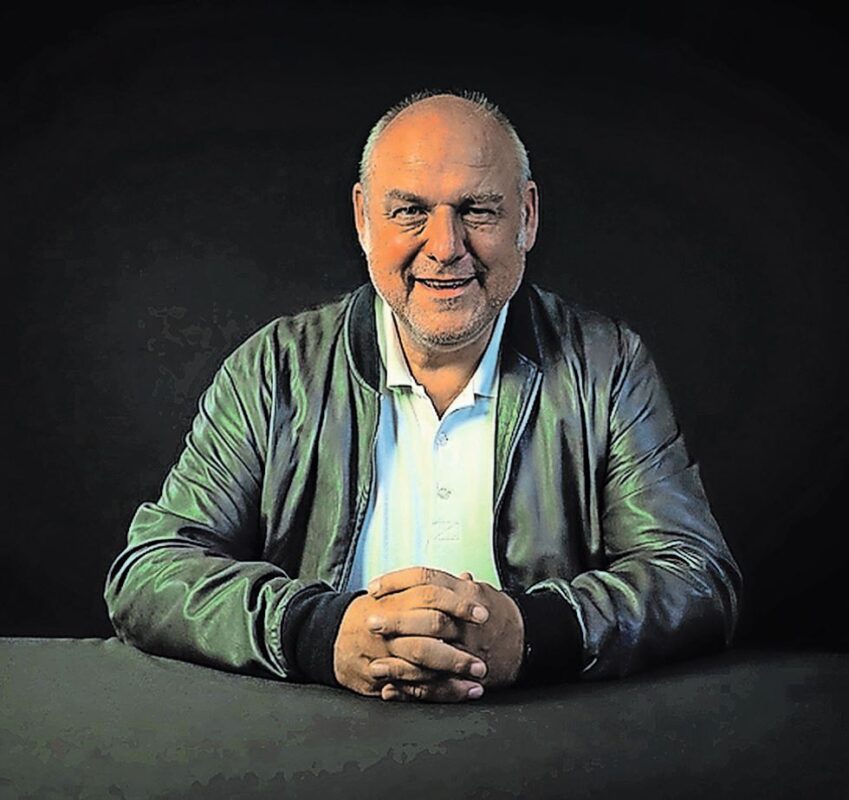
Christoph Schneider has been working in the media since 1996. In his last position at Axel Springer Schweiz, he was responsible for the marketing of digital products as Advertising Market Manager Online. Claudio Lumbiarres has been working in the Swiss media industry for twelve years, most recently at Tamedia in the online network Newsnet in the position of Head of Sales & Business Development. In September 2013, Schneider and Lumbiarres set up their own company, Limmatkontor. In cooperation with their Cologne-based partner Rheinkontor, they are managing directors of the agency, which specializes in marketing and sales.