
Architects of Brand Pop Culture: Here Are the World's Top 10 Creative Leaders
Behind every groundbreaking campaign lies not an algorithm, but the vision of extraordinary people. The Cannes Lions Talent Report celebrates the leading Chief Creative Officers whose perseverance, empathy, and radical thinking are driving the global creative industry forward. We introduce the ten most influential minds, take a look at their award-winning masterpieces, and analyze the insights and lessons the marketing and communications industry can draw from them.


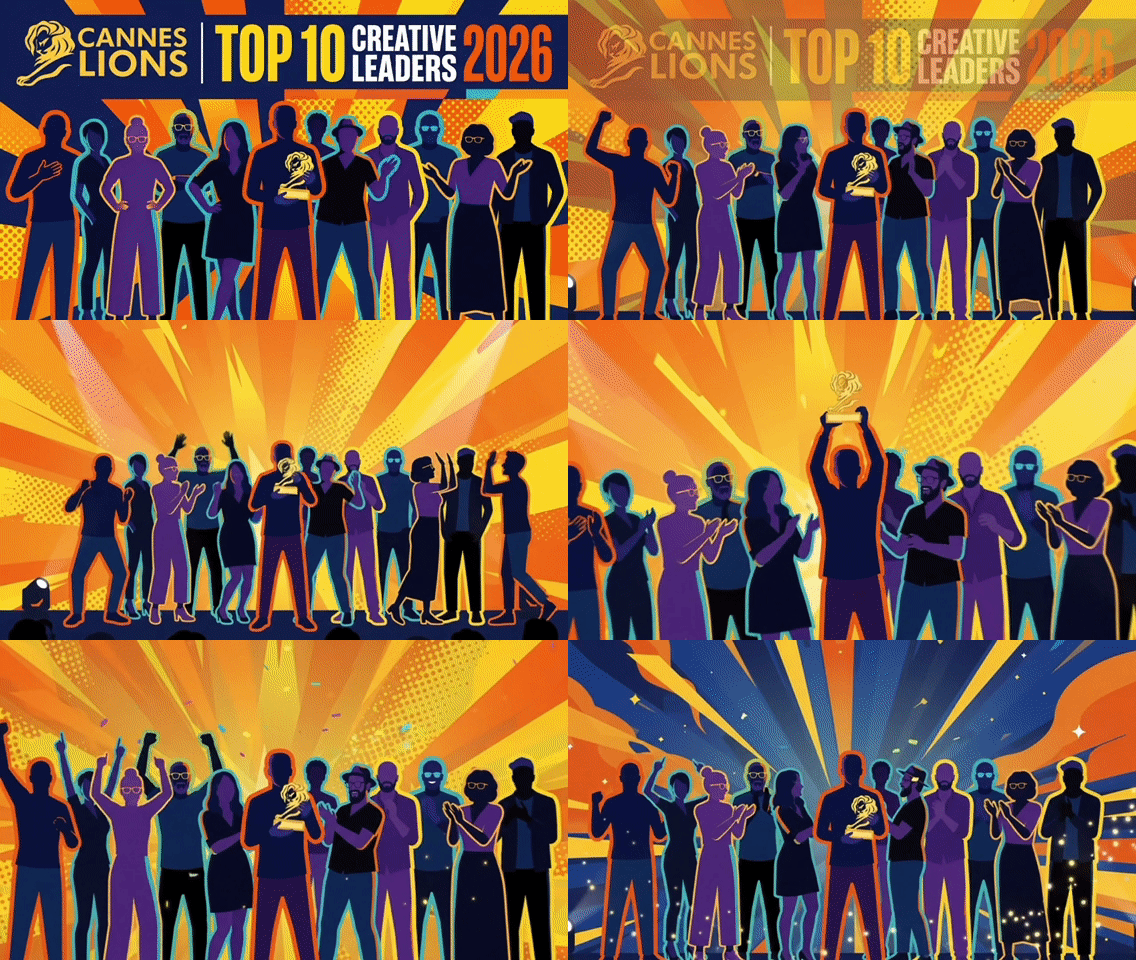
«The most important thing is the people you hire; the people you work with,» emphasized Eddy Cue, Apple's Senior Vice President of Services and Health, on stage at Cannes Lions. Film and television producer Jerry Bruckheimer put it similarly: «If you work with great people, you’re going to achieve great things.» It is precisely these creative trailblazers who are the focus of the current analysis. The following ten creative leaders have proven that top-tier advertising is most effective when it transforms products into cultural phenomena, overcomes social barriers, or infuses technology with humanity.
1. Debbi Vandeven – Global CCO, VML
As global chief creative officer at the very top of the VML network, she—who was named the world’s number one—proved Debbi Vandeven its dominance with one of the most spectacular winners at the 2026 Cannes Lions: The OREO Cows (Case Film on YouTube). Um das traditionelle Eintunken der Kekse in Milch in Mexiko kulturell neu aufzuladen, machte sich das Team eine biologische Kuriosität zunutze und erhob die Rinderrasse «Belted Galloway» – deren Fellzeichnung exakt dem schwarz-weißen Muster eines Oreo-Kekses gleicht – zum lebenden Werbeträger. Die humorvolle Mockumentary über einen mexikanischen Bauern entfachte eine nationale Debatte über die Echtheit der Tiere, woraufhin in Kooperation mit einer der größten Molkereien des Landes eine offizielle, mit Kuhmustern versehene Milchlinie in die Supermärkte gebracht wurde, die der Keksmarke ein Umsatzplus von 12 Prozent bescherte und VML den prestigeträchtigen Titanium Lion einbrachte
According to [source], the most powerful brand message requires Vandeven No artificial narratives, if one can uncover an existing truth directly in nature or in people's everyday lives. Her overarching vision demonstrates that modern creative leadership must have the courage to completely break down the boundaries of traditional advertising formats: By irrevocably linking the product and its inseparable counterpart—milk—through a biological phenomenon, VML freed the brand from the realm of pure advertising and firmly anchored it as an integral part of real-world pop culture
2. Marco Venturelli – CEO & Global CCO, Leo / Publicis Conseil
Marco Venturelli führte Publicis Conseil als CCO im Wertungszeitraum zu historischen zwei aufeinanderfolgenden Auszeichnungen als weltweite «Agency of the Year» in Cannes. Das Fundament dafür legte er mit dem mit dem seltenen Titanium Grand Prix ausgezeichneten Meisterwerk AXA: Three Words (Case Film on YouTube). Der Versicherer ergänzte seine Standard-Wohnungsverträge rückwirkend um genau drei Worte: «und häusliche Gewalt». Betroffene Frauen erhielten damit automatisch das vertragliche Recht auf eine sofortige Notfall-Umsiedlung und psychologische Hilfe.
From Venturelli, the industry learns that cultural relevance and genuine brand loyalty reach their peak when a company uses its own product portfolio to effectively close a systemic gap in everyday life. His strategic vision redefines advertising as an active social infrastructure for change—one that isn’t limited to mere promises but provides tangible assistance to the community.
3. Rafael Pitanguy – Deputy Global CCO, VML
As a leading global figure, Rafael Pitanguy spearheaded, among other projects, the high-profile “Coca-Cola: Thanks for Coke-Creating” campaign, in which unofficial Coca-Cola logos hand-painted by store owners were featured on posters and cans around the world.
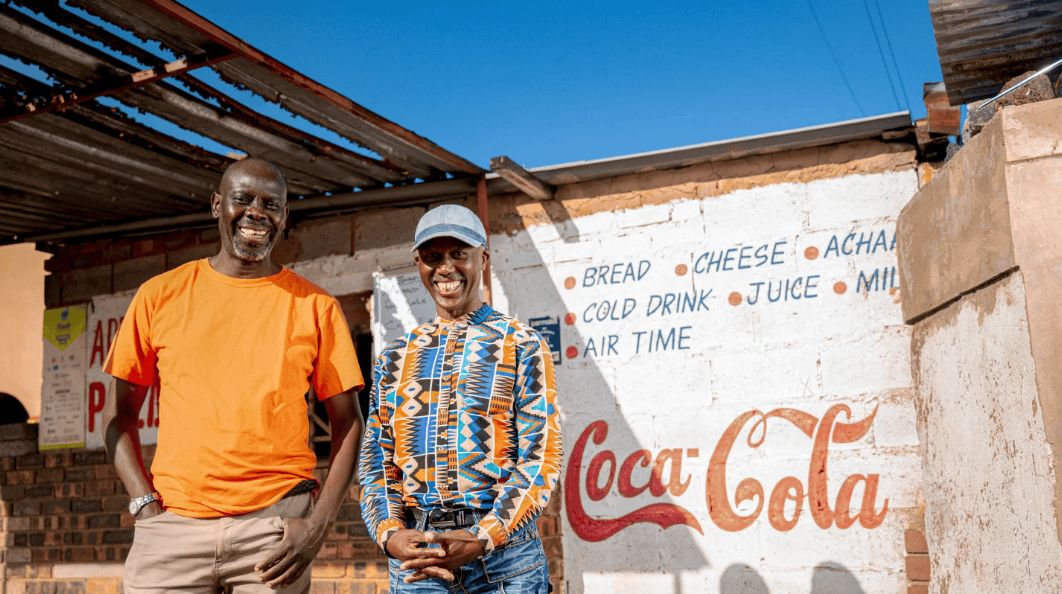
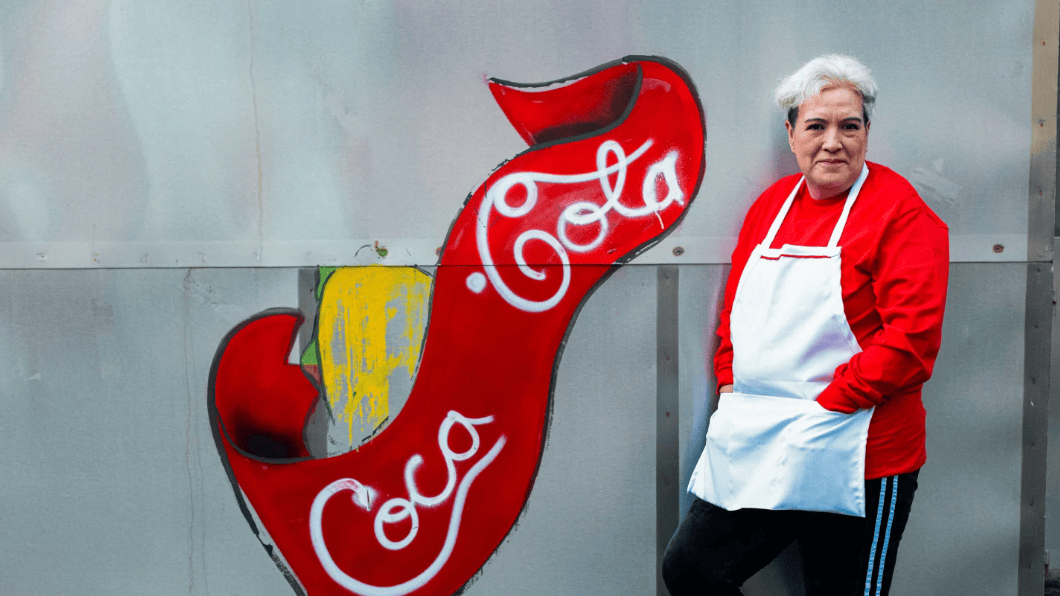
His work demonstrates that rigid brand guidelines must give way when consumers and retailers imbue a brand with their own unique identity. Pitanguy’s vision breaks away from the ivory tower of centralized brand guidelines: The most powerful campaigns emerge when global giants have the courage to take their brand back from consumers and embrace decentralized subcultures.
4. Danilo Boer – Global Creative Partner, FCB
Danilo Boer, who previously set new standards at McCann, most recently demonstrated at FCB with Spotify: Spreadsheets how to elevate B2B marketing to the level of award-winning pop culture. The campaign specifically targeted media planners and CFOs by integrating Spotify’s ad formats directly into functional, musical Excel spreadsheets.
The key lesson: Even supposedly no-nonsense B2B decision-makers are people who can be inspired by surprising, humorous craftsmanship. Boer’s vision is to completely blur the line between B2B and B2C—every briefing, no matter how technical, deserves the same emotional and playful approach as a Super Bowl campaign.
5. The LePub Trio: Bruno Bertelli, Mihnea Gheorghiu, and Cristiana Boccassini
LePub’s leadership trio dominated the global awards scene with Heineken: The Boring Phone, a partnership with the streetwear label Bodega. Together, they launched a transparent flip phone without apps, a browser, or social media, designed to encourage night owls to put away their screens and have real conversations at the bar again.
The lesson for brand builders lies in having the courage to be self-deprecating and in consciously avoiding constant digital sensory overload. The trio’s vision proves that modern brand experiences must leverage data-driven consumer insights to create products that reflect the spirit of youth culture, rather than simply bombarding young people with commercials.
6. Liz Taylor – Global CCO, Ogilvy
Als Nummer eins der globalen Kreativrankings landete Liz Taylor mit Vaseline einen weltweiten Doppelsieg in Cannes. Statt virale Beauty-Hacks auf TikTok zu bekämpfen oder zu ignorieren, liess die Marke absurde und geniale Nutzertipps von Dermatologen im Labor auf Herz und Nieren testen. Was funktionierte, erhielt das offizielle Siegel der Marke; was gesundheitsgefährdend war, wurde öffentlichkeitswirksam entlarvt.
Taylor’s work teaches us the principle of social listening on an equal footing: Brands should not dictate the conversations within their community, but rather curate them with scientific authority. Her vision of „Borderless Creativity“ demonstrates that PR, the creator economy, science, and brand protection must merge seamlessly to secure the right to define one’s own product category.
7. Bas Korsten – Global CCO of Innovation, VML
Bas Korsten is considered one of the most forward-thinking minds at the intersection of technology, biology, and brand management. His latest, highly acclaimed innovation is the project „T-Rex Leather.“. Working with bioengineers, his team used complex AI models to reconstruct a complete protein sequence from incomplete fossilized T. rex collagen fragments. From this, real dinosaur leather was grown in the lab and crafted into a luxury handbag, radically reimagining the future of materials.
The key lesson is this: Artificial intelligence and cutting-edge technologies are most fascinating not when they are used to achieve traditional efficiency gains, but when they are used to make the impossible physically tangible. Korsten’s vision calls for brands’ innovation budgets to extend far beyond traditional screen formats in order to generate a completely new form of storytelling and PR impact through genuine scientific breakthroughs.
8. Jaime Mandelbaum – Regional CCO for EMEA, VML
Jaime Mandelbaum demonstrierte mit der vielbeachteten Arbeit «KitKat: Phone Break» as well as major pan-European platforms, on how to roll out global brand campaigns simultaneously across more than thirty diverse markets without losing creative impact. In this out-of-home campaign, smartphones held by passersby in everyday situations were visually replaced by chocolate bars, since both objects share the same elongated shape.
From Mandelbaum, you learn how to strike a balance between global brand consistency and local nuances: An idea must be so robust in its core mechanics and visually self-explanatory that it can withstand even the most rigorous country-specific adaptations. His vision for EMEA is based on radical cultural empathy, which recognizes that there is no homogeneous target audience in Europe, but only shared, overarching human habits.
9. Diego Medvedocky & Gabriel Schmitt – Global Creative Leads, Grey
The lesson for marketing professionals: The most powerful technological innovations often don't require expensive new hardware, but rather the creative repurposing of existing, widespread infrastructure in the physical world. The vision of Medvedocky and Schmitt transforms traditional marketing into genuine value-driven architecture—the campaign reduced reports of stolen money by 48 percent and firmly established the bank as a key part of the public’s need for security.
10. Javier Campopiano – Global CCO, McCann Worldgroup
Javier Campopiano propelled McCann to the top of the global creative rankings and, with the stroke of genius that proved decisive for the global rankings, "Heinz: Ketchup Insurance“ A prime example of modern relevance to everyday life. Since, statistically, nearly one in two consumers regularly experiences ketchup mishaps, the brand launched a real, legally binding insurance policy covering 57 predefined mishaps. Using an app, affected fans could submit photos of their mishaps and received tangible assistance as compensation—ranging from coverage for dry cleaning to handyman services and relaxation vouchers.
Campopiano teaches us that humor, self-deprecating humor, and celebrating minor product mishaps are often more effective than endlessly repeating stereotypical taste promises. His vision advocates for the „open kitchen“ approach to creativity: brands must learn to laugh at themselves and turn their weaknesses into charming loyalty programs in order to secure an unshakable place in consumers’ minds.
The Methodology Behind the Ranking
The ranking of these Creative Leaders is not based on subjective surveys or industry juries, but rather on a purely data-driven scoring matrix drawn from the world’s most relevant creative competitions. The scoring system tracks the aggregated achievements from the Cannes Lions, the D&AD Pencils, The One Show, and the Clio Awards. Each award—from the coveted Titanium or Grand Prix trophy to Gold and shortlist placements—is assigned a fixed numerical value. Only those individuals who, as CCOs, bore the ultimate strategic and creative responsibility for the award-winning campaigns are taken into account. The result is an infallible barometer of who actually dominated the global communications industry in the respective calendar year.
Conclusion: What Swiss Marketers Can Learn from the World's Best
Die besten Arbeiten von heute verändern die Werbebranche grundlegend. Klassische Kampagnen mit leeren Versprechungen gehen im heutigen Medienchaos schlicht unter. Ob aus Paris oder São Paulo – die herausragenden Projekte haben eines gemeinsam: Sie packen echte Probleme an, erleichtern als smarte Produktideen unseren Alltag oder nehmen die Absurditäten unseres digitalen Lebens mit viel Humor auf die Schippe.
Für Marketingentscheider bedeutet das einen radikalen Kurswechsel. Kreativität ist kein nachträgliches Make-up mehr, das man am Ende über ein Produkt legt. Sie ist das stärkste Werkzeug, um Unternehmenskultur, echten Nutzen und gesellschaftliche Verantwortung sinnvoll miteinander zu verbinden. Wer diesen Mut hat, holt nicht nur Preise in Cannes, sondern gewinnt vor allem langfristige Fans und echten Geschäftserfolg.


