Switzerland - world champion of quiet brand management
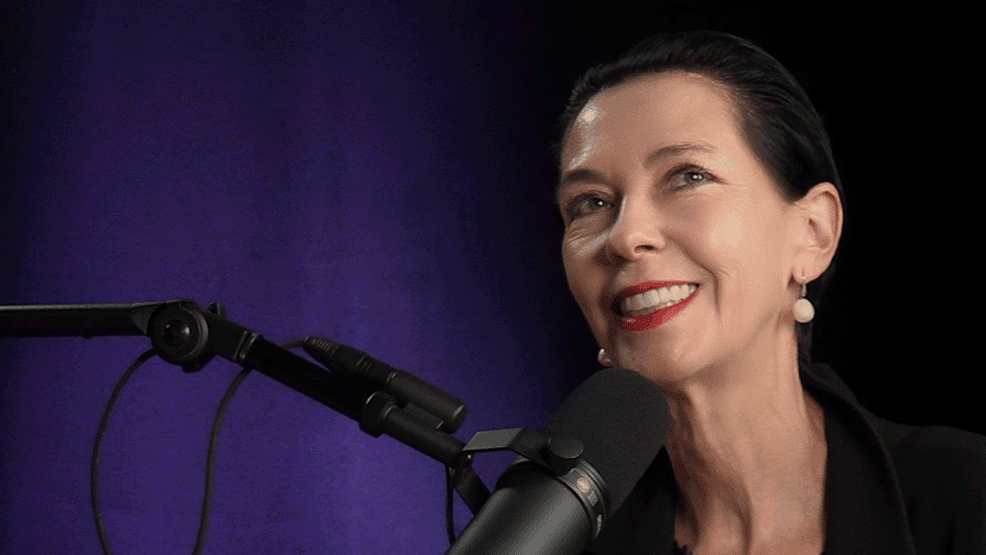
At the IAA lunch on June 27 at the Metropol in Zurich, David Haigh, founder and CEO of Brand Finance, presented the findings of the «Swiss Brand Champions 2025» report. Following the presentation, Christoph G. Meier (Nestlé), Olaf Geuer (Swisscom), and Stefan Gross (Zurich Airport) participated in a panel discussion on brand management practices in Swiss corporations—and the art of balancing trust, consistency, and innovation.


Branding meets financial logic
David Haigh is a bridge builder between two worlds that often talk at cross purposes: marketing and finance. As a former chartered accountant with an artistic background, he founded Brand Finance almost 30 years ago - a consulting firm specializing in brand valuation that is now a global leader. The aim: to make the value of brands visible and justify investments in branding in a measurable way.
Brand Finance's methodology is based on the strength of the brand - determined by consumer research in over 40 countries - and its financial value based on the so-called "royalty relief" approach. A certification process by the Austrian Standards Institute ensures compliance with ISO standards - ironically not by the Swiss standardization body, although the ISO is based in Geneva.

Swiss brands: "Boring is the new sexy"
According to Haigh, Switzerland is a special case: small in population but huge in brand power. With a GDP per capita of 100,000 US dollars, it is well ahead of the USA or Singapore. The recipe for success: consistent quality, perfection in execution, continuous incremental improvement - and a deep understanding of intellectual property.

In BrandFinance's "Global Soft Power Index 2025", Switzerland is among the G7 countries. After the USA, China, UK, Japan, Germany, France and Canada, Switzerland is ranked eighth, ahead of Italy.
In this model, brands are not just an advertising concept, but monetizable assets. Particularly striking: Swiss brands such as Nestlé, Rolex, Swiss or Lindt combine "Swissness" with global appeal - in a reserved, almost modest way. The expression "Boring is the new sexy" sums up this self-image.

The brand evaluation methodology comprises two main points: First, brand strength based on extensive research (surveys in 40 countries and 40 sectors on 5,000 brands that capture brand perception and customer behavior, such as willingness to pay or recommend). Secondly, the financial value of a brand based on a "royalty relief" approach, which calculates the hypothetical royalty rate one would have to pay if one did not own the brand.
Soft power through brand management
In the Global Soft Power Index, which Brand Finance compiles on the basis of 175,000 surveys in 120 countries, Switzerland occupies top positions: Number one for governance, "People & Values", as well as recommendations for products, tourism and investments. This makes Switzerland a role model for nation branding - subtle, efficient and deeply rooted.

Haigh compares this to Roger Federer: "He was never spectacularly superior either - but often simply slightly better. This small difference makes the difference in long-term success. It is a Swiss principle that also applies to brands.
The dilemma of restraint
But Haigh also sees untapped potential. Swiss brands could be more daring on the global stage. While other countries boldly conquer new industries - even at high risk - Swiss companies focus on controlled growth and quality assurance. This sometimes inhibits creativity. Especially in comparison to cultures where "weird" is allowed, such as in the USA or the UK.
Nevertheless, strong brand management succeeds - often thanks to precision, not provocation. The best example: Rolex, originally British, but which has become an icon of excellence in Switzerland.

Although Switzerland is good at technology, it focuses on incremental improvements rather than daring new industries such as cryptocurrencies, which are more common in the US and have a high failure rate. The top industries by brand value in Switzerland are food (heavily influenced by Nestlé), apparel, insurance and banking.
Favorite brand? Lindt. Of course.
When asked about his favorite brand, David Haigh didn't have to think twice: Lindt. Swiss chocolate is simply "fantastic" - and not just as a gourmet product, but also in terms of its brand management.

Well-known Swiss brands include Nestlé and Rolex. Glencore was originally non-Swiss (presumably South African) but is now classified as a Swiss brand as the company is headquartered there. The financial brand value is based on the so-called "royalty relief" approach. This simulates the license fee a company would have to pay if it did not own the brand but wanted to use it. The resulting cash value is considered an objectively comprehensible figure, especially for financial managers or tax experts.


Brand strength is determined on the basis of a comprehensive global survey. To this end, Brand Finance surveys consumers annually on 5,000 brands in 40 countries and 40 sectors. Among other things, brand awareness, perceived attributes, willingness to pay, purchase intention and recommendation are surveyed. The responses are used to create an index that evaluates a brand's performance along relevant key attributes.

"We are not boring - we are focused"
In the panel, Christoph G. Meier, Global Head of Corporate Media Relations at Nestlé, focused on a differentiated view. For him, rankings are reference points, but not a goal in themselves: "The real benchmark is success on the shelf - in other words, whether the products are bought." Nevertheless, he emphasized that in certain areas such as ESG rankings are indeed strategically relevant - for banks, for example, which use them as a basis for investment decisions. Nestlé therefore works actively with organizations such as the Carbon Disclosure Project (CDP), MSCI ESG Ratings and Sustainalytics. "If we are not top-ranked there, it means: no investment case."
Meier also described the cultural influence of brands - using Indonesia as an example: Nestlé is perceived there as a synonym for safety and health. "A product from us means: no stomach ache. That's what counts." It is an impressive example of how brands can also create trust beyond Western narratives.
"Reputation is strategic - also in the M&A process"
Swisscom's Head of Brand Olaf Geuer confirmed that rankings such as those from Brand Finance are indeed taken into account internally. Reputation is a central management tool at Swisscom that extends into business decisions - including potential acquisitions. A reputational risk can certainly become a criterion for exclusion. The most recent example of an actively managed reputation adjustment is the new brand image that Swisscom launched in May 2025. The aim is to shift the image from "distant" to "approachable" - through a revised design, new positioning and a new claim, among other things.
Brand as an experience director: Zurich Airport
Stefan Gross, Chief Commercial Officer of Zurich Airport, compared his role to that of a circus director. The airport provides the stage - the quality of the experience is created through interaction with strong partners. "The Zurich Airport brand works because it is part of a very strong product: Switzerland." Gross also attributes the fact that the airport is now in demand internationally as an operator, for example in India or Brazil, to its reputation: "We were chosen because people trust us to be competent and reliable."
Conclusion
Switzerland is the world champion in quiet brand management. But it is precisely this strength - modesty, systematics and precision - that could use a creative addition in the age of global attention. David Haigh's analysis and the subsequent panel provided a coherent picture: Swiss brands are strong - and could become even more visible with a little more courage to take corners and edges.