Agency at the airport relies on lost tones for Neuroth Hörcenter

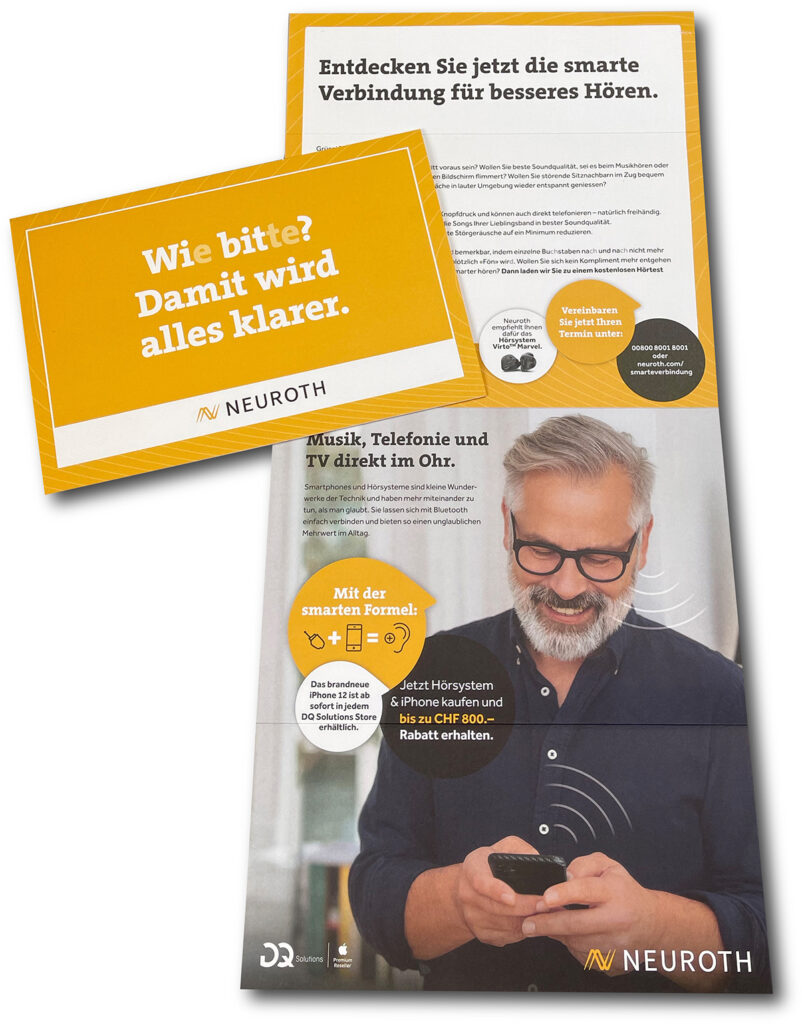
To help potential customers understand the benefits of hearing aids in everyday life, the agency at the airport developed a direct mail campaign for Neuroth.

Founded in Austria in 1907, the hearing care company Neuroth now operates more than 250 specialist institutes and hearing centers. Thanks to technological progress, today's hearing aids have little in common with the devices of yesteryear. In the meantime, these little helpers can do much more than just improve hearing. Connected to a smartphone via Bluetooth, they offer incredible added value in everyday life, because you can also use them to make phone calls or listen to music directly.

To make this added value clear to potential customers and at the same time lower the inhibition threshold to visit a hearing center, the agency at the airport developed a direct mailing. It was sent to 45,000 recipients in Switzerland, who were selected on the basis of their age and previous profession.

Responsible at Neuroth Hörcenter: Lukas Häusermann (Head of Marketing CH/FL), Sharlyn Keiser (Head of Marketing Management), Fabienne Rudigier (Marketing Manager). Responsible at agency at the airport: René Eugster (overall responsibility), Dominique Rutishauser (art direction), Ketil Eggum (graphics), Miriam Egli (consulting/text).

RMH Regionalmedien AG to be merged into NZZ Regionalmedien AG

The structure of the NZZ Group is to be streamlined. RMH Regionalmedien, which brings together media companies in St. Gallen and Lucerne, is now to be fully absorbed by NZZ-Regionalmedien.

The board of directors of RMH Regionalmedien AG will propose this step to the annual general meeting on May 25, according to a media release on Tuesday. RMH Regionalmedien is to be merged into NZZ Regionalmedien AG by means of an absorption merger, excluding minority shareholders.

RMH Regionalmedien had emerged from the merger of the media houses LZ Medien Holding AG and Tagblatt Medien Holding AG, which belong to the NZZ Group. 97 percent of the shares are held by NZZ.

The minority shareholders had originally been involved in one of the media houses in eastern and central Switzerland, the statement said. Among other things, the situation changed with the creation of the joint venture CH Media, which united the NZZ and AZ regional media under one roof, it said. "The original direct link to the regional media has largely dissolved as a result of this structural change."

The remaining RMH minority shareholders will receive a cash compensation of CHF 245 per share, according to the announcement. The merger of RMH into NZZ Regionalmedien will give the company greater freedom of action, the statement continues. Felix Graf, Chairman of the Board of Directors of RMH Regionalmedien AG, was quoted as saying that maintaining RMH as an independent company with minority shareholders would involve disproportionate expense. (SDA)

Coca-Cola HBC Switzerland and Dreifive launch employer branding campaign

Coca-Cola HBC Switzerland and Dreifive jointly launch the employer branding campaign #WomenOfCCHBC using a new story ad format on LinkedIn.

As part of "Equal Pay Day 2021", Coca-Cola HBC Switzerland is launching a new and "snackable" video series that portrays female employees who work in predominantly male-dominated professions.

The video series takes users behind the scenes at Coca-Cola HBC Switzerland and lets female employees talk about their everyday work and their experiences with gender roles. The video series #WomenofCCHBC was produced for LinkedIn. The aim is to draw attention to gender equality issues through authentic storytelling. The campaign aims to generate reach through optimized and innovative ads and put female employees in the spotlight.

LinkedIn Story Ad Format in Beta Test

As part of this video series, Coca-Cola HBC Switzerland and Dreifive used the new LinkedIn Story Ads, which are currently only available in beta for a limited group of advertisers in the DACH region.


Responsible at Coca-Cola HBC: Carina Geiger (Employer Branding Specialist at Coca-Cola HBC Switzerland), Danielle von Rechenberg (External Communications Manager at Coca-Cola HBC Switzerland), Gilgia Bugno (Apprentice at Coca-Cola HBC Switzerland). Responsible at Dreifive: Marleen Albert (Head of Social Media Zurich), Dylan Hess (Social Media Consultant), Sandro Kohler (Teamlead Art Director Motion & Picture), Bibiana Schwarz (Junior Digital Designer).

Press Freedom Ranking: Switzerland Remains in the Top Group

Despite dropping two more places, Switzerland remains among the top countries in the 2021 Press Freedom Index. New Zealand and Portugal have overtaken Switzerland because their scores have improved slightly. RSF Switzerland remains concerned, however.

In the ranking published on Tuesday by Reporters Without Borders (RSF), Switzerland's result remained stable. As in the previous year, it lost two places and is now ranked 10th.

It thus remains in the "white" zone of the world rankings. This includes countries in which freedom of information is best protected in an international comparison, as stated in the media documents.

However, according to RSF Switzerland, this good result could be called into question in the future. The ranking does not reflect the recent sharp rise in verbal and sometimes physical attacks on media professionals and the media in Switzerland.

"Increasing hostility"

The Swiss section expressed "extreme concern about the increasing hostility" toward the media. This had become particularly accentuated during the Corona pandemic. RSF Switzerland expects everyone to respect the work of journalists, RSF Switzerland Secretary General Denis Masmejan was quoted as saying in the press release.

Journalism is the "most important vaccine against disinformation," writes RSF. However, in 73 percent of the 180 countries assessed, it is blocked in whole or in part. In these countries, the environment for press freedom is very poor, poor or at least problematic.

Never since the start of the continuous statistics have there been so few countries in which RSF has rated the situation of press freedom as "good. Their number fell from 13 to 12; bringing up the rear, with minor shifts, remain China, the ex-Soviet republic of Turkmenistan in Central Asia, North Korea and the African country of Eritrea.

Pandemic consolidates repression

According to RSF, the pandemic strengthened and consolidated repressive tendencies worldwide: "In countries as diverse as China, Venezuela, Serbia and Kosovo, media professionals were arrested for their Corona reporting," concludes the global survey. In China, more than 100 media professionals are in prison, more than in any other country in the world.

The Nordic countries Norway, Finland, Sweden and Denmark continue to lead the press freedom rankings. They are followed by Costa Rica, the Netherlands, Jamaica, New Zealand, Portugal and Switzerland. Liechtenstein ranks 23rd.

Germany was knocked out of the top group, dropping two ranks and now in 13th place. "The main reason for this rating is that violence against media professionals in Germany reached an unprecedented dimension in 2020," the organization said, explaining the downgrade. The majority of physical and verbal attacks occurred at or on the fringes of demonstrations against Corona measures, according to the reporters' organization. (SDA)

Envy in advertising is counterproductive

Advertisers who stir up envy in their ads risk driving their customers away to competing brands. This is the conclusion reached by the Cass Business School at the University of London in a recent study conducted in collaboration with the São Paulo School of Business Administration. According to the study, using envy as an advertising strategy can trigger negative brand associations among consumers, thereby driving them away, and should therefore be used with caution.

Fair competition plays a key role in positive external perceptions. (Symbol image: Depositphotos)

According to the Cass Business School, international brand giants such as BMW or Calvin Klein use the envy factor to a large extent in calculated advertising campaigns to make their products appear more desirable and to increase the need for them. Envy serves as a tactic to encourage customers to achieve personal goals through the purchase of products, be it more beauty, health or status. The study "(Un)deservingness distinctions impact envy subtypes implications" was published in the Journal of Business Research published.

The team analyzed the issue with nearly 2,000 study participants in Brazil and conducted studies in three settings: a job selection process, a doctoral competition, and an academic exchange program. They examined the impact of personal merit and controllability on malicious envy. The effect of disliking a competitor on the extent of perceived envy was also examined. This was applied to consumer behavior.

Malicious envy harms

Malicious envy occurs among participants when, in their view, a competitor got something he didn't deserve, according to the results. For example, if he was seen as lazy and still got a place at university. Malicious envy can consequently also cause negative feelings in consumers toward a brand and damage the relationship between company and consumer.

"The key to using envy successfully in marketing campaigns is to understand whether the campaign triggers harmless or malicious envy," explains co-author Kirla Ferreira of Cass Business School. She advises marketers to focus on sympathetic identification figures in such ads rather than controversial celebrities. In addition, the impression should be conveyed that someone who receives something has also earned it in a fair competition. (pte)

Job matching platform "We Talents" to support creative industries

Matching talents for matching jobs: The creators of Ron Orp are launching a new type of service for the creative industries. On the matchmaking marketplace "We Talents," freelancers are to find their clients and vice versa with the help of artificial intelligence. The service is intended to "overcome a black spot in the Swiss creative economy.


The initiators of We Talents: Christian Klinner, Romano Strebel and Beat Odinga (from left to right).

We Talents is already the third initiative by Christian Klinner and Romano Strebel. Through their activities with the city portal Ron Orp and the crowdfunding platform Crowdify.net, the duo can draw on a base of half a million users. The creators are therefore convinced that they will reach a critical mass right from the start, according to a statement. Also on board is construction and industrial entrepreneur Beat Odinga of Odinga Ventures.

Currently, there is no central, clear place for the "highly fragmented group of creatively active Swiss people to find commissions," the initiators write in the press release. This is despite the fact that the creative economy accounts for around 7 percent of GDP (as of 2018). The engagement of freelancers often takes place via personal networks and already known people. But do clients really find the most suitable people this way?

This is where "We Talents" comes in. "We offer a central and unbureaucratic solution for finding, engaging and paying for talent. Following a completed project, a mutual evaluation takes place, which helps future clients make their decision," explains Christian Klinner. His partner Romano Strebel adds: "We Talents thus responds to the New Work trend of modern society, which is globally networked, digital and project-based."

Skills matching and subscription model

The platform is based on intelligent technology: Skills matching directly finds suitable jobs for talents who present their skills on We Talents. Creating a profile on We Talents is free of charge for users. Only when they discover suitable offers do they select the appropriate variant from various subscription versions starting at just under 9 francs per month. We Talents charges a transaction fee of 3 to 5 percent on completed transactions.

Two new Group Executive Board members at Ringier

Effective May 1, Ringier’s five-member Group Executive Board will be expanded to include Chief Technology & Data Officer Kilian Kämpfen and Group General Counsel and Chief Legal Officer Manuel Liatowitsch, who will also take over as head of Ringier’s Corporate Center.

Kilian Kämpfen (left) and Manuel Liatowitsch join the Group Executive Board of Ringier.

The two new appointments are intended to underscore the relevance of technology and data as well as the importance of the Ringier Group Corporate Center.

Kilian Kämpfen, 54, has been Chief Technology & Data Officer (CTDO) and Head International Technology & Data Unit at Ringier since March 2019. Previously, he served as Chief Business Development Officer (CBDO) at Ringier Digital and as Head of the International Marketplaces Unit since 2013. Since 2006, Kämpfen has held various management positions at the Scout24 Switzerland Group. He will join the Group Executive Board of Ringier as of May 1, 2021.

Manuel Liatowitsch, 49, joined the Ringier Group in October 2020 as Group General Counsel and Chief Legal Officer. As of May 1, Liatowitsch will become a member of the Group Executive Board and, in addition to his existing functions, will take over the leadership of of the Corporate Center, which comprises the Group units Legal, Compliance, HR, Corporate Communications and Data Protection, as well as Risk Management and Crisis Management.

The Group Executive Board of Ringier will in future be composed of:

  • Marc Walder (CEO)
  • Annabella Bassler (CFO)
  • Ladina Heimgartner (Head Global Media and CEO Blick Group)
  • Alexander Theobald (COO Ringier Switzerland and CEO Ringier Axel Springer Switzerland)
  • Axel Konjack (Head Global Marketplaces)
  • Kilian Kämpfen (Chief Tech and Data Officer)

In Corona Year 2020, more than one-third work from home

More than a third of employees worked at least part of the time from home in 2020 as a result of the COVID-19 pandemic. The highest figures were recorded in the second and fourth quarters. Which employees worked from home depended heavily on their industry. The information and communication sector had the highest proportion of employees working from home.

Over the year as a whole, 76.3% of employees were working from home, as reported by the Federal Statistical Office (FSO) on Monday. Its survey is based on data from the 2019 and 2020 Swiss Labor Force Surveys (Sake).

In second place for working from home in 2020 was the financial and insurance sector, with 61.4% working from home. More than 50 percent of employees in the education and teaching, freelance and scientific and technical services sectors also spent at least part of their working time working from home.

In total, 34.1% of employees worked from home in full or in part last year. In 2019, this figure was only 24.6 percent.

High work autonomy

Overall, 73.9% of Swiss employees recorded their working hours in 2019. The European average was only 58.1%. In addition, automatic recording of working hours was twice as widespread in the EU (32.8%) as in Switzerland (13.4%). On the other hand, three times more employees in Switzerland recorded their own hours manually than in the EU (53.1% compared to 15.8%).

In 2019, fewer employees in Switzerland (49.2%) had to adhere to fixed working hours than in the EU (60.1%). 36.8% of employees had restricted working hours and the remaining 14% were free to choose their own working hours.

60.4 percent of employees in Switzerland had a high degree of autonomy at work. On the other hand, 13.5 percent had little or no influence on the content and sequence of their tasks. Across Europe as a whole, 50.6 percent of employees had a high degree of autonomy at work. The highest values were recorded in Iceland (76.4 percent), Portugal (75.5 percent) and Luxembourg (73.3 percent). In Cyprus and Slovakia, the figures were only 19.8 and 23.2 percent respectively.

One in twenty on call

In 2020, 5.5 percent of employees in Switzerland worked on call. This has hardly changed since 2010. 45.8% of them were guaranteed a minimum number of working hours by their employer. On-call work is particularly widespread among people of retirement age (25 percent) and 15 to 24-year-olds (9.8 percent).

In 2020, 18.2% of the Swiss workforce regularly worked on Saturdays and 9.3% worked on Sundays. This is a decrease compared to 2010. Women worked more often at weekends than men. (SDA)

Swisscom launches new "Ready" marketing campaign

Swisscom's current marketing campaign celebrates social diversity in Switzerland and shows how the telecom provider is ready for all needs.

Moving to the country? Entertainment from the sofa? Not interested in technology? Taking responsibility for the next generation or just partying? The needs and life situations of Swisscom customers are as varied as they are different. The telecoms provider wants to enable everyone in the country to take advantage of the many opportunities offered by the networked world.

Or, to put it another way: Swisscom is ready so that its customers are, too. The new campaign is therefore intended to confidently demonstrate that Swisscom plays a central role in the daily lives of its customers - and assumes this responsibility. "The campaign is also intended to show that we are moving with the times and are continuously developing. We have therefore deliberately taken a somewhat fresher, more dynamic and also a little bolder approach in the campaign," explains Christoph Timm, Head of Marketing Communications at Swisscom.

A broad communications mix is used; the emotional anchor point is the 122-second long spot.

The campaign was largely created internally. For the image and film production, a co-creation with Stories was created, ranging from conception to implementation.


Idea and conception: Swisscom, Stories. Film: Flurin and Silvan Giger (Director), Pascal Walder (DoP), Nicole Spring, Florian Nussbaumer (Producer). Digital: 316tn, Jung von Matt, TLGG. Text: Simon Kümin. Visual language: Swisscom, Johannes Diboky, Pascal Walder. Media:  Capture Media, Hoy, Mediaschneider, TLGG. Production: Branch & Fischer, Setaprint.

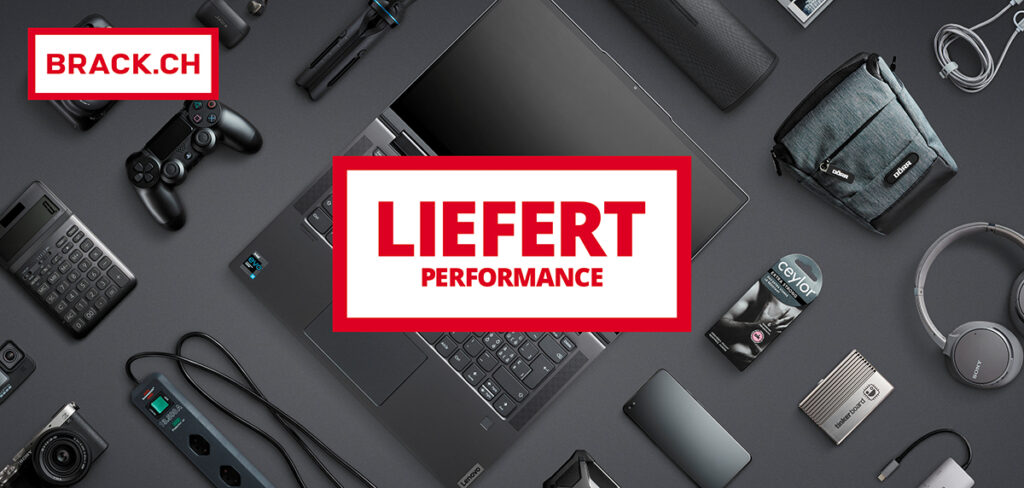
Zimmermann Communications and Compresso stage the depth of Brack.ch's product range

The Brack.ch campaign, launched in the fall of 2020, is entering its second phase. This time, Zimmermann Communications and Compresso are highlighting the online retailer’s extensive product range through six ad concepts.

While the launch campaign under the motto "Delivers more than you think" showed the breadth of Brack.ch's assortment, the current appearance is about showing the depth of the respective assortments and addressing the target groups in a more focused way with a concrete "delivery promise".

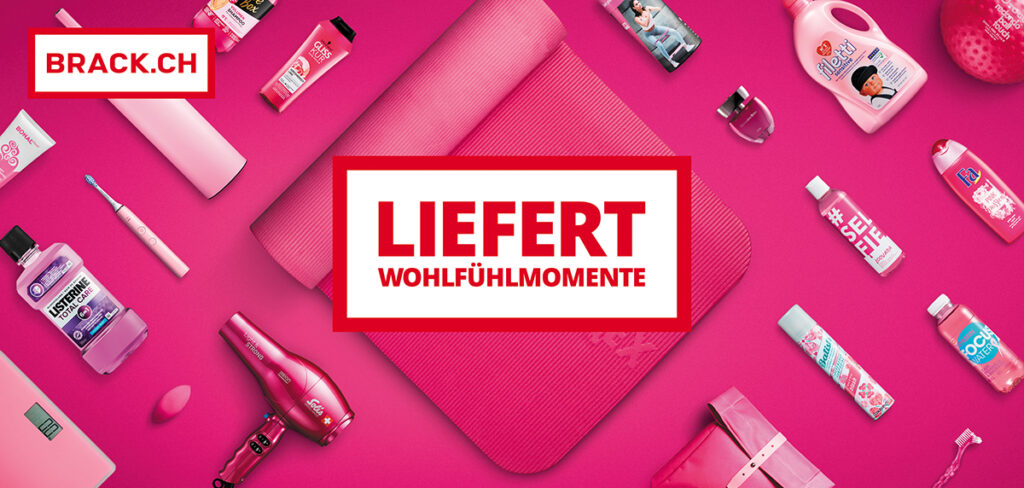
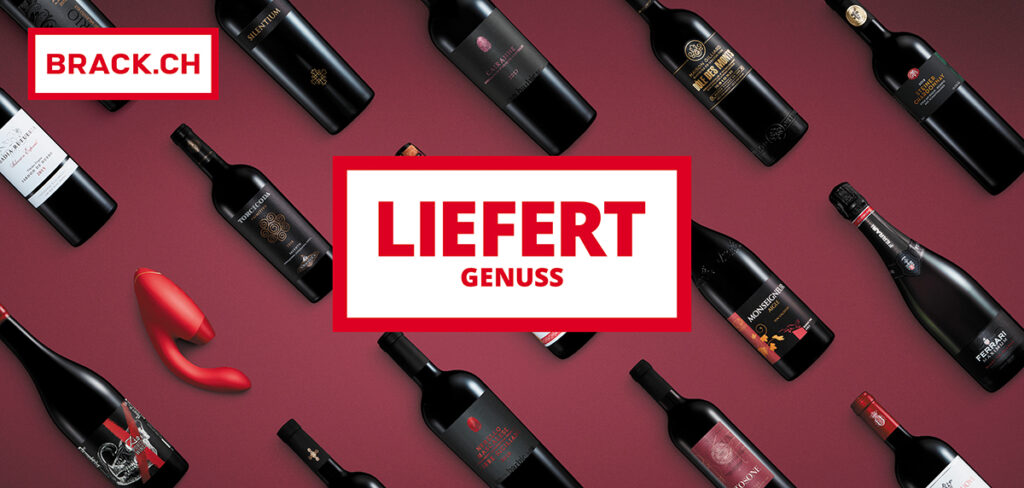
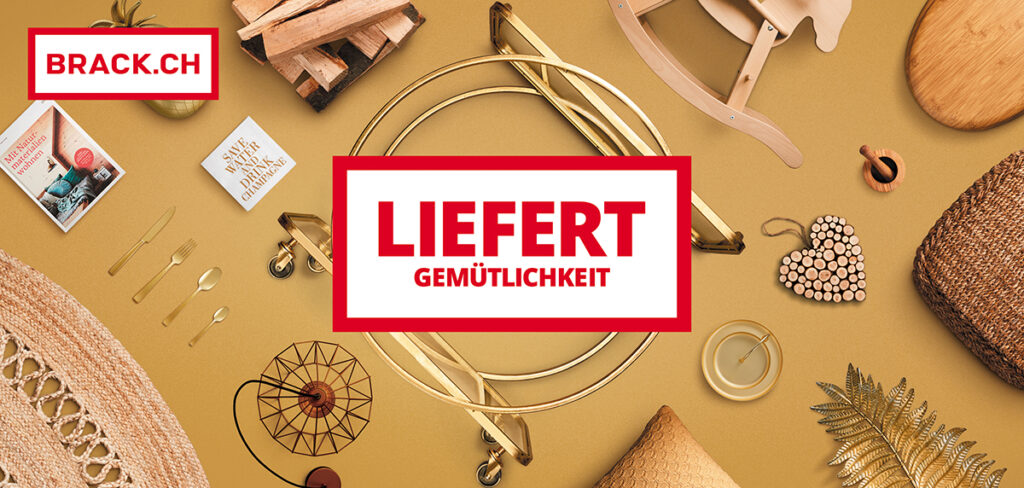
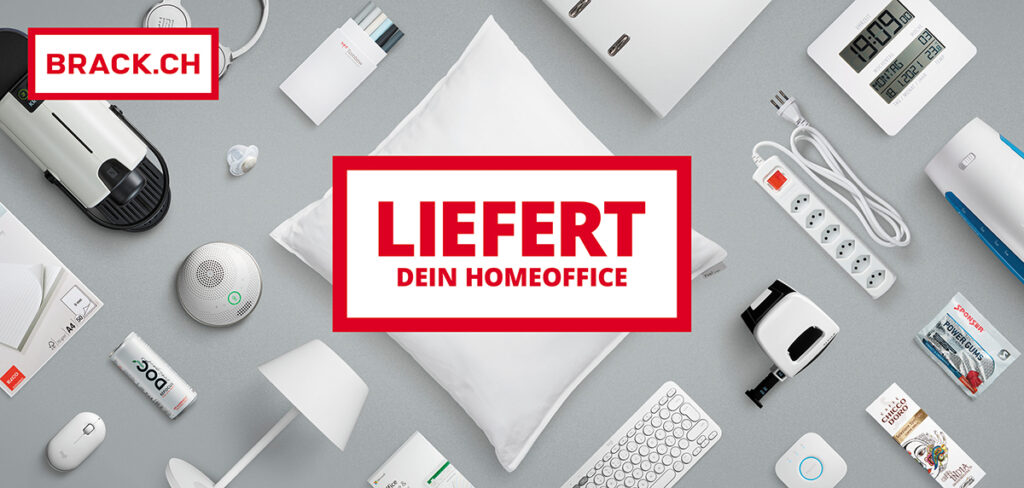
Zimmermann Communications and Compresso have created six new subjects for the campaign. The subjects with mottos such as "Delivers Pleasure" or "Delivers Performance" deliberately allow a wide range of interpretations and invite customers to discover new products in the online retailer's range. The "Feel-good moments," "Adventure," and "Coziness" motifs also offer the right product for every inclination and need.

The campaign is currently running on posters in German- and French-speaking Switzerland and is also being used in digital environments and implementations.


Responsible at Brack.ch: Simon Thoma (Head of Marketing), Sandrine Knechtli (Head of Marketing Communications), Franziska Heimberg (Head of Marketing Communications), Michael Otto (Marketing Manager Brand). Responsible at Compresso:  Fridolin Stauffacher (overall responsibility), Alexandra Nadtochiy (strategy), Michelle Müller (project management), Sean Dünki (art direction), Yannick Vogel (graphics). Responsible at Zimmermann Communications: Rolf Zimmermann (Strategy/Art Buying), Christoff Strukamp (Creative Direction), Ramon Alder (Art Direction), Florian Bieniek (Project Management). Photo production: Detail AG, photographer: Christian Egger.

Valencia designs new loyalty program for Würth Xtra

Würth, the B2B supplier for the trades, is launching its «Würth Xtra» rewards program in Switzerland in the spring of 2021. Valencia Kommunikation provided strategic and creative support to Würth during the development process.

In order to offer its approximately 100,000 Swiss customers from a wide range of industries even more, Würth is launching an extensive bonus program. During the development of the program, Valencia Kommunikation initially supported the client in the strategic area: together, the core values of the loyalty program were worked out in workshops. First, target groups were defined and narrowed down on the basis of the "Limbic" types in order to derive the necessary characteristics for the loyalty program, such as reward structure, points collection mechanism, tonality, etc.

In a further step, the program's communications presence was developed in close collaboration with the client, including the naming, logo and other design elements that were also used for the screen design of the online rewards store. As an emotional ambassador, Valencia and its in-house illustrator created the character "Max", an upbeat craftsman who is intended to convey the values of the program in a sympathetic way.

For the launch of the program, Valencia designed, among other things, an animated kick-off video for all Würth employees, flyers and POS posters for the launch, and supplied the concept for an explanatory video designed to get to the heart of the bonus program's functions. The design concept supplied by Valencia enabled Würth to create further advertising materials itself.

The result is an extensive bonus program in the B2B sector. Customers collect points with every purchase, which they can redeem for non-cash rewards and experiences. As a special incentive, even multiple points can be collected depending on the sales channel (craftsmen's store, sales force, Würth app, etc.). Würth Xtra will be launched in spring 2021 and is open to Würth customers free of charge.


Responsible at Würth: Matthias Schlatter (Head of Marketing); Julia Vogt (Head of Communication & Branding); Daniel Stäudle (Head of E-Business). Responsible at Valencia Kommunikation: Michael Gerber (CEO), Tommy Schilling (CCO), Claudia Paganini (Senior Account Director), Sebastian Refardt (Senior Copywriter/Concept Designer), Béa Otto (Art Director), Michael Wenk (Illustrator), Daniel Nussbaumer (Screendesigner), Ana Estepa Garcia (Interactive Media Designer), Sylvia Schneider (Polygrafin).

Hansjörg Wyss drops out of bidding war for Tribune Publishing

According to a press report, billionaire Hansjörg Wyss has withdrawn from the bidding consortium seeking to acquire the Chicago-based newspaper group Tribune Publishing. The Chicago Tribune reported this over the weekend, citing well-informed sources.

Wyss' partner, the American hotelier Stewart W. Bainum Jr., remains on the ball, reported the Chicago Tribunewhich, as the flagship of the newspaper group, is directly affected by the events. Wyss informed Bainum of his withdrawal last Friday.

The reason: the 85-year-old from Bern has realized that his long-term plan to Chicago Tribune into a national publicationwould be "extremely difficult" to achieve without a major investment. No statement was available from the parties involved.

Shortly after Easter, Wyss and Bainum submitted a non-binding offer of 680 million dollars to buy the group. This was intended to prevent the newspapers from falling into the hands of the New York hedge fund Alden Global Capital. The latter already holds almost 32 percent of the shares and is making its own offer for the remaining shares.

On an earlier occasion, Wyss explained his reasons for getting involved as follows: "I don't want to see another newspaper go down the drain that has the chance to convey more truth to the American people."

Wyss is one of the richest Swiss - and one of the most generous. He has donated several hundred million dollars for environmental protection in the USA. He has also donated tens of millions to the ETH and the universities of Zurich and Geneva, as well as the Bern Art Museum. Wyss is also a member of "The Giving Pledge". He has pledged to donate at least half of his fortune to charity. (SDA)

get_footer();