What does "ideal-typical" actually mean?

In his column «What Does It Actually Mean…?», Benno Maggi explains terms from the fields of marketing and communications. This time, he shares his thoughts on the term «idealtypisch.».

Typical. No sooner do we finally manage to elegantly circumnavigate all the faux pas linguistically, so that political correctness and cancel culture are kept out of our work, than it is no longer enough that something may only be described as "typical" in good Swiss. First it was replaced by the German "passt doch", which, however, seemed too strict over time. But the ponderous "typical" has nevertheless had its day. Today, anyone who thinks something of himself talks about ideal-typical. As a constructed term with the prefix "ideal-" it is suddenly on everyone's lips. But what does that mean exactly?

Sociology as the basics of advertising

The ideal type only organizes and captures sections of reality by highlighting and occasionally exaggerating the essentials. In this respect, the term is well justified for inflationary use in the industry. After all, isn't that what advertising is all about? Oscar Milton Gossett, David Ogilvy, Leo Burnett, Paul Gredinger and many other legends of advertising had the ability to see the ideal typical of a product and to implement it or have it implemented in a creative idea.

How they did it can be seen in the endless lists of their quotes and the "all-time best" galleries. At the top is the first female advertiser, Helen Lansdowne, with her 1911 tagline "A skin you love to touch" for a soap. It doesn't get much better than that.

It was the German sociologist and national economist Max Weber who, at the beginning of the 20th century, influenced the sociology of economics, domination, law and religion with his theories and conceptualizations and described the concept of the ideal type, which he introduced, as a "one-sided enhancement of one or a few points of view".

Does this sound familiar? Certainly, especially when the attention span of recipients is getting shorter and the list of channels to play on is getting longer. Or as David Ogilvy once said, "The headlines which work best are those which promise the reader a benefit." The only question is what that benefit is. Finding that out is, ideally, the task of marketing.


* Benno Maggi is co-founder and CEO of Partner & Partner. He has been eavesdropping on the industry for over 30 years, discovering words and terms for us that can either be used for small talk, pomposity, excitement, playing Scrabble, or just because.

Women and culture: Le Matin Dimanche is expanded and modernized

The Sunday newspaper Le Matin Dimanche in the French-speaking part of Switzerland will be published with a new and expanded offering from Sunday. This is intended to take even greater account of the interests of readers.

Frauen und Kultur: Le Matin Dimanche wird erweitert und modernisiert

On Sunday Le Matin Dimanche presents the revised edition. As one of the innovations, the previous supplement "Cultura" will become a fourth bundle of its own, in which the section "Bien vivre" will be integrated. The new Bund provides insights into cultural life in French-speaking Switzerland and also deals with national and international cultural topics.

The women's magazine Femina reinforces its committed, feminist and inclusive positioning. In addition, the weekly magazine, which is published every Sunday as a supplement to Le Matin Dimanche is supplemented by a thematic monthly issue.

Other topics further developed in terms of content

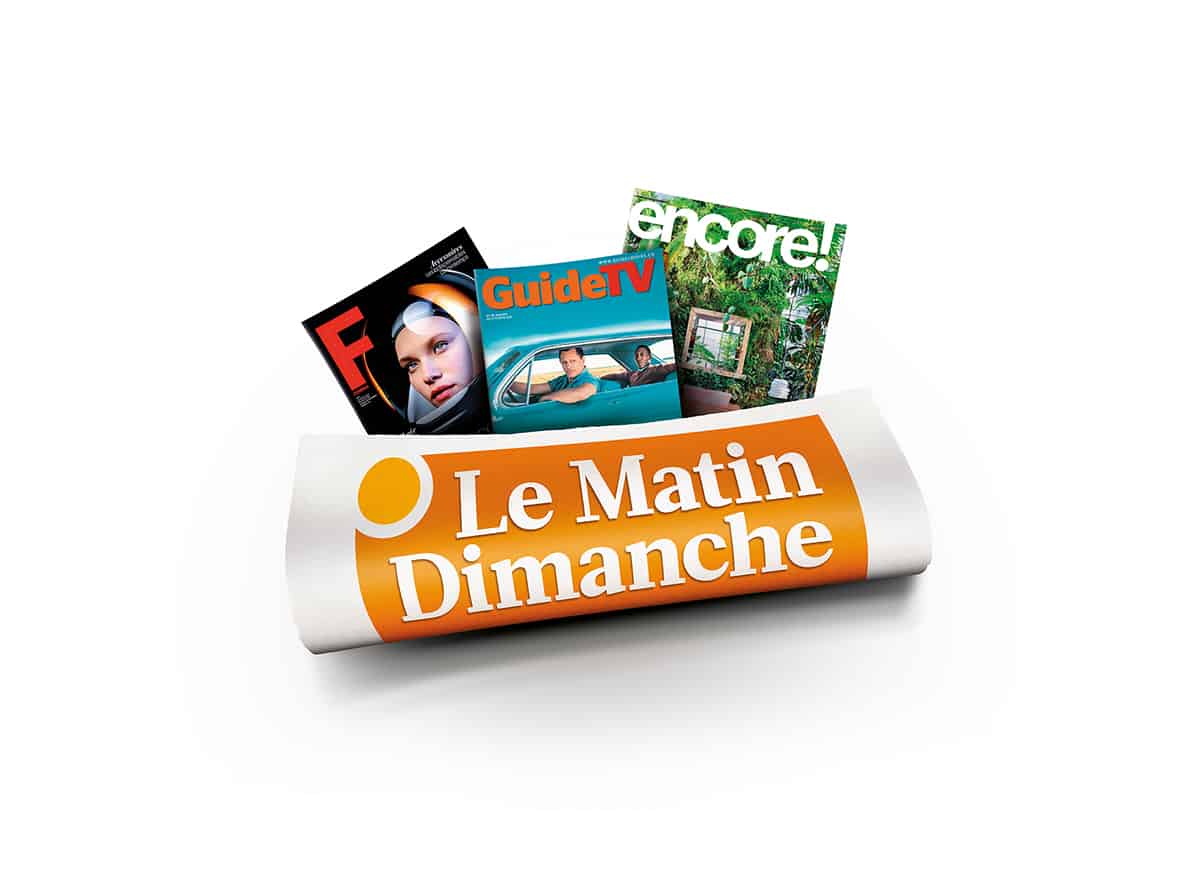
With the relaunch of Le Matin Dimanche the "Actu," "Acteurs" - which will appear under the name "Profils" in the future - and "Sport" were also further developed in terms of content. These include new columnists, caricatures and a section on animals. The TV guide Guide TV will be included in the Sunday edition. The lifestyle magazine Encore remains unchanged part of Le Matin Dimanche.

Farner/Rod and "Freedom of Expression" say yes to media package

The non-partisan committee "Freedom of Expression" launches the Yes campaign for the media package passed by the Federal Council and Parliament with a nationwide campaign. Farner/Rod is responsible for the implementation.

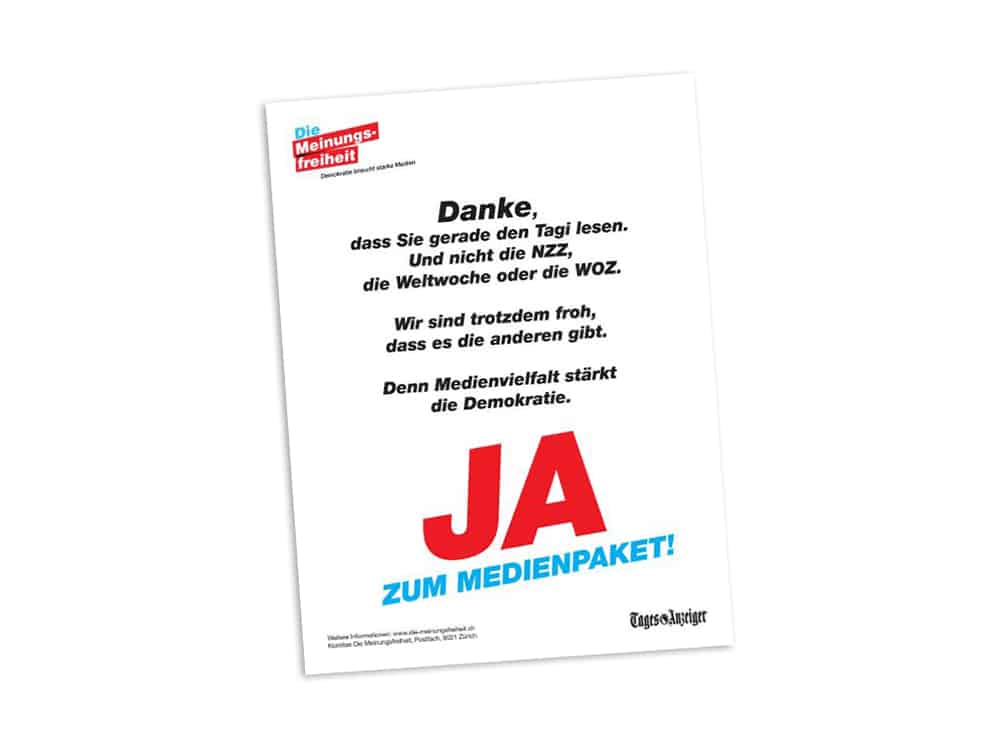
The media package is essentially about comprehensive access to information and debates for political opinion-forming. As part of the nationwide launch campaign, the newspapers are for once paying homage to their competitors, with whom they otherwise fight hard for readers. Because when it comes to balanced political debates, all newspapers are important in direct-democratic Switzerland, finds "the freedom of expression".

Parliament adopted the media package in June 2021. In addition to an expansion of indirect press subsidies, Parliament also approved support for online media and general measures in favor of electronic media. Due to a referendum, the Swiss electorate is expected to decide on the media package at the beginning of 2022. (Werbewoche.ch reported).


Responsible at "The Freedom of Expression": Stefan Wabel (Managing Director VSM), Andreas Zoller (Public Affairs Specialist VSM), Daniel Hammer (Managing Director Médias Suisses). Responsible at Farner/Rod: Michel Grunder (Strategy and Consulting), David Schärer (Strategy and Amplification), Janine Paumann (Campaigning and Consulting), Laura Zimmermann (Campaigning and Amplification), Dimitry Parisi (Digital Strategy), Jakob Ehrensperger (Digital Campaigning), Markus Gut (Branding), Fabian Bertschinger (Branding), Fabian Sigg (Branding), Alessandro Reintges (Creation), Serge Baumeler (Realization), Ondrej Maczko (Creation).

There is still a lot of untapped potential in outdoor advertising on public land

A study by Obeliscum and the University of St. Gallen shows that outdoor advertising on public property has not yet realized its full qualitative and financial potential. Contracts still have long terms, and only a small portion of advertising space has been digitized.

(Source: Obeliscum)

66 of 292 cities and municipalities contacted took part in the study on advertising media on public land in the DACH region. The results show that over two thirds of all cities have the goal of modernizing or digitizing their advertising spaces.

Cities often hope that this will improve the quality of the advertising space on offer, while at the same time consolidating or reducing the number of locations.

Low digitization rate

Despite the strong need, the digitization gap in Switzerland is still correspondingly wide with a digitization rate of only 1.1% of all areas. Even compared to German cities, which have a digitization rate of 2.4%.

APG|SGA and Clear Channel remain strong

Although important new players have entered the Swiss market in the last seven years with Neo Advertising, Livesystems and ESH Médias, the two major marketers APG|SGA and Clear Channel are still represented - mostly exclusively - in over 85% of cities.

According to the authors of the study, this could be an obstacle to the stagnation of digitization. Experience has shown that innovations - in this case the digitization of advertising space on public land - arise in a highly competitive environment and require innovative activities on the part of all market participants, from the marketer side, but also from the owner side, i.e. the cities and municipalities themselves.

To date, however, the public advertising spaces have neither been managed nor administered by the cities and municipalities during the contract periods. The know-how is outsourced and left to the marketer. Cities and municipalities thus voluntarily relinquish their creative freedom during the term of the contract and in the preparation of new tenders.

Better tendering practice

Although 47% of contracts still have terms of more than seven years, tendering practices have improved significantly since the price monitor's recommendations in 2012: the average term in Switzerland is 4.5 years, which obviously gives both the cities sufficient flexibility and the marketers enough time to gain a foothold in the cities and successfully commercialize the inventory.

Optimistic mood

Swiss cities are optimistic about the future. 78 percent of cities expect an increase in the amount of concessions in new tenders: 28 percent of those surveyed even expect financial increases of over 50 percent. The results of current tenders, such as in the city of Zurich for VBZ Zurich or the city of Schaffhausen, far exceed this target, especially if advertising spaces are modernized or digitized on a large scale.

FOPH defends vaccination campaign with fail videos

The FOPH will not continue its COVID-19 vaccination awareness campaign featuring so-called "fail" videos. According to the FOPH, this is in line with the original plan. The decision is not a response to public criticism.

The FOPH had only launched the "Really" campaign in mid-September (Werbewoche.ch reported). Videos on social media showed people with things going wrong - such as a young man putting a firecracker down his pants. The declared aim of the campaign was to allay young people's fears about the Covid vaccination.

The fail videos were planned from the beginning as the first element of a multi-stage campaign, FOPH spokesman Gregor Lüthy told Keystone-SDA news agency on Thursday. They will not be replaced, but will be replaced as planned by the next communication measure. The current campaign "Lieber vaccinate", implemented by Rod Kommunikation, was presented on Monday. (Werbewoche.ch reported).

No failure

The FOPH does not consider the fail videos to be a failure: they picked up on current trends with which the target group was familiar and were widely received, explained Lüthy.

In the future, the FOPH will rely on "Better to vaccinate" to convince young people to vaccinate. It is the answer to a series of rhetorical questions. "For example, "Quarantine after every Chilbi?" or "Get tested before every outing?

Current campaign significantly more expensive

According to FOPH spokesman Lüthy, the costs for the "Really" campaign with the fail videos amount to approximately 230,000 Swiss francs. This includes the costs for distribution.

For the "Lieber lassen vaccinate" campaign, the federal government is relying not only on social media, but also on posters and ads on screens in public places. The FOPH expects the campaign to cost around CHF 1.14 million. (SDA/swi)

Ringier Advertising and Brand Metrics measure the brand lift of brand campaigns

Ringier Advertising has entered into a partnership with Brand Metrics. Together, they aim to help Swiss advertisers demonstrate the brand lift achieved through advertising campaigns.

The algorithm uses a simple question with five answer options to provide reliable information on qualitative advertising impact. Ringier Advertising and Brand Metrics wrote this in a joint statement. The algorithm can be applied to native advertising, display advertising and commercials. Data is collected directly from publishers' websites, where selected users are asked about their attitudes toward the brand. The results are then assigned to the four KPIs brand awareness, consideration, brand preference and purchase intent, while at the same time an industry-related benchmark comparison is made.

Ringier Advertising's portfolio includes Ringier's own Swiss titles and Ringier Axel Springer Switzerland, as well as external portals such as Bluewin.ch and Le Temps. Through its collaboration with Brand Metrics, the company aims to demonstrate the effectiveness of digital advertising measures.

Through the algorithm, publishers should be able to consistently demonstrate the effectiveness of their measures based on the metrics set by advertisers. This is done by recording the brand lift and comparing it with a benchmark, regardless of the scope and cost of the campaign.

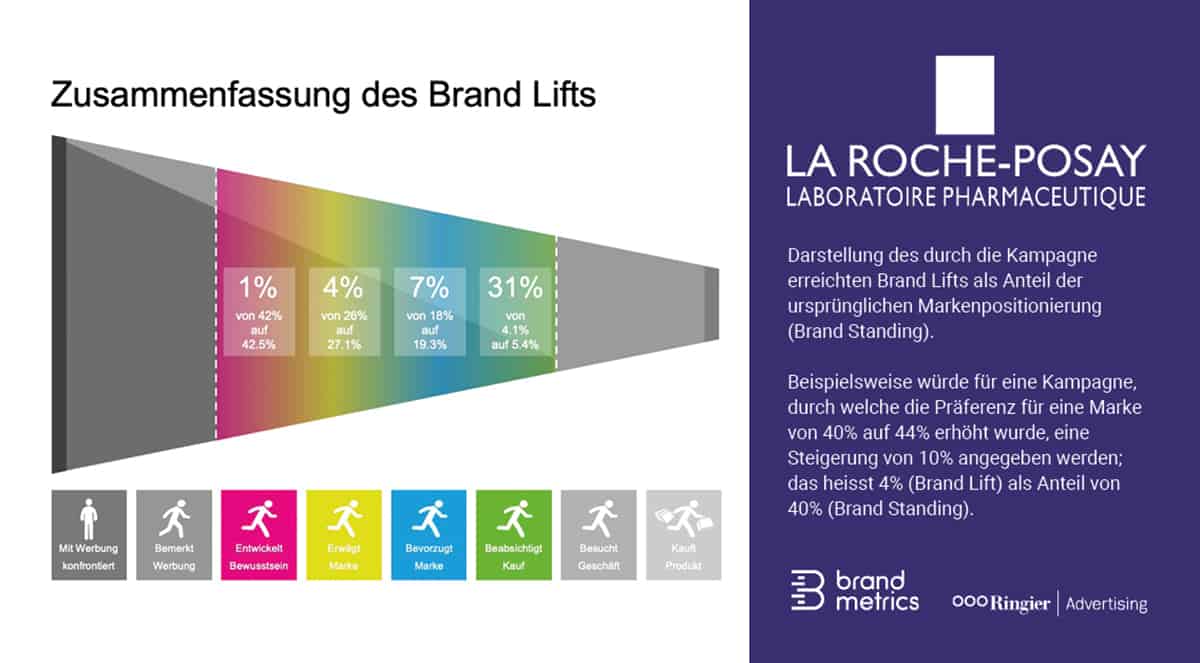
For example, in a recent campaign for L'Oréal conducted by Ringier Advertising and Brand Metrics, Brand Metrics revealed in June 2021 that a Brand Lift was achieved on all four KPIs. It was found that the skin care brand La Roche-Posay is very strongly positioned compared to other beauty brands in the Consideration and Brand Preference KPIs, which are in the middle of the brand funnel, but rather weak in Purchase Intent.

"For our customers, neither click rates nor impressions are decisive. But due to a lack of alternatives, the industry has focused on precisely these values for too long," explains Thomas Passen, Managing Director of Ringier Advertising. "Advertisers urgently need evidence that advertising is achieving their specific goals. By working with Brand Metrics, we ensure the effectiveness of brand campaigns and show how they can be improved based on individual objectives. This is valuable for consultative meetings with all of our advertising partners."

"The main goal of the last campaign was to create awareness among Swiss consumers for the La Roche-Posay brand, which is recommended by dermatologists worldwide. The results of the measurement make it clear to our brand team what needs to be done to ensure that the next campaign is even more successful," adds Frank Burkhardt, CMO at L'Oréal.

Sunrise launches new combination subscriptions and new TV based on UPC TV

The merger of Sunrise and UPC is bearing fruit in terms of offerings: Sunrise is launching new bundled subscriptions and launching a new Sunrise TV with more features, based on UPC TV. However, this is not yet the merger of the Sunrise and UPC customer bases.

This will take place later, explained Sunrise-UPC CEO André Krause in an interview with news agency AWP on Thursday: "We have said that we will merge the two brands at some point." He said that with the current addition to the Sunrise product portfolio, the company is creating the conditions for the merger of the two customer portfolios, but is not yet completing it.

"We don't know yet when that will come," Krause said. With strong products, the company wants to convince customers to switch voluntarily. There will be no forced migration at the moment.

Specifically, Sunrise is launching new bundled offers for Internet, TV and telephony under the name Sunrise We from October 11. "Anyone who switches to We Home or a We Combo, for example, will automatically always receive the best locally available broadband connection for the respective offer," Switzerland's second-largest telecom group wrote in a communiqué.

This means that households with a fiber-optic connection can surf at up to 10 gigabits per second (Gbit/s). Customers on the cable network will receive speeds of up to 1 Gbit/s, Krause explained. Customers outside fiber-optic and cable networks would get Internet to their homes either via 5G mobile technology or traditional copper lines. There is a discount for Sunrise mobile customers.

Sunrise TV modernized

The biggest innovations, however, are in television. The new Sunrise TV uses the UPC TV platform, which is one of the most modern solutions in Switzerland, it said. It offers personalized access. Each person in the household can access their personal favorite shows and recommendations via their own user profile at the touch of a button.

In addition, streaming apps such as Netflix, Amazon Prime Video and Sky Sport are already integrated into the box. The TV box can also be controlled via voice commands. And with the Sunrise UPC TV app, you can continue watching programs you have started on another device such as a laptop, tablet or cell phone.

The user guidance and the possibilities of the new Sunrise TV box are better than with the previous one, which is getting on in years, said Sunrise UPC boss Krause. Sunrise's existing TV customers could switch to the new box, but they would not be forced to. "The old box will continue to operate for now, but probably not for eternity," Krause said.

Nothing will change for users of the Sunrise TV neo app. There is no new TV app now. That will happen at a later date, Krause said: "No customer needs to be afraid now that they won't have TV tomorrow." (SDA)

Bodin.Consulting gives the Handelszeitung a rebranding

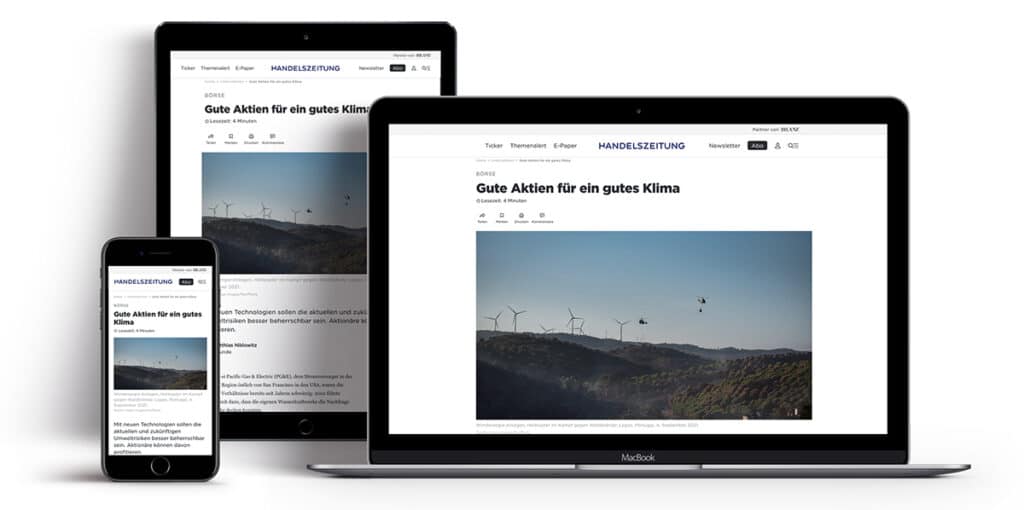
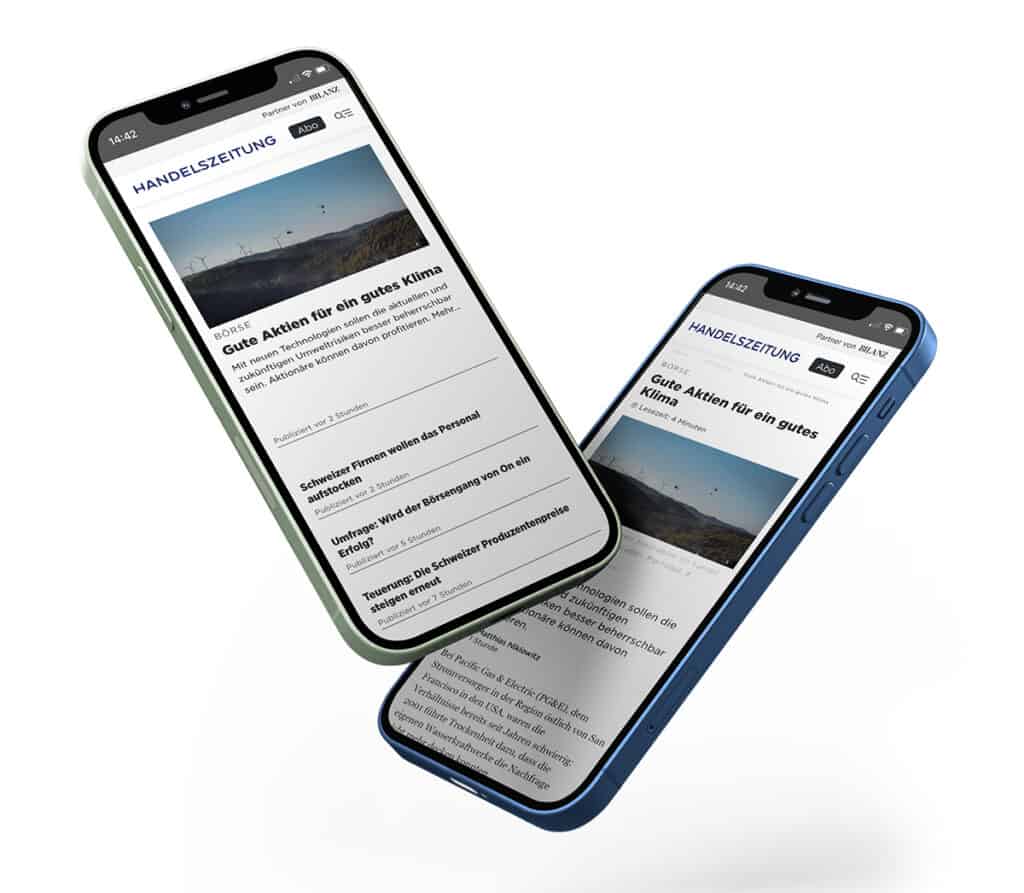
The logo, tagline, and print layout are new: As part of its digital initiative, the Handelszeitung will debut a new look across all channels starting Thursday. The logo and tagline were designed by Bodin.Consulting.

The comprehensive rebranding is intended to raise the profile of the Handelszeitung and is consistently pursuing its "digital first" strategy under a uniform brand for print and digital, Ringier writes in a statement. The new logo and the consistent blue logo color are intended to underscore the title's future focus on its digital offerings. The sans-grain and sans-serif typeface is unagitated, in line with the new brand promise "Business in plain language." The logo and claim were developed in collaboration with Bodin.Consulting.

"Speaking plainly means saying things openly and getting to the point in an understandable way," says Stefan Barmettler, editor-in-chief of the Handelszeitung. "In this way, we offer our users orientation and thus a basis for decision-making in a business world that is becoming increasingly complex. On the other hand, 'plain speaking' also means having an attitude and showing strength of character."

Revised print layout

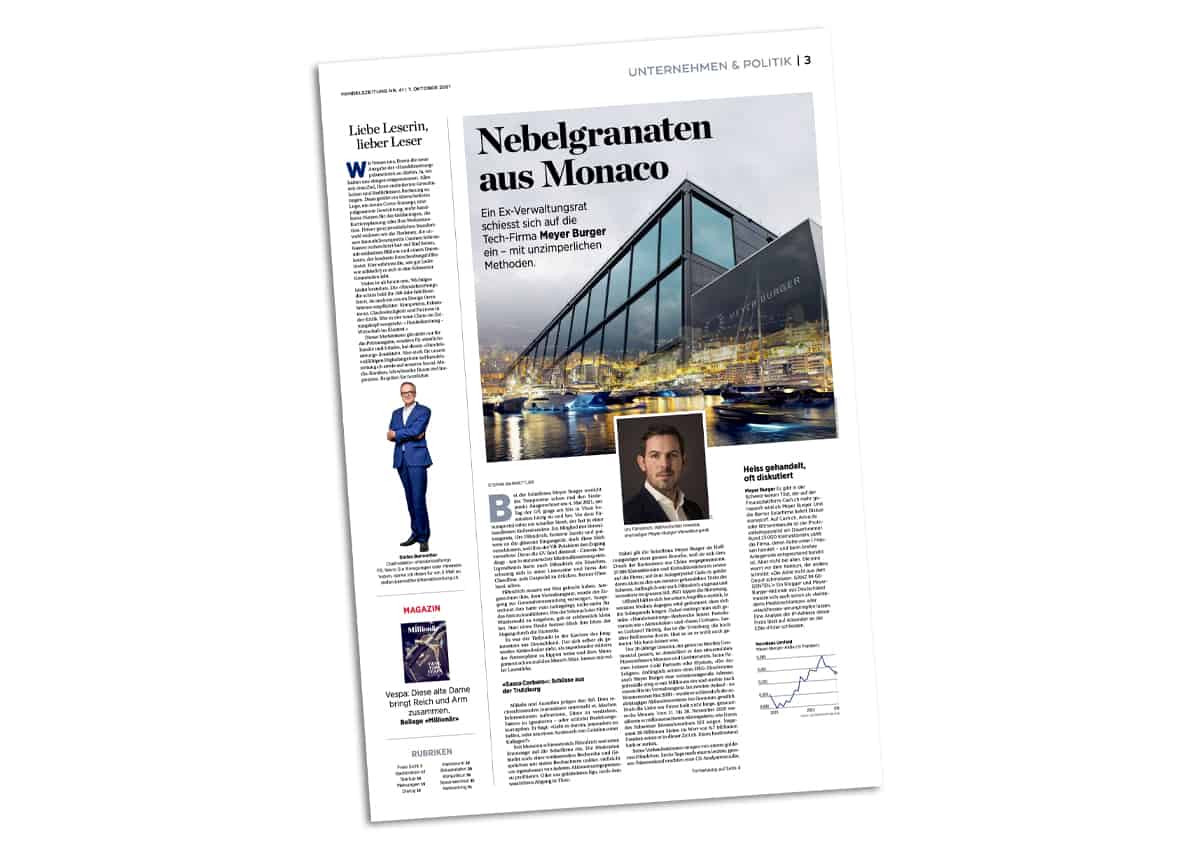
The print edition is given a revised layout that takes up this approach and anchors it visually in the reading experience. The printed edition comes across as newly tidier, with more calm and elegance as well as modernized typography. This look is rounded off by emotional image elements that break the grid and showcase the minds and topics of business. The Handelszeitung will focus strongly on the cover story in the future, while at the same time adjusting the mix of topics. The aim is to create added value for readers in the areas of investment and leadership. The investment section and tech reporting will also be expanded.

"The new branding as well as the modernization of the print edition is a consistent step in our 'digital first' strategy, with the print edition of the Handelszeitung will remain an integral part of our product portfolio and brand," says Michael Moersch, Chief Digital Officer and Head of Business Media at Ringier Axel Springer Switzerland. "With a new logo, claim and fresh print layout, we are now also signaling to the outside world the departure that we launched internally a few months ago."

These are the nominees for the Master of Swiss Apps 2021

The Best of Swiss Apps jury has nominated the best projects of the year. Ten apps stood out from a total of 183 submissions during the judging process and are now competing in the final round.

At the end of September, Best of Swiss Apps published the shortlist for this year's awards. From a total of 183 entries, the jury selected 51 favorites (Werbewoche.ch reported).

Now the master candidates are also known. The following 10 app projects are up for election this year:

Best of Swiss Apps Master candidates 2021
Project Client Contractor
Benevita Swica Health Insurance Bitforge / Hinderling Volkart
Digital Experience Platform Zurich Airport Zurich airport Unic
EM.app Electro-Material AG MP Technology / Nextension
Myswica customer portal Swica Unic / Apps with love
Nature Detectives Mania Migros Cooperative Federation Mutabor / Demodern
Remote AR Sales Feey Bitforge
Runtime by Ochsner Sport Ochsner Sport Thjnk Zurich
Smartstop Burri Public Elements Gotomo
Swisstopo Federal Office of Topography Swisstopo Ubique Innovation
ZVV Zurich Transport Association ZVV MNC / Bitforge
Source: Best of Swiss Apps

Increase master's chances with the reader's choice

The decision on who becomes Master of Swiss Apps does not rest with the jury alone. The community also has a vote. The final score will be determined in equal parts by the votes of the jury, the readers of Netzticker and the audience at the award night in Zurich's Aura on November 3.

Subscribers of the net ticker, the newsletter of Netzwoche, can vote for their favorite from October 14 to 18. Everyone who has registered by October 13, 2021 is eligible to vote.

Jury votes on the ten master candidates

Benevita

Health is the central theme of Benevita, the lifestyle app from health insurer SWICA. Classic mechanisms such as challenges, awards, progress bars and levels were skillfully integrated and motivate the app users to change their behavior. The design is discreet and appropriate, and the support for the most popular fitness trackers for recording exercise challenges was also convincing.

Digital Experience Platform Zurich Airport

With local data storage, push messages for flight data, indoor navigation and a chatbot, Zurich Airport offers a progressive web app optimized for mobile use, which can functionally replace the previous native app. The user guidance is also successful and the "remember flight" function is almost ingeniously solved. The user-friendly experience is rounded off by an innovative menu that takes mobile navigation to a new level.

EM.app

Ensuring that a construction site runs smoothly is often a difficult undertaking. The EM.App from Elektro-Material AG helps electricians on site to order exactly the right product, easily and quickly. The app is clearly laid out and the range of functions, such as the reminder functions, know how to please. The visual support during the purchasing process reduces the error rate and increases customer satisfaction.

MySWICA customer portal

The mySwica customer portal provides policyholders with a comprehensive tool for digitally managing all matters relating to their own health insurance. The application is generously designed, everything has its place and visual details have not been neglected. Particularly praiseworthy are the breakdowns of costs and the short descriptive texts of the individual insurance benefits.

Nature Detectives Mania

The Nature Detectives Mania app is an educational game by Migros about the Swiss animal and plant world. Within a very short time, the app has captivated a large user group. Customizable profiles, gamification elements and the weekly release of new content encourage users to return and explain the high addiction potential. The app is lovingly designed and the 3D worlds in particular are convincing in their design execution.

Remote AR Sales

Remote AR Sales combines video telephony and augmented reality in a successful way. Via live stream, customer advisors can place products - such as houseplants in the example - directly in the customer's living room and provide them with optimal advice. The app has been reduced to a small number of purposeful and well thought-out functions. This makes it easy to use and opens up a lot of potential for further applications.

Runtime by Ochsner Sport

With Runtime, Ochsner Sport created an app to encourage Swiss people to run. The app creates a special incentive because the high-quality audio content is only played when the cell phone is set in motion. For example, you are coached live by the European champion during a run and after each run you get your run evaluated and can share it. In addition, a voucher is activated that can be redeemed directly.

SMARTstop

SMARTstop revolutionizes accessible public transport travel with the help of modern technologies such as NFC, app clips and beacons. If you touch the stop badge with your smartphone, the app immediately provides information about departures, delays and much more. The optimized display for screen readers is appreciated by the visually impaired and thanks to minimal requirements for the stop infrastructure, nothing stands in the way of a nationwide rollout.

Swisstopo

The swisstopo app is an ingenious milestone that brings the popular and famous Swiss national maps in digital form to the smartphones of enthusiastic hikers, bikers, mountaineers and numerous other users. Particularly successful is the easy creation of routes, the offline functionality as well as the intuitive and fast operation. Another highlight is the sophisticated and innovative panorama function.

ZVV

The completely revamped ZVV app comes across as clean and clear and pleases with many small details such as the animated icons. The smart start screen offers the most important information about the next trips and the user guidance is also convincing: customers can find all relevant information and buy tickets with just a few taps. The app is rounded off with a coherent design.

How corporate events succeed in the digital space

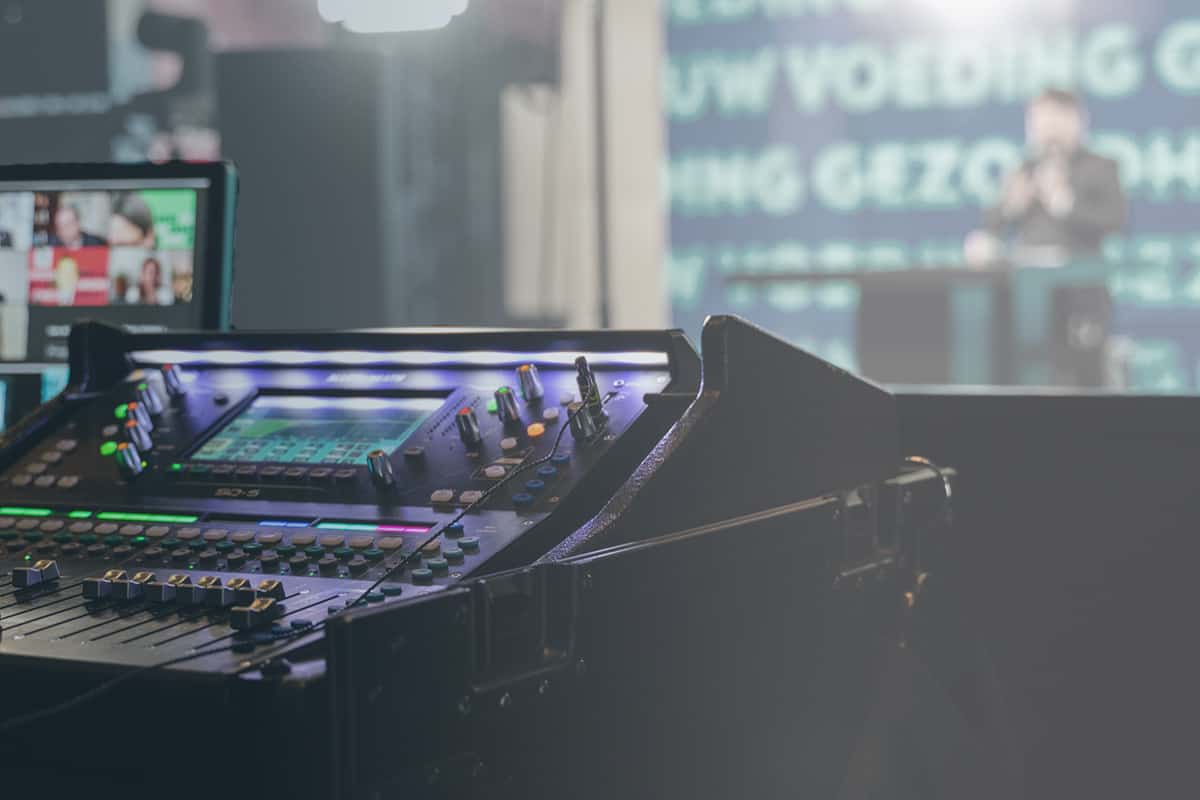
Digital corporate events are here to stay. But how do you put on a great show? The FS Parker agency uses examples from its clients and seven tips to show how digital events achieve impact.

Last year, the learning curve for companies in terms of digital competence was characterized by trial and error. One of the most important lessons learned: there is still a lot of room for improvement when it comes to digital presence.

Why does employee motivation via digital events deserve at least as much attention as an analog event? The days when messages from management were patiently digested by employees and implemented as desired are over, at the latest since Millennials started working. Informing and, ideally, inspiring requires more than terse instructions. Genuine commitment cannot be bought in the long term, but can only be developed through appreciation. The community within a company wants to be nurtured, understood and involved. It is not enough to decorate bullet-point overloaded slides with colorful pictures.

Christoph Schmidt, Managing Director of FS Parker, sees it as follows: "To create a sense of community, interaction in the digital space is even more important than offline. The earlier and the more employees are involved in the process and perceive themselves as part of something big, the more powerful the effect - in the short term as well as in the long term. Employees are a company's most valuable ambassadors. If it is not possible to communicate internally where the journey is going, it will also be difficult to convince the outside world. Stories of strategic spotlights or milestones along the way to the big vision are essential. Numbers and KPIs are important, but they only represent the results of what has been achieved together. They should be presented accordingly."

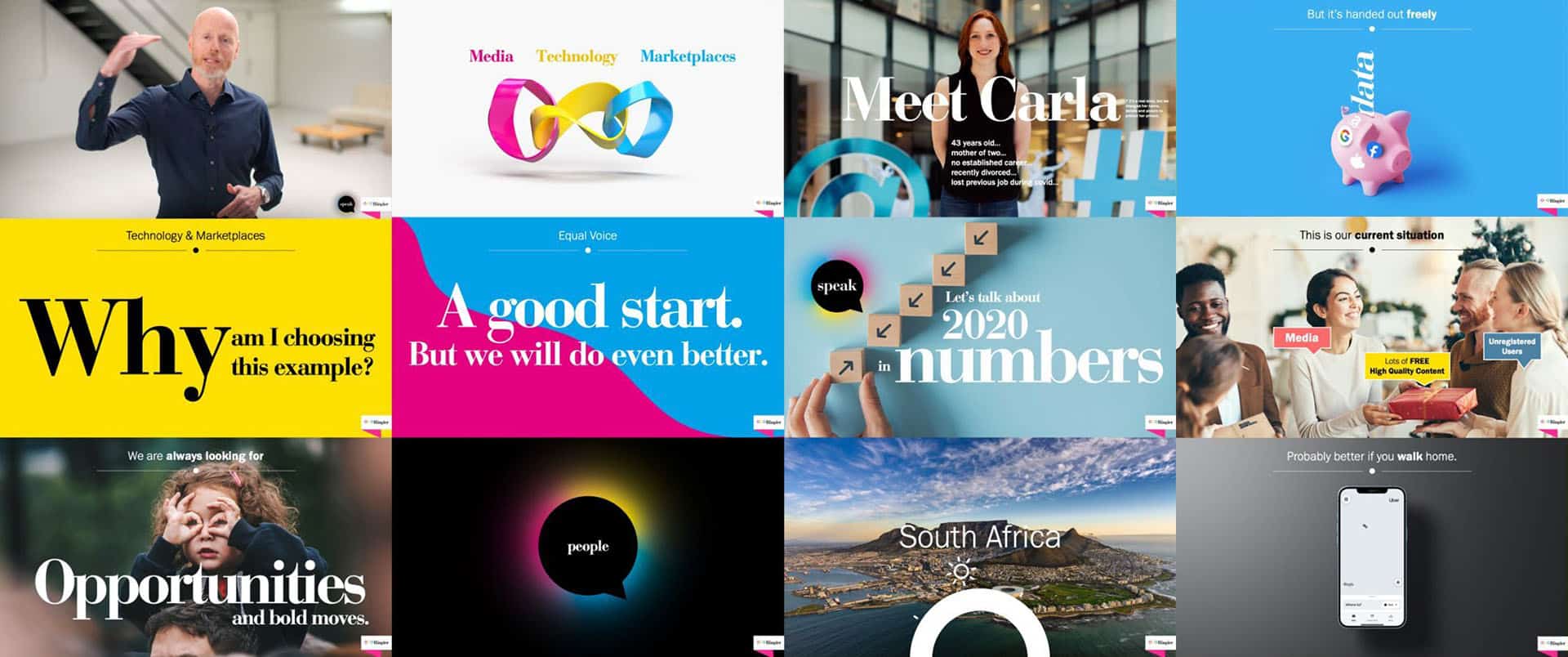
Ringier CEO Marc Walder sends a clear signal in the age of digitization with an annual fixture. The multimedia presentation "Speak" brings figures, data, facts, and developments of the publishing group to life through stories and moving images. The presentation is storytelling and infotainment with lasting impact. "If we are brave and try to learn together every day in these fast-moving times, it makes us stronger," says Walder. FS Parker helped the publishing group build "Speak" into an impactful event.
It starts with the message. What does the management want to convey and why? With strategic communications consulting, impact-strong and brand-affine graphic implementation, and reliable service providers also in the technical area, the leap into the digital water can be made without much headache. "Holistic consulting is important in order to translate strategic plans into effective communicative solutions - in terms of both content and visuals," says Stephanie von Mentlen Ramunno, Head of Strategic Communications at Raiffeisen Switzerland.

A digital event offers opportunities that go beyond the traditional format. A larger group can be reached and involved. Messages can be conveyed with pinpoint accuracy. Contrary to all prejudices, the networking aspect can now also be experienced digitally with various tools.

7 tips for a successful digital event

1. brevity is the spice

A traditional event that used to stretch over several hours shines digitally when the content is condensed to the point. What's really relevant? The rule of thumb is: no more than 90 minutes at a time. In the digital space, viewers lose their attention even more quickly than was already the case offline. Important topics can be explored in greater depth in workshops that take place before or after the event.

2. professional appearance instead of half measures

"Do it right or don't do it at all." Participants staring into a too-small screen in a suboptimal home office setting are far less forgiving than those sipping a glass of champagne in a beautiful off-site location. In 2020, awkward attempts to perform through homespun slides still garnered sympathetic smiles. In 2021, there will be no more sympathy points for that. But why isn't content alone everything?

Content remains king, but without supporting visuals, the king is left without clothes. Noelia Blanco, COO and Key Account Director at FS Parker, is convinced that "in the few moments during the year when the management addresses employees, shareholders or important stakeholders in a big way, content as well as speakers can definitely stand a touch of high gloss".

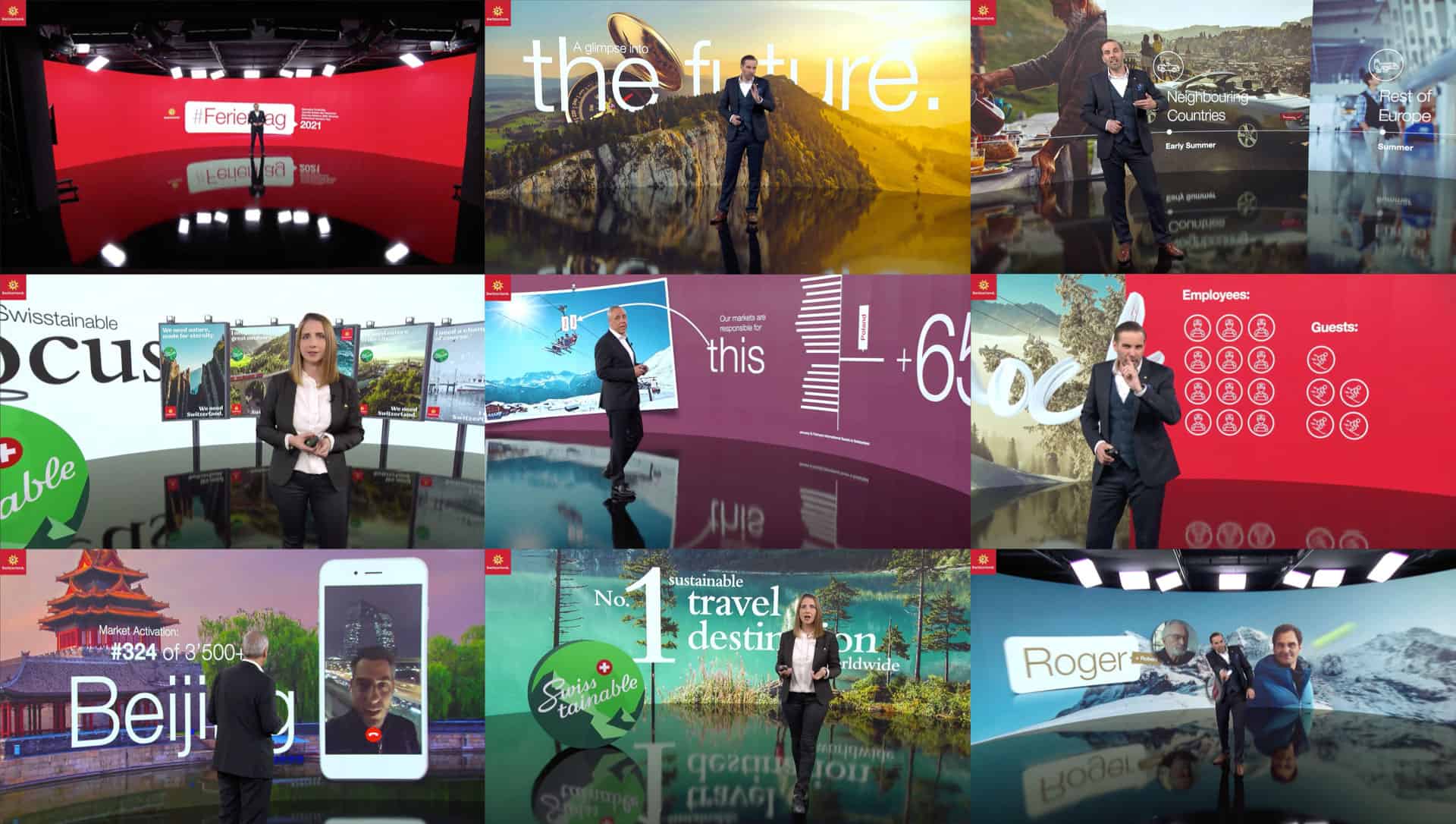
Martin Nydegger, Director of Switzerland Tourism, was also aware of this: "Switzerland Tourism's Holiday Day is the biggest and most important industry event of the year. In 2021, the association faced the difficult challenge of showing ways out of the biggest crisis in recent history and inspiring and motivating the entire industry with one event." According to Nydegger, this goal was well achieved in a virtual setting.

"For Switzerland Tourism, the story line was about credibly communicating prospects for better times and getting people excited about the industry's comeback in an entertaining, high-energy way," explains Hannes Sigrist-Thompson, ECD at FS Parker, which managed the event. "Special challenges require more than traditional presentations. In this case, being able to run the show in a TV studio allowed us to deliver content at a fast pace and with a high level of professionalism, while showing the speakers in their best light. A professional performance is a form of appreciation. In the end, everyone wants to be proud of the work they've done together; of the company; of the management team."
3. think through dramaturgy

Where do I pick up my audience mentally and on which journey do I take them? How can information be best absorbed and remembered? How much entertainment is necessary to keep the attention via screen? How does the event retain its appeal in the replay? There are many questions to be answered in the run-up to the event. Teasers before the event arouse interest and increase the number of participants. Strong openers form the foundation of the digital stage. Follow-up communication after the event deepens and anchors content.

"A digital event is not just an analog event plus a camera. The digital space has its own rules. The distractions in the digital space are enormous. Emails want to be answered, Instagram is worth a look, the next notification is buzzing on the cell phone. The trick is to keep the audience's attention. If you communicate digitally, you need content that inspires," says FS Parker ECD Sigrist-Thompson.

4. appeal to emotions

"It is important to send messages that will be remembered. We did this particularly well with the Kickoff this year successful", says Katarina Rösinger, CEO of BSH Switzerland. This point may seem like old wine in new skins, but it is actually more relevant than ever, because emotions are to be weighted twice as heavily in the digital world. The sterile environment of the digital world does not yet trigger cries of jubilation per se.

Johanna Walser, Chief Communication Officer at Ringier, always asks herself: "How can you trigger enthusiasm and create opportunities for identification despite all the sobriety? Storytelling is an important tool in the communication magic box and must be digitally reinforced." But beware: a story only makes sense if you know why it's being told and what connection you yourself have to it. Authenticity, transparency and honesty are key factors here. "Without storytelling, the consumer is hardly able to absorb the wealth of information," adds FS Parker MD Christoph Schmidt. "We implemented this at Raiffeisen with a mountain climb or at BSH with a visit from the future."
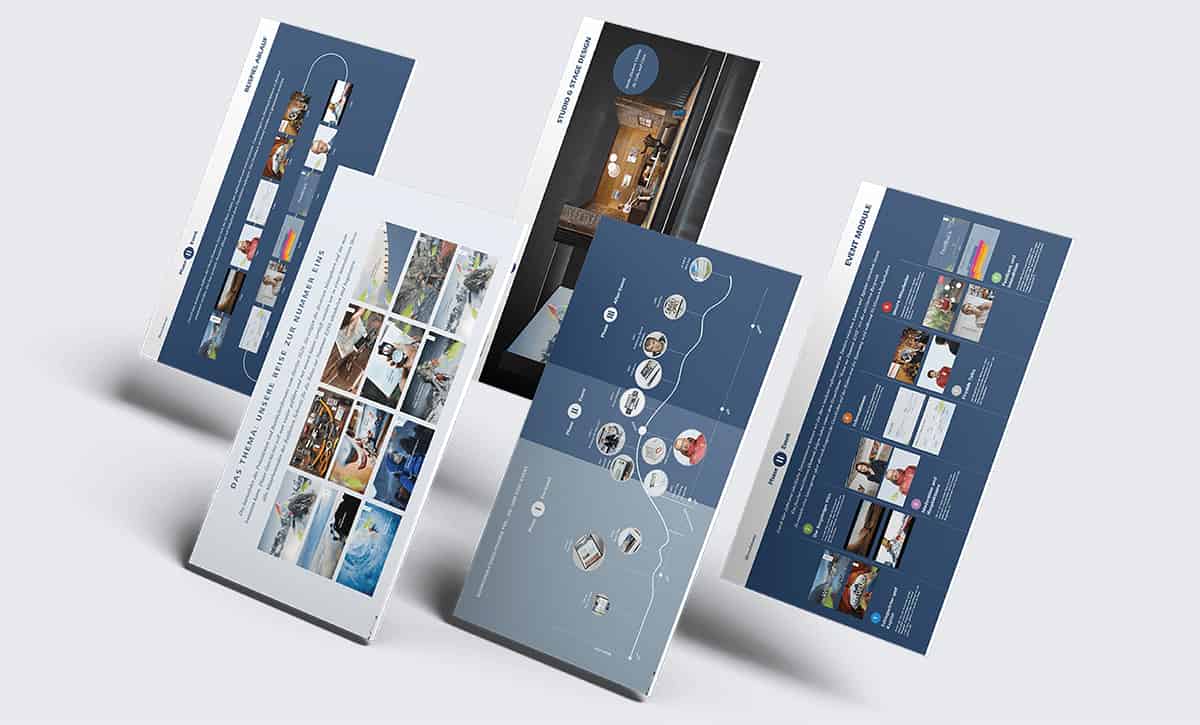
5. plan topic blocks

Digitally, you have more opportunities to play the main messages in a variety of ways, to repeat them selectively, and to anchor them in the memory. "It's important to have a thread of the main messages running through - from the invitation, to digital content with video, animations and presentations, to the look and feel of interactions with the audience, to pre- or post-event workshops or surveys," explains Noelia Blanco of FS Parker.

6. Consider content recycling at an early stage

To ensure that a successful digital event doesn't turn into a flash in the pan, it's best to think about the further utilization of the material right from the planning stage. How can the message be sustainably anchored both internally and externally? Which excerpts do you need for social media? Which parts can be included in an image film about the company? The requirements of different channels influence the production. For example, the presentation of an annual report does not necessarily have to be a "one-shot". The valuable content can easily fill other formats and channels after the launch of the report.

7. Thorough planning, organization and implementation

A few seconds of radio silence due to technical difficulties or insufficient rehearsals have a much longer effect in the digital space than at an offline event. So thorough preparation is important here, too. How do I supervise the speakers before the performance? Who is responsible for keeping to the schedule? Is there moderation?

"Minute preparation is important. The choice of the right technical tools needs to be considered early on," Noelia Blanco is convinced. "What interactions do you want to offer? Do you play videos? What content needs to be produced in advance? How do you guide interactively through the Q&A session? An important element is also aligning the expectations of the different partners and service providers in advance."

Volker Klodwig, Head of Sales Europe at BSH Hausgerätegruppe, adds: "A well-functioning team, top preparation and a clean storyboard that doesn't overwhelm consumers but takes them along on the journey are essential and almost more decisive in digital implementation than in analog. This shows in the quality of an event."

Conclusion

Sooner or later, the digital event format will win a prominent place in the corporate communications orchestra. "There is no substitute for contact with people. Hybrid and digital events excellently complement and underscore the analog communication of content. This can be very helpful for large organizational units that want to emotionally pick up and inspire employees across regions, language borders and countries," concludes Christoph Schmidt.

Editor-in-chief of Watson Romandie leaves

The editor-in-chief of the French-language version of Watson, Sandra Jean, is leaving the online portal. Fred Valet, deputy editor-in-chief, is taking over as editor-in-chief on an interim basis.

The management and Jean had decided to end their cooperation by mutual agreement, Watson announced on Wednesday. The reason for the departure was differences of opinion about the future development of the news portal and the management of the project.

"I would like to thank Sandra Jean for everything she has done over the last 18 months. She has recruited a great team and perfectly accompanied the launch of Watson in Western Switzerland. I am very grateful to her," Watson CEO Michael Wanner is quoted as saying in the communiqué.

Watson Romandie was launched at the beginning of March (Werbewoche.ch reported). Around 20 journalists work on the editorial staff in Lausanne. Jean had previously published the French-speaking Swiss newspapers Le Matin and Le Nouvelliste managed (Werbewoche.ch reported). (SDA)

Media promotion: referendum with 110,000 signatures submitted

The «No to State Media» committee has submitted a referendum against federal media subsidies, backed by 113,000 signatures. As the committee announced on Tuesday, many people do not see the justification for subsidizing billion-franc corporations with three billion francs over a seven-year period.

The referendum on media subsidies is expected to be held on February 13, but the Federal Council has not yet set the date. The referendum was submitted one day before the deadline.

The committee chaired by former National Councilor and media entrepreneur Peter Weigelt (FDP/SG) collected more than twice as many signatures as needed for a referendum. For the opponents, the media subsidy is a "state policy sin and a breach of the constitution," economically discriminatory and damaging in terms of democratic policy.

The existing postal tax reduction for print media is already constitutionally questionable. The direct subsidy decided by parliament, however, is an "absolute no-go," the committee wrote.

Public debate opened

It welcomes the fact that the referendum has "forced" a broad public debate on the role of the media in democracy and their attitude toward the state. The private media companies and SRF radio and television could no longer maintain their refusal to discuss the issue before a referendum, the committee writes.

Private media would now cost taxpayers 400 million francs a year. Over the seven-year term of the law, this would add up to around three billion francs. In addition, state-funded media would prevent public debate, destroy freedom of expression and are poison for democracy.

The referendum is supported by a non-partisan parliamentary committee from the SVP, the center and the FDP.

120 million additional per year

On the same day, a citizens' movement for media funding, founded on Monday evening, spoke out. It had been launched by media such as the Weekly newspaper WoZ or exponents such as Hansi Voigt, the founder of the Internet medium Watson. In times of constant pressure from large companies and expensive PR consultants on media professionals, state media funding guarantees the independence of the media and secures their existence.

Parliament approved the media subsidy in the summer session. Over seven years, the media in Switzerland will receive direct and indirect funding of 120 million francs more than before. This will benefit print media, the membership and foundation press, online media, news agencies such as Keystone-SDA, and media training. (SDA)

get_footer();