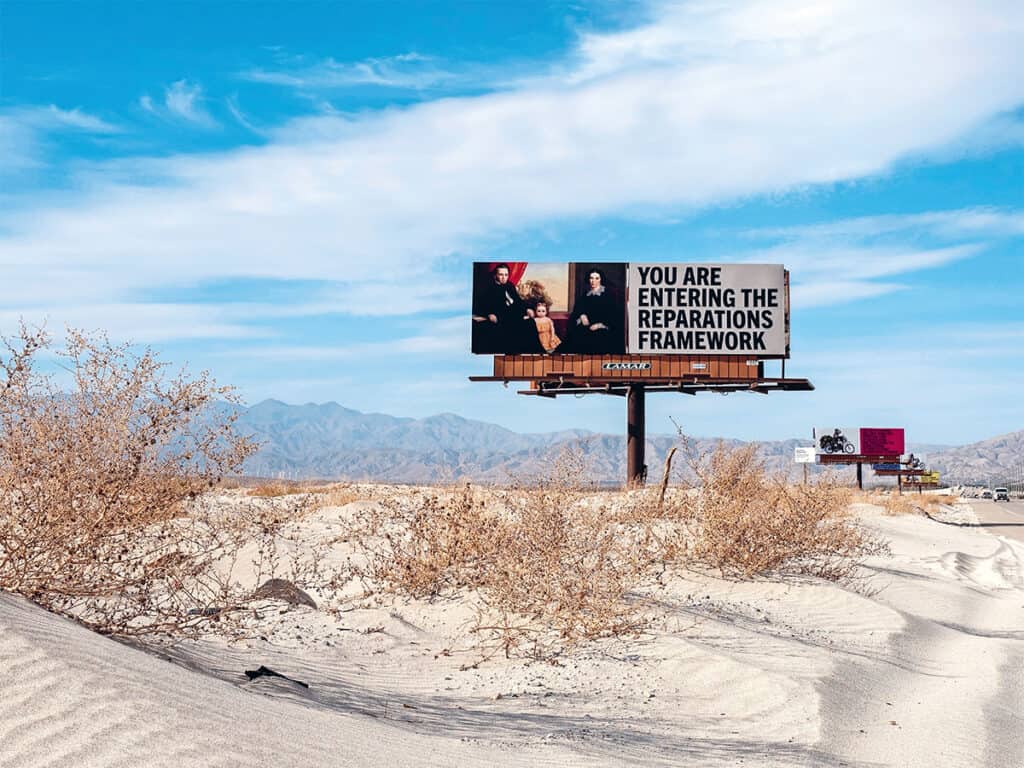
 When the «Advertiser of the Year» describes a campaign—one he didn’t create himself—as «striking,» that’s probably the highest praise one could hope for. When Phd supported Oatly’s entry into the Swiss market in mid-2021, the media agency didn’t focus on TikTok or influencers for the Swedish oat milk producer. Instead, it focused on traditional, analog posters. «Less is more,» says David Schärer, co-founder of Rod Kommunikation and “Advertiser of the Year 2021/22.”.
«Because by focusing on the essentials, a poster can have an agenda-setting effect. In my view, Oatly’s advertising campaign was orchestrated exclusively through posters.» And this was done «in the time-honored tradition of consistent poster design,» according to the advertiser—Schärer believes that this type of outdoor advertising could be experiencing a renaissance. No wonder, because in an age when we’re spending more and more time in front of screens due to working from home, virtual meetings, and digital events, analog advertising mediums have almost become a rarity—and stand out all the more for it.”.
Outdoor advertising is making a strong showing with its traditional strengths—a trend for the outdoor advertising industry in 2022? Definitely, because posters and other outdoor media play an enormously important role in Switzerland. According to a survey by DieMarktforscher.org from last November, street posters are the second-most effective medium in Switzerland after the internet when it comes to reach. By comparison, in Germany, posters rank seventh! Whether in the city, high up on a mountain on a gondola, on public transportation, in a shopping center, or at a gas station: The study shows that the Swiss value advertising in public spaces and find advertising on the street, in train stations, and in shopping centers the most appealing of all media. For example, VBZ TrafficMedia has also observed an increase in bookings for X-Large roof formats on trams and buses, full-wrap tram advertisements, and large-scale advertising formats.
«By focusing on the essentials, a poster can have an agenda-setting effect.»
«A last-resort medium with broad reach that reaches all segments of the population,» says APG|SGA. And that’s more important today than ever—because «with increasingly fragmented media consumption and countless communication channels, out-of-home advertising stands for unrestricted visibility, openness, honesty, and conversation starters,» says Nadja Mühlemann of APG|SGA. Media planner Oliver Schönfeld of TWmedia goes a step further and refers to outdoor advertising as «the last remaining mass medium.» «In an era when former mass media such as TV are fragmenting into more and more individual channels, you need an extremely large number of stations and a substantial budget to achieve a reach comparable to that of outdoor advertising, thanks to its omnipresence,» says the Managing Director.
However, this medium doesn't just score points for its reach; it's also way ahead of online and other platforms in several other areas: visibility, brand safety, and trust.
DOOH on a Growth Trajectory
In the new year, however, the medium isn’t just relying on its traditional strengths; it’s also increasingly evolving into a state-of-the-art companion along the customer journey. As a result, growth in 2022 will come primarily from the digital sector: Major players are investing in the expansion of digital products—for example, APG|SGA surpassed the 1,000-unit mark for large-format ePanels and eBoards for the first time last year, in addition to 1,500 screens located in public transportation and other venues
and mountain stations; this trend is set to continue throughout 2022. Clear Channel has more than 500 digital outdoor advertising spaces in its portfolio. Neo Advertising currently has 1,045 screens, and that number is expected to exceed 1,300 as early as July.
«In the new year, this medium is increasingly evolving into a state-of-the-art companion on the customer journey.»
Even in transit advertising, there is a growing demand for digital formats. «In public transportation, however, digital offerings are still in their infancy and will continue to evolve in the coming years,» says Serge Nater, product manager at VBZ TrafficMedia. Furthermore, digitalization is making its way into more and more out-of-home (OOH) sectors: «Until now, the outdoor advertising industry has primarily implemented digitalization only in absolute premium locations such as train stations or airports, mainly for cost reasons,» says Adtrac Managing Director Benjamin Wey. «However, we are observing that
»There is increasing activity in the retail media sector. This means that retailers are recognizing the media value of their household-decision-maker audience and want to capitalize on it in the physical world as well. The objective for advertising space is therefore a combination of information, sales, and promotional impact."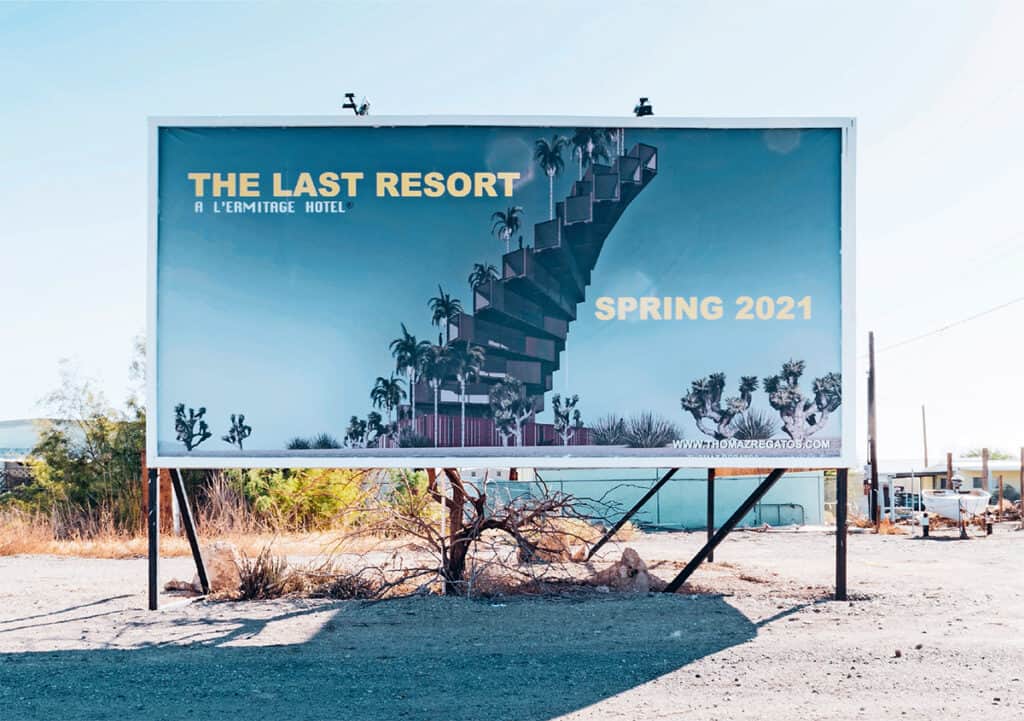
Raclette only when the weather is right
PDOOH—or Programmatic Digital Out of Home—also remains a trend in the 2022 outdoor advertising landscape—a relatively new discipline that aims to compete with online advertising. After all, precise targeting options, ads tailored to weather conditions and foot traffic, and new opportunities to integrate with other media—these are features that haven’t necessarily been considered a USP of OOH until now. The
The major players are well-prepared and are already offering such services.
According to the new white paper «Programmatic Out of Home 2021» by APG|SGA and JCDECAUX, respondents (98 percent) from 13 countries agree: the share of programmatic OOH will continue to rise. Experts see opportunities here, particularly in combination with mobile, but also with online and TV. Nevertheless: «Programmatic DOOH is still in its infancy,» says David Schärer. The advertising professional is eager to see fascinating case studies, but there are already examples that illustrate the potential: To promote raclette and fondue, Coop’s ads appeared on digital screens only when the relevant target audience was out and about and the weather met specific criteria. The campaign was precisely targeted via a demand-side platform. The result: nearly ten million impressions, more efficient targeting, and a significant increase in sales.
Starbucks also used weather data to invite passersby in German- and French-speaking Switzerland to enjoy a drink via DOOH within a 500-meter radius of its stores. A cool soft drink or a hot coffee—depending on the weather.
However, when it comes to PDOOH, the industry still has a lot of work to do. After all, the key to successful PDOOH campaigns is having the right data—namely, dynamic data. Anyone who wants to respond in real time to the behavior of their customer groups with different ad creatives must understand that behavior. Even though market research provides this data, it is not yet linked to the SPR+ standard—a unified metric is still missing. (see interview below). And there are new challenges when it comes to creativity as well: «Creative techniques change with every channel, and we have to rethink how to make the most of the opportunity,» says David Schärer. The biggest mistake: simply using clips from existing video campaigns for (programmatic) DOOH. The campaigns must be effective at a glance and convey both the message and the sender within a few seconds.
If this succeeds in 2022, it could take digital out-of-home advertising to a whole new level. Because one thing is clear, according to the Advertiser of the Year: «DOOH is finally putting an end to linear storytelling.»
INTERVIEW
«The potential has not yet been fully realized»

Oliver Schönfeld, Managing Director at TWMedia, discusses the advantages of DOOH and PDOOH in an interview with m&k.
m&k: Digital out-of-home (DOOH) offerings are expected to drive growth in the new year—why is DOOH so popular with advertisers?
Oliver Schönfeld: Digital out-of-home advertising offers numerous advantages—the locations are usually prime, and advertisers want to harness the power of this new medium. The screens are more visible during the darker months of the year, and thanks to the booking options, DOOH is faster and more flexible than traditional posters. Programmatic DOOH also opens up new opportunities to target audiences even more precisely. A paradigm shift is therefore taking place—away from a purely location-based approach and toward a stronger focus on target audiences.
What challenges does this medium face in this regard?
From a technological standpoint, DOOH offers enormous possibilities. However, the market is not yet able to fully capitalize on them. I see three challenges in particular: first, the issue of data. As an advertiser, you can use PDOOH to target different audiences in the morning than at noon or in the evening. But if you want to respond to behavior and target audiences in real time, you also need to understand their behavior precisely. This requires the right—and dynamic—data. While market research firms do provide this data, it isn’t yet linked to SPR+. In effect, we’re dealing with different «currencies» in each case, which sometimes leads to confusion on the client side. The second issue is inventory, which definitely has room for expansion. Currently, it’s not yet possible to run a national DOOH campaign here that matches the reach and coverage of a traditional poster campaign.
And third?
The Creative. For DOOH, agencies should adapt the advertising material to suit the channel as much as possible—in other words, they shouldn’t simply use clips from TV commercials or online videos, because no one watches these spots linearly from start to finish. This means that the moment someone walks by, the message must be effective, and the sender must be clear in every sequence—all without sound.
Why is PDOOH effective when combined with Is mobile really that effective?
To put it bluntly, a smartphone is a tracking device. We know with relative precision who passes by a billboard or a point of sale, where they live and work, what they’re interested in online, and which apps they use—all in an anonymized manner that complies with data protection regulations. If you run a billboard campaign with a strong branding element and then, in real time, engage someone walking by with a more performance-oriented message that references the billboard, it can be very successful.
This article first appeared in the m&k Print Edition 1-2/2022.


 The campaign is aimed at the target group of best agers and introduces Pax's new pension product. It includes the sing-a-long song "Nix pi, pa, po - I wött einfach nur Pax," sung by Ayo Hope, musician and storyteller at Stuiq.


 Sanitas Troesch is celebrating its 111th anniversary this year. Together with the agency Festland, the Sanitas


 The good result is due to revenue growth in the user and advertising markets, the recovery in the event business and the pleasing business performance of the investments and the joint venture CH Media, the media company announced on Wednesday. It was essentially due to the successful transformation of the business model.
 Thanks to the strict savings program, the use of synergies and a recovery in the advertising market in the second half of the year, the operating result increased significantly compared to the previous year, CH Media announced on Wednesday.

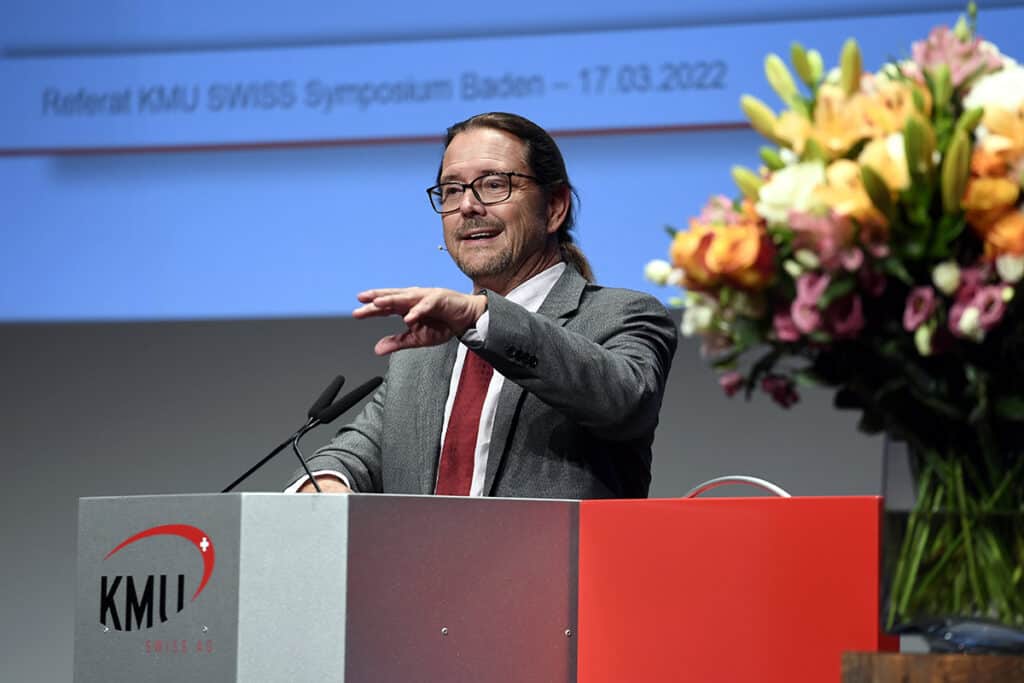
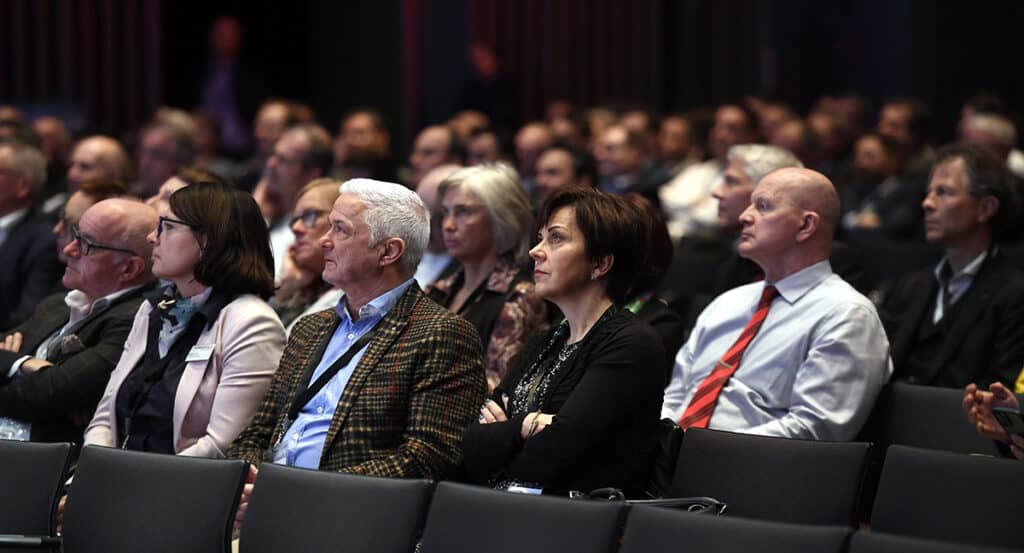
 The goal of the Swiss trade fair for business events, the ConferenceArena, is to be a pioneer in terms of trends and news. Now, those responsible for the trade fair say that, with a heavy heart, they have decided to postpone the anniversary edition by one year. The new date for the 10th ConferenceArena is Thursday, April 20, 2023.
 Swiss TecLadies has set itself the task of raising awareness of STEM professions among girls and discovering and promoting technical talent. The national support program is now entering its third round: from now until the beginning of May 2022, all technology fans can apply to the


 Swiss tap water may be of impeccable quality, inexpensive and healthy - but in the long run it's also a bit boring. With "Eau&Moi," Rivella wants to transform the lackluster tap water into a fruity refreshing drink with natural ingredients. For this purpose, pureed fruits, herbs and spices are packed into small pouches that can be added to the tap water as a natural flavor additive.


