New management team and new additions at SonntagsBlick

Under the leadership of Editor-in-Chief Reza Rafi, SonntagsBlick is expanding its management team and has appointed Fabian Eberhard as its new deputy editor-in-chief.

Fabian Eberhard becomes deputy editor-in-chief at SonntagsBlick, Lisa Aeschlimann takes over the role of the paper's editor. (Pictures: zVg.)

Eberhard, 39, has been with the company for six years. SonntagsBlick most recently in the role of head of research. He was appointed in 2022 by the industry magazine Swiss journalist:in elected investigative journalist of the year (Werbewoche.ch reported). In 2019, he won the Zurich Journalism Prize for his series of articles on Swiss arms exports to war zones. Eberhard previously worked for six years at the SonntagsZeitung. He graduated in history from the University of Bern and completed a MAZ diploma in journalism.

In addition, 29-year-old Lisa Aeschlimann now serves as the paper's editor. Aeschlimann joined the company at the beginning of the year. SonntagsBlick and quickly distinguished herself with stories on crime, security and social issues. Previously, she spent three years at the Tages-Anzeiger where she wrote about business and politics in the Zurich department. Prior to that, she studied journalism at the ZHAW, completed a diploma course at the MAZ, and did a traineeship at the Country Messenger. In 2019, she was runner-up as "Newcomer of the Year" at the industry magazine Swiss journalist:in.

Furthermore, the news section of the SonntagsBlick strengthened with two new additions. 34-year-old Lino Schaeren will join the team in mid-August. He was with the Bieler Tagblattthe last two years as editor-in-chief, where he repeatedly stirred up local politics with his research. Schaeren graduated with a diploma in journalism from the MAZ after completing a technical baccalaureate.

Also in November, Vanessa Mistric will be the SonntagsBlick reinforce. The 33-year-old has been part of the editorial team's research team since 2020 K-Tip/Balance. Prior to that, the winner of the Investigative Journalism Award completed a traineeship at Tamedia's research desk. Other stations were SRF and the SonntagsZeitung. Mistric graduated from the University of Zurich with a degree in political science.

Federal House editor Danny Schlumpf and news editor Camille Kündig have decided to SonntagsBlick to leave.

Change of management at Ammarkt: Danijel Sljivo succeeds Marcel Odermatt

There is a change in leadership at the Ammarkt agency. Marcel Odermatt will step down at the end of July after 14 years. His successor, Danijel Sljivo, will take over as head of the company effective August 1, 2023.

Danijel Sljivo (left) takes over the position of CEO of Ammarkt from Marcel Odermatt. (Image: zVg.)

Marcel Odermatt will remain a shareholder and board member of Ammarkt, according to a statement from the agency. Danijel Sljivo has already been working in the creative industry for more than 14 years. At TBWA, he worked his way up from intern to managing director. Sljivo brings extensive experience in leading teams and strategically planning marketing and communications campaigns. He holds an Executive MBA in Digital Transformation.

"I am very pleased that Danijel Sljivo will become the new CEO of Ammarkt," Marcel Odermatt is quoted as saying in the release. "Danijel has an impressive track record in the creative industry and with his experience and innovative approach will lead our company into the next phase of growth and development." Among other things, the company plans to expand its services in the area of digitalization. "With his extensive technical and leadership expertise and education, he has the necessary tools to accomplish this task," Odermatt said.

FDP uses image subject created by AI for election campaign

The FDP has launched a new poster campaign for the federal elections this fall. For the first time, it also used a fictional photo created with the help of artificial intelligence (AI).

The picture, first distributed on Sunday, shows suspected climate activists in orange high-visibility vests sitting on the ground on a downtown street. In front of them are vehicles, most notably an ambulance with blue lights. The scene never existed like this. It is made up of various photos.

The FDP wants to denounce the "destructive actions" of climate activists with the poster "Anpacken statt anklekleben!", as the party announced. Instead of street blockades, constructive solutions are needed.

The FDP is breaking new ground with the poster, it said. The motif was generated with the help of AI. The party is basically positive about the technology. However, it is against deliberate deception of the public. Therefore, the Federal Council party marked the use of AI on all affected posters.

The FDP had already presented its election campaign and the campaign program in May. According to its own statements, the second step followed on Sunday with an umbrella campaign. The campaign, which focuses on the economy, security of supply and retirement provision, was launched at numerous billboard locations and in social media. (SDA)

Tincan and So/In Agency team up

The agencies Tincan and So/In Agency have formed a partnership. Together, they aim to set new standards and effectively meet the rapidly growing demand from major brands for high-quality content creation for Instagram and TikTok.

Making common cause: Raphael Willi from Tincan, Melanie Balasopulos from So/In Agency and Nicoline Ineichen, Tincan Clicks. (Image: zVg.)

Big brands need content creators who promote the company community. Because Tincan and So/In Agency know how to do this and how to be successful, the two agencies have recently joined forces to take the social channels of national and international brands to a new level.

With this cooperation, a modern one-stop store for social media management is being created in the greater Zurich area, according to the joint media release: With Tincan as a full-service agency, So/In Agency can fall back on a versatile partner. Raphael Willi, co-founder and partner at Tincan, explains, "Whether in conception or content creation, our 30-person team is extremely diverse and, in addition to all social media management, also covers the other marketing needs of large brands. We live for missions that inspire."

Creative Booster for Next Level Social

Melanie Balasopulos, founder of So/In Agency, curates some of the biggest lifestyle Instagram accounts herself, including. @myinterior with over 2.3 million followers. Together with Tincan, she now implements large multimedia campaigns and social media strategies for her clients' platforms.

The collaboration has already gotten off to a very good start, says Melanie Balasopulos: "It already 'clicked' in our first workshop! The result is a symbiosis of creativity, performance and a lot of heart and soul. I'm really enjoying the collaboration and can't wait to go viral on Instagram and TikTok with our first joint customers."

How to deal with Fake News?

In their guest article, Stefan Eggenberger and Stefan Vogler aim to raise awareness about the issue of «fake news» and outline practical approaches and measures for better identifying and addressing false information in both business and personal life.

In their podcast stefanundstefan, Stefan Eggenberger (left) talks about various topics from the media and communications sector. The latest episode is about fake news. (Image: zVg. HWZ)

Is fake news old wine in new bottles? Not quite. Deliberate deception and manipulation have existed as long as there have been people. Fake news is a special and modern variant of it. These false reports are characterized above all by their rapid spread on the Internet and in social media. The motive behind them is often to stir up fear, insecurity, mistrust and hatred or to shake confidence in established and functioning institutions.

Is it all just staging?

Maybe. But probably only until we have believed Fake News for the first time, have spread it or supported its spread and have come to harm ourselves or others.

At some point it really hurts

It is important to take the phenomenon of fake news seriously, because they pose a threat to open cultures and societies in the sense of Karl R. Popper. They can undermine people's trust in politics and the media and thus endanger social cohesion.

With fake news, manipulators target public opinion and political decisions and aim to influence them for their own purposes. In doing so, they can cause damage by spreading false information on health, energy or security issues, for example. As fake news is increasingly professionally prepared and disseminated, they are all the more difficult to detect. They cleverly play on our prejudices and target our susceptibility. And they can lead us to make wrong and fatal decisions. They reinforce existing or create new prejudices, stereotypes and enemy images, lead to hatred and violence, and fuel the readiness for confrontation between groups and mentalities.

Fake News will soon pass away....

If you believe it, you will be blessed. In the future, we will be confronted with fake news even more intensively, more regularly and in all areas of life. Why? Because, for one thing, more and more groupings and communities of interest have no viable program of their own, no value-creating approaches and no meaningful solutions. Their own raison d'être is essentially only to distort, demonize, slander other models, programs, progress, developments, activities and actions.

On the other hand, because technology is developing rapidly, new horizons are constantly opening up, and it is becoming easier and easier to produce false reports professionally and spread them in a targeted manner. One need only think of the current technical possibilities of disinformation and manipulation of people through language models such as ChatGPT. With such possibilities, the phenomenon of fake news, which is so devastating for democracies, will continue to increase. And free media as an integral part of a democratic opinion-forming process will come under even greater economic and political pressure. This is because media channels can be filled more cost-effectively with AI-generated texts.

Personal resistance to deception and ability to tell the truth

There are several ways to become more truthful. The following seven pragmatic approaches can help in personal everyday life:

  1. Sources: When we read or hear a message, we check the source and its trustworthiness.
  2. Facts: If a news story sounds too good to be true, it probably is. Then we briefly check the facts and their accuracy.
  3. Dissemination: We avoid sharing or forwarding messages without review.
  4. Preferences and sensitivities: It is important to be aware of this and try to balance subjectivity with objectivity.
  5. Diversity of perspectives: We use different sources. When we read or hear a particular message (see point 2), we look for other sources and compare the information.
  6. Education: We keep ourselves up to date and educate ourselves further. Context and topic competence help us to better assess and classify information and news.
  7. Exchange: We exchange ideas in our communities (not to be confused with bubbles and echo chambers...), with friends and acquaintances, and get valuable third-party opinions.

Entrepreneurial levers

Organizations and companies can be threatened in part or as a whole by fake news and get into crises. They should therefore have a vested interest in ensuring that their employees act and react in a self-responsible, independent and constructively critical manner. With the following simple measures, they can make a concrete contribution to improving their Fake News resistance:

  1. Orientation: Guidelines for dealing with fake news are in place. The employees know, understand and apply these in their daily work.
  2. Enablement: Employees are systematically sensitized and coordinated in dealing with fake news, activated and motivated to cooperate independently in a constructive and critical manner.
  3. Act: Employees know how to recognize misinformation and where to report it.
  4. Monitoring: Social media channels and platforms are systematically and continuously monitored for fake news.
  5. Cooperation: Companies are working with other organizations to jointly combat fake news.
  6. Value chain: Companies inform their customers, partners and suppliers about fake news and how they can protect themselves from it.
  7. Consulting: Companies seek advice from experts, recognized bodies or companies with core competencies in this area (e.g. swisscom.ch, Fake News Guide).

Deliberate, conscious deception is an integral part of all cultures and societies. Let's learn to deal with it in a more relaxed, alert and professional way.


* The authors of this article, Stefan Eggenberger and Stefan Vogler, produce podcasts with conversations on relevant and current topics in communications. With "stefanandstefan" analyze, comment on and convey practical tips. Examples from practice are mixed with insights from studies and knowledge from teaching. In addition to the latest podcast "Let's fake!", they have published the following podcasts, among others: "Bullshit communication", "Nightmare AI?", "Purpose overkill", "Cost pressure - don't crack under pressure", "CEO communication", "Employer branding in times of skills shortage", "Super skills" and "No risk - No trust".

Farner and SBB rely on selfies instead of glossy portraits

The Swiss Federal Railways' (SBB) employer branding campaign is getting a new visual concept. By using selfies instead of glossy portraits, the campaign aims to highlight the SBB's team spirit.

In Switzerland, the shortage of skilled workers is becoming increasingly precarious and is creating additional pressure on the already tight labor market. This makes it all the more important for companies to position themselves clearly as employers and to set themselves apart. SBB has already been doing this consistently and successfully for several years with the guiding principle "Do something big. Move Switzerland with us.

In the course of the changeover to the "Du" in the HR process, Farner developed a new image concept that is intended to further emphasize the collegial interaction. This is to be achieved with selfies, a style of image that is unusual in an employer's image.

The 25 images produced feature SBB employees from a wide range of professional fields in front of backdrops such as factory halls, railroad tracks or stations. The photos are used for the entire SBB HR process: on the website, in job advertisements or for recruiting campaigns.


Responsible at SBBCorinne Kuhn, Yves Rüegg, Nicole Pongracz. Responsible at Farner Consulting: Mathias Kröbl, Camille Zuber, Ennio Cadau, Roger Krage, Rebecca Gerritsen, Philipp Skrabal. Responsible at Sebahat Film+Photo: Sebahat Derdiyok, Dan Cermak (photographer).

New supermarket company: Migros remains vague

Planning for the new centralized Migros Supermarkt AG begins on Monday. At a press conference, Migros’s top management outlined its intentions—though few concrete details were revealed.

In essence, Migros wants to streamline administration and become more efficient by centralizing its supermarkets. And all this, of course, for the customers, as the leadership repeatedly emphasized to the media on Friday. "Our goal is to offer the best price-performance, this has become increasingly difficult in recent years," said the head of the Migros Cooperative Federation MGB, Mario Irminger.

In the meantime, Migros has been left behind by its competitors - and the management team let this slip: "Migros has lost market share and lost effectiveness," said Irminger. And perhaps it was "partly in its own way," admitted the CEO, who has been in office since May.

One reason for this is the complicated organization. Even if the "federalist" organization has its advantages, "it sometimes happens that Migros is smiled at a bit because it is so complicated," Migros President Ursula Nold admitted.

Centralization and downsized management

Migros therefore agreed that it could not continue in its old form. The management got its act together and examined the options. However, those responsible rejected a move away from the regional cooperatives. "The merger of the regional companies would be an economic possibility, but there is no majority in the federally organized Migros," emphasized Irminger.

The decision to reorganize, which was already taken in May, is therefore as follows: The supermarket business, which was previously organized by the ten regional cooperatives on their own, will be brought together under one roof. This new Migros Supermarkt AG (MSM) will become a subsidiary of the MGB with its headquarters at Limmatplatz in Zurich, where the MGB is also at home.

The board of directors of the new Migros subsidiary includes five representatives of the regional cooperatives of Lucerne, Eastern Switzerland, Aare, Valais and Ticino, as well as two representatives of the MGB, Migros CEO Irminger and Hubert Weber. According to those responsible, MSM is 70 percent owned by the regional cooperatives and 30 percent by the MGB.

In addition, the MGB management, i.e. the Migros Board of Directors, will be reduced from 23 to 14 members. Among other things, the cooperatives represented in the MSM will be removed from the MGB Board. This means that in future, instead of ten regional cooperatives, only five will be represented: Neuchâtel-Fribourg, Basel, Vaud, Geneva and, above all, the powerful cooperative in Zurich, which has by far the highest turnover.

Cooperatives have worked out responsibilities

The Migros management emphasized that the cooperatives had agreed among themselves who would sit on the MGB board and who would sit on the MSM board. "It is also important that a large cooperative continues to be represented in the MGB," said MGB President Ursula Nold in response to criticism from various quarters that the important Zurich cooperative is not represented at all in the new supermarket company.

As announced on Thursday, Peter Diethelm, former head of Migros Genossenschaft Ostschweiz, will take over the management of the new supermarket subsidiary. He will start planning the new supermarket AG as early as next Monday. As of the new year, the first employees will transfer from MBG to MSM, first the 700 employees of the marketing department. Central tasks such as marketing will then be managed from the new organization, as will logistics, for example.

There was ironclad silence on the specific effects on costs. Diethelm said, however, that he himself had a precise list of the potential cost savings if the reorganization succeeded. He did not give exact figures.

Diethelm said only this much: "In the medium term, MGB is targeting a reasonable EBIT margin of 2.5 percent, which is standard for the industry." By comparison, Migros' EBIT margin in 2022 was 2.1 percent. "But it's not just about cutting costs anyway, it's also about gaining market share and sales," Diethelm said.

Job cuts not ruled out

The Migros management team also refused to be drawn on any concrete statements regarding possible job cuts. "We can't elaborate on that at the moment," said Migros CEO Irminger, but conceded that there could be "selective changes." However, Migros will take a "very social" approach to any layoffs.

But he also stressed that currently there is not simply a shortage of skilled workers, but also a general shortage of labor. "We currently have over 2,000 vacancies that we cannot fill," he said. (SDA)

Farner implements national information campaign "The EPD works."

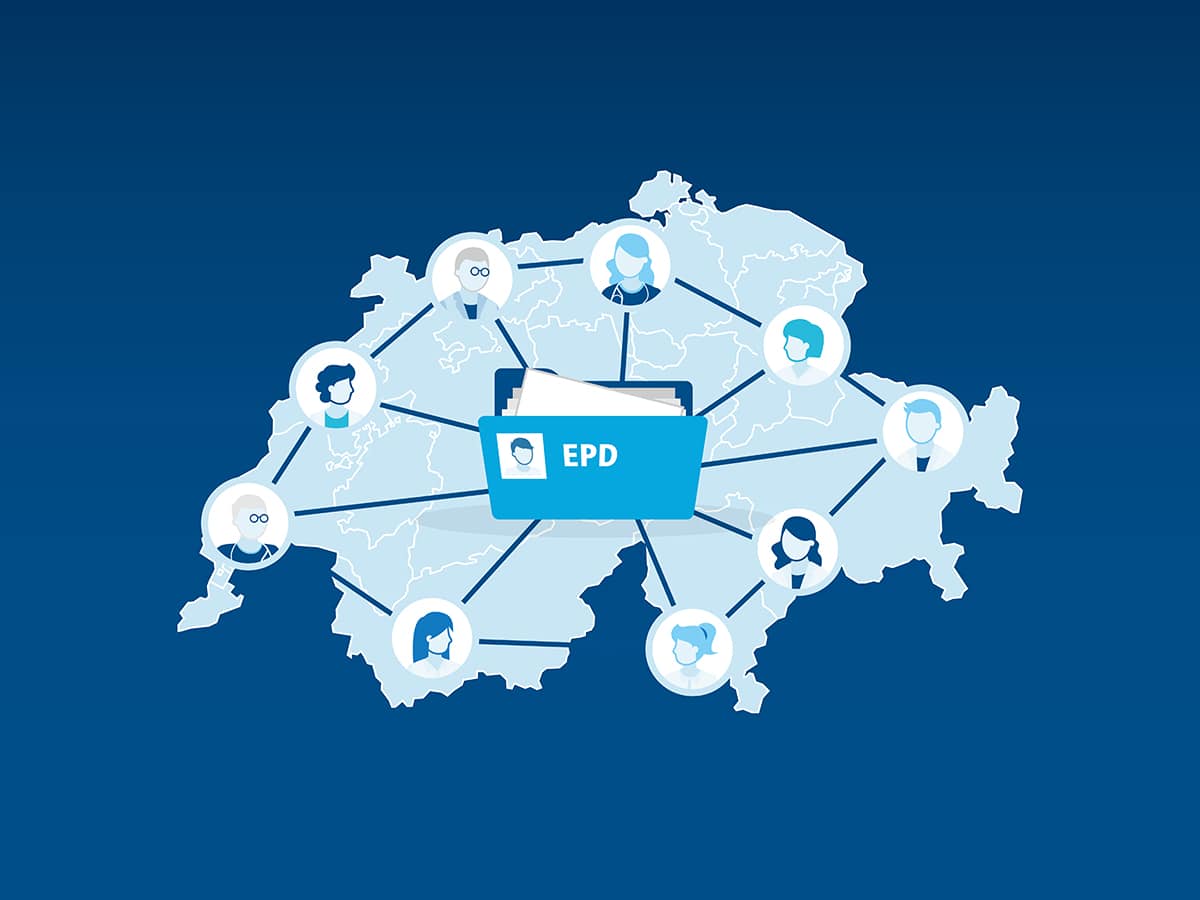
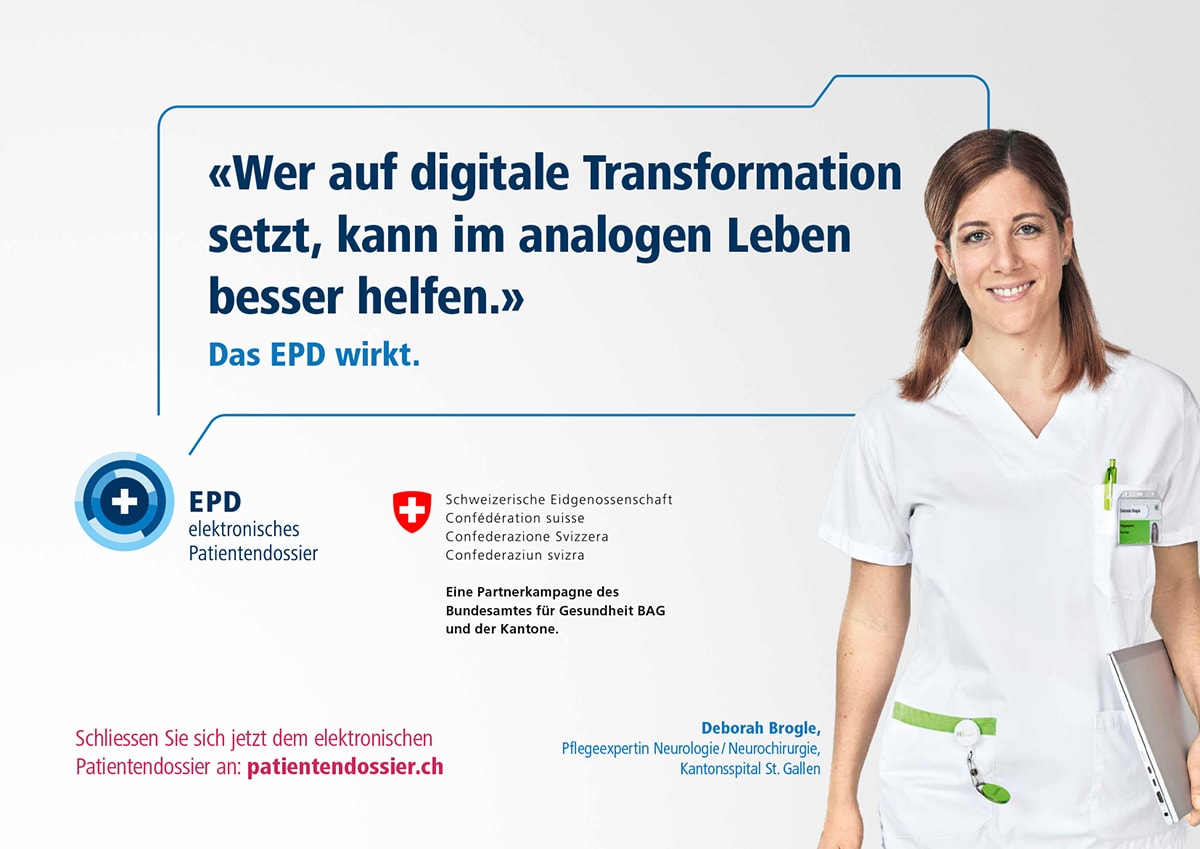
On Friday, the federal government will launch the «The EPD Works» partner campaign for the electronic patient record, organized by the Federal Office of Public Health (FOPH) in collaboration with the cantons. Team Farner is responsible for implementing the campaign.

In a first phase, the EPD campaign to health professionals, because they are important actors for the dissemination of the EPD and patients have great trust in them. The campaign informs health professionals about the EPD and its benefits and is intended to encourage them to join the EPD. It also allows health professionals to engage with the topic. An important role in establishing the EPD among health professionals throughout Switzerland is also played by the cantons, associations and organizations, as well as tribal communities. In a second phase, the general population will be informed. This is to take place in the course of 2024.

In order to reach as many health professionals as possible, paid advertising - print/online ads, presence on social media and more - as well as media work are planned. In parallel, the channels of the cantons, associations and organizations will be used to disseminate information about the EPD. This should give the campaign maximum impact.


Responsible agency: Farner I Team Farner.

Switzerland sweeps the board at the US International Awards

The winners of this year's US International Awards have been announced. Seeed and Switzerland Tourism are among the big winners in the competition for corporate videos, online and social media videos, and documentaries.

The Zurich-based film production company Seed Audio-Visual Communication snatched the Grand Award for the best submission in the main category "Corporate Videos". Switzerland Tourism also won a Grand Award in the main category "Online & Social Media". In addition, the jury named the tourism organization Client Company of the Year.

In total, there were 18 awards for Switzerland. Other Swiss award winners include Filmgerberei, Maybaum Film, Pumpkin Film, Stories, Wirz and Georg Fischer.

Across all categories, there were a total of 108 awards - 29 Gold Awards, 51 Silver Awards and 28 Finalists. Ten Production Art & Craft Awards were also presented, for example for Best Cinematography, Best Direction and Best Editing. In addition, the jury selected five Grand Awards, for the main winners in the respective main categories, and five Specialty Awards, which also include the Client Company of the Year Switzerland Tourism.

US International Awards 2023 Swiss medal table
Award Category Subcategory Production/Company Campaign/Client
Client Company of the Year Switzerland tourism
Grand Award Corporate videos Seed "Studying is what you make of it!" for FHNW
Grand Award Online & Social Media Wirz/Pumpkin Film "No Drama" for ST
Gold Corporate videos Corporate Image Seed "Studying is what you make of it!" for FHNW
Gold Online & Social Media Tourism Product Wirz/Stories "No one upstages the Grand Tour of Switzerland!" for ST
Gold Online & Social Media Webisode Film Tannery "Hanna Cash - S2, E1" for Economiesuisse
Gold Online & Social Media Country Promotion Wirz/Pumpkin Film "No Drama" for ST
Silver Corporate videos Corporate Image Brand film "Going Forward" for Georg Fischer
Silver Corporate videos Corporate Image Maybaum/Stämpfli Communication "University of Bern - Knowledge creates Value!" for Unibe
Silver Corporate videos Business, Economy & Finance Film Tannery "Hanna Cash - S2, E1" for Economiesuisse
Silver Corporate videos Marketing B2C Film Tannery "FEHH - The beauty of health" for Fehh
Finalist Corporate videos Corporate Image Seed "Renggli image film" for Renggli
Finalist Corporate videos Corporate Image Film Tannery "Every day a new tomorrow" for island group
Finalist Corporate videos Health, Medical & Wellness Film Tannery "Every day a new tomorrow" for island group
Finalist Corporate videos Corporate Image Maybaum film "Trisa of Switzerland" for Trisa
Finalist Corporate videos Informational Film Tannery "Hanna Cash - S2, E1" for Economiesuisse
Finalist Corporate videos Human Resources Film Tannery "Coop Future" for Coop
Finalist Corporate videos Fashion & Beauty Film Tannery "FEHH - The beauty of health" for Fehh

Source: US International Awards

The Specialty Award Winners

  • Production Company of the Year: Monte Nero Productions (Austria)
  • Client Company of the Year: Switzerland Tourism
  • Agency of the Year: Brunswick Creative Campaigns and Content (USA)
  • TV Network of the Year: TVN Warner Bros. Discovery (Poland)
  • Film School of the Year: Filmakademie Baden-Württemberg (Germany)

The Grand Award Winners

  • Corporate videos: "Studying is what you make of it!" - Seed Audio-Visual Communication for University of Applied Sciences Northwestern Switzerland FHNW
  • Online & Social Media: "No Drama" - Pumpkin Film in collaboration with Wirz for Switzerland Tourism
  • Documentaries: "The Wagner Group. Putin's Mercenaries" - TVN Warner Bros. Discovery (Poland)
  • Independent videos: "Disco Sauce: The True Story of Penne Alla Vodka" - Roberto Serrini (USA)
  • Student videos: "Henry" - Marco Henn from Filmakademie Baden-Württemberg (Germany)

Avoidance behavior towards repetitive and complex messages

Sometimes you just don't feel like reading the newspaper or watching the news. But why, exactly? Negative news stories are often blamed for this. According to a researcher from Freiburg, however, that isn't the only reason.

Repetition, complexity, and a focus on political strategies can lead to reader fatigue. (Symbol image: Unsplash.com)

A considerable part of society deliberately avoids confrontation with news about current world events. According to a recent study by the Reuters news agency, 40 percent of Americans do not follow the news in the newspaper or online. The explanation often given is that the reporting is too alarming. Communication scientist Gwendolin Gurr, who currently works as a data analyst for Swiss-German radio and television SRF, shows that this is not the only reason.

In her SNSF-funded study, published in the International Journal of Communication, Gurr identified three causes for audiences to lose interest in a long-standing issue and avoid related messages: repetition, complexity, and a focus on political strategies.

To test these factors, Gurr looked at how news about Brexit was followed in Switzerland. "I didn't choose the topic at random, of course," she explains. "It affects Switzerland, but not so directly that fears were the main reason for defensiveness." The topic was also "topical for long enough for a fatigue effect to occur at all."

In her study, the researcher combined results from a survey of the Swiss population with a content analysis of reporting on Brexit in this country. The respondents indicated what thoughts and feelings the topic triggers in them and how often they inform themselves about it. The news, in turn, was classified according to various criteria, namely negativity, intensity, complexity, sensationalism, repetition, political strategies.

In total, the researcher conducted three surveys at different points in time - and in each case simultaneously analyzed the articles about Brexit. This enabled her to observe whether public sentiment developed in step with the tone and content of the media reports.

Context bores

A first point that emerges from the study concerns the repetition effect. In general, fatigue is observed when media reports contain little new but at the same time a lot of familiar information. These are frequently recapitulated to place them in the overall context. In other words, too much information that is already known deters the audience. And vice versa: The most current news is the most attractive.

The second deterrent is complex style. Gurr has applied a system that she uses to evaluate the difficulty of language in articles and reports. To do this, she measures such things as sentence length and other linguistic aspects. The result: Complex news items are more likely to cause a feeling of fatigue.

Finally, the analysis revealed that fatigue is more likely to occur when political aspects dominate. That is, when it's not so much about facts, but about political maneuvering in connection with those facts - intrigues in parliament, alliances, election strategies. Or to put it briefly: Political maneuvers may excite politicians and the media, but they apparently leave a large part of the public cold.

Problem child climate

In contrast to other analyses, in which the negativity of news is often cited as the main reason for disinterest in news, this effect was not found in the Freiburg study. However, this does not mean that Gurr's findings contradict previous research. "In Switzerland, the coverage of Brexit was almost exclusively negative, so it was not even possible to measure an effect," the researcher explains.

Can these results be applied to other topics such as the climate crisis? "You can say, of course, that climate is very repetitive as a subject of news coverage because similar events occur and are analyzed over a long period of time," Gurr explains. "Our work clearly shows that this plays an important role in fatigue."

Moreover, explanations are often technical - favoring more complex formulations - and susceptible to political capture and corresponding maneuvering. In other words, all three of the factors for fatigue identified by Gurr are present in the climate crisis. Media professionals who want to inform a broad public about climate issues thus do not have it easy, according to the researcher. At the same time, she cautions, "Even if general conclusions can be drawn from my study, our results cannot simply be transferred like that, because each issue is individual." As an example, she cites armed conflicts or humanitarian disasters, where a specific form of fatigue occurs, so-called "compassion fatigue." (pd)


Those interested can download the study "What Leads to Audience Issue Fatigue? A Linkage Analysis Study on the Effects of News Coverage on Fatigue From Ongoing News Issues" by Gurr and Metag. here read up.

UBI rules on non-disclosure of comments in SRF online forum

For the first time, the Independent Complaints Authority for Radio and Television (UBI) has ruled on complaints regarding the failure to post comments on Swiss Radio and Television (SRF) online forums. In several cases, it concluded that the rejection of the comments did not withstand scrutiny under the fundamental right to freedom of expression.

(Iconic image: Unsplash.com)

The UBI found in several cases that the rejection of the comments did not stand up to the fundamental right of freedom of expression, as it announced on Thursday evening. It was only after a lengthy and controversial discussion that the commission affirmed its jurisdiction in this regard during today's public deliberations by a narrow majority of 5 to 4 votes and acted on corresponding complaints.

A regular writer had complained that several of his comments had not been published by SRF's community editorial team. In each case, the latter had referred to the company's own netiquette. The editors usually justified the non-disclosure by stating that the comments were unverifiable insinuations and allegations.

The UBI examined in each individual case whether the conditions for a restriction of the fundamental right of freedom of expression were met, according to the statement. In seven cases, it came to the conclusion that this was not the case. It therefore approved the corresponding complaints.

In contrast, the UBI unanimously rejected the complaint of the same writer against the non-disclosure of a comment due to personal attacks against another user. According to the press release, his complaint against the six-month blocking of his comment account was also narrowly rejected. The editors had issued this after an explicit warning because of repeated verbal attacks against SRF employees.

Three other complaints were also dismissed by the UBI on Thursday. (SDA)

What does "triggered" actually mean?

In his column «What Does It Actually Mean…?», Benno Maggi explains terms from the fields of marketing and communications. This time, he explains the term «triggered.».

What did this word trigger in them when they read it? Or in new German, what did it trigger? If something bad, then I'm sorry. For me, it usually triggers anger when I hear or read it. The term is currently used very inflationary and unfortunately often wrong. At the moment, everything triggers something in everyone. No matter if gender star, climate surcharge or ChatGPT. It seems as if we are all traumatized, so much you hear the word or read it in the social media. Can't we just get excited anymore?

In the psychological context, a trigger is a so-called cue stimulus. It triggers an unprocessed trauma and floods us with feelings that we had at the time we were traumatized. And that can be very unpleasant for those affected.

The word was used mainly in psychology before its rapid spread. And that's where it belongs. It comes from English and means trigger. Yes, that's right, the little lever on a pistol or revolver that causes the cartridge to fizz out of the barrel with a shot. Bang! That would be the second interpretation. "Pull the trigger." - Pull the trigger. Finish it.

In the social media, after all, it often pops up and therefore it is not surprising that the term outside the treatment rooms of psychologists and psychoanalysts appeared there first. As so-called trigger warnings, with which at best traumatizing content was provided. The often thoughtless content and comments on the rather anonymous platforms seemed to awaken the need for more empathy and more considerate behavior.

Caution, trigger alarm!

It was well-intentioned when these first appeared before posts. Such hints can protect us by giving us the choice whether we want to see what is coming now or not. But even here, the inflationary use of trigger warnings is counterproductive. They are automatically clicked away or make us even more curious. And in the most harmless case, you get angry about the crap you just consumed; in the worst case, traumatic events are reactivated.

But what is traumatic today? The next reorganization, the missing briefing of the client, the new hip cosmetic product that is no longer available online, the terrible campaign of the competitor agency? OMG. Is it all that bad? Seems so to anyone who consumes social media or even classic media and their comment columns.

Whereas letters to the editor used to be linguistically sophisticated, today comments are often just verbal shootings. "Pull the trigger." - Pull the trigger. Finish her/him off. In the end, a lot of noise and many victims who are then traumatized in the worst case.

But at least mental health has managed to get out of the taboo zone and into the public eye in recent years, and we can finally talk about mental health problems, traumas and illnesses as if they were the flu, a pulled muscle or a broken leg. But that doesn't mean we have to communicate with each other in psychologist speak all the time.


* Benno Maggi is co-founder and CEO of Partner & Partner. He has been eavesdropping on the industry for over 30 years, discovering words and terms for us that can either be used for small talk, pomposity, excitement, playing Scrabble, or just because.

get_footer();