Brandsoul implements Tamedia's largest employee event

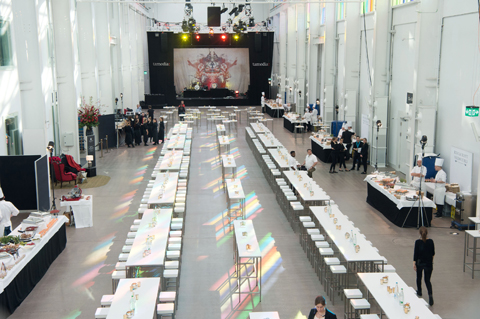
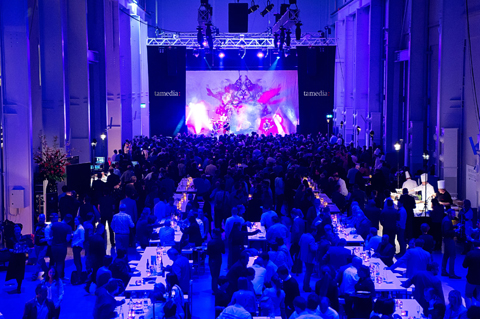
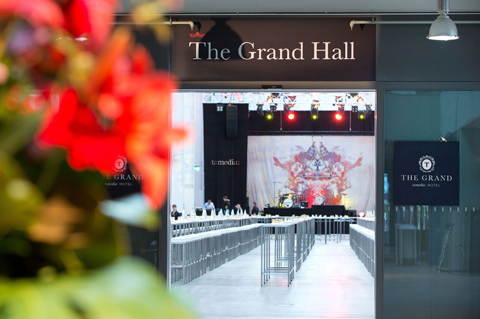
For Tamedia's largest employee event to date, Brandsoul was entrusted with the conception, overall organization, implementation and communication of the event.

2-t_0

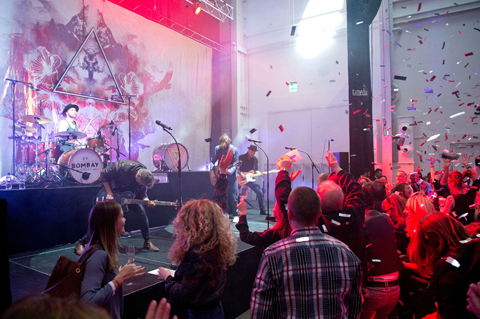
Around 2,000 employees from the various media and products of Tamedia, Switzerland's largest private media group, traveled from all parts of the country to experience the company's identity and diversity up close in a festive evening.

1_19

In addition to a broad culinary selection from all over the world, the guests were able to benefit from a first-class entertainment and show program. Through targeted communication measures and an elaborate, scenographic staging, Brandsoul developed a platform that offered the opportunity for exchange and supported the employees' loyalty to the company in the long term.

2_21
3_19
4_15


Council of States does not want a ban on advertising for tobacco products

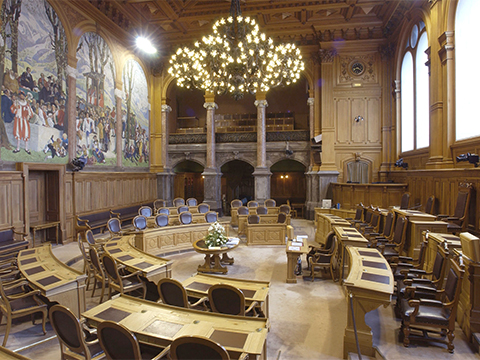
A setback for Health Minister Alain Berset: The Council of States wants to send the Federal Act on Tobacco Products back to the Federal Council. The upper chamber wants nothing to do with an advertising ban.

staenderat_1

The free market economy should be given more weight than prevention. By 28 votes to 15, the small chamber followed the majority of its health committee. The latter had requested the referral back to the government by 6 votes to 4 with 2 abstentions. Berset only received support from the left-wing camp. This means that the Federal Council will probably have to go through an additional round. If the National Council also rejects the bill or the Council of States decides to reject it a second time, the government will have to go back to the drawing board.

"There is a limit"

The Federal Council wants to alleviate the problem of addiction with the Tobacco Products Act. Parts of the new law were already controversial during the consultation process. The Council of States is calling for a new bill that only includes undisputed elements of the current Tobacco Ordinance, such as the protection of children and young people. However, the small chamber wants nothing to do with restrictions on advertising in cinemas or on posters, sales promotion and sponsorship. In particular, the reporting of advertising and marketing expenditure should also be dispensed with. A clear center-right majority in the Council of States warned against an "attack on the free market economy". It had not been proven that general advertising bans caused a reduction in smoking. It would also give the Federal Council too much power. "There is a limit," said Joachim Eder (FDP/ZG).

No differentiation

It is also difficult to see why the same strict rules should apply to nicotine-containing e-cigarettes or chewing tobacco snus as to conventional cigarettes, which are more harmful. "We lack differentiation," said committee spokesperson Josef Dittli (FDP/UR). The Federal Council issues advertising bans regardless of the risk potential. The civil parties also complained that the Federal Council's draft bill would curtail the powers of the cantons. "The bill regulates so much at federal level that it restricts the cantons' scope for action," said Dittli.

Let the facts speak for themselves

Only the SP and Greens as well as two centrist politicians considered the draft law to be a useful basis for parliamentary work. "We should bring ourselves to discuss the differences in the detailed consultation," said Hans Stöckli (SP/BE). Advertising bans in a number of cantons were already proving effective. In cantons with stricter rules, the smoking rate is lower, said Stöckli. "If you fail to recognize this, as those rejecting the law do, you must be in a very clouded area." Federal Councillor Berset focused on the hard facts in his fiery plea for the bill. Smoking causes health, economic and social damage, he said. "The rejection of the bill is not a compromise, but the stance of one pole."

Law for the protection of minors

The nationwide ban on the sale of cigarettes to minors is not controversial. A majority stated that they expressly welcomed this measure to protect children and young people. A legal basis must be created for test purchases. Most also consider a ban on advertising aimed specifically at minors to be sensible. At the presentation of the proposals, Health Minister Berset said that advertising has a particularly strong influence on young people. According to a German study, the risk of young people starting to smoke increases by 46 percent if they are exposed to tobacco advertising.

Strict rules in many cantons

Today, there is a ban on tobacco advertising on radio and television. Tobacco advertising explicitly aimed at minors is also prohibited. Some cantons have stricter rules than the federal government. In 15 cantons, poster advertising for tobacco products is already prohibited. In ten cantons, cigarettes may not be sold to minors, and in a further twelve cantons the sales age is 16. Every year, over 5 million people worldwide die as a result of tobacco consumption. In Switzerland, this figure is around 9500. This makes tobacco consumption the most common preventable cause of death. (SDA)

BSSM sells Switzerland with Otto Hofstetter

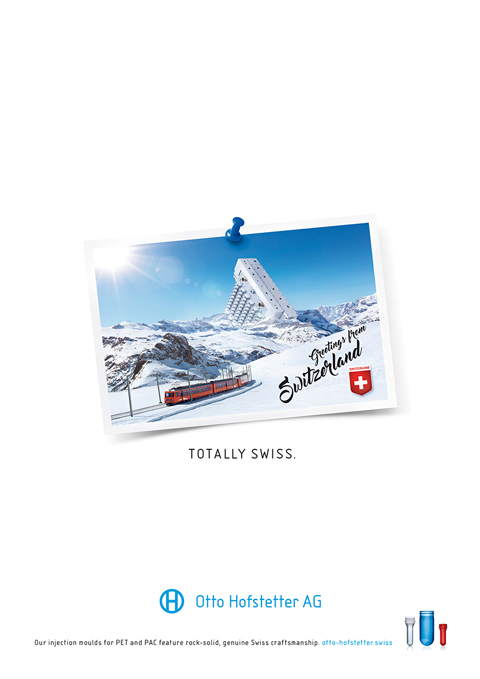
Otto Hofstetter commissioned BSSM to further develop the brand identity launched last year. Based on the central theme of origin, new key visuals were created that combine one of the toolmaker’s products with a typical Swiss object.

Otto_Hofstetter_Ad_SwissCheese-t

Toolmaker Otto Hofstetter is almost exclusively active in exports. The main markets of the family-run company are in Europe, South America, Asia and increasingly in the Middle East. Market studies have repeatedly confirmed that Swiss origin is an attractive attribute in international business and that Swissness is a significant quality feature. According to customer statements, Swiss production justifies even a higher price compared to competitors. The key visuals are used in advertisements placed in international trade titles.

Otto_Hofstetter_Ad_SwissMountains_0
Otto_Hofstetter_Ad_SwissCheese

Responsible at Otto Hofstetter, Uznach: Stefan Zatti (overall responsibility). Responsible at BSSM Werbeagentur, Basel: Urs Schneider (CD); Pascal Rehmann (AD); Hannes Müller (text); Philipp Buser (consulting); Imke Fichtner (production); Mirco Rederlechner (photography); Detail AG (image editing).

Last but not least: Out of tombstone

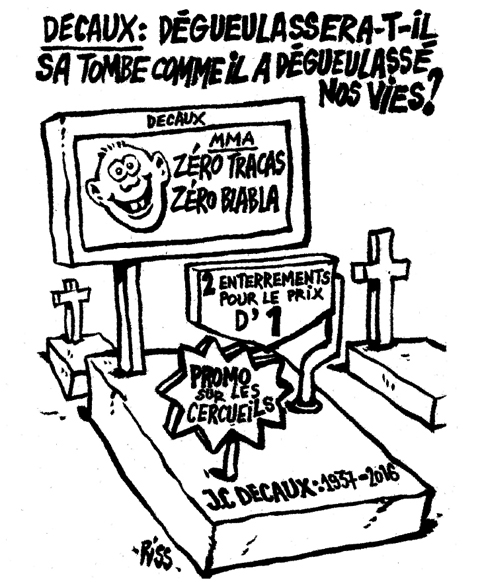
Outdoor advertising magnate Jean-Claude Decaux died on May 27. The French satirical magazine Charlie Hebbdo paid tribute to him with a scathing cartoon.

RIP-Decaux-t

No one stands for out-of-home more than Jean-Claude Decaux. In 1964, he founded JCDecaux, currently the world's largest outdoor advertising company, which today holds 30 percent of APG SGA. With the idea of providing municipalities with bus shelters free of charge and maintaining them in return for exclusive marketing rights, the company secured a quasi-monopoly in public spaces. Using the same principle, the company still maintains toilet facilities, bottle banks and illuminated city map boards today.

As is well known, however, advertising in public spaces does not only have friends. Unlike all other forms of advertising, it cannot be circumvented; there is a compulsion to consume, so to speak. Even advertising legends like David Ogilvy criticized that advertising does not integrate itself into the public space, but blocks the view of it. What is a blessing for some (cf. Last but not least from Tuesday), is a thorn in the side of others. It is therefore not surprising that Decaux's life's work is not only applauded and admired, but also criticized.

RIP-Decaux-2

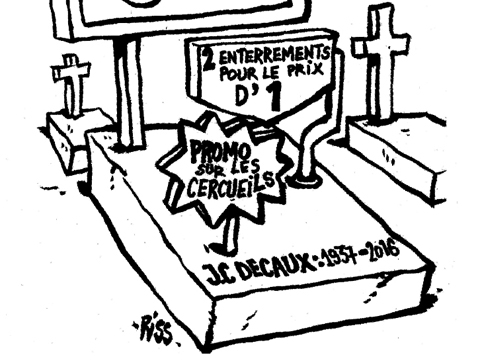
"Is he dirtying his grave like he did our lives?" asks Charlie Hebdo cartoonist Laurent "Riss" Sourisseau - plastering the tombstone with macabre advertisements such as "Two Funerals for the Price of One" or "Action on the Coffins" (source: Charlie Hebdo, No. 1245, June 1, 2016). Incidentally, cartoonist Sourisseau survived the attack on the Charlie Hebdo editorial office in January 2015, playing dead after being shot. (hae)


Open Up celebrates 15-year anniversary

In 2001, Kilian Borter and Urs Thaler founded the agency on Stauffacher Street in Zurich, focusing on copywriting services for internal and external corporate publications, media relations, and crisis communication.

openup1

The agency now has thirteen employees and is run by the two owners Melanie Schneider, who joined Open Up as a partner five years ago, and Kilian Borter. "We have always attached great importance to a very personal and close customer relationship. This has paid off, as evidenced by the many long-standing mandates," says Melanie Schneider. "Digitalization is changing the communication behavior of people and companies enormously. What remains is the origin of all communication, namely the content."

openup2
The Open Up team (from left to right): Patrick Preuss, Rahel Perrot, Katrin Schmitter, Melanie Schneider, Kilian Borter, Sascha Komenda, Angela Obrist, Deborah Bischof, Mario Schuler, Urs Thaler, Diego Oppenheim, Nicole Merkel, Ramilya Iftodi

Open Up currently serves around thirty clients on an annual mandate and project basis. The agency's clients include companies and organizations from the finance and insurance industries, IT and telecoms, tourism and transport, automotive, healthcare and education, as well as NGOs, foundations and associations.

Growth and expansion of the offer

Over the years, the agency has not only grown continuously, but has also expanded its portfolio of services. In particular, consulting on brand positioning and the development of content strategies have been added. The aim here is to make greater use of the clients' own media (corporate and social media). The focus of client work is therefore on stories and addressing target groups. Open Up attaches great importance to content creation, i.e. the development and staging of content. Open Up is a member of the Association of PR Agencies in Switzerland (BPRA) and is certified according to international standards (ICCO, CMS III). The agency is also a member of the industry association BPRA and the international network of independent agencies Public Relations Network (PRN). The representatives of the PRN agencies are guests of Open Up in Zurich on the occasion of the annual general meeting this year.

Microsoft buys career network Linkedin for $26 billion

Microsoft aims to strengthen its position in the corporate sector by acquiring the professional networking site LinkedIn. LinkedIn is valued at a total of $26.2 billion, the two companies announced on Monday.

linkedin

This sum also includes Linkedin's cash reserves. They stood at a good three billion dollars at the end of the first quarter. Microsoft is offering 196 dollars per share. That's a whopping 49.5 percent premium to Friday's closing price of $131.08. Compared to prices last year, however, it's still something of a bargain: Linkedin stock had been trading above $260 at times. Investors were unconvinced by the deal in an initial reaction, with Microsoft shares falling around four percent at the start of U.S. trading. Microsoft CEO Satya Nadella said the Linkedin team had built a "fantastic business." "Together, we can accelerate growth." He also said the office software Office 265 and Dynamics would grow with the purchase - "because we want to equip every person and every business in the world with it."

Microsoft needs new fields

Nadella has led Microsoft since February 2014 and gave the company a new direction. Traditionally, Microsoft lived primarily from selling Windows software for PCs as well as its office programs. But with the shrinking of the PC market, the Windows money machine has become less reliable. And for Office, there is favorable competition from Google, among others, as well as other vendors targeting mobile devices. Nadella is relying on subscriptions instead of purchased software and stated the goal of making Microsoft's online services available on all platforms - including, for example, Apple's iPhones and iPads and devices running Google's Android system.

Everything remains the same at Linkedin

Linkedin, launched in 2003, is one of the veterans among online services. The company has been listed on the stock exchange since spring 2011. The career network is to retain its brand and operate independently under the umbrella of the Microsoft Group. Linkedin CEO Jeff Weiner will keep his job and report directly to Nadella. Linkedin has relied on data analytics to help with recruiting for years. Most recently, the integrated blog platform, through which well-known entrepreneurs such as Virgin founder Richard Branson publish articles, also became important. On Linkedin, users can introduce themselves in professional profiles, look for new jobs and communicate with other members. Companies also use the portal to search for employees. In the first quarter of 2016, the global user base climbed from 414 to 433 million. Per month, 105.5 million of them were active. In German-speaking countries, Linkedin exceeded the eight million member mark. Competitor Xing has over ten million members in Germany, Austria and Switzerland - but is largely limited to this region as well. (SDA)

Mediafisch: Image film for Swiss blister center

The new blister packaging line is the most advanced in Switzerland. To promote this facility and the blister packaging process, the Swiss Blister Center produced a promotional video in collaboration with Mediafisch.

Bildschirmfoto-2016-06-13-um-16.31.58
The new Swiss Blister Center stands for the highest quality in the blistering of medicines. Medicines are packaged individually for each patient and per intake time in a tubular blister. This is done in a clean room and by means of an automation system. The drugs are blistered by machine and then subjected to automatic and visual quality and safety checks. The new blister line is the most modern in Switzerland. To promote this facility and the blistering process, the Swiss Blister Center realized an image film in cooperation with Mediafisch. This goes beyond a simple film portrait.

The film shows in a humorous way what can happen if a mistake is made when preparing medicines. The frame story sets the film apart from usual image films, according to the release, and thus grabs the viewer's attention. The main part introduces the blister line. In clear steps, the film explains the process of blistering with its nationally unique procedure. Every step in the process is carried out to the highest standards of hygiene and is continuously monitored. The focus is always on one thing: patient safety.

https://www.youtube.com/watch?v=paQ3tV_JYZg

Cuts are largely dispensed with in the film. The so-called plan sequence is current again and is also used in films such as The Revenant or Birdman. A camera on a gimbal guides the viewer through the story.

Responsible at Swiss Blister Center: Johnny Schuler (Head of Marketing). Responsible at Mediafisch: David Amrein (project management); Philippe Grob (idea, script, direction); Joël Brunner (camera) ; Nick Metzger (camera assistant); Oliver Wigger (camera assistant); Martin Rütsche (editing, color grading, motion design); Shamim Benz (production assistance); Dani Baja (make-up) ; Anne-Cécile Vogt (actress) Pedro Vertulli (actor).

Schaerer und Partner: Around 17,000 visitors at AEW Energie's big anniversary party

AEW Energie celebrates its 100th anniversary this year. Schaerer und Partner was commissioned with the conception as well as the project management of the various activities. The highlight was a four-day celebration at Birrfeld.

aew

On Thursday evening, Christa Rigozzi welcomed 480 employees to the internal party. The cover band ABBA 99 set the mood until the early hours of the morning. 520 invited guests from business and politics drove up on shuttle buses on Friday. Mona Vetsch led through the gala evening in the nobly decorated marquee. Entertainment was provided by Leo Wundergut in collaboration with the Argovia Philharmonic. On Saturday and Sunday, the 3.5 hectare festival area opened its doors to the public. They were welcomed and guided through the day's program by the well-known presenter Nik Hartmann.

aew

Numerous attractions ensured two exciting days of festivities. The AEW Electricity World invited visitors to playfully explore the topic of energy with various experiments. The Physikanten provided numerous laughs with their spectacular and interactive science show. A bit of courage was required when crossing the specially built rope bridge at dizzy heights. An impressive professional show by AEW Energie, including a lightning strike in a power pole, the poetic glider shows by the Blanix team from Austria, face painting and pony rides for children, concerts and much more made the festive days fly by. (pd)

Responsible at AEW Energie: Yvonne Kohler, project management; Silvia Geissmann and Claudia Wehrli, project implementation. Responsible at Schaerer and Partner: Andi Schaerer (overall management), Claudia Zampoli (project management), Daniel Rist (event).
 

Digital transformation - a visit to Silicon Valley

Nowhere else in the world do so many startups spring up as quickly as in Silicon Valley. Peter van der Touw, CEO of Notch Interactive, was there when it all began with a groundbreaking project in a garage, and he’s brought back the latest figures and developments for *Werbewoche*.

petervdt_teaser

Silicon Valley is one of the most important locations for the IT and high-tech industry in the world. It is the southern part of the metropolitan region around the cities of San Francisco and San José - San Francisco Bay Area. The whole region is about 70 kilometers long and 30 kilometers wide. Nowhere else is the attraction for technicians and inventors so great, nowhere else is the innovation density and networking so strong. Yet it all began on a small scale in a garage - where William Hewlett and David Packard, both graduates of Stanford University, founded Project HP with just over $500. The first HP product was developed in a garage in Palo Alto in 1939. It is now considered the birthplace of Silicon Valley. "The garage still looks the same today," van der Touw said, "except the door is green today." Economically, the region's development was spurred around 1951 with the creation of the Stanford Industrial Park. This research and industrial area next to Stanford University was probably the main driver for subsequent development, Peter van der Touw recounts after his visit to Silicon Valley: "They didn't want students to go to big companies after graduation, but instead to realize their own projects on site." In this way, new impulses were to be triggered in the economy. Soon, graduates of the university and former employees of electronics companies were founding small companies in Silicon Valley. They developed their own ideas and products. The main figure in this development was Professor Frederick Terman. As a member of the engineering faculty at Stanford, he encouraged his students to start their own companies as early as around 1938 and invested in many of them himself. This resulted in companies such as Hewlett-Packard. It was also Terman who spurred the development of the Stanford Industrial Park (now Stanford Research Park) in 1951. The university leased portions of land to high-tech firms, after which companies such as Eastman Kodak and General Electric moved into the park. According to the story, the growth of Silicon Valley was also due to Terman's efforts to create relationships between Stanford and various technology companies in the area. During the proliferation of computer technology in the 1960s and 1970s, high-tech companies increasingly flocked to Silicon Valley - such as Apple, Google, Adobe, Oracle, Cisco, Dell, Facebook, Tesla and Amazon.

"Fail fast, fail cheap"

Today, Silicon Valley is almost overcrowded. Three million inhabitants live on an area of 2100 square kilometers - around 40 percent of the inhabitants are foreigners. "Inventors and geniuses from all over the world come here to promote their project and find an investor," says Peter van der Touw enthusiastically. Because nowhere else are so many companies founded, is so much invested in start-ups, do so many attempts fail. However, the failed attempt is not condemned, on the contrary: "A failure is seen as a learning episode for the next start-up," says van der Touw. Failure is almost an important part of success, he said. "Fail fast, fail cheap," is the startup motto in Silicon Valley. But it's not just the way failed projects are dealt with that is much more open and transparent. Collaboration, too, is actually based on mutual exchange instead of competition; interactive cooperation and mediation replace rivalry fights. This atmosphere is also appreciated by some Swiss companies. Swisscom, for example, has had an outpost in Silicon Valley since 1998 and is driving innovation. Last fall, for example, Swisscom invested in the startups Ava and Crowd. Together with Archilogic, Gamaya and Monetas, they were among the winners of the third Swisscom Start-up Challenge and completed a one-week mentoring program in Silicon Valley. Ava has developed a smart bracelet that helps couples plan for pregnancy. Ovulation can be reliably predicted, and a mobile app discreetly displays fertile days. Ava was already preparing to enter the U.S. market last fall, opening an office in San Francisco. Swisscom is investing around two million Swiss francs as part of a seed round together with Zürcher Kantonalbank ZKB and various business angels.

Digital revolution

If you want to deal with digital transformation in Silicon Valley, you can't get past Moore's Law. "Moore's Law is responsible for the fact that there is a digital transformation or a digital revolution," says van der Touw. We're talking about a 1965 insight by Gordon Moore regarding technology advancement that still holds true today. Moore made his observation shortly after the invention of the integrated circuit. Moore's Law states that the complexity of integrated circuits can be regularly doubled with minimal component cost. It refers to the doubling of the integration density, i.e. the number of transistors per unit area. Or in terms of the current application - the storage capacity of a 1970s computer today fits on an iPhone memory card. This advance in technology can indeed be described as the essential basis of digital change - the reduction in the size of the elements with a simultaneous increase in the size of the microchips, or storage capacity. Thus, the name silicon ("silicon ") also comes from the research and industrial complex in semiconductor and computer technology in the Santa Clara Valley.

Start-ups in Silicon Valley

The currency in Silicon Valley lies primarily in stock options. This means that anyone who invests in a start-up benefits from the company's growth with stock options. "The most famous example is probably Google's chef, who became a millionaire with stock options as a salary component," says van der Touw. So Silicon Valley is not just a business valley for engineers. But engineers also have a different status in Silicon Valley - in addition to higher wages than in the high-cost country of Switzerland, for example, employees also receive stock options - "no wonder the innovative and high-performing technicians are migrating to the Valley," says van der Touw. In addition to the impressive facts and the extraordinary atmosphere in Silicon Valley, some start-ups also caught van der Touw's eye because of their uniqueness. Autodesk Autodesk is a Californian software company for digital 2D and 3D design. They use an effective project to show how artificial intelligence is used. The assignment is to design a new racing bike using various parameters. Based on the data in the system, the algorithms automatically suggest various models in a restricted playing field. "In the so-called deep learning process, the system thus starts to learn on its own," says van der Touw. So the new ideas of the models come from the system - based on the input. The same principle also works for high-rise buildings, for example. As soon as the system has been fed the necessary architectural data, it independently suggests various models - and also 3D prints them out. "Of course, the knowledge of structural engineers, architects, engineers and other experts has already been incorporated here," says van der Touw, "but then the system independently calculates various proposals." Thus, after entering the system once, one receives a template that can be expanded as desired and does not require recalculation each time - "the system does it right away itself." Internet of Things According to van der Touw, the Internet of Things is also a big topic in Silicon Valley. Apps are being developed, for example, that collect pollen levels, medication purchases and other data - thanks to this data, allergy sufferers can get an overview of the current pollen levels in various regions before they go to the site themselves. An inhaler uses GPS to find those zones in the region where the most asthma attacks have been detected. Agricultural sensors work on the same principle, providing information on crop status, water quality and temperature in fields of various sizes. Data can be shared and viewed via a cloud. Ubiquitous information sharing "Innovations like this are particularly beneficial for internal communication at companies whose employees work primarily in the field," says van der Touw enthusiastically. For example, he says, the builder can provide news to employees at all construction sites via the Beekeeper app - an app or wristband is very practical here. He himself has already considered whether Notch Interactive could use such a tool.

Ursina mason

IN BRIEF

petervdt

Peter van der Touw brought the latest figures and developments from Silicon Valley, including from Ecosystems Ventures - a company that provides capital for startups. He traveled to Silicon Valley as part of an Executive MBA with HTW Chur's Digital Transformation pilot class. The Executive MBA class visited Google, Oracle, Cisco, HP, Salesforce, Autodesk and Swisscom, among others, as well as many startups. The EMBA Digital Transformation lasts one year, on Fridays and Saturdays - plus one week in Berlin and one week in Silicon Valley. As a final project, each student writes a master's thesis. "This MBA has brought me a lot so far, especially inspiration and networking with the course participants," says van der Touw. For example, the EMBA class owed a visit to Oracle in Silicon Valley to Heinz Hodel, Emmi CIO and van der Touw's fellow student in HTW Chur's Digital Transformation pilot class. Van der Touw also has a personal connection to Silicon Valley. His uncle Marnix Dillenius emigrated from Holland to Palo Alto because he worked as an engineer at NASA.

Internet of Things is a big topic in Silicon Valley.

1_9
Apps collect data on pollen levels and medication use. This gives allergy sufferers an overview of pollen in different regions.

2_6
Agricultural sensors provide information on crop status, water quality and temperature in fields of different sizes.

3_4
Autodesk is a California-based 2D and 3D digital design company. Once the
system has been fed with the necessary architectural data, it independently suggests
various models and also prints them out in 3D at the same time.
4_1

The biggest mistakes made by failed startups
are according to van der Touw:

- Single founder: At least two persons
must be present at the start of a project,
a technical and an economically oriented
Founder.
- Bad location: Venture capitalists want
drive no more than an hour to reach the
Start-up to visit. A Swiss start-up,
that a capital raising in Silicon Valley
plans, it is imperative to be there on site.
- Stubbornness
- Diversification instead of focus
- Premodern: It makes little sense to use a product
to design the mental and technical
Basic attitude of the company too far
ahead is.
- Poor calculation of financial resources:
The money really has to go into the product.
- To give up already after the first fail.

Facts & Figures
- The most important IT and technology location
worldwide: Three million inhabitants live on
an area 70 kilometers long and 30
Kilometer width.
- Silicon Valley is the southern part of the San
Francisco Bay Area, includes the Santa Clara
Valley and the southern half of the peninsula
of San Francisco and extends from San Mateo
to San José.
- The part of the name Silicon ("Silicium") refers to
on the research and industrial complex
in semiconductor and computer technology, consisting of
from over 1000 companies in the Santa
Clara Valley.
- In the USA - and thus above all in Silicon
Valley - around $290 billion annually will be
invested. In the rest of the world 210 billion
USD.
- The economic development of the region
began around 1951 with the establishment of the Stanford
Industrial Park - driven by Frederick
Terman.
- A location of high technology became the
Silicon Valley with the spread of computer technology
since the 1960s / 1970s.
- Among the best known companies are
today Apple, Adobe, Amazon, among others,
AMD, Cisco, Dell, eBay, Facebook, Google,
Hewlett-Packard, Intel, Oracle, Symantec,
Yahoo, Tesla and Uber.
- Inventors and employees come after completed
Technology study always
still with the largest share from Stanford - on it
follows Harward, MIT and Berkley.
- Venture capitalist awards funds in five phases,
starting at 1to 3 million. The first
Phase of investment is the most risky,
but relatively the cheapest.
The goal of the start-ups is therefore to regularly receive funds
and thus to obtain the next phase of the
investment to achieve.
- Around 1000 new start-ups per year.
- One start-up out of 100 is very successful.

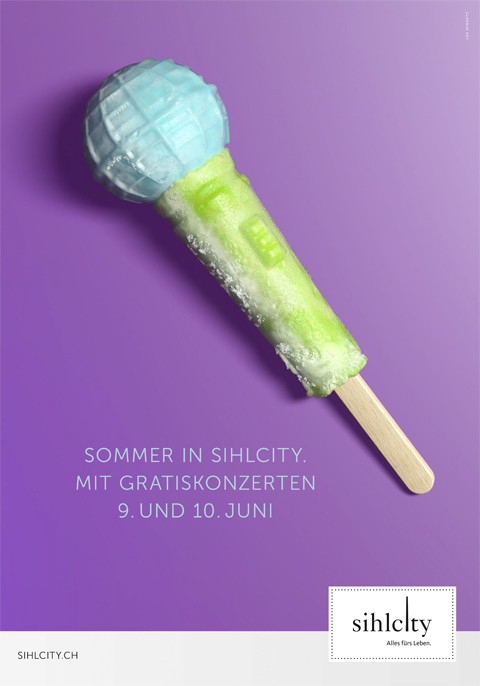
Leo Burnett: Summer events for every taste

Leo Burnett Switzerland handled the communications for the summer lounge in Sihlcity. The campaign includes print ads and radio spots.

LBS_SC_Sommerlounge2016_F200_PR-1-t

Sihlcity is not only a shopping center, but surprises with a variety of activities. One of them is the Summer Lounge, which takes place from June 8 to July 30 on Kalanderplatz in the middle of Sihlcity. The lounge offers bars, concerts, EM public viewing and, of course, shopping - in other words, something for everyone. The campaign by Leo Burnett implements this in a refreshing way: with unusual glacé shapes, matching the various themes. The three motifs can be seen on posters and flyers as well as in ads and banners. Radio spots also show how close lounging and shopping come in Sihlcity.

LBS_SC_Sommerlounge2016_F200_PR-1
LBS_SC_Sommerlounge2016_F200_PR-2
LBS_SC_Sommerlounge2016_F200_PR-3

Responsible at Sihlcity: Corine Maissen (Head of Marketing), Corinne Wiederkehr (Marketing Specialist). Responsible at Leo Burnett Switzerland: Barbara Hartmann, Anna Leudolph, Cla Campell (creation), David Fischer (CD), Martin Stulz (ECD), Christoph Schwarz, Michela Iseli (consulting), Erasmo Palomba (art buying), Sven Hauth (3D).
 

Apple Pay comes to Switzerland

As expected, Apple announced the launch of Apple Pay in Switzerland at the WWDC developer conference. However, the payment service will only be available in a few months.

applepay
According to rumors, Apple Pay should have been launched in Switzerland in the next few days. But nothing will come of it. As 20min.ch reports, software chief Craig Federighi promised a Swiss launch "in the next few months" on Monday night in San Francisco.

The service is also to be made available in France. So far, it has been available in Europe in the UK. According to the news agency SDA, no details were given on a launch date in other European countries. Apple Pay can be used at POS devices equipped for contactless payment via NFC radio. The industry is gradually equipping all terminals with it. As a next step, Apple also wants to let people pay for online purchases on a computer via its service. Instead of a password or PIN code, the payment will be confirmed by fingerprint on a connected iPhone.

Twint and Apple Pay with similar timelines

The Swiss competition is probably happy with the delay. Not least in response to the imminent market entry of Apple's payment service, the two big players Twint and Paymit have joined forces and merged (Werbewoche.ch reported). The U.S. group had already registered the Apple Pay brand with the Swiss Federal Institute of Intellectual Property in March. The five largest Swiss banks Credit Suisse, Postfinance, Raiffeisen, UBS and ZKB, the financial infrastructure service provider SIX, the retailers Coop and Migros, and Swisscom have subsequently agreed to pull together and combine the advantages of the two payment systems Twint and Paymit under the name Twint. The joint solution is expected to be ready in fall 2016 - around the same time that Apple Pay becomes available for Switzerland.

Twint welcomes competition

In a first reaction to Apple's announced market entry, Twint is confident in a statement and "welcomes another competitor that will further sensitize users to mobile payments." Competition would help make mobile payment solutions even more attractive, CEO Thierry Kneissler is quoted as saying. "The market, the willingness of interested parties and consumers will determine how the various solutions will be able to position themselves," the statement sent Monday evening added. (hae)

Will you be using Apple Pay? Take note of our new Survey (right).

Tino Kunz moves from VBZ to VBG

Tino Kunz will take over as head of the Marketing & Communications division effective September 1, 2016, and will become a member of the executive board of VBG Verkehrsbetriebe Glattal.

vbg

The graduate business economist FH and tourism specialist HF has a lot of experience in tourism and public transport, according to the statement. Since 2012, he has been in charge of the Events & Extra Trips division of Zurich Public Transport. Director Matthias Keller is pleased: "With Tino Kunz, an innovative marketing professional joins our team. He knows public transport inside out, and the requirements and needs of our customers and partners are well known to him. That's why he is the right person for us to further develop the VBG brand." The previous Head of Marketing & Communications, Karin Faes, is leaving VBG at her own request to take on new challenges.

get_footer();