Catering can be ordered by app on the Zentralbahn

Coffee, croissants, mineral water: Zentralbahn passengers between Lucerne and Interlaken BE can now order catering from their seat - thanks to a new app.

zb

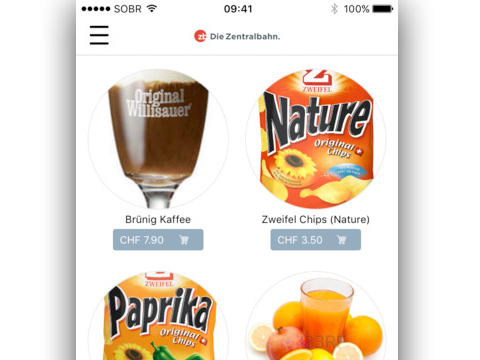
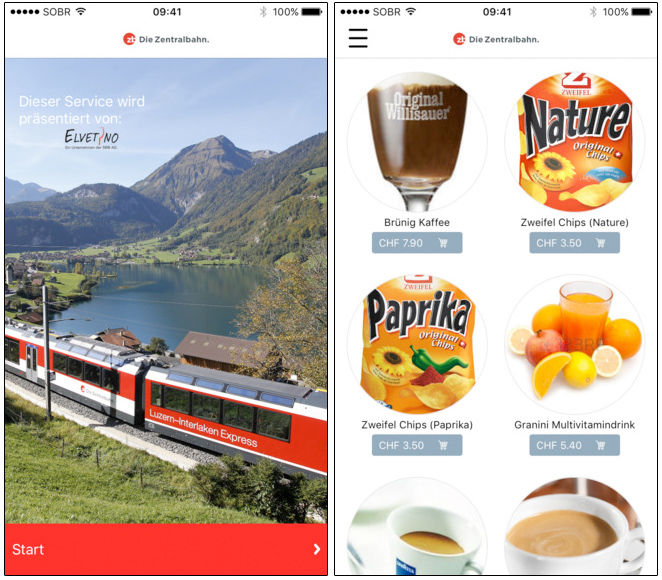
The "BistroOrder" app from ZB Zentralbahn and the caterer Elvetino is being tested in a pilot project. The app will break new ground in rail catering, the ZB announced on Wednesday. With the free app, passengers traveling in first class on the Lucerne-Interlaken Express over the Brünig can order drinks and snacks from their seat in the Elvetino bistro car. The order is confirmed to the customer with details of the delivery time. It is then brought to the seat, where the customer can also pay for it. Ivan Buck, Head of ZB Marketing, said on request that the pilot phase would last until the end of September 2016 and that no additional staff would need to be hired. If there is a large crowd in the bistro car, the app will be blocked so that no orders can be placed from the seat. The app could also be offered in second class at a later date. However, there are no plans to extend it to the second zb line, the one between Lucerne and Engelberg OW. The journey time of 43 minutes is too short for such a catering service, said Buck. Elvetino is a subsidiary of SBB, and zb is two-thirds owned by SBB. According to SBB, the "BistroOrder" project is running independently of its own rail catering plans. SBB will abolish the minibars at the end of 2017. (SDA)

Unbenannt-4_168

Swiss E-Commerce Summit: E-Commerce tips from brain research

People make nearly 80 percent of all their decisions subconsciously. Neuromarketing expert Hans-Georg Häusel revealed in Zurich what impact this has on e-commerce.

adwge

On the topic: Advertising Week interview with Hans-Georg Häusel

The ninth Swiss E-Commerce Summit took place at Lake Side on Tuesday. The event organized by Unic, SAP Hybris and Datatrans attracted e-business and IT experts to the shores of Lake Zurich.

The power of the limbic system

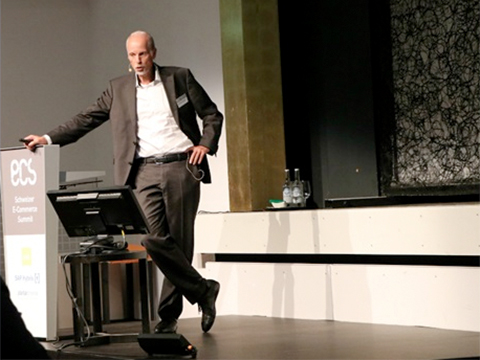
The first presentation was given by neuromarketing expert Hans-Georg Häusel. He revealed what e-commerce can learn from brain research. "People make 70 to 80 percent of all decisions unconsciously," said Häusel. One reason for this is the power of the limbic system in the brain, which processes emotions, releases endorphins and can trigger fear or enthusiasm. Emotions drive people and have a major impact on purchasing decisions, said Häusel, who gave a very entertaining presentation and made the audience laugh out loud several times.

Some of his Tips for marketing and e-business professionals:

- People have different personality structures that are defined by the three main emotional fields of stimulation, dominance and balance. Companies must therefore ensure that they address their different customer types in a targeted manner.

- Brands should convey an emotional message. Anyone selling life insurance or medication, for example, must ensure that their website conveys values such as health, cleanliness and reliability. If, on the other hand, you offer sports cars or outdoor products, you should rather convey characteristics such as courage, freedom or a willingness to take risks.

- Companies should avoid triggering negative emotions in their customers with their website or brand presence - or no emotions at all. "Anything that doesn't trigger emotions is meaningless, worthless and meaningless to our brains," said Häusel.

- Humans and the human brain don't like to think - because it's exhausting. Anyone advertising a product should therefore make it as easy as possible for the addressee. The first impression counts! According to Häusel, the feeling that a company triggers in the customer during the purchasing process is important. It therefore makes sense to emotionalize offers.

- A positive example is Booking.com. The site is packed with things that trigger emotions and encourage a booking. Häusel named the following elements: "X people are currently looking at this item", "This offer is currently in high demand", "This offer has already been booked x times today", positive community ratings, time-limited discounts.

- According to Häusel, the human brain is more patient with analog things than with digital ones. It is therefore all the more important that customers are not kept in suspense on the web.

- In the DACH region, there are around 29% Harmonizers, 13% Open-minded, 13% Hedonists, 6% Adventurers, 10% Performers, 10% Disciplined and 19% Traditionalists. Companies should take a close look at these personality structures and then decide which group to address and how.

Siroop - the Swiss Zalando?

At the end of the day, Ralf Wölfle from the University of Applied Sciences Northwestern Switzerland FHNW presented the E-Commerce Report 2016, the only Swiss B2C e-commerce study from a provider's perspective.

Wölfle also mentioned the new online marketplace Siroop. "This is the most exciting e-commerce project in Switzerland this year, perhaps even this decade," he said in a personal conversation with the editorial team. The company has a start-up culture, with a lot of dynamism, expertise and the courage to take risks. "The team around Constantin Hilt is moving forward at a very fast pace, without fear of making a mistake. That's unusual for Switzerland."

The role model for establishing the Siroop brand should be Zalando, said Wölfle. Zalando had succeeded in popularizing its brand in record time. Siroop is a very ambitious project. It is astonishing that a newcomer is now taking the lead, as other players in the market would actually have had better prerequisites. Ricardo, for example, whose brand is already very well known in this country. (Web Week)
 

netzwoche

Martschini.ch: "My Puglia, My Fasano"

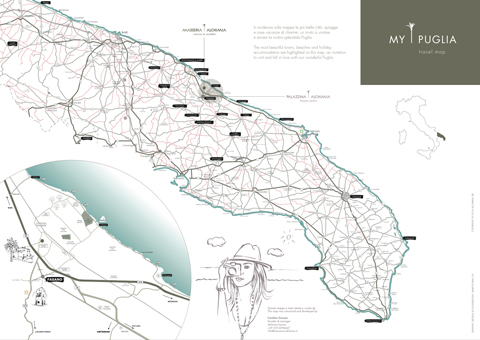
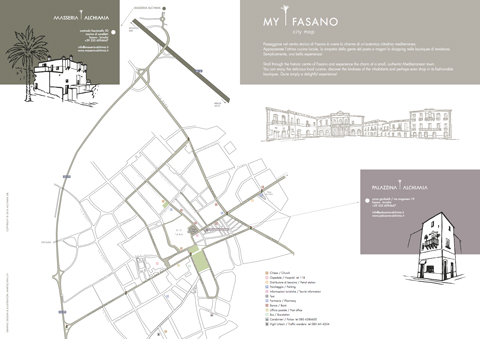
In November 2015, Ludek Martschini embarked on a creative journey to Apulia to visit Caroline Groszer’s design resort, «Masseria Alchimia.» This led to a commission to design a custom travel map.

IMG_3668-1-t

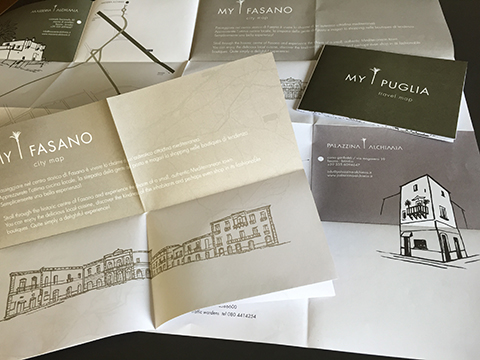
Ludek Martschini designed and illustrated a section of the map of Puglia and the map for the city of Fasano. The map was supported by illustrations of his impressions of Puglia. This individual travel map was realized especially for the vacation guests of "Masseria Alchimia".

MA_A6_Karte_EN1-1-1
MA_A6_Karte_EN1-1-2
Bildschirmfoto-2016-06-15-um-11.00.33
Bildschirmfoto-2016-06-15-um-11.00.47

Responsible at Masseria Alchimia, Puglia, Italy: Caroline Groszer, Masseria-alchimia.it, Palazzina-alchimia.it. Responsible at Martschini.ch: Ludek Martschini (design + illustrations).

Cannes Lions announces record number of entries

The 2016 Cannes Lions Festival recorded 43,101 entries. That’s seven percent more than last year—and more than ever before.

canneslions_0

18 out of 24 Lion categories have more entries this year than in last year's edition. The Product Design Lions recorded an increase of 92 percent. The three secondary festivals Lions Health, Lions Innovation and Lions Entertainment are also on the upswing. The Entertainment Lions (formerly: Branded Contend & Entertainment) grew by 32 percent to 1843 entries. The new Lions for Music category generated 637 entries in its first year.

By contrast, the Cyber Lions, the Film Lions, the Media Lions, the Print & Publishing Lions and the Radio Lions.

This year's Cannes Lions International Festival of Creativity will take place from June 18-25, 2016. The side festivals Lions Health (June 18-19); Lions Innovation (June 21-22); Lions Entertainment (June 23-24) will take place at the same time. Werbewoche will be on site again this year and will cover all the news about the festival on Werbewoche.ch. (hae)
 

  2015 2016
Creative Data Lions 619 715
Creative Effectiveness Lions 160  109
Cyber Lions 3,738 2,886 
Design Lions 2,409 2,857
  - 1,150
Direct Lions 2,813 3,097
Entertainment Lions 1,394 1,843
Entertainment Lions for Music - 637
Film Lions 3,070 2,801
Film Craft Lions 2,205 2,315
Glass: The Lion for Change 166 155
Health & Wellness Lions 1,430 2,024
Innovation Lions 226 381
Integrated Lions - 279
Media Lions 3,179 2,986
Mobile Lions 1,246 1,259
Outdoor Lions 5,037 5,365
Pharma Lions 432 583
PR Lions 1,969 2,224
Print & Publishing Lions 4,470 3,775
Product Design Lions 280 538
Promo & Activation Lions 3,196 3,458
Radio Lions 1,720 1,410
Titanium Lions 374 254
TOTAL 40,133 43,101

Kreienbühl and Vogler: When accounting distracts from work

Kreienbühl und Vogler has created a new campaign for Swissdec's payroll accounting.

Swissdec_Header-t

Every year, Swiss companies spend valuable working time on bookkeeping. Forms have to be filled out to send salary data to compensation funds, insurance companies and the tax authorities. This would not be the case with Swissdec-certified electronic payroll accounting. This is because the data is transmitted electronically at the click of a mouse.

Bookkeeping is a real burden for Swiss SMEs. Especially when you should be concentrating on your core business but are constantly being distracted. This insight is dramatized in the campaign developed by Kreienbühl und Vogler Werbeagentur by making bookkeeping visible as a distraction in everyday working life. The campaign can now be seen in various online and offline media.

Swissdec_Anzeige_1
Swissdec_Anzeige_2
Swissdec_Anzeige_3

Responsible at the Swissdec Association: Ernst Stalder (Managing Director), Christoph Rothenbühler (Head of Technical Commission), Marlis Fehr (Deputy Managing Director), Ralph Heidemann (Communications Consultant Suva). Responsible at Kreienbühl and Vogler advertising agency: Marco Donada, Reto Vogler, Oli Kreienbühl, Fabian Schiltknecht; Visualeyes International (production); Carioca Studio (photography, film and CGI).
 

Seven puts Galaxy S7 Edge in scene at live concert

The Galaxy S7 Edge's high-performance camera captures razor-sharp images even away from the spotlight. Samsung and Equipe demonstrated this during a live concert by Seven at the Kaufleuten in Zurich.

Bild1-t

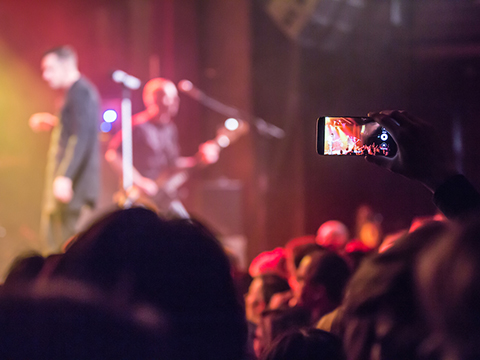
With the help of a Galaxy S7 Edge and together with his fans, the soul star shot a stirring music video.

bild1_2

As "Owner No. 7" of the integrated launch campaign "#GalaxyJourney", Seven had a reggae interpretation of his hit "Lisa" filmed by the audience with a Galaxy S7 Edge. In the process, Seven was put in the best light by his fans even in the semi-darkness, as evidenced by a music video created from the action. The footage of the live concert will also be used for further advertising measures as part of the "#GalaxyJourney". At the center of the launch campaign is the Galaxy S7 Edge itself, on whose journey changing owners experience extraordinary things again and again. On the campaign microsite Galaxy-journey.ch the community can follow the adventures of the Galaxy S7 Edge and experience all the features of the new smartphone.

bild2_2

Responsible at Samsung: Anja Olsson (Head of Marcom), Allan Haverman (Marcom Specialist). Responsible agency: Equipe.


New competition for Twint

The market for contactless payment is in upheaval. Just recently, Twint and Paymit announced their merger. This week, Swatch is launching the Bellamy payment watch in Switzerland.

agekhhh

And with Apple Pay, an international heavyweight will soon be in the mix here. In Europe, the Apple Pay payment service can currently only be used in the UK. It is soon to enter the market in France and Switzerland (Werbewoche.ch reported). Initially, customers of the credit card companies Visa and Mastercard who have a card from Bonuscard, Cornèrcard and Swiss Bankers can pay with Apple Pay, as Apple announced on its website on Tuesday. When exactly Apple Pay will launch in Switzerland, however, is still unclear. According to communications from Visa and Mastercard, it should be ready "in the summer." According to media reports, which refer to statements made by Apple's software chief at the WWDC developer conference in San Francisco, Swiss customers will still have to wait "a few months".

Contactless payment increasingly popular

With Apple Pay, a credit card must be deposited. After that, the cell phone works in the same way as for contactless payment with a credit card. The service will therefore be available at all checkouts equipped with near-field communication (NFC) radio terminals: In addition to Migros and Coop, this is also the case at Aldi, Lidl, Spar and the Valora chains K Kiosk and Avec. According to Stefan Holbein, Country Manager of Visa Europe Switzerland, Switzerland is virtually predestined for payment via smartphone. In May, 11.3 percent of all Visa transactions in this country were processed via contactless. A year ago, this figure was only half as high. Today, two-thirds of all Visa terminals in Switzerland are already equipped with NFC technology. By 2020, the standard should be available at all terminals, Holbein said in a conference call on Tuesday.

Competition for Twint

The market entry of Apple Pay is likely to be a litmus test for the Swiss payment app Twint, which will be merged with the competing product Paymit in the fall. In favor of Apple's solution is the fact that Switzerland, with a market share of a good 50 percent, is actually an iPhone country. Although the latest models have NFC on board, Apple has so far refused app developers access to the interface. The manufacturer only allows Apple Pay to communicate via NFC. Therefore, Twint and Paymit will have to resort to other technologies until further notice. With Paymit, for example, a QR code must be scanned. With Twint, payments are processed via Bluetooth at a separate terminal at the store checkout. However, the new Twint app is prepared for the event that Apple changes its policy: The solution is to be designed to be open to technology and can also integrate the wireless technology NFC.

Bulwark against Apple

Nevertheless, Twint does not have to hide from Apple Pay. The merged service is backed by UBS, Credit Suisse, Postfinance, Raiffeisen and ZKB, the five largest Swiss banks, Coop and Migros, the two largest retailers, and Swisscom, Switzerland's largest telecommunications provider. In a statement, Twint is somewhat relaxed about the new competition. The competition is welcomed, it says. This will further sensitize users to mobile payments. The statement also emphasizes that Twint can be used regardless of the smartphone's operating system. Apple Pay, on the other hand, only works with an Apple operating system. In addition to the iPhone, payment is also possible with the iPad and the Apple Watch.

New competition on the way

But Apple is not Twint's only new competitor. On Thursday, watch giant Swatch launches in Switzerland with its Bellamy payment watch. Like Apple Pay, Bellamy also uses NFC technology. Comparable to a contactless credit card, the watch simply has to be held up to the point-of-sale terminal. There is no need to open an app. Mondaine is relying on the same technology. In late summer, the watch manufacturer from Schwyz plans to launch its first collection with a payment function. In addition, it should only be a matter of time before the smartphone world market leader Samsung also comes to Switzerland with its payment offering. The market launch in Singapore is scheduled for Thursday. The service is already available in the US, South Korea, China and Spain. (SDA)

Unbenannt-2_161
Image: Swatch.com

15-year-old presents "Glanz & Gloria"

For one week, 15-year-old Tom Surbeck from Uster will host the celebrity magazine show «Glanz & Gloria.» For this occasion, SRF has renamed the show «G&G voll fresh» to make it more appealing to young people (?).

fresh

At the end of April, "Glanz & Gloria" called on young people to apply if they wanted to spend a week creating SRF's people magazine in fall 2016. Within a very short time, 120 interested people applied for a casting, and 40 took part at the end of May. The editorial team has now decided on twelve applicants. The presenter will be Tom Surbeck, 15, from Uster ZH.

He is 15 years old, attends cantonal school, plays floorball and comes from Uster ZH. And he has a big goal: one day he wants to work as a radio or TV presenter. "That's exactly why I applied for "G&G voll fresh" - it's the perfect opportunity to get a little closer to my dream," says a delighted Tom Surbeck. The Zurich native will be in front of the camera for "Glanz & Gloria" for a week from October 10 to 14, 2016. Paola Biason, Editorial Director of "Glanz & Gloria": "Tom came in - and everything was clear. He is likeable, clever and eloquent. I'm still perplexed that a 15-year-old can master a TV casting so confidently."

Creative young people will also be at work behind the camera for a week - whether as editors, reporters or cameramen. They include Angéline Reichenbach, 14, from Adlikon ZH, Balz auf der Maur, 16, from Oberwil ZG, Joana Hirt, 14, from Würenlingen AG, Jan Signer, 14, from Gossau SG, Malin Ackermann, 14, from Dielsdorf ZH, Luca Fischlin, 15, from Lucerne, Maurus Rothen, 14, from Münsingen BE, Max Felner, 14, from Zwillikon ZH, Leana Flückiger, 14, from Leimiswil BE, Tristan Scherer, 15, from Wettingen AG and Viktoria Agnes Heutschi, 14, from Riggisberg BE.

During this time, the people magazine also gets a new name, "Glanz & Gloria voll fresh". The broadcasting concept remains the same, but reporting is done from the perspective of young people. They choose the topics and protagonists, create the reports from A to Z and ultimately present the show.

Keyvisual-Voll-Fresh-7016x4961-767x554

Customer proximity is the decisive success factor

Since 2009, the Swiss E-Commerce Report has been examining the significance, changes, and trends in Swiss online retail—the only study to do so from the perspective of providers. The survey is conducted by Datatrans and the University of Applied Sciences and Arts Northwestern Switzerland (FHNW).

Grafik1_E-Commerce-Report-Schweiz-2016_DE

Digitalization and foreign influences are reshaping the retail landscape
The flow of information and goods between manufacturers, retailers, and consumers continues to evolve. More and more distribution channels are emerging and competing with one another. The internet and digitalization are giving rise to further innovative business models. Foreign markets are putting pressure on Switzerland, affecting both traditional retail and e-commerce. Brand manufacturers want to better bring their brand experiences to end customers and are also taking on traditional retail functions. For all forms of retail, one function is becoming increasingly important: creating access to customers.

A Challenging Situation in Swiss E-Commerce

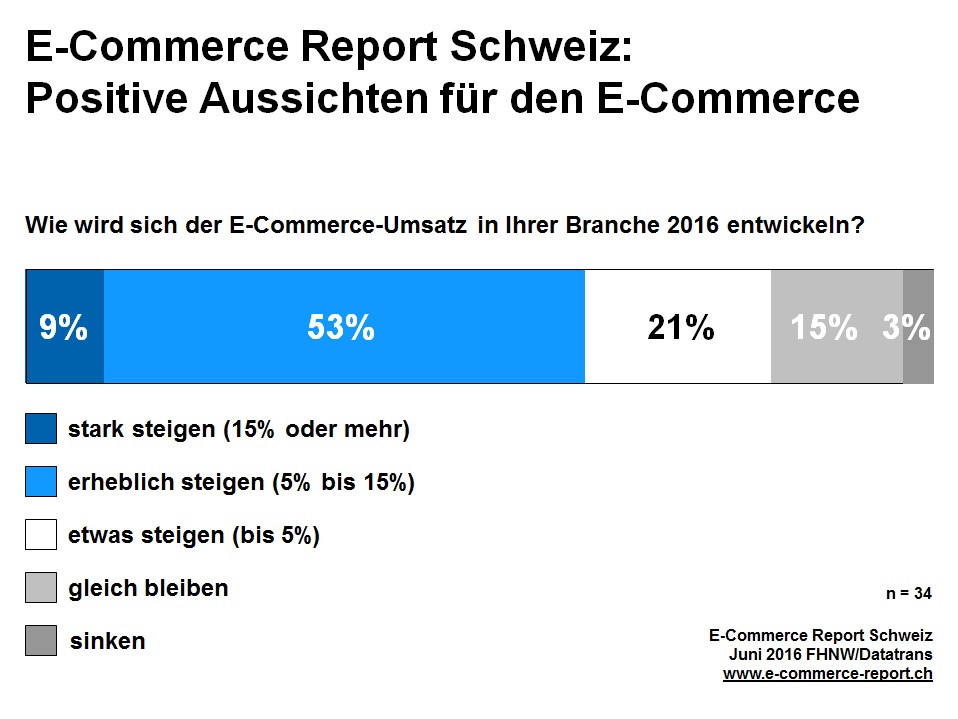
Even though online retail grew by another 10 percent in 2015, it was a difficult year for some retailers. The growth rates of the survey participants were lower than in previous years. About one-third even saw a decline in sales. One reason for this is fierce competition, particularly from abroad. The market share of foreign e-commerce providers grew by two percentage points in 2015 to a remarkable 20 percent—though there are significant differences between industries. Adjustments to a business model can also initially lead to a decline in revenue. «Profitability and sustainability have become more important,» explains study author Wölfle. «Swiss companies are no longer blindly focusing on growth in e-commerce.»

Grafik1_E-Commerce-Report-Schweiz-2016_DE

Cross-channel business concepts remain highly important

Retailers that have the opportunity to do so are driving multichannel strategies forward. The proximity to customers offered by brick-and-mortar locations is also intended to be leveraged as an advantage in the context of e-commerce. More so than in previous years, pure-players are also embracing brick-and-mortar concepts. They want to achieve greater visibility and set up local services such as pickup locations or service points. Not least due to the massive rollout of 290 PickMup pickup stations by the Migros Group, 80 percent of study participants now believe that pickup solutions will become established in the market. Some retailers are beginning to try to expand the limited product ranges in their stores by providing access to online product ranges.

Logistics as a Competitive Advantage

Swiss providers also want to capitalize on their physical proximity to customers in logistics: They can deliver faster than foreign competitors and set up pickup options more easily. Many providers are investing heavily in logistics. Now that delivery times have been shortened, the focus is shifting to giving customers the ability to specify their preferred delivery time and location. The integration of various modular services and partners—such as for assembly, commissioning, and disposal—offers customers personalized options.

A New Boost in Payments

An order placed by a customer ready to make a purchase must not be jeopardized by a barrier during the payment process. This is the most important requirement for payment solutions. Next comes the call for greater simplicity—including on smartphones—and lower fees for providers. While the retail sector has largely clung to its aging solutions, service industries such as public transportation have made great strides. The latter has been extremely successful with mobile ticket sales solutions and automated payment processes: «Buy a ticket with two clicks on your smartphone.».

Amazon as a Catalyst for the Will to Assert Oneself

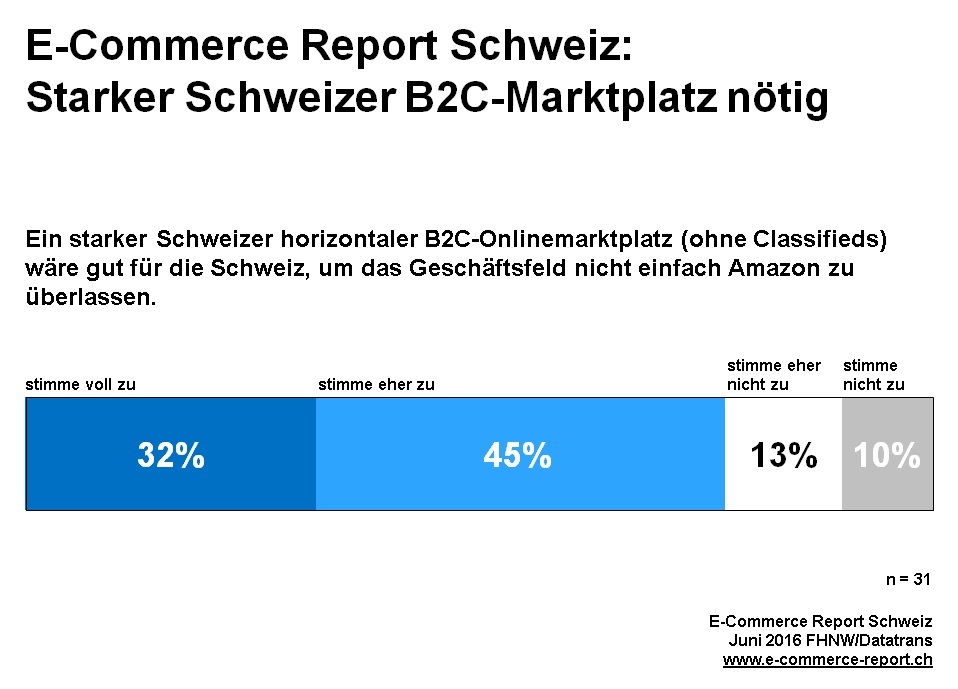
In many countries, Amazon is the go-to destination for online shopping. Its selection is vast, and its logistics capabilities are spectacular. Switzerland still lacks a comparable counterpart: As B2C marketplaces, ricardo.ch and siroop are, so to speak, in their infancy. siroop—perhaps the most exciting e-commerce project in Switzerland right now—is setting a remarkable pace as a startup. Amazon is feared: What could Swiss providers offer to counter Amazon? A three-quarters majority of the study panel believes that a strong Swiss B2C online marketplace would be good for Switzerland, so as not to simply leave the market to Amazon.

Grafik2_E-Commerce-Report-Schweiz-2016_DE

Two Online Retail Giants on the Rise

Digitec Galaxus generated sales of nearly 700 million Swiss francs in 2015 and has been Switzerland’s largest e-commerce provider of consumer goods ever since. In addition to Galaxus, BRACK.CH can also be described as an online department store due to its wide-ranging product selection. Both are believed to be capable of holding their own even in the face of intensified competition from Amazon. However, beyond their own potential, they do not provide Swiss e-commerce with the leverage needed to counter Amazon—after all, they are not online marketplaces.

Brand manufacturers are taking the initiative

Brand manufacturers are seeking a more active role in their relationships with end customers. They have no choice but to do so: Traditional retail is losing ground, and brand fans are demanding direct access. Brand manufacturers want to expand their brand universe beyond traditional distribution channels. Conflicts with retailers are inevitable, but not unavoidable. The division of labor must be reevaluated. However, there is no alternative to accepting the diversity of customer demands and the coexistence of different purchasing channels.

Retail will continue to be needed in the future

Even as brands become more involved in direct-to-consumer sales, retailers will remain an indispensable partner for most of them in the future. Manufacturers need a strong retail sector that draws attention to their products within its customer segment (reach), promotes their products in an appropriate manner (promotion), does not undermine brand policy, and, when necessary, communicates with customers on behalf of the brand and addresses their concerns (service). By far the most important asset a retailer has is its access to consumers. «Almost all products and services are available at multiple locations simultaneously,» says study author Wölfle. «The decisive factor for sales will be who has access to the customers.»

Topics in the 2016 Swiss E-Commerce Report

– An Overview of the Swiss E-Commerce Market in 2016
– Key Areas of Activity in 2016
– Development of online marketplaces and online department stores
– Digitalization and Foreign Markets as Drivers of Structural Change
– Annual Focus: Direct-to-Consumer Sales
– Five-Year Outlook for Swiss E-Commerce Through 2021

The study is available free of charge at:E-commerce-report.ch/orders

Goal

The Swiss E-Commerce Report examines the significance, changes, and trends in online commerce on an annual basis—it is the only Swiss study to do so from the perspective of providers.

Methodology

– Long-term study, repeated annually since 2009
– Empirical, primarily qualitative
– Survey: Expert interviews and questionnaires
– Survey period: January 7 through March 18, 2016 Sample
– 36 online and multichannel providers of consumer goods and services based in Switzerland that have the potential to shape the market
– Together, they account for an e-commerce volume of over 4.5 billion CHF
– Selection criteria: a proven track record of success in e-commerce over several years, prominence in the industry, and the degree of innovation in the business model
- List of Study Participants

Implemented by: the Institute for Business Informatics at the University of Applied Sciences and Arts Northwestern Switzerland (FHNW) on behalf of Datatrans, Switzerland's leading specialist in online payments.
 

Seed: New image film for Pax

Seed has realized the new Pax image film in cooperation with Ramstein Ehinger Associates.

seed_3

Pax gets to the heart of pension provision. Close to the customer, easy to understand and reduced to the essentials. This is exactly how Pax communicates with its new image film. The new image film is based on the independent visual language that Pax has been using since the launch of its new brand identity in 2014. Short and sweet and with a wink, a presenter gets to the heart of Pax. The film is used for presentations, events and online.

Responsible at Pax: Nicolas Bopp (Head of Marketing). Responsible at Ramstein Ehinger Associates: Ralph P.B. Ehinger (CD), Christian Theiler (AD). Responsible at Seed Audio-Visual Communications: Felix Courvoisier (producer), Mats Frey (script, direction), Jan Mettler (camera), editing (Cécile Welter), Jingle Jungle (music, sound design & mixing), Bettina Frymerman (production management).


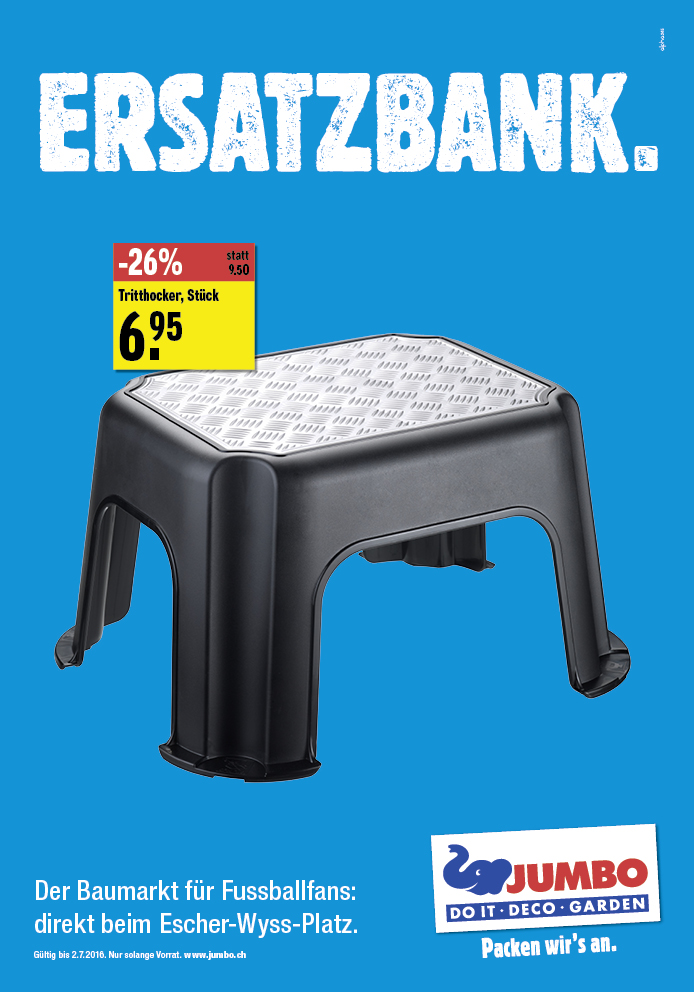
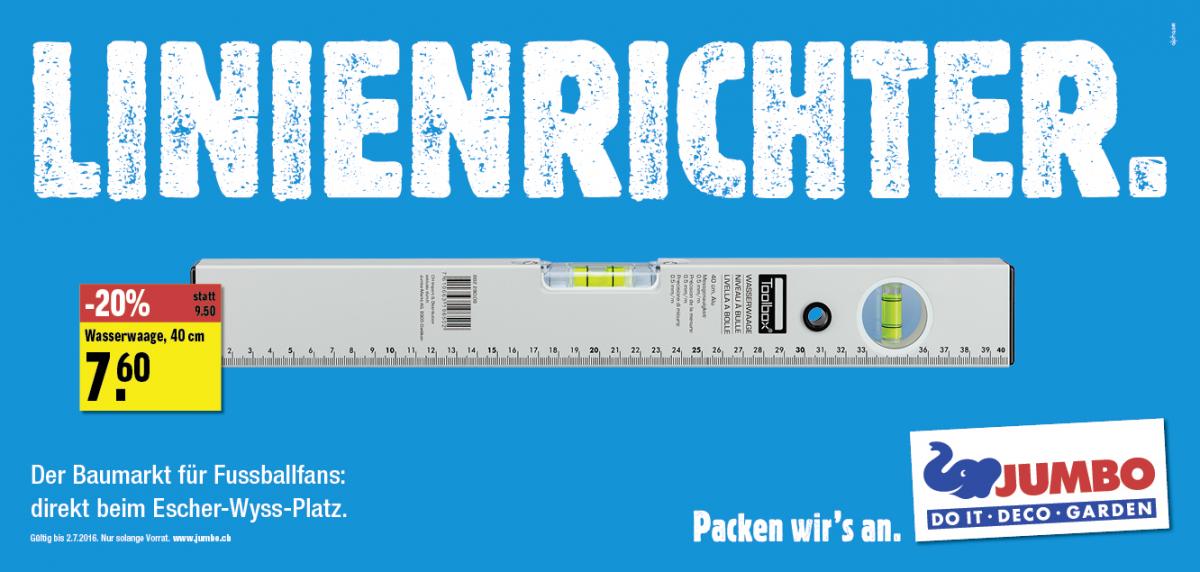
Alpha 245: 5:0 for Jumbo Baumarkt

Just in time for the kickoff of the 2016 European Soccer Championship, the blue elephant is making a splash with a poster campaign.

torhueter

The five subjects in sizes F12 and F200 rely on the proven interplay of offer and headline. In addition, they score points this summer with technical terms from the world of soccer. And they hit the bull's-eye with the soccer and do-it fans.

Plk_Josefstrasse_EM_TORHUETER_F200_d
Plk_Josefstrasse_EM_STUERMER_F200_d
Plk_Josefstrasse_EM_ERSATZBANK_F200_d
Plk_Josefstrasse_EM_EINWURF_F200_d
Plk_Josefstrasse_EM_LINIENRICHTER_F12_d

Responsible at Jumbo-Markt Switzerland: Jérôme Gilg (CEO), Fabian Rauber (Head of Marketing). Responsible at Alpha 245: Patrick Senn, Patrick Beeli (CD), Patrick Bucher (text), Barney Rees (AD), Sylvia Kohler, Inma Mendiola (consulting), overall responsibility (Walter Tagliaferri).


Mobile Internet consumption increases by 28 percent worldwide

According to Zenith's Media Consumption Forecasts, we will spend 27.7 percent more time on the mobile internet worldwide this year, resulting in a 1.4 percent overall increase in media consumption.

smartphone_mobile_internet

The use of all other media - including desktop Internet - will fall by 3.4% in the same period.

This second annual edition of Media Consumption Forecasts examines the changing patterns of media consumption and forecasts the resulting temporal impact for each medium between 2016 and 2018. The report examines time spent outside the home reading newspapers and magazines, watching television, listening to radio, going to the cinema, using the internet and viewing outdoor advertising. This edition covers 71 countries around the world, up from 65 last year.

71 percent mobile Internet consumption

At the beginning of this decade, desktop internet usage increased rapidly and peaked in 2014 at 52 minutes per day, up from 36 minutes per day in 2010. However, the switch by more and more people to mobile devices has led to a decline in desktop usage. In 2015, more people used the mobile internet than the desktop internet for the first time. And for this year, we forecast that people worldwide will use the mobile internet for an average of 86 minutes per day and the desktop internet for 36 minutes. This means that 71 percent of Internet consumption will be mobile. Broken down by region, mobile Internet consumption is highest in the Asia-Pacific region at 73%, closely followed by North America with a share of 72%.

Mobile Internet is booming, all other media are losing out

The increasing use of the mobile internet is at the expense of all other media. According to our forecasts, we will spend an average of 27.7% more time on the mobile internet and 15.8% less time on the desktop internet this year. All traditional media will lose market share in 2016: Cinema by 0.5 percent, outdoor media by 0.8 percent, television by 1.5 percent, radio by 2.4 percent, newspapers by 5.6 percent and magazines by 6.7 percent .

Please note: These figures only relate to the time we spend using these media in their traditional form - print titles, TV channels and radio stations. Consumers spend the majority of their time online with content produced by traditional publishers and broadcasters. Traditional media owners have invested heavily in extending their brand online and some of them have a larger audience online than their offline products ever had. Increasing mobile internet usage offers both opportunities and threats for traditional publishers and broadcasters.

Mobile Internet continues to increase media consumption

The ever-increasing use of the internet (first desktop, now mobile) led to an overall increase in media consumption of 7.9% between 2010 and 2015, from 403 minutes per day to 435 minutes per day. Average annual growth was 1.5% and we are forecasting further growth of 1.4% for 2016. For 2017, we expect growth of 1.2%, followed by just 0.4% growth in 2018, when mobile usage will begin to level off. In 2018, we expect media usage worldwide to average 448 minutes per day.

Television continues to dominate worldwide

Despite the recent decline in figures, traditional television remains by far the most popular medium worldwide and attracted people to the television for 177 minutes a day in 2015. Internet consumption followed in second place with 110 minutes a day. In 2015, television accounted for 41% of total media consumption. For 2018, we still expect a share of 38% and an internet share of 31%.

"Mobile technology is changing people's media behavior worldwide and is leading to higher media consumption overall," explains Frank-Peter Lortz, CEO Publicis Media DACH. "This gives owners of traditional media the opportunity to reach people and places previously inaccessible to them, and consumers can find and enjoy interesting content in a completely new way."

get_footer();