Call Lanz for SMP: Lovely's feat of strength

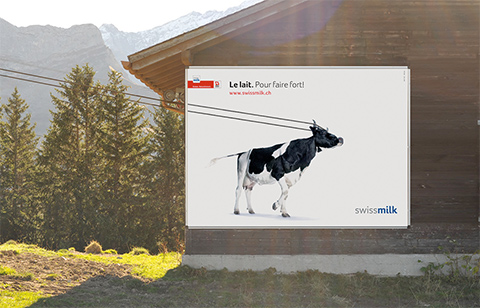
"Really strong" is the long-standing slogan of the Swiss Milk Producers SMP. This winter, it will be surprisingly staged with posters by Ruf Lanz at numerous cable car stations.

Each poster was individually matched to the environment, creating the impression that Lovely would pull the whole cable car. The campaign once again comes from the stable of the Ruf Lanz agency, which has been creatively responsible for the popular campaign of the Swiss milk producers since 2006.

Responsible at the Swiss Milk Producers SMP: Charlotte Hofstetter (Head of Marketing), Martin Rüst (Head of Advertising & Promotions), Olivia Etter (Project Manager Advertising Milk). Responsible at Ruf Lanz, Zurich: Danielle Lanz, Markus Ruf (Creative Direction), Mario Moosbrugger (Art Direction), Torsten Maas (Text), Tanja Felix (Consulting), Sebastian Durband (Consulting Management).

Unbenannt-12_15
Subject also on the Advertising Week Facebook page

ruflanz-2


Last but not least: Calculated risk

The fact that this condom advertisement was banned in Australia probably doesn't bother those responsible: the spot is being celebrated on the Internet.

With so much implied slipperiness, other countries would probably get cold feet: The condom manufacturer Four Seasons Condoms seems to have more or less consciously accepted the TV ban. No big deal: what is funny, naked and forbidden is welcomed by the Internet community with a kiss on the hand and distributed free of charge to the ends of the earth. In figures: Over three million clicks in three weeks and counting. Sex sells - over and over again. But condom manufacturers are excused: Their field of business does not allow for alternative topics. The poorest! (hae)

//www.youtube.com/watch?v=ROJy9TlhxtY

Part.ch: TV spot for Grand Prix Migros

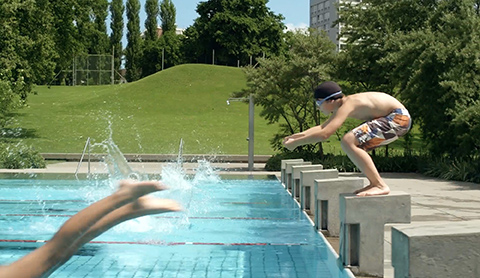
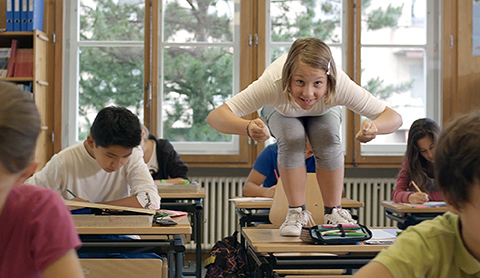
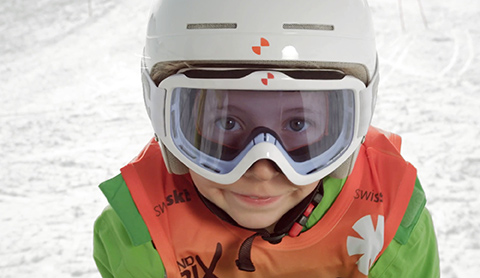
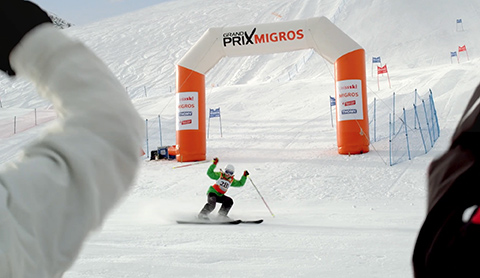
Teil.ch was commissioned by Migros to create the new TV commercial for the Grand Prix Migros, the biggest children's ski race in Europe.

In the commercial, kids show ski squats in unfamiliar surroundings in joyful anticipation of the major sporting event. In order to optimally complement digital communication with classic advertising, an online photo competition was held in the first quarter of this year to find original ski squats. A jury then selected the best ideas from the photos submitted by children and young people aged between 6 and 16. These were filmed and the winners of the competition were given the opportunity to ski squat themselves in the TV commercial. The commercial will be broadcast on SRF zwei at the end of the week.

//www.youtube.com/watch?v=xo4AENNQpcQ

Responsible at the Federation of Migros Cooperatives: Caesar Keller (Project Manager Sponsoring); responsible at Swiss-Ski: Roman Rogenmoser (Project Manager Grand Prix Migros). Responsible at Teil.ch: Alain Zeiter (Consultant), Martin Zeiter (Creative Direction), Hannes Tscharner (Art Direction). Responsible at the film tannery: Flavio Gerber (director), Silvio Gerber (cinematographer), Ares Ceylan and Alessandro Biffi (post-production), Elien Yukio Lanz (music/sound design), Jingle Jungle (sound).

1_badi
2_schule
3_ballett
4_fokus_ski
5_zielhang
6_schlussszene

Serviceplan: Economic miracle for Swisscom

Wirz: Cuche-Viral cracks million mark

Is it a fake? Is it really Cuche? The Wirz video "Cuche breaks the bus! :-)" on YouTube and already has more than 370 comments, 2,250 likes and over one million views.

The video looks like a cell phone movie of a family skiing in Austria. Suddenly Didier Cuche drives to the ski lift and shows his famous ski trick. When he tries to repeat the trick, his ski flies off and smashes through the window of a car parked next door. The bus driver can hardly believe it and curses: "Where did you get your skis? In Switzerland, do you think you're Cuche or what?"

//www.youtube.com/watch?v=t97pEK0p-xQ

The viral video spread like lightning on the web after Didier Cuche posted it on his Facebook site. Numerous Swiss media, from 20 Minuten and Blick to Bluewin.ch and the SRF portal, reported on it and further fueled the mystery about its authenticity and the company behind the whole action. But the Cuche virus also quickly attracted widespread attention internationally, not least in the Austrian media, of course, which were rife with all kinds of speculation about the background.

After a week, the resolution followed: The viral links to the latest Mobiliar TV spot with Didier Cuche, which has also been shown on Swiss television since December 9. The Mobiliar campaign, which has been successful for 15 years, thus surprises once again: Because the 24th damage report TV spot is the first with a celebrity testimonial - and still seems anything but contrived. It combines the legendary Cuche ski trick - in which something can actually go wrong - with a funny piece of damage: the window of the Austrian team bus being smashed by the ski flying away.

//www.youtube.com/watch?v=0Bqfhcri9RE

With minimal additional effort, Wirz Werbung was able to generate widespread attention and entertainment in a very short time through the viral. And Didier Cuche and Mobiliar also had a lot of fun with the whole thing.

Responsible at Die Mobiliar: Christoph Ott (Head of Advertising & CI/CD), Marianne Sterchi (Project Manager Advertising). Responsible at Wirz: Philipp Skrabal (ECD); Andi Portmann (CD); Florian Molinari, Hanning Beland (AD); Winfried Schneider, Angelo Mabellini, Marietta Mügge (text/concept); Urs Hirschi, Stefan Schmid, Yves Rückert, Alessandro Tschabold, Vincenzo Tremonte (consulting). Film production: Stories; Tobias Fueter (director); Yves Bollag (producer); Filip Zumbrunn (director of photography), Fabian Sturzenegger (sound design & mix), voiceover (Jingle Jungle), color grading (Fabian Kimoto). Media: PHD Switzerland; Peter Hüssy (Account Director).

Coop wants to place fewer ads for children

Coop is the first major retailer to commit to restricting its advertising practices targeting children under the age of twelve. Going forward, the retailer will refrain from advertising products to children—with some exceptions.

"If the products do not meet defined, scientifically recognized nutritional criteria", they will not be advertised to children, writes the Swiss Pledge initiative in a press release on Wednesday. Coop describes the label as a "significant new addition". Although the self-regulation, which will apply from January 1, 2014, is voluntary, it represents a clear commitment to change its own advertising behavior towards children. The voluntary campaign is monitored by independent market research companies that analyze advertising on TV, in magazines or on websites.

By the end of next year Swiss Pledge has stated that it will introduce standardized nutritional criteria for each product category. According to a press release, the Federal Office of Public Health (FOPH) welcomes the industry's voluntary initiative. Since the launch of Swiss Pledge in 2010, the number of members has doubled. The label now includes 13 national and international food manufacturers and catering companies, which account for more than a third of TV advertising expenditure for food and beverages in Switzerland this year at around CHF 124 million. Nestlé, Kellogg and McDonald's, for example, are participating in the program. Others are to follow. (SDA)

Teaser image: Keystone (child in foreground)

Swissadsolutions launches in Switzerland

On January 1, Swissadsolutions will launch new advertising formats for Switzerland. Behind the brand are Alexander Beyer and a team of Swiss specialists, along with Plista from Berlin.

Beyer, previously Country Manager Switzerland for the online advertising provider Adcloud, will become Director of Swissadsolutions. Boris Sabel will take up the position of Senior Sales Manager. In addition to the core business of image-text and IAB display ads, the successful Plista recommendation widgets will also be introduced to the market. In addition, completely new branding formats such as flyads and new moving image offerings will be added for Switzerland. In 2014, the portfolio will be rapidly expanded to include further offerings, as detailed in a press release.

bild_alexander-beyer

Swissadsolutions will have a whole range of advertising formats in its portfolio for Switzerland right from the start. The new products for targeted online advertising will be available from January 2014 at Swissadsolutions.ch be bookable. Former Adcloud customers can continue their campaigns and site marketing as usual with Swissadsolutions. The portfolio of partners, products, prices and services will be completely taken over by Swissadsolutions so that previous activities can be continued without interruption.

"We will continue to expand our offering in the coming weeks and focus even more closely on the Swiss market," says Beyer. "As part of this, we are also planning to expand the team and open our own location in Switzerland." Swissadsolutions focuses in particular on transparency for its customers. They can access reliable data at any time, for example to precisely identify target group environments and check the performance of their campaigns in real time. Advertising activities can be optimized on this basis.

Plista from Berlin is behind Swissadsolutions. The company is the market leader in its segment in German-speaking countries and brings advertisers and media owners together via its data-driven content and advertising platform. Thanks to its specially developed targeting and real-time optimization technology, Plista is able to target both content and advertising according to the interests of individual users. With Swissadsolutions, Plista will also make its technology available to the Swiss advertising market in the future.

logo_swissadsolutions
logo_plista
 

A burn hole promotes the advertising letter

Wirz Wietlisbach Dialog and Mediaxis realize a special form of advertising for Swiss Post: an ad with a burn hole.

Wirz Wietlisbach Dialog is currently advertising for Swiss Post with an extraordinary media idea. As part of the image campaign for the letter "The effect makes the difference", the agency has realized a motif that demonstrates the unique possibilities of the advertising letter in terms of sensor technology and storytelling. The back page of the current issue of Persönlich is adorned with an advertising motif showing the advertising letter of a fictitious fire protection insurance company. The highlight: in the middle of the letter shown is a real fire hole, because it has been punched into the cover of the magazine.

"Used intelligently, the letter simply offers many possibilities that other advertising media do not offer in this form," says CEO Guido Wietlisbach. "The campaign is designed to highlight these and fire the imagination of the advertising industry." Oliver Nater, account director at Mediaxis, adds, "We were immediately enthusiastic about the idea and were delighted that the publisher was happy to agree to punch a hole in the cover of the magazine." The fire extinguisher manufacturer Minimax, which is also benefiting from the idea, is also likely to have been pleased. Or as Guido Wietlisbach puts it, "When do you ever get offered an ad space that has a fire hole in it? That usually only works with the letter."

Responsible at Post CH: Mark Friedrich (Head of Marketing and Live Communications), Gabriela Weibel (Head of Marketing Communications). Responsible at Wirz Wietlisbach Dialog: Guido Wietlisbach (CEO), Stefan Dätwyler (Creative Director), Jörg Bewersdorff (Creative Director Text), Eric Fricke (Senior Art Director), Anna-Lea Michael (Consultant), Rosanna Blättler (Junior Consultant). Responsible at Mediaxis: Oliver Nater (Account Director), Denise Rosenberger (Media Assistant), Thai Hien Tran (Media Assistant). Photography: Felix Streuli (photographer), Felix Schregenberger (image editing).

Minimax_Anzeige
Brandloch_Magazin
Brandloch_Detail

Happy Up: Rod develops campaign for Laax

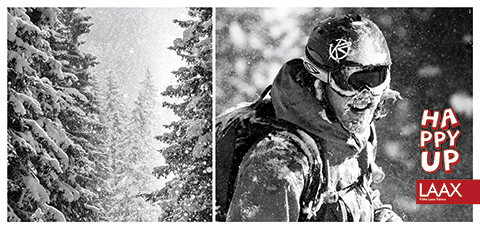
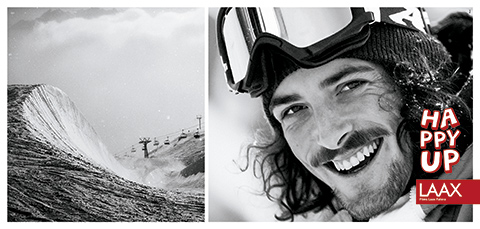
Under the slogan «Happy Up,» introduced a year ago, Rod has launched a branding campaign for the Graubünden winter sports resort of Laax.

How do you communicate with the young freestyle scene and appeal to adults and families alike? How do you position a winter sports area that, with Rocksresort and Riders Palace, also has a lot to offer before and after a day in the snow?

Since the 2012/2013 season, the Zurich agency Rod Kommunikation has been responsible as lead agency for the positioning and thus the branding and communication of the Grisons winter sports resort Laax. Under the claim "Happy Up", which was successfully introduced a year ago, the image campaign of what is probably Switzerland's most varied and innovative winter sports destination with 235 kilometers of pistes is now appearing. The integrated campaign, consisting of cinema spot, mega posters and billboards, digital advertising media as well as ads not only differentiates the concise promise, but also breaks with the common clichés of destination advertising with its black and white look.

//www.youtube.com/watch?v=evn2YEdXPB8

Laax_Plakat_Ski_Freerider_kl
Laax_Plakat_Board_Freerider_kl
Laax_Plakat_Ski_Freeride_Forest_kl
Laax_Plakat_Freestyle_Pipe_kl
Laax_Plakat_Freestyle_kl
Laax_Plakat_Board_Freestyle_kl

Responsible at Mountain Vision: Katja Kamps, Tobias Treichler, Sarah Philipp, Kristian Paasila. Responsible at Rod Communication: n.a. Photography: Gaudenz Danuser. Image processing: Stephan Riederer / Pixelpolish. Direction & Film Production: Humbi Entrees / MMP Films. Postproduction & Sound: Jingle Jungle. Postproduction: Ultra Images. Sound: Jingle Jungle.

Comet: Historic moments with YB

The retro images in YB’s «Moving Moments» campaign feature photographs of emotionally charged moments from times gone by. The nostalgic retrospective was created by the Komet agency.

BSC Young Boys, or YB for short, is firmly anchored in the footballing hearts of Bern. It has been moving and inspiring its supporters since 1898. The current campaign "Moving Moments" portrays fans in their personal moments of emotion with the club, in live recordings before, after or during the match, while cheering or sympathizing.

In a special series, the campaign is now dedicated to historical photographs. The visuals show original photographs from over 100 years of the club's history to bring back to life the emotional moments of times gone by. The subjects are presented on postcards, in the club magazine and in the stadium itself.

Responsible at BSC Young Boys: Christoph Lanz (Head of Marketing), Dominic Eichenberger (Head of Marketing Communications), Daniel Moreno (Polygraf MarKom). Responsible at Komet: Thom Pfister (CD), Roland Zenger (AD), Antonia Bekiaris (text), Simon Schatzmann (head of consulting).

YB_Retro-1
YB_Retro-2
YB_Retro-3
YB_Retro-4


"Nicolas - Prix Carte de Noël" is relaunched

The agency is continuing this year what Evoq started six years ago, in collaboration with Swiss Post: Under the name «Nicolas – Prix Carte de Noël,» the contest for Switzerland’s best Christmas card is being held.

Among all entries, the most beautiful, the most creative and the most appropriate card will be awarded. Evoq developed the idea and the concept of "Nicolas - Prix Carte de Noël" and designed a matching signet to communicate the competition. In addition, various implementations were realized, such as a flyer for Post DirectNews, a submission form or the content site at Post.ch.

All Swiss companies and organizations that realize and send an individual printed festive card this year can participate in the competition. Further information and submission form: Post.ch/nicolas
 

DSC08835
DSC08842
DSC08859

IPMZ study on Internet use

The «World Internet Project – Switzerland» survey, conducted by the Institute for Journalism and Media Research (IPMZ) at the University of Zurich, provides insights into Internet usage among the Swiss population.

85 out of 100 Swiss people have access to the Internet. Use is becoming more intensive, even 70 percent of senior citizens are online. However, there is still a high level of apprehension when it comes to data control by companies, for example. Young people are generally more carefree and women are more concerned about protecting their privacy. Despite the high level of penetration, four out of ten Swiss people say they feel "not at all or only a little" involved in the information society.

Increase in mobile use

In the last two years, the proportion of users who surf the internet on the move has risen at an above-average rate: Around 39% of the population and almost half of internet users are also online on the move. This doubling of mobile internet use is mainly driven by smartphones.

Income and education

There is a digital divide in Switzerland in terms of internet access based on income (clearly in the case of mobile use), education and level of employment. Differences based on age and gender have become less significant: "A remarkable 70% of 60- to 74-year-old Swiss people use the internet today, with roughly the same number of women as men," says Michael Latzer from IPMZ. However, one million Swiss men and women (aged 14 and over) still do not surf the World Wide Web, citing a lack of interest and benefit.

Concern remains high

Trust and concerns regarding internet use have essentially remained the same in Switzerland in recent years. Professional offerings - especially those from the SRG and the government - are rated as particularly trustworthy, while those from online social networks and blogs are the least trustworthy. Around 40 percent of users would be "very or extremely concerned" about using a credit or debit card online, with five percent having actually fallen victim to credit card fraud online.

When it comes to data control, companies are still much more distrusted (40%) than the government (26%). Generally speaking, young Swiss people - and men too - are far less concerned than older people. Eight out of ten internet users are very concerned about protecting their privacy, and 45 to 59-year-olds are more likely to call for regulatory restrictions on corporate data collection than younger people. One in two users is resigned to the fact that privacy on the Internet no longer exists.

Information more important than entertainment

Use for information purposes - with product and travel information as well as news leading the way - also surpassed entertainment in 2013; video and music portals topped the rankings in this area. Online social networks such as Facebook and Twitter are used noticeably more frequently, the latter especially by younger users. Almost six out of ten surfers use online social networks, two thirds of them on a daily basis. Private online social networks are three times more popular than professional ones such as Xing. E-commerce use is stagnating at a high level: 78% search for product information, 67 buy online and 63 compare prices online.

Women value their internet skills less

The Internet is used differently depending on age: Younger people are more active when it comes to interactive applications, user-produced content and entertainment; conversely, older people use the Internet more for electronic shopping and online banking. A gender difference no longer exists today in terms of access to the Internet, but still in terms of the intensity with which information and entertainment are used, the self-assessment of Internet skills and the feeling of belonging to the information society: all these are lower among women than among men.

Internet wins over traditional media

Compared with other media, the Internet has become more relevant for information and entertainment since 2011. For users, it is the top source of information - on a par with newspapers. For young Internet users (14 to 29 years), the Internet has overtaken the other media. For entertainment, television and radio continue to dominate, with television ahead of the Internet among younger users.

Digital politicking with a lot of restraint

The great skepticism in Switzerland about digital participation in political processes has continued. In an international comparison, Switzerland is one of the countries with the greatest doubts about the possibilities of digital democratization: Only a vanishing minority of four to seven percent are strongly convinced of positive effects of the Internet on democratic quality. The Internet is therefore little used for participation in political discussions; even among Internet users, 71 percent discuss political issues exclusively offline. Only half of those surveyed also think it is right to be able to freely criticize the government on the Internet, and a third clearly reject this.

Further information on the "World Internet Project" can be found at Mediachange.ch.


get_footer();