Last but not least: True love

In a new commercial, TBWA\Paris reveals the secret to good acting: hamburgers. From McDonald's.

jetaime-t
The actor of "American Summer" is extraordinarily convinced of himself. And of his own talent. No wonder the journalist is blown away. The film is an ambitious project - and she wants to know from the professional how he deals with the high expectations. After all, a bird doesn't worry about how to fly, she gets as an answer - a ready-made quote. In the 1:43 spot, TBWA shows that sometimes it takes more than "a little work and tons of talent" to get the scene across emotionally enough. (hae)

Digicomp acquires Somexcloud

Two leading providers of training and continuing education in the field of digital communication are joining forces: Digicomp is acquiring 100 percent of Somexcloud.

somexcloud-digicomp

Both companies will remain independent after the acquisition, with Somexcloud operating as a wholly owned subsidiary of Digicomp Academy. Under Somexcloud, a comprehensive and practical course portfolio for digital corporate communication and collaboration will be offered in the future. Somexcloud's previous focus on social media seminars will be expanded to include courses for Adobe Creative Cloud, collaboration tools such as SharePoint, web technologies, e-business, knowledge management, networked working with Office 365/Google Apps, Wiki in enterprise use, Skype for Business and mobile working.

Companies today not only communicate to external stakeholders via digital channels, with digital transformation the digitization of communication, collaboration and processes is also taking hold internally. "By working with Digicomp, Somexcloud can offer close to 100 seminars and training courses in one fell swoop with the combined pool of experts to equip company employees for the challenges of digital transformation," said David Schäfer, founder and previous co-managing director of Somexcloud. "On our own, we probably wouldn't have been able to achieve this market presence with the required speed."

Experience meets networking

The organization, administration and premises of the Somexcloud courses will be taken over or provided by Digicomp in the future. "With Zurich, Bern, Basel, Lucerne, St. Gallen, Lausanne, Neuchâtel and Geneva as new locations and a customer base of 20'000 small, medium and large companies, the company gains market access throughout Switzerland. With our almost forty years of experience in corporate training for companies and our digital software solution for organizing personnel development measures, we can take Somexcloud to the next level administratively," says Peter Kupper, CEO and owner of Digicomp, about the advantages of the purchase. And further: "In return, the media, advertising and communication world opens up to us via the strong relationships of Somexcloud and its experts. Our existing customers gain knowledge about digital communication and transformation that can be the decisive competitive advantage for them in the future."

Administrative relief

"Thanks to the administrative relief, we can focus again on what we do best: lecturing, coaching and consulting," says Andreas Gedenk, second previous co-managing director Somexcloud. Somexcloud will continue to offer consulting services for digital transformation and communication in the future. To what extent cloud consulting of a technical nature will also find its way into the services is currently still open. "This acquisition offers Digicomp many strategic options. We can now increasingly tackle new forms of corporate training that integrate informal and formal training in one approach with on-the-job learning, performance support, coaching, consulting and training with the innovative power of a Somexcloud," Oliver Müller, Business Development Digicomp, is pleased about the new possibilities.

The current managing directors Andreas Gedenk and David Schäfer will remain with the Digicomp management team as lecturers and strategy consultants. The operational business will be managed by Digicomp in the future, talks with the current employees are ongoing. The parties have agreed not to disclose the sales price.

Coziness can be built

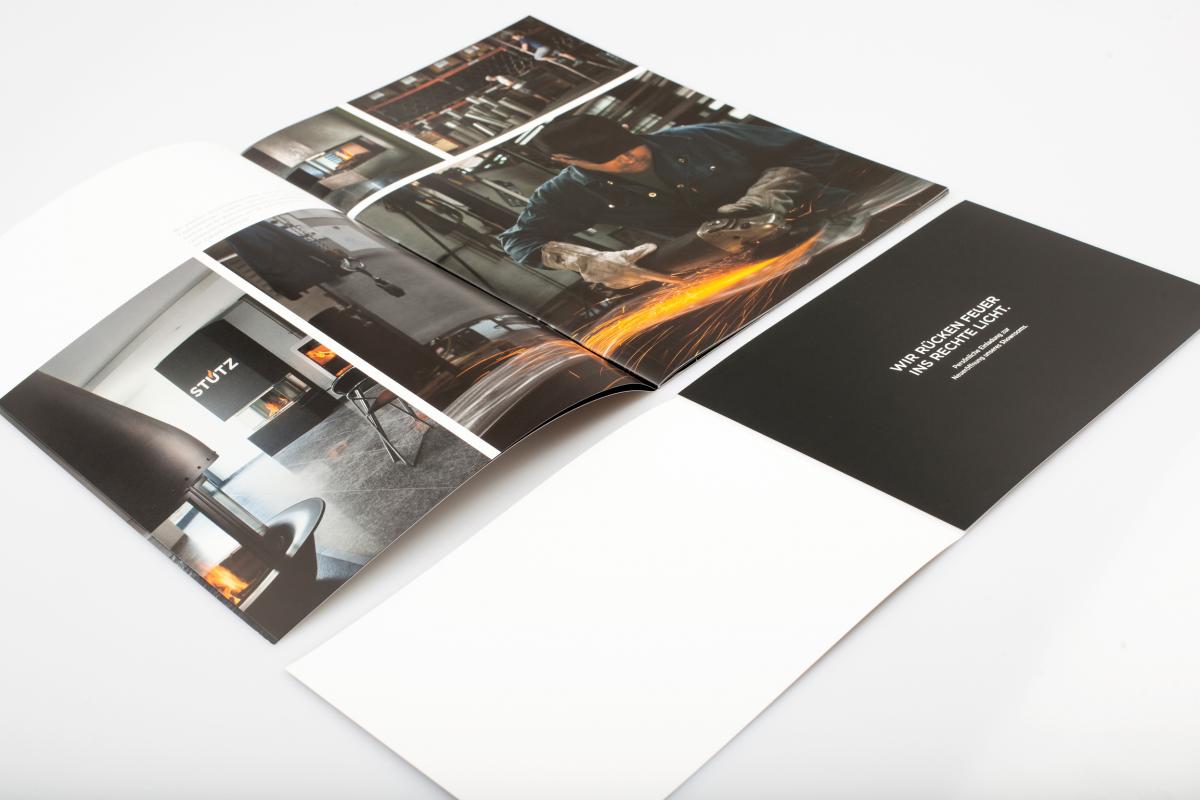
Serviceplan Solutions Suisse implemented a rebranding for Cheminéebau Stutz.

1_LOGO_STUTZ

Nothing is as beautiful as sitting in front of a cozy blazing fireplace. Reason enough for the publishing agency Serviceplan Solutions Suisse to create an equally beautiful rebranding.
The basis for the complete redesign of the previous communication is the newly created logo. Regardless of whether brochures, stationery or the website of the fire experts - minimalist design elements run through all advertising materials. By the way: Not only the communication media received a new look, but also the showroom of the Stutz family business in Birmensdorf.

2_MG_0374_2
3_MG_0329
4_MG_0386

5_Web_DEF

Responsible at Cheminéebau Stutz: Charly Stutz (Managing Director). Responsible at Serviceplan Solutions Suisse and Serviceplan Suisse: Nicolas Stark (art direction), Hanna Blumenrath (text), Raul Serrat (creative direction), Roland Dill (web design), Andrea Aegerter (consulting), Carmen Anderegg, Claudia von Grünigen, Denise Goldmann, Victor Borel (realization), Hanspeter Hunger (overall responsibility).

Passengertv with new partner in French-speaking Switzerland

The four newest double-decker trains of the private railway Chemin de fer Nyon-Saint-Cerque-Morez in the canton of Vaud are now equipped with the Passengertv passenger information system.

passengertv2

The private railroad company Compagnie du chemin de fer Nyon-Saint-Cerque-Morez operates a 27-kilometer, meter-gauge rail line from Nyon to La Cure via the recreation and winter sports resort of Saint Cerque. Passengers on the four recently commissioned trains now benefit from the Passengertv information system: news on politics, sports, business, weather and culture are broadcast on the screens, with advertising of up to 25 percent; a separate channel shows information from the rail company on stops, timetables and traffic news.

Passengertv is present in streetcars, buses and commuter trains in 23 cantons. The program is broadcast in four languages and reaches more than one million passengers every day, as certified by WEMF. Passengertv has grown strongly in French-speaking Switzerland in recent years and now operates a branch in Lausanne. In public transport in French-speaking Switzerland, Passengertv is present in Bienne, Neuchâtel, Nyon, Fribourg, the Jura and Lower Valais, in regional transport around Montreux and Vevey, in the tourist area of the Riviera and Lavaux, as well as on the SBB Vaud commuter train and PostBus Switzerland.

Image: Passengertv

Futurecom clarifies creditworthiness

The Y&R agency Futurecom Interactive launches a credit check portal for Bob Finance in record time.

bob-Finance-ScoreMe-2016-08-19

Our creditworthiness is often put to the test. Whenever we shop online, are interested in a rental property or want a lease, loan or mortgage, our creditworthiness is checked. And usually with Crif, Switzerland's leading credit agency. To make this behind-the-scenes process visible, Bob Finance, the Valora Group's fintech subsidiary, has entered into a cooperation with Crif and, at the beginning of July, launched the online platform ScoreMe launched.

Within just seven weeks, Futurecom interactive built the brand and the platform on a greenfield site, so to speak. First, the name and the corporate design were created in a concentrated process. This was followed by a short conception phase for the actual core, the online platform. Then the programming team around CIO Bruno Rambaldi took over, and the virtual sweat beads are still standing on his forehead after the launch: "Getting a project with such complex networking and high security requirements off the ground in such a short time was a great challenge for all of us. Our extensive experience with such projects naturally helped us to define potential problem areas in advance and to have solutions ready. Nevertheless, it was the case that the Futurecom project team certainly couldn't go home at 5 p.m. in the final phase."

Since July 1, 2016, all Swiss residents over the age of 18 can now check their creditworthiness in a very simple and free way. "All it takes is an official identification document (passport or ID) and the cell phone number," says Tim Ackermann, COO of Bob Finance, explaining ScoreMe's simple system. After the free registration, the result is sent by e-mail within a few minutes. If the credit rating is okay, a credit certificate can be ordered for a fee, which is accepted by an ever-growing number of landlords, banks and other lenders. If the credit rating is not as it should be, this can be changed with the help of an expert from "Bob Finance" partner Crif.

Responsible at Bob Finance: Hilmar Scheel (CEO), Tim Ackermann (COO), Wolfgang Gröschel (CFO), Janine Lutz (Marketing Manager). Responsible at Futurecom Interactive: Claus Bornholt (COO), Bruno Rambaldi (CIO), Thomas Engeli (Executive Creative Director), Sandro Tissi (Art Director), Nick-Patrick Herrmann (Account Director), Marcel Berberich (Principal Software Engineer), David Suppiger (Senior Software Engineer), Henry Seng (Software Engineer), Jean-Baptiste Bernus (Software Engineer), Roger Krage (Copywriter).


Media type issues new Le Menu

The advertising week shows its new face

With its comprehensive relaunch, Werbewoche shows how to turn a magazine on its head, keep the best and shake out the rest. The first print edition with the new look and feel was published today; Werbewoche digital will go live in the next few days.

Werbewoche-Logo-w

The most important thing: Werbewoche is finally going mobile. Werbewoche readers can now read and consult the comprehensive information and entertainment package of the over 40-year-old specialist magazine for advertising, media and marketing in print or digitally on all devices; comfortably at home, quickly on the move, wherever and however they want. And always accompanied by the W in a red circle, the trademark of Werbewoche for almost ten years.

Werbewoche-Logo-1200

Browsing wanted

From now on, the print edition will no longer be published in an unwieldy newspaper format but in magazine format, printed on high-quality paper and so beautifully designed that you won't want to put the magazine down. The magazine offers exclusive reading material, insides, tips and best practices from the industry, digitally rounded off with slideshows, moving images, audio files and a powerful search function.

Bildschirmfoto-2016-08-18-um-20.58.43

Superfluous and outdated trash has been shaken out of the trade magazine, but what remains are popular opinion pieces and columns, the head of the week portrait, reports on strategies, developments, campaigns and heads. Debates, background and advice reports on various topics, a literature column that relieves busy people of the need to read thick books, entertaining formats and large-format pictures by up-and-coming Swiss photographers have been added to the range of topics.

Bildschirmfoto-2016-08-18-um-20.56.23
Bildschirmfoto-2016-08-18-um-20.53.20

Wiping possible

The Werbewoche website and newsletter will continue to provide Werbewoche readers with detailed, concise industry news - from next week in a modern, streamlined design and optimized for all devices. The newsletter is already part of the daily reading of 6,500 industry insiders.

"I am very proud of the new Werbewoche and am really looking forward to entering a new era with the magazine in print and digital," says Werbewoche editor-in-chief Anne-Friederike Heinrich. "We have worked very hard for a year and a half on what our readers and subscribers will now be served: the perfect mix of fast news, critical background reports and entertainment. We very much hope that they like it." But work on the magazine continues, emphasizes Heinrich. "We still have a number of ideas with which we want to gradually enhance Werbewoche. After the relaunch is before the relaunch."

Bildschirmfoto-2016-08-18-um-21.04.20

Time for change

Almost ten years have passed since the last major redesign of Werbewoche in 2008: The then editor-in-chief Pierre C. Meier (†) decided to switch from a simple newspaper look to a magazine-style appearance; in addition, Werbewoche was no longer published in tabloid format, but in Din A3 format. In 2008, Werbewoche was also given a logo for the first time in its history - the now well-known W in a red circle. Three years earlier, the Werbewoche website had been comprehensively revised for the last time.

werbewoche-relaunch

The current Werbewoche relaunch was managed entirely in-house: it was conceived and initiated by Werbewoche editor-in-chief Anne-Friederike Heinrich together with the Werbewoche editorial team. Werbewoche's parent company Somedia, based in Chur, is responsible for the design and technical implementation of the print and digital editions and their further production.

Queries and contact:

Anne-Friederike Heinrich
Editor-in-Chief Werbewoche / Werbewoche Branchenreport / Media Trend Journal
Neugasse 10, P.O. Box 1753, 8031 Zurich
Phone: +41 44 250 28 29
[email protected]

About the advertising week

Founded in 1973, Werbewoche is the oldest independent Swiss publication for marketing, advertising and media. Werbewoche is published fortnightly in print, daily in digital form and Monday to Friday as a newsletter. It is read by more than 10,000 experts from all areas of marketing communication. Once a year, Werbewoche also presents the prestigious Werbewoche Advertiser of the Year award to an outstanding advertising personality. The winner is chosen by an independent jury and Werbewoche subscribers. Werbewoche has been part of Somedia, Chur, for five years.


Managers must think more networked

The German Institute for Leadership Culture in the Digital Age (IFIDZ) identified the skills and qualities that leaders need in the digital age.

digital

What skills and characteristics do managers increasingly need in the digital age? The Institute for Leadership Culture in the Digital Age (IFIDZ), Frankfurt am Main, know. It therefore launched an online survey of managers on this topic called the Leadership Trend Barometer. The executives, who took part anonymously, were able to select a maximum of three answers from a total of 19 options. 127 executives took part in the online survey.

The survey revealed that most of the participants consider the ability to think in a networked manner to be a core competence of leadership in the digital age. However, just as many consider the characteristic "openness to new, unfamiliar ideas and possible solutions" to be important (69 percent in each case). According to Barbara Liebermeister, head of IFIDZ, this corresponds with the fact that 65 percent of the respondents consider a high willingness to learn and change to be a key competence of a leader in the digital age. In fourth place comes the ability to convey meaning and demonstrate meaningful connections. (64 percent). This is again closely related to the fact that 58 percent of respondents are convinced that managers will be more in demand as leaders in the future. In other words, they must be "role models, impetus providers and motivators for other people". Only 13 percent of respondents, on the other hand, consider a "high level of assertiveness" to be an important characteristic of managers in the digital age - presumably, according to Liebermeister, because this characteristic is more in demand in a working environment characterized by a strong hierarchy, and less in a working environment characterized by cooperation as well as cross-departmental and cross-hierarchical collaboration.

trendbarometer-antwortoption1

IFIDZ conducts an anonymous online survey of executives three times a year under the label Leadership Trend Barometer. The next online survey will start at the beginning of October.

Youtube: With digital fingerprint against piracy

While the music streaming business is growing rapidly, the industry is taking aim at YouTube, where users can listen to many songs for free. Google points to its own system, which can recognize content and use it to generate revenue.

youtube_4

Anyone who has ever uploaded a video to YouTube may be familiar with this. The clip contains a well-known song, for example as background music or a karaoke performance - and a short time later an e-mail from YouTube lands in your inbox. "A rights holder using Content ID is claiming content in your video," it says. And, "Don't worry, you won't get in trouble." The clip doesn't have to be deleted, it says, though the rights holder does earn from the advertising revenue generated around the video. According to Youtube, in the music space, 95 percent of song rights holders have now opted to make money via Content ID. What's more, more than 50 percent of the music industry's revenue on YouTube is generated in this way. For a long time, the industry suffered badly from piracy on the Internet. Is such a "digital fingerprint" now the way to earn good money even on free platforms?

Content ID is not enough

"No," says Florian Drücke of the German Music Industry Association (BVMI). Measures like Content ID were not enough. "It must finally be made clear that online platforms such as Youtube must also pay licenses for their content - just as Spotify, Apple Music or Deezer do," he demands. How does Content ID work exactly? Rights holders can transfer songs, but also movies or live sports streams to Youtube as a so-called reference file. This is then used to create a kind of digital fingerprint that can be used to find the material again. The Google subsidiary's data pool currently comprises around 50 million reference files with a total duration of around 600 years. This compares with the 400 hours of material uploaded to the video platform every minute worldwide. The data is compared with each other. If there is a match, both sides are informed. The rights holder has the option of blocking his content - or earning money with it.

Optimized in Zurich

The system is optimized at Google's development center in Zurich, the largest outside the USA. 1800 employees from 75 nations are employed on the premises of the former Hürlimann brewery. There, they work on the further development of Google Maps or the Street View panorama service, on the Google Assistant, or even on Content ID from YouTube. Increasingly intelligent technology is leading to faster and more precise image and sound recognition, says project manager Fabio Magagna. Even modified images, such as those in black and white or with mirrored motifs, are recognized. This also applies to music. The expert points to the video "Smells like Nerd Spirit" in which the Nirvana hit "Smells like Teen Spirit" is played exclusively by an "orchestra" of computer hardware - the rights holders also earn money from this. "It teaches the computer how to be fed," Magagna explains. Two billion dollars has been paid out to rights holders via Content ID so far, according to YouTube. Of course, the company itself also earns a lot. Exact figures are not given - only that more than half of the revenues go to the rights holders.

Criticism of Google

However, the music industry has repeatedly criticized Youtube for not giving away enough money in relation to its size. The dispute came to a head at the end of June, when more than 1,000 musicians - including stars such as Coldplay, Lady Gaga and Ed Sheeran - complained to the EU Commission that services such as Youtube were devaluing music with their broad free offerings. By comparison, Youtube has over one billion users. According to the latest available figures, the streaming market leader Spotify has around 100 million users - more than two-thirds of whom are satisfied with the ad-financed free version. The number two in the streaming business, Apple Music, has around 15 million paying subscription customers just over a year after its launch.

In this situation, the music industry has for some time been turning to YouTube, where many songs can be found for free. At the same time, the music companies themselves post fresh video clips on YouTube to make the songs more popular. Currently, new licensing negotiations are underway between the music companies and Youtube. "Spotify pays an estimated $18 a year for each user, Youtube less than a dollar. This creates an unfair business advantage, which at the same time undermines the value of music," says BVMI head Drücke. Youtube does not want to accept this comparison: You can't compare services that cost $10 a month with an ad-supported offering, he says. "That's like me comparing a cab driver's revenue from his customers with the revenue from advertising in the cab," says Youtube manager Christophe Muller. (Jenny Tobien/SDA/DPA)

Everything else is history

Proviande is moving away from the slogan «Everything else is just a side dish.» The reason is the growing trend toward giving up meat.

schweizerfleisch_0

This writes 20 Minutes Online on Friday. The claim has been ubiquitous in Switzerland for more than ten years and has even become established in everyday language to some extent. Proviande, the trade organization of the Swiss meat industry, put the entire communications budget out to pitch in the summer of 2004. The search was for a new, comprehensive concept approach with the potential for long-term brand profiling. At the time, the race was won by the Berne agency Polyconsult, which prevailed in the evaluation against three other agencies. "We all separate meat and side dishes when we talk about a menu," the CD responsible, Jürg Tscharner, told Werbewoche at the time. "What place Swiss meat has in the meal becomes most obvious once it is missing."

20_Minuten_Friday_Ab_in_die_Pfanne

Apparently, the climate has since changed. "We have noticed that the slogan is increasingly criticized in the current climate, in which meat renunciation is on everyone's lips. In the political discussion, it was really beaten around our ears," Proviande Director Heinrich Bucher told 20 Minuten. The communication strategy was therefore further developed. The new claim "Swiss meat. The fine difference." under the motto "Responsible enjoyment from the homeland" emphasizes the advantages of domestic meat instead of differentiating itself from vegetarian food. (hae)
 

Retailers rely on mobile advertising

A global study by Marin Software states that mobile and paid search will be the most relevant channels for retailers in the fourth quarter of 2016.

thestate

Almost half of the advertising money (40 percent) that retailers will spend on online advertising in the fourth quarter of 2016 will go to mobile advertising. 37 percent of paid search clicks will be generated with shopping ads in the same period. At the same time, social network clicks and budget share will settle at a steady level. These are the findings of The State of Shopping Ads: 2016 Cross-Channel Marketing Report, presented by Marin Software on Friday.

The study forecasts activities of influential online stores in paid search and mobile for the fourth quarter of 2016 and provides specific recommendations for action for the shopping season at the end of the year.

"Publishers like Google and Facebook are constantly developing new formats and features that offer retail advertisers new target groups and revenue streams," explains Marcus Thümmler, Team Lead Product Consulting DACH & EE at Marin Software. "Consumers also benefit from this, because firstly, it tailors the shopping experience even more precisely to them. Second, in a mobile world, they can click and buy even more easily at the right moment for them."

The study, "The State of Shopping Ads: 2016 Cross-Channel Marketing Report," is based on data collected worldwide from the Marin Global Online Advertising Index, which summarizes the advertising companies that manage more than seven billion US dollars of advertising budget annually via the Marin platform. For this analysis, retailers spending more than $100'000 per month on text ads on Google and Bing and on Product Listing Ads (PLAs), now called Shopping Ads, were evaluated. As a result, the data and findings apply predominantly to the performance of large retailers and may not show performance trends for smaller companies. However, the scope and diversity of the data allows for a robust analysis of shopping ad performance.

The complete report volume, "The State of Shopping Ads: 2016 Cross-Channel Marketing Report," can be here downloaded free of charge.

Frank Egholm new CEO of Orell Füssli Thalia

The Board of Directors of Orell Füssli Thalia has appointed Frank Egholm as its new CEO.

orellfuesslithalia

The 45-year-old business economist will take up his position on October 1, 2016, and has many years of management experience in retail companies, according to the company. Most recently, Frank Egholm was responsible for the business of Staples, the world's largest office supplies retailer, in the DACH region as Managing Director. Several years of successful engagements in the apparel, food and pet food sectors round off Frank Egholm's profile.

Orell Füssli Thalia is a company founded in 2013 Joint venture between Orell Füssli and Thalia Books, making it the largest bookseller in Switzerland. Orell Füssli's share is 50 percent.
 

get_footer();