Most adults spend a large part of their time at work. So it seems only natural that work should not only be fun, but should actually make us happy. But what exactly is happiness? And are we entitled to it?
Julia Wentzlaff
-
October 13, 2023
(Image: Getty Images)
Most adults spend the majority of their lives at work. Although this can often be demanding, stressful and even overwhelming, unemployment is considered to be the greatest source of unhappiness. For many people, work is not just a source of income, but an opportunity for self-fulfilment; to find meaning and happiness in life. But is it realistic to expect our professional activity to make us happy? Is it not enough to simply be satisfied with our day-to-day work?
Life in the hamster wheel
The idea of finding personal happiness at work was unthinkable for a long time. Those who forged iron 14 hours a day, 7 days a week had little room to reflect on happiness. At the time of industrialization and the rise of capitalism, thoughts of economic growth and material gain dominated the world of work. A dynamic that led to catastrophic working conditions: The rural exodus promoted by the industrial centers led to an oversupply of labor in the city. The individual worker was therefore worth little and factory owners had the freedom to extend working hours, cut wages and immediately dismiss old or sick workers at their own discretion - because there were always enough replacements. Around 1860, working weeks of 78 hours were still the norm.
"The idea of finding personal happiness at work was unthinkable for a long time."
In a world in which work had become the purpose of life and the driving idea was economic growth, work and happiness seemed to exist in two completely different realities. In a treatise published at the beginning of the 20th century, Max Weber described this situation as a hamster wheel of work, everyday life and consumption in order to increase the gross national product. There had never been so much wealth, so much poverty in a system that obliged those involved to live and work in a steel-hard shell of bondage. Professional humanity", he concludes, must manage "without God and ideals".
"The purpose of life becomes (...) a hamster wheel of work, everyday life and consumption."
But the sweat seems to have paid off: Capitalism has brought us unprecedented prosperity. Many machines are now so advanced that they can do a large number of strenuous and repetitive tasks for us. Political achievements such as social security and occupational health and safety have increased the quality of life. As a result, attitudes towards the purpose of business have also changed: Younger generations Y and Z in particular are aware that the promise of economic growth does not have to be kept at all costs if people, animals and the environment are harmed in the process. In a slow but steady process, work activity is being decoupled from profit growth and replaced by ideals such as environmental protection, social responsibility and personal happiness.
The "New Work" megatrend
This change in values also manifests itself in a new perception of progress and consumption. The value of a product is no longer defined solely in terms of expensive materials, but results from a combination of quality, environmental awareness and ethical values that are linked to the entire life cycle of the product. Corporate social responsibility has even developed into an economic advantage. Not only can it drive consumption in strong target groups such as the Glamour Greens, but a company can also be perceived as an attractive employer by representing ethical values. This is an advantage that is becoming increasingly important today: Diametrically opposed to the abundance of labour during industrialization, the global shortage of skilled workers today is recording record numbers. An authentic corporate purpose motivates collaboration on a shared meaningful vision, and through working models such as remote work, companies are even taking care of the mental and private well-being of their employees. All of this is leading to a fundamental re-evaluation of work and career: leisure time and working time should be aligned. Work is no longer a tedious duty, but should be an integral part of a fulfilled life and can even give it meaning.
What happiness is
Before the new work trend, satisfaction was primarily associated with work. Even today, people often answer with the term satisfaction when asked about happiness. On closer inspection, however, the two closely related terms can be differentiated: According to a qualitative study conducted by happiness researcher Ricarda Rehwaldt in 2017, satisfaction tends to arise "from external circumstances such as the expected rewards of extrinsically motivated activities (such as salary)". Happiness, on the other hand, is characterized by intrinsically motivated, "active and self-determined activities".
"Today, work is no longer a tedious duty, but can even give meaning to life."
This explains why happiness was only associated with work after the economic framework conditions had changed: According to Rehwaldt's definition, happiness at work only has a chance when the professional activity is not solely geared towards the accumulation of material gain. Happiness at work is found by those who perceive it as an activity in itself, i.e. intrinsically fulfilling and meaningful, regardless of external factors. However, this is an expensive luxury: not having to focus solely on earning money at work.
How much does happiness cost?
The modern trend of happiness at work is permeated by an irresolvable tension: on the one hand, work can by definition only make you happy if it is not extrinsically motivated by material gain - on the other hand, however, this attitude to work can only be afforded by those who have already set aside sufficient material resources. In their recently published study, Nobel Prize winner Daniel Kahnemann and Matthew Killingsworth come to the fascinating, albeit sobering, conclusion that the happiest 30 percent of the world's population have an annual income of over 100,000 dollars. According to these figures, happiness seems to be a luxury of the affluent society. - A result, however, that only partially fits the description of happiness as an "intrinsically motivated, active and self-determined activity", because the reward for an activity always remains external.
"Sometimes happiness requires a different kind of interpretation: 'eudaimonia' instead of hedonia and dopamine."
A look at history shows that happiness can be achieved in a completely different way than through wealth: Around 400 years before the beginning of our era, Diogenes came to the conclusion that happiness and possessions were incompatible. He consistently opted for a life of complete independence and poverty. When Alexander the Great granted him a wish, Diogenes is said to have said: "Just get out of the sun a little." Alexander's entourage began to mock the poor man, but Alexander the Great is said to have exclaimed with emotion and admiration: "Truly, if I were not Alexander, I would like to be Diogenes!" For Diogenes knew that happiness can be as simple as a warm ray of sunshine that outshines all the gold on earth.
Bliss
As brilliant as the story of the development from the "steel case of bondage" to happiness at work through remote work, new work and corporate social responsibility may seem - the claim to personal happiness at work is threatened by elitism. It can lead to the devaluation of ordinary professions and even cause us to become unhappy if we do not feel happiness at work. Yet the state of not feeling happiness is not necessarily unhappiness, but normality: anyone who clears garbage from the street, drives the bus or cares for the elderly in an old people's home will rarely rejoice in their work. But that doesn't mean that these jobs can't make you happy. It's just that this kind of happiness requires a different interpretation: it's not about carefree, self-realization, individualism, hedonism or dopamine, but about the fulfillment of meaningful work that can be integrated into the self-image of a life and into the narrative of a culture and society. However, this narrative cannot be found in the job description. Meaning can only be created by the person doing it. And those whose actions make sense will probably not rejoice - but they will experience what another Greek named Aristotle once called "eudaimonia": Bliss.
(K)a comment
m&k Werbewoche.ch asked Swiss author Dr. Matthias Zehnder to provide context for the various layoffs, scandals, and investigations at Swiss publishing houses. Zehnder declined—but did allow us to publish his explanation.
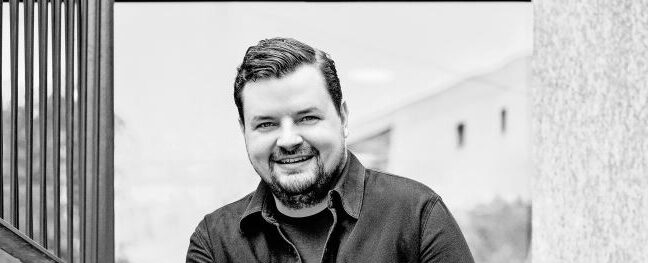
Matthias Zehnder
-
October 12, 2023
Inquiry from Johannes Hapig, co-editor-in-chief of m&k Werbewoche.ch:
Dear Mr. Zehnder
I hope you're doing well.
I am writing to you because we were absolutely thrilled by your article on «The Soul of Artificial Intelligence»—but also because you are one of the country’s most prominent media critics.
(We’re not the only ones) who have noticed that in recent months, various male (chief) editors at renowned Swiss media outlets have had to step down or have at least been sidelined—you’re familiar with the cases, so I don’t need to list the names here.
Of course, we don’t expect you to delve into the nitty-gritty of these cases for our sake—that’s tedious and can quickly lead to legal complications; however, we’re interested in a «meta-question» related to this topic: Is a (perhaps long-overdue) cultural shift taking place in the media?
This raises a number of «sub-questions»: Why now? Was there even a «pre-culture,» and what will a «post-culture» look like? What mechanisms do media companies have in place to deal with such cases? In general—are they sufficiently well-established and developed, or are they rather outdated? And in this heated climate, where one media outlet reports on another, how do we protect the alleged victims?
Once again: As I said, you shouldn’t mention any names; there’s no need to venture onto thin ice here. In this case, we’re solely interested in the «meta-theme.» Would you be willing to explore this topic and write an essay? Feel free to be critical, provocative, and experimental. Just as you see fit.
We could offer you our standard rate for 8,500 characters, including spaces. It would also be great if we could receive the text by September 12; however, we have some flexibility if that deadline is too tight.
What do you think?
Sincerely, Johannes Hapig
(Photo: Courtesy of / Ferdinando Godenzi)
Response from Matthias Zehnder:
Dear Mr. Hapig
Thank you very much for your inquiry. You write that I am «one of the country’s most prominent media critics.» That’s quite the compliment—it almost worked. But I can’t write about misconduct—or even abuse—in Swiss newsrooms. I don’t know any better. And then, on top of that, as a man. I only know about these cases from the media. In any case, criticizing colleagues doesn’t look good. Besides, every case is different. And then there’s the presumption of innocence, too. No, I can’t write anything sensible about it.
I've been discussing this with my friends. They're asking what's going on in the newsrooms. It's striking that these cases often dragged on for years. Why didn't anyone ever step in? How is this even possible in a newsroom?
I tried to explain to my friends how a newsroom works. On the one hand, newsrooms are part of an industrial production process—a massive machine in which many gears must mesh together so that the website is updated on time, the TV show can be broadcast, or the printed newspaper can be delivered to readers’ mailboxes on time the next day. On the other hand, newsrooms rely on a constant stream of new ideas and the creative energy of innovative minds. Newsrooms often thrive on the ingenuity of individuals.
So we have both industrial production, like in a car factory, and a creative act, like that of a painter. The industrial side insists on deadlines and character counts. If 8,500 characters have to go into production by 5:15 p.m., there are no excuses. Even if the screen is still blank at 4:30 p.m., your stomach is growling, and for some inexplicable reason, the keyboard has suddenly stopped producing umlauts. By 5:15 p.m., the 8,500 characters are in the can.
The other side—the «artists» in the company—provides the sparks that get the machinery moving in the first place. They come up with the brilliant ideas and the inspiration. They find the better word, capture the more powerful image, and craft the more compelling headline. These «artists» stand in opposition to the car factory. They don’t stick to schedules or numbers, because they don’t produce products—they produce ideas. They’ll completely revamp the entire newspaper right before it goes to press because they’ve had a better idea. And they’re often right.
Although editorial departments have flat hierarchies or none at all, this leads to the «artists» enjoying informal power within the company because the car manufacturer relies on them. Sometimes, over time, the «artists» turn into despots. The work environment deteriorates; it can become downright toxic—and not just for women. The «artists» attain cult status. People accept that they sometimes behave strangely and cross boundaries. The editorial team believes this is just part of the job. The editorial team looks the other way.
I've been discussing this with my friends. They ask whether there's a sexist atmosphere in newsrooms. Why boundaries are crossed so often.
I’ve tried to explain to my friends how a newsroom works. That journalists, like doctors, are allowed to break social rules. No matter how powerful a CEO may be within his company, or how popular a female politician may be—journalists are allowed to pepper them with critical questions. Not that journalists are above the law. Not at all. But they operate outside the sphere of power. No one in the inner circles of executives, politicians, or professors is allowed to treat those in power that way. Only journalists are allowed—indeed, must—cross boundaries and ask uncomfortable questions.
This also applies within our own editorial team. If a photo is bad, there’s no room for kind words. It has to go. If an article doesn’t work, you have to say so to each other’s faces, even if it hurts. Even when everyone wants to be nice to one another and take each other seriously. It’s precisely then that the «artists» tend to hide their vulnerability behind excessively crude language. A photo isn’t just bad—it’s «shit.» Or worse.
All of this is happening amid mounting competitive pressure. There’s external pressure from other market players. Who will be the first to post the story? Which news program will have the better footage? Which newspaper will better engage its readers? Even worse than the external pressure is the internal competitive pressure. Not all stories make it into the paper or onto the broadcast—and certainly not onto the front page. And then there are the clicks: The success of every piece can be measured at any time. The numbers are displayed. Everyone knows whether your story was well-received or whether it flopped.
Yet this story that’s falling apart isn’t just a component like a tire in a car factory. It’s a text or an image into which you, as an «artist,» have poured a piece of your soul. If it’s rejected—whether by the audience out there or internally by the production manager or your colleagues—then that’s also a rejection of your soul. Of you as a person. Journalists are always, to some extent, putting a piece of themselves out there.
I've been discussing this with my friends. They ask what this has to do with sexual harassment in newsrooms. They ask if I'm trying to excuse it.
"Of course not," I said, "absolutely not. There’s no excuse for harassment. I’m just trying to explain how the environment works and why it doesn’t react. The pressure, the personal exposure." That journalists are used to crossing boundaries—not just with CEOs and federal councilors, but also among themselves. How important geniuses are in newsrooms. That this sometimes creates a sense of untouchability, which leads to no one calling a harasser out. That this can result in a toxic work environment.
I've been discussing this with my friends. They ask what has actually changed. Whether it's #MeToo. Or whether newsrooms have simply lost their inhibitions about reporting on other media outlets.
That is the question. What has changed compared to ten or twenty years ago? One thing is certain: young journalists—and especially young female journalists—no longer put up with just anything. Thankfully, they don’t. No lewd comments, and certainly no harassment. At the same time, the pressure on newsrooms has increased. Every performance is immediately measurable. In the battle between the car factory and the artist, the factory side has gained ground. Newsrooms have become more industrialized. And now artificial intelligence is knocking at the door. The geniuses are in trouble.
I discussed this with my friends. They asked what happens next.
I don’t know. I hope that many media organizations will succeed in creating a supportive work environment where young women (and men) feel safe and comfortable. At the same time, it must be possible to offer each other tough criticism. It’s no coincidence that the most important rule in editing a text is: «Kill your darlings.» Media professionals must not become mere factory workers. They must remain «creators.» Creative, unconventional, free-spirited, sometimes brilliant. They must be hard on themselves, their writing, and their images. They must be able to speak frankly with one another, even if it sometimes hurts.
I’ve discussed this with my friends. We’ve been wondering how this can be achieved. The answer is probably an uncomfortable one: we need more humility and decency in newsrooms. That’s not exactly a popular idea. Furthermore, media companies can no longer pit creative work against process-oriented operations. Newsrooms must bring both sides together and, as a whole, become a creative, functioning organization—one in which young women can immediately stand up for themselves when a man crosses a line. Yes, it’s possible. But it requires a few old cowboys to get off their high horses—and a few auto mechanics to crawl out from under their machines.
I'm still discussing this with my friends. But try as I might, I just can't write a substantial comment on it.
Warm regards from Basel, Matthias Zehnder
Dr. Matthias Zehnder is a freelance journalist, consultant, and author based in Basel. He studied German language and literature and philosophy in Zurich and earned his doctorate in media studies in Basel. Zehnder has founded or co-founded several start-up companies and publications related to the internet. From 2007 to 2012, he was editor-in-chief of the «Coopzeitung,» Switzerland’s largest print publication. From 2012 to 2015, he was editor-in-chief of the daily newspaper «bz Basel.» Since early 2016, he has been working independently as an author, researcher, and consultant.
Between AI and Ratio
The latest edition of the PwC study «Swiss Entertainment & Media Outlook 2023–2027» examines the use, applications, and challenges of generative artificial intelligence (AI) in the industry. It also takes a look into the future.
Bogdan Sutter*
-
October 11, 2023
(Image: Unsplash.com / Allison Saeng)
The shift in Switzerland’s entertainment and media (E&M) industry toward digital channels and formats continues. This is evident in the latest «Swiss Entertainment & Media Outlook 2023–2027» from PwC Switzerland. Generative AI holds particular potential within this trend. A dedicated chapter in the study examines how it is being used in the E&M market today and how it will transform it in the future.
A Long-Running Media Favorite
Generative AI technology is based on advanced deep learning models. It learns from existing data and uses that data to generate new content. The technology itself is not new. What is new is that platforms and tools are more accessible and easier to use than ever before. It is therefore not surprising that generative AI has received enormous media attention since the launch of the AI-powered chatbot ChatGPT in November 2022. The E&M industry is increasingly using the technology to generate new media content and conduct research.
Versatile and dynamic
The rapid rise of generative AI is driven by several factors. For example, generative AI foundation models are trained on massive amounts of unstructured data from the internet. Thanks to social media platforms and user-generated content, this data is available in abundance. In addition, AI-based models benefit from increasingly powerful hardware components, cloud hosting, and deployment environments. Furthermore, the major players in the Big Tech industry—such as Microsoft, Google, Baidu, IBM, and Nvidia—are investing heavily in generative AI. As a result, AI startups and pilot projects are attracting the attention of investors. Finally, generative AI is scaling up novel forms of personalization across an ever-wider range of application areas.
«Generative AI frees up time for creative and high-quality tasks.»
Widely used and promoted
Three-quarters of E&M research firms report using generative AI; 46 percent of respondents use it at least once a week. Advertising agencies are particularly active in using the technology, making them industry pioneers. Generative AI is particularly well-suited for their work—for example, to independently create new content such as music, text, and videos; to translate text; or to generate ideas. Thirty-five percent of respondents cite a lack of understanding as the main reason they have not yet adopted generative AI.
Employees’ usage patterns correlate with employer support. For example, 71 percent of the companies surveyed support the use of generative AI either moderately or strongly. It is noteworthy that SMEs with up to 250 employees, in particular, frequently use the technology. This could be because small organizations often adopt new technologies more quickly than large companies.
Benefits Recognized
87 percent of study participants believe that the increasing use of generative AI brings more benefits than drawbacks, such as improving the viewer experience or boosting creativity. Currently, E&M players primarily use generative AI for simpler tasks and as a support tool. They use the technology to automate daily or labor-intensive routine tasks and their processes—in other words, to boost productivity.
93 percent of respondents say that generative AI makes their day-to-day business operations easier and more efficient. This assessment mirrors that of 82 percent of respondents, who believe that AI-generated content is of equal or lower quality than content created by humans. Accordingly, generative AI frees up employees’ time to focus on tasks that require human intelligence. 77 percent of respondents would like to see the use of generative AI increase in the future. This demonstrates that the E&M industry believes in the technology’s potential.
Reservations remain
Despite all the optimism, generative AI also poses serious risks, such as those related to data protection, environmental sustainability, and ethical integrity. 72 percent of study participants believe that AI jeopardizes the protection of sensitive data. More than three-quarters of respondents are skeptical of generative AI and the content it produces. Nine out of ten respondents are concerned that generative AI may not distinguish between true and false information. At the heart of these concerns are the implications for copyright. Outputs generated by generative AI are novel, but they draw on existing, original content. As a result, they risk infringing on copyrights. Many artists express dismay that generative AI uses their material without permission and feeds similar material back into the market.
Controversial Debate on Prices
59 percent of study participants believe that generative AI will revolutionize the world of work and could even replace jobs in the E&M industry. Whether and how generative AI will affect prices in the E&M industry is the subject of heated debate. Some fear that price pressure could increase because generative AI simplifies tasks and thus reduces costs. Others argue, however, that it improves quality and performance, which could lead to higher prices. The impact of generative AI on paid search is likely to be an improvement in the relevance, accuracy, and usefulness of search results. However, it is unlikely to completely replace search.
An Outstanding Game-Changer
This year’s E&M Outlook special report highlights a certain ambivalence inherent in emerging technologies. On the one hand, generative AI holds the potential to drive disruptive change across all sectors of the E&M market. The industry representatives surveyed are positive about its use and benefits. On the other hand, there are challenges and risks, such as a lack of data security, insufficient integrity of statements, or copyright infringement. The fact is: Generative AI frees up time for creative and high-value tasks by automating routine tasks. Whether it will evolve into a valuable tool, a rival, or a catalyst for human creativity remains to be seen. Either way, generative AI has already significantly transformed the world of work and will continue to do so. E&M decision-makers would be well advised to keep a close eye on this game-changer and act with foresight.
Advertising legend Jean-Remy von Matt is advancing his next career move with sculptures that emphasize the finiteness of human life. Together with the Zurich-based startup Vivents, he is presenting an hourglass that cannot be turned over. And he’s already thinking about new projects.
Johannes Hapig
-
October 11, 2023
Artist Jean-Remy von Matt with his latest work - a lifetime hourglass. (Image: zVg. Vivents)
The other day, Jean-Remy von Matt, Germany's best-known "retired advertiser," attended an event in Berlin. At a bar table, he met three people who had observed his first steps in the world of the performing arts - among them "painter prince" Markus Lüpertz. While the "non-artists" at the table were full of praise for von Matt's works, Lüpertz made a remark that, in context, could rather be understood as an "anti-compliment" - he explicitly referred to the ex-advertiser's Sixt campaigns and expressed his respect for them; however, he did not mention his art with a single word. "I would have quite liked to have received praise from Lüpertz, I must say," von Matt recalls. And then adds with a grin: "But I'm still new to the profession."
The anecdote shows how much has changed for the iconic agency founder: He is no longer involved in the day-to-day business of his company, and only rarely climbs into the saddle for esteemed traditional clients such as Ricola. And never for longer periods. "I've been producing ideas as a service provider for almost five decades," he says, "and now I'd finally like to be creative in my own right. So he allows himself the luxury of doing what he really wants to do.
"Advertising is not designed to last. (Also) therefore now: art."
While he himself is gaining years (he will be 71 in November, even though visually he would be considered in his late 50s at most), Jean-Remy von Matt has begun to build an artistic oeuvre around the themes of time and transience that will one day become part of his creative legacy. He believes that some of his major campaigns will continue to shape the industry's discourse in the distant future, but advertising is not designed to last; today even less so than in the past. (Also) therefore now: art.
Two watches, many messages
Von Matt began with a quasi archetypal Swiss activity: watchmaking. But he has turned the principles of watchmaking on their head, because his timepieces do not mark the present or indicate past moments. No, he is concerned with the future - his watches tell you how much life you can expect to live.
"My works are not dedicated to death, but an ode to lifetime."
On the one hand, there is the digital "Carpe Vitam Clock," which shows on a small display the average remaining years of the owner's life - broken down to seconds; and on the other hand, there is the half-analog, half-virtual "Hourglass of Life," whose falling grains release basic concepts of being human. Both clocks are a permanent reference to the phrase "memento mori," which was already used in ancient Rome to remind victorious commanders of their mortality - and which then continued as a game with vanitas motifs throughout (art) history until today.
So has a morbid fascination with death infected the artist Jean-Remy von Matt? Not at all, he says: "We value life far too little, we go through our daily lives as if we had an unlimited number of moments at our disposal," he explains, "when in fact the exact opposite is the case." Buyer:inside his Carpe Vitam digital watch, he includes a copy of Seneca's treatise on the brevity of life, an impassioned plea to make the most of one's time and avoid unworthy time-wasters. "My works are precisely not dedicated to death," von Matt emphasizes, "but an ode to lifetime." And if someone is in the world longer than the average value on the life timer predicts? Then the clock begins to congratulate the person at regular intervals.
From being a child to independence
Similarly, while the hourglass reveals the inescapable fact that everyone's time is running out - and that things are lost in the process of aging - it also reveals new insights to the viewer. Childlike naïve joy may be increasingly buried under the sands of time, but this process creates space - in the artwork, but also metaphorically - for ever greater independence. Nonchalance gives way to self-confidence, enthusiasm becomes serenity, and when finally the last grain comes to rest over the concept of time itself, opposite stands: hope, completely free and uncovered. In defiance of all certainties, all inevitability.
As I said, this is life art, not death art, also because von Matt mentions in an aside that for every work sold he donates 1,000 euros to the country with the lowest life expectancy in the world. More than 50,000 euros have already flowed to Chad, to a hospital that primarily treats sick children. A wonderful dialectic: a theoretical reflection on the brevity of life in a German living room or a Swiss gallery practically prolongs a life on the other side of the planet.
Vivents founder Sarah Schlagenhauf in her gallery office, where Jean-Remy von Matt's new hourglass (below) will be unveiled on October 11.
Gallery, Company, Revolution
In general, the keyword is gallery: just as Markus Lüpertz could not bring himself to compliment von Matt's works, established galleries were also rather hesitant to include the ex-advertiser in their portfolios. "As a collector, I would be very welcome with them," he notes smugly, "but as an artist? That's where the circle suddenly narrows drastically."
The dynamic changed with Sarah Schlagenhauf, the driving force behind Zurich-based startup Vivents. Schlagenhauf and her team break barriers, working at the intersection of art, luxury and technology. As a result, the venture has established itself as a pioneer of immersive Web3-centric brand experiences powered by blockchain technology. With a focus on luxury and art in e-commerce, it leverages cutting-edge technologies to create transformative experiences.
Existential questions
Schlagenhauf, who as a young person ("She still has well over a billion seconds on her watch!" as Jean-Remy von Matt charmingly puts it) might well have a different relationship to time than her counterpart, when asked, reports an immediate fascination that von Matt's works have triggered in her. "I actually think a lot about how to make the most of the moments that are given to me," she explains. Just recently, she says, she discussed with friend:ing whether she would buy - in the style of the artist's works - a further development of the digital watch, a time-measuring device that not only juggles statistics but also knows her individual date of death through a kind of magical intuition. She leaves the answer open. The special thing about the Carpe Vitam movements is that they function as a constant reminder without symbolizing absolute determinism. Schlagenhauf and von Matt in unison: "One can - one may - one should 'overcome' the clocks." Those who eat healthily, exercise or stop smoking may not get a bonus on the display, but (much better!) the chance to get one in reality.
(Image: zVg. Vivents)
Quo vadis?
Speaking of bonuses: What will happen after the launch of the Hourglass of Life on October 11, 2023? What topics does von Matt want to address next - at best in cooperation with Sarah Schlagenhauf and her team? "I'm mainly interested in the very big, the eternally effective themes," says the artist, "and not what the zeitgeist offers." He finds the exploration of maximum opposites exciting, says von Matt, of light and darkness, truth and lies, dialogue and silence. So there's plenty to do. "Unfortunately, I have less time for my second career than others who have always made art," Jean-Remy von Matt concludes, "but if I use the time properly, it can still become something."
Susan Hoffman: The Lioness of St. Mark's
This summer in Cannes, Wieden+Kennedy CCO Susan Hoffman received the highest honor in advertising: the «Lion of St. Mark» for her creative life’s work. She spoke with us about her early days at the legendary agency, the lessons she learned from its founders, and the value of lasting client relationships.
Johannes Hapig
-
October 10, 2023
(Illustrations: Silvan Borer)
m&k: Susan Hoffman, this past summer you were awarded the «Lion of St. Mark» at the Cannes Lions International Festival of Creativity—there’s really no greater honor for an advertising professional. Still, doesn’t it feel a little strange to be recognized for your life’s work when it isn’t even finished yet?
Susan Hoffman: No one has ever asked me that question before! (laughs) I dye my gray hair, which is why they still let me into my office—we’ll see how long that lasts… But all joking aside: I think it’s perfectly fine to honor someone’s life’s work, even if that person is still actively working. Dan Wieden also received his «Lion of St. Mark» without having retired. The same goes for a significant number of our colleagues. That said, I’d say: I’m grateful for the award, of course, but I’m not the kind of person who’s constantly thinking about awards. Wieden+Kennedy—as you probably know—comes from a small town in Oregon, and the «Spirit of Portland» helps you stay humble. Dan used to say, «You’re only as good as the last campaign you did.» I like that idea, and even a «Lion of St. Mark» doesn’t change that.
Still, even without focusing on awards, it’s fair to say that you’ve been very successful in your career. That’s particularly interesting because you actually ended up in the advertising industry more by chance, didn’t you?
I’m not talking about a coincidence, but rather a «stroke of luck»: I wasn’t particularly good at school, and on top of that, I grew up at a time when society didn’t … encourage women to pursue a career. I enrolled in college anyway—and discovered a course titled «Commercial Art.» I liked art, so I took it. To my surprise, the instructor didn’t talk about classical painting and theory, but rather about the very practical basics of what was considered modern advertising at the time. I probably should have read the fine print… But by then it was already too late for me. (laughs) Shortly after that, I dropped out of college, and even though my mother said, «You’re not smart enough to have a career in advertising,» I decided to give it a shot …
… and suddenly became the eighth (!) employee at Wieden+Kennedy, now one of the largest independent agencies in the world.
That’s true, but: I had met Dan Wieden and David Kennedy earlier, when we were working together at an agency called William Cain. They left that agency and took Nike with them as their first client, and although they didn’t initially have the capacity to offer me a job, they promised to get in touch. They kept that promise. Interestingly, Dan and David offered me a position on the very same day that a much larger agency contacted me. Everyone I asked advised me to go with the better-known firm. But I wanted to work with Dan and David. I’d really enjoyed working with them at Cain; it felt like the right decision. So I became their «number eight.».
«The »Spirit of Portland' helps you stay humble."
You are currently the global CCO of Wieden+Kennedy, but looking back, you could also be described as the «Chief Growth Officer»: You played a leading role in the agency’s expansion into international markets and helped establish offices around the globe. Why you, in particular?
I think it has mostly to do with the fact that I love to travel. I’ve always found it incredibly enriching to explore different countries—to experience firsthand just how diverse and exciting our world is. When the opportunity arose to go to Europe—we had our first international office in Amsterdam, after all—someone else was asked before me, but he had reservations about moving with his entire family. I, on the other hand, was ready. And I have very fond memories of those years in Amsterdam… with Dutch as a new language, Nike as a familiar client in an unfamiliar environment… There was so much to do, so much to learn. It was magical.
Did you find it more difficult to create advertising in—and for—cultural settings where you didn't grow up?
Yes, absolutely. But with the agency, we followed a principle that has proven to be very helpful: We built Wieden+Kennedy around the pursuit of creative excellence. Whenever we ventured into a new market, we tried to attract great local team members with that creativity. In other words, people who understood the market’s mindset—and who received a «creative influx» from us. My advice for expansion is therefore this: Focus equally on the region, your employees, and your clients—then it can work out well. Of course, some cultures are harder to «understand» than others. In those cases, it’s even more important to trust your local team. Filling an office in Tokyo with a bunch of Americans and saying, «Now go do something great!» … that’s not going to work.
«I'm not the kind of person who's constantly thinking about awards.»
Last year, you gave a speech in London. Among other things, you talked about how important it was—and still is—for you, as a leader, to support people in their individual careers. Why?
Well, I myself have received an enormous amount of support throughout my career. I can hardly count how many times I was given new assignments at Wieden+Kennedy and went to Dan or David saying, «I’ve never done this before! I won’t be able to do it!» They always remained very calm, very relaxed, and said, «It’ll work out. There’s a first time for everything.» They trusted me and didn’t get angry when something went wrong. In fact, they made «Fail harder!» one of the agency’s mottos. Nobody likes to fail—I still don’t—but only when you feel trusted, when there’s a safety net, can you truly be innovative. I received that kind of support, and I want to pass it on. It’s also very important to me … to give people enough time to learn. If my portfolio at the time had been the deciding factor when I started at Wieden+Kennedy—I don’t know if they would have hired me. (laughs) But Dan and David believed I could learn, and they gave me the time to do so. I think that’s what you owe your people in any kind of business. You wouldn’t expect a first-grader to solve problems meant for college students, either.
Since you brought up the motto «Fail harder!»: Is the marketing and communications industry as a whole too afraid of failure—and does it therefore want to play it safe?
I know from the briefing I received before our conversation that you wanted to link this question to a question about the importance of KPIs. KPIs are definitely something I won't be addressing. (laughs) But … yes, the industry has taken some interesting turns in recent years. There have been—and continue to be—repeated attempts to remove emotion from the process. Advertising, however, needs emotion. It used to be easier to judge the quality of an idea because the team’s enthusiasm—and then the clients« enthusiasm—the »wow factor«—was a good indicator of whether something would work. Now, on the part of everyone involved, there’s often a tendency to block out immediate feelings… and start »overthinking« right away. I try to counteract this by asking, for example, »Before we get into the details, what was your first reaction?« But emotions and advertising—that’s a complex matter. You know, it’s always taken courage to trust your intuition, but today it takes more courage than ever. By the way, I don’t mean to suggest that we shouldn’t think things through or be critical. In fact, I would always encourage critical engagement. Let people debate! But the argument that »something feels right” must have a place in these discussions.
«Filling an office in Tokyo with a bunch of Americans and saying, »Now go do something great!' … that doesn't work."
Have you ever had an idea that «felt really good»—but still didn’t work out?
Probably … more than once. (laughs) That’s why I said, talk about your ideas, discuss them. I remember a time when a colleague of mine and I had what we thought was a brilliant idea for Coca-Cola. We were totally excited, showed it to Dan, and he just said, «They won’t buy that from you.» We argued that everyone on the team was on board and that everyone liked our idea, so he nodded: «Okay, give it a try. Good luck.»
What happened next?
We went to Coca-Cola, and Dan was right. Our idea didn't go over well. (laughs) But so much of what you and I have talked about is summed up in this short story—that’s why I love it so much: Dan empowered us to stand up for what we believed in. He accepted that this wouldn’t fly at Coca-Cola. At the same time, we didn’t deny our feelings, but let them guide us—even if they ultimately led us in a, well, less-than-ideal direction.
Despite the fact that some ideas «didn’t cross the finish line»—to use a sports metaphor—you’ve helped many brands find a distinctive «voice» and a purpose. Nike seems to me to be a good example of this. Can you tell me a little about your collaboration with the company, which is now entering its fourth decade?
As mentioned earlier, Wieden+Kennedy started out with Nike as its first client—and the agency was very fortunate that it turned out that way. Phil Knight, Nike’s founder, believed first and foremost in athletes—and he believed that athletes’ values should be reflected in the brand. However, he also realized that it would take a few years for the public perception of Nike to catch up with his internal vision. We saw it exactly the same way he did. And that’s why Wieden+Kennedy and Nike have grown side by side, together, and in tandem.
«Good branding is like working in a garden … You can't sow seeds today and reap the fruits of your labor tomorrow.»
Is this the secret to a long, successful agency-client relationship?
The length itself can be the secret! You know, I firmly believe that long-term partnerships between agencies and clients are usually a good thing. I’m not fundamentally opposed to the culture of pitching, but a pitch rarely gives agencies the chance to get to the heart of a potential client’s business—to find a starting point from which a «unique voice» can be developed. When you have the opportunity to grow together—to evolve together—over the course of years, the result is generally much more profound. This applies not only to our work with Nike, but also to our work with Kentucky Fried Chicken and Old Spice. Good branding is like working in a garden… You can’t sow seeds today and reap the fruits of your labor tomorrow. But in due time, the fruits will grow.
So, do we need to make our—enormously accelerated—industry «slower» again? Can we even do that?
I’m under no illusions: We’ll never have as much time as we used to. I remember how, back in the 1980s, a copywriter and I worked on a tiny ad that was going to be published in a newspaper. It took us about a week to finish it. Looking back now, I think, «Holy shit, a whole week!» (laughs) So perhaps some projects have even benefited from the increased pace. But we should keep reminding our clients how important it is to do quality work. Especially because there are so many brands today that are harder to communicate to the public due to the complexity of their products. You can’t just shoot a pretty video or write a nice piece of copy for them and call it a day—you have to develop a fundamental understanding of what they do and then put that into practice. That takes time. So what I’m trying to say is this: We won’t be able to slow everything down, and it wouldn’t be wise to try. But there are some areas where we should strive to prioritize quality over speed, and we need to identify those areas and talk openly about them with our clients.
For several years, you were in charge of «The Kennedys,» your agency’s creative incubator. Its purpose is to help the company’s «most curious, innovative, and dedicated» minds—as well as a few external candidates who can apply—develop their creative skills. Can creativity be «learned»?
Each of our branches has its own approach to the program, and every cohort of The Kennedys is a little different—depending on where in the world you’re participating. So I don’t want to say anything that sounds too general. But: Do you learn creativity at The Kennedys? Well… you certainly don’t learn how to «do advertising.» We don’t show people how to write ad copy or produce a TV commercial. Rather, we want them to find and use ways to fully unleash their individual creative potential. There are various ways to do that, and we point them out—then everyone can figure out for themselves what works best.
Can you give me an example?
Here in Portland, Creative Director Jarrod Higgins is currently in charge of a group of students from The Kennedys. He recently gave them an assignment that I really liked. He said, «I want you to go home, open your web browser, and then find something I’ve never seen before.» Jarrod challenged the class to dive deep into the subject matter, explore phenomena or subcultures they weren’t familiar with, and then give a 20-minute presentation on it. He added, «Remember that I’m constantly diving down some ‚rabbit holes‘ on the web myself,» because they should really put in the effort. I saw the presentations that resulted from the homework assignment—they were absolutely brilliant, every single one of them. And full of surprises. So: «Creativity» probably can’t be taught, but you can train yourself to be open-minded, curious, and willing to step off the beaten path to explore uncharted territory. All of these are components of a creative mindset.
She doesn't really like photos of herself, but she's still provided us with one: Wieden+Kennedy CCO Susan Hoffman on an ad shoot. (Photo: Courtesy of Wieden+Kennedy)
What actually inspires you?
My job these days isn't to come up with ideas every day, but I do have my own «rabbit holes.» Back in the day, when I needed inspiration, I’d buy an issue of «i-D Magazine,» for example, and read it from cover to cover. Sometimes, at some point, something would just «click!» and an idea would come to me. Today, I find the exchange between different generations—between people from different walks of life—particularly interesting—especially within the agency! I was recently working on a project when a young colleague said, «Morse code is making a comeback in pop culture; it’s a growing trend—couldn’t we use that?» That seemed a bit strange to me at first, but that’s exactly where support comes in: What if we let this person pursue her idea? Maybe we’ll end up with something that works. Ensuring that others can give free rein to their inspiration, in turn, inspires me.
A year ago, a CMO told me in an interview that she understands pop culture primarily through a WhatsApp group that includes her teenage daughter and her friends. There, she exchanges thoughts on trends, news, and ideas. It’s impressive that you’ve been able to establish this on a larger scale at Wieden+Kennedy as well.
Thanks, but I have to admit: We’re not perfect—we got it wrong for a few years. We weren’t quite sure how to balance new ideas and experience, or how to bring the younger and older members of our teams together. I remember how we—and at the time I was still on the side of the less experienced team members—once built an idea around Nike’s jockstrap underwear… I’d rather not go into detail. (laughs) Dan and David were pretty shocked and, unlike with the Coca-Cola idea I mentioned, wouldn’t let us talk to the company about it. But a little while later, they said, «Actually, it’s amazing what you guys have come up with!» That’s the kind of attitude I’d like to have, too. Younger people, innovative people, can sometimes… startle you—until you realize that what they’re doing is actually pretty clever.
We talked about how Wieden+Kennedy helps brands find their own distinctive voice. Many of the brands you work with don’t shy away from making political statements—even in a highly polarized world. That can be quite a sensitive issue in advertising, can’t it?
Yes. It’s a delicate issue, but in principle I think it’s a good idea. However, you can’t force it. The agency can’t require clients to make a statement they don’t feel comfortable with. The agency can, however, encourage clients to speak openly about their beliefs and core values. I briefly mentioned that Phil Knight has been a strong supporter of athletes since Nike’s founding—so when Nike has the opportunity to show that practical support, they do so. Even if that upsets a few people, because everyone has an opinion on everything. But it’s in line with the brand’s values. It’s authentic.
«I want advertising to feel like editorial content. We inspire; we don't dictate.»
One last question for the current «Lioness of St. Mark»: Can you tell me—as briefly as possible—what makes a good ad?
You’re the editor-in-chief of a magazine. I assume there are—roughly speaking—two types of content in your publication: editorial content and advertising. Well, I want advertising to feel like editorial content. We don’t need to dictate to people what they should buy or do; instead, we should inspire them about a brand and how it might fit into their lives. Then people can draw their own conclusions and make their own decisions. That, in a nutshell, is one of my recipes for successful advertising.
Susan Hoffman is the CCO of Wieden+Kennedy, one of the world’s largest independent advertising agencies. As «Employee Number 8,» she has been instrumental in the agency’s growth over several decades and, together with her teams, has not only won hundreds of awards but also managed clients such as Nike, Coca-Cola, Kentucky Fried Chicken, Old Spice, Microsoft, and Chrysler. Hoffman established both the Amsterdam and London offices of Wieden+Kennedy before moving back to her hometown of Portland, Oregon, where she has been working at the agency’s global headquarters ever since. In the summer of 2023, she received the «Lion of St. Mark» in Cannes for her lifetime achievement.
Master of the brand
«Hackney Diamonds,» the Rolling Stones' new album, will be released in a few days. The band isn't just musically brilliant—it also exemplifies perfect brand management.
Alexander Haldemann
-
October 9, 2023
(Illustration: Silvan Borer)
When «Hackney Diamonds,» the Rolling Stones« new album, is released on October 20, 2023, music fans around the world will be thrilled: The previously released song »Angry« suggests that while the band may be older, they haven’t gotten any »quieter.« Mick Jagger (80!), Keith Richards (79!), and Ron Wood (76!) sound as though they entered the studio with joy, energy, and a certain nonchalance—which, after more than six decades of success, they’re certainly entitled to display. »Angry’ sounds—and I’m no music expert, just a fan—like contemporary rock ‘n« roll that fits perfectly into the year 2023; and yet, the signature »Stones sound” is unmistakable. My takeaway: We can also learn a lot from this about branding and brand management.
Core and Cosmos
Looking at the band’s body of work over time, one thing stands out: at their core, the Rolling Stones have always remained true to themselves. Jagger’s voice and unique stage movements, Richards« and Wood’s signature riffs—all of this returns again and again; transcending the genres the band has experimented with (and there’s really been a lot of them, ranging from English folk to blues to country) and the themes they’ve explored (social criticism, psychedelic drug excesses, sex, and so on). The Stones know »who they are”—and because they never lose sight (or sound) of the center of the universe they’ve created, they can set out on musical excursions into the immediate and distant surroundings at will. So Lesson Number One is: If you know your brand’s core identity inside and out, you can—building on that foundation—create an entire brand universe.
Conflicts Can Be Helpful
At the same time, their first promotional appearances (such as the one with late-night talk show host Jimmy Fallon in London) suggest that the long-simmering—and now infamous—feud between Mick Jagger and Keith Richards seems, at least for the moment, to have given way to constructive cooperation. In interviews, the two do come across as distant from time to time (Richards told a *Spiegel* editor regarding the new album: «If you want to know anything about the meaning of the songs, ask Mr. Jagger. I just play guitar.»), but after 60 years, the two alpha males seem to have learned to get along. If they «only» argue to achieve the best result, then in my opinion, that actually benefits the band’s output—and its brand. Lesson number two, accordingly, is this: It’s worth fighting for harmony—but it’s just as worth enduring tension when it comes to what really matters. Branding also means: «Choose your battles—wisely.»
No satisfaction
Finally: « (I Can’t Get No) Satisfaction,» as the Rolling Stones sing. The fact that they’re still recording new albums today suggests that they view their work as unfinished—and perhaps will always view it as such. «Chronic dissatisfaction» and the continuous pursuit of something better is lesson number three and, perhaps, the best tip for successful brand management.
The author is the CEO of Publicis Groupe Switzerland.
Merkle: on course for growth
The history of the Merkle agency in Switzerland is already a success story: Founded in 2020, the company made it onto the podium of the LSA rankings just two years later. But the company’s leaders want more: They see additional potential in a number of areas—and are taking action.
Johannes Hapig
-
October 7, 2023
(Image: Unsplash.com / Tim Mossholder)
Around 2020, the strategists at Japanese mega-agency Dentsu came up with a clever idea: why not combine the strengths of two Swiss companies that were already associated with Dentsu at the time - namely Isobar and Namics? And why not use the name "Merkle", known in other markets for CXM excellence, as the name for the merger project? Planned, done: Isobar and Namics went through a merger, re-branded existing offices and ... yes, what actually happened next? This question is by no means intended to sound ironic or even sarcastic, but rather to point out an interesting phenomenon: With the merger of Isobar and Namics, Merkle (or Dentsu) has managed to climb to the top of the LSA ranking in Switzerland practically "from a standing start". Only two other "big players" - Publicis and Farner - can top the impressive gross operating income in the marketing and communication sector. But because Merkle, unlike the aforementioned agency groups, is neither part of the "typical advertising bubble" nor do most laypeople (and even some industry insiders) directly understand what the company "does", it remained - despite the impressive figures - rather "under the radar".
This is exactly what is now set to change. In and around the aforementioned "bubble" - and in all regions and sectors of the Swiss economy - the Merkle decision-makers see untapped potential. The signs are pointing to growth.
"We want more"
Pierre-Alexandre Riera, Managing Director for Switzerland and Board Member at Merkle DACH, looks suitably "feisty" when we visit him in his office in Geneva. It smells of fresh paint, everything here has just been renovated. "We've done the same in Zurich, so we'll meet there next time," he says with a smile as he shows us around the spacious premises.
"We want to bring our expertise to the whole of Switzerland: In Geneva as well as at the Paradeplatz or on the Rhine."
In any case, the agency feels "at home" throughout the country; French-speaking Switzerland was simply a better meeting place for scheduling reasons. "Many of the global companies that Merkle works for are based here," explains Riera, "but what we do for them, we also want to do more for pharmaceutical companies on the Rhine or for banks on Paradeplatz." Pierre-Alexandre Riera immediately provides a good keyword: What does Merkle actually "do"?
"We help customers in several areas," explains the Managing Director, "and work with them both internally and externally. We harmonize technological processes so that employees can use their potential for really important things - and we accompany the entire customer journey, from the customer's first touchpoint to the sale and delivery of the goods."
Merkle itself is both a kind of tech company, building apps, programs or platforms; but also harmonizes existing solutions from various providers; develops strategies and concepts for clients and provides them with long-term support (see the listicle on services on page 45). Those who don't deal with the "marketing engine room" in their everyday lives, but rather think in broad brushstrokes, may not have thought too often about why a "(mar)tech management consultancy" that can also program itself is important - but there are plenty of cases where the Merkle experts need to be called in.
New Merkle offices in Geneva: the focus is on growth. (Image: zVg.)
Sometimes you have to help ...
For example, have you ever paid close attention to how many tech companies your employer has business relationships with? Perhaps you use one product for sales and another for the "experience component" and organize your supply chains independently of both? This is not unusual, but none of the major technology providers are keen to offer "mix & match solutions". Compatibility is much higher than it used to be, but still far from perfect. Company A may know that company B offers the better tools in area X or Y - and vice versa - but this does not usually mean that they would simply leave this area to the competition. Instead, they develop their own solutions, and if they don't generate enthusiasm among customers, they reduce the compatibility of the products in which they are the market leader in order to at least make purchasing competing programs less attractive. This, in turn, means that someone has to come along and transform the disharmony (which is partly intentional on the provider side) into harmony. Appearance: Merkle.
"We don't underestimate the competition. But we like the competition."
Other examples: The digitalization of corporate divisions where work was previously mostly analogue; the design and implementation of smartphone applications (for Swiss Post, Raiffeisen or Livit, for example); CMS solutions that transcend national and language boundaries (for Emmi, for example) or blockchain security solutions for the identification of luxury goods (for Breitling, for example). Merkle always uses its own resources, but also relies on existing systems where necessary. "There are so many exciting cases that I find it difficult to give you a particularly good example," reflects Managing Director Pierre-Alexandre Riera. Outside of interviews, he doesn't particularly like to "think in terms of cases"; instead, he prefers to approach every challenge with a fresh perspective. "Clients give us a challenge and we solve it," he says, "and - to be honest - sometimes under time pressure." Because, as in every field, the following also applies to Merkle's profession: "If feedback loops run too long, if you think about it month after month, then you might miss the chance to be a decisive step ahead of the competition." To summarize: Merkle solves technology problems, primarily - but not only - in the areas of marketing and sales. And it does so creatively, independently and quickly.
So that this doesn't sound too much like an advertising slogan, a critical question at the end: don't others do this too - with even more clout? Accenture Interactive, for example, operates out of Zurich, Deloitte and IBM are also interested in the Swiss market. And there are also lots of niche specialists working in small agencies. How does Merkle plan to grow? "Don't be fooled," says Managing Director Riera, "we know our competition very well. We don't underestimate them. But we like competition."
INTERVIEW
"We focus on what is best for the client."
(Image: Merkle.com)
m&k Werbewoche.ch spoke to Pierre-Alexandre Riera, Managing Director of Merkle Switzerland.
M&K Your company builds its own technology, but also maintains long-term partnerships with the biggest players on the market. You always offer your customers the solution that best solves their problems. Why is that?
Pierre-Alexandre Riera There are three things you can do in our industry: either you try to do everything yourself, but then you will probably remain a niche provider. Or you can enter into a close partnership with a mega-player, but find yourself "closed doors" with the other providers. We have opted for the third option: cooperation with all relevant providers of marketing, sales and IT solutions - plus our own expertise. This way, we are completely independent and only have to base our work on what is best for our clients.
Speaking of clients: You feel the pulse of the MarCom and sales industry, but also of the economy in general. What challenges are your clients currently struggling with the most?
There is no one-size-fits-all answer to this question. Most of them have invested heavily in tools and platforms over the past year. The question now is how they can best use them and derive added value from them. This is not just a purely digital challenge, but rather a profound transformation of their operating models. The solutions we provide for them are accelerators of this change.
You support initiatives such as "Make A Wish" or "Bring Women Back To Work" with Merkle resources. How important is social commitment to your company?
Very. Despite all the technology, we must not lose sight of the purpose. We appreciate that both regular - i.e. paying - customers such as the Red Cross, but also charity initiatives such as those you mentioned, make the meaningfulness of our own work clear to us every day. I would say that this is at least as valuable for us as a company as it is for those who benefit from these initiatives.
What Merkle offers
1. experiences: Merkle develops holistic customer experiences for a cross-channel brand presence.
2. e-commerce: Merkle creates commerce experiences that extend from the analog store to the Internet and the social web.
3. workplace & operation: Application management, business processes, maintenance and support: Merkle provides 24/7 support.
4. CRM: With a holistic CRM and integrated tools for automated marketing, customers remain loyal.
5. data science & AI: Thanks to data analysis, companies receive new, profitable information about their customers.
Experience brands - with all senses
Trade shows, roadshows, pop-ups, and other events bring brands to life. This is a factor that can make a difference all the way to the point of purchase. However, the challenges companies face in this regard are becoming more complex.
Julia Gundelach
-
October 7, 2023
(Image: Unsplash.com / Touann Gatouillat)
When this train rattles along the tracks, it’s not just travel and adventure that come to mind—it makes your mouth water. Creamy chunks of chocolate to sink your teeth into, melt-in-your-mouth caramel, the rich brown of this Swiss delicacy—next stop: Broc, Maison Cailler. Welcome to the Chocolat Express—the latest initiative from Nestlé Switzerland in partnership with the Fribourg Public Transport Authority, which has been connecting the city of Bern directly to the famous chocolatier in the Gruyère region since the end of August. Everything about this mode of transportation triggers associations with this sweet treat, and your mind can think of only one thing: chocolate—now!
But the brain doesn’t want just any chocolate—it wants Cailler’s, of course. With the opening of the new train line, the Nestlé brand is taking the next step in brand experience by launching the famous Maison Cailler—a brand world where visitors can not only see the «love brand» but also touch, smell, and taste it. For Cailler, this is an important marketing tool—and, in the truest sense of the word, a connection with its target audience: «When building a brand, it’s important to be culturally relevant to the target audience and to become part of their everyday lives,» says Cailler Marketing Manager Elina Sejourne. “We used the project for the rail line from Bern to Broc-Fabrique to establish this connection with our consumers. By branding the Cailler Chocolat Express in the Cailler brand colors, we offer visitors a memorable experience during the ride. This way, everyone traveling on the Cailler Chocolat Express gets a taste of the chocolate adventure that awaits them even before they arrive.”
Reaching Out to Target Audiences
Cailler shows how to bring brands to life: Even in an age when almost anything is possible digitally and companies can precisely target their audiences to offer them the right solutions at the right time, it’s still important to connect with customers through real-life experiences. Or perhaps especially in these times. «The pandemic has shown that companies can’t rely solely on digital channels. They’ve realized that, in addition to a digital presence, a brand must continue to be managed and presented in the real world,» explains Juri Camagni, CMO at Andreas Messerli AG.
In other words: Whether it’s the impressive trade show booth of a construction equipment manufacturer where visitors can touch the products and experience them firsthand, Nikin’s flea market in a trendy location where the fashion label positions itself as particularly sustainable, Porsche’s exclusive pop-up store in the heart of Zurich, the Jelmoli fashion show at «Fischers Fritz,» BMW’s brand roadshow, or Aldi Suisse’s festival shop at the Open Air St. Gallen—there are many opportunities for companies to present themselves to their target audience in person and in full color. They all have different features and come with different requirements. Juri Camagni explains what these are: «Trade shows are still a great way to achieve broad reach within the respective sales market and attract new customers. With roadshows, a company has the unique opportunity to reach its target audience right where they are. At in-house trade shows, many customers have positive experiences and combine the benefits of an exclusive customer event with a product demonstration. And pop-ups provide companies with cost-effective, temporary access to an exclusive sales location, allowing them to benefit from new streams of customers.»
«Live formats must reflect authenticity, generate added value, and feature strong content in order to meet the expectations of the target audiences.»
Trade shows, pop-up stores, and other in-person events where customers encounter brands in real life have a decisive advantage over other communication channels: They penetrate people’s subconscious and thus generate more attention for messages than purely digital touchpoints, for example. This is also demonstrated by a study conducted by Nextlive in collaboration with other companies in the events industry, which used brain scans to investigate what happens subconsciously when people participate in live events. Conclusion: At live events—in the case of the study, a trade show visit—the researchers observed increased brain activity dedicated to processing information during the visit. For the study’s authors, this means that a personal interaction is significantly more effective than a digital one.
Brand events appeal to the senses, making brands tangible and experiential—you can smell, see, and sometimes even taste them. They tell a story—and invite you to stay. «By creating stories and experiential spaces, we ensure that the messages stick in the minds of the target audience,» explains Jocelyne Montredon, Team Lead & Senior Project Manager at Insglück Zurich. The live communications agency has had a branch in Switzerland since this summer and helps companies create memorable brand experiences. «Live productions are an effective way to convey complex content in a clear and memorable way, presenting it in a manner that is easier to understand and more tangible.»
Integration into the Overall Strategy
It’s important to note that in-store brand experiences are not isolated, one-off measures; rather, they must fit into the overall strategy and contribute to a successful customer experience. At Insglück, experts are currently observing «a new objectivity,» says Jocelyne Montredon. «Brands are focusing on their core. In doing so, they’re prioritizing authenticity and seeking innovative ways to build genuine relationships with their target audiences. Now more than ever, live formats must reflect this authenticity, generate added value, and deliver strong content to meet the expectations of their target audiences. And these expectations are constantly rising—after all, today’s customers have already experienced almost everything, so inspiring them requires courage, creativity, and professionalism.»
«Customers today have already experienced almost everything; inspiring them requires courage, creativity, and professionalism.»
Sustainability is another major challenge: Events and live experiences are not considered environmentally friendly—electricity consumption, travel, catering, waste, and other factors all leave their mark on the carbon footprint. Recycling, green electricity, eco-friendly catering, and the use of energy-efficient technology are issues that event organizers must address. The same goes for transportation: Perhaps attendees could leave their cars at home and take the train instead?
REQUESTED
«Meeting in person and exchanging ideas builds trust!»
m&k Werbewoche spoke with Juri Camagni, CMO of Andreas Messerli, about live marketing at its best.
m&k Advertising Week: Why is it so important for brands to connect with customers through authentic experiences?
Yuri Camagni: Target audience engagement is significantly stronger and more lasting in live experiences—provided that the company plays its cards right and succeeds in leaving a positive and lasting impression on the target audience through its presentation. In a customer journey, the touchpoint—or, as we might call it, the real-life encounter with a brand—can become the decisive trigger for action. Meeting in person and exchanging ideas builds trust. The tactile experience with the product at trade shows, retail locations, or in showrooms can also play a significant role in the purchase decision.
What do companies need to keep in mind?
A company’s live events must be authentic and tailored to its brand essence and target audience. Successful events engage visitors and create lasting experiences. Today, consumers want to interact with the brand and be part of its story. However, this customer involvement places high demands on the concept and content, as well as on the project’s execution. Digitalization is also a key aspect: the digital extension of the event leads to greater reach.
What opportunities are brands missing out on by relying solely on digital communication?
I believe that «digital» gains appeal through its physical component—and vice versa. That’s why I’d rather talk about the potential that can emerge when digital and live experiences merge to create unforgettable moments. This combination extends and deepens customer loyalty and leads to greater success. Live communication is not an isolated measure; rather, it must be integrated into a company’s communication strategy and serve to energize it.
AI: When the soul is missing
ChatGPT has taken the world by storm. However, the texts generated by this AI tool come across as strangely stilted, awkward, and rarely original. Here's why.
Matthias Zehnder
-
September 22, 2023
(Image: Unsplash/Pawel Czerwinski)
There has hardly ever been a bigger hype: Within five days of its release, ChatGPT had one million users—a world record. The actual results achieved with ChatGPT and similar AI tools stand in stark contrast to this success. When reading the text generated by these systems, one often gets the feeling that something is missing. It lacks soul and any distinct character of its own.
Here's the thing: Google Bard and ChatGPT are generative language models. Their eloquence is astonishing, but the AI has no idea what it's saying.
Digital Parrot
Language has two levels: a sign level and a meaning level. A word like «tree» is a linguistic sign consisting of four letters that stands for an extralinguistic meaning. When we humans read the word «tree,» we associate it with something that provides shade and can bear fruit. Memories of a dangerous climb up a cherry tree or a kiss under a beech tree come to mind. All these extralinguistic aspects are beyond the scope of the linguistic model.
«AI is an exciting tool, but it can never take responsibility for the outcome.»
However, the AI knows that «tree» most frequently appears as the subject in a sentence with the verbs «grow,» «topple,» and «fall,» and as an object in the accusative or dative case most frequently with «plant,» «cut down,» and «uproot.» «Tree» is also often a genitive attribute of «shadow,» «life,» and «branch.» Such statistics are available in the DWDS, the «Digital Dictionary of the German Language.» A language model knows these statistical relationships among all the words in a language. Chat GPT and Google Bard thus have a perfect command of the character level of a language: they can simulate language with statistical precision. But they have no idea what any of it means. A language bot is therefore nothing more than a digital parrot.
AI Simulates Intelligence
Chat GPT and Google Bard aren't intelligent. They merely simulate intelligence. Because we humans are conditioned to infer intelligence from eloquence—that is, to judge a speaker’s intelligence based on their language—we fall for the chatbots’ wealth of words and mistake them for intelligence. But they aren’t. They’re just fast and know a lot of words. Since AI systems rely on statistics when generating language, their texts often sound wooden—even boring. They produce the linguistic equivalent of a Barbie doll. A good, creative text, on the other hand, captivates. It speaks to the reader on an emotional level, evokes images, surprises, perhaps pushes boundaries—and is precisely because of this that it etches itself into our memory. Like the heart with the intertwined initials that we all carved into the bark of a beech tree at some point in our youth, despite our parents’ prohibitions.
Vending machines need instructions
Does that mean copywriters have nothing to fear and can just ignore AI? Yes and no. Yes, copywriters don’t need to worry about being replaced by AI. At least not if a significant part of their work is creative—that is, creating new, engaging content. This is where AI is—and will remain—poor. The situation is different when the content already exists and the task involves further processing. I’m thinking of proofreading, generating variations, editing for brevity, or, where necessary, translations. In these areas, AI won’t simply take over the work fully automatically, but it will make professionals significantly more efficient with its assistive functions—provided they know a thing or two about AI.
«Even with AI, a layperson won't be able to achieve good results because they can't give the AI precise enough instructions and aren't able to verify the results either.»
You shouldn’t think of AI-powered chatbots as ingenious machines that magically generate brilliant texts as if by magic. Rather, they are digital assistants that, while they have no idea what they’re doing, can be very capable when given the right guidance. The secret lies in how the task is phrased: the «prompt.» If this command is precise and formulated in a way that’s suitable for AI, the result will also be useful.
However, I can only give a precise command if I know exactly what I expect from the AI—and if I can evaluate the result of the work myself. In other words, as a creative professional, I must have already done the core of my creative work. AI is therefore well-suited to making experts more productive. A layperson won’t achieve good results even with AI, because they can’t give the AI precise enough instructions and aren’t able to verify the result.
The responsibility always lies with people
This is the last point that no employer should forget: AI is an exciting tool, but it can never take responsibility for the outcome. The responsibility always lies with the person at the computer. Of course, the CEO of an SME might consider replacing the company’s copywriter with AI. However, he or she should ask themselves who will be responsible for the texts in the future—for the content, not the linguistic form.
* Matthias Zehnder is an author and media scholar. He offers AI seminars for creative professionals, small and medium-sized businesses, and schools and teachers. He has He wrote the book *The Digital Insult: On the Replaceability of Human Beings*, which was published by NZZ-Libro.
Successful news pearls
Young people want fact-based reporting instead of opinion-driven journalism. They want solutions and courses of action instead of negative news headlines. m&k highlights which global news platforms and news podcasts are promising for the future and are already working today.
Mark Baer
-
September 19, 2023
(Image: Unsplash.com / Meagan Carscience)
Those were the days when the whole family would gather around the radio at 12:30 p.m. to listen to the news from Radio Beromünster. From the early 1930s onward, this was the only news source for many Swiss people. Media consumption habits have been evolving steadily since those early days. Today, there are news offerings for every target audience.
«Media companies today must be open to experimentation and continuously adapt their strategies to meet the changing needs of their target audience,» says Sandra Cortesi of the Institute for Communication Studies and Media Research (IKMZ) at the University of Zurich. Ideally, media companies would do this «in partnership with their future readership.» This could take the form of a «Youth Lab,» for example, as the “Tages-Anzeiger” has done.
«Negative topics that are presented without a solution or course of action are perceived as particularly frustrating and distressing.»
According to the digitalization expert, in order to get young people in particular excited about the news, we should ask ourselves in the future what real added value a product offers: What does a product enable users to do? And what is its additional benefit?
The psychologist, who studies the effects of digitalization on young people between the ages of 12 and 18, recommends, among other things, that media outlets engage in «solution-oriented and actionable reporting.» This is particularly important when it comes to negative news. Negative topics presented without any solution or course of action are perceived as particularly frustrating and depressing. Cortesi says that we should reach out to young people. Waiting for the young audience to come to you is not the right approach. Social media is and will remain important for reaching Gen Z and millennials. But offline channels should not be underestimated either.
«SRF is constantly evolving, and so is its news coverage; as part of a pilot project, SRF News is currently posting content on TikTok as well.»
Given the vast amount of news available, young people today are likely asking themselves tougher existential questions than previous generations, according to freelance media journalist Rainer Stadler. Due to «a lot of redundancy» and «too little depth,» the young target audience is likely content with a reduced level of news consumption as a result. But young people also grow older over time, which is why their needs change as well. Stadler therefore believes the more important question is how to reach the general audience with information. So let’s take a look at news sources that have already managed to win over an audience.
Which news sources are popular?
Kirsten Müller-Daubermann, who also works at the IKMZ and previously worked in the U.S. as a TV and radio journalist and host, first mentions the Johnny Harris's YouTube channel. He is a former investigative journalist who also worked for the *New York Times*. The independent journalist asks profound and thought-provoking questions and is always very engaged with his fans and viewers. The 34-year-old also cites the Vox Media, a multiplatform company, which produces news, opinion pieces, video content for Netflix, and podcasts. All of these formats are then presented with unique voices. «In their podcasts, they use a kind of humor that makes them more appealing to young people,» says the media expert. Vox Media produces shows and content that deal with more than just political topics. As an example, Kirsten Müller-Daubermann cites the Unexplainable Podcast: «This shows that they are a platform that offers more than just a daily news roundup.»
It is also interesting to observe how news personalities and independent journalists Twitter / X as a platform to reach a larger audience with their content. Although the digital media communications consultant considers Tucker Carlson controversial, the former Fox News host has launched his own Twitter show with great success, which now reaches millions of viewers. Elon Musk hosted the introduction of Republican presidential candidate Ron DeSantis on the platform.
The New Competition Threads is a threat to Twitter/X’s dominance. But the app from Facebook’s parent company, Meta, is interesting and is currently being flooded with journalists. «This platform is worth keeping an eye on in terms of future broadcasting opportunities.»
The German Instagram news account news_wg, which breaks down news into easy-to-digest segments and features cool personalities as hosts and curators, is also highlighted by the American as a successful news channel. News WG has many followers and offers more than just basic news, which makes the company particularly appealing to a younger audience. «I think the key to the success of new channels lies in offering entertainment alongside the news, so that content on all topics is enjoyable.» In addition, the Instagram channel speaks the language of young people. This is especially true for a young audience, where Funk, the content network of ARD and ZDF (also on Instagram), went over very well.
More entertainment formats
According to Annabel Louise Jones, who also works at the IKMZ, making news appealing to a young audience requires more news presented in entertainment formats. The 23-year-old master’s student in Internet & Society cites as an example John Oliver's satirical news. Trust in the news and journalism should be strengthened by citing news sources and focusing on fact-based reporting rather than relying on opinion-based journalism. It is also important to give readers more influence over the topics that are covered. Jones further recommends making news more affordable by bundling it with entertainment. «News organizations could partner with streaming platforms so that, for example, signing up for Netflix also grants access to The New York Times.‚
Apocalypse & Filter Coffee
Nico Leuenberger is the founder of Podcastschmiede and a lecturer in podcasting at the Media Training Center (MAZ) and the Institute for Applied Media Studies (IAM) at ZHAW. For him, a great example of how a good, valuable news podcast doesn’t have to be deadly serious—but, on the contrary, «can better connect with people through approachability»—is the format Apocalypse & Filter Coffee. Although Leuenberger isn’t a fan of copies—«every format must be developed individually for the respective market»—he believes it’s perfectly fine to draw inspiration from other countries as well. A format similar to *Apokalypse & Filterkaffee* certainly has potential in Switzerland as well and could reach people who are no longer engaged by traditional news media. For the 40-year-old, the best news podcast is The Daily from the U.S. This podcast has also inspired many others, such as NZZ Akzent and Tages-Anzeiger Apropos. «The format isn’t radically different from something like *Echo der Zeit*, but it’s produced as a ‚podcast-first‘ show, without having to worry about a linear broadcast schedule.» This gives the format freedom, for example, in terms of episode length.
«Given the vast amount of news available, young people today are likely asking themselves tougher questions about the meaning of life than previous generations did.»
According to Beat Soltermann, Head of Radio Online and Digital Audio at SRF, the editorial team pays close attention when producing Echo of time that the show also works for podcast listeners. Younger listeners, in particular, are sometimes unaware that *Echo* is actually a radio show. «They only know *Echo der Zeit* as a podcast.» SRF does not publish figures for individual podcasts. However, Soltermann confirmed to m&k that *Echo der Zeit* is currently the most-listened-to SRF podcast. The former editor-in-chief of *Echo der Zeit* regularly listens to the show to get the big picture. International from SRF or also Deep Dish on Global Affairs from the Chicago Council on Global Affairs. «Also worth checking out, if you have some time, are Slow Burn: Becoming Justice Thomas and Cui Bono: Who's Afraid of the Dragon Lord?» said the 50-year-old news professional.
According to Ursula Gabathuler, Head of Digital News at SRF, the network and its news coverage are constantly evolving. The goal is to ensure that the news reaches its target audience in a format and with content tailored to their needs. As part of a pilot project, SRF News is currently posting content on TikTok as well. SRF is keeping a close eye on offerings from other countries and competitors. «From our perspective, however, there are currently few offerings that are of interest to SRF,» said Gabathuler.
Dirt in discourse
British advertising icon Sir John Hegarty will deliver the keynote address at DirectDay 2023. Attendees can look forward to a talk that is, as usual, incisive and critical—as Sir John reveals in an exclusive pre-event interview.
Editorial
-
September 14, 2023
(Image: zVg.)
m&k: Sir John Hegarty, you've had an eventful few weeks: you were in Cannes and took part in a fireside chat in front of a large audience; you hosted a virtual "Summer School"; and you're preparing a new round of your online Masterclass, due to start in October. The common denominator in all your activities: It's always about creative excellence and how to approach it. So my first question is: How do you assess the status quo of creative quality in the marketing and communications industry?
Sir John Hegarty: Where should I start? (laughs) When I spoke in Cannes, I tried to make one thing clear to the audience: Our industry - you can count the agencies, but also the clients - is producing more and more mediocre, often really bad work. In our daily lives, we are confronted with thousands of snippets of information - consumers have no patience and no desire to deal with low-quality advertising on top. It may sound harsh, but: quite a few agencies, quite a few responsible persons in the marketing and communication industry hardly do anything else than pollute the discursive space. Unfortunately, I hardly recognize any efforts to change this. Instead, the frequency of advertising is ramped up in the hope that some of the nonsense will stick if only enough media pressure is exerted.
"Quite a few (...) do little other than pollute the discursive space."
A clear verdict. Do you also have an idea how the problem could be solved?
You anticipated my idea in your first question: We need a return to excellent, creative work. Now. Instead of wearing people down with bad advertising until they eventually give in, we need to convey messages that consumers actually want to hear and see. Sustainability is now on everyone's lips. This raises the question of why many agencies and clients have apparently not yet realized that they are not only wasting time and money with their advertising strategy, but also "real" energy. Let's assume that 99 percent of the content that is played out as advertising does not generate any impact - then this is not just intellectual pollution, but ultimately leads to "real", physical pollution.
An interesting thesis: "Creativity equals sustainability."
Exactly. The IAA recently suggested five measures agencies can take to reduce their environmental footprint - but promoting creative excellence is not one of them. That's unfortunate. After all, messages that are well received need to be played out less frequently and are therefore "sustainable" in more ways than one.
"We need a return to excellent, creative work. Now."
Where does it come from that today people seem to pay more attention to KPIs and clicks than to creativity?
We've already had a few conversations together, so you know that I've always considered creative work to be an endangered discipline. It starts with the upbringing and education of our children. We try to discourage them from creative thinking at a young age ... and not just yesterday, but for centuries. First, children learn through play; by imitating the people around them, by drawing pictures and letting their imaginations run wild. Then all of a sudden we adults come along with our idea of "proper education" and say, "You're ten years old now, stop playing and start counting - focus on math, focus on science." (laughs) I know that's putting it casually, but I'm getting at something: We're doing what we can to convince wonderful, curious, young people that everything in the world should be measured. Instead, we should also teach them about phenomena that can't be expressed in numbers - and teach them appreciation for them. After all, this is the beauty of life. Love, for example, cannot be described very well in mathematical terms. And yet it is omnipresent.
Campaigns from better times: The iconic "When the world zigs, zag" ad for Levi's ...... and the Audi slogan "Vorsprung durch Technik," each conceived and implemented by Hegarty and colleagues. (Images: zVg.)
You once told me that the forced change of perspective via education can lead to a real "fear" of creative work.
Oh, yeah. Many people don't really understand creativity; they don't know how to get to a creative - and thus, if you will - "free" mindset. What people don't understand, they fear. Or at least reject it. Then they turn to other things that seem more tangible than creativity. "Let's leave that to the artists:inside," people say, forgetting that we are all creative by nature. As I mentioned, we are born with creative power, we may have just forgotten a few things "along the way." But we can remember, thankfully, if we dare. I have my own, somewhat silly way of illustrating this: Imagine that I give you a Ferrari ...
... I would take it! ...
... I know you would, but for now this is just a thought experiment. (laughs) Okay, so - I'll give you a beautiful red Ferrari. I'll have it delivered right to your front door and give you the keys. What do you do? Do you say, "I'm not a very good driver, certainly not behind the wheel of such a bolide" and send the Ferrari back? Or do you say, "I think I could learn to control the machine if I put in a little time ... and then I could have the fun of my life with it"? You see where I'm going with that comparison!? Creativity is the Ferrari. You can also put another make of car in the metaphor if you have preferences that differ from mine. (laughs)
Agencies like to claim that it was much easier to work creatively 30 years ago. You had to work on fewer platforms and pay less attention to asset diversification. Is there any truth in that?
With all the new technology being developed, I can understand the temptation to wait and see; à la, "We'll take a look at it in peace, and then we'll get creative again!" But that's not how it works. Technology is a vehicle, a vessel - not a purpose in itself, not content! The only place advertising needs to work is in the mind of the recipient. I realize that technology is a bridge to get there, but we don't need to glorify the bridge. Here, for once, the journey is not the destination. You know, people used to be fascinated by microphones, or radios, or TV sets. Does anyone still talk today about what a great invention the microphone is? No, but people talk about Sinatra, who used it very effectively. Storytelling and creative excellence are as important as ever. The means may have changed, but we humans haven't.
"Technology is a vehicle - no purpose in itself, no content!"
Some time ago, you spoke in a lecture about creative excellence being a locational advantage, and Europe needs one. At least if the continent wants to retain its importance in tomorrow's world. Is that still your conviction?
Yes, absolutely. We simply won't be able to compete against markets like the U.S. or China in the medium term. And then there's India, Indonesia, the Philippines ... these countries have resources, they're determined to develop, and they have access to an abundance of low-cost labor. I'm not saying that the latter is a good thing, but it is a fact. What do we Europeans have? We have imagination, culture and history. That is all. But that can be enough if we use the assets properly. We need to export our creative potential; to a world that is desperate for new ideas. This is the best chance we have.
When you left TBWA in London in 1982 to found Barton Bogle Hegarty, you and your colleagues took considerable economic risks - out of conviction. Do you think today's generation of young advertisers is just as willing to take risks ... or has the desire to fundamentally change the industry become generally weaker?
That's an interesting question. If we look at the great creative movements of the past - I'm thinking of Bauhaus, Pop Art, etc. - the driving force there was usually people who questioned the current state of affairs. The same may have been true of advertising agencies in the 20th century. Today, many probably lack the desire and the will to change something. Not only, but also in advertising. I sometimes wonder where the "hunger" has gone. At the same time, I have to come to the defense of the next generation: Technology has fundamentally changed the way young people work together in agencies. Fragmentation is much greater, the team culture is very different from what it was back then. The maxim is no longer, "Gather everyone around one great idea!" but rather, "Person A is responsible for social media, person B for activation, and person C for consulting." Outside of paced group meetings and pitches, there's less sharing. It's harder to realize that there are people around you who think as unrestrictedly as you do ... and with whom you could possibly start a new business.
More iconic BBH ads: The "Laundrette" for Levi's ......and "Keep Walking," the claim of Johnnie Walker whisky. (Pictures: zVg.)
Advertising experienced its first - very successful - "creative revolution" in the 1960s. Do you think a second "creative revolution" is possible?
Once again, the methods and platforms may change, but creative excellence and outstanding storytelling will never lose their importance. I don't think we understand yet how to really translate these two virtues into the digital space. So I would encourage my younger colleagues to look into that. We've taken storytelling from newspapers to TV sets, found our own form for it, but have we done the same with social media? Or have we said - and again I'm deliberately using a simplification: "We're doing roughly the same thing as on TV, but we're just making the clips shorter, shorter, shorter"? There is a theory that the attention span of young people ends after one and a half seconds and that you either have to "grab" them there - or lose them. I can't refute that, but I can say that there are examples that point in a different direction. Do you know "The Killing"?
No, I have a knowledge gap there.
This TV show not only established the genre of Nordic noir crime series, it was also an enormous success in several countries, especially among younger viewers. I emphasize this for one particular reason: each season consists of twenty episodes, and there is only one murder per season. If that's not an extensive arc of suspense, then I don't know what is. (laughs) Despite this - or perhaps because of it - the series has delighted audiences. Maybe soon we'll be able to tell longer stories again, better stories, more complex stories on all platforms ... we just have to figure out how.
"Maybe soon we'll be able to tell longer, better, more complex stories again."
We've talked a lot about ad agencies, but when it comes to creative excellence, CMOs, CEOs and the like need to be held accountable too, right?
Most definitely, and that brings me back to the environmental footprint of advertising. I often hear from CMOs that while they'd like to dare to be a little more creative, they don't have the authority - and their CEO always wants "proof" that marketing "works." Okay, whatever. Maybe we need to introduce new metrics then? Metrics that marketers can use to prove that one campaign took half as much energy as the previous one to achieve the same result?! And all thanks to creative excellence and storytelling that stands out from the crowd. That should also make sense to CEOs.
Do you really think so?
Yes, and I've already been through every other argument. (laughs) But the C-level is often amazingly ... resistant to advice.
That sounded a bit cynical now.
I hope your readers will forgive me for this. I am simply convinced with every fiber of my being that we can't go on as before; that we have to stop this "advertising pollution" of the world. And I think a large part of the industry - on the part of the agencies as well as on the part of the clients - would at least quietly agree with me. All we need now is the courage to implement the alternatives.
Want to experience Sir John Hegarty - and other inspiring speakers:inside and workshops - live? Then secure your ticket for DirectDay 2023 now - there are only a few remaining tickets available. Go to the online store here.
Sir John Hegarty began his career in advertising as a junior art director at Benton and Bowles London in 1965. Two years later, he joined the consulting firm Cramer Saatchi, before co-founding TBWA London as creative director in 1973. Finally, in 1982, he founded his company Barton Bogle Hegarty, with which he realized numerous internationally acclaimed campaigns in the following decades; among others for Levi's, Audi or Lego. He won the world's major advertising awards, including the "Lion of St. Mark" in Cannes for his life's work.
This article first appeared in m&k extra! on DirectDay 2023.
The power of good
As CEO of IBM, Virginia «Ginni» Rometty was responsible for 350,000 employees and an average annual revenue of 80 billion dollars. What few people know: This top executive comes from a very humble background and had to work hard to build her career. Now she has written a book about power, courage, and humanity.
Johannes Hapig
-
September 1, 2023
(Photo: Courtesy of the publisher; Illustration: Silvan Borer)
m&k: Ginni Rometty, your book *Good Power* not only offers insight into your leadership principles and the key lessons you’ve learned throughout your career, but it also describes the difficult circumstances in which you grew up. How did those circumstances shape you?
Ginni Rometty: The message I want to convey—especially at the beginning of *Good Power*—is that my entire development was shaped by my mother and the women in my family. My father left us when I was a teenager, and although we had already been struggling financially, this made our situation even worse. My mother had to take on several jobs to pay the bills; she was often exhausted and worried about our future. But she never complained! Instead, she worked very, very hard to make our lives at least a little bit more comfortable. Like her mother before her and like my aunt, she experienced hardship and tragedy, but she didn’t let it get her down. None of the women in my family did. That’s how I wanted to be, too: I wanted to demonstrate a strong work ethic, focus on the positive, and change my situation by gaining independence through education. Incidentally, this pursuit of autonomy is also one reason why I’ve been married for so long: I never looked for a provider; never for someone to take care of me. I married my husband for other—the right—reasons.
Your childhood and youth have clearly motivated you in a very positive way. I’ve met leaders who grew up in similar circumstances and were afterward driven more by defiance—by the idea: «I have to prove myself—I have to show the world what I’m capable of!» You never thought that way, did you?
No. I can't really explain exactly why, though. Maybe sometimes in life you come to a fork in the road, and then you can either choose to turn what you’ve experienced into something positive—or you can take a different path, get terribly upset about everything, and fight against fate. I don’t judge anyone—I’m not a psychiatrist—but I know which path was better for me.
«My entire development was shaped by my mother and the women in my family.»
Despite all the obstacles, your path led you to university, where you graduated with top grades. Did that also have something to do with the work ethic that the women in your family instilled in you?
Back in college, I had to work hard—really hard—to achieve everything I wanted to. I'm not a natural when it comes to memorizing things (laughs). My brother is much more gifted in that regard; he has a photographic memory and is also incredibly intelligent in other ways. So work ethic was one thing, but I was also driven by the kinds of jobs my mother had to take on after my father left. Since she didn’t have a high school education, she had to work for a low hourly wage or at night… which in turn meant that during the «transition period,» we had to rely on food stamps because money was tight in every way. My mother hated those coupons! She would go out of her way to supermarkets far from our apartment so that the neighbors wouldn’t happen to «catch» her with them. All that changed only when she took a few courses and found a job in an office. She gained, as they say, access. My mother had always been smart and resourceful, but she lacked documented qualifications. I wanted things to be different for me. And once I got used to learning, I never stopped. On the contrary: I believe one of my strengths as IBM CEO was that I remained curious about innovation until the very end; that I wanted to understand what drives the market and the world. When I speak to young people today, I always tell them the same thing: Never stop learning! If you study a STEM subject, there are many things you can do and become—far more than just becoming an engineer and fulfilling the common stereotype. (laughs) – but you still have to be constantly willing to grow. Given the rapid advances in AI, none of the skills anyone acquires today will be sufficient for the coming decades. Lifelong learning is becoming essential for every career.
Speaking of careers: The *New York Times* once wrote that, early in your career, you «quickly rose from one leadership position to the next.» What do you attribute your «speed» to?
In the early years of my career, I always did one of two things: either I learned from someone—or I tried to help someone. That’s how I built a strong network. You know, I firmly believe in the power of networking—and I write about it in *Good Power*—but I don’t view networking as transactional; rather, I see it as building genuine, lasting human connections. And I do so without immediately asking, «What can the other person do for me?» In my experience, you get the most back when you expect the least. That’s certainly been true of my professional career—to answer your question.
«Maybe sometimes in life you come to a fork in the road, and then you have to make a decision.»
That ties in well with the concept of «service,» which runs like a common thread through your book, your speeches as CEO, and your past interviews. Why is «service» so important to you?
Because the willingness to serve others is the prerequisite for exercising power responsibly. Only when I recognize that I bear genuine responsibility—for myself, my family, a department, a company, or even society—and then do everything I can to use the power entrusted to me for their benefit is it «good power.».
Let’s talk about how you’ve specifically transformed the lives of many people—and a part of the American economy—through «good power»: For example, you changed IBM’s recruiting guidelines to foster true diversity. How did you do that?
We didn’t just change our recruiting guidelines—which would have been a simple administrative step, at least on paper—but we also adapted our entire approach to attracting new talent. For a long time, IBM was a «PhD company» and proud to have a particularly large number of people with doctoral degrees on its staff. But then I asked myself: What about young people who don’t have the opportunity to attend university for several years—but only attend an adult education center for two years? Do we really want to turn them away at the doorstep from the outset? Does that align with the values we so proudly proclaim … and can we even afford to do that? Or will we eventually find ourselves unable to recruit new employees if we remain so conservative? Fortunately, the head of our HR department was immediately convinced by my idea to select applicants based on skills rather than strictly on degrees—to test them if necessary—and then teach them the know-how they still lack. However, I was accused by others of «deliberately making the workforce less competent.» Fortunately, I didn’t listen to these naysayers and stood my ground. There is now a wealth of data demonstrating how well this has worked for IBM, and I’m advising several «Fortune 100» companies that are also on the path to such a transformation. Progress is sometimes slow, but things are moving forward.
«The willingness to serve others is a prerequisite for exercising power responsibly.»
This statement also applies to women in leadership positions at international corporations, doesn't it? You were only the nineteenth female CEO of a «Fortune 500» company in the history of the ranking; now, finally, a slow but steady shift is taking place. Do you feel like you had to break through many «glass ceilings» to make your way?
I can’t give you a simple answer to that, but I can try to describe my experiences. As problematic as the idea of a «PhD Company» may have been during the recruiting process, once you were part of the company, it ensured that IBM operated according to a meritocratic principle. Anyone who was capable and performed well was hired and promoted regardless of gender. I experienced something similar—albeit somewhat less pronounced—in my previous role at General Motors. It’s a privilege—and perhaps a bit of luck?—that I was able to spend the majority of my professional career at precisely these companies. That likely spared me some of the problems I might have encountered elsewhere. But was everything always rosy because of that?
I'm guessing the answer will be "no.".
Exactly—no, it wasn’t. Because, of course, as a woman, you experience interactions in meetings, at conferences, or in everyday office life differently. I’ve even noticed, right at the executive level, how men tended to be listened to more closely when they spoke—perhaps even about something a woman had already mentioned just a few minutes earlier. I’ve met female CEOs who were plagued by self-doubt because of this; who considered themselves «too soft» or constantly wondered whether they should have phrased this or that statement differently so that people might have listened to them. This «discursive problem» is far from solved; there’s still a long way to go.
«I was accused of »deliberately making the staff dumber.'"
When you meet young women today who are striving for leadership positions—what advice do you give them?
I advise them to be less risk-averse. I’m not a fan of generalizations, but this is something I’ve often observed among my male colleagues—and something we women can learn from: the conviction that growth is only possible when things get uncomfortable; that sometimes you have to consciously put yourself in uncomfortable situations. This goes hand in hand with a willingness to expose oneself to criticism—sometimes harsh, sometimes personal—and to tell yourself: «I can handle this; I know what I’m doing.» It took me a few years to become more resilient when someone criticizes me, but in the end, having a thick skin helped me.
To share this kind of advice—combined with personal anecdotes and the lessons learned from In your resume—you wrote «Good Power,» right?
Yes. At its core, I wanted to write a book about «good power» that embodies my ideal of leadership: leadership that focuses on unity rather than division, on respect rather than toxicity, and on empowerment rather than discouragement. It’s an ideal that I’ve been able to put to the test in the business world and that has helped IBM achieve great success; but it can also be applied to politics. Leaders who want to achieve great things must «bring everyone along»—or at least make a sincere effort to do so. Anyone interested in protecting democracy must bridge divides, build bridges, and stop polarization. And in doing so, celebrate even small steps forward, rather than merely lamenting that a major goal may not have been achieved: «Hey, it’s great that we’re on the right track!» I then incorporated personal anecdotes and details about my childhood and youth into the book because I want to reach not only people in boardrooms and parliaments, but all readers—and if anyone finds themselves in a situation that’s unpleasant or challenging, I want them to take away a message of hope from the book: «If my mother made it, if I made it, then you can make it too!» A little optimism can’t hurt in the times we’re living in, can it?
It is encouraging when business leaders commit themselves to social cohesion. Would you like to see more of your «peers» speak out on such issues?
When put that way, it sounds as if issues such as safeguarding democracy, environmental protection, or other causes actually lie outside the sphere of influence of companies—but their CEOs should still speak out on them. However, I don’t believe that’s the correct way to look at it: Ultimately, society gives large companies the mandate to act—at least in the long run. Companies that are consistently successful are usually those that have a solid value system and aren’t afraid to communicate it to the outside world. Incidentally, a sound value system also makes communication with external stakeholders much easier: If you believe in something, if you’ve internalized a set of core beliefs, then you don’t have to convince anyone with vague phrasing or half-truths; you simply state the facts—and explain how you put them into practice. Of course, not every company can take a stand on every issue. But if you take a position where your business intersects with the broader public, that’s enough.
It immediately reminds me of your definition of networking, only on a broader scale …
Yes, you can compare the two. For example, I would always tell fellow CEOs: Don’t publish a sustainability report just because you hope it will get you good press or instantly boost your reputation—people can read between the lines. Produce the report because you’ve realized that without a healthy environment, there will soon be no foundation left on which to run your business. That’s not a transaction along the lines of «We’ll publish some nice-looking data, and then the public will praise us»—it’s «good power.».
Now, as we wrap up our conversation, I am, of course, tempted to ask you whether IBM has always published sustainability reports under your leadership.
My guiding principle has always been: «We’re doing this for the owners, not for the tenants.» The owners of a publicly traded company are those who hold the shares for the long term—and the tenants are those who merely trade in shares but are completely indifferent to the company itself. So let’s say there’s someone who’s been invested in IBM for three or four decades… what would that person expect from management? That they act in a way that ensures IBM will still be around when the shares are passed on to their children or grandchildren. That, in turn, is only possible if we still have a society and an environment we can rely on—cities where our employees live—and places where we can establish a corporate presence. That was a somewhat rambling lead-up to the answer I actually want to give you (laughs), and here it is: When, eight or nine years ago, everyone suddenly started talking about corporate sustainability, I asked to be briefed in detail on our own sustainability report. As luck would have it, I then had a meeting with someone in charge of investor relations—and brought the report with me. I placed it on the table, and my counterpart said, «Wow, does IBM have a sustainability report now, too?»—to which I replied, «For 35 years.» If I’m not mistaken, we were the first in the industry to publish such a document on a regular basis. The fact that my counterpart didn’t know about it didn’t bother me at all—quite the opposite. It showed me that we approached the topic with such a matter-of-fact attitude that we didn’t need to publicize it. It had simply been important to us for more than three decades. And that was enough.
Virginia Marie «Ginni» Rometty is an American computer scientist, electrical engineer, and business executive. From early 2012 through January 2020, she served as CEO and President of IBM. She subsequently assumed the position of Executive Chairman. In 2012, *Forbes Magazine* ranked Rometty 15th on its list of the world’s most powerful women; *Fortune* magazine has listed her annually since 2004 as one of the fifty most powerful women in business (most recently ranked 7th in 2011), and *Time* magazine included her in its annual list of the 100 most influential people in the world in 2012.
«Good Power» by Ginni Rometty
Part memoir, part leadership guide: The book *Good Power* uses personal anecdotes and profound insights to illustrate Ginni Rometty’s journey to the top of the global corporation IBM. A must-read for late summer days!