«Everything okay?» «Hehe, bye.» Who hasn’t had to deal with Gen Z email exchanges at some point? Mariska van Lavieren is one of them. Here, she shares the golden rules to keep in mind if you want to interact with people under 30 on an equal footing.
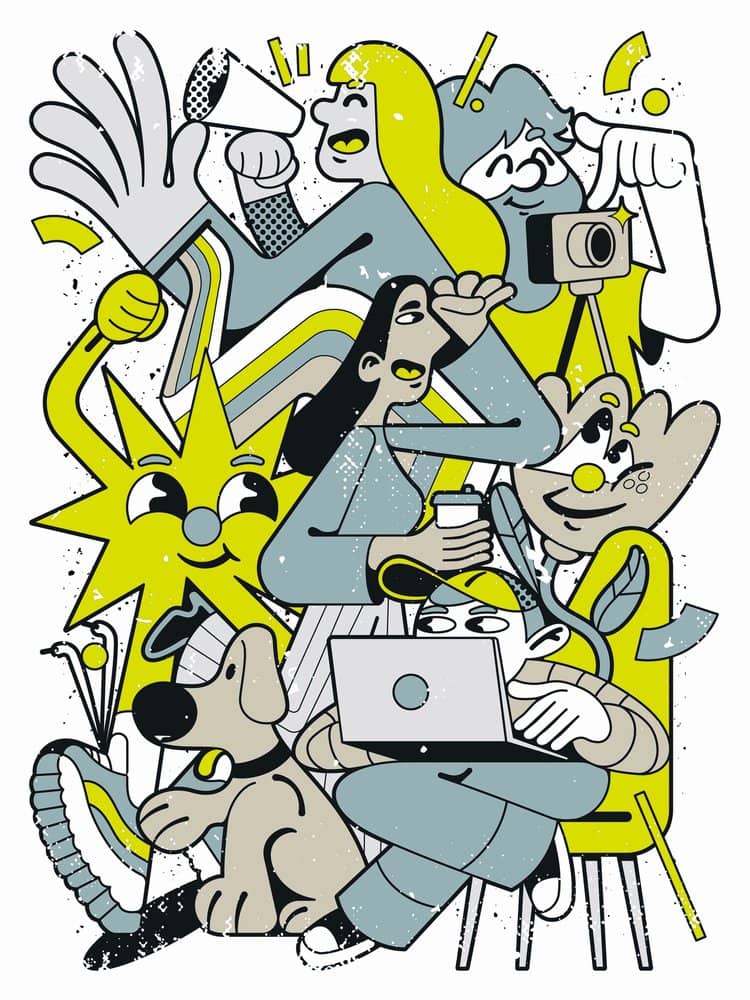
By Mariska van Lavieren; Illustrations by Oleksii Demianiuk
-
August 28, 2023
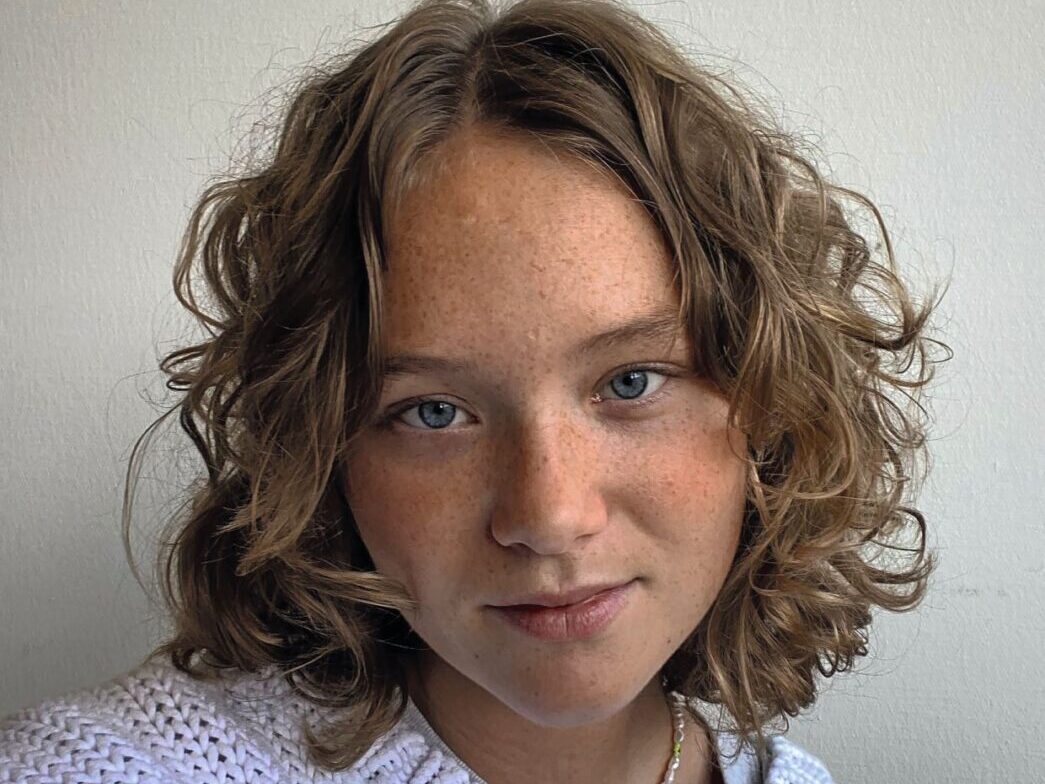
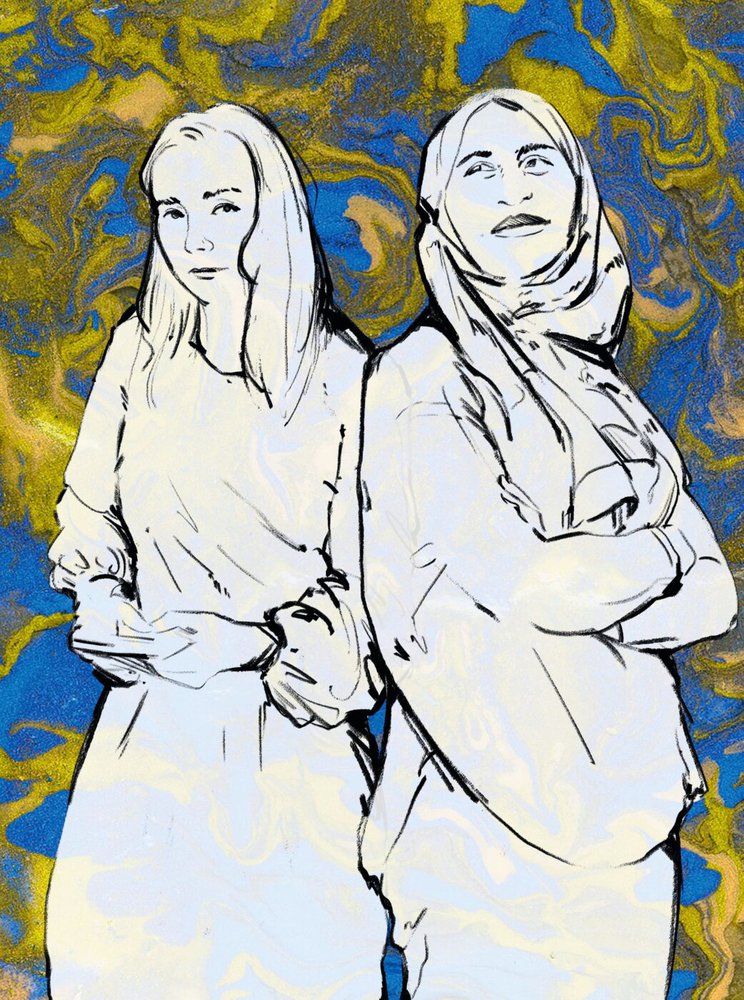
Mariska van Lavieren is 22 and the founder of the film production company Navada. (Photo: Courtesy of the publisher.)
Everyone interacts with us every day, whether at work or in their personal lives. That’s my assumption. Opinions are divided about us and why we differ from millennials or older generations.
Feel free to dive into this article to find out why we act the way we do and how you can understand us. We’ll start with the basics and then move on to tips and tricks for how to best interact with Gen Z. Enjoy!.
The Basics
Generation Z is a group of people born roughly between the mid-1990s and the early 2010s. Their behaviors and attitudes are shaped by a variety of factors, including social, economic, technological, and cultural influences. Here are some key reasons that contribute to how Gen Z behaves:
Technology and Digital Connectivity
They are the first generation to have grown up with widespread access to technology and the Internet. This has led to a strong reliance on digital platforms for communication, information, entertainment, and learning.
Information Overload
The constant influx of information from various sources has led to shorter attention spans and a preference for quick, easy-to-digest content.
Diverse and inclusive mindset
Generation Z is growing up in a more diverse world, which has led to greater awareness of social issues and a strong desire for inclusion and equality.
Economic Uncertainty
Many members of Generation Z have experienced economic challenges, such as the 2008 financial crisis and the COVID-19 pandemic. This has shaped their attitudes toward work, finances, and stability. Gen Z doesn’t hold out much hope of ever being able to buy a home for their family, so why work themselves to the point of burnout if a home is unaffordable anyway?
Entrepreneurial Spirit
The digital age has enabled Gen Z to engage in entrepreneurial activities and part-time jobs from a young age, thereby fostering an entrepreneurial mindset.
Global Awareness
Thanks to social media and digital connectivity, Gen Z is more open-minded and engaged with international events and issues. They are deeply concerned about environmental issues and are motivated to take action and advocate for sustainability. They are also becoming increasingly politically active and are willing to openly express their opinions on political and social issues.
Social Media and Self-Presentation
Social media platforms offer Gen Z opportunities for self-expression, creativity, and activism. Gen Z knows that social media platforms aren't real life. However, they know how to combine the two to make new things possible.
Education and Skills Development
Gen Z understands how important continuous learning and skill development are for adapting to a rapidly changing job market.
«Since buying a house is no longer an option for us, we're focusing on making our daily lives as pleasant as possible.»
Raising Awareness of Mental Health
She speaks more openly about her mental health and seeks support when needed, thereby helping to reduce the stigma associated with mental health issues.
Various Influences
Family dynamics and peer relationships play an important role in shaping the values, beliefs, and behaviors of Generation Z.
Important
It’s important to note that while these reasons provide insights into Gen Z’s behavior, there are individual differences within every generation. Not all members of Gen Z exhibit the same traits or behaviors, and there are variations based on cultural backgrounds, personal experiences, and other factors. So, now that we have a basic understanding of Gen Z, we can turn our attention to living alongside them. Below are ten principles to keep in mind when interacting with Gen Z:
The Ten Commandments
Of course, we shouldn’t lump everyone together, but many Gen Zers have had similar experiences. Among other things, we spent our youth at home, we grew up with unlimited access to the internet, we’re inundated with information, and the world is moving faster and faster… We try to keep up and live up to the expectations of previous generations, yet we know that the old ways can no longer keep pace with the rapid pace of life. Gen Z is trying to breathe new life into old structures and, through our communication, bring a positive and optimistic energy to everyday life. Since owning a home is no longer an option for us, we focus on making our daily lives pleasant—lives that bring us joy, support and encourage both ourselves and others—all in a friendly, upbeat tone.
Well, that's it. Bye, ciao, adios.
Keep slaying, Mariska
What does «slaying» mean, exactly? If someone looks very confident, acts confidently, or has achieved something spectacular, you can comment with «Slay,» for example: «You were awesome! Slay!» «Slay» can also be used to preface an encouraging call to action. Like this: «Slay! You can do it—show them.»
The Ten Commandments
1. Authenticity is important
Generation Z values authenticity and transparency. Be sincere, honest, and clear in your communication and actions to build trust.
2. Digital Natives
They are true digital natives who have grown up with technology. Use digital platforms, social media, and technology to connect with them effectively.
3. Short attention spans
Because of the abundance of available information, Gen Z has a shorter attention span. Keep your interactions short and engaging.
4. Visual and Interactive Content
Use visually appealing and interactive content, such as videos, infographics, and quizzes, to capture their interest.
5. Social Awareness
Gen Z is socially conscious and cares about issues such as diversity, inclusion, and environmental sustainability. Show that you and the company share these values.
6. Personalization
Whenever possible, tailor your communication and offers to individual preferences. They value personalized experiences.
7. Entrepreneurial Spirit
Many Gen Zers have an entrepreneurial mindset. Provide opportunities for creativity, innovation, and independent thinking.
8. Instant Gratification
They're used to immediate results and feedback. Give prompt responses and acknowledge their contributions quickly.
9. Cooperation and Community
Foster a sense of community and collaboration. Generation Z enjoys working together and values collaborative efforts.
10. Continuous Learning
Encourage continuous learning and skill development. Generation Z is eager to acquire new knowledge and skills in order to remain relevant in a rapidly changing world.
Brave or naïve after all?
Silvan Borer, designer, illustrator, artist, in other words a creative U30er, thinks out loud about age and can't really find himself in the Generation Z discourse. He doesn't feel limited, but has an understanding for the debate.
Silvan Borer
-
August 28, 2023
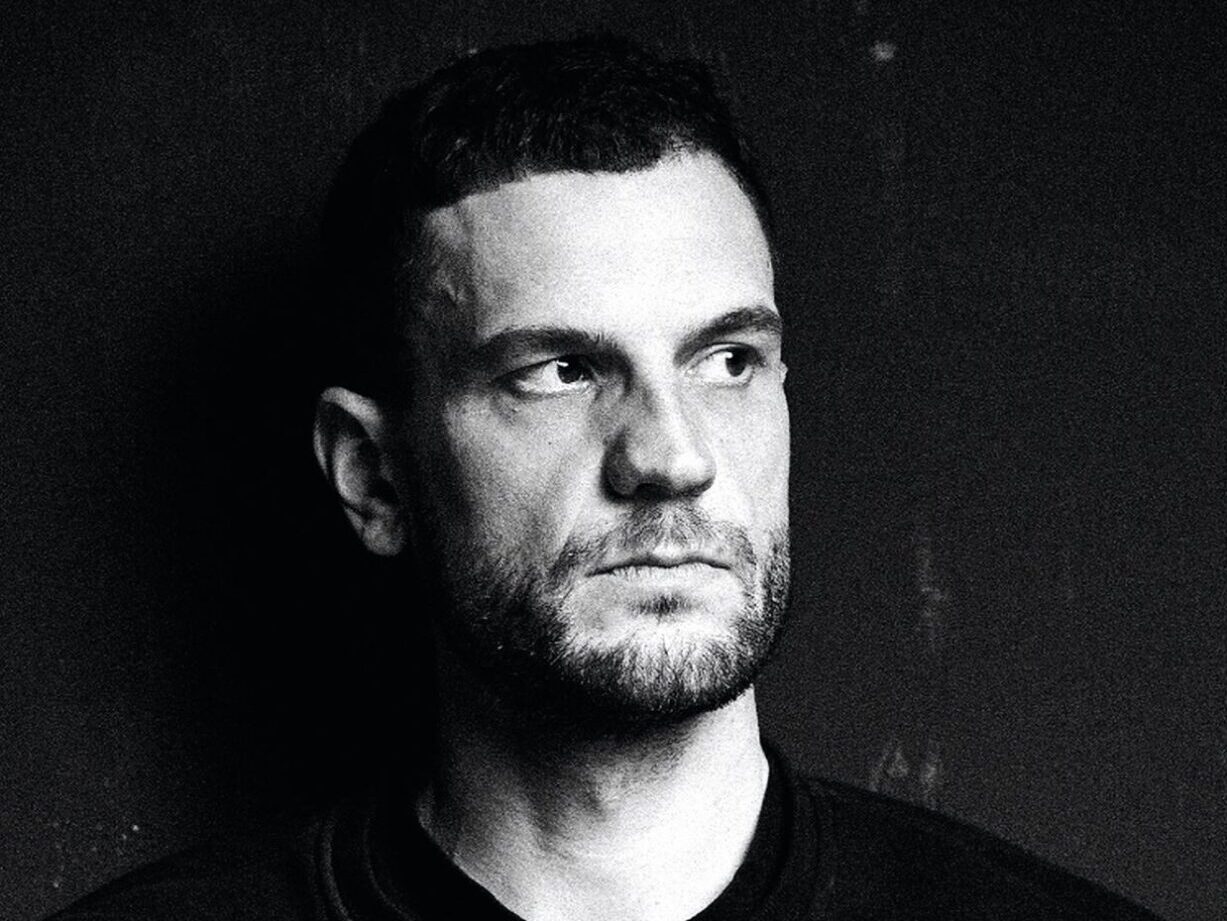
Silvan Borer, a 29-year-old illustrator.
As I write these lines, I realize that this is probably the first time I’ve ever thought about this. It’s pretty late in the game at 29, but here I am, thinking about my age—specifically, my age in relation to my work. I can say with a clear conscience that, up until now, it simply hasn’t mattered to me. Generally speaking, it’s like this: if I don’t think about something, it isn’t on my mind. And that’s why it never even occurred to me to limit myself in any way or to let others impose limits on me. Whether that’s brave or just naive—for me, it worked and continues to work wonderfully.
In general, age is often equated with a person’s experience. To me, however, this seems to be a fallacy. Experience ultimately stems from work done. From my perspective, therefore, experience can be measured just as little by age as the general assumption that the duration of a job determines its quality.
Breaking with Prevailing Values
For me, however, the key questions remain: What can be done to break away from prevailing values? And what would be the added value of doing so, anyway? It certainly takes courage—the courage, as a young person, to assert oneself in a world that still relies heavily on this traditional value system of time—that is, quantity—rather than quality.
It also takes courage on the part of the older generation to engage with Gen Z. Based on my own experience, I can say without a twinge of guilt that this would be a welcome addition to the creative industry, which is currently very rigid, practical, and solid—though in some cases quite old-fashioned. So let’s all be a little brave and lead the creative industry into the future!
MCH transformation: Can the new start succeed?
The 2022 fiscal year resulted in another loss, and the trade show environment remains challenging. However, a new team offers hope that the necessary transformation of the MCH Group can finally be completed.
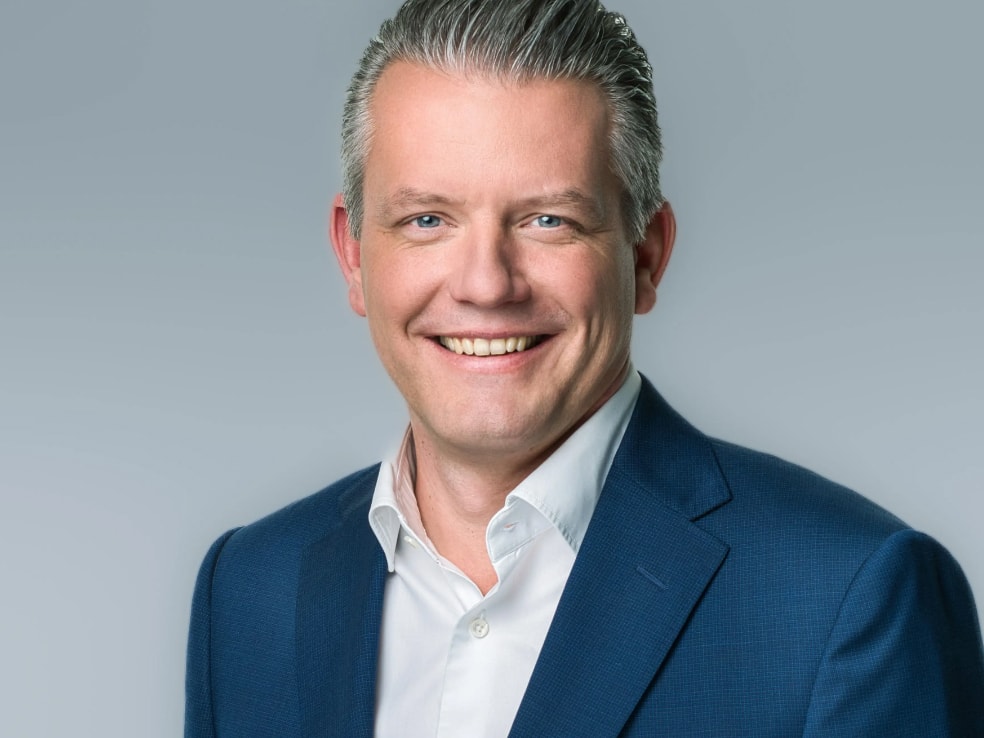
Urs Seiler
-
August 26, 2023
(Image: Unsplash.com)
The MCH Group has weathered a rough patch due to the demise of Baselworld, the world’s leading watch and jewelry trade fair, the COVID-19 pandemic, and management errors. And yet it remains a beacon of hope for «Swiss trade shows,» namely for the commercial beneficiaries of the trade show industry. The MCH Group aims to grow in Switzerland, «but not at any cost abroad,» as CEO Florian Faber stated at the annual results press conference on March 30 in Basel. To that end, the company has—without making a big fuss about it—initiated a fundamental transformation on various levels. What are the components of this transformation—and can it bring about the long-awaited, urgently needed «turnaround»?
New Values, New Products
To adapt to the changing market environment, a cultural transformation was launched at the end of 2022, centered on new corporate values. The «Culture Journey» of the Basel-based trade fair giant is summed up by the motto «One Team, One Goal, One Culture»; the (significantly younger) management team is polishing the company’s image through social media.
At the same time, the product portfolio is being adjusted. At the annual press conference on March 30, 2023, the new CEO, Florian Faber, reaffirmed his commitment to Basel as a business location, as he had done previously. In 2023, two new formats were launched: «Sustainability Days» and «Spring Basel,» a sort of successor to the consumer trade fair Muba. The long-standing trade fairs Ilmac, for the chemical and life sciences industries, and the food service trade fair Igeho are being revitalized through rebranding. Strengthening the core «trade fair» business is certainly the right path for the MCH Group’s domestic operations; even though experts expect trade fairs in Switzerland to continue stagnating or even decline in scale. The Ilmac and Igeho fairs in the fall of 2023 should therefore serve as a good indicator of what is still possible in the market. Art Basel, of course, remains the flagship event on the Rhine. Also, as mentioned at the annual results press conference on March 30, the premiere of the «Paris+ par Art Basel» art fair held in Paris was apparently very successful. The art blockchain ecosystem Arcual is set to be strengthened.
A 365-day trade show?
When it comes to digitalization, after many years of fumbling in the dark with meaningless, confusing buzzwords, the MCH Group now seems to be on the right track.
At the Ilmac press conference on May 23, a promising format for a 365-day trade show was presented. «We want our exhibitors and visitors to feel a stronger connection to the trade show and to benefit from ‚content and contacts‘ throughout the year. However, the digital aspect is not a replacement, but rather a complement and an extension,» says CEO Florian Faber regarding the relaunch of the digital business.
The new brand identity of Ilmac, the trade fair for the pharmaceutical, chemical, and life sciences industries, is (very fittingly!) complemented by a modern, digital concept. Via 365.ilmac.ch, exhibitors and visitors can now communicate with each other throughout the year once they have registered with Ilmac.
The digital extension is timely and valuable for networking within the industry. However, with its agenda, Ticketcorner, career platform, and showroom featuring key Ilmac partners, the 365-day trade show goes far beyond a mere networking platform. The lessons learned will be evaluated, not least for the newly launched «Swissbau» in January 2024, which has once again opened its doors to individual exhibitors.
Profits Starting in 2024?
Financially, the MCH Group is still in the red with a net loss of 9.3 million Swiss francs for fiscal year 2022, although Covid-related restrictions limited operations to just nine months that year. According to the company’s forecasts, 2023 will also result in another loss. Starting in 2024, however, the MCH Group expects to return to profitability. Whether the stock price, which has fallen to a historic low, will recover significantly is impossible to predict at this time.
«To grow, the MCH Group has initiated a fundamental transformation on various levels.»
How good is the new leadership team?
Naturally, the management and communications teams are also part of the cultural transformation at the MCH Group. On July 1, 2022, Florian Faber, the long-time CEO of MCH subsidiary Expomobilia, became the new CEO of the entire group. A rejuvenated management team has been formed around him, featuring Roman Imgrüth as CEO of Exhibitions & Events and the seasoned communications professional Emanuel Kuhn—formerly with the star architects Herzog & de Meuron—who is now responsible for corporate communications. This management renewal is accompanied by a partially revamped communications team for the «Sustainability Days,» the chemistry and life sciences events Ilmac, and the food service trade show Igeho. In this regard, there is definitely a new wind blowing in Basel, reflected, among other things, in an improved relationship with the local and national press.
That’s refreshing, but of course it won’t be enough to bring about a «turnaround» for the MCH Group. On the other hand, the new communications team offers a glimmer of hope: skilled communicators—starting with the CEO himself—can achieve a great deal that wouldn’t be possible through other means. With Roman Imgrüth and Emanuel Kuhn, parts of the management team hail from Basel. They exude local credibility (as Roman Imgrüth put it: «I’m a child of the Muba!»), which can only help the MCH Group’s efforts to reestablish its standing in its hometown.
«Exhibitors and visitors can now communicate with each other throughout the year.»
Switzerland is the beneficiary
During its heyday—with Baselworld, the world’s leading trade fair, in full swing—the MCH Group generated two to four billion Swiss francs in direct and indirect revenue for Switzerland. The indirect effects, in particular, were a major source of revenue for regional and national businesses. «But local businesses and trade show service providers aren’t just ‚beneficiaries‘ of the trade show business,» says Florian Faber. «Together, we contribute to the overall value creation at a given location.»
In addition to the jobs at the MCH Group, the trade fair industry supports numerous indirect jobs. This will not change in the future. The entire Swiss trade fair industry therefore has a stake in the MCH Group’s success. Bottom line: When the MCH Group is doing well, so is the Swiss trade fair industry.
INTERVIEW
«For a positive result, a lot of things have to fall into place!»
In an interview with m&k, Florian Faber, CEO of the MCH Group, talks about his company's «turnaround.».
m&k: Florian Faber, what is the MCH Group focusing on most right now?
Florian Faber: One of our biggest challenges is to underpin our growth targets with a solid resource base. This means meeting the demand for new expertise and new employees, which is quite difficult given the current job market. On a positive note, we’ve been able to welcome many young new colleagues in recent months who view MCH’s current situation as a personal challenge and want to grow with us.
How can we achieve this «turnaround» now, and what is the most important step toward it?
We had already initiated a transformation process before the pandemic and have made significant progress in recent years. For us to return to a positive net income, many factors must align; we must consistently pursue the course we have set, keep costs under control, and adhere to the «protect and grow» motto.
What strategies will you use to implement your commitment to strengthening Basel as a business location?
Our focus is clearly on customer satisfaction. In the past, we’ve earned a reputation in some circles for being somewhat smug. We’re determined to change that. That’s why sustainability, in all its facets, is crucial. As a venue for hosted trade shows and conferences, we’ve already come a long way—from travel arrangements to energy generation to catering—but there’s still much to be done.
Which division of the MCH Group is your favorite—the one you wouldn't give up for anything?
We are a company with 700 wonderful colleagues. I am convinced that we are well-positioned with our current portfolio of brands and business units. And that, as our investor James Murdoch emphasized in a recent interview, «the group as a whole makes sense.».
Report from Butscha
Journalists Masha Froliak and Yousur Al-Hlou brought Russian war crimes in Bucha to the world’s attention—and were awarded a Pulitzer Prize for their work. They spoke with us at length about their investigation for the first time.
Johannes Hapig
-
August 16, 2023
(Illustration: Silvan Borer)
When Masha Froliak and Yousur Al-Hlou arrive in Bucha, a small Ukrainian town whose name was unknown to the world before March 2022, bodies lie in the streets. Not «just» those of soldiers—the expected, though of course no less tragic, victims of the Russian invasion. No, there are also elderly men who were shot off their bicycles; there are women who were executed on their way home from the market—for no apparent reason, in a perverse violation of the Geneva Convention. Froliak and Al-Hlou are reporters for the New York Times, were in Mariupol before the war began (yet another place that would become infamous); then in Kyiv, when Putin’s bombs began to fall. And now: Bucha. The Russians had advanced there from the north, stayed for a few weeks, and were eventually driven out. «We have to go see this,» the journalists think; «we have to see what the occupiers left behind.» They take photos and videos that go around the world, along with a wave of collective horror. The Zelenskyy government breaks off negotiations with the Kremlin’s intermediaries. And the West realizes that the time for phone calls with Moscow is over. Now the weapons speak. While all this is happening, Masha Froliak and Yousur Al-Hlou begin a forensic investigation: photos aren’t enough for them; they want answers. Which Russian unit committed the massacres in Bucha? Who were the people who were killed, especially along Yablonska Street in the town center? And what can journalism do to bring at least some justice to the victims? Their tremendous dedication—a blend of modern data analysis and traditional fieldwork—was recently honored with the Pulitzer Prize. They shared with us—for the first time and exclusively—the «story behind the story.».
m&k: First of all, I’d like to congratulate you on winning the Pulitzer Prize. That’s a fantastic achievement and a well-deserved recognition of the important work you’ve done in Ukraine. When exactly did you start your work there?
Yousur Al-Hlou: In December 2021, the «Visual Investigations» team at the New York Times about sending staff members to Ukraine to report on the Russian army’s troop movements across the border and to get a general sense of what is happening there. Interestingly, I wasn’t even involved in those discussions because I don’t normally cover Eastern Europe—but in the end, I was asked to travel to Ukraine after all. So that’s what I did. Two of my colleagues from New York came along as well, and after we arrived, we met up with other staff members on the ground. Among them was Masha, with whom we had previously worked on a report in Syria. Our first stop was Mariupol, which we considered a likely target in the event of a possible invasion. The city is not far from Rostov-on-Don, where the Russians had established a large military presence, and is relatively easy to reach. It was also part of a planned «land bridge» to Crimea. We stayed until early February, then went to Kyiv … and waited to see what would happen.
Masha Froliak: On the morning of February 24, we were sitting in our hotel room in Kyiv watching Vladimir Putin’s speech on TV … and shortly afterward, the invasion began. From a colleague’s balcony, we could see explosions in the distance. That was Hostomel Airport, which Russian airborne units were attempting to capture. I remember an overwhelming sense of shock when the war began. Because even though there were clear signs that something might happen, very few people in Ukraine had expected an attack from so many directions and on such a massive scale. I don’t think the international press corps on the ground did either.
Did you switch to «work mode» right away? I can hardly imagine how nerve-wracking the situation must have been—especially since you, Masha, also have family in Ukraine?!
MF: That's right, my family lives in Kyiv. A month earlier, I had celebrated New Year's with them. We had a few wonderful days where everyone got together to eat and drink. And a few weeks later, war had suddenly broken out …
You were certainly worried about the safety of your loved ones, weren't you?
MF: Yes. But then I thought to myself—my family is just as safe or unsafe as millions of other Ukrainians, and fear is the worst guide. What we needed more urgently than worry and panic was information, so we started gathering it.
YAH: It’s hard to imagine just how much confusion and chaos reigned during the first few hours of the war and how little people knew—including us! So we discussed the situation with our security advisors, and as soon as they gave us the «green light,» we left the hotel to take a look around. I’m from California and live in New York City, so I’m used to heavy traffic… but what I remember most vividly from those first hours of the war is the sheer number of cars on the Kyiv ring road. People were trying to flee—to the West. Many of them had their pets with them or were trying to take at least some of their belongings with them. There was one family—this has also stayed vividly in my memory—who had hardly any luggage but did have their musical instruments with them. «We just couldn’t leave them behind,» they said.
MF: I also remember the … very strange silence. There were no explosions in Kyiv—not at that moment; it was simply as if a tense calm had settled over the houses and streets. The silence was broken only by occasional sirens, and whenever we heard them—by which time we were already back at the hotel—we would crouch on the bathroom floor. We always had our laptops with us and tried, despite everything, to work and stay in touch with the outside world.
Where did you find the courage not to simply join the refugees, but to stay put?
YAH: Well, I’ve spent most of my career as a journalist covering global conflicts, so I’m well aware of the dangers involved. Of course, in situations like these, you have to constantly weigh your personal risk—but as I mentioned earlier, there’s a «safety system» in place: a constant assessment of the threat level by specialists both on the ground and in New York City. Our newspaper does everything it can to look out for its reporters. On top of that, I felt it was my duty to report on the events in Ukraine in February 2022. On the one hand, the war is, of course, a terrible, terrible tragedy… but it is also the defining tragedy of our generation. I’m not sure if I could have articulated that thought in the first few hours or days, but I definitely had a feeling that later developed into that thought. The implications of the conflict—the way it has changed history and will continue to change it for decades to come… This is simply a story that had to be told and must continue to be told, especially in the early moments. When something so momentous happens, someone—despite the dangers—has to be there to bear witness. Masha, what do you think?
MF: For me, it was the first time I’d experienced an armed conflict firsthand. I’d been traveling in the Middle East for a while, but I’d never seen active combat before. And as a Ukrainian, I was also pretty shaken up—precisely because everything had been completely normal just a month earlier… and then it was completely different. But Yousur and the entire team were incredible, and my home country went on the defensive. So I wanted to use what I do best—namely, being a reporter—to help. I didn’t think for a second about leaving Ukraine.
About a month later, some things had changed. The initial uncertainty had given way to various realizations: Russia had failed to «take Kyiv in three days,» as the country’s propaganda had claimed, and the attack from the north had been repelled. Was that the moment when you learned what had happened in Bucha?
YAH: We were aware of the strategic importance of Kyiv’s suburbs from the very beginning of the war. We knew that Russian troops would have to pass through these areas to reach Kyiv. So they were always a topic of conversation among journalists, because that’s where the front line ran, that’s where intense fighting was taking place—and while we wanted to be as close to the action as possible, it would have been madness to enter those cities before they were liberated. We wouldn’t have been able to get in anyway, even if we’d tried. At the end of March, we were on our way back to Kyiv from Zaporizhzhia—where we’d been reporting on the exodus from Mariupol—when we heard that the town of Bucha had been recaptured. We drove there immediately.
What did you see when you got there?
MF: Destruction. Military vehicles were parked along the roadside, and a body lay on the ground. Although the recovery of the dead had already begun, the authorities had not yet been able to complete the task due to the sheer number of victims. Mass graves were later found and exhumed. In addition to many soldiers and members of the media, law enforcement officials were also present—the national police and representatives of the public prosecutor’s office. And there were specialists tasked with clearing the area of landmines. At first, we hardly encountered any locals, because a large portion of Bucha’s residents were still in their basements and didn’t know what was happening outside. There was no electricity and, for the most part, no means of communication they could use. It was very cold—unusually cold for this time of year in Ukraine. We then spent days knocking on doors, trying to get people to talk to us—and to tell us what had happened.
«When the war began, we didn't think for a second about leaving Ukraine.»
Did you get the immediate impression that things here were «different»—that large numbers of civilians had been killed and war crimes had been committed?
YAH: I’d like to give you a somewhat nuanced answer to this question. You know, what made Bucha so unique was probably the fact that there were so many civilian casualties in such a small town. The relative scale of what happened there was… grotesque. But aside from the sheer number of crimes committed against the civilian population, I’d be reluctant to use the word «different.» When you’ve witnessed a few wars, you start to recognize recurring patterns. You know that civilians always get caught in the crossfire. Or that they’re always at the mercy of an invading force, and the invaders know this all too well—so they do whatever they want. No matter where in the world, armies behave this way. Innocent people are killed. War is neither fair nor does it follow any noble rules, and if one were to claim that Bucha is a particularly negative example—then surely there must also be positive examples of warfare, right? But there aren’t any. Bucha is everywhere. The city’s name has now become synonymous with Aleppo or Sarajevo—and rightly so. War is always cruel, and Bucha is no exception.
MF: In Bucha, I began—in some respects—to adopt a more selective perception. As a form of self-protection. As I’ve already told you, I had never experienced an active conflict in my home country before the war. I hadn’t even been to a crime scene before. But the dead civilians, the destruction, and the pain caused in Bucha—so close to Kyiv… When you went inside the buildings, there were bloodstains on the floor, and the smell of death hung in the air. So you have to pull yourself together and switch back to «work mode.» Because if you want to collect evidence, you have to be quick; otherwise, it might be destroyed.
YAH: You’re raising a very important point here, Masha. The more time passes since the events, the more likely it is that people will delete photos from their phones, that surveillance cameras will automatically overwrite the past month’s footage with new data, and that witnesses will forget important details. We had traveled to Bucha to cover some breaking news, but our editorial team in New York City then suggested that we treat the city as one single, large crime scene and conduct a comprehensive, thorough investigation. To dig deeper. And that’s what we did. There were simply too many stories that needed to be told, too many questions that needed to be answered, for us to have been able to leave after just a few hours. Questions like: Why were so many civilians shot on Yablonska Street, right in the middle of the city? Which Russian regiments were present when the killings took place? Did the killings follow a specific pattern? And, since we aim to provide victim-centered reporting: Who were the people who died in Bucha? What kind of lives had they led?
How did you conduct your research?
YAH: We didn’t just knock on doors and take down residents« accounts—we also went looking for cell phone and video recordings. And when we entered the houses that had been occupied by Russian soldiers, it was astonishing how many of their belongings they had left behind. Everything you can imagine, really! Thousands of documents, uniforms… We photographed all of that; that part was relatively easy. When it came to cell phone and CCTV footage, things turned out to be much more complicated, because there were regular power outages in Bucha during the occupation, and during those times, residents couldn’t charge their cell phones, nor did the CCTV cameras work. The »blackouts” were like… missing pieces of a puzzle. Sometimes Russian occupiers would turn on a generator next to a house, and we’d have three or four days’ worth of footage from the surveillance cameras at that house—and then the generator would be turned off again. We had many, many data points in front of us that we first had to connect.
«Who were the people who died in Bucha? What kind of lives had they led?»
To identify the victims and document their stories, you spoke with their families, friends, and loved ones. But how did you identify the Russian soldiers linked to the events in Bucha?
MF: What Yousur just described—this combination of on-the-ground reporting and data analysis—took a total of eight months. Eventually, it became clear to us that a number of different Russian units had been operating in Bucha at various times; they rotated in and out of the city. But those who had truly established a strong presence there were members of the «76th Guards Airborne Assault Division.» For example, they had left behind ammunition crates bearing their markings. However, we still had to figure out which regiment of the division had been «operating» in Bucha, and we proceeded in several steps to do so.
Can you explain these steps to me?
MF We had a log of all phone calls made from the region during the Russian army’s occupation—this log was provided to us by the Ukrainian authorities. We noticed that among the numbers that had been dialed were Russian numbers. Some of the victims on Jablonska Street still had their cell phones on them, and we discovered that those very phones had been used to call the Russian numbers listed in our call log. We concluded: A Russian soldier must have been near the victim—probably within a few hours of his death—and used his phone. Could this soldier also be responsible for the civilian’s murder? It’s hard to say, but it’s at least a clue. So we, too, called the numbers in Russia, and the people who answered were the soldiers« mothers, wives, or girlfriends. We were able to get some information out of them… naturally, the level of detail varied, but it was usually enough to continue our investigation and search for these men on social media. In the end, a clear pattern emerged: The phones belonging to the victims on Jablonska Street—whose murders we had captured in part on low-resolution CCTV footage—were being used by members of the »234th Guards Air Assault Regiment,« which is part of the »76th Guards Airborne Assault Division.” Now we had one of the answers we’d been so desperately searching for.
And one of the responses that made headlines—all over the world. The footage of these horrific crimes and the evidence that a Russian regiment committed them… Did that change the course of the war?
YAH: Only time will tell. Will those responsible for the crimes in Bucha one day be held accountable? Will the International Criminal Court take up their cases and indict them? We cannot make any predictions about that. But one thing I know for sure: Our work in Bucha can serve as an example of what journalism is capable of. It should set a standard for news organizations when it comes to investing financial resources and time in investigative projects. All in all, we worked on the Bucha stories for eight months. There are also several reports that we haven’t even mentioned in our conversation yet—such as the identification of eight men who were shot behind an office building. The investigation of audio recordings from Bucha in which soldiers discussed war crimes and criticized their commanders. If you provide the necessary resources, you can practice this kind of journalism; and in an era where headlines and quick livestreams are considered the gold standard, that sends a strong message. You still need people on the ground, time, and patience if you want to do real investigative work.
MF: What we’ve done is similar in many ways to the work of the prosecutors who were in Bucha. But for legal reasons, it takes them years to make their findings publicly available. We, on the other hand, collect hard evidence, which we then publish immediately. So I do believe that what we’ve done has had an impact on the war: Our work refuted Russian propaganda—Putin’s own narrative—that the Russian army would not harm civilians and that it had entered Ukraine with good intentions. We have proven that the exact opposite is true. Russian soldiers have massacred civilians in the most brutal ways. The facts speak for themselves.
Honestly, where do you find the strength to do this kind of work?
YAH: We’ve talked a lot about how we identified the Russian unit that caused so much suffering to the residents of Bucha. But a type of investigative journalism focused on the victims is actually closer to my heart. The eight men we briefly mentioned earlier—who were shot behind an office building—were featured in our newspaper; we’ve created a journalistic memorial to their names and their stories. And during our on-the-ground investigation, we had the opportunity to offer at least a little comfort to some of the families in the town…
MF: … In one case, for example, a man’s surviving relatives didn’t know that he had been found on Jablonska Street—until we told them. Or there was a woman whose husband had been shot there; she had heard that he was dead, but no one could tell her the date he was murdered. We found it out. That’s sometimes very sad, but it’s also a powerful motivation to keep going.
Yousur Al-Hlou and Masha Froliak are investigative journalists at The New York Times—and were awarded the 2023 Pulitzer Prize for their work in Ukraine. Special recognition was given to the forensic, eight-month-long investigation that Al-Hlou and Froliak conducted in the small town of Bucha. The NYT is making this available free of charge (Note: The following video is age-restricted.).
Party with Purpose
Anyone who focuses on nostalgia and a speech lasting several hours by the senior executive at a company anniversary celebration—and serves lukewarm white wine and canapés—is doing a lot of things wrong: Even parties need a sense of purpose these days.
Daniel Tschudy
-
August 16, 2023
(Image: Unsplash.com)
Without meaning to sound cynical: the term «company anniversary» does carry a somewhat old-fashioned image. You can’t help but picture gray-haired founding fathers standing proudly on a stage overloaded with flowers, looking back on half a century of company history—chronologically and, of course, with plenty of pathos. A few yellowed photos on the projector screen show the first factory grounds, back then still bearing the old company logo; they serve as reminders of the first delivery van or the laying of the cornerstone for a new warehouse. There’s polite applause for the speaker, and the local press will write a short article. Then everyone gets tipsy on white or red wine (both a bit too warm!) and, late in the evening, the boss leans across the table toward the managing director: «The next anniversary,» he says gruffly, «bring it on!»
But today’s company anniversaries aren’t that simple anymore—at least most of them aren’t. There are still owners and CEOs who turn the company’s anniversary into a retrospective that focuses primarily on their own (actual or alleged) achievements. There’s hardly any difference from typical shareholder meetings; «standard procedure»—except that the employees in attendance might be thanked a bit more graciously: «After all, none of this would have been possible without them.».
«Today's company anniversaries aren't simple anymore—at least most of them aren't.»
A Fragmented Target Audience
But: None of this is really in keeping with the times anymore. Yes, a company anniversary certainly warrants a dignified look back; but it must primarily focus on the present and—perhaps even more importantly—the future. And this should be directed at a wide variety of target audiences simultaneously, using a diverse range of appropriate platforms—both analog and digital. In addition, accompanying campaigns do not necessarily have to be centered on a single specific holiday; depending on the target audience, they can also run over a specific period or even throughout the entire anniversary year. This means that the anniversary can be actively «leveraged» to present the company in a positive light, introduce any new corporate values, and visualize the company’s path into the future.
Michael Meyer is the managing partner of the live communications agency Jeff and has organized and managed numerous corporate anniversaries, such as the celebrations marking the 150th anniversary of Zürcher Kantonalbank: «We were the main partner there and were able to propose a cable car across Lake Zurich.» Unfortunately, this bold idea didn’t pan out, but it does show just how creative Meyer’s team can be. «But first, the various stakeholders must agree on the goals of the celebration. After all, senior management often has different priorities than the HR department or the sales force. We then remind our contacts of the primary requirements: agreement on the objectives, the provision of financial and human resources, and a lean organizational team with short decision-making paths.»
Other event professionals also recognize how important it is for clients to plan such a complex event well in advance. The problem here is often that companies «assign» someone internally to the event without relieving that person of their regular workload—or at least reducing it. At first, this often sounds like a good idea to the «people involved»—they’re motivated and look forward to taking on this special role within the company. But then they realize that either their regular work can no longer be completed, or that they’re getting «burned out» from their commitment to the special assignment. A second complication: When the initial assignment is given, companies communicate proactively and precisely—which can be as early as one or two years before the actual anniversary event. After that, the communication chain often breaks down, preventing constant changes within the company from being effectively relayed to the event team. The fact is that a company can change significantly in the time between placing the order and fulfilling it—and with it, so can the expectations or needs for an anniversary celebration.
«A look into the future is exactly what the workforce and the public are interested in.»
The Crux of the Matter
Michael Meyer confirms this as well: The past is an integral part of anniversary celebrations. But only as one element of a three-part concept encompassing history, the status quo, and the future. In this context, looking back shouldn’t be a dry, chronological recitation of numbers and growth—the human factor is more relevant. What impact has the company had on the community since its founding, what role have employees played, and how has the society surrounding the company changed over the years? Such reflections also create a smooth transition to the present and to how the company sees itself, operates, and engages with the world today. The company’s social responsibility (known in business English as Corporate Social Responsibility) must be visualized without coming across as self-congratulatory. And also how the company monitors its own activities through corporate governance. Employees play a significant role here as well, which is why they should be involved in the celebrations, participate as ambassadors themselves, and thus be an authentic part of the presentation.
Mission and Vision
Looking to the future is exactly what employees and the public are interested in. These turbulent times are forcing companies to remain highly agile and to continually refine their image and public presence. And in doing so, to steer their products and services in new or expanded directions. The science and technology group Merck, for example, decided to build a new innovation center in Darmstadt to mark its 350th anniversary. The company’s own teams and external startups can now conduct research there. This was a highly compelling message to mark the anniversary—a clear signal of the future and a motivational tool for employees—more effective than any champagne reception—and for the media as well.
Authentic Presentation
Exactly what the individual components of the anniversary celebrations will look like can only be determined on a case-by-case basis. For some clients, a classic gala event might be appropriate; for others, a family-oriented company party might be the right choice; and still others may be involved in social initiatives for disadvantaged people or with a nonprofit organization. That’s why a proper brainstorming session is essential at the start of the planning process—though it only works if all relevant stakeholders can «join in.» This ensures that, together, we identify platforms that align with the company’s style, budget, and the practical communication needs of both the company and its target audiences. And then, consequently, these platforms are perceived by employees as authentic and appropriate.
If the anniversary strategy is sound, the various target audiences are reached, and the different activities and events are on track, the question of whether to use analog or digital channels resolves itself automatically. Maybe Facebook or YouTube will fit the bill, or you might even post on TikTok—just keep it as interactive as possible.
For Michael Meyer, anniversaries should be an opportunity for companies: «Maybe they can take a chance and do something they wouldn’t normally do. It’s perfectly fine for it to have a dramatic element and a highlight that everyone will remember.»
Events That Became Legends
If you have something to celebrate—and plenty of money to spare despite the recession and inflation—you can choose the following for your next corporate event take, for example, company parties that have become legendary: Google once recreated a small Greek town on its campus, UBS rented the American Museum of Natural History, and Bloomberg explored the biblical sins.
Cecilia Alemani: Queen of art
Cecilia Alemani curated the 2022 Venice Biennale—despite the turmoil of the pandemic. This made her the most influential woman in the global art world. An interview.
Johannes Hapig
-
August 14, 2023
(Illustration: Silvan Borer)
m&k: Cecilia Alemani, you curated the 2022 Venice Art Biennale—but your plans for the exhibition titled «The Milk of Dreams» were repeatedly derailed by the COVID-19 pandemic. Now that several months have passed since the show ended, have you fully recovered from the associated hardships?
Cecilia Alemani: I don’t know if I’ll ever recover; maybe I’ll carry a Biennale scar on my soul until the day I die. (laughs) No, joking aside, I’m doing very well. Although a Biennale runs from May to November, things quiet down for the curator after the opening ceremony. The months and weeks leading up to it are incredibly exhausting, but once the visitors are there, it’s as if you’ve given birth to a baby and someone else is now taking excellent care of it. Then there’s another kind of mental turning point when the Architecture Biennale opens… it’s happening right now!… because that’s a completely different exhibition with a very different theme. It feels like a new page in the book has been turned, and you can bring the project to a close.
«Wrap up» is a good keyword: One might say that the role of Biennale curator is arguably the most important task that can be entrusted to anyone in the world of contemporary art. Do you feel a sense of wistfulness when the exhibition is over?
You’re probably right—there’s hardly any other event in the global art world that carries such prestige, and hardly any task more interesting than curating the Venice Biennale. Of course, there’s a certain melancholy in seeing it come to an end. A project of this magnitude always takes up an enormous part of one’s life. But I was also happy with how everything turned out and that we achieved what we set out to do. Generally speaking, I’m not someone who constantly dwells on the past—I prefer to think and talk about the future.
And that's exactly what we're going to do right now, I promise. I just wanted to ask you one more thing: I tried really hard to find negative reviews of *The Milk of Dreams*, but I couldn't …
… then you should have read the Italian press … (laughs)
… From an international perspective, at any rate, you’ve received nothing but praise and appreciation. Not only because you managed to pull off the exhibition despite the disruptions caused by the pandemic, but also because—as one critic wrote—you «presented one of the best biennales Venice has seen in years, perhaps even decades.» Looking back, what were the highlights of «The Milk of Dreams» for you?
I don’t think so much about individual highlights, but rather take pleasure in a general, all-encompassing sense of satisfaction. I live with the pleasant feeling of having absolutely no regrets. A question I’m often asked is whether there are things I would have liked to do in Venice but wasn’t able to, and I have to say: Despite the chaos surrounding the pandemic, the delays in deliveries, and everything else that happened… I curated exactly the show I wanted to curate. That’s the best conclusion one can draw.
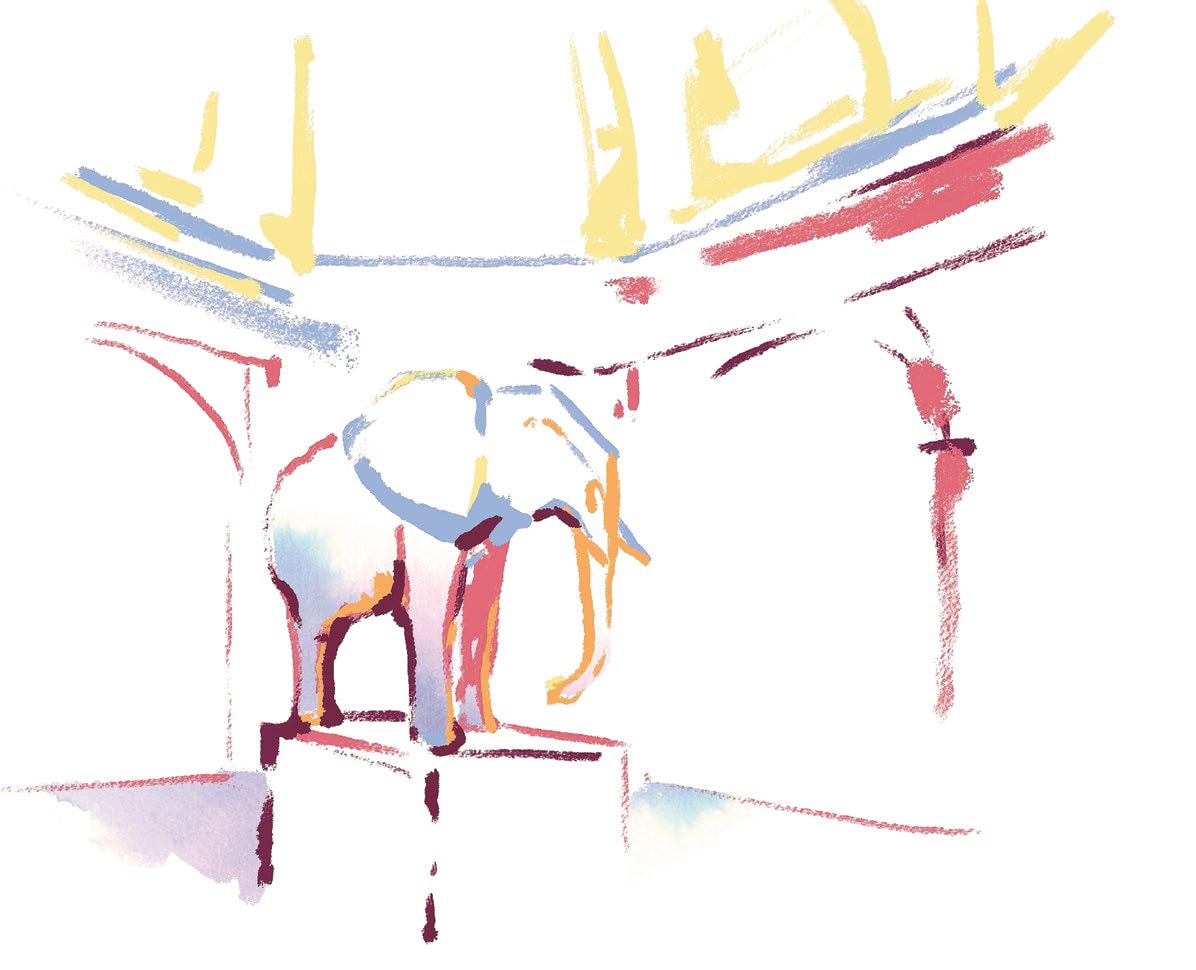
«Elefant / Elephant» (1987): A statue created by German artist Katharina Fritsch «welcomed» visitors to the 2022 Biennale.
You were also asked whether the high proportion of female and non-binary artists in the exhibition was a political statement. You gave a «both-and» answer.
That was both a statement and … not one. What it wasn’t: a demonstration just for the sake of it. Because that wouldn’t have benefited anyone—neither the exhibition nor the people whose works we showcased. At the same time, I wanted to highlight the magnificent art created by women and non-binary artists, which is sometimes overlooked in the discourse. So: Yes, «The Milk of Dreams» was political, but the political message was more of a—very important—side note.
Do you nevertheless feel that you have already made an impact in the world of contemporary art?
I hope so. People may call me naive or overly optimistic, but I believe that things are finally changing for women in the arts—not at the same pace everywhere, but in the United States and parts of Europe, there’s a momentum that I find encouraging. When Frieze took place in New York City this past May, there were so many booths dedicated to women! Was that a direct result of «my» Biennale? That’s unlikely. But perhaps there were indirect effects, a shift in the atmosphere, an encouraging message that emanated from Venice—and continues to resonate to this day. Fortunately, the situation for women in the art world today is already quite different from what it was ten years ago, and I hope we’ll see even more progress in the next decade. I would be delighted if exhibitions like «The Milk of Dreams» were viewed in the future as part of a broader dialogue that our generation has fostered.
Let’s talk about influence: There’s a notorious list of «leading figures in contemporary art,» the «Art Review Power 100.» You’re currently ranked second on that list. Do you feel … powerful?
(laughs) No. No, that’s not how I feel at all! It would be presumptuous if that went to your head, wouldn’t it? Lists like that are certainly entertaining; they’re nice for a bit of small talk… and the relevant media outlets enjoy putting them together. But it’s quite possible that I won’t be part of the «Power 100» next year, despite my current standing. Things can change very quickly, so I don’t think about it too much.
Even if you don’t agree with *Art Review*«s assessment, would you still say that curators possess a certain kind of power or influence? And if so, how exactly could one define that power?
I felt powerful—or empowered—as I curated the Biennale. Because, as I said, I had the privilege of doing exactly what I wanted to do in every respect. No one interfered. Not the organizing committee, not politicians, not the Biennale’s director general—although we did have a few, well, interesting conversations. He’s a man from a different generation, with different views than mine. As a curator, not having to make any compromises… you could say that’s power. Furthermore, you have the opportunity to present connections in a way that wouldn’t work in a book or a catalog. You can engage in visual storytelling: The story begins in the studio, through the eyes and hands of the artists—and we curators continue it by deciding how and where the finished artwork will be exhibited, and how it interacts with the surrounding space.
In Venice, you demonstrated intellectual courage by directly addressing some extremely complex questions. In doing so, you set the tone, so to speak, for the Biennale: «How is the definition of what it means to be human changing? What constitutes life? What distinguishes plants from animals, humans from non-humans? What are our responsibilities toward the planet, other people, and other forms of life? And what would the world look like without us?» When did these questions first come to mind?
I was announced as the curator of the Biennale in January 2020—which, as you know, was supposed to take place in 2021 and was then postponed to 2022—two months before the pandemic began. It was clear to me almost immediately that I wanted to incorporate ideas of transformation, progress, and metamorphosis into the show. I sought out conversations with artists, read philosophical treatises… but everything, of course, was still on a theoretical level. And suddenly, theory became reality—we, who place so much trust in science, had to bow down before an invisible virus. Our lives were turned upside down. What exactly was this virus? Where did it come from—did it originate in animals, or was it created in a lab? The conversations I had with the artists changed. Instead of viewing their works in their studios, we began talking remotely via Zoom—less and less about what they were currently working on, and increasingly about the fear, the anxieties, and the doubts we all shared during the first months of the pandemic. We spoke about the fragility of the human condition and how a world without humans suddenly seemed less dystopian—and far more realistic—than it had before. All of this later found its way into the questions you just quoted from my introductory essay on *The Milk of Dreams*.
«I believe that things are finally changing for women in the arts.»
Speaking of which: Is art better suited to asking questions—or to suggesting answers?
In my opinion, art in general isn’t particularly good at providing clear-cut answers. Suggesting answers? Maybe, every now and then. But it’s best suited for sparking discussions. I like to view the world through the eyes of artists, through their work—it’s like putting on a special pair of glasses, like a pair of tinted lenses that allow you to question your own perspective on life. Could there be a more sustainable relationship between humanity and the planet—a coexistence that’s less exploitative and more respectful? How do we treat animals and the land we inhabit? Perhaps we’ll find artists who address precisely these issues through their work.
I’m tempted to ask: Have you found—personal, individual—answers to the questions you raised at the beginning of *The Milk of Dreams*?
No. They’re too complex for that—they’ve been circulating, in modified forms, for millennia. But because our times are so fast-paced, many people have stopped thinking about the «big questions.» The pandemic has certainly forced us to slow down and rethink our priorities. Does it really matter that I don’t have any answers for you?! Or isn’t the fact that we’re slowly getting used to asking questions, thinking things through, and engaging in introspection much more important in the end?
Since you brought up our responsibility toward the planet: How sustainable are global art exhibitions? I recently interviewed one of your colleagues who advocated «localizing» exhibitions, creating museum gardens, and no longer shipping artworks around the world by plane.
Well, after jetting around the globe for decades and leaving a huge carbon footprint in the process, he now wants to be a champion of sustainability? That’s one way to make peace with his own past. (laughs) But I’m a pragmatic person—we don’t need an «either-or» debate; it’s less about revolution and more about reform. An event like the Venice Biennale can’t exist as a local exhibition. Can you imagine what it would look like if we filled the Arsenale and the Giardini with works by 120 artists from the immediate vicinity? I doubt that would attract many visitors. The Biennale or Documenta will likely continue in their current form. Where I do see room for improvement, for example, is in museums—it’s easy for me to say that because I don’t work in a museum, but: If you travel to Hong Kong, then to Sydney six months later, and to São Paulo another half-year after that, and everywhere you see the same thing… then you start to ask yourself: «Why did all of this have to be shipped around the globe just to put on one generic exhibition after another?» A stronger local component would make sense here. When I’m in São Paulo, I want to get a sense of the Brazilian art scene; I’m not flying there to see Jeff Koons’s work. (laughs)
Interestingly, your «main job» is a very local project: For the past twelve years, you’ve been in charge of «High Line Art» in New York City. It’s a constantly changing, free, public exhibition of multimedia contemporary art—set in a park built on the tracks of a former elevated railway. Why do you still enjoy it so much, even after more than a decade?
It’s fascinating to see how the project has grown, and I really love the audience we get there. People who visit the High Line often don’t even know there’s art up there … They go there because it’s such an unconventional park, one that’s now mentioned in every travel guide. And it really is impressive: You’re walking ten meters above the ground, right in the middle of a metropolis, and you see grass, flowers, butterflies! And then suddenly you come across a sculpture or an installation… and inevitably start to engage with it. It’s perfectly fine if you don’t know the art-historical context or the story of the person who created the work. You look, and you enjoy it. You know, when you visit the Museum of Modern Art, it’s a rather passive experience—you walk from painting to painting, maybe take a selfie in front of a Van Gogh. You know what to expect. But «High Line Art» evokes a moment of surprise, and that’s what I love so much about it.
At the same time, «High Line Art» offers an accessible way to engage with contemporary art—because it’s free and you don’t have to make a special trip to a museum.
We even work with a «double low-threshold» approach: On the one hand, we showcase art for people who may have never been to a gallery or museum. On the other hand, we give young artists—who may not yet be exhibited in major museums—the chance to gain attention. I think it’s great when a 30-year-old artist creates an installation out of scrap metal that we can have installed on one of the buildings along the High Line. This fosters an exchange between the artwork, the viewers, and the surrounding architecture.
I like how, with «High Line Art,» you take up an idea of transformation that also served as a guiding principle for your work in Venice. For example, you commission works that are meant to change—that show growth or decay over time …
Yes! And even if we haven’t explicitly commissioned it, we always let the forces of nature run their course. Artworks typically remain on the High Line for twelve months so that they can be experienced against the backdrop of the changing seasons. If you visit in spring, summer, fall, and winter, you’ll get a completely different impression each time. That’s something our local community especially appreciates.
You say that, as a curator, you engage in visual storytelling that can change people’s perspectives on life. Do you remember the first work of art that had that kind of effect on you?
When I was young, my parents often took me to museums, and I think I liked many of the works we saw there. If I had to choose one painting that left a lasting impression on me… it would perhaps be «La trahison des images» by René Magritte—the tobacco pipe with the caption «Ceci n’est pas une pipe.» When I saw the painting for the first time, it really made me think because it seemed both familiar and strangely foreign. The moment I decided to pursue a career in the art world, however, didn’t come until much later: I was living in London for a while; I’d actually studied philosophy, but—this was in 2001 or 2002—I then had the opportunity to take a fantastic course at the new Tate Modern. It was about the mechanics of curating, and they took us into the museum’s storage rooms—I can’t really describe the feeling I had back then, but it was… very positive and very powerful. And when I came out of those storage rooms, I thought: “What I’ve been studying for years—only in theory—I could actually put into practice right here!” That’s how it all started, and so far, things have been going pretty well. (laughs)
In these times of chaos and disorder, can art help change the world—or, even if that’s a big word to use, save it?
I’m not sure if it can do that. But art can offer people a place where they can express themselves freely. It can open up a space where we can express things we wouldn’t talk about either at the office or at the dinner table. Art represents the ultimate freedom of speech; in fact, even more than that, because it transcends the medium of language and the limitations that come with it. Even if only for a moment—while we’re creating art, viewing it, or reflecting on it—in that moment we build our own world on the pillars of that absolute freedom. A world in which we are not trapped in predefined social or political constructs, but where everything is open to negotiation. And when we return to our everyday lives, we carry with us the memory of the freedom we have experienced. We pause, reflect—perhaps in the context of the questions already cited: «Couldn’t all of this,» we think, delving deep into ourselves, «be completely different?»
Cecilia Alemani is an Italian-born curator based in New York. Since 2011, she has served as the Donald R. Mullen Jr. Director and Chief Curator of the New York art project «High Line Art.» She also served as artistic director of the 59th Venice Biennale in 2022, the first Italian woman to hold that position in the history of the event. Previously, she had curated the Italian Pavilion at the 2017 Biennale and served as artistic director of the inaugural edition of Art Basel Cities in 2018. She currently ranks second on the «Art Review Power 100» list, behind an artist collective. This makes Alemani the most influential individual in the global art scene.
The award for Swiss commissioned films runs
The coveted Edi. Film Awards will be presented again soon. Anyone who would like to submit their commissioned film productions has until the end of August to do so.
Mark Baer
-
August 13, 2023
Shipbuilding is the traditional setting for Edi. (Image: Swissfilm Association)
This is already the 24th edition of the major Swiss commissioned film awards ceremony. The awards with the Edi. trophies will take place again this year at the beginning of November. The glamorous "award show" will once again take place at Zurich's Schiffbau on November 2.
Even before that, on October 17, the Swissfilm Association SFA will publish its "shortlist". Of all the commercial film submissions, the best productions of the past twelve months will then be put on the shield. "This is already an award," explains SFA managing director Susann Vogel. All films that end up on the "shortlist" are reviewed this year by about 90 jurors. The jury includes not only filmmakers but also clients, agencies and customers.
After the "shortlist" has been drawn up, there is then the second round of judging, in which the jury members award the very best works with a gold, silver or bronze Edi.23. The jury process is extremely important to the organizers of the Swiss Commissioned and Commercial Film Award. "The result should be as fair and transparent as possible," says project manager Katia Bonadei. Anyone who wants to win one of the coveted awards can submit their work now. Every year, the Edi. awards the best commissioned film contributions. The aim is to make visible what the Swiss film industry has up its sleeve. The prize is once again under the patronage of the Federal Department of Home Affairs and the call for entries runs until August 31. Commissioned films can be submitted by all authorized participants in a production, such as producers, clients, directors, advertising agencies, post-production houses or sound studios.
"The Edi. awards the best commissioned film entries each year, so those who want to snag one of the coveted awards can submit their work now."
New category
In addition to the best commercials, corporate communications and branded content films, awards will also be presented this year for the best Swiss commissioned animated films. In creating this new category, the Swissfilm Association wanted to respond to the trend in the industry. According to Roger Zürcher, co-founder of Vaudeville Studios, this extra category was needed. This is because today about 20 percent of all audiovisual productions produced in Switzerland are animated or contain animation to a large extent.
Last year, the film "Under the Influence - Let's Break the Silence" by Camille Bovey won in the "Corporate Communication" category and also picked up a Special Edi. This film, which beautifully demonstrates the benefits of animation for sensitive issues, would be awarded in the new "Animation" category this year. "The advantage is that the separate vessel 'Animation' means that like is now compared and judged against like," Zürcher explains further.
For the film production company Stories, the Edi. has become an integral part of the annual calendar. "We always look forward to the event," says Tobias Fueter, co-founder of Stories. In the summer, they would always judge last year's work internally. Those film productions that were believed to be award-worthy would be submitted. "Often we then find many of our submissions at least in the Edi. shortlist." And time and again, works are also rewarded with precious metal, "which of course makes us very happy and drives our team to create more great commercials that hopefully entertain and move Switzerland," the 49-year-old director continues. Last year, Stories picked up a golden Edi. with the NZZ commercial "When the debate falls silent, take the floor." Whether or not one of the coveted awards is actually won is "the great unknown" every year, Fueter laughs. "Because of course there are many great competitors who also give their heart and soul to each film." And no one knows exactly what has been produced in the last twelve months. The Edi. shortlist therefore also serves as a wonderful showcase of the year, where one often discovers productions that one had not yet seen. "That's why it's always a great pleasure, a great honor and a nice surprise when we can take home another Edi. and put it on the trophy shelf."
As Finland’s foreign minister, Prof. Alexander Stubb once mediated in the war in Georgia—and as his country’s head of government, he later opted for pragmatic cooperation with Russia, Finland’s large neighbor. But he says that such cooperation must now come to an end, because: A new world order is dawning.
Johannes Hapig
-
August 11, 2023
(Illustration: Silvan Borer)
m&k: Alexander Stubb, you have not only held several ministerial posts in Finland, but also served as the country’s head of government. Drawing on your extensive political experience, how would you describe the current state of affairs in Europe and around the world?
Prof. Alexander Stubb: This is our 1919, 1945, or 1989 moment—a point in history when an old order is dying, but a new one has not yet been born. In 1919, the heads of state and government of the time established the League of Nations, an ambitious peace project that ultimately failed, however, and was unable to prevent World War II. After that, the concept of the balance of power was established, a—for the most part—successful system of multilateral order. And then, in 1989, many people—myself included—naturally believed that we had reached the «end of history.» That every country would eventually adopt liberal democracy, embrace globalization, and accept the free-market economy—simply because all of these bring enormous benefits. Finland knows this, and Switzerland knows it; that is why both are among the ten most successful countries in the world. But as we now see, the «end of history» has not come to pass. Instead, two other developments have taken place.
And what exactly?
First of all: Europe is divided once again. On one side of the «new Iron Curtain» lies Russia; on the other, 44 European nations are striving to preserve their unity. The second major development is that the world order as we knew it—based on rules, norms, and international institutions—is crumbling before our eyes. It may take about a decade for the dust to settle, and then we could find ourselves facing a combination of competition, cooperation, and conflict as the «new normal.» A situation in which there are plenty of regional blocs—such as the European Union, the African Union, or ASEAN—and, beyond that, there will be rather peculiar, transactional alliances like BRICS, where it’s unclear what holds them together. Except, perhaps, for a shared aversion to the West.
«The world order as we knew it is crumbling before our eyes.»
Putin’s attack on Ukraine was a major catalyst for the developments you describe. Finland shares not only a very long border with Russia, but also a great deal of shared history. Did you expect something like the attack on Ukraine?
«Expected» is probably the wrong word. But we did consider various scenarios and conducted various analyses when I was prime minister. A major war between Russia and a neighboring country—much larger than the war in Georgia, which I helped resolve as Finland’s foreign minister in 2008—was something we considered, something we thought was possible. But we didn’t think it was likely. I regret that I, too, made some mistakes in my assessment of Russia. I thought that integration and interdependence would make war impossible. After all, that had worked before, between France and Germany after World War II. Why shouldn’t that serve as an example of … if not eternal peace, then at least relative calm in our relations with Russia?! Nevertheless, I—we—should have paid attention to the warning signs in Putin’s 2007 Munich speech, during Putin’s 2008 invasion of Georgia, and above all during the 2014 annexation of Crimea. We always protested, but then returned to a sort of «business as usual.» The latter will no longer be possible—we must accept that Russia is an imperialist, revisionist, and aggressive power that does not believe in adhering to international norms. People like Putin and his inner circle believe only in greatness, power, and violence. We were wrong; we were all wrong. With the possible exception of Poland and the Baltic states.
Still, Finland was less mistaken than others. They’ve always been rather «vigilant» toward Russia, haven’t they?
Well, since the 14th century, we’ve had to defend ourselves against Russia about 40 times, whether in major wars or minor skirmishes. Our foreign policy toward our neighbor has therefore always been shaped by a mix of idealism—the belief that the past is behind us and the future will be better—and realism. Before the invasion of Ukraine, five percent of our total trade was with Russia. Our shared border is more than 1,300 kilometers long, so we knew that the country wasn’t just going to disappear. We tried to cooperate—we really did. That’s the idealistic part. At the same time, we’re one of the few nations in Europe that has retained conscription. I’m in the reserve forces, and my son is starting his basic training in July. We can mobilize about 300,000 people overnight. We have large ammunition stocks and numerous modern weapons systems. Of course, to be perfectly frank: we didn’t acquire all this equipment because we’re worried about an attack on Sweden (laughs). That’s the realistic aspect of Finnish foreign policy. I would even go so far as to say that this is the reason why the war hasn’t escalated or spread. Russia knows that it would make absolutely no sense to provoke Finland. Should the day ever come when they try, it would be a fatal mistake.
Switzerland and Finland share a long tradition of military neutrality. Now your country has joined NATO. What are your thoughts on this?
To be honest, I would have preferred it if we had joined NATO back in the 1990s. Now that we have, I feel that our security strategy has been enhanced by another component—which is, of course, good for Finland. We are not an aggressive NATO member—certainly not; we do nothing to provoke anyone. What we do is solely for our own protection.
You mentioned the role you played in the 2008 peace agreement between Georgia and Russia. Do you think a similar agreement could eventually bring an end to the war in Ukraine?
At some point, there will have to be a ceasefire. And then: negotiations. But as for what the prerequisites for a lasting peace might be, I’m afraid I’m not at all sure. You have to keep in mind that this war is on a completely different scale than the events back then in Georgia. The peace agreement we concluded in 2008 contained five simple points that my assistant jotted down almost in passing, and then Nicolas Sarkozy joined us and suggested adding a sixth point. Voilà. For Putin, however, the war against Ukraine is «too big to fail.» And it’s now «too big to fail» for the West as well, because we’re so deeply involved.
What would be the best-case scenario for the end of the war? And what would be the worst-case scenario?
The worst-case scenario is certainly that the war will continue, perhaps for many years to come. The next-best or next-worst scenario—however you want to put it—is that a situation like the one between North and South Korea or between Palestine and Israel will arise, where there is no agreement on borders and a constant risk of escalation. In a perfect world—in the best-case scenario—Ukraine wins on the battlefield and Russia is defeated. Then the Zelenskyy government—and I emphasize, only it!—can decide on the terms of peace. It would have to consider the territory: Where are the borders, and what are they willing to accept? The 1991 borders, or something else? They would also need security guarantees—even Henry Kissinger is talking about NATO membership for Ukraine. Great, let’s have that discussion. Or at the very least, offer Ukraine EU membership, which would also contribute enormously to its security. Then there would be the question of the legal consequences …
… so, an international criminal court for Russia?
Yes, ultimately it would come down to an international tribunal where Russian generals and politicians would be charged with war crimes and where the issue of financial compensation for Ukraine would also be resolved. And with that, reconstruction would finally begin—in both the public and private sectors. But to be honest: I don’t think any of this will be over until Putin is gone. That’s the reality, I’m afraid. You know, some people have talked about war fatigue—but every time Putin attacks a hospital, a kindergarten, or a school, that fatigue vanishes, and Ukraine, as well as its Western partners, knows that the fight must continue.
You have already said that the international order—or disorder—is rapidly changing. Russia and China seem quite taken with the idea of a multipolar world. And if that is the reality we will be facing, could there be a positive version of it—one in which the West, in some form, upholds its principles? One in which global institutions can be preserved, at least to some extent?
There was once a Finnish president, Juho Kusti Paasikivi, who said—and I’m only translating this roughly—that accepting the facts is the first step toward understanding what needs to be done. So we must accept that the world order as we knew it is gone. It will not return. The West—consisting of about 50 countries, including Europe, North America, Japan, South Korea, New Zealand, and Australia—naturally does not view this in a particularly positive light. On the other hand, however, there is a global East led by China, followed by Russia and Iran and about 20 other countries that usually vote with those three states at the UN. Together, they want to dismantle the liberal world order and replace it with something else—in many respects, they have already succeeded. The world is no longer unipolar, and even if what I just said might sound that way, it is not bipolar either! After all, we also have more than 100 countries in the Global South that pursue a largely opportunistic approach in their respective foreign policies. Both the West and the East will have to try to persuade them to cooperate. The Indo-Pacific region, the Gulf region and the Middle East, the African continent, and Latin America—we will have to work with them to save the remnants of liberalism that are so dear to our hearts. However, we no longer have the power to preach—we can only lead by example; we can engage in dialogue, listen, and work toward reforming the UN Security Council, the IMF, the World Bank, and even the WTO. Beyond that—the West’s time is over.
Since you yourself have drawn comparisons between Switzerland and Finland: Do you think that Swiss neutrality is also a concept that will have to be up for discussion sooner or later?
I’m always hesitant to talk about political developments in other countries, because strictly speaking, that’s not my place. But since you asked: From my perspective, Switzerland has long been an integral part of the global West, with Geneva as the seat of the United Nations and in light of the principles of international law that guide Switzerland. In some areas, such as relations with the European Union, your country’s great wealth and the resulting independence may still afford you the luxury—for a while longer—of not having to take a firm stance on certain issues. When it comes to conflicts like the war in Ukraine, however, there is no middle ground. The choice becomes binary—you’re either on the side of the aggressor or on the side of the victim. Switzerland has imposed sanctions on Russia, hasn’t it?
Yes, but we aren't sending weapons to Ukraine, and we could probably do more in that regard.
In this day and age, anything can become a weapon. And sanctions against banks, wealthy individuals, or trade can be just as «deadly»—albeit not immediately. How far you want to go down this path is, of course, your decision, just as is the question of whether you ultimately want to become more closely integrated into the European Union or NATO. As for the EU and NATO, I can say this: They would certainly be delighted! (laughs)
«Companies led by an authoritarian leader are doomed to fail.»
Many of our readers are executives at iYour companies. You’ve led an entire country. Are there any key principles that can be applied to navigating a «world in disarray»?
I don’t have a perfect list, but I can improvise. First and foremost, I would advise leaders to always stay true to their values. That’s important even in normal times, but it’s essential during crises. Don’t throw your principles overboard just because you’re panicking; instead, calmly work toward sustainable solutions. Trust that you have the competence to overcome any difficulties you face. Second: Be humble and open-minded enough to accept occasional setbacks, and then be flexible enough to adapt. Third: Don’t overdo it when it comes to hierarchies. Empower the people you work with and show them that you trust them to make the right decisions. Share responsibility, and be generous in doing so. Just like autocracies or dictatorships, companies with an authoritarian leader at the helm are doomed to fail sooner or later—and crises, as we know, are catalysts for this.
Since you mentioned autocracies—are you concerned about the rise of populist narratives in Western societies?
Well, to a certain extent, democracy is also a form of populism, because whoever reaches the most people with their message wins. It has always been that way. It only becomes a problem when opposing parties can no longer debate on the basis of a shared understanding of the truth, and when disinformation and fake news narratives begin to circulate. Or when extremists from across the political spectrum rally around a controversial issue, like the anti-vaxxers a year or two ago, who gained support from both the far left and the far right. That’s when things get really difficult for politicians who believe in pragmatism. But there’s another development that worries me.
And what would that be?
There’s a great book by Daniel Kahneman titled *Thinking, Fast and Slow*. The author describes a spontaneous, emotionally charged mode of «fast thinking»—a bit like our conversation right now. But there’s also a careful, reason-driven mode of «slow thinking» upon which the idea of democracy was once built. The basic idea was to weigh options calmly and find fair solutions. Technology has made that much more difficult: In the «old world,» a political leader had three months to respond when someone raised an issue. Then it became three weeks, three days, three hours—and now? Thanks to Twitter and the like, people get nervous if you don’t take a stance within three seconds (laughs). Okay, that’s a bit of an exaggeration, but you see what I’m getting at? Democracy has been forced into a mode of operation that doesn’t really suit it, and it hasn’t yet caught up with today’s technology.
Even though this interview has touched on many very serious topics, I’d like to end on a positive note. I found a TED Talk online that you gave a few years ago, in which you talk about the power of positivity. How do you maintain that strength, even in times as difficult as these?
My philosophy is this: If you don’t know what the future holds, assume it will bring something good. There’s a Finnish proverb that goes something like this: «A pessimist will never be disappointed.» But do I want to lead a static, pessimistic life? The answer is «No,» because then I’d never take risks and never accomplish anything new. I admire the works of Hans Rosling, Yuval Noah Harari, and Steven Pinker; they’ve all had a strong influence on me. None of them argues that one should never worry, and they all acknowledge that there is war, climate change, artificial intelligence, and so many other things that rightly seem threatening. But they are also—and I agree with them on this—convinced that the human mind has the ability to constantly find new solutions. Whenever there’s a problem, sooner or later an idea will emerge to solve it.
And your optimism really never leaves you?
Well, when Finland failed to make it to the finals of the Ice Hockey World Championship again this year, I couldn't hide my disappointment—I'll admit that. But Switzerland didn't make it either, so at least we're in good company.
Prof. Cai-Göran Alexander Stubb is a Finnish politician from the National Coalition Party. Since 2008, he has held ministerial posts in various governments; his political career culminated in his election as Prime Minister of Finland on June 24, 2014. After leaving office, he served as Vice President of the European Investment Bank in Luxembourg from 2017 to 2019. Alexander Stubb now teaches at the European University Institute in Florence.
A gift horse ...
… you don’t look a gift horse in the mouth—or do you? A study on so-called «free» offers and their impact on consumers.
Johanna Gollnhofer
-
August 9, 2023
(Illustration: Silvan Borer)
Free, gratis, at no cost, charge-free, without charge! Marketers love to use these words. They act like a gateway drug, with the goal of gaining a larger market share. In reality, these offers aren’t as «free» for consumers as we’d like to think. Upon closer inspection, it quickly becomes clear that we’re actually paying with our data, our attention, or insights into our private lives.
However, they seem to work: Consumers throw their shopping lists aside and join long lines to get their hands on this free object of desire. According to neuroscience, even discounts have an effect on our brains similar to that of cocaine. So what effect does a zero on the price tag have? Do consumers actually completely lose their minds in this situation?
Two «Workshop Scenarios»
To get to the bottom of this question, researchers compared two scenarios: In the first scenario, a group of consumers is offered a free «in-person workshop» that requires them to travel by train. In the second scenario, another group of consumers was offered the same «in-person workshop» (also requiring travel by train) at a discounted price. In which scenario did consumers show greater interest in participating in the workshop?
Free beats cheap—right?
If we follow the economic principle of demand, then we must clearly advocate for the first scenario: While low prices are attractive to consumers, something that’s free is even more appealing. Psychology also supports this argument, as it’s well known that a zero on a price tag triggers a strong positive emotional response. Consumers should therefore be extremely interested in the free workshop. In this case, however, they aren’t, and interest in the low-cost workshop is higher! How can this be explained?
A Question of Capacity
When consumers see a price tag, they start thinking about the price: Is it justified? Or is it too high? All these questions take up almost all of their attention and mental capacity. If consumers then perceive the workshop as affordable, they don’t think twice and show interest. However, if the workshop is offered for free, consumers don’t have to worry about the price. This means they have mental capacity available to consider the hidden costs: Is the time it takes to get there really worth it? Do I really want to take the train there? Consumers generally wouldn’t have asked themselves these questions if there had been a price tag. A zero on the price tag therefore makes the most sense when the costs (including hidden costs like time spent) are actually low for consumers. Otherwise, they’ll certainly look a gift horse in the mouth!
Prof. Dr. Johanna Gollnhofer She is an associate professor of marketing and one of the co-directors of the Institute for Marketing and Customer Insight at the University of St. Gallen (IMC-HSG). For m&k Werbewoche.ch, she writes monthly about exciting, sensational, or curious marketing studies, case studies, and books from around the world. This time, her article is based on this article.
"We must not rest"
In January 2023, Jan-Hendrik Völker-Albert became Chief Marketing & Branding Officer at Zürcher Kantonalbank. How is he positioning the bank in Switzerland’s turbulent financial market?
Johannes Hapig
-
August 9, 2023
Jan-Hendrik Völker-Albert at the ZKB’s coworking space on Bahnhofstrasse, which is open to the public: «I’m going to go out on a limb here and say that Johann Jakob Keller would have really liked this.»
m&k: Jan-Hendrik Völker-Albert, you have been Chief Marketing & Branding Officer at Zürcher Kantonalbank since January of this year. Previously, you were responsible for marketing and communications at PwC in Switzerland and also oversaw these functions across Europe. Why did you decide to make the move «back to the national stage»?
Jan-Hendrik Völker-Albert: When I look back on my career, there’s one thing that has always interested me most in marketing, branding, and communications: transformation. I realize that’s a term that’s used rather loosely—but I take pleasure in driving change within the company through the work of my team and me, change that extends beyond our department. And once that change has been successfully implemented, it sometimes makes sense for me to move on. I spent six years in consulting at BBDO, six years at SBB, six years at PwC …
…and now you're planning to stay at ZKB for six years?
No, it’s a little different there. I tend to plan for the long term from the outset—as long as they let me. (laughs) Our CFO just retired; he’d been with ZKB since 1977… I’ll never manage that kind of tenure myself, but it speaks to the loyalty of the employees and the attractiveness of the employer, don’t you think?
So: You clearly see supporting ZKB in its transformation as an exciting challenge. In what areas does the company need to change?
Perhaps I’ll start by telling you where—in my view—we don’t need to change. Zürcher Kantonalbank is an incredibly strong institution; one of the safest banks in the world. We are stable, even as, metaphorically speaking, «the ground is shaking» all around us. We have the highest level of trust in the Swiss banking sector. This isn’t a coincidence—it’s in our DNA: We were founded as a bank for the general public, dedicated to serving our customers.
Unlike your competitors, you mean?
I don’t believe in pointing fingers at others. I can only speak for ZKB, and I learned right from my first days here in January that humility—in the best sense of the word—is a defining element of our identity. We’ve always acted this way, always communicated accordingly, and we won’t stray from that. Our clients appreciate that—in Zurich, throughout Switzerland, and even abroad.
Your success certainly proves you right: you’re currently seeing large sums of «fresh money» coming your way. That’s a pleasant situation, especially for you as a marketer, isn’t it?
But we must not rest on our laurels. The fact that our economic situation is positive at the moment has to do with the current interest rate environment and the well-known developments in Switzerland’s financial center—as well as with the trust that all ZKB employees have built up over many decades. This gives the marketing team some welcome leeway… but if my team and I approach things with the mindset of «Things are going well, so let’s just relax,» then that leeway will certainly be exhausted in no time. And then we won’t need to launch campaigns to «make up for it»—by then, it would be too late. We need to put a marketing strategy in place today that appeals to customers even in a changing environment and brings them to our bank—a strategy that creates unique, personalized experiences and delivers value and impact for all our stakeholders.
What should this marketing be based on?
I see room for improvement when it comes to certain aspects of how the ZKB is perceived by the outside world. Yes, we’re seen as very secure, reliable, and highly trustworthy—as I said, that’s helping us enormously right now. But there are also stakeholders we can’t reach with just the message of stability, modesty, and trust. Take talent, for example: We’re one of the largest employers in the canton of Zurich, but many people aren’t even aware of how diverse the career opportunities we offer are. Did you know, for instance, that we employ more than 1,300 IT experts?
No.
(laughs) Exactly. To be honest, I didn’t know that either before I started here. And it really surprised me—this enormous diversity, this wide range of possibilities. If we want to attract the best employees in the future, we need to raise awareness of this. The same goes for our economic, social, and environmental commitments. For example, since 2005, we’ve supported over 260 startups with more than 220 million Swiss francs in venture capital. That makes us one of the largest and most active startup investors in Switzerland. In addition, we contribute over 22 million Swiss francs annually to more than 400 institutions, associations, and initiatives. If you ask me, we can speak more openly and confidently about this—because when it comes to a good cause, excessive modesty isn’t productive. We’re facing a balancing act: never putting ourselves in the spotlight with what we do, yet still showing people more clearly what we do and what matters to us beyond our core business.
«I'd like to move beyond thinking in terms of traditional target groups.»
What do your customers actually expect from you? I get the feeling that banks and insurance companies are advertising less and less with returns or premiums, and more—as corny as it sounds—with humanity.
You’re right about that. And I don’t just think that’s good and important—it’s also the goal my team and I have set for ourselves. We want to reorient our approach to the market, take a stand, and focus not on «what» with push marketing, but on «how» with pull marketing. People today no longer choose a financial institution simply because the return is half a percentage point higher than elsewhere; instead, they ask themselves whether the financial service provider aligns with their individual life circumstances and personal values. For potential customers to even be able to assess this, they need to get to know us and experience what we’re about. Marketing is the first step toward that—and then we listen to them, but we don’t try to sell them anything.
Snapshot: The ZKB head of marketing looks out over Zurich from the bank's roof.
We've known each other for a while now, so I hope you'll forgive my candor: I find it hard to believe that you're not trying to sell anything.
I guarantee you this: When you come to us for a consultation, our goal is to win you as a long-term client and support you through every stage of life. This requires a genuine interest in your needs. That’s why, during our first meeting, we’ll focus on asking questions and listening to you. Only then can we find the right solutions and create added value for you. This is in line with our business policy, which is focused on continuity, stability, and responsible conduct.
Do you turn away customers?
As part of our business strategy, we offer universal banking services to the public and the business community. In doing so, we always comply with legal and regulatory requirements. For this reason, there may be instances where we are unable to accept certain potential customers.
«I don't believe in pointing fingers at others.»
You run a coworking space in Zurich that both individuals and companies can use for free. We’re sitting here right now, right on Bahnhofstrasse, having a conversation. Let’s say I were to «book a spot» with you for a few days next week—surely I’d get a sales call from your colleagues at some point.
No. When Johann Jakob Keller founded the ZKB, there were, of course, no coworking spaces yet. (laughs), but: A bank for the general public is providing a flexible workspace with BüroZüri and asks for nothing in return—I’m just going to take a «historical» leap of faith here and say that Keller would really like that.
You mentioned earlier that you focus on young talent when it comes to talent acquisition—which makes sense. What about acquiring new customers: Are young, tech-savvy people the biggest challenge there?
I’d like to move beyond thinking in terms of traditional target groups, unless—as in the case of young talent or new trainees—it simply fits the nature of the situation. We want to pursue a marketing approach that is individually tailored to the life stages of each customer, rather than one that assumes that all 18-year-olds are uninterested in finance and all 40-year-olds are extremely interested in stock investments. We keep coming back to the term “transformation,” but I really want everyone—whether existing or potential customers, young or old, wealthy or not—to be able to benefit from a new kind of banking. That is the real challenge: We must create an offering that provides access to banking in a different, new form—one that integrates more easily into our customers’ daily lives and fits their individual life stages. An offering that makes it possible to speak with our advisors at any time, but that also makes it just as easy to handle everything digitally. One that allows for financial transactions in real time from anywhere in the world, but that also has enough physical touchpoints where people can interact. And one that creates not only economic value, but also social and environmental value. We are working on this new way of banking and will make it even more visible and tangible in the future.
Jan-Hendrik Völker-Albert is Chief Marketing & Branding Officer at Zürcher Kantonalbank since January 2023. Previously, he served as Head of Marketing & Communications Europe at PwC, Head of Strategy, Marketing, and Sustainability at SBB, and a management consultant at BBDO Consulting, among other roles. Völker-Albert also lectures at the University of St. Gallen and the Lucerne University of Applied Sciences and Arts. He is married and lives with his family near Zurich.
Advertising for change
Charity campaigns and advocacy initiatives are no easy task for communications professionals: They must bring about change using the simplest means possible, while remaining authentic, emotional—and different from anything that has come before.
Julia Gundelach
-
July 27, 2023
At this presentation, the Kongresshaus Zurich suddenly went quiet: When Tom Schwarz from Seven.One Ad Factory presented the flood wine campaign "Our Worst Vintage" at this year's Screenforce Day, he impressively showed what marketing can achieve in the hardest of times. The crowdfunding campaign for Germany's Ahr Valley, which was hit hard by floods in 2021, proves: creativity is crisis-resistant. The campaign sold quality wines from the region under the label #flutwein, which had become a rarity due to the floods - in original muddy bottles. This not only won the Grand Effie in Germany. But also more than 4.4 million euros in donations for those affected, countless contacts through press coverage, and a sustained increase in awareness of the Ahr Valley as a wine region.
A selfie - "backwards
A campaign that affects everyone and that everyone understands. And that's probably why it was so successful. It's a similar story for the winning campaign in the current Good Report 2022, a ranking by Act Responsible and the World Advertising Research Center (WARC) that honors the best campaigns and agencies for social and sustainable issues. As number one among the campaigns "for Good," the ranking selects the famous "Reverse Selfie" by Dove (agency: Ogilvy UK). With this, the cosmetics brand wants to draw attention to the dangerous beauty craze in social media - with a simple means: education. In the spot, the brand impressively showed the long story behind a supposedly perfect selfie and what the face behind it actually looks like. Ads were designed like a before-and-after comparison with and without filters. In addition, there was an appeal to talk to one's daughters about this topic, along with a comprehensive parents' kit for downloading that provided information about bullying, filters, social media and self-confidence. Result: more than 6 billion earned impressions, worldwide coverage, countless downloads. And above all, awareness of an issue where action is needed.
"... more than six billion impressions, but most importantly: awareness that action is needed."
Sensitive topics
This is also the case with cancer. It's a topic that poses a particular challenge for communication, reports Philipp Skrabal, Partner at Farner. "Cancer is unfortunately omnipresent, and many people have a painful connection to it. No one wants to be constantly reminded of it," says the advertiser, who was partly responsible for the "Recipes Rewritten" campaign for the Swiss Cancer League, which caused a stir throughout the country in 2021. This was achieved through an approach that does not aim for sympathy, but works with real insights from those affected - and thus not only tells a story, but also offers added value: Because a large proportion of cancer patients suffer from changes in taste as a result of the disease or therapy, Swiss celebrity chefs have adapted their signature recipes so that they taste good again to those affected. The recipes can still be viewed on the homepage - from baked tomato with burrata to grilled mini lettuce with sea buckthorn. The cinematic documentary resulted in a touching video - and an enormous media response. Farner speaks of a media equivalent value of CHF 1.6 million and a reach of 7.3 million.
"We were looking for a different approach than simply asking for donations. Rather, the goal was to use insights and dramaturgy to find a story that was so exciting that it would be picked up by the media. In this way, we got much closer to the target group than through the pity theme," says Skrabal. Instead of unpleasant feelings such as illness or death, the focus was on moments of enjoyment, on being together, on beauty. And in a way that everyone can relate to and that affects everyone in some way.
"We were looking for a different approach than just asking for donations."
The famous Ice Bucket Challenge
"The most important thing in motivating people to do something is emotion," confirms Peter Metzinger, who as "Mr. Campaigning" helps companies, associations and organizations to drive change (see free-standing interview). And in addition to emotions, says the expert, campaigns that want to make a difference for a good cause have to be as simple as possible.
That was probably one of the reasons why the world-famous Ice Bucket Challenge was so successful: The online hype from the summer of 2014, in which people were filmed pouring a bucket of ice water over their heads and sharing it on social media, went viral - 200 million US dollars in donations were collected, and even Eminem, Rihanna and many other celebrities took part in the campaign. A bull's eye, you might think. But there was also a problem: Many of the participants didn't even know that the campaign was intended to draw attention to a disease - amyotrophic lateral sclerosis (ALS) - let alone who the sender was. What it was actually about eventually melted away like the ice cubes above the followers' heads. "Social media makes such campaigns possible in the first place, but at the same time it also brings with it a disadvantage," says Philipp Skrabal: "Many who honor a campaign do so without knowing what it's actually about."
Emotional campaigns with purpose: Dove's "Backward Selfie" and the recipes of star chefs, adapted to the needs of cancer patients. (Images: zVg. Dove / Farner Consulting)
Emotion drives motivation
To ensure that the enormous effect does not fizzle out, a campaign must succeed not just in remaining a brief hype, but in embedding itself in all the measures of its sender. However, in contrast to classic marketing, "campaigns for good causes involve three stakeholders and not just two," explains Marianne Affolter, Co-Managing Director of Kampagnenforum: the sender, the target group - and the beneficiaries. "Campaigning is therefore even more dependent on effective storytelling than communication anyway: it must be told in a catchy and accessible way what the cause is, why it needs it, and how you can help." Only in this way can a charity campaign be anchored in the long term and sustainably - and find its way into daily awareness and concrete action, says Affolter.
When cooking, relatives think about the possibly altered tastes of those affected by cancer, omit certain ingredients and instead make greater use of other spices, then a campaign like Recipes Rewritten has achieved just that: a change in awareness - and perhaps a beautiful and happy moment for a loved one. And advertising can't get any better than that.
INTERVIEW
"Classic advertising speak doesn't work!"
Peter Metzinger launched his first campaign in the charity and NGO sector in 1982 - he has now been Switzerland's "Mister Campaigning" for more than forty years. What is important in his work?
m&k: Peter Metzinger, how do organizations make campaigning projects go viral?
Peter Metzinger: There is no recipe for success. But there are certainly factors that increase the likelihood of success for campaigns and change projects. Among other things, it is important to polarize. Don't be different, be completely different! To get people to do something, you also need emotions and a certain simplicity. It can also help to think in scenarios - from worst case to best case. And to think about strategies for how to react in each case.
How does campaigning differ from classic communication, which is mostly about selling as much as possible?
Campaigning is about getting people to help you achieve your goals. If you want people to help you, you have to engage with them. To make the best use of your budget, you only want to use tools that really make a difference. Such campaigns can't be planned as far in advance as traditional marketing, but must be constantly adjusted to unforeseen events. After all, as soon as an interim goal is reached, the situation is no longer the same and there are often knock-on effects that cannot be foreseen.
The topics they deal with are usually quite sensitive: illness, politics, grievances. What does that mean for the creation?
It has to be much more empathetic. Classic advertising slogans that gloss over everything and the typical PR slogans don't work here. If you want people to listen and perhaps even sacrifice their free time or a donation for this purpose, you have to be much more responsive to your target groups and speak their very own language.
The crux of morality
Advertising agencies are for-profit businesses and need to make money. At the same time, the messages they convey have an enormous influence on society. A survey on ethically questionable projects—and the responsibility that comes with power.
Anna Kohler and Johannes Hapig
-
July 3, 2023
(Illustrations: Silvan Borer)
Some set up a "value agency" instead of an "advertising agency"; others say they would unhesitatingly advertise weapons or tobacco if it secured their turnover: When asked about the principles of Swiss agencies in relation to their mandates, our magazine hears a veritable potpourri of positions. And indeed - especially in a rapidly transforming world - it is not so easy to take a stand: Those struggling with inflation and recession must not only want to afford values, but must first be able to do so.
The question of advertising morals goes much further than the simple bipolarity with which this text is introduced. In a pinch, it is probably possible to be successful without the Marlboro Man or Smith&Wesson in the portfolio, but - as one agency head reflects: "Where do we pull the lever? Who decides the good and the bad?" The gun, sure, that's used (mostly) to shoot people; there the matter is a clear either-or. But what about advertising air travel, whose carbon footprint fuels climate change? Or visually stunning campaigns for luxury SUVs that happily guzzle 22 liters of fuel per hundred kilometers in the city center? Do the exponents of the industry also have to explore such gray areas, or would that be asking too much?
One thing is certain: Agencies are commercial enterprises and bear responsibility for their employees (and, above a certain size, for their shareholders). That's why they have to make sure that the turnover is right at the end of the year. But they also have enormous power, catalyzed by the budgets of their customers - power that can change social discourse and influence people's perceptions. This power gives rise to a responsibility that should not be underestimated ... and which has sometimes been abused in the past.
Who doesn't remember (today, admittedly, rather with a grin) the campaigns of the American sugar lobby, which once printed the following slogan in newspapers: "Sugar keeps your energy up - and your appetite down"? Or the advertising for butisol, a rather potent barbiturate that was marketed to women as "Mother's Little Helper" from 1932?
Such "anti-scientific" campaigns practically no longer exist today (fortunately!), but they have burned themselves into the collective memory as a cliché. This is another reason why advertisers are always under a bit of general suspicion - and pressure.
How do they deal with it? How do leading Swiss creatives and strategists bring their clients' products to market without concealing facts, appearing clumsy or even risking a shitstorm? In short: How do they deal with the sometimes delicate balancing act between advertising and morality?
Who decides what is good and what is evil?
The question of ethics and morality in advertising is a complex one, as it is far-reaching. Advertising is tied to consumption, and consumption is tied to our economy, and this results in prosperity and well-being. If consumption is not stimulated through advertising, economic dynamism suffers and our prosperity comes under pressure. So for me, the question is more about the general consumption attitude of society than about advertising. One example: flight movements in 2023 are at least as high as in 2019 - so there is no trace of flight shame. Consequently, should we ban or bypass advertising for airlines and air travel? What about the textile industry? Or with nonsensical toys? Food products? Car industry? The list is endless. Where do we put the lever? Who decides what is good and what is bad? Ultimately, each advertiser or contractor must decide for himself/herself how he/she tariffs his/her value system and according to which maxims he/she advertises. It is understandable that politics plays an external role in this, or wants to do so, and in certain respects it is also a good thing. But over-regulation does not help us, because society has to change its understanding and can thus ultimately influence the demand for certain offers through its own consumption control. We can help, point out options, perhaps even create facts. But it is up to the consumers themselves to decide. Advertising or not.
Matthias Kiess, TBWA\Switzerland
Advertising is a powerful tool
Yes, advertising needs ethics and morals. This is because advertising is a powerful tool that can have a significant impact on people's behavior and decisions. Therefore, it is important that advertising follows ethical and moral principles to ensure that it is fair and responsible. Basically, every single marketing activity, no matter how small, should respect people's rights. It should take diversity and inclusion into account by avoiding stereotypes and addressing diverse audiences appropriately. This without content that is discriminatory, sexist, racist. Seems easier said than done. There's actually still a lot of room for improvement. Especially what you see on social media every day. I also observe that there is still a lot of misleading, immoral information circulating, especially in the beauty sector. Which can have dire consequences. Especially for a rather young target group, which often runs after their ideals and reads everything from the lips of the influencers. From incredibly crass weight loss products to rejuvenating creams, everything can be seen. No trace of honesty, the main thing is that the cash register rings. But back to the question: I am sure that if the brand and the communication about it respect ethical and moral principles, it can strengthen consumer trust, promote positive social values and ensure long-term success for the brand.
Karin Estermann, Content and Form.
Values, ethics and morals create identity
Nothing works without an overlying ethical framework. Every promise must be able to be kept and be comprehensible. No trigger battle and no noise at any price. Those who only shout will no longer be heard. Smart, transparent and fair communication always wins. Would we turn down a company for ethical reasons? Definitely. Because morals don't stop where the wallet promises to get fatter. Actions instead of words. We ask new employees about their personal reservations when they are hired, and we discuss fundamental no-goes with the management. We would not employ our vegetarian and vegan employees for a mandate in a steakhouse, and the arms industry and right-wing parties are generally at the wrong address with us. With new requests, we always carefully check whether they fit in with us - not only morally. Our team is heterogeneous, but we all share the same attitude. That's why our collective works very harmoniously. We enjoy working together, which is the key to sustainable success. Like many companies, we have written (three) values on our banner. They don't just stand there and suggest that we are "dynamic" or "flexible," for example. A very important value for us: "Capable friends". This is also our guiding principle in recruiting. We hire people who primarily fit the culture. Personality is the decisive factor. Everything else can be learned. Financial gain is not the most important factor. It doesn't have to be at an independent agency, because we don't run after fictitious KPIs for an international network.
Raphael Bühler, Bühler & Bühler.
It does not work without decency
Everything needs values, ethics and morals. To put it a little more clearly, I simply summarize the three terms in something you learn as a child: decency. Without decency, there is no way. If you are indecent as a child, you get scolded. It's the same in marketing and communications, for agencies as well as brands: Anyone who violates decency and rules gets scolded in the form of bad press and threats of boycotts. They are condemned by industry associations, the competition and, above all, by the people outside. The difficulty with this topic, however, is, as so often, the definition of the boundary: What is unethical and what is not? Not everyone understands decency the same way, either, and from an agency perspective we also have to remain honest: Not everything we do is considered equally decent or indecent by everyone. After all, we influence opinions and thus trigger actions. We are aware of this, which is why we already ask during job interviews whether the applicants have any products, industries or brands that they do not want to work for because they themselves reject their consumption. Or simply don't want to have anything to do with them. We understand, respect and seek this. Because it's an attitude - and we want people with an attitude. Because with every new customer inquiry, we also consider whether we want to work for this brand or this industry. After all, we still see our daily work as more than just a bread-and-butter job. We do communication because we like doing it, with commitment and passion. Anything else would be indecent. And would deserve scolding.
Swen Morath, Wunderman Thompson Switzerland.
Advertising is always a contemporary witness of society
For us, ethics and morals have always been central. The agency was founded with the intention of supporting social change. Early on, we tried to set an example with our own initiatives. With "Swiss Muslim Stories," we wanted to show young Muslims new perspectives, and with "Integrated," we integrated refugees into everyday work at the agency. We think communication and advertising have the power to have an impact on the world and on coexistence, which we want to fully exploit. Exposing the core of a brand and supporting meaningfulness is a win-win for everyone in the long run. In the meantime, we have been able to use the expertise we have gained for various organizations and companies; value- and society-oriented communication has even become FG's trademark: Our opinion is: Whenever you have the opportunity to show diversity, you should do it. Because representation of different people, ages, genders and ethnicities is fundamentally important to the groups involved. If we see a campaign today that was supposed to represent all of society, but all 20 people look the same, it looks out of place. We only work for companies that we can stand by. There are industries that are not compatible with our principles. Advertising is always a contemporary witness, a reflection of society. Good advertising is always one step ahead of the status quo, also in terms of ethics.
Pascal Deville, Kind regards.
About the responsibility in dreaming
Advertising as we know it today has been around for 150 years. Since then, we have not only helped sell products, but also awakened new desires, helped customers create new dreams in people's minds. Until now, these have mostly been consumer dreams, which are of course increasingly being called into question in light of the climate crisis. And that's why we advertisers have a bad reputation. But we can also bring down clichés. We can tell new stories and create truer dreams. But we can't just do it. We have to. Because what we do has a wide reach and shapes the viewing habits and notions of normalcy of millions of people. What we do is not completely irrelevant. And that's why, unfortunately, agencies can't be neutral. Try as we might. As soon as there is communication, there is also positioning. "Are we now only allowed to advertise meat substitutes and hemp shoes?" is often asked immediately. No, I think. We are not the only ones with a large reach. Above all, our big customers have it: Reach and leverage. So if we accompany our biggest customers in becoming more sustainable and inclusive step by step, and turn it into really exciting communication that inspires millions of people to do the right thing, then we have made the most of our chance to contribute to a better future. Let's try!
Luitgard Hagl, Jung von Matt Limmat.
Values are interpreted differently
Advertising reaches a broad audience, it has an impact on society and thus bears responsibility. In addition to influencing the perception of companies and brands, it can help promote social norms and values, and be a platform to address social issues and raise awareness about environmental issues or other important concerns. Values, ethics and morals are not issues that are used selectively during a creative process. They are the foundation of our work. Values are lived subjectively and interpreted differently by individuals and cultures. What is acceptable to one person may be seen as unethical or problematic by another. As an agency, we form a community of values. Because we have a set of values for our advertising product, we surround ourselves with people who have a similar set of values. Our top priority is maximum freedom for thoughts, opinions and individuality. If the work on a client does not match our own value compass, the team is put together differently. As a service provider, we enter the value cosmos of our customers - which requires a necessary congruence in values as a basis, but also requires a certain elasticity. Every collaboration means an overspill in terms of values from the client to our agency. If the necessary intersection of values is not there, then we react to it. Advertising is not activism, but as a creative agency we have the opportunity every day to influence social discourse and change perceptions in the population. We see ourselves as an entity that raises and drives relevant issues to the client. Of course, implementation always takes place within the value framework of our customers. But even this can be moved in the right direction with courage and determination.
Andrea Bison, Thjnk Zurich.
The question goes in the wrong direction
As a liberal thinker and as an advocate of the expression of opinions, advertising does not "need" any specifications in this direction, as long as no laws are violated. Here, the market - demand and supply - plays the decisive role. It is the responsibility of the consumer to critically question advertising and to make decisions. They should evaluate the advertised products or services and consider their values, ethics and morals for their own needs. And, if necessary, draw the consequences. Clearly, advertising that is based on values, ethics and morals can help build consumer trust in a brand or company. If it is honest, transparent and morally responsible, it can have a positive impact on the perception and reputation of a brand. But let's face it: overly laudable intentions in advertising are sometimes at odds with economic reality. Companies primarily want to pursue economic goals and make profits in order to be successful. This can lead to certain advertising strategies taking priority, which may not always be in line with the highest ethical standards. As an agency, according to our guiding principle "be different or die", we often go to the very limit of what is actually permissible when developing campaigns. In terms of values, ethics and morals, however, we tend to be sensitive and on the conservative side. That doesn't mean, however, that we would forego customers like Bell just because advertising meat is ethically unacceptable for certain groups. As you can see ... we could go on debating this for a long time.
Reto Dürrenberger, The Answer.
Care in dealing with the power of ideas
Good ideas are thoughts that people like to follow. They entertain and stick. Because they make sense. Ideas trigger enthusiasm. And anyone who triggers enthusiasm is rewarded with attention and interest. Every agency must handle the power of an idea in a targeted and doubly attentive manner. Purposeful, because the ideas have a job to do and should advance the advertised brand or product. Mindful because the ideas are committed to the values of the brand and the relationship of trust with its customers. And mindful because ideas must take on a social responsibility. This was true even before sustainability or diversity issues shaped the values of our society. A proven rule of thumb makes ethics and morality discussions easy: If an idea and its message are true, positive and useful, it does everything right. The idea can entertain, inspire, offend, awaken, excite, delight, delight, and polarize in all directions, but it remains ethically and morally unobjectionable in its basic tenets. With this rule of thumb and care in handling the power of ideas, basically any communication assignment can be served professionally. Always. But anyone who, out of personal conviction, cannot reconcile idea work for the client with his or her values should leave it alone. Always.
Christoph Bürge, butcher Rottmann Bürge.
Advertising exerts great influence on our society
Ethics, values and morals serve as guardrails. Basic values such as truthfulness, respect for the dignity of the individual, health, safety, and dealing with children and vulnerable target groups are well established. Environmental awareness and social behavior have only received increased attention in recent years. In communications, the focus on ethics, values and morals is on product development and advertising communications. However, little attention is often paid to an important lever - the distribution of content. At Sir Mary, we therefore specifically ask ourselves where and by what means modern media planning can and should take values, ethics and morals into account. Our findings: strengthen local partners, finally establish brand safety as the status quo, and become aware of the influence on the climate. For us it is clear: Ethical and moral distribution of advertising needs a rethinking in media planning. Our internal agency values are a good basis for this. Sir Mary, for example, views sustainability holistically, ecologically, socially and in terms of employees. We act from the inside out: What can we do better internally? What can we improve in the projects with our clients? What can we do for society? In this way, we are able to provide our customers with comprehensive advice in this area, make recommendations and work together on guidelines.
Vanessa Habisreutinger, Sir Mary.
Values create added value
I don't think we need to talk about advertising, but about values, ethics and morals of brands and companies. Advertising is only one consequence of this, because if a brand has clearly defined its values, then this automatically has an impact on communication. The chain should be formed cleanly. Every brand and every company needs a moral compass. Actually nothing new, but today more important than ever. We need a "Code of Conduct" to which people can adhere. A small manifesto for behavior, appearance, language, in fact for everything that takes on a form of expression in a company. Because today, this is a decision criterion in the "War for Talents. And having a value system is not enough. CS also has a perfectly formulated value system. What is needed is to use the value system as a criterion within the company. In everyday life, this means that as an employee, I not only have to do my job well, but also represent the values well. Then, for example, bonus payments here and there would depend on how one has behaved over the year. That sounds exciting, doesn't it? On the keyword area: Values are independent of area. Values are like a cloak that covers everything and keeps an organization warm. Areas without values and areas with values should no longer exist. Adhering to values can be painful. We have already rejected customers who do not fit our value system. But it's moments like these, which can also be tough in economic terms, that show whether you're really living your value system. Consistently living and working according to values is just like being consistently sustainable - it's also sometimes exhausting and here and there it costs extra. Now I come to the full potential of values: If you put a team together in such a way that you can pursue and live a set of values together, you achieve incredible energy. And I can also turn energy back into economic success. My conclusion is that values create added value. Especially if you consider it part of your own success formula in the long term.
Dennis Lück, Brinkertlück Creatives.
Doing the right thing
At Farner, taking responsibility in everyday agency life means "simply doing the right thing." In other words, setting ethical standards and, where possible, exceeding them. We see the greatest impact in the way we select our clients and deal with them transparently. In the area of tension with economic interests, this means for us: "We don't do everything." But how do we draw our lines? We are not advocates of blacklisting, as we are convinced that we can support the morally relevant transition of companies through good communication and serious cooperation. After all, doing good goes further than just supporting what is already good. It also lies in making positive change possible, accompanying it and giving a voice to those who - perhaps need to catch up, but - want to become more ecological, socially ethical and progressive. We draw boundaries where freedom of action is restricted. Because we are committed to a society in which everyone can do what they want within the legal framework - as long as it does not affect the freedom of others. This attitude certainly does not provide a razor-sharp checklist, but it does provide a proven tool for discussing the acceptance or rejection of every single new customer every week in the circle of the management. We also see it as our responsibility to create transparency for the outside world. Where opinions are formed and majorities forged, it should be clear who is behind them. Our democracy deserves this. Last but not least, we see it as part of our responsibility to society, the market, our stakeholders and our employees to be self-reflective and to talk openly about what we are already doing well as a company and where we want and need to improve. Different stakeholders are increasingly demanding corporate responsibility. In this respect, it becomes an inescapable imperative for agencies to operate according to ethical principles. Because customers, employees and the market consistently select according to them.