Swiss advertising sales fell in 2008 for the first time in four years

Advertising sales in Switzerland fell slightly in 2008 for the first time in four years. They fell by 1.3 percent to CHF 5.796 billion. The print media recorded a decline in advertising revenue of 3.3 percent to CHF 2.4 billion.

Advertising sales in Switzerland fell slightly in 2008 for the first time in four years. They fell by 1.3 percent to CHF 5.796 billion. The print media recorded a decline in advertising revenue of 3.3 percent to CHF 2.4 billion, as reported by the Swiss Advertising Statistics Foundation on Wednesday. Of this, CHF 1.2 billion went to the daily press, 8 percent less than in the previous year. The Sunday press, on the other hand, increased by 10.3 percent as a result of newly launched titles. Income from job advertisements shrank by 4.5 percent to CHF 350 million. Within the daily press, more and more advertising francs are going to the free newspapers, continuing a trend that has been going on for years. Since 2002, the share of revenue generated by free commuter newspapers has risen from 13.5 to 18.7 percent.
A total of CHF 628 million was received for television advertising and sponsorship of programs. Compared to the previous year, this represents a slight decrease of 1.4 percent. Cinema advertising fell significantly by 9.1 percent to CHF 30 million. In contrast, more money flowed into out-of-home advertising, as the foundation also reported. Advertising sales here rose by 3.2 percent to CHF 684 million. However, the Advertising Statistics Foundation was unable to determine reliable figures for online advertising.
The moderate decline recorded in 200 will intensify considerably in 2009, said Rolf Blum, project manager for the survey on Wednesday in Zurich. The print media will be particularly affected, Blum added.

At www.werbestatistik.ch the brochure with the detailed results can be downloaded as a PDF.

MySpace cuts two thirds of jobs

The online network MySpace plans to drastically reduce its workforce outside the United States. Two-thirds of its current 450 positions are set to be eliminated.

The online network MySpace wants to radically reduce its workforce outside the USA. The subsidiary of Rupert Murdoch's media group News Corporation has announced that two thirds of the current 450 jobs are to be cut. In future, MySpace intends to concentrate on its locations in Berlin, London and Sydney. The offices in ten other countries will be "reviewed". Opening as many offices as possible around the world had led to "inefficiencies".

SSM will not accept SRG savings package

The Swiss Media Workers' Union (SSM) does not intend to simply accept the SRG's cost-cutting package. It will support the initial cost-cutting measures only as long as they do not lead to staff or program cuts.

The Swiss Syndicate of Media Professionals (SSM) will not simply accept the SRG savings package. The union supports the savings measures "insofar as they do not lead to staff or program cuts", as stated in a press release on Tuesday. However, the planned wage freeze at SRG is "quite demotivating", said SSM President Barbara Büttner when asked by SDA. The employees are already unsettled by the media convergence project and the savings measures of CHF 12 to 20 million contained therein.
Büttner is also hoping for a "positive signal from the Federal Council". It must give the green light for a fee increase after 2010 or online advertising for SRG in order for something to change on the revenue side. If this does not happen, there are fears of redundancies.

SRG: Walpen to retire at the end of 2010

SRG Director General Armin Walpen will retire at the end of 2010. His deputy Daniel Eckmann has also announced his retirement at the end of January 2011. Until then, Walpen wants to put SRG back on a sound financial footing.

There will be two changes at the top of SRG. SRG Director General Armin Walpen will retire after 13 years at the end of 2010. At the same time, Deputy Director General Daniel Eckmann announced his resignation at the end of January 2011. Walpen told the SDA news agency on Tuesday that by announcing his resignation at an early stage, he wanted to create clarity and remove the basis for speculation. He had already made the decision together with his wife in November 2007.

Important tasks still pending
The 61-year-old went on to say that he still had a year and a half ahead of him in which he wanted to achieve important goals. The aim is to put SRG back on a sound financial footing by the end of 2010. The major media convergence project for radio and television has been launched and the quality initiative is being implemented. The generational change has now also been initiated.
SRG is successful in the Swiss market and does not need to shy away from comparison with providers in Europe. The services of Swiss radio and television will continue to be indispensable in the future. In the turbulent media environment, there is a great need for classification and credible reporting. SRG wants to be present on the Internet and expand its offering.

Succession
The SRG Board of Directors will appoint the successors to Walpen and Eckmann from fall 2009. The election must be approved by the Assembly of Delegates. Prior to the revision of the Radio and Television Act, the approval of the Federal Council was still required.

(Image source: Keystone)

Federal Council wants to improve Switzerland's image

Against the backdrop of the tax dispute, the Federal Council has adopted a new communication strategy. The goal is to prevent negative opinions about Switzerland from spreading abroad.

Against the backdrop of the tax dispute, the Federal Council has decided on a new communication strategy. The aim is to prevent negative opinions about Switzerland from spreading abroad, as President Merz told Swiss Radio DRS. Hans-Rudolf Merz said that there were many misunderstandings and a lack of information abroad regarding banking secrecy and the Swiss financial center. The new concept should correct this.
The embassies, Presence Switzerland and members of the Federal Council will be involved. It is about networking and persuasion, especially in Germany and the USA, added Ambassador Johannes Matyassy, Head of Presence Switzerland. Both countries are important partners.

Not only financial policy affected
However, the concept is about more than just financial policy. Federal Councillor Eveline Widmer-Schlumpf said in the radio report that there are various cross-departmental topics that require good communication, such as asylum and migration and visas. These could be better communicated via the embassies.
The new communication strategy was adopted at the request of the Federal Department of Foreign Affairs (FDFA), the Federal Department of Justice and Police (FDJP) and the Federal Department of Finance (FDF), confirmed FDFA Head of Information Lars Knuchel.

Personal Purple: Personal Blue and Red will be merged from September

Starting in September, the two publications *Persönlich Rot* and *Persönlich Blau* will be combined into a single monthly magazine for cost-saving reasons. The new magazine will be published under the title *Persönlich*.

From September, the two publications Persönlich Rot and Persönlich Blau will be merged into one monthly magazine entitled Persönlich. The new magazine will be published ten times a year. The slump in the advertising market and the economic crisis have accelerated the move to merge the two magazines, the publisher announced on Tuesday.
Persönlich-Verlag, based in Rapperswil SG, founded the magazine Persönlich Rot in 1996 to appeal to people interested in advertising and media. This was followed by the founding of Persönlich Blau in 2001 with a target audience of corporate management, marketing and communication.

Budget win: Cosmic wins contract for B2B directory advertising

Cosmic Bern has won the competition presentation from Swisscom Directories, LTV Yellow Pages and Local.ch. The agency will now implement its B2B campaign to increase the attractiveness of directory advertising.

Cosmic Bern has won the competitive presentation by Swisscom Directories, LTV Yellow Pages and Local.ch. The agency was able to beat four other agencies with its B2B campaign to increase the attractiveness of directory advertising. The implementations will be on display from September 2009.

Last but not least: The "best job in the world" wins at Cannes

The Queensland Tourism Authority's PR campaign has made headlines around the world. Now it has also won a prize at the advertising festival in Cannes.

The Queensland Tourism Authority of Australia probably could not have imagined what a sensation its new PR campaign "The best job in the world" would cause when it awarded the contract to the agency CumminsNitro. The idea of looking for an "Island Caretaker" who could be paid to relax and do nothing on the Great Barrier Reef made headlines around the world. The tourism organization received over 34,000 applications.
Now the campaign has even scooped a prize at the 56th International Advertising Festival in Cannes. The viral explosion received both the coveted award in the Direct category and the newly launched PR Grand Prix. Tim Bell, the president of the first PR Lions jury, praised the advertising idea as a classic, simple but purposeful campaign that works both online and offline. It was also very "contemporary", as many people around the world are currently looking for a job. The advertising idea even knocked Barack Obama's election campaign out of the running. It remains to be seen whether the Swiss Tourism Association will also put its foot down with the next campaign.

img090623_zgl2

Heusser: Designed for Nestlé Professional Magazine

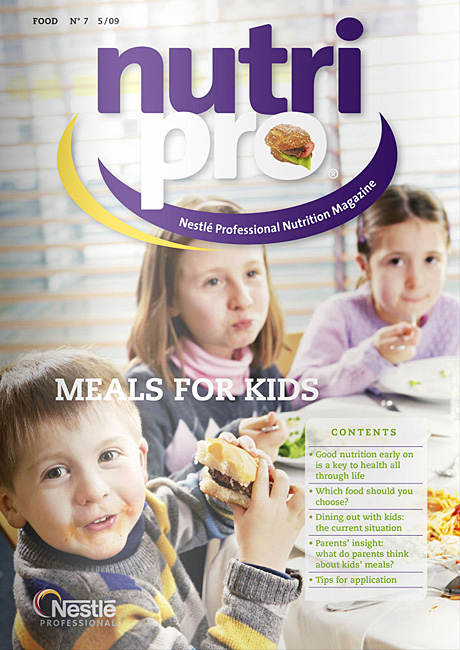
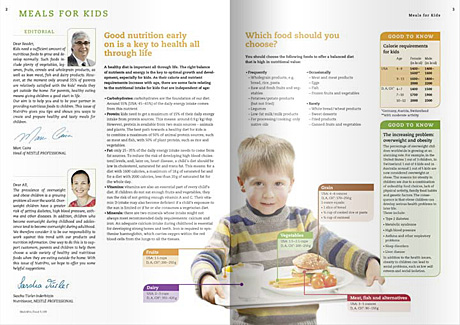
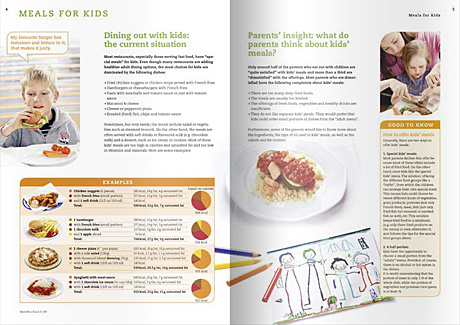
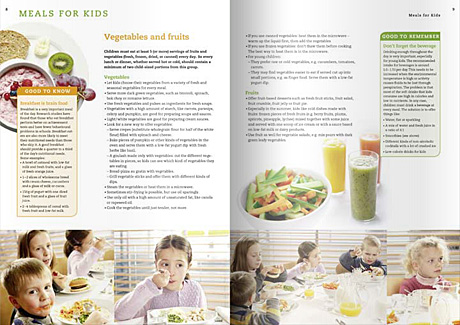
Heusser Communicates has produced another issue of the NutriPro magazine for Nestlé Professional. It features ideas for a healthy and balanced diet for children.

Zurich-based design and communications agency Heusser Communicates has produced another issue of NutriPro magazine for Nestlé Professional. The latest issue contains numerous ideas for a healthy and balanced diet for children. The magazine communicates in a colorful, cheerful and playful way.

Responsible at Nestlé Professional, Vevey: Sascha Türler (Nutritionist). Contact at Heusser Communicates, Zurich: Thomas Heusser (consulting), Anita Elsenhans (AD), Moritz Köhler (graphics/layout/illustration/realization).

1290581598_img090623_nestle1
1290581598_img090623_nestle2
1290581598_img090623_nestle3
1290581598_img090623_nestle4
1290581598_img090623_nestle5

Swiss Post's "In" folder creates goodwill

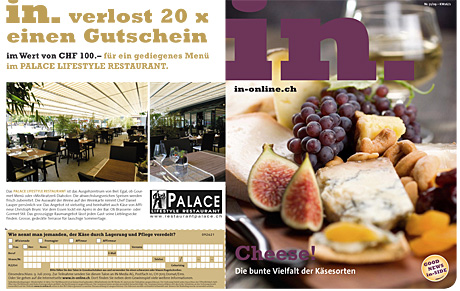
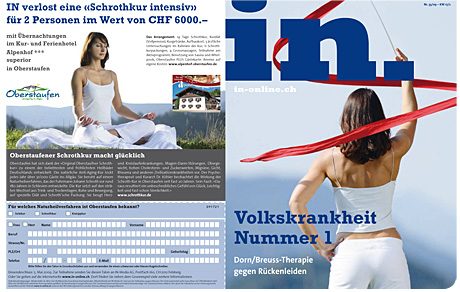
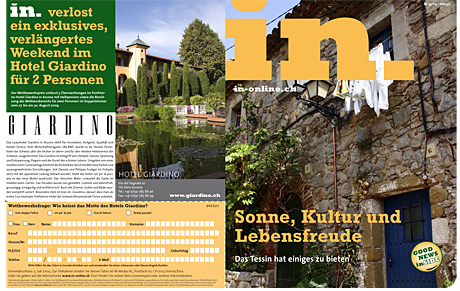
For the past year, a magazine-style leaflet has been helping to keep mailboxes more organized when it comes to unaddressed direct mail. Now, a Link survey shows that 4 percent of recipients pay closer attention to the brochures bundled in this way.

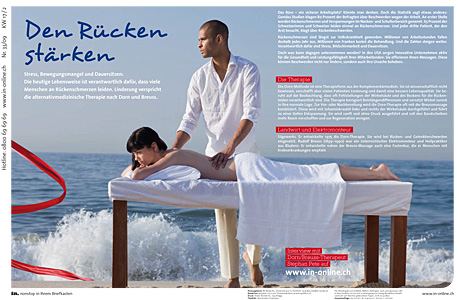
Just under a year ago, In-Media AG in Biel, a subsidiary of the Direct Mail Company (DMC), launched a kind of magazine called "In-" - a four-page, color folder in tabloid format that is used as a collection sleeve when unaddressed advertising is distributed to mailboxes. "In-" is intended to ensure more order in mailboxes and thus increase the acceptance of unaddressed direct mail.
Now, for the first time, In-Media has commissioned the Link Institute to conduct a representative survey to determine whether the folder fulfills its objective. For this purpose, a total of 1001 people were interviewed by telephone in March in the regions of Baselland, Thun and Biel as well as Zurich/Winterthur. The result: 299 people, or 30 percent of those surveyed, had noticed the In-Folder, and they also noticed the new order in the mailbox. Another 41 percent had a stop sticker on their mailbox, so they were not aware of the In Folder. The remaining people (29 percent) were among the In-Folder recipients, but they had not paid any further attention to the new product. Apparently, however, they did not notice it negatively either.
Of the 299 respondents who had taken note of the in-folder, 209 people (or 70 percent) said they paid similar attention to the brochures it contained as they had previously in the unbundled form. 18 percent pay more attention to them, 12 percent less than before. In-Media concludes "that unaddressed advertising is actually paid more attention to by 6 percent in the new distribution form." But be careful: based on the basic sample (1001 respondents), only 2 percent pay more attention to advertising; based on all "in" folder recipients, the figure is still 4 percent.
Another result: of 388 respondents with stop stickers on their mailboxes, 24 people (or 6 percent) said they would remove the stickers if they were only sent advertising in a leaflet. René Brahier, Managing Director of In-Media AG, has his own reservations about this, however: "It is unrealistic to expect that 6 percent of the stickers would actually disappear from the mailboxes. The respondents only expressed a declaration of intent. But if we can curb the trend toward more stop stickers or reduce it by a few per thousand or even one percent, I'll already be overjoyed." Stop sticker density is currently a good 40 percent throughout Switzerland, but in some cantons it is over 60 percent.
The "In" folder is more than just a cover: it is designed as a four-page lifestyle sheet that covers topics such as fashion, travel, sports and seasonal news. Launched in August 2008 with 110,000 copies in the regions of Thun and Baselbiet, the circulation has since grown to 823,000 copies - and is expected to reach 912,000 by the end of 2009. "In-" is published twice a week, in three languages, and will soon be available in all regions of Switzerland. Recently, the folder also won Swiss Post's internal innovation prize "InnoPrix 2009", because In-Media AG is affiliated with Swiss Post: Swiss Post holds a 50 percent stake in the parent company DMC. The award to In-Media thus makes it clear that Swiss Post sees great potential in the folder in the area of direct advertising and especially in the fight against stop stickers.

Markus Knöpfli

1290581598_img090623_in1
1290581598_img090623_in2
1290581599_img090623_in3
1290581599_img090623_in4
1290581599_img090623_in5
1290581599_img090623_in6

Cannes: SFLB wins Gold Lion

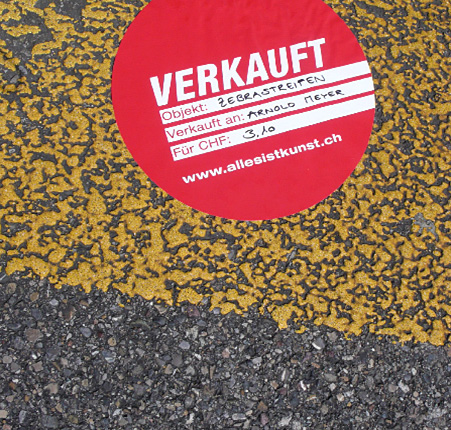
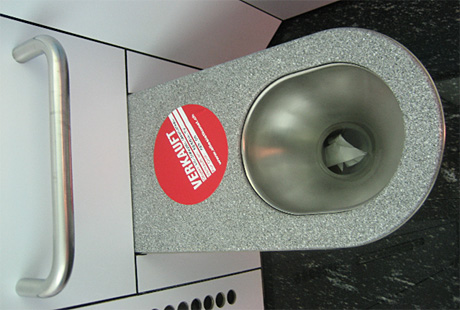
Spillmann/Felser/Leo Burnett become the first Swiss agency to win a Gold Lion at the Cannes Advertising Festival. The advertisers received the PR Lion for the campaign "Stop the cultural sellout" for the Cabaret Voltaire. In addition, two other shortlists with Swiss nominees were announced.

Spillmann/Felser/Leo Burnett become the first Swiss agency to win a Gold Lion at the Cannes Advertising Festival. The advertisers received the PR Lion for the campaign "Stop the cultural sellout" for the Cabaret Voltaire.

> To the PR Lions winners list

Cabaret Voltaire - Zurich is sold from SFLB on Vimeo.

1290581600_img090623_dada1
1290581600_img090623_dada2

Also announced were the winners of the Promo Lionsand of theDirect Lions. However, there are no Swiss works among the winners.

In addition, the shortlists of the Cyber Lions and of the Design Lions published. Swiss submissions are included on both:

Design Lions
RUF LANZ, Zurich: ION EGLIN SMALL PRINTED DESIGN, ION EGLIN

Cyber Lions
MAXOMEDIA, Bern: FRIENDS-ON-A-TRAIN, SWISS FEDERAL RAILWAYS
walker, Zurich: EBAY ATTACK, AMNESTY INTERNATIONAL

get_footer();