Leuthard gives green light for advertising alliance

According to Federal Councillor Doris Leuthard, nothing stands in the way of the advertising alliance between SRG, Swisscom and Ringier. However, SRG is not allowed to offer advertising tailored to target groups for the time being. The current license does not cover this.

The advertising alliance does not hinder the private media in Switzerland to any significant extent, Media Minister Doris Leuthard told the media in Bern on Monday. Her department, together with the supervisory authority Bakom, therefore came to the conclusion from a media law perspective that free competition should play. Unlike the alliance partners Swisscom and Ringier, however, the SRG would have to abide by the concession. Advertising tailored to target groups is not covered by the current concession, he said. "Here we are entering new territory in a very dynamic market," Leuthard said. There are still many open questions, she added.

Concession expires in 2017

This includes, for example, whether regional advertising is permitted or not. Bakom will deal intensively with these questions in the coming months. Leuthard recalled that the license for radio and television expires next year and that target group-specific advertising could be regulated there. It is also conceivable that this form of advertising could be included in an ordinance. According to Bakom Director Philipp Metzger, the regulatory authority will address all of these issues. "This work is likely to take several months," Metzger said.

Ban lifted

With immediate effect, Bakom's decision of December 16, which forbade SRG to appear on the market as part of the joint venture, has been rescinded. In other words, SRG may participate in the market presence of the new advertising alliance, but may not place any target-group-specific advertising as long as the federal government does not permit this. Private TV stations, on the other hand, are already free to use this new type of advertising, the media minister stressed. In order to secure advertising revenues in the medium term, however, it is important that all licensed TV broadcasters, including SRG, can take advantage of target-group-specific advertising. Leuthard went on to say that she takes the fears and concerns of the private media companies seriously. Technological development is advancing rapidly, she said. Switzerland could play a pioneering role with regard to such new forms of advertising. In a dynamic environment, development cannot be stopped.

Disposition can be challenged

The ruling by the Department of the Environment, Transport, Energy and Communications (DETEC) can be appealed to the Federal Administrative Court. The private media houses had strongly criticized the joint venture of the three partners and demanded to see the details of the agreement from Bakom. Bakom refused to do so. Leuthard once again emphasized that SRG will in any case remain prohibited from placing advertising on the Internet. Bakom will keep a watchful eye on this, Metzger said. The private media houses had repeatedly expressed fears that SRG would use the joint venture to circumvent the online advertising ban. Leuthard recalled that private publishers still have a very strong position in the Swiss advertising market, which must be defended against large foreign competitors. Total advertising revenues amounted to CHF 4.2 billion in 2014.

Alliance partner delighted

The three alliance partners SRG, Swisscom and Ringier welcomed the Uvek decision in a statement (Werbewoche.ch reported). The conditions have now been met for the new marketer to start operations. The launch is planned for the 2nd quarter of 2016. According to Marc Walder, designated Chairman of the Board of Directors of the joint venture, this sets the course for a media policy that takes account of the fundamental upheavals in the media world.

Slightly disappointed by the rulings of the Bakom and the Uvek is Hanspeter Lebrument, President of the Association of Swiss Media. The goal of achieving a halt to the march or excluding SRG from the joint venture has not been achieved, he says. Nevertheless, Lebrument is confident about two things. One is that SRG is prohibited from running regional target-group-specific advertising. "And in the upcoming discussion in 2017 about the content of the SRG concession, the publishers will bring their full weight to bear," Lebrument continued (Reaction Swiss Media Association).

Leuthard: Publishers have a strong position

Federal Councillor Leuthard recalled that private publishers still have a very strong position in the Swiss advertising market, which must be defended against large foreign competitors. Advertising revenues amounted to CHF 4.2 billion in 2014. TV advertising revenues accounted for CHF 772 million. A good half of this went to SRG, 10 percent to private Swiss broadcasters and 40 percent to private advertising windows. Revenues from Internet advertising amounted to around CHF 720 million per year - with an upward trend year on year.(SDA)


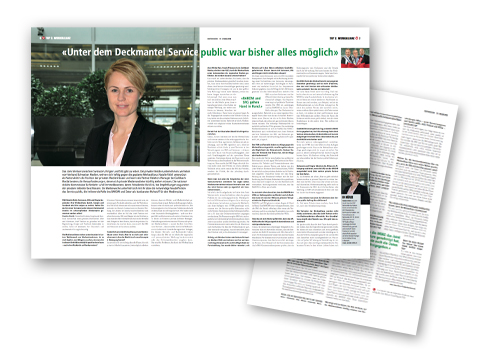
"Under the guise of public service, anything has been possible so far"Natalie Rickli in the big Werbewoche interview on the planned advertising alliance.

Y7K: Delaneau surprises its customers digitally

The watchmaker Delaneau has decided to send out its New Year’s greetings online—in the form of a website. The greeting card has already been shared thousands of times.

The greeting card project is fascinating: Y7K transforms the Delaneau Key Visual into a digital kaleidoscope. Visitors to the Website fill the Delaneau artwork with life by moving the mouse pointer or tilting their smartphones. Often, mobile versions are not particularly popular, but this greeting card spread thousands of times via social media within 30 days, the agency writes. The website thus attracted more than 10,000 visitors.

delaneau1

For the kaleidoscope, Y7K used Web GL, a JavaScript API that draws complex 3D elements on the screen more smoothly. The project won the FWA Site of the Day award for mobile and desktop. "With this web experience, we wanted to show how something very personal, i.e. a greeting card, can become a global brand campaign to increase awareness," says Yves Sinka, partner at Y7K, "simply thanks to innovative conception."

Responsible at Delaneau: Jessica Walther, Victoria Panchaud. Responsible at Y7K: Alfatih Al Zouabi, Ruben Feurer, Yves Sinka.
 

Last but not least: lies have a short journey

Very open test drive: lie detector, Smart Cabrio. If the driver lies, the roof closes and the ride is over.

"The world's most open test drive" is the brainchild of the Berlin-based creative minds BBDO and K-MB Agentur für Markenkommunikation. The viral film hasn't really gone viral yet - just over 10,000 views on YouTube - but that could still happen. The chances are good, because so is the idea. It shows couples - for example friends or mother and daughter - on a special test drive in an open-top Smart Fortwo convertible. The competition: to drive open-top for as long as possible. Meaning: not to lie for as long as possible. Even if the questions would actually invite you to do so over time. Only those who are really open will pass the challenge. And so the connection between an open top and a lie detector is established. (hae)

https://www.youtube.com/watch?v=BFtNSiSuYhg

"Under the guise of public service, anything has been possible so far"

Advertising alliance: Werbewoche talked to Natalie Rickli about the necessary redefinition of the public service, the irritating role of OFCOM and data as the most precious raw material for the media center.

nrickli

The private media companies, represented by the Swiss Media Association, are resisting the planned advertising alliance. As a member of the National Council, Natalie Rickli supports the position of the private media houses and, as Partner Relation Manager at Goldbach Media, knows the challenges that private media providers will have to face in the future. The National Council's Commission for Transport and Telecommunications, of which Rickli is president, has adopted recommendations in favor of the private providers.

Werbewoche: Natalie Rickli, Swisscom, SRG and Ringier justify their advertising alliance by saying they want to stand up to Google and Facebook. Do you think that's a pretext to gain share in the shrinking advertising market?

Natalie Rickli: In fact, Google and Facebook now have a large market share. But to set up a Swiss joint venture with the justification of wanting to fight Google and Facebook is, in my opinion, illusory on the one hand and untrustworthy on the other.

Media providers are in fierce competition with each other for advertising revenues. Isn't it legitimate to look for ways to position oneself as best as possible in this environment - even without regard for competitors?

Swiss companies have to be innovative, they have to offer good products, also for advertisers. Of course, they can join forces, either in the area of content or in the area of advertising; the approach is absolutely understandable and comprehensible. But in the case of the joint venture between Swisscom, SRG and Ringier, the problem is that two of the three companies are state-owned enterprises. Ringier is not an issue, it's a private company that can do what it wants. SRG and Swisscom are a different matter.

Indeed, the advertising alliance is putting private media houses under pressure. But isn't it also desirable for the market to get moving with new concepts?

Yes, of course. It's important that the players who finance themselves privately in the market can work in the best possible way, that they enjoy advertising and media freedom, that they have good framework conditions, which is why I'm also politically committed to this. But the difficulty in the Swiss media landscape is that it is very regulated. We have a lot of financial dependencies - and now SRG and Swisscom are also encroaching on domains where private providers already operate. That's why, as far as I know, all private media providers - except the three joint venture partners - argue that they themselves are in danger from the advertising alliance. Especially the regional publishers, the local TV and radio stations are afraid that the SRG will compete with them in the market for regional and personalized advertising or that it will be able to circumvent the online advertising ban. These are the problems created by the advertising alliance.

Mirko Marr, Head of Research at Goldbach Media, also wrote in the NZZ that the advertising alliance would endanger regional media in particular. So you would agree with that?

I would sign that. I think the private media providers could credibly make the case that their existence is threatened if this joint venture is approved without conditions. In terms of media policy, we are moving in a dangerous direction: More and more smaller, private providers are now hanging on to the fee pot. And if you now set up another joint venture like this, there is a great danger that at some point it will be said: "Now we have less advertising, in order to continue to exist, we need more fees." I am very afraid of that. In the past, many politicians thought they were doing good by paying more fees to the private stations. But it is wrong to want to secure media diversity with as much state intervention as possible.

At the moment, however, the state has its fingers everywhere.

Exactly, which is why we keep coming back to the regulatory problem with the advertising alliance. People always say that Swisscom is independent, and that SRG is, too. But the Federal Council directly sends two representatives each to the board of directors of SRG and Swisscom - you can hardly speak of independence of the state, but also independence at the operational level. Instead, the state penetrates the advertising market with two representatives each from the Federal Council. In addition, the SRG does things that are not service public, because private companies already offer them. Perhaps the problem is not even the SRG, but the politicians who have waved it through for years.

But if you now take the perspective of the joint venture partners: You say yourself that media companies have to be innovative and the joint venture would actually be an innovative approach ...

Of course, the basic idea behind the joint venture is understandable. But the big problem is regulatory. In terms of media policy, 2016 is one of the most important years in recent decades, and if the advertising alliance is approved by DETEC without conditions, we will no longer have to have the public service discussion. Because then facts will be created, such as the fact that the online advertising ban can be circumvented. The financing of SRG is guaranteed, the fee pot is getting bigger and bigger, because everyone has to pay and the population is growing. The private broadcasters would come under even more pressure. It must also be said: The idea of the advertising alliance is a good one, but no one knows exactly what it entails, because the private broadcasters are denied access to the files.

Correct. Since October, the Swiss Media Association (VSM) and several publishers it represents have been demanding access to the files and the possibility of becoming parties. This has been denied so far, with reference to business secrets contained in the files. Why won't Swisscom, SRG and Ringier let us look at their cards?

I don't find either Swisscom or SRG particularly transparent. For example, the accounts of Billag, a subsidiary of Swisscom, are not transparent. Only after repeated inquiries in parliament and pressure from the media did the department disclose that Billag earns millions in profits from fee payers every year. SRG does not have to account to parliament or the public at all. The department always says in response to political requests: SRG is independent and OFCOM has an overview, everything is fine. Parliament is switched off. But when taxpayers' money flows somewhere, it has to be controlled by the state. That's why I'm so in favor of free media, because I don't think they should have to be controlled at all. The media policy so far has, of course, been a matter of political will. In the run-up to the Competition Commission's decision, the responsible media minister also expressed her approval of the joint venture and the participation of SRG and Swisscom. It is logical that the administration should not contradict this.

The VSM and Tamedia have now filed a lawsuit against the advertising alliance, primarily concerning the possibility of inspecting the files. Do you think the association has a chance of getting away with the lawsuit?

The judges will decide that. From a political point of view, I can say this much: We had a hearing on this topic in the Commission for Transport and Telecommunications and heard all positions, from the joint venture partners to data protection officers, the Competition Commission and, of course, the private providers. As a result, we drafted a recommendation to the Federal Council with the request that the private parties be granted access to the files. The majority did not understand that this was not possible. What OFCOM decides in March will be decisive.

Yes, it does seem absurd that OFCOM asks VSM to comment and then in response sends back a paper that has been mostly blacked out by SRG.

OFCOM and SRG often go hand in hand in my eyes. OFCOM could have demanded that SRG disclose the details. But if the administration and the responsible Federal Councillor do not do that, then that is clear political will.

But this is highly dangerous, because OFCOM should actually control the SRG and not protect it.

Exactly. In my eight years in the National Council, I have found that OFCOM's answers are usually very SRG-friendly. We parliamentarians have practically no leverage here. We can exert pressure and adapt the laws, but this is of course a longer process. For example, the commission wants to examine a dual SRG concession competence, i.e. a framework law from parliament and the details by the administration. Until today, the parliament could not say anything about the concession. So far, everything has been possible under the guise of public service.

WEKO had approved the advertising alliance last December because it did not expect the joint venture to undermine effective competition. Was that a misjudgment?

I do not think this judgment is correct. And perhaps we should remind ourselves once again that the Competition Commission is a federal authority. In recent years, Swisscom has repeatedly been fined after the fact, for example because it charged too high prices for broadband Internet. But of course it's no use to the other companies if, seven years later, they're told "the prices were too high, we're lowering them now and Swisscom has to pay a fine in the millions". Because the fine that Swisscom has to pay simply passes from one federal treasury to the other. We should question this.

On the same day as the WEKO gave its go-ahead, OFCOM prohibited SRG from participating in the joint venture. A final decision is now expected by the end of March. What do you think OFCOM will decide?

For me, it would be untenable in terms of regulatory policy if DETEC were to approve the joint venture without conditions. However, it is almost certain that it will approve the advertising alliance. That fits in with its media policy orientation in recent years. I think it would be right to postpone the decision until the public service debate has been conducted.

Swisscom and Ringier could raise the alliance on their own if SRG is outmaneuvered by OFCOM. Or bring other private partners on board.

Yes, they could. But of course there is no other player as big as SRG with as many stations. But we have to make it clear once again: Advertising marketing is not part of the SRG concession. Online series or advertising on SRF info were not in it either, and they were adjusted afterwards.

... so the very first thing that needs to be done now is to clearly define the public service mission?

Yes, and when private companies do something, I think they do it according to the principle of subsidiarity.

The representatives of the advertising alliance never tire of emphasizing that the joint venture is open to other media providers. But their basic attitude radiates defensiveness. How does that go together?

I don't think the three players expected the opposition to be so great. They now seem to have opened up a bit, but the last I knew, the VSM was looking for a discussion and the SRG didn't get back to me. What is certainly a good development is that we are now having this important media policy discussion. In recent years, private stations with fees have not dared to make media policy an issue and to speak out critically against the administration. Now the private stations have a chance to show what good work they do and how innovative they are. To do this, they need good framework conditions, which politicians should ensure.

The private publishers are supported by the National Council's Commission for Transport and Telecommunications, of which you are President. You're the perfect person for this, in your dual role as a politician and an employee of Goldbach Media, which means you know the media industry from the inside.

That's the beauty of the militia system. You can also bring your professional know-how to bear in parliament. The disadvantage of being president is that I can no longer express myself much in terms of content in the commission. I always liked to make motions and ask critical questions, but I can't do that anymore. But the advantage is that I can plan the meetings and introduce topics - and I decided to put the joint venture between Swisscom, SRG and Ringier on the agenda. We listened to all those involved so that we could get a comprehensive picture. We did that and have now made three important recommendations to the Federal Councilor responsible.

Following the VSM's announcement that it intends to take action against the advertising alliance, Ringier withdrew from the association with immediate effect. And in the rest of the Swiss media industry, too, fissures are opening up in heated debates: pro or contra joint venture. Doesn't this create unnecessary imbalances in the Swiss media industry?

From the media policy perspective of the past few years, I actually have the feeling that the private media providers have gotten their act together for the first time. When 50 media companies get together and act in concert to find a minimum consensus, that's a good development. Especially since it's not about money from the state, but about good framework conditions. So for the private sector, this conflict can now also be an opportunity, in line with my credo of "innovations instead of subsidies". I now see that the private sector is much more united.

User data is the treasure of the digital world and fertile ground for value creation. The VSM therefore proposes that, as an alternative to the joint venture, it should be examined whether all advertising-relevant user and usage data, which only Swisscom currently has, could be made available to all media providers. From the point of view of the media companies, this is a grandiose idea - but what does data protection have to say about it? And can this be in the consumers' best interests?

Indeed, we have to take a very critical look at this. Our Commission has therefore decided, firstly, that data protection must be guaranteed in the joint venture. And secondly, if data protection is guaranteed, the data must be made available to the other Swiss media companies via an independent platform. Furthermore, the data should only be allowed to be stored in aggregated form, so that privacy for the consumer is guaranteed.

No one else in Switzerland has the kind of data that Swisscom has. And the company naturally wants to turn this enormous competitive advantage into money. Why should Swisscom give away its data?

If it hadn't been for the joint venture, we wouldn't even have started discussing this data. Now, understandably, the private sector is also registering its interest in the data. Since Swisscom is majority state-owned, one can conclude that they have to make the data available. And since the WEKO has approved the joint venture, I think it has also released the data. Now it's a matter of deciding who gets access to that data. I don't think it's absolutely necessary to use this data for advertising purposes, but it's certainly lucrative for the advertising industry. And customers benefit from receiving advertising tailored to their needs.

That depends very much on which customer you ask: one finds advertising that really concerns him better than advertising that doesn't interest him at all and only annoys him. And the other doesn't want any advertising at all, certainly not using his data. It's not for nothing that ad blockers are booming.

Ultimately, it's up to the customer to decide. But the issue goes even further. Ultimately, it's about net neutrality, the revision of the Telecommunications Act and questions such as "does the citizen have the right to his or her data?", "how much can he or she get involved in this debate?" etc. That is why the Commission has explicitly and separately referred once again to the guarantee of data protection.

What would be wrong with fee-financed content bringing in advertising money at the same time, in order to further increase the revenue of the company - in this case SRG? After all, the profit could flow into new content, which in turn would benefit the audience. DETEC could impose this as a condition on SRG in the joint venture.

SRG has practically the same advertising conditions as private media providers, and the restrictions are minimal. In the current debate, various publishers have called for stronger ones. That's why the public service debate is so important. I am also prepared to discuss models in which, for example, the Internet is excluded from fee financing. Then SRG would have to face competition in these areas and finance itself through advertising. Then, of course, the other media providers won't be happy. But as it is now, it is simply an unpleasant cross-financing because it is not transparent. The online advertising ban can be circumvented if, for example, SRG content is broadcast on Blick.ch or Bluewin.ch and these capitalize on content that was originally financed via fees. These are questions that have not been answered and will not be answered until the details of the deal are known. In addition, if the joint venture were approved, it would not be under OFCOM supervision. Then no one would control what goes on there.

How long will it take to decide on the basis on which media providers will work and make decisions in the future - i.e. data protection law and public service, joint venture and Billag?

I can't say, it depends on how the discussion develops. But it's certainly positive that we're debating it and that we're no longer committing blasphemy in parliament when we question the SRG. Until now, SRG and public service were under homeland security - that has now changed. The next year and a half or two years will be very exciting overall in terms of media policy; I don't think we'll have any final decisions this year.

Do you think the dispute over the advertising alliance would have made such waves if SRG hadn't been involved?

I don't think so. Of course, the data from Swisscom would also have been a central point. But the main reason why the matter caused such a stir was that it became known that the joint venture was being set up against the backdrop of the RTVG vote, i.e., while we were being led to believe that it was only about a collection model and not about public service. And behind the scenes, the three players bypassed the politicians and the public to create a joint venture. That was the straw that broke the camel's back. This is not appreciated by many sides. Swisscom, Ringier and SRG have certainly completely underestimated the situation.

What would it mean for your employer Goldbach if the advertising alliance goes through?

Of course, we are affected just as much as the other media providers, but especially the stations we market. If the Swisscom data is not made available to all participants, the joint venture will know more about the broadcasters than the broadcasters themselves. For example, who watches what, when and where. For the private providers, this represents a competitive disadvantage, because they would not have this data at their disposal. The broadcasters are coming under pressure.

If you had one wish: How would this conflict end?

I've learned in recent years that you have to separate what's politically feasible from what's desirable. Idealistically, I would like us to have a discussion on media and regulatory policy, at the end of which the SRG takes over the minimum basic public service and private companies drive the industry forward through innovation, independent of the state. In terms of realpolitik, I hope that OFCOM will impose a clear condition on the joint venture that the data must be made available to everyone on a non-discriminatory basis, taking into account data protection.

Interview: Anne-Friederike Heinrich

rickli-print
This article already appeared in Werbewoche 4/2016. Order subscription

Four awards for Meta Design at the 2016 Rebrand 100

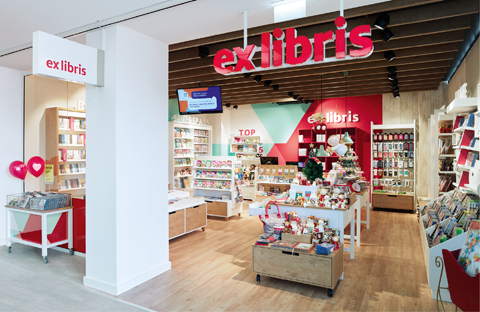
Four works by Meta Design were honored at the Rebrand 100 Award. The jury awarded prizes to the new brand presences of Ex Libris, ChatWork, Loylogic and Meizu.

Ex Libris, the Swiss media discounter for books, music, movies, games and software as well as consumer electronics and accessories.

MetaDesign_Exlibris_01
MetaDesign_Exlibris_02

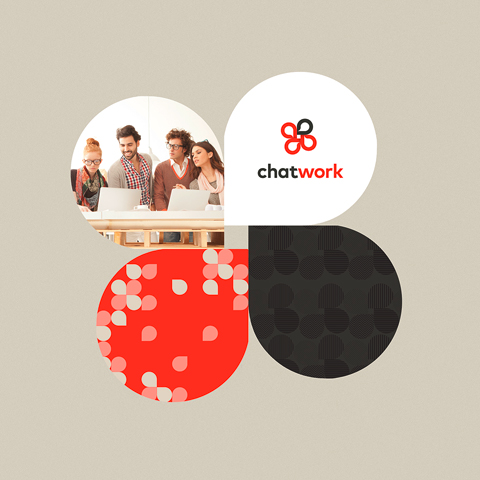
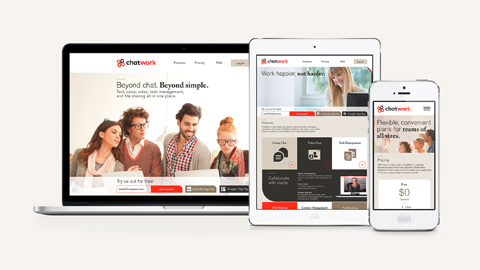
Chatwork, the Japan-based software developer, designs business solutions for enterprise communications in more than 200 countries worldwide.

MetaDesign_ChatWork_01
MetaDesign_ChatWork_02

Loylogic is the world's leading trading platform for virtual currencies, points and miles.

MetaDesign_Loylogic_01

Meizu is one of the best-known smartphone manufacturers in China.

MetaDesign_Meizu_01
MetaDesign_Meizu_02

"Strategically sound brand processes are relevant everywhere in the world. This is demonstrated by the success of our sites in this year's Rebrand 100. The awards are a nice success for our teams and encourage us in our global orientation," comments Dr. Alexander Haldemann, CEO of MetaDesign, on the competition results.

The Rebrand 100 is one of the most coveted global awards of its kind, recognizing the most effective redesigns of companies and institutions worldwide. It is considered the most important international competition for brand repositioning and redesigns. An international, multidisciplinary jury evaluates the before and after state of a brand against the background of its strategic objectives.
 

Editor-in-chief of the Einsiedler Anzeiger takes his hat

The long-serving editor-in-chief of the Einsiedler Anzeiger, Victor Kälin, has resigned with effect from the end of August. Apparently there were differences of opinion between him and the majority shareholder. Kälin may return, however.

Victor Kälin made his resignation public in the comments column of the Friday edition of the Anzeiger. He did not give any reasons. He did not wish to comment on this when asked by the SDA news agency on Monday. Kälin has been writing for the local newspaper in the district of Einsiedeln for more than 28 years. The Board of Directors also commented briefly on Kälin's departure in the same issue. It said it wanted to quickly resolve the management vacuum created by the dismissal together with the editorial team and the shareholders. The current unrest is damaging the newspaper, the company and also the employees. Apparently there were problems between the long-standing editor-in-chief and the majority shareholder. This was also confirmed by Andreas Kilchenmann, Chairman of the Board of Directors, on request. The Board of Directors never wanted Kälin to resign, said Kilchenmann. For this reason, he said, he was working with Kälin to develop a concept for a new shareholder structure for the newspaper "in a short space of time" - one without the current majority shareholder. Under these circumstances, Kälin could at best imagine returning to the Einsiedler Anzeiger, said Kilchenmann. The Einsiedler Anzeiger is published on Tuesdays and Fridays. According to the WEMF bulletin, the circulation is 5605 copies. (SDA)

Police reprimand SRF traffic offenders

Seat belts? For the participants in «Switzerland’s Got Talent,» as shown in a video clip, that’s a foreign concept. The Zurich City Police are not at all pleased with this behavior.

The stumbling block is a clip from the first show of "Die grössten Schweizer Talente": Jury members Susanne Kunz, Jonny Fischer, Gilbert Gress and Bligg are being chauffeured through Zurich by presenter Viola Tami. None of the five people is wearing a seat belt. Criticism for the errant behavior is not long in coming. Zurich city police have "pointed out the problematic behavior" to Swiss television, as police spokeswoman Judith Hödl told Schweiz am Sonntag. For reasons of proportionality, however, no subsequent punishment was imposed.

SRF emphasizes to the newspaper that they naturally observe the obligation to wear seat belts during filming. In the case of the old Pontiac used in the scene in question, the seat belts were not worn because the car was only equipped with seat belts at the front - and these were fastened at the back. At the same time, it was ensured that a route with as little traffic as possible was chosen, which allowed a low driving speed. (Switzerland on Sunday/hae)

Bildschirmfoto-2016-02-28-um-10.40.30
 

Last but not least: Anti Brumm Brumm

Disease-carrying mosquitoes thrived in Thailand's slums—until the creative minds at BBDO Bangkok took on the problem.

In Switzerland, people are afraid of the tiger mosquito because it can transmit the dreaded dengue fever. The majority of them are still only found south of the Alps, but there is no question that they will sooner or later spread more widely in the north due to climate change. These horror scenarios have long been a reality in other countries. Mosquitoes are spreading rapidly and with them the diseases. In Thailand, the slums in particular, with their open, stagnant sewers, are true breeding paradises for the biting disease vectors. Control measures only work temporarily and very selectively. In addition, insecticides are harmful to humans and nature. BBDO Bangkok therefore relies on moped riders, who are always and everywhere on the road in Thailand anyway. An exhaust attachment mixed with natural oils repels the insects over a large area. What sounds like theory seems to work in practice. A creative solution that makes use of the existing local infrastructure to solve a global problem, at least locally. (hae)

https://vimeo.com/154717119

Bildschirmfoto-2016-02-28-um-12.55.04
Bildschirmfoto-2016-02-28-um-12.53.56

Switzerland Tourism wants to inspire Chinese for winter sports

Switzerland Tourism hopes to save the current winter season with «a strong finish.» An advertising campaign is aimed, among other things, at attracting Chinese winter sports enthusiasts to Switzerland. The first signs of success are already visible.

"December and January were two bad months for Switzerland's winter sports resorts and mountain railroads," said Jürg Schmid, Director of Switzerland Tourism, in an interview with Zentralschweiz am Sonntag. Thanks to the early Easter, however, there is a good chance of a good final spurt. Mountain tourism has a good future, but it is going through a difficult time at the moment, Schmid continued. "There are a few regions in the mountains that are benefiting from the insane growth from Asia." One example of this is Engelberg/Titlis thanks to its good location in relation to Zurich Airport. 96 percent of all other Alpine resorts are not yet benefiting from the growth from Asia. According to Schmid, Switzerland Tourism wants to bring the Swiss winter to the Chinese sales markets. He is convinced that there will be a steady increase in Chinese winter sports enthusiasts in Switzerland in the coming years. Switzerland is already experiencing an initial increase. "The Chinese will not replace the Europeans, but there will be a nice little growth," Schmid noted. However, an invasion of Chinese guests is not to be expected. According to Schmid, only individual tourism is being promoted in winter tourism. (SDA)

Rebrand Awards: Catherine Martin honored

The Rebrand 100 Global Awards are the most prestigious award for brand repositionings and redesigns. Catherine Martin is correspondingly delighted to have been awarded a "Merit" for the redesign of Otto Fischer.

Otto Fischer is the second largest electrical materials wholesaler in Switzerland. What all business units have in common is that connections are made through which energy flows. This is visualized in the new brand design created by freelance art director and brand designer Catherine Martin through the concisely connected, flowing emblem OF. In this way, the DNA of the tradition-rich company has been successfully transferred to the present day. Today, the new brand identity is consistently applied at all levels: From the letterhead to the trade show booths and give aways to the building and the vehicle fleet.

1_OF
2_OF
3_OF
4_OF
5_OF

Responsible at Otto Fischer: Patrick Fischer (Managing Director), Roger Altenburger (Head of Marketing + Logistics), Stefan Ruf (Head of Communications). Responsible at Catherine Martin Art Direction: Catherine Martin (Concept, Art Direction and Brand Design).
 

Netflix: No more US offer for Swiss customers

Netflix has begun blocking VPN services. As a result, Swiss users can no longer access the U.S. library.

By using VPN services, services such as Netflix are made to believe that the user is in America. This makes it possible for non-American customers to access the streaming service, which is actually reserved for US customers. This is an understandable need: the U.S. offering is much larger, and series that are hotly anticipated by fans are launched much earlier in America than in the rest of the world. While the USA offers 4500 films and 1100 series, Switzerland has just 1800 films and 450 series. And with this, Switzerland even comes off well in an international comparison, since it can access the offerings of all neighboring countries. This is shown by the comparison service Unogs.com. However, Swiss Netflix users also pay 35 percent more for the basic service than users in Germany.

According to Schweiz am Sonntag, Netflix has long announced that it would take action against VPN services - but so far the streaming service has shown little effort in practical implementation. This is now said to have changed: The VPN services Zenmate, Betternet and Mediahint have been blocked, even though access via the latter is still supposed to work.

The fact that countries are treated differently is not really what Netflix CEO Reed Hastings has in mind. He recently announced his goal of offering the same service all over the world. The film studios, on the other hand, are of a different opinion, still awarding licenses according to countries and language regions and presumably exerting pressure on Netflix.

The fact that customers who are willing to pay are prevented from obtaining digital content legally seems somewhat outdated in this day and age. For example, the fourth season of "House of Cards" will be available on Netflix USA on March 4. Swiss Netflix users will be left out in the cold: For the time being, the series will be reserved for Teleclub subscribers in this country. They can receive Sky Atlantic exclusively - the channel shows a new episode of the fourth season every Friday. From March 5, 2016, all 13 episodes will also be available on demand in the original English version on Teleclub on Demand on Swisscom TV.

Whether the Netflix-using Swiss fans of the series will switch to Swisscom and Teleclub must at least be questioned. Reed Hastings probably does, too. At the Swiss market launch, he commented to the BZ Bernese Newspaper Our biggest competitor in Switzerland is product piracy. Downloading pirated copies on the Internet is half legal in this country." (hae)


Kind regards: Damage becomes "Schädeli

Claims have never been so unspectacular: With a launch campaign created by Freundliche Grüsse, Elvia is being positioned as a new Swiss online insurance provider that takes the fear out of every claim.

As part of a new digital strategy, Elvia replaces the previous direct brand Allianz24. Freundliche Grüsse won a pitch for the rebranding and the online launch campaign at the end of 2015. With the new brand identity, the aim was to position Elvia as the online insurance provider in Switzerland. Thanks to Elvia's fast and reliable service, every claim becomes a "Schädeli". This is conveyed with a typical Swiss word construct - the "li".

Skulls are celebrated in two web films. A family at a rest area continues to play cards calmly even after a small "Blechschädeli". Or a pensioner continues to read his newspaper in his living room even during a waterfall-like "Rohrbrüchli".

The films can be seen throughout Switzerland on the microsite, as branding day, Youtube mastheads, prerolls and streaming ads. Even in Google Adwords, the Schädeli campaign continues. FG has also implemented a microsite with competition for existing customers. Further "Schädeli" and campaigns will follow in the course of the year.

Responsible at Allianz Suisse: Claudia Staub (Head Marketing & Communications), Quynh-Thu Le (Digital Specialist), Simone Schmitt (Digital Manager). Responsible at Friendly Greetings Zurich/Berlin: Pascal Deville, Samuel Textor, Res Matthys, Nadine Mojado, Sean Dünki, Max Benrath (Creation), Christian Haueter (Consulting), Nadine Rapp (Media), Ricardo Colacurcio (Agency Producer); Visual Arts (Film Production), Dennis Ledergerber (Direction), Manuel Schneider (Production), André Guadagno (Camera), David Haisch (Research).


get_footer();