Frame Eleven: Media production is teamwork

The diversity of professions at media production service provider TPC Switzerland is often underestimated. An employer image film is now intended to counteract this...

Under the creative direction of Frame Eleven, an insight into the diverse world of media production was created. The Swiss broadcast service provider is often reduced to the big camera and the cameraman. But the company has much more to offer. Behind every broadcast are numerous people who make it possible in the first place. All those interested in one of the many professions in media production should be made aware of this.

Frame Eleven has developed a concept to make this diversity visible. In slow motion, every viewer is now granted a small insight into the fascinating world of radio, TV and online. Produced by professionals The film, supplemented with impressive and also humorous facts and figures, highlights how many different professionals are at work. Whether carpenter, painter, truck driver or stylist. They are all professionals. And they all work for the same goal: perfect productions for tpc's customers. Teamwork was also at the heart of the image film production: while Frame Eleven took care of the creation and direction, TPC handled the entire production.

Swiss exporters ahead of the implementation of the Swissness law

A study by HTW Chur has examined the importance of the designation of origin for exporting Swiss companies. Three quarters of companies use the image of Switzerland in their marketing.

Switzerland has an excellent reputation abroad. It is associated with chocolate, cheese, watches and mountains and stands for a beautiful landscape, high quality of life, reliability, trustworthiness and cleanliness. Internationally active Swiss companies take advantage of this positive image by displaying the term Switzerland and corresponding symbols in their market presence. However, the Swiss brand is not only used, but also abused. To protect against this, Parliament passed the new Swissness Act in June 2013, which regulates the use of the Swiss cross for products and services and defines criteria that must be met in order to be able to advertise with the Swiss designation of origin.

A study by the University of Applied Sciences HTW Chur has examined the significance of the designation of origin for exporting Swiss companies, how well they are prepared for the introduction of the new Swissness law and what support they need for its implementation. The study shows that three quarters of the companies surveyed use the Swiss designation of origin verbally and figuratively in their marketing. Swissness is most important in the food sector. Its importance is somewhat lower for industrial companies.

The degree of compliance with the new Swissness law varies greatly from sector to sector. Only 17 percent of the food manufacturers surveyed meet the requirement that at least 80 percent of the raw materials used come from Switzerland. 72 percent of industrial companies meet the requirement that 60 percent of manufacturing costs must be incurred in Switzerland. 93% of the service providers surveyed meet the requirement that their company headquarters must be located in Switzerland.

The level of information among the Swiss companies surveyed still appears to be inadequate in view of the great importance of the designation of origin. Only 2 percent of companies feel very well informed. 31 percent rate their level of knowledge as good, 48 percent as sufficient and 19 percent as insufficient. 46% of companies stated that they would like support in the form of advice and exchange with other companies. Many Swiss companies are therefore still faced with the task of finding out exactly what the new Swissness law requires and rethinking their value creation process if they want to continue to benefit from Switzerland's positive image after 2017.

Havas Worldwide Genève: Gaznat offers all its energy to satisfy its customers

As an expert in the transportation and delivery of natural gas in Western Switzerland, Gaznat always puts customer satisfaction first. Havas Worldwide Genève demonstrates this with a campaign.

The subjects highlight the expertise of Gaznat's employees. Photographer Markus Bertschi has photographed experts who represent Gaznat's three business areas: Transportation, Trading and Customer Service. Always under the Gaznat signature "our energy, your future".

Havas_GAZNAT_1
Havas_GAZNAT_2
Havas_GAZNAT_3

Responsible at Gaznat: Henri Bougeois (Director, responsible for Finance and Services). Responsible at Havas Worldwide Genève: Gabriel Mauron (CD), Thibaud Genevois (Copywriter), Simeon Brandner, Pierre-Olivier Gardello, Charlotte Chappaz (Art Directors), Pauline Charuel (Account Manager), Alexis Mouthon (Strategy). Photographer: Markus Bertschi.

Doers: Two Faces of Swiss Filmmaking

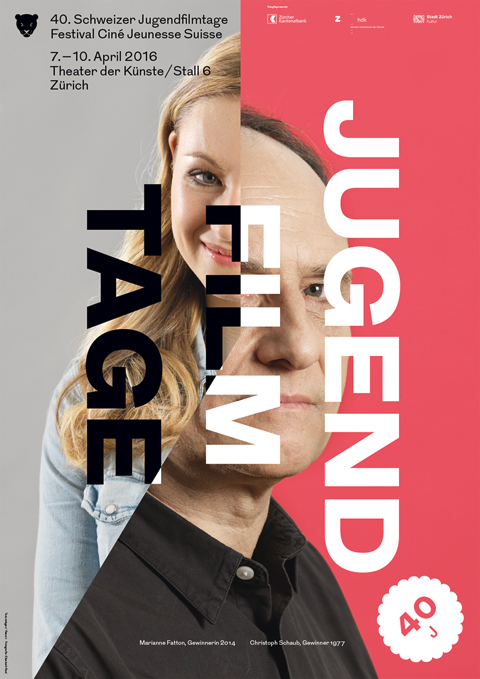
The 40th anniversary of the Swiss Youth Film Festival is being promoted by director Christoph Schaub and the Tatenträger agency.

In 1977, Christoph Schaub won the Swiss Youth Film Festival competition, and today he is a fixture on the Swiss film scene as the director of films such as "Sternenberg", "Bird's Nest" and "Giulias Verschwinden". For the 40th anniversary edition, the Youth Film Festival was able to win Christoph Schaub for its campaign together with up-and-coming filmmaker Marianne Fatton (first place winner of the 38th Youth Film Festival). The festival will be advertised with posters, cinema slides, advertisements and via social media channels. From mid-March, the posters will be displayed in the cultural notice board and the cinema slides in all arthouse cinemas in the city of Zurich. The campaign was developed by Tatenträger. The agency focuses on youth promotion projects and is also responsible for the festival's visual identity and online presence.

1_Kinodia_Jugendfilmtage

The Youth Film Festival is the largest and most important film festival for up-and-coming filmmakers in Switzerland. The 40th edition will take place from April 7-10, 2016 at the Theater der Künste on Gessnerallee in Zurich.

2_Plakat_Jugendfilmtage
3_Marianne_Fatton_Christoph_Schaub

Responsible for offenders : Michael Häne, Dieter Glauser (concept, art direction). Photography: Elisabeth Real . Hair & Make Up: Madleina von Reding.
 

Responsive: Wernli Internet relaunch and rhyme contest

After the Responsive agency successfully completed the relaunch of several Hug websites in early 2015, it also began work on the website for the long-established brand Wernli.

The new website seduces every biscuit lover with its playful elements based on the basic Erdmannpeisker campaign. As usual, the graphics team at the Responsive agency worked with a great deal of passion and presented the fine Wernli products in the best possible light. Thanks to the Typo3 content management system (CMS), the team of editors at Wernli has user-friendly administration of the new website, including simple maintenance of the three languages. The extensions and plug-ins adapted to their needs also make their work easier. According to the press release, Responsive placed particular emphasis on the connection to Hug's internal data warehouse (DWH), where all product data is maintained centrally and automatically transferred from the websites.

wernli_screenshot_1

From smartphones and tablets to desktops - the Website is accessible on all platforms and is of course fully responsive. The website's clear menu navigation guides visitors safely to their destination. In addition to all important information about the company, all products and their ingredients as well as nutritional values are visible.

wernli_screenshot_2
wernli_screenshot_3

Rhyming allowed

Now you can also comment and rate. Because, as we all know, Wernli likes to share. And to reinforce this statement, Wernli officially invites you to rhyme: Anyone who comes up with an original Wernli rhyme on the subject of sharing biscuits may soon discover it on the new Wernli packaging.

Fun_and_Win_Wernli

Responsible at Hug: Esther Zürcher (Head of Product and Brand Management at Wernli), Maya Moléa (Product Manager at Wernli), Murielle Jöri (Junior Product Manager at Wernli), Mike de Bever (Head of Consumer Marketing). Responsible at Responsive: Tuan Nguyen and Patrik Marty (both Managing Partners).


Roger Blum new Ombudsman SRG German-speaking Switzerland

The Public Council of SRG Deutschschweiz (SRG.D) today elected Roger Blum as the new SRG.D Ombudsman.

The former president of the Independent Complaints Authority for Radio and Television (UBI) and professor emeritus of media science at the University of Bern will take over the office on April 1, 2016 from Achille Casanova, who headed the ombudsman office for eleven years. With Blum, who presided over the UBI from 2008-2015, the audience council was able to engage a proven expert, according to the statement. He also has experience in his new area of responsibility, having served as deputy ombudsman of SRG.D for three years before joining the UBI. He was also president of the Press Council from 1991 to 2001. Until his professorship at the University of Bern, the media scientist, historian and constitutional lawyer worked as a journalist, among others at the Tages-Anzeiger, where he was a member of the editorial board from 1985 to 1989. He has focused his teaching and research on political communication, journalism, media history and media systems and has published several times in these areas.

Unbenannt-1_112

Achille Casanova, former Vice-Chancellor and Speaker of the Federal Council, is stepping down from the Ombudsman's Office at the end of March after many years of service. "After eleven years, it is time for the ombudsman's office to be re-staffed with a breath of fresh air and a different approach," he says, explaining his motivation for stepping down. During his time in office, he dealt with around 2000 complaints about radio and television broadcasts. With prudence and great commitment, he dealt with the individual cases, mediated between programmers and complainants, wrote final reports, and was able to resolve many of them in personal discussions. Thanks to good empathy with the concerns of the complainants and a high level of expertise, only a few complaints were forwarded to the second-instance UBI in each case.

The SRG.D ombudsman's office is the first point of contact for complaints about radio and television broadcasts and the "other journalistic offerings" of Swiss Radio and Television (SRF). It examines the matter and mediates between the parties involved. The provisions of the Radio and Television Act (RTVA) as well as international law, which is also binding for Swiss broadcasters, serve as the basis for the assessment. The practice of the UBI and the Federal Supreme Court as well as SRF's journalistic guidelines are also taken into account. The ombudsman's assessments can be referred to the UBI.

Study: Internet TV is increasingly becoming an alternative

According to a representative study published by Zattoo, the majority of Swiss people can imagine doing without television via satellite, cable, or antenna in the future and replacing it with Internet TV.

Video streaming is booming in Switzerland. Increasingly, streaming of TV content is perceived as an alternative to conventional reception channels. Just under ten percent of the Swiss now only obtain TV content from the net, a doubling compared to the previous year. More than half of the Swiss (56 percent) can well or very well imagine watching TV exclusively via Internet TV in the future, 33 percent more than in the previous year. This is the result of a representative survey conducted for the second time in German- and French-speaking Switzerland by the market research institute TNS Infratest on behalf of Zattoo. A total of 829 people aged 15 and over took part in the online survey and provided information about their viewing habits, as they did at the beginning of 2015.

According to Jörg Meyer, Chief Officer Content and Consumer at Zattoo, there are good reasons why the Swiss are increasingly seeing Internet TV as an alternative to cable or satellite TV: "Most households have a fast Internet connection. Large technology companies such as Apple, Google and Samsung are entering the market with powerful streaming boxes and TV sets. And Internet TV services are constantly improving in terms of streaming quality, content offering and user-friendliness."

Smart TV on the rise

Falling costs for smart TVs and opportunities to "upgrade" existing TVs with inexpensive streaming boxes are making a significant contribution to the growing appeal and spread of Internet TV. Already today, more than one in five Swiss viewers streams television on the big screen. In addition to use on the big screen, another advantage of Internet TV offerings is their availability on other devices. PCs/laptops are still the frontrunners, followed by tablets and smartphones.

Demand for flexibility increases

Swiss users can choose from a diverse range of moving images. Two clear favorites dominate the screens: YouTube and live TV, for example via Zattoo. Almost three out of five Swiss Internet TV users stream these services regularly. Content from video-on-demand providers and TV broadcasters' media libraries are also popular. "The demand for time-shifted TV or content on demand is increasing. That's why Zattoo is positioning itself as a platform that combines live TV with media library content and TV productions on demand," adds Jörg Meyer.

Video streaming is mainstream

For many, online viewing of moving images is now an integral part of media use. Around three quarters of all Swiss people take advantage of streaming video, with around one in three doing so predominantly or exclusively. Compared to its German neighbors, where only 56 percent of respondents stream TV content, the online TV market in Switzerland is thus significantly more advanced. Regardless of whether they watch live or on demand on a smart TV or tablet: For more than 90 percent of those surveyed, watching TV remains one of the most important leisure activities, which they do at least once a week.

Zattoo-PR-CH-160317-Infografik-Internet-TV-Final_CH

Advertising market down in February

According to Media Focus, advertising spending in February totaled 353 million Swiss francs (gross). Compared to the same month last year, this represents a decrease of 2.3 percent.

The months of January and February 2016 together show advertising print of 682 million gross Swiss francs, a decrease of 7 million compared with the same period last year. The two biggest increases compared to the same month last year were in the Energy (+134.9 percent) and Initiatives & Campaigns (+40.7 percent) sectors.

Advertising pressure in the overall market

csm_Grafik_Gesamtmarkt_Werbedruckentwicklung_Februar_2016_f7362a0886
csm_Tabelle_Gesamtmarkt_Werbedruckentwicklung_Februar_2016_4899dcae4c
Development of advertising print as of February 2016

Energy and Initiatives & Campaigns make strong gains

Compared with the same month last year, the energy sector recorded the strongest growth, with an increase of 134.9 percent. This was largely due to various image campaigns by major energy providers. In second place came the Initiatives & Campaigns sector, which posted a 40.7 percent increase due to the federal referendum on February 28.

Dive tobacco

Compared to January 2016, the tobacco products sector almost doubled its advertising print in February 2016 (an increase of 93 percent). Nonetheless, the industry was down 42.8 percent, well below the figure for the same month last year. The telecommunications sector shows a year-on-year decline of 22.3 percent. In third place comes the construction, industry, furnishings sector, with a year-on-year decrease of 20.7 percent.

The voting campaign leaves its mark

In terms of advertising, the months of January and February 2016 were dominated by the federal referendum on February 28, 2016. The Initiatives & Campaigns sector increased its advertising print by 50 percent in February 2016 compared with the previous month. In the associated Political Campaigns product group, advertising pressure was 220 percent higher in February 2016 than in the previous year.

Advertising printing in the industries

Advertising pressure in the sectors with year-on-year comparison

csm_Tabelle_Branchen_Produktgruppen_Vorjahresvergleich_Februar_2016_576987d7c9

Top 10 of the month

csm_Tabelle_Top_10_Werbetreibende_Produkte__4eb8e851c8
Top advertisers and most advertised products and services (excluding assortment and image advertising) in February 2016

Stailamedia is one of the world's first partners to use the new Appnexus Video SSP

Stailamedia recently migrated its entire video inventory to the Appnexus Video SSP and, since March, has been one of the first partners worldwide for this new platform, which is set to launch officially and become generally available in the second quarter.

At the beginning of January 2016, Facebook announced that Liverail, the video ad serving solution it had purchased just 18 months previously, would be discontinued and that only the Liverail Video SSP would be integrated into the Facebook Audience Network. For many Liverail customers, this was a reason to look for alternatives. As Stailamedia's entire display and mobile inventory is already available on the Stailamedia Exchange, which is based on AppNexus, a cooperation with the company was an obvious choice, according to a press release. Stailamedia is now one of the first in the world to use the Appnexus Video SSP solution.

For customers, this has the advantage that all inventory available on the Stailamedia Exchange is available via an SSP and the same technical setup can be used as for display campaigns. In addition, video customers benefit from a large user pool that is available to all connected DSPs via the AppNexus solution. For customers who previously had private deals on the LiveRail platform, new deals must be created on the AppNexus platform and the inventory purchase must be migrated.

"With Appnexus, we can offer our customers the entire Stailamedia Exchange inventory via the same technology," says Jochen Witte, COO at Stailamedia. "We specialize in multi-screen/device forms of advertising. It is therefore important for us to work with a technology partner that shares our vision of a holistic platform for cross-media delivery of advertising."


Last but not least: striker in a glass of water

Zurich's Theater Neumarkt is receiving little enthusiasm for its bizarre advertising campaign. The reason: The campaign is hard to beat in terms of bad taste.

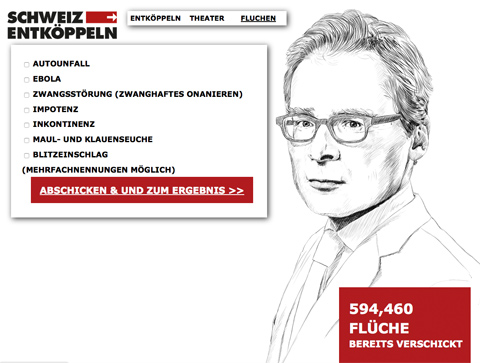
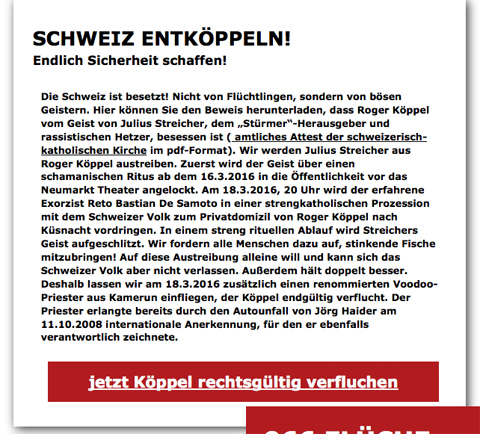
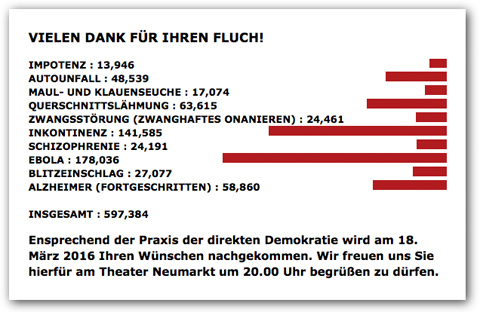
"Schweiz entköppeln" is the name of the campaign that the theater is using to promote the performance "Die grosse Austreibung" (The Great Expulsion) on 18 March. An "experienced exorcist" is to free Weltwoche publisher Roger Köppel from the spirit of Julius Streicher. Streicher is considered to be the most radical anti-Semite of the Third Reich. With his newspaper Der Stürmer, he incited hatred against Jews on a weekly basis with unprecedented fanaticism and in the most primitive manner. The publication invented horror stories such as alleged ritual murders or denounced fellow Jews with their photo and address in order to accuse them of invented crimes. The image of the so-called "Stürmer Jew" spread in the caricatures drawn by Philipp Rupprecht created a stereotypical, repulsive portrayal that has persisted in the anti-Semitic context to this day.

"Besides (sic!) twice is better. That's why we're also flying in a renowned voodoo priest from Cameroon on March 18, 2016 to curse Köppel for good," write those responsible. The priest had already gained international recognition as a result of Jörg Haider's (fatal) car accident, for which he was also responsible.

Bildschirmfoto-2016-03-16-um-20.05.16
Bildschirmfoto-2016-03-15-um-20.34.07
Screenshots Switzerland-entköppeln.ch

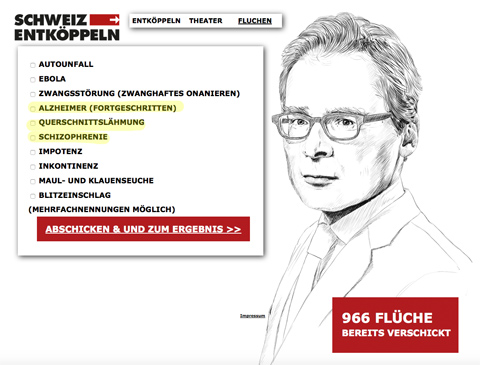
Visitors to the website, inspired by such contempt for Köppel, can then join in the cursing and wish the unloved editor-in-chief a car accident, Ebola or incontinence, for example. Some possibilities such as paraplegia, Alzheimer's or schizophrenia have been removed in the meantime, but still appear in the results. Presumably, these diseases are a little too firmly anchored in society to wish them on someone just because they have a different political opinion. Direct democracy and all that.

Bildschirmfoto-2016-03-15-um-20.21.41
Screenshot 3/15/2016, 8:21 pm

Bildschirmfoto-2016-03-16-um-20.11.29

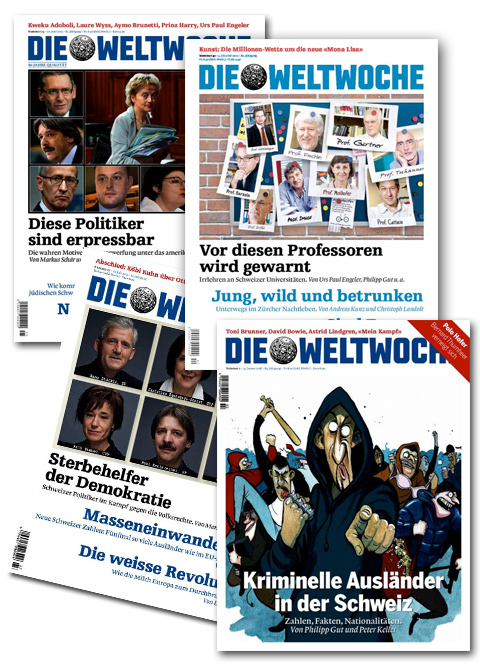
Speaking of different political opinions: according to SDA, it is not only the SVP and FDP in the city of Zurich that are anything but enthusiastic about the campaign, but also the left-wing mayor Corinne Mauch (SP). The campaign crossed the red line, was tasteless and "bad satire", Mauch told the municipal council on Wednesday. She emphasized that sometimes art is also bad. There is really nothing more to add. Even if Köppel can be accused of occasionally cultivating a style that is more reminiscent of the Stürmer than the Coopzeitung or Schweizer Familie, for example with repulsive caricatures of foreigners (Weltwoche front page 2/2016) or public denunciation and defamation ("We warn against these professors"). Whether one should wish someone a serious, often fatal illness for the fun of it is probably something everyone has to decide for themselves. (hae)

Unbenannt-19_30


Leo Burnett: Spring has arrived at Micasa

Spring doesn't officially begin until March 20. At Micasa it's already here - with the new catalog full of living ideas - fresh and lively staged by Leo Burnett.

The spring issue is a premiere at Micasa. From now on, it will be published alongside the autumn catalog at the beginning of each year. And because a cozy home does not necessarily end at the front door, the new catalog also looks outside for the first time: With an integrated supplement for garden and balcony.

Unbenannt-6_126
Unbenannt-7_135

Responsible at MGB / Micasa: Roman Reichelt (Head of Marketing Communications MGB); Christoph Vogler (Head of Communications Specialist Stores); Lukas Vasvary (Head of Communications Micasa); Carine Bernet (Project Manager Communications Micasa); Michel Keller (Division Manager Micasa). Responsible at Leo Burnett: Barbara Hartmann, Anna Leudolph, Vanessa Mermoud (creation), David Fischer (CD), Martin Stulz (ECD); Annick Engeli (consulting); Suzana Kovacevic (art buying); Susan Wittber, Hannes Kälin (realization/production); Michael Gassler (overall responsibility); styling: Natalija Pocuca; photography: Raphael Zubler, Heinz Unger; production: Mel Y Mel; image editing: Felix Schregenberger.


Studio Schoch creates the brand Twin by Delizio

In collaboration with Delica, Studio Schoch is developing the Twin by Delizio brand. It is a closed-loop coffee system for premium coffee and the finest milk-based beverages.

The Twin capsules are now available in Migros and can be obtained both from the Twin machine and with their Nescafe Dolce Gusto machine. Thanks to a special technology, Twin capsules as well as Delizio capsules can be prepared in the Twin machine. Twin is launched under the Delizio brand, which Studio Schoch has been managing since 2012. The brand design looks cheerful and dynamic and is reminiscent of Delizio in its structure. The design is intended to reflect the modularity of the brand and underline the expertise of Delica.

Twin_1
Twin_2
Twin_2_0

Responsible at Studio Schoch: Dominik Schoch (Creative Director), Dominique Ghilardi (Design), Tina Fuchs (Consulting).
 

get_footer();