Digitization changes vacation planning - but not vacations

Digitalization has significantly changed the way the Swiss plan their vacations. While ten years ago they mainly used travel agencies as a source of inspiration, today they turn to their computer or tablet.

However, computerization has hardly changed the vacations themselves, as an analysis by the travel search service Kayak shows. Travelers still prefer to relax, go on sightseeing tours and enjoy good food during their vacations. Together with Poles and Austrians, the Swiss are also particularly sporty on vacation compared to the rest of Europe.

The communication behavior of Swiss tourists is also surprisingly resistant to change. The internet is on the rise. However, only 7 percent of holidaymakers are still regularly active on social networks during their vacation, which will also be a consequence of the still high roaming charges.
However, according to Kayak, this proportion is likely to rise steadily over the next few years. This is because, at 13%, almost twice as many under 35-year-olds post regularly from their vacations than the average.

Vacation reports on social networks

Compared to other Europeans, however, young Swiss people are also among the online grouches during their vacations. Across all age categories, Russians (22%) and Italians (16%) are significantly more digitally active. However, this does not mean that the travel reporting behaviour of the Swiss has not changed as digitalization has progressed.

Almost two thirds of all travelers still prefer to share their experiences verbally and directly from person to person. The postcard also remains surprisingly popular, with 35% of Swiss tourists still using it as a communication channel (2006: 62%).

At the same time, however, there has been a marked increase in personal vacation reports via social networks. Today, 46% of Swiss travelers upload photos and travel reports to their social network profiles during and especially after their vacations. In 2006, this figure was only 5 percent. They still prefer to use their computers for this purpose. However, this is likely to change in the next few years. This is because the smartphone is much more popular than the computer among 18 to 24-year-olds.

Mobile use on the rise

The same development is also foreseeable for travel itself. The majority of travelers still distrust electronic documents or find the applications too complicated. Only 15 percent use mobile online check-in and mobile boarding passes (2006: 3 percent). In contrast, 51 percent check in at home on their computer and print out their boarding pass (2006: 17 percent).

However, this means that digitalization and crowdsourcing - i.e. the outsourcing of activities to the customer - has become the norm at check-in. Today, only 23% of Swiss travelers check in at the airport itself. In 2006, this figure was almost three times as high at 66 percent. (SDA)
 

X-Change with Pierin Vincenz

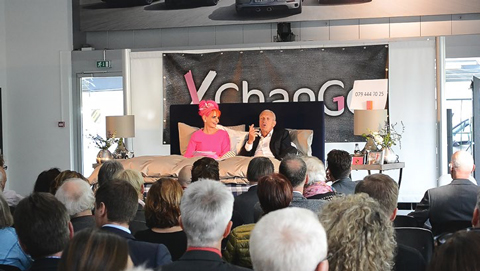
On May 19, it was that time again. For the fifth time, Cordelia Hagi welcomed a distinguished guest to the Porsche Center Bern as part of the Xchange event series.

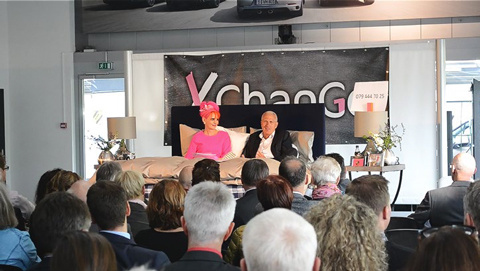
This time, the former head of Raiffeisen Bank, now Chairman of the Board of Directors of Helvetia Group Switzerland, Pierin Vincenz, answered her questions for an hour-long interview. In front of around 150 invited guests, Hagi asked the manager about creativity in the area of complementary consulting. The first signs of creativity could already be seen in the unusual setting: the entire interview took place in a Hästens box-spring bed.

In this intimate setting, Pierin Vincenz gave Cordelia an insight into his day-to-day business and explained why large companies could no longer exist without integrated creativity. The shift in values in corporate culture was also discussed, with Pierin Vincenz particularly emphasizing the importance of future links to generations Y and Z. Learning from crises and growing with them was something that the banking business and the not always easy way of dealing with the media taught him. Pierin honestly admitted that innovation and creativity are not required in all areas of the working world, as there are certain positions in the banking and insurance business in particular that simply demand a certain sobriety.

XChanGe_1
The interview was rounded off with questions from the audience, which were asked interactively via SMS.

XChanGe_2
 

Notch Interactive: Always the target in sight

To kick off the cycling season, Search.ch launched its new «Bike Route Planner» feature. Notch Interactive developed the campaign.

With the "Veloroutenplaner", bike tours can be easily planned using official bike routes, elevation profiles and current weather data. In order to make the practical tool known to cyclists, Search.ch commissioned the Zurich-based digital creative agency Notch Interactive with the conception and implementation of an attention-grabbing campaign.

The bike route planner on Velo.search.ch contains official bike routes from Veloland Schweiz, elevation profiles and current weather data along the route. Easy or challenging route? Family outing or romantic lake tour? Over hill and dale or without detours from A to B? With the bike route planner, cyclists can tailor their personal route entirely to their needs. But the most important thing is the destination. Notch Interactive dramatizes this in two different subjects with oversized "destination objects" that the cyclist always has in view on his route.

search1

The campaign for the bike route planner also serves as a harbinger and supplement to the Tour de Suisse 2016 and consists of print and digital posters, display banners, print ads, and social media advertising on Facebook, Instagram, YouTube, and Twitter. The two subjects can be seen throughout Switzerland since the beginning of this week and will be on air until the end of the Tour de Suisse in mid-June 2016.

search2

Responsible at Search.ch: Florence Studer (Communications Manager), Jasna Smojvir (Brand Management), Christian Nübel (Art Director). Photographer: Hans Stark. Responsible agency: Notch Interactive.


Tell Museum shines in new splendor

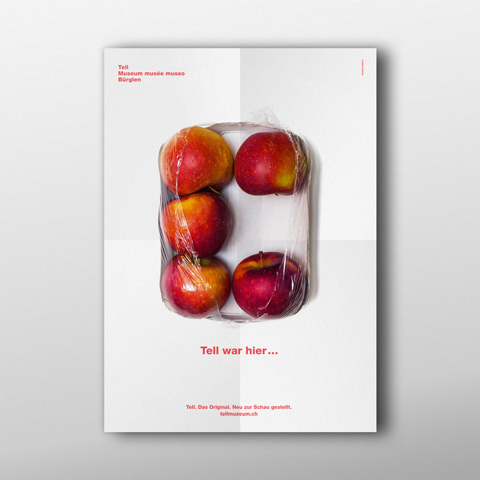
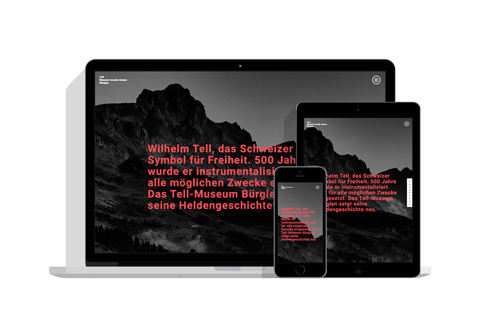
The design agency Herger Imholz oversaw the entire curatorial concept, repositioning, and redesign—including a website with a fluid design—for the Swiss brand Tellfrisch.

For the new edition of the historical narrative of William Tell, the design agency Herger Imholz has created a concise visual Performance for the Tell Museum in Bürglen. The focus is on the overall responsibility and development of the curatorial concept. With spectacular interactive installations in space, the most comprehensive collection about William Tell is staged in a surprising way.

tell1

At the same time, fresh life is breathed into the Tell Museum Bürglen brand by means of repositioning. The corporate identity corresponds to the desired rough positioning. In addition to the new logo with a concise color scheme, stationery, documentation, advertising materials (postcards, ads, posters) and the complete signaling were designed. For the digital communication, the website was implemented as a OnePager in Responsive Design.

tell2
tell3

Responsible at Tell-Museumsgesellschaft Uri: Paul Arnold (President Building and Exhibition Commission), Stefan Aschwanden (historical preparation and curatorial advice), Erich Herger (editing). Responsible at Herger Imholz: Yves Herger (overall responsibility and development curatorial concept, repositioning and redesign), Jasmin Zurfluh (coordination, graphics and screen design).


Swiss Pledge: Advertising pledge with good results

Swiss Pledge companies are keeping their advertising promises to children under the age of 12. According to an evaluation by the independent market research institute Media Focus, the members once again achieved good results in 2015.

Swiss Pledge is a self-regulation for responsible advertising behavior towards children under 12. Behind the voluntary commitment are 13 leading food and beverage producers, catering and retail companies. Media Focus gives the Swiss Pledge companies high marks for the past year.

In 2015, the independent market research company Media Focus reviewed advertising placements by Swiss Pledge companies on TV, in children's magazines and on brand websites of member companies: 99 percent of the advertising spots on Swiss stations, program windows and private stations placed by Swiss Pledge companies last year met the criteria of the voluntary commitment. TV advertising accounted for 59 percent of Swiss Pledge companies' advertising spend in 2015. Measured against the total TV gross advertising spend of the food and beverage industry in Switzerland, this corresponds to 34 percent.

Swiss Pledge companies also achieved good results for advertising in children's magazines and on their brand websites. 93 percent of the children's magazines checked were compliant, according to Media Focus. For brand websites, 90 percent met the Swiss Pledge criteria.

The member companies undertake to comply with the following minimum criteria:
⇒ Restricted product advertising to children under 12. Only products that meet defined nutritional criteria* may be advertised.
⇒ No product-specific communication to elementary school (children under 12). Unless specifically requested or approved by school administration for educational purposes.
"Advertising to children under 12" means advertising to a target audience with a minimum of 35 percent children under 12.

Swiss Pledge was founded in 2010 by food and beverage producers. Today, 13 companies are committed to responsible advertising behavior towards children under 12. They are: Coca-Cola, Coop, Danone, Intersnack, Kellogg, Mondelēz, Mars, McDonaldʼs, Nestlé, PepsiCo, Rivella, Unilever and Zweifel Pomy-Chips. The initiative is open to other market participants who commit to complying with the minimum criteria mentioned.

The content of the Swiss Pledge is based on the European voluntary commitment EU Pledge.
 

KPMG study: "Internet of Things increases the risk of cybercrime in Switzerland"

Swiss companies underestimate the cyber risks associated with the Internet of Things. They still do not collaborate enough in the area of digital security and have an inadequate understanding of the threat landscape.

A significant number of Swiss companies are at risk of being left behind in this area and risk jeopardizing the continuation of their business activities. This is shown by the current KPMG study "Clarity on Cyber Security".

Digitalization continues to advance at a tremendous pace. In addition to business opportunities, this development also harbors major risks for the Swiss economy: over half (54%) of all companies surveyed have been the victim of a cyberattack in the last 12 months. For 44% of the companies affected, the attacks caused serious disruption to business processes and a quarter feared that they had suffered reputational damage as a result of the attacks. The most common methods used by cyber criminals were malware, phishing emails and social engineering. Victims are manipulated by means of false identities, by pretending to be social networks or by supposed authorities.

"The survey of 60 Swiss companies from various sectors shows that the topic of cyber security is still approached very differently in Switzerland: Some companies have an up-to-date approach and are trying to adapt to the constantly changing threat situation. Others are in danger of completely losing touch and thus jeopardizing the basis of their business activities in the medium term," says Matthias Bossardt, Head of Cyber Security at KPMG Switzerland, summarizing the results.

Little experience with the Internet of Things

The fourth industrial revolution and the ever-increasing networking of different devices also brings with it an immense security risk. This is because networked technology landscapes offer significantly more attack surfaces: Through the Internet of Things, cyberattacks can cause tangible damage in the offline world. However, the survey shows that many Swiss companies are paying far too little attention to the security aspects of Industry 4.0. More than half of the respondents (53%) stated that they had no overview of their risk situation in connection with the Internet of Things, which makes effective protection against cyberattacks impossible.

Internal risks and the human factor

It is not only external attacks that can cause serious damage; internal sources of danger should not be underestimated either. However, a large majority of the company representatives surveyed (80%) are dissatisfied with the company's internal handling of these insider threats: 60 percent do not have sufficient monitoring of suspicious internal activities, 51 percent lack appropriate data evaluation and 49 percent complain about a lack of multidisciplinary coordination. However, a multidisciplinary approach is essential when it comes to cyber security, as limiting internal and external security measures to technology alone is not enough: "Many cyber criminals take advantage of the human factor to circumvent technical defense barriers. For this reason, companies will increasingly have to place softer factors, such as corporate culture, at the center of their security considerations in the future and not just consider the technology component," says Gerben Schreurs, Partner Forensics at KPMG Switzerland.

Intensified cooperation is necessary

The desire for increased collaboration was expressed by 95% of all companies in last year's survey. In the current survey, 66% stated that they had actually increased their cooperation in the area of cyber security in the last 12 months. These alliances most frequently involve sharing relevant information on the threat situation (88%), exchanging experiences (83%) or joint prevention (78%). "In an increasingly networked and complex world, it makes no sense for companies to isolate themselves in the fight against cybercrime. Meaningful cooperation should be expanded wherever possible," comments Matthias Bossardt on the results of the study.

Progress in dealing with third parties

While 59% of companies were still unsure in 2015 whether and how their business partners, service providers and suppliers defend themselves against cyber attacks, 72% of respondents now explicitly require minimum security standards in their third-party contracts. The proportion of companies that fear an increased cyber risk from IT outsourcing also fell from 15% to 8 percent. However, the financial sector is more skeptical when it comes to the security risks associated with outsourcing and collaboration with partners. Many companies are questioning whether the trust they place in third parties is really justified. In the financial sector, for example, the proportion of respondents who fear less transparency with regard to cyber risks as a result of outsourcing increased from 25% to 33%.

Methodology

The "Clarity on Cyber Security" study by KPMG Switzerland is based on a combination of qualitative individual interviews and an online survey and covers around 60 companies. The individual interviews were conducted with C-level partners (CEO, COO, CIO, CMO) from various industries.


Maxomedia repositions Bern daycare centers

In the agency pitch, Maxomedia won the contract to reposition the City of Bern’s daycare centers and after-school care programs and was subsequently commissioned to create the new brand identity for the municipal facilities.

The introduction of childcare vouchers in January 2014 has significantly changed the daycare landscape in the city of Bern. Since then, it is no longer the daycare centres that are subsidized, but the fathers and mothers. As parents can now choose the right company themselves, the city's daycare centers needed a communication concept that shows their strengths and solidarity. The new image strengthens the local connection and positions the city of Bern as a friendly sender: Thanks to the broad coverage, every family can find a municipal daycare center in their immediate vicinity. In addition, the high quality standards ensure an atmosphere of safety, security and reliability. Children feel at home in the daycare centers of the city of Bern.

s_mxm_stadtbern_kita_CD_0

This closeness and familiarity were the basis for the new look. Therefore, no scenes were staged for the imagery, but natural and real moments from daycare and daycare life were captured. A strong recognition symbol was also designed. This shows a playful use of the Bernese coat of arms colors and two footprints, because the daycare centers and daycares accompany the children on their way to adulthood and leave their mark. The advantages and values of the municipal companies are also communicated through the new naming, the claim and the revised, user-friendly website.


JLS Digital conquers Eastern Switzerland for St. Galler Kantonalbank

In the spring of 2016, JLS installed digital displays for point-of-sale communication in all 38 branches of St. Galler Kantonalbank. In total, more than 85 screens and display stands were installed indoors and outdoors within two months.

With large communication points in the customer zones, meaningful and emotional content is conveyed. Thanks to dynamic content and an animated 3D logo element, JLS Digital creates a recognition value and significantly increases the impact of the communication.
 

Four awards presented to seven outstanding journalists

This year's Zurich Journalism Prize goes to Felix E. Müller, Paula Scheidt, Markus Häffliger, and Thomas Preusse, as well as the trio of authors Federico Franchini, Hannes Grassegger, and Daniel Puntas Bernet.

Felix E. Müller, Editor-in-Chief of NZZ am Sonntag, receives the 2016 Zurich Journalism Prize for his complete works. Paula Scheidt (Das Magazin) is honored for her article entitled "Swiss Family".Markus Häfliger and Thomas Preusse receive the prize for the series of articles published in the NZZ on the "Kazakhstan affair". The trio of authors Federico Franchini, Hannes Grassegger and Daniel Puntas Bernet were also honored for their research on "Unicef and Blood Gold" published in "Reportagen".

IMG_3659-(1)
flg

This year, the jury of the Zurich Journalism Prize, headed by Hannes Britschgi, honored three entries that stood out for their linguistic quality, form and impact as well as the underlying research work. The report on the journey of a refugee from Afghanistan to the Aargau province stood out from the numerous submissions, as did the research by a team of authors who looked into the connection between a philanthropic industrialist and African blood gold. The award also went to the work of a reporter from the Federal Parliament and a data journalist, whose series of articles cast a harsh light on the political scene in Bern.

IMG_3665
In her laudatory speech, jury member Susan Boos (Woz) praised the work of Federal Parliament editor Markus Häfliger and data journalist Thomas Preusse (NZZ) on the Kazakhstan affair as a "first-class lesson". "Not that we didn't know. But never before has anyone traced so precisely how maliciously certain lobbyists manipulate", said Boos.

IMG_3674
Journalist Paula Scheidt brought Afghan refugee Ezmari, about whose life with his host parents she wrote her excellent report "Swiss Family" (Das Magazin), on stage with her.

IMG_3682
Daniel Puntas Bernet, Federico Franchini and Hannes Grassegger revealed in their article "Unicef and blood gold" (Reportages) how the German head of Unicef was involved in business with African blood gold. Laudator Hansi Voigt described the authors' "outstanding work" as "extremely precise journalistic forensics".

The jury honored Felix E. Müller, the founder and editor-in-chief of NZZ am Sonntag, with the prize for his complete works. Jury president Britschgi paid tribute to Müller as a "passionate journalist and recognized editorialist" whose decades of journalistic work have helped shape journalism in Switzerland.

IMG_3692
Felix E. Müller, winner of the prize for his complete works, is the "father" of the NZZ am Sonntag. And of the NZZ lifestyle supplement Z, which he was once given as a test object for the Sunday edition - and which was finally added to the NZZ after consistently being in the black. He wrote his first article for the NZZ in 1997 - an eyewitness account of the attack in Luxor, which he survived with his wife.

The award ceremony, which took place on Wednesday, May 25, 2016, at Kaufleuten Zurich, was attended by numerous prominent guests from the worlds of business, media and politics. The Zurich Journalism Prize, one of the most prestigious awards for journalism in Switzerland, has been awarded since 1981. Each of the four prizes awarded is endowed with CHF 10,000. Outstanding and groundbreaking work and complete works are honored, regardless of whether they are distributed via a newspaper, magazine or online channel. The award is made possible thanks to contributions and donations from publishers, companies and institutions. The foundation would like to thank Migros, Google and the Zürcher Presseverein for their support. (hae/pd)

Admire: From 0 to bus in 10 seconds

Admire was awarded the contract by Immoveris to create a campaign promoting the new «Sommerrain» development in Ostermundigen near Bern.

The aim of the campaign is to draw the attention of the five defined target groups to the existing rental offer of this superstructure in an unconventional and creative way. For this purpose, the agency created five target group-specific subjects. These will be used in carefully selected online and offline media such as the municipal bus network, the Wankdorf stadium, Facebook, as well as by means of programmatic advertising and via the Google display network. The campaign will run until September 2016, and the initial response and available results show a high level of popularity among the relevant target group, according to the statement.

160519_Medienmitteilung_1
160519_Medienmitteilung_2
160519_Medienmitteilung_3
160519_Medienmitteilung_4
160519_Medienmitteilung_5

Responsible at Immoveris: Anita Horner (Head Residential Marketing). Responsible at Admire: Oliver Hofer (project management, concept, text), Melanie Veloso (layout design) & Jürg Dummermuth (renderings).

Roman Hirsbrunner new President of Leading Swiss Agencies

A change at the helm of the Association of Leading Swiss Communications Agencies: Geri Aebi, board member and co-owner of the Wirz Group, is handing over the presidency to Roman Hirsbrunner, CEO and co-owner of Jung von Matt/Limmat, as planned after two years.

The members of the Leading Swiss Agencies (LSA) industry association elected Roman Hirsbrunner as their new president at their 81st general meeting. The 42-year-old CEO of Jung von Matt/Limmat succeeds Geri Aebi, who has led the association of leading communications agencies for the past two years. The LSA reappoints the presidium every two years.

"I am proud to take over the presidency of the Leading Swiss Agencies association and look forward to representing its interests in the future. The communications industry is undergoing extraordinary change, which will present us with a number of challenges to overcome in the coming years," says Roman Hirsbrunner after his election.

The new president told members that he wants to continue to push the opening strategy launched a year ago to open the association to all leading communications agencies and to take the leadership aspirations of the association and its members in the communications industry to a new level. "The biggest challenge is to cope with the growing complexity in the communications industry. Leading Swiss Agenciesis challenged more than ever to provide leadership and guidance to its members," said Hirsbrunner.

As the current president Geri Aebi explained in his opening speech to the general meeting, Leading Swiss Agencies can look back on a challenging and eventful year. The demands on agencies continue to increase, especially in the digitally oriented communication tasks. Added to this are technological developments, the complexity of channels, and the short-term nature of communication tasks.

Change in the Executive Board

It was decided to reduce the size of the board in order to make the association more powerful. The committee is reduced from twelve to eight members. Geri Aebi, Frank Bodin, Michael Kamm, Andy Stäheli, Manfred Strobl and Maurizio Rugghia resigned from the board after many years of dedicated service. Newly elected are Beat Krebs, CEO/Chairman ZenithOptimedia as representative of the media agencies and Matthias Adolf, Equipe as representative of the digital agencies.
 

Switzerland buys price-consciously - demands for sustainability increase with age

In Switzerland, price is the primary factor influencing purchasing decisions. Interest in sustainability and fair production conditions increases with age and personal budget. This is shown by the market research study «Most Trusted Brands.».

The study was commissioned by Reader's Digest. Consumers' shopping behavior in Switzerland was also surveyed. The majority of the Swiss population pay attention to price first and foremost when shopping (57%), in French-speaking Switzerland the figure is as high as 68%. Almost one in two people attach importance to the fact that a product is produced fairly and humanely; the same applies to products from regional production (both 48%). From the age of 60, the interest in fair production conditions (57%) and regionality of the goods (59%) then comes to the fore. A short transportation route also has a positive influence on the purchasing decisions of survey participants with an income of CHF 8,000 or more (56%). In contrast, around a third of 18 to 29-year-olds (31%) do not care where the product is made.

RD-MTB_FAIR-EINKAUFEN
RD-MTB_REGIONAL-EINKAUFEN

Brand loyalty - a question of price? Not necessarily

At first glance, brand loyalty appears to be a question of price: 54% of survey participants find it unnecessary to spend more money on a branded product if there is a cheaper alternative. Nevertheless, around 57% of the men and women who responded admitted that they only buy certain products from a specific brand. These statements underline the importance of the survey results on brand trust communicated by Reader's Digest back in March: Swiss consumers remain loyal to their favorite brands even in turbulent times.

New brands have a hard time

30% of all survey participants opt for branded goods when shopping because they expect them to be of high quality. This view is again held primarily by the over-60s (38%) and people in the highest income bracket (37%). This expectation also appears to be much more widespread in German-speaking Switzerland (33% of respondents) than in French-speaking Switzerland (20%). In French-speaking Switzerland, the need for exclusivity is higher: 28% of French-speaking respondents would prefer a high-quality product from a lesser-known manufacturer in order to own something special (German-speaking Switzerland: 17%). Products from new brands, on the other hand, have a hard time in both parts of the country and across all age groups. Only 16% of all survey participants are interested in them.

RD-MTB_MARKEN-QUALITAT
RD-MTB_MARKEN-EXKLUSIVITAT
Graphics: Most Trusted Brands 2016 by Reader's Digest

To the "Most Trusted Brands" study by Reader's Digest

"Most Trusted Brands" is an independent study commissioned by Reader's Digest and has been measuring the brand trust of consumers in Switzerland every year since 2001. It is one of the most established and largest consumer studies and is recognized as a brand monitor. The approach of asking the brand question in an unsupported manner, i.e. without any brand specifications, remains unique. This year's study was conducted by the market research institute Dialego. This year, participants were also asked about their consumer attitudes and brand awareness. Around 1600 people evaluated statements on production conditions, purchase criteria and their subjective brand perception.


get_footer();