Working on the smartphone: In Switzerland, two-thirds do business during their free time
More and more people in Switzerland are working while they have time off: 68 percent say they use their smartphones to handle work-related matters during their free time. At the same time, 84 percent use their devices for personal matters during work hours.


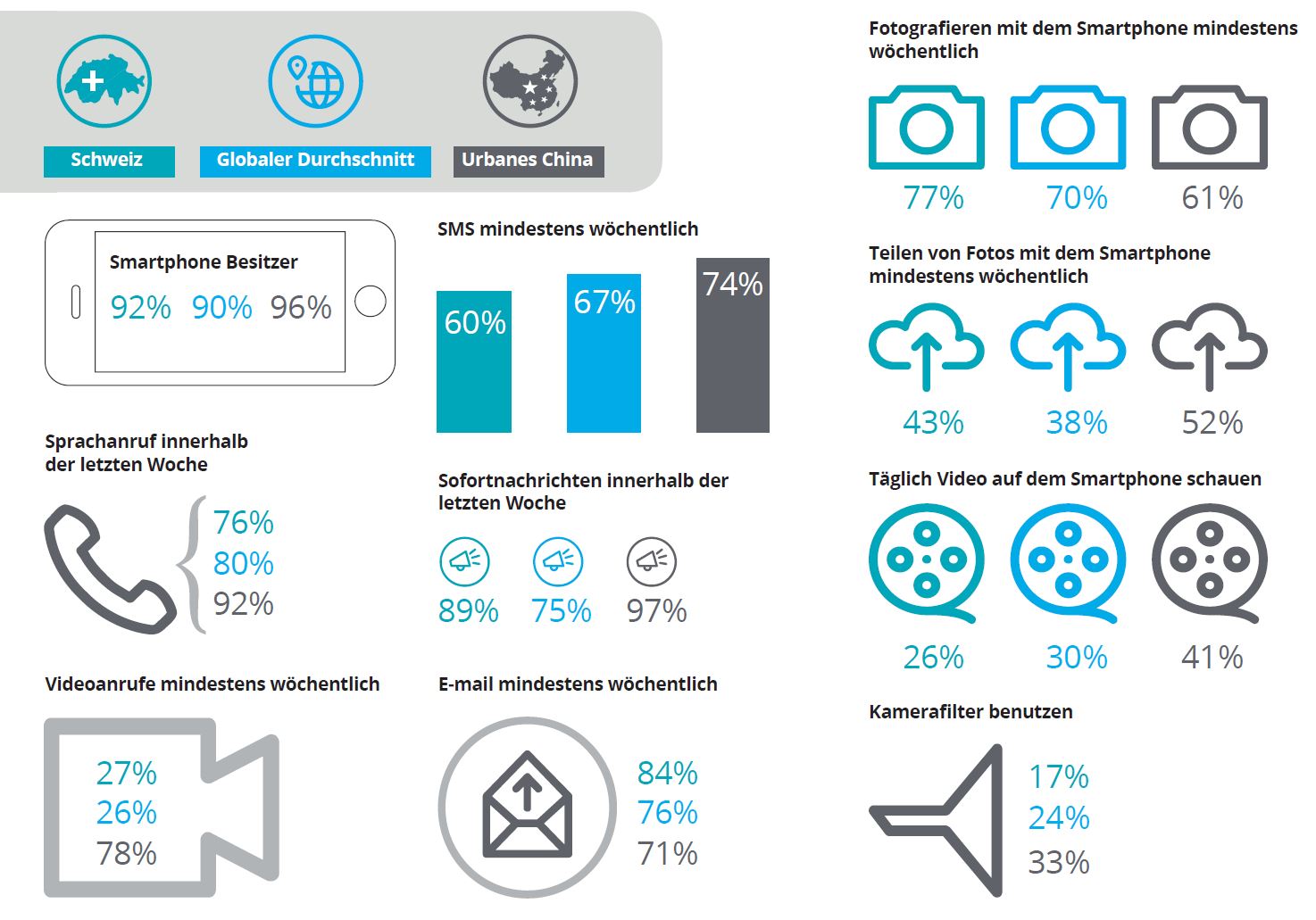
In Switzerland, 92 percent own a smartphone and 97 percent of them use it every day, not least for work. These were the findings of a survey of around 1,000 consumers in Switzerland and a total of 54,150 people from 34 other industrialized and emerging countries for the Deloitte Global Mobile Consumer Survey.
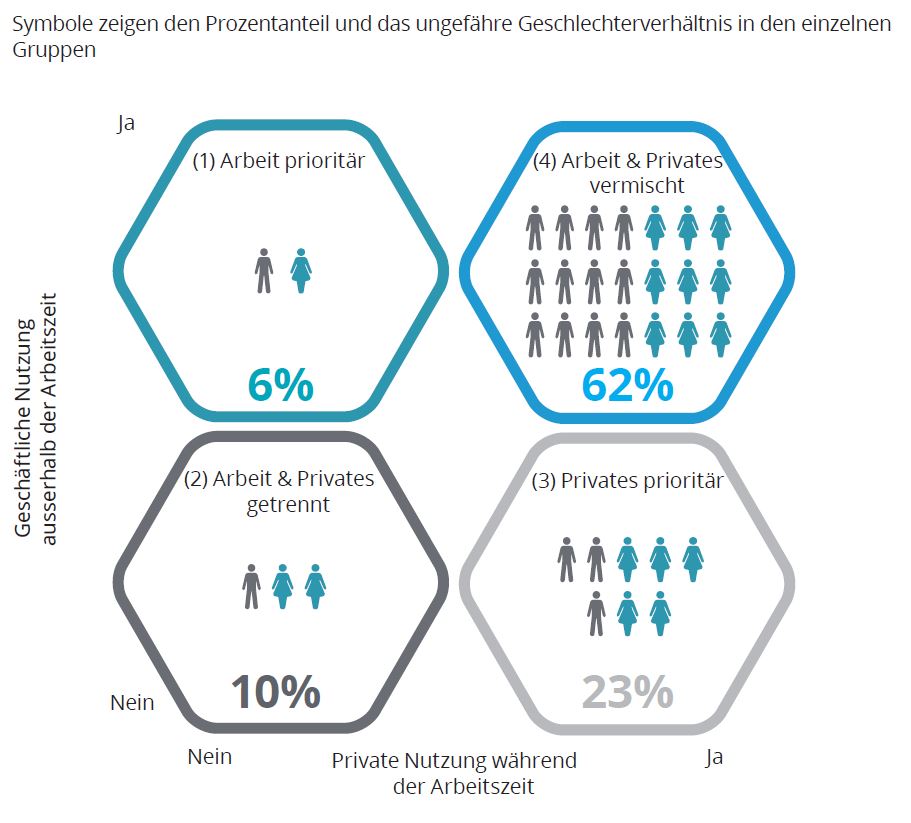
Four groups can be formed from the responses of all working smartphone owners to the questions on the professional and private use of their devices. The smallest group, at six percent, is made up of those who use their smartphone for work in their free time but never do private things during working hours. The second most common group (10%) is made up of people who continue to keep work and private life strictly separate. The majority of this group is female (61%) and tends to be older.
Almost four times as large as the first group is the group of those who spend working time on private matters but never free time on business (23%). This group also includes a majority of women. Most of them only go on their social media profiles or exchange private messages during working hours from time to time. However, a good third do so frequently or very frequently. The vast majority of employees in Switzerland (62%) mix work and leisure on their cell phones in both directions; men are in the majority here (58%).
Similar use private and business
The top business applications are email (48%), phone (44%), calendar (36%) and instant messaging (35%). Barely ten percent of respondents use their smartphones to complete administrative processes such as expense tracking, scheduling work assignments, billing hours or project management. "There is great potential to increase efficiency in the greater use of smartphones for administrative processes - companies should take advantage of this to save costs and stay competitive. It also relieves employees of tedious paperwork," says Myriam Denk, Partner and Head of Future of Work at Deloitte Switzerland.
With a simple user interface on the smartphone, it is possible to integrate and digitize process steps that are separate and time-consuming from one another. For example, the personal trainer can not only manage her client appointments more easily or invoice regularly in an automated manner, but also continuously measure the vital data of her clients and send progress graphically processed directly after the training - without having to return to the office.
Project instructions on work surface
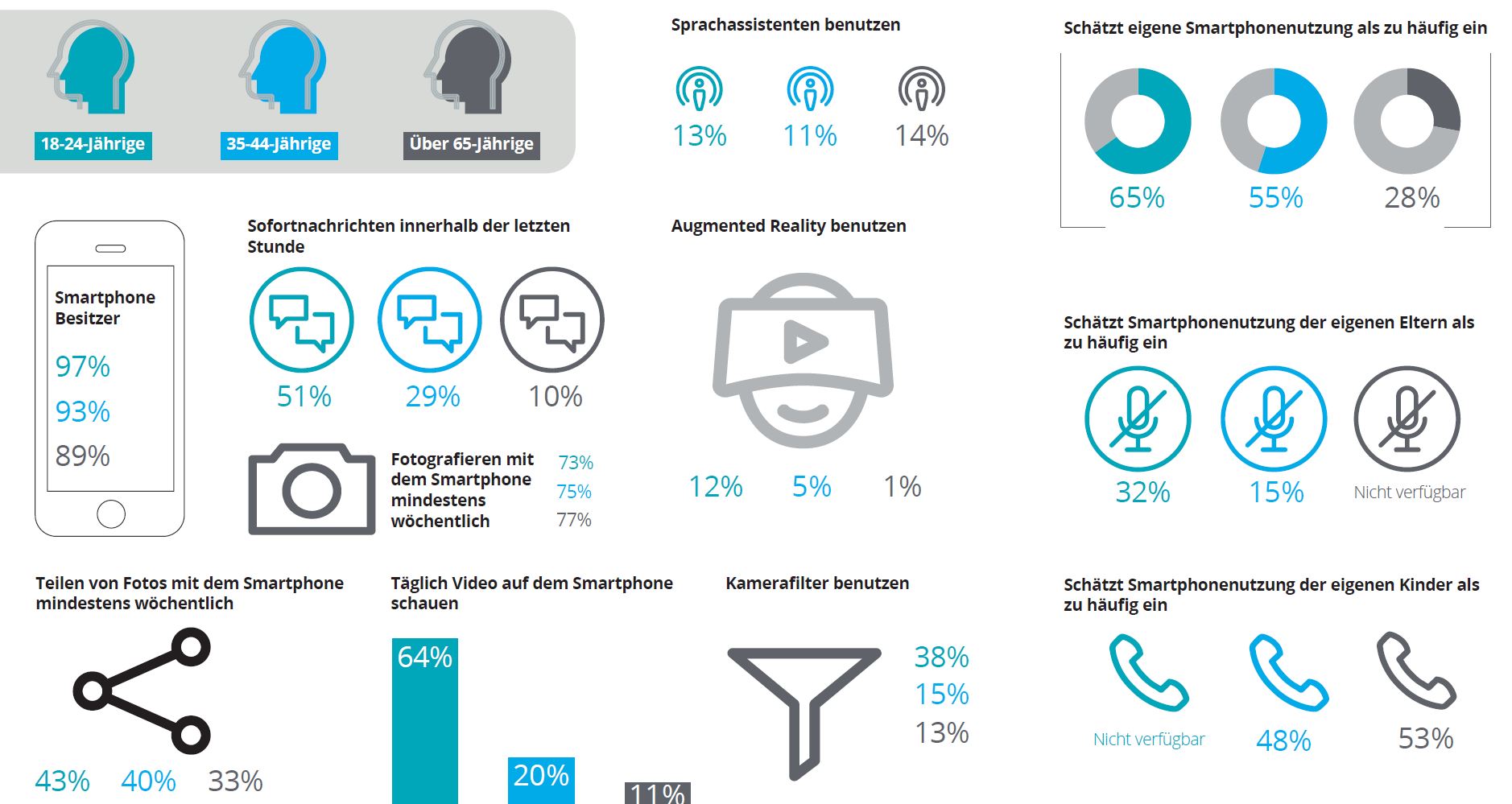
Further, by integrating new technologies such as augmented reality (AR), the smartphone can also transform the way we work. AR can be applied in various sectors, such as education, medicine or industry. For example, an assembler then projects instructions or information directly over his work surface, allowing him to work more precisely and quickly. During maintenance work, material weak points are highlighted or complex work steps are displayed step by step directly on the device.
"The world of work is increasingly geared toward flexibilization, collaboration and connectivity. The new digital technologies are placing the relationship between employees and the company on a completely new footing; they are also changing the workplace and the tasks themselves. Mobile devices and their flexible, self-determined use are an essential element in realizing the new world of work. However, companies and employees still have a lot of catching up to do," says Myriam Denk. For example, 42 percent of respondents to the Deloitte study on the future of the workplace said they were not provided with any mobile digital devices by their employer.
Data security and data protection
The increased use of digital mobile technology also means that investments must be made in cyber security. IT departments and external IT service providers will have to deal accordingly more with the new possibilities and potential vulnerabilities of mobile digital systems.
Networked databases and real-time information sharing bring additional challenges: Incorrect entries could spread quickly or unauthorized persons could gain access to data and systems. In addition to data security, data protection must also be ensured and it must be precisely defined and checked which customer information may be used how and for what purpose.
Keeping an eye on health
In addition, the individual risks of further flexibilization of work should not be forgotten. In the survey, 66 percent said that they are distracted from work by the private use of their smartphones, and for 19 percent this is even often or very often the case. In addition, a lack of rest periods and constant availability can have a negative impact on employees' health. In the workplace, too, it is therefore important to use smartphones consciously and responsibly. Employers must sensitize their employees to this and, if necessary, issue rules.
"Many Swiss companies have still used digitization too little in recent years to increase productivity, as our study on digital innovation capability has shown. Mobile solutions can make a decisive contribution to leveraging the benefits of digitization more strongly in people's working environment, thereby increasing competitiveness and productivity and securing jobs in Switzerland," explains Bjørnar Jensen, Managing Partner Consulting at Deloitte Switzerland.