Wrages agency for the promotion of creative forces
After 20 years at international advertising agencies, Folker Wrage plans to start his own consulting firm. His company, Wrage/Antwort, aims to help businesses find creative solutions to their business challenges.


In recent years, his work has largely been characterized by change management projects. Most recently, Folker Wrage spent just over a year in Istanbul until August 2013 bringing McCann Erickson there back "from almost zero to 100". Wrage's answers to change were also in demand when McCann Erickson in Zurich wanted to reposition itself better at the end of 2010. Its change management was already well underway when the headquarters in Frankfurt had to report the loss of the global budget for Opel. In Zurich, that was half of the business. As a result, the Swiss branch was closed in spring 2012. "A wrong decision," as Folker Wrage is still convinced today.
For him, it nevertheless turned out to be a good coincidence. "If it hadn't been for my subsequent transfer from Zurich to Istanbul, I doubt I would have taken up my studies again. While working for the creative minds on the Bosporus, Folker Wrage incorporated his experiences into a case at the renowned Berlin School of Creative Leadership and earned his MBA. The topic of his master's thesis was "U-Turn - How To Turn An Agency Around In 12 Months.
When the Turks were able to function independently again, the courage to become independent was also the next logical development for Folker Wrage.
His start-up Wrage/Antwort has been operating out of Zurich since December 2013 and offers companies various consulting formats. One of the core offerings is the combination of interim and change management with the aim of using management transition periods to tackle important changes in the company. However, involvement in the work process is also sought for shorter analysis mandates. "My basis for this is the conviction that after many rounds of cost savings and efficiency improvements, companies will increasingly need to better utilize and promote creative potential within the company in order to stand out from the competition. This applies not only to communications and product development, but also to all other areas of the company."
Discover creative potential
The offer is primarily aimed at companies in the creative industry, but is explicitly not limited to them. Wrage is currently in talks with his previous employer McCann and already has various projects for the Swiss branch of an international brewery in his client portfolio.
Wrage could also find possible answers if, for example, an agency or a company is weakening because the creativity that exists in that company cannot be properly transferred into the product. "We process too much and don't get anywhere with our creativity," would then be the complaint. Also, according to Wrage's assessment, there are still many agencies that are not yet able to bring the digital challenge optimally - organizationally and strategically - into their more classically oriented set-up. "That is then a question of structures and workflows. My contribution can be strategic or tactical - and always very close to the creative work," explains Wrage, who can look back on more than 20 years of experience in various agencies.
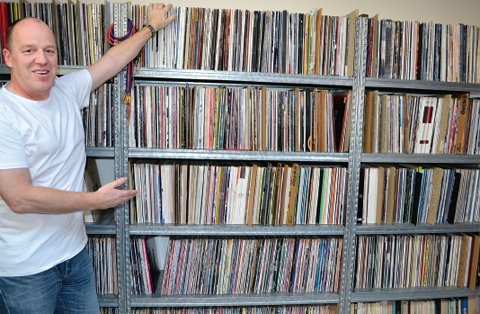
Folker Wrage began by studying psychology. Around that, he also worked as a flight attendant for five years. "But that's not a job you want to do your whole life. So the question came: how can I challenge my mind a little more?" Wrage found the answer in writing. The music connoisseur, who still regularly DJs in his spare time, became editor-in-chief for a Frankfurt scene paper. There, he mainly wrote record reviews. And because he knew a creative director at Ogilvy One, the cultural journalist was occasionally allowed to take on small jobs as a freelance copywriter. Because he liked his work, Wrage was eventually asked if he would like to go into advertising full-time. So in just ten years, the DJ progressed from junior copywriter to CD to executive creative director at Ogilvy One.
In 2003, Wrage moved to Leo Burnett in Frankfurt as CD. In 2006, the same responsibility followed in the same city at Saatchi & Saatchi. Finally, in 2008, the call to Zurich followed. At Publicis Dialog, the task of integrating Fisch. Meier.Direct in the most creative way possible.
After the fire drill at McCann Zurich, as mentioned, the troubleshooter who was no longer needed in Zurich was offered an even more difficult task within the network in Istanbul as a replacement. "I didn't know exactly what to expect there. But after a full day of talks at the agency and a Turkish dinner with the new CEO, I looked him in the eye and knew: a challenge awaits here - but also an opportunity." Three weeks later, Folker Wrage has moved to Istanbul.
McCann, at the crossroads between Europe and the Orient, "was de facto down, motivationally and business-wise." Through no fault of its own, it had lost two international clients. As a result, many employees had to be laid off. The chief creative officers left of their own accord. The chief marketing officer had also quit. "It was a shambles. But I made an effort to find the people I could motivate once again among those who remained to make a change. Then we made decisions very quickly, which on the one hand affected the structures, because the leadership was completely gone. On the other hand, I also wanted a new positioning for the agency. It quickly became clear to me that we had to create a digital offering that was creatively visible and of high quality. Otherwise, we wouldn't have a chance in the market and wouldn't be able to differentiate ourselves."
After just three months, things were back on track: the change manager was able to turn the creation "that stood there without any pride or self-confidence" into an "active, modern and cheerfully working department" again. There was also a bit of luck involved. "We won a big customer very quickly. As a result, the trust towards me also grew very quickly."
Development in different directions
In the fall of 2013, Folker Wrage returned from Istanbul to his stylishly converted farmhouse near Dübendorf. Here he was able to type the last lines for his master's thesis at the Berlin School of Creative Leadership into the computer in peace.
The idea for such additional training, however, had been dormant in his mind long before Istanbul. "At some point, when you've risen to senior positions in the creative agencies of this world, you have two options: You think it's great and you're happy with what you've achieved. Or - and that was the case with me - you want to take on more responsibility than just the creative department." Most agencies today are still organized in such a way "that even a CCO is still seen as a CD and less as a co-managing director."
But Folker Wrage was far too interested in also being able to lead and shape a company than being reduced to this classic CD position. "With an MBA, this is more recognized." With his international past in several agencies and now still this degree, Folker Wrage, as a management consultant and coach, expects that, at least in a first phase, mainly advertising agencies will be interested in his services. However, the "answers" should not only apply to pure advertisers, but to all companies where creative solutions need to be sought. "Many companies today have been trimmed and shrunk down far too much to be efficient: How are they going to improve? They're under extreme pressure. People are overworked and hardly motivated. In short, there's hardly any time left for an extra round. In such a case, I see it as my job to help this company regain a more creative view of how to work and how to be structured as well." Folker Wrage is convinced that there is more creative potential in every company than the company suspects "and I want to harness that." In which way and in which areas does not have to be defined at all in advance. "That comes out automatically in a conversation with the customer. They realize they could do more and then we go at it together and see where and how. There are always models."
ith his background in Germany, Wrage has naturally also thought about starting his own business somewhere other than Zurich. He wants to work internationally and a lengthy article "Shut Up And Play Your Guitar - Why Creativity Needs To Take Over" has just been published by him in the American magazine Forbes.
But the German feels very much at home in Switzerland, even after the decision of the last vote. "Switzerland is an international place. I can also work well from here for Germany and Eastern Europe." What's more: his wife Constantine, who "looked after" their shared apartment in Dübendorf during Wrage's Turkey stint, is also in the middle of numerous jobs here. As a freelance producer, she works for various advertising agencies and has just produced the new spot for Credit Suisse with Roger Federer and "Bonviva. "A huge box," as her husband proudly reveals. He also occasionally consults Constantine on the organization of his projects. But a joint agency is not a goal - at least for the time being.
Wrage/Answer is built primarily around the experience of its creative head and will work with an "exciting and diverse network." Wrage also relies on this network to communicate his new services. He has also developed it as a jury member at various competitions such as Cannes Lions, New York Festival, John Caples Award, Golden Drum, and as a speaker at various summits. This March, Wrage is speaking at a world printing industry congress on change management. In May, he'll be in Prague at a workshop on "How can I make my company more creative?" The agency founder is convinced, "By being present like this and communicating content and ideas, building my business develops all by itself."
When asked whether Wrage/Answer might even lead in the direction of a "real" advertising agency one day, the versatile consultant would like to "leave all options open. Many people in Zurich with whom he has worked would like to work with Folker Wrage in an agency again. But: "What will become of Wrage/Answer, I like to leave open. I think it's more exciting to put something together now that I'm convinced of. And then to see how people react to it. I compare this to prototyping, which is actually more familiar from product design. That's one of the principles I started with: with a business model that keeps adapting as the company evolves and goes through different phases and stages of change."
Andreas Panzeri