
The Future of Strategy: WARC Sees Cautious Optimism
The new WARC report, «The Future of Strategy 2026,» shows that strategists are once again looking to the future with greater optimism. At the same time, concerns are growing that artificial intelligence could replace their role.


The The Future of the Strategy Those directly affected view it with cautious optimism. This is according to the report «The Future of Strategy 2026,» published by Warc. The study is based on a global survey of 489 strategists conducted in August 2026. The majority of respondents work at agencies.
Greater influence with customers
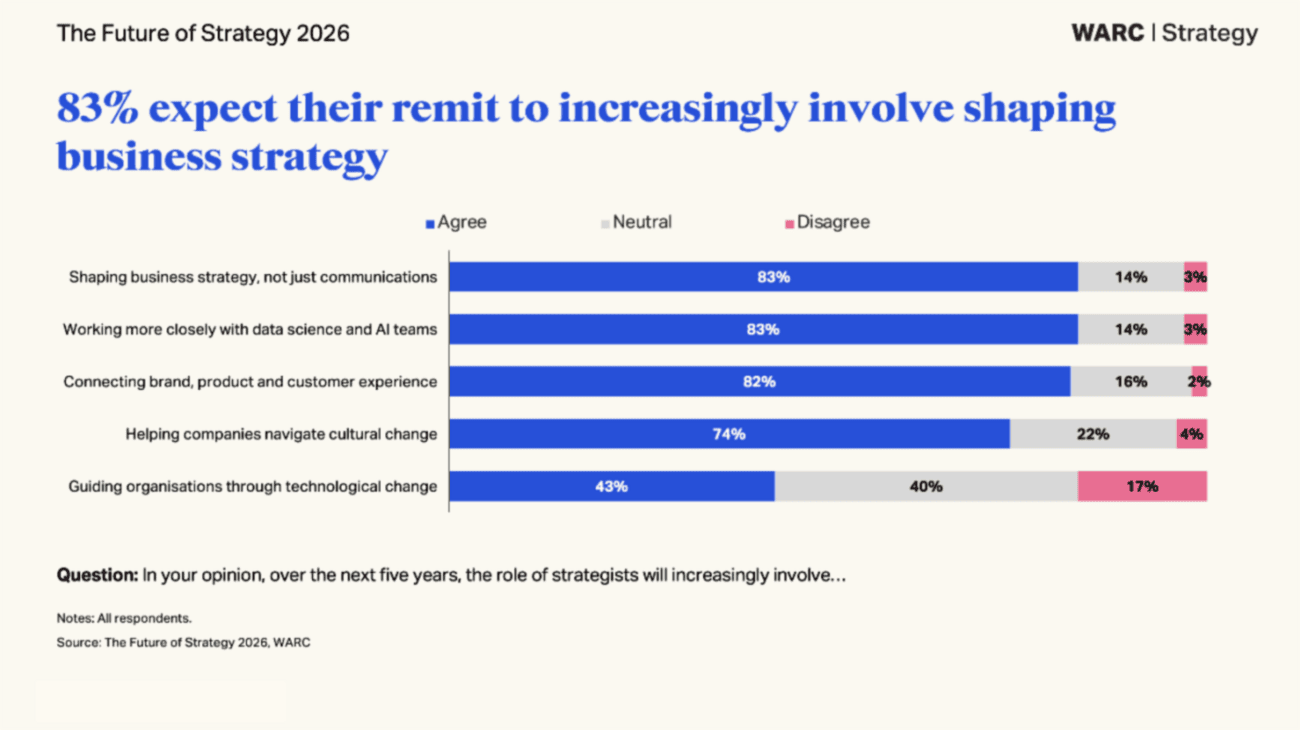
According to Warc, 66 percent of strategists agree that there are clear reasons for optimism. Lena Roland, Content Director at Warc Strategy, says: «Last year’s report painted a gloomy picture of agency-side strategy. Twelve months later, the mood has shifted, with 66% of agency-side strategists agreeing that there are clear reasons to be optimistic.» The influence of strategy on clients rose to 50 percent, up from 41 percent in 2025. Internal influence remained unchanged at 46 percent.
The Future of Strategy: Demonstrating Added Value Remains Key
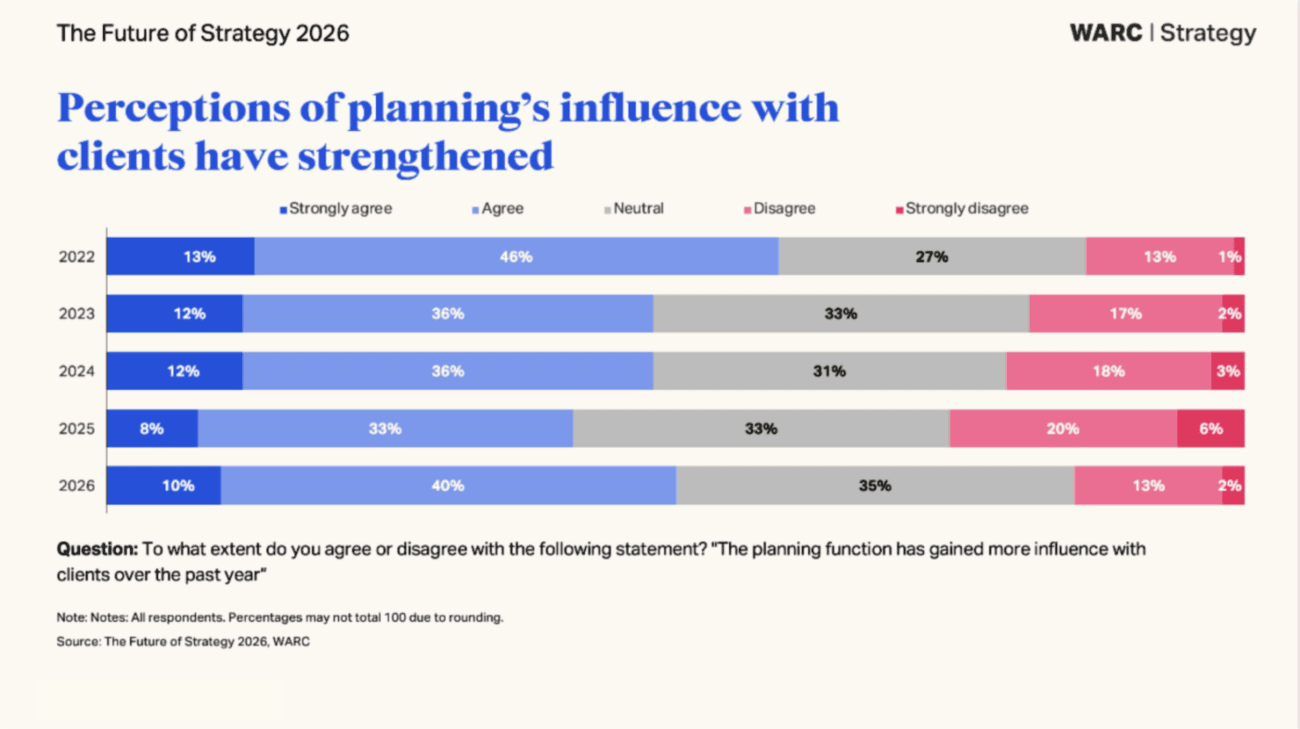
Despite high demand, demonstrating value remains a challenge. 57 percent of strategists say they need a new value proposition because compensation models need to improve. Just under 80 percent believe the profession needs to develop stronger arguments and evidence of its impact on the business. Nikita Walia, a partner at Unamed, says: «The strategist who only understands the “front stage” of a brand—messaging, insight, positioning—will quickly hit their ceiling. The strategist who understands the backstage—how things are made, distributed, and measured—will become indispensable.» Strategists can demonstrate their value by linking recommendations to business results and speaking the language of senior management.
AI as an Opportunity and a Threat
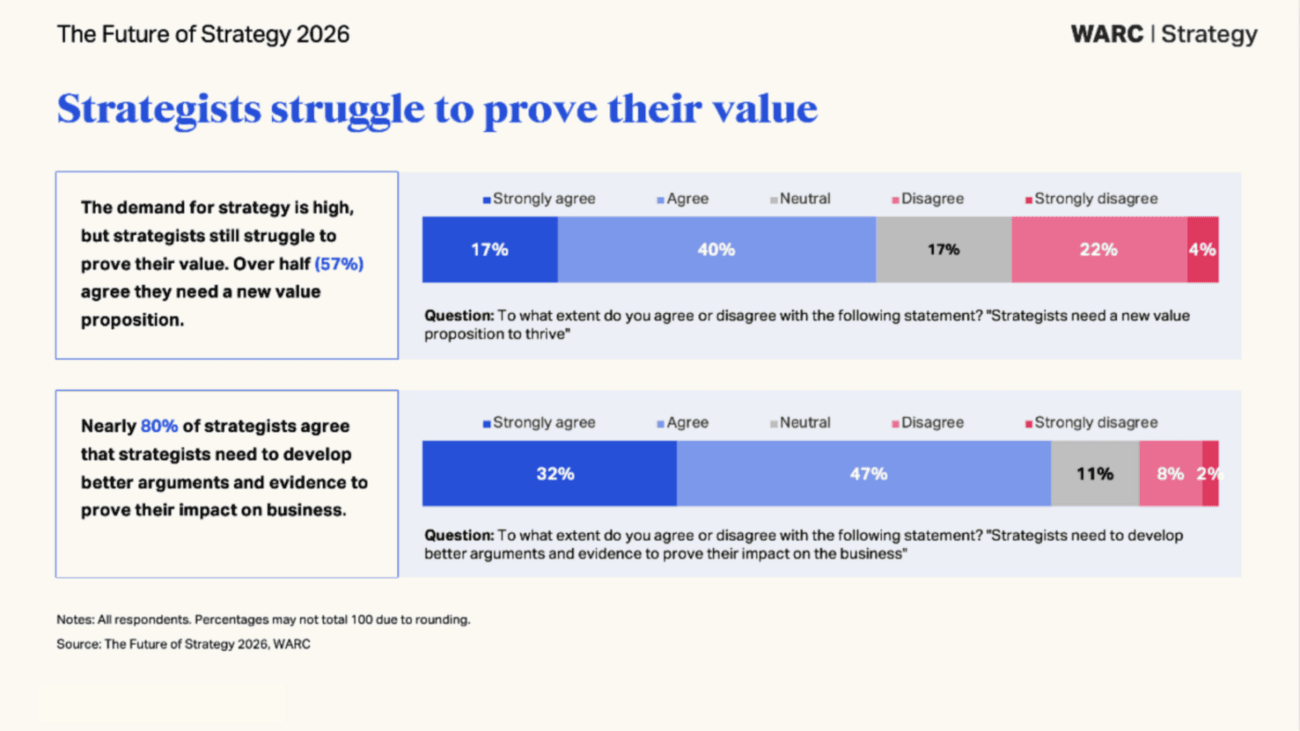
56 percent of strategists fear that AI will replace their roles. That is 15 percentage points more than in 2025 (41 percent), making it the most commonly anticipated threat. At the same time, AI frees up more time for reflection: 65 percent use the time saved for more nuanced, strategic work, and 55 percent believe that AI will align strategy more closely with human perspectives. Respondents cite banal results, a lack of cultural nuance, and a lack of emotional resonance as AI’s greatest weaknesses.
At the same time, qualitative field research is on the decline: 23 percent conduct in-person research at least once a month, down from 35 percent in 2025. Elizabeth Paul, Chief Brand Officer at The Martin Agency, says: «AI should not give strategists permission to do less human research. It should give us the time to pursue more extraordinary truths with greater depth.»
Strategists Are Moving Closer to Corporate Leadership
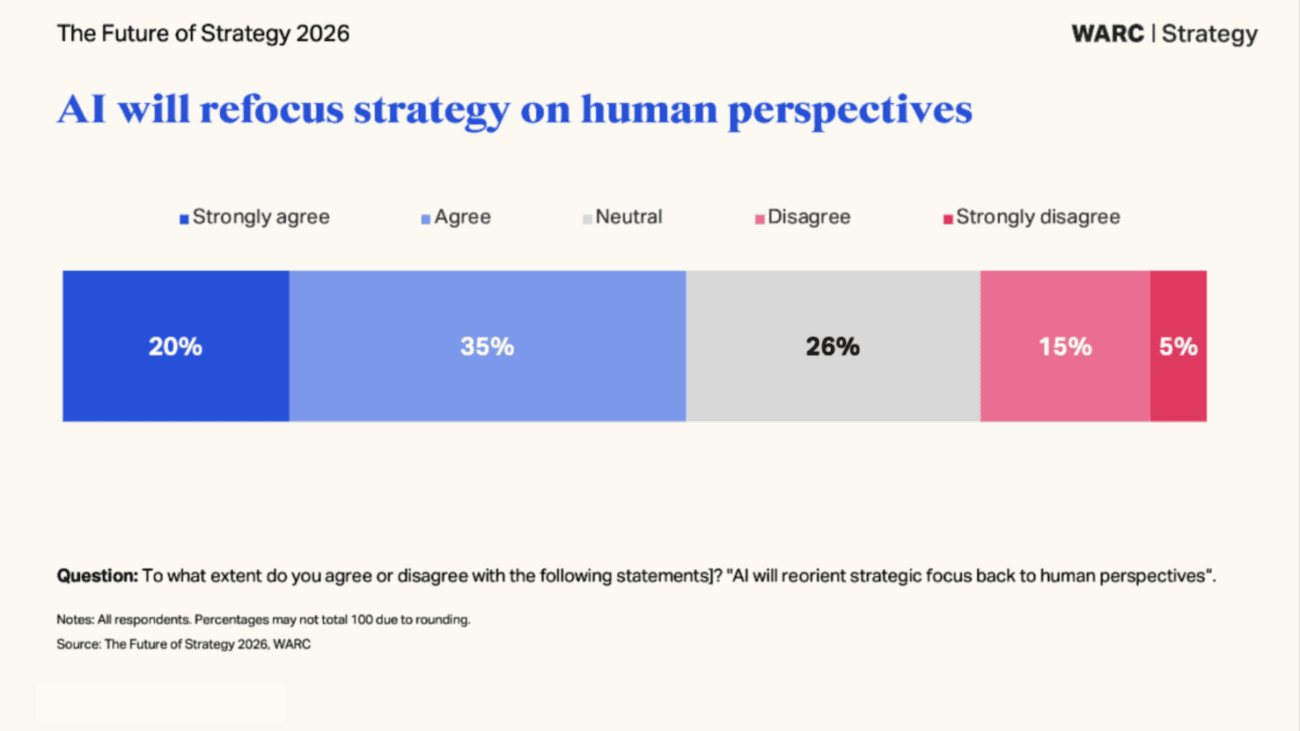
83 percent of strategists expect that their responsibilities will include shaping business strategy in the future, rather than just communication. A key issue is the «two-audience problem»—that is, addressing both people and machines. This is leading strategists into fields such as CX, PR, and agentic commerce. Other tasks include identifying new «demand spaces» and frameworks that reflect media trends.


