Four trends are shaping the TV of the future
Das TV wird den Fernseher verlassen. Zugleich wird das TV-Gerät für immer mehr Funktionen genutzt werden. Dies sind zwei von vier Trends, die einer neuen deutschen Studie zufolge die Zukunft des TV prägen werden.


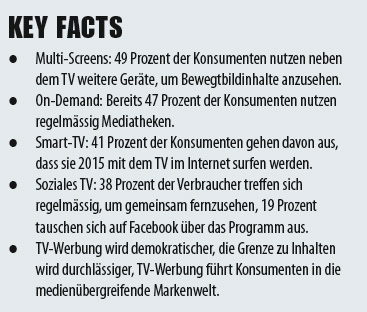
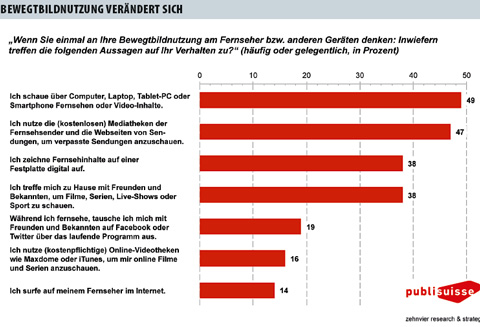
In order to draw a picture of the lines of development of TV, the communications agency Interone and the trend research institute JeldenTTC combined various methods - including in-depth interviews with lead users, a representative survey of over 1,000 consumers aged between 18 and 74 and interviews with media experts. First of all, the study shows that multi-screening is becoming normal. On the one hand, traditional TV will continue to play a central role, while on the other, new forms of television will become more important. One in two people already regularly use other devices to watch video content. Those who own mobile devices - and more and more consumers do - are integrating them into their viewing habits. 86% consider their notebook to be important for their use of video content, while smartphones and tablets are important for three out of four owners. While the TV maintains its function as a social campfire, mobile devices are used more individually. They complement traditional TV use by providing in-depth information, facilitating an exchange with others about the program and allowing content to be viewed on the move. And they strengthen individual TV usage. Even today, one in four respondents (27%) has a partner in the same room watching their own program on a mobile device while they are watching TV themselves. The second trend identified by the study is increasing on-demand use. The freedom to watch content at any time is only being used to a limited extent, but the opportunity counts. The trend towards on-demand use is also being fueled by media libraries. As many as 47% of respondents state that they use media libraries regularly. The content is often simply started later because it is more convenient at the time. Occasionally, users also browse the media libraries when they don't know what to watch. In future, on-demand use will become even more convenient thanks to new recommendation and curation mechanisms. The third trend is the leap in the development of TV sets. Today, networked TVs are still a niche phenomenon: only 14% regularly surf the net via their TV. However, 41% of consumers expect to do so in 2015. Around one in four can also imagine using apps on their TV. Networking also increases the opportunity to involve viewers interactively in the TV program. Almost one in five think that they will be able to participate interactively in TV shows in 2015. According to the study makers, "social television" is the fourth key trend. TV remains a social medium - consumers' need for community ensures this. In addition to public viewing, private group viewing and social TV play an important role: 38% of respondents regularly meet up with friends and acquaintances to watch films, shows or sport together, while one in five (19%) discuss TV content on Facebook or Twitter. In future, TV broadcasters will focus even more on formats with live and participatory elements that take longer to develop. The question remains as to what this means for marketing communication. The study shows that TV advertising will become more democratic. Viewers will be able to choose between advertising approaches (e.g. pre-roll or interruption advertising), and they will rate commercials with "I like". The boundary between advertising and content will become more permeable, with offers increasingly being placed in films, series or shows. In future, brands will increasingly rely on long-term engagement strategies. TV advertising will be a signpost that leads consumers into the cross-media brand world. Clemens Koob