SLK: The average addressee is decisive
At its meeting on September 18, 2013, the Swiss Fairness Commission (SLK) had to assess a total of 13 new complaints and presents the most interesting cases.


What is self-evident must not be specially advertised
"Without 1,4-dioxane/ethylene oxide" is how a cosmetics company advertised its body care line. Two retailers adopted this manufacturer's claim in their communication without any further ado. However, the ingredients in question are generally prohibited under Art. 2 para. 3 of the EDI Ordinance on Cosmetic Products (VKos). If a company advertises with such self-evident ingredients, it acts misleadingly and unfairly in the sense of SLK principle 3.6. The fact that the defendant companies had relied on the correctness of the manufacturer's information was of no use to them. Everyone is responsible for their own communication.

Advertising kills - is that fair to say?
Admittedly, the claims "Advertising kills," "Advertising makes impotent" and "Advertising causes cancer" are borderline radical. But that does not make them unfair. The average addressee perceives the offending statements as exaggerations and does not see any real call to action in the claim "Advertising kills". All the more so, as the reference to smoking prevention is obvious and individual advertising statements should not be viewed in isolation, but only in the overall context.
The Golden Lady does not like hamburger
What comes to mind when you see a barely clothed young lady with golden colored skin? Hardly a particularly hearty hamburger. According to principle 3.11 of the Fairness Commission, a sufficient factual connection is not given if the two subjects are depicted together, as in the objectionable advertisement of a large burger chain. The woman had a purely decorative function; the advertisement was therefore discriminatory and unfair.

The average consumer is the decisive factor
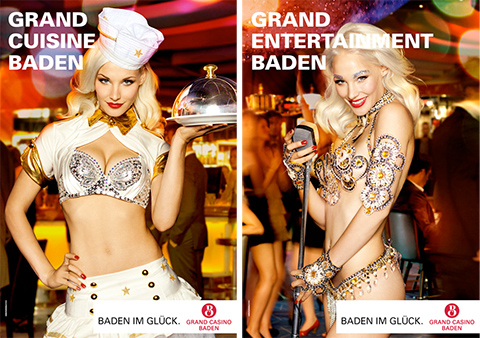
If, on the other hand, lightly dressed ladies advertise the gaming, entertainment, restaurant and bar offerings of a casino, this is not gender discriminatory. According to the First Chamber, the average consumer nowadays no longer expects only prize games in a casino and is also aware that singers and barmaids can be rather lightly dressed there. The objectionable subjects would therefore indicate how the advertised services are actually provided.
About the Swiss Fairness Commission
Any person is authorized and legitimized to complain to the Swiss Fairness Commission about commercial communications that they believe are unfair. The SLK has been the self-regulatory body of the advertising industry since 1966. In addition to the industry associations, it includes the Federal Office of Public Health, the State Secretariat for Economic Affairs SECO, the Equal Opportunities Office of the City of Zurich, the Lottery and Betting Commission Comlot, the Institute of Intellectual Property, and consumer associations. The Swiss Commission for Fair Trading has been chaired by National Councilor Christine Bulliard-Marbach since 2012.