
Online communication media are most prevalent in the CH advertising market


ADVERTISING AND COMMUNICATION MEDIA Their own website is the most widely used means of communication among the top 750 clients in the Swiss advertising market. Nine out of ten (89.6 percent) use it for their marketing communication.A total of 70 different advertising and communication media were surveyed. The results of this survey show how many of the top 750 clients use these advertising and communication media and how many of them have increased, maintained or decreased their advertising investment compared with the previous year (see box). In other words, it shows the prevalence of the individual advertising media, but not the level of advertising investment in these advertising media.Overall, 21 of the 70 advertising and communication media surveyed are used by more than half of all clients:

Another 22 advertising and communication tools are used by less than half of all advertisers, but at least one in three:
The remaining 26 are used by fewer than one in three advertisers. Let's now turn to the advertising and communication tools with the greatest penetration among the top 750 clients. The first six places are all occupied by online communication tools. Not only are these the most prevalent, they have all increased in recent years:Social networks +40% (since 2009)Own online newsletter +31% (since 2001)Search engines and web directories +30% (since 2003)Advertising on third-party websites +17% (since 1999)Advertising on partner sites +11% (since 2009)Own website +4% (since 1999)Direct electronic advertising via e-mail is the only means of online communication that has seen a decrease in penetration (-7% since 1999).In addition to these online communication tools, there is only one advertising medium that has been able to expand its distribution in recent years, commuter newspapers. However, they are a special case in that they came onto the market at the beginning of the period under review, had a strong build-up phase, and are now suffering a decline like the other print media, but are still well above the level of the start-up phase (+17%):
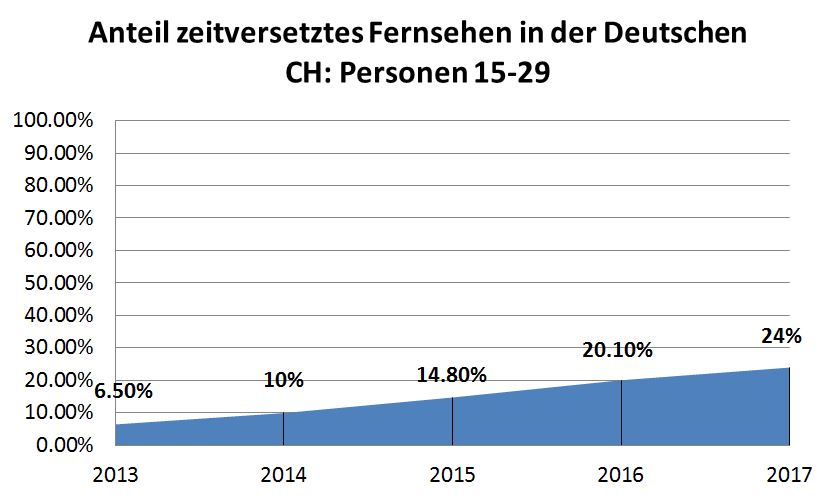
The means of communication, which are right after the most widespread means of online communication in 7th to 10th place, have also lost reach, as have the badly battered daily newspapers in 11th place, but all still with a distribution of over 60%. Print advertising at the POS has lost 11% in distribution reach over the past 15 years, events -4%, contests and sweepstakes -17%, promotional items -24% and daily newspapers -20%.Contrary to what might be expected, TV advertising media are not on the winning side either. For one thing, they have not found a shelter in the first third of the ranking, where they once appeared briefly (2006 to 2008). On the other hand, they have also suffered a drop in reach, albeit a much smaller one than the daily newspapers (spots in SRF programs -11%, spots in CH windows -4%).So far, we have looked at the total reach. Let's now briefly turn to the most important part of the reach, the "increasing importance" share. Unsurprisingly, the communication tools with the highest "increasing importance" all come from the online communication sector.
____________________Every year, the Media.Research.Group's advertising market study asks the top 750 clients in the Swiss advertising market how important the individual advertising and communication media are in their marketing communications for the current year. A total of 70 advertising and communication media are surveyed. For each of them, the respondent has to indicate whether it is of increasing, constant or decreasing importance in his communication, i.e. whether he is increasing his advertising investment, keeping it at the same level or reducing it. This survey has existed in this form for 15 years now. In the first few years, 150 clients took part in the survey; in recent years, participation has risen to over 400.The entire study can be ordered from the www.mediaresearchgroup.ch for the price of Fr. 432.-.Author: Walter Weder





