No end to the "psycho shit"
IP Multimedia hosted a trend talk on «Real Life Soaps»—and it turned into a reckoning


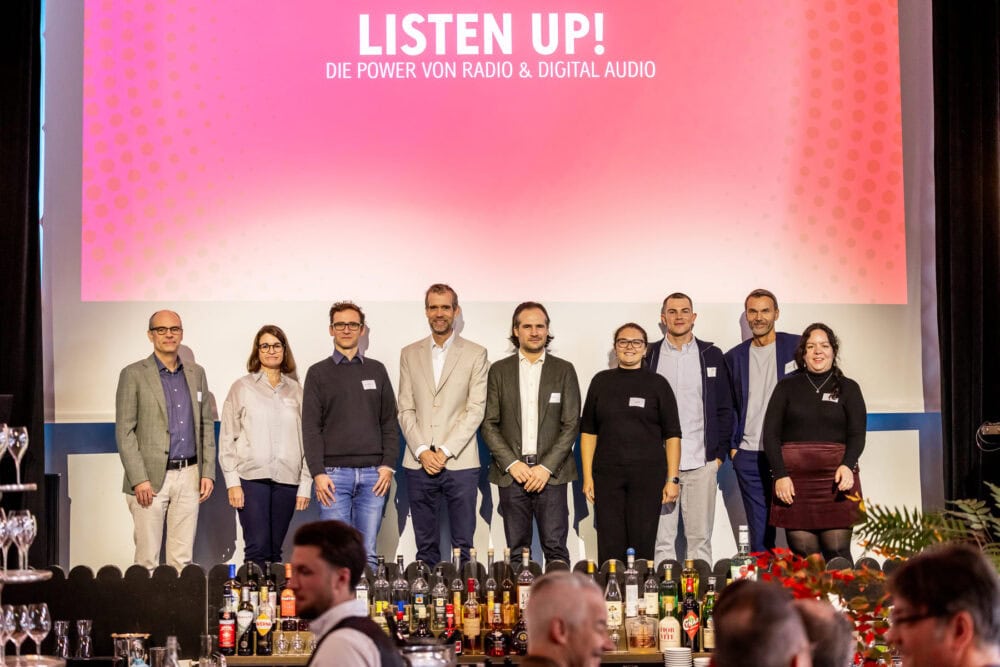
IP Multimedia hosted a trend talk about "real life soaps" - which turned into a reckoningBy Andreas Panzeri "Many of us are addicted to them and others hate them. But no one can escape them!" said IP Multimedia's invitation to a trend talk about "real life soaps". An illustrious panel discussed the ratings chase with such shows "between self-portrayal and survival training".
"It doesn't matter how a thing is, but how a thing works," Tucholsky once said. This wisdom served as the starting point for the panel's discussion about "Big Brother" and its sister shows.
To get some action going right at the start of the talk show, host Gerry Reinhard from Radio Z wanted to know what his guests thought of a development in which the container show "Big Brother" in Germany would last a whole year in future, with a possible prize of five million marks up for grabs.
"Nothing has been decided yet," said Torsten Prenter, program director of RTL 2, succinctly, but with a look into the future of television, he revealed the first details about the show "Der Club". The update version of the proletarian show will soon be called "Big Brother".
Like other spin-offs from this dingy corner of TV programming, this format should play even more with the possibilities of interactivity. To this end, "The Club" should offer more reliably calculable variety by allowing the fixed "inmates" in the clubhouse to regularly invite their favorite guests.
RTL 2 is currently also considering a doctor's surgery or even a school as further blood brothers of the "Big" show. In principle, however, hardly much is likely to change with all these futuristic TV concepts. At least Prenter has not yet let anything concrete out of the container on the occasion of this talk show in the TV-historical Studio Bellerive, apart from the prophecy that quiz shows will soon make it back into prime time.
The remaining talk guests took this no-news regarding the future as an opportunity to talk all the more in depth about the current situation in the next installment of the trend talk and to make fun of "Big Brother" at length.
Real Life TV is not the
Same as Reality TV
"We haven't noticed any increase in sales of our chewing gum yet," joked Alex Minder, Managing Director of Stimorol. This brand sponsors TV 3's "Big Brother", which is heading towards the final, and Stimorol no longer wants to be involved in the next season. "But that has nothing to do with success or failure. It is part of Stimorol's concept that we only sponsor completely new things. We are interested in the initial spark," explained Alex Minder.
Andy Lehmann made no secret of his disdain for "Big Brother". However, the Managing Director of Optimedia made it clear that he would never insert his personal opinion into one of his clients' businesses. "If such shows have a lot of viewers and my clients want to advertise on them, then that's wonderful," he said.
IP Multimedia has invited Karin Böhme-Dürr as the fourth member of the panel. The lecturer in media studies at the University of Düsseldorf will soon be publishing a non-fiction book on the trends surrounding the "Big Brother" phenomenon.
Under the title "Behind Closed Doors", Böhme wants to explore the success of the internationally popular "Big Brother" concept. "How did everything come together to make it as successful as it is today?" she asked, seeking an initial, scientifically correct answer in the term "Real Life TV", which the media researcher intends to use instead of "Reality TV" in her book.
It also became clear that not only the responsible TV stations, but also all other media are passively and actively involved in the success of "Big Brother". The NZZ accompanies the phenomenon with specialist articles. Blick makes a story out of the heartbreak of Janine's boyfriend who watches TV alone at home.
"Psycho shit" from the
Container is madness
And what else? We know from various studies that young people are looking for role models. However, they can find these less and less at school or even in church. As a result, children as young as three to thirteen regularly watch "Big Brother", was the theory put forward. And what do they learn there, apart from how to put on a friendly face when being bullied?
For Karin Böhme-Dürr, it is clear from this question that "characters that are rejected by the audience can also be a didactic aid". Alex Minder took a less scientific view: "In the past, people looked at the king's life. Today, we look at our neighbors," he commented.
"Only we old people are constantly discussing the sense or nonsense of the show in the container. The young simply watch it or they don't," philosophized Lehmann, now slightly weary of the eternal shop talk surrounding this new TV reality. And with regard to the audience's disdain that keeps shining through, he said: "My son, an economics student, has no problem zapping into 'Big Brother' today and 'Literary Quartet' tomorrow."
The media specialist therefore argued that "Big Brother" fans should not be treated as psychopaths. However, Lehmann was less feigned than genuine in the panel discussion when Karin Böhme-Dürr wanted to talk about the psychological damage caused to former fellow mobbers in the container.
What happens to moth hen Conny or bull Remo when their fame suddenly sinks them back into oblivion?
"Rubbish", said Lehmann and scolded: "Such psychobabble is madness compared to real problems, for example those of people who are unemployed." Lehmann found such discussions "played with psychology". Presenter Gerry Reinhard then brought the argument back to the point: "Even after a week at scout camp, a child comes home disturbed."
More brutal reality versions damage the sponsor image
Finally, the benefits that potential sponsors or advertisers can expect from spot placements around such "real life soaps" were analyzed somewhat more pertinently for the numerous advertisers present. In line with the motto: "Stimorol wants to get involved where a trend is emerging", Alex Minder is happy about his involvement in "Big Brother" in retrospect, as the trend has really taken off.
With regard to the new idea of a five-million-mark prize for the winner of the one-year container prison, however, Lehmann from Optimedia is skeptical as to whether there is still a sensible environment for advertising. Such a large box could only be financed by equally large sponsor companies such as banks. And these would probably have little to do with the program.
"It's crucial what a particular brand is associated with. If I sponsor something, I want to know in what form an image transfer to my brand takes place," says Stimorol boss Minder, who is also skeptical about ever more brutal versions of bullying games or other expected reality shows.
RTL man Prenter countered this statement by saying that the TV station alone was responsible for the content and not the sponsor. "The contact group is important," he said.
However, Prenter was generally outvoted in the final round: "Anyone who supports something as a sponsor also supports it in terms of content. In terms of advertising, this has a similar effect to testimonials!"