
Cancer League launches campaign for World Cancer Day
To mark World Cancer Day, the Swiss Cancer League is launching a national campaign that shows what it means to live with cancer. Using slogans such as “Cancer Fatigue,” “Cancer Rage,” and “Cancer Hope,” real patients bring to light the emotions behind each story. The campaign, created by La Stratégiste, features handwritten typography and authentic portraits.


Every year, around 45,000 people in Switzerland are diagnosed with cancer. Over 450,000 are currently living with or after the disease. This means that almost everyone knows someone who is affected - directly or indirectly. With its new national campaign, which will be launched throughout Switzerland on World Cancer Day (February 4), the Swiss Cancer League is showing what it means to live with cancer - and that every story counts.
The campaign raises public awareness of the reality of many people affected by cancer: that cancer is not just a disease, but a part of life - full of fractures, strength, anger, dignity and hope. Buzzwords such as cancer fatigue, cancer rage, cancer dignity, cancer hope or cancer fighter make visible what otherwise often remains unspoken. They stand for the emotional richness behind every patient and family member's story - and show that cancer has many faces.
Real people, real emotions
All the protagonists are people from Switzerland who are or have been affected by cancer themselves. They volunteered to share their stories, their faces and their feelings - honest, vulnerable and strong at the same time. The shoots were accompanied by content creators and influencers who themselves have a personal connection to the disease. They captured the encounters, opened up a new, personal level of conversation on social media and helped to bring the topic of cancer to the center of society.
"Cancer has many faces. This campaign shows them all - unembellished, human and with great respect," says Mirjam Lämmle, CEO of the Swiss Cancer League.
Attitude and recognition
The visual language is deliberately raw, direct and emotional. The handwritten font is a strong design element running through all the subjects. It does not come across as advertising, but as an expression of genuine feelings: anger, tiredness, dignity, hope. Each headline thus becomes an emotional statement - and the font the new visual code of the Cancer League.
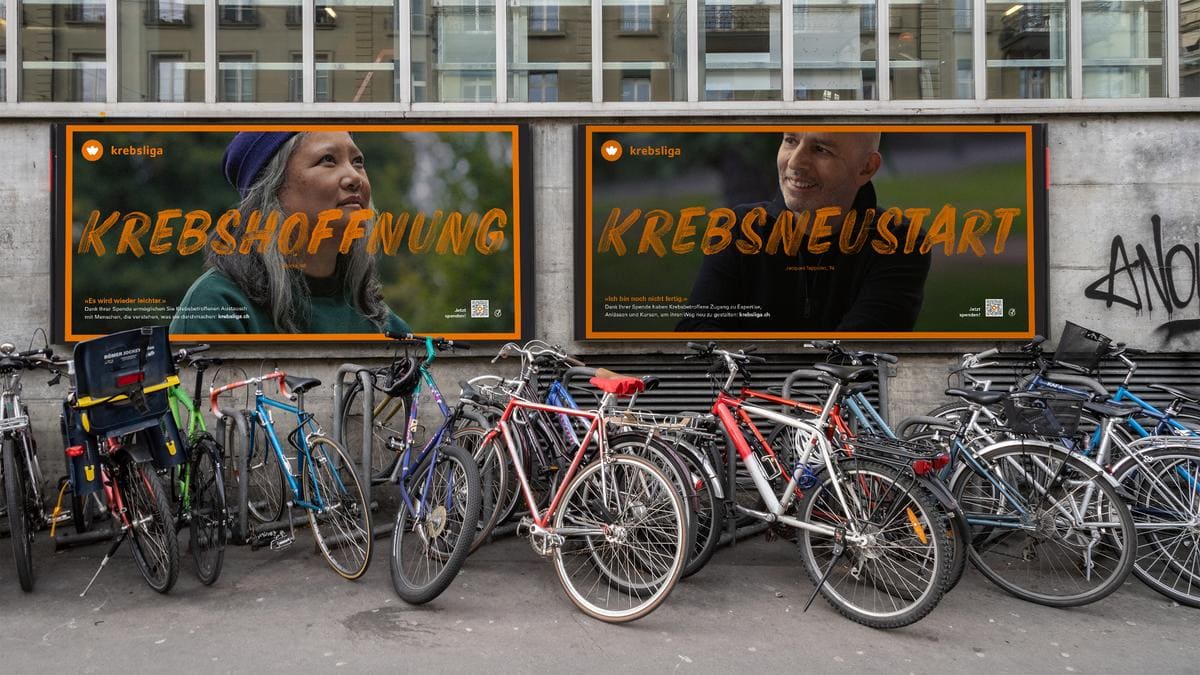
"This campaign is not intended to be compassionate, but human. It shows that you can talk about cancer - without fear, without distance," says Mirjam Lämmle. The concept was created by the advertiser Regula Bührer Fecker (La Stratégiste), the photography and filming was done by Sarah Maurer, whose pictures are touching and dignified.
Six Swiss influencers (Sara Satir, Sylwina Spiess, Manuela Leonhard, Andrea Monica Hug, Camilla Carrier and Valentin Mulhauser) who have a personal connection to cancer (affected themselves or affected people in their environment) accompanied the production and report on the protagonists in personal portraits.
Launch on World Cancer Day
The campaign will kick off on World Cancer Day, February 4, 2026, on screens in train stations throughout Switzerland. It will be supplemented by online and social media measures as well as fundraising measures. Digitec / Galaxus is supporting the campaign by enclosing a World Cancer Day flyer with all packages.
It marks the beginning of a multi-year communication platform that will be continuously expanded - online, offline and in fundraising. The aim is to create proximity, trust and relevance and to anchor the Cancer League in the public's consciousness as a strong, empathetic organization.
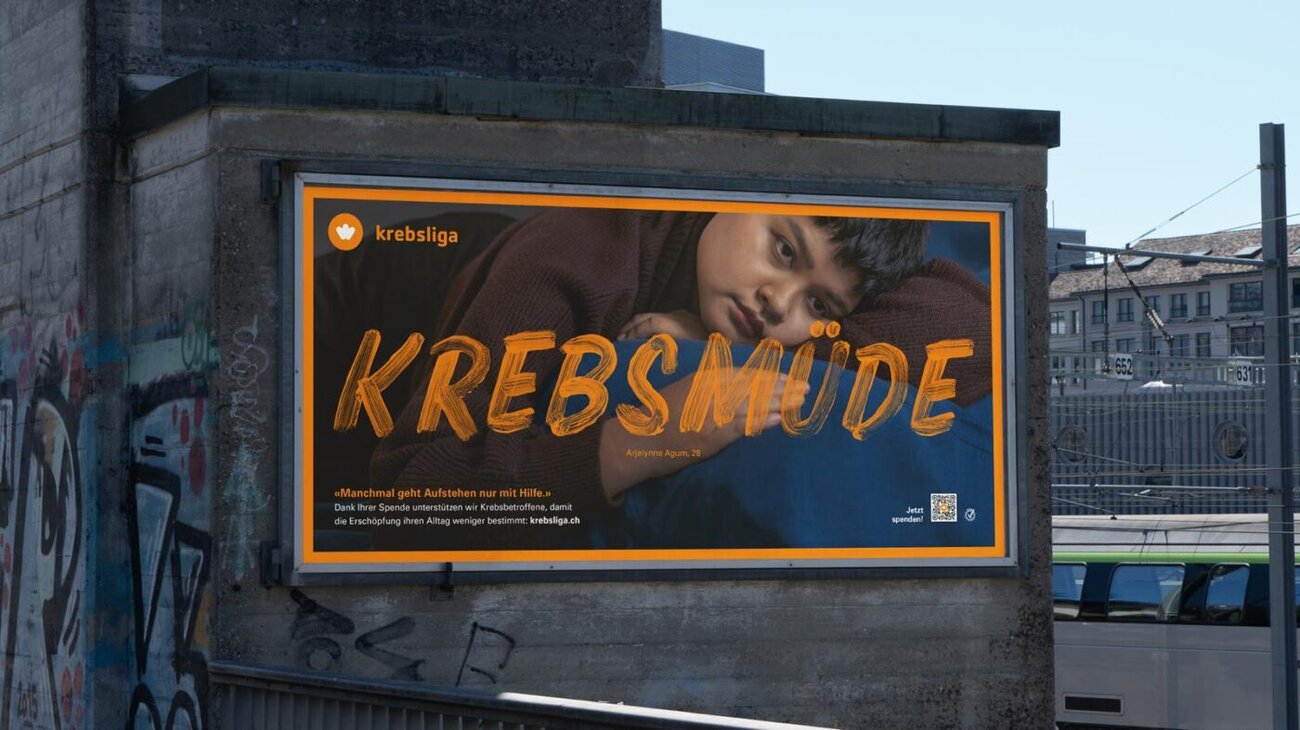
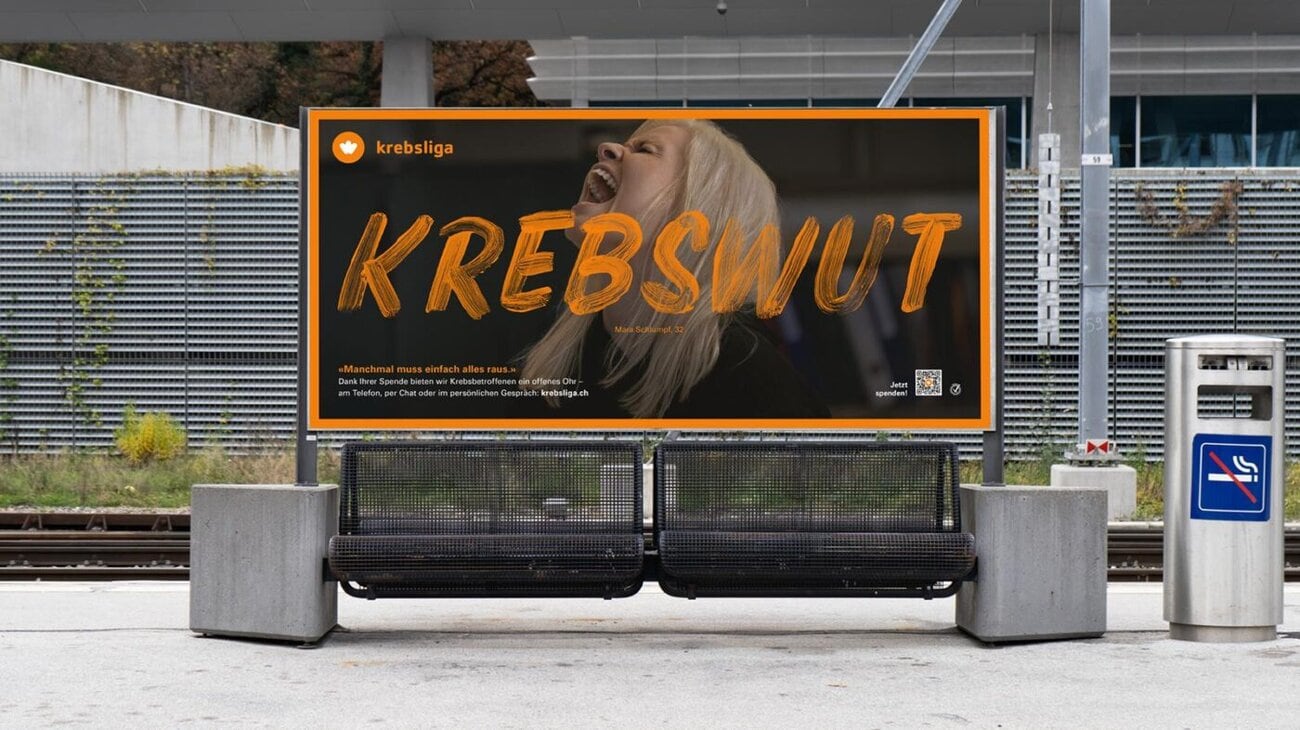
m&k spoke to those responsible:
Regula, what was the actual strategic task behind the campaign - in one sentence?
Around half a million people in Switzerland are living with or after cancer: the strategic task of the campaign was to make this reality visible and at the same time to show in an understandable way how the Cancer League supports those affected and their relatives.
The campaign works with real people. Why were real people and real stories so important to you?
Because cancer is not an abstract topic, but part of many lives in our country. The campaign was implemented exclusively with real people affected by cancer from all over Switzerland. The Cancer League has closely accompanied most of them through difficult times with supportive and relieving services, i.e. there is a relationship with the Cancer League. All these people made a huge impression on me with the way they dealt with the disease, which varied from person to person and was also portrayed differently. There were people affected who associated cancer with "anger", and there were people affected who wanted to focus on their positive approach. All of this is possible under the campaign umbrella.
Handwriting/brush typography is a very strong code. Why exactly is this rawness right here - and what creative rules are needed to keep it respectful?
Typography stands for immediacy, humanity and imperfection. It attracts attention, is noticed and makes the viewer think. And forms a bracket over a topic that, as I said, contains very different stories and realities.
The "cancer..." words (Krebsmüde, Krebswut, Krebswürde, Krebshoffnung etc.) are very direct. What criteria do you use to decide which word is allowed on a subject - and which is not?
Cancer is cancer: not mentioning the word doesn't help. That's why we decided to integrate it centrally in the headline. The terms we have created from it show the range of topics and references that those affected and their relatives associate with cancer. Jacques Tappolet (74), for example, lost his wife to cancer and is now affected himself, but has made a conscious decision to learn new things, such as singing and acting, so "cancer restart" was appropriate for him. He explicitly wanted a positive term. It suits Jacques and certain people, but of course not everyone. Every story is different. And so is the way we deal with it. The campaign aims to enable this breadth.
"Real people, real emotions": What were your guidelines for casting and staging to make it authentic - without voyeurism or clichés?
The campaign was not intended to talk about cancer, but to be based on the experience of those affected. Therefore, real people from Switzerland, voluntary participation, no models, no actors, no symbolic images. People affected by cancer were contacted via the Cancer League's networks last fall, and many of them got in touch and wanted to take part. We held personal preliminary talks with all of them, learned their story, then selected six people and ensured in a second meeting that the topic and the production were suitable. For the creative realization, we chose photographer Sarah Maurer, who was a perfect fit: Sarah is a wonderful person, very subtle and empathetic, which was a wonderful fit and ensured that everyone felt comfortable.
NGO-specific: How do you resolve the tension between the dignity of those affected and the clear fundraising call to action?
The whole Cancer League team is very conscious here. Dignity is the focus and I feel that the campaign lives up to this. However, the Swiss Cancer League is mainly financed by donations from the public, private individuals, companies and foundations. These funds are central to the work in the areas of counseling and support for those affected, prevention, early detection and the promotion of cancer research. It is therefore important that interested people know that they can support the Cancer League and help those affected and their relatives.
The campaign launch around World Cancer Day on February 4 is intended to appeal to solidarity and marks the kick-off of this long-term campaign.
Concept & Strategy: La Stratégiste, Photography & Film: Sarah Maurer, Image processing: Pixelpolish, Production: Detail, Mailing implementation: Evoq


