Text Academy Podcast #45: Marc Holitscher, Microsoft: «Lifelong learning has never been more important than it is today»
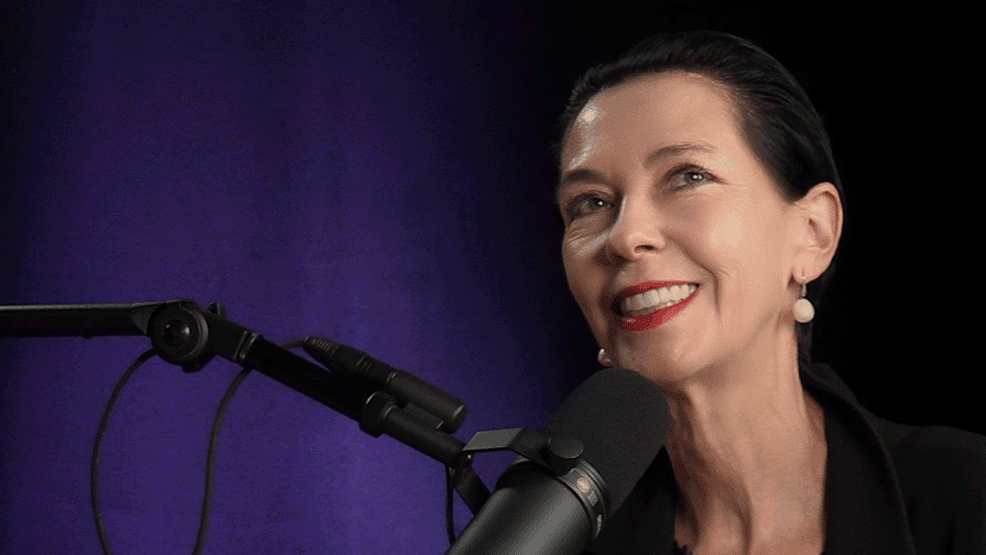
Marc Holitscher, National Technology Officer at Microsoft Switzerland, explains in the video podcast «AI and Society – Paths to the New World,» explains why Switzerland is a global leader in AI adoption, why many executives are still in the process of developing clear strategies for using AI—and why his 91-year-old father has become a key figure in his argument.


When asked to name the turning point in his twenty-year career at Microsoft, Marc Holitscher doesn’t hesitate: November 2022, when ChatGPT became publicly available. Not because the technology was invented then, but because it suddenly became accessible through the most natural of all interfaces—human language. «This gave a much broader range of users the opportunity to experience technology in a very personal, very direct way,» says Holitscher, who holds a Ph.D. in political science, in conversation with host Christoph Soltmannowski.
To illustrate his point, Holitscher draws on an example he likes to share: his 91-year-old father, who had never used a computer—and suddenly found himself talking to a machine that answered him. It’s a rhetorically effective image that also conveys the National Technology Officer’s central thesis: Artificial intelligence democratizes access to knowledge and technology.
Soltmannowski disagrees. Microsoft, OpenAI, Apple—aren’t these corporations more a reflection of a concentration of power than of democratization? Holitscher counters by shifting the perspective: It is not the development side that is decisive, but adoption. And this is precisely where he sees Switzerland’s advantage. More than a third of SMEs are already using AI productively, and more than a third of the working-age population regularly engages with these applications. «This breadth of adoption and this level of usability are unique to Switzerland.»
The 70 Percent Question
But the numbers also tell a different story. According to a regular Microsoft survey, 70 percent of Swiss executives consider AI to be crucial—yet at the same time, about half are unsure whether their organization already has a clear vision and concrete implementation plans. Why is that? Holitscher’s answer goes beyond the technical realm. It’s not about «simply sprinkling artificial intelligence all over the place,» but rather about change management, culture, and leadership. Executive teams must lead by example in how these tools are used—while at the same time giving employees room to experiment on their own.
For an SME with five employees, his specific recommendation is to provide a tool—«whether it’s Copilot or something else»—and let employees gain experience, but with structured guidance from internal «champions» who organize discussions about successes and failures. Holitscher distinguishes between three types of adopters: “Takers,” who rely on standard solutions; “Shapers,” who configure these solutions to their own needs; And Makers, who develop their own language models from scratch. Thanks to low-code and no-code tools, the transition from Taker to Shaper is now easier than ever.
Sovereignty, Data Protection, Freedom of Choice
The discussion about digital sovereignty is one of the more sensitive parts of the conversation. Soltmannowski addresses the argument head-on: Swiss providers warn that sensitive data should not be entrusted to American hyperscalers. Holitscher’s response is seasoned and nuanced. The key factor, he says, is customers« freedom of choice. Microsoft has been operating data centers in Switzerland since 2016 with dedicated local staff and offers a »range of technical and contractual options” to ensure data protection and availability. These options allow customers to ensure maximum protection and availability of their data in Switzerland.
What is noteworthy is the way Holitscher positions Switzerland in this context. It’s okay not to be the first to adopt it—«but being the second to do it right isn’t such a bad thing either.».
From Tool to Competency
Microsoft aims to make one million Swiss citizens AI-literate by 2027. Holitscher deliberately defines what «competent» means in concrete terms quite broadly: Not everyone is expected to become an expert, but rather to develop a «basic ability to evaluate.» This involves less technical skill and more critical thinking, understanding context, and interpreting results.
Here is a sentence that captures the essence of Holitscher’s argument: «In the field of artificial intelligence, we are dealing with very powerful prediction machines. We must never forget that.» Maintaining a healthy critical distance from the machine’s answers is not an optional virtue, but a fundamental prerequisite for responsible use.
Holitscher also addresses the issue of job losses—with an argument that points to a rarely cited demographic scenario. A recent study by the Zurich Economic Research Institute estimates that the canton of Zurich will face a shortage of hundreds of thousands of workers due to the wave of retirements. It identifies the responsible use of AI as the second most important measure to address this shortage. «This has reinforced my belief that even at the political level, it is recognized that technology can make a very concrete contribution here.»
What Remains
When asked the final question—what should be done better today—Holitscher emphasizes his belief: AI can only realize its full potential if it works in harmony with humans. «Technology alone will not be able to achieve this.»
The podcast on Spotify
Mountain Summit Laax: AI Meets the Alpine Landscape
On May 28, 2026, the AI Mountain Summit will take place for the first time in LAAX—an event at which Marc Holitscher will speak. This new format brings together decision-makers from business, technology, and society at an altitude of over 2,000 meters. The focus is on the question ’AI, Leadership, and the Future«: How is artificial intelligence transforming businesses, what role does leadership play in this transformation, and what decisions need to be made today to remain competitive tomorrow? Holitscher’s thesis: AI is a foundational technology that has an impact regardless of industry or company size. It is particularly relevant for small businesses in regional areas to remain attractive as employers and to counteract the exodus of young skilled workers to urban centers.
«AI and Society – Pathways to a New World» is a video podcast produced by the Swiss Text Academy Foundation and the Swiss Prompt Engineering Academy in collaboration with Science City Davos and Lab42 Davos. Hosted by Christoph Soltmannowski. Available on YouTube, Spotify, and all other major podcast platforms: tinyurl.com/5t4fyfex