Ambri top, ZSC flop: The somewhat different ice hockey ranking list
PRfact is now using the Social Hockey Score (SHS) to measure the relevance of Swiss ice hockey clubs on social media.


Ice hockey fans currently know one topic above all others, as the playoffs and playouts are in full swing. The social media community is being cultivated by all clubs. But is a club's position in the rankings or its size a guarantee of success on the social web? During the qualification phase, PRfact analyzed the Swiss National League clubs on social media.
First things first: sporting success or failure in the run-up to the playoffs or playoffs is generally reflected in social web performance. However, there were a few surprises. Take the ZSC Lions, for example: as the largest field hockey club in Europe, the Zurich team is unable to translate its large fan base into tangible results on social channels. It was a completely different story for the pre-season relegation candidates HC Ambri Piotta, who not only dominated Ticino on the ice, but also finished the analysis with the highest score and as champions on the social web.
In general, the content on the social web channels of all National League Hockey clubs differs only marginally. Game scenes and player interviews dominate. Own formats are only found to a limited extent - and are obviously not very popular with the community. Facebook and Instagram are mostly filled with identical content. "That's a shame, because it means a lot of the potential of social media is lying idle," analyzes Dino Ceccato, Director Digital at PRfact.
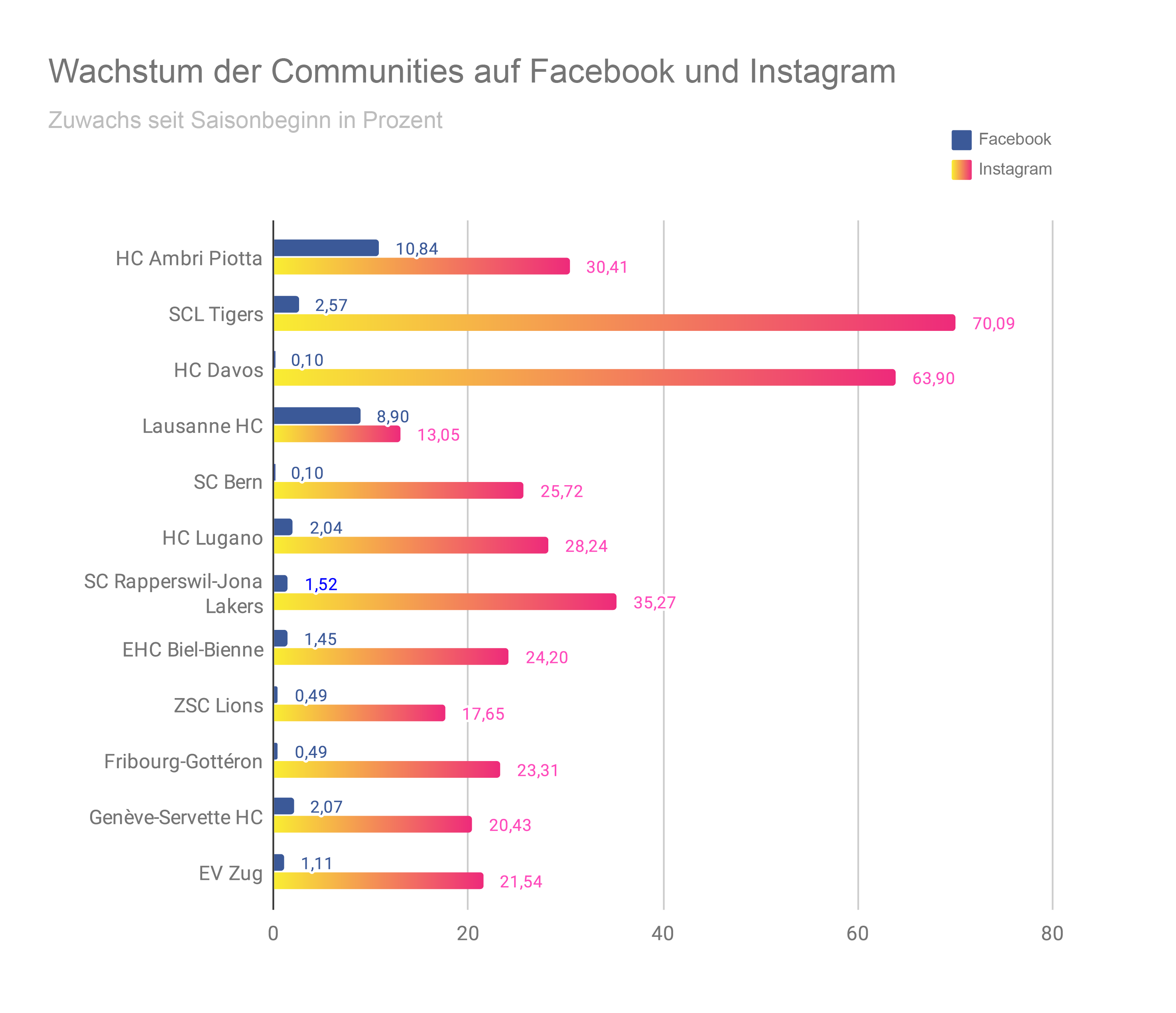
The agency found that the smaller clubs have a higher level of identification and fan enthusiasm than the larger clubs. It is striking that the lower-ranking regions - with the exception of HC Lausanne in 4th place - are mostly occupied by clubs from French-speaking Switzerland. Fribourg Gottéron and Servette-Geneva in particular performed poorly, generating little response from their community and hardly reaching any new fans. Clubs generate significantly more growth and engagement on the trending platform Instagram than on Facebook. Regardless of the size of the community. "This reflects the general trend on the social web," confirms Dino Ceccato.
About the SHS
The entire qualifying phase of the 2018/19 season served as the analysis period. The individual social media profiles (Facebook & Instagram) of the clubs were analyzed and evaluated to calculate the score. The number of fans or followers of the profile was taken into account. The club's ability to generate growth in the community was then calculated. The response from fans was also evaluated and an interaction rate was calculated for each account. These three key figures were then combined into a separate score, the Social Hockey Score (SHS), for comparison purposes.