Tanja Herrmann: «There’s more than enough content»
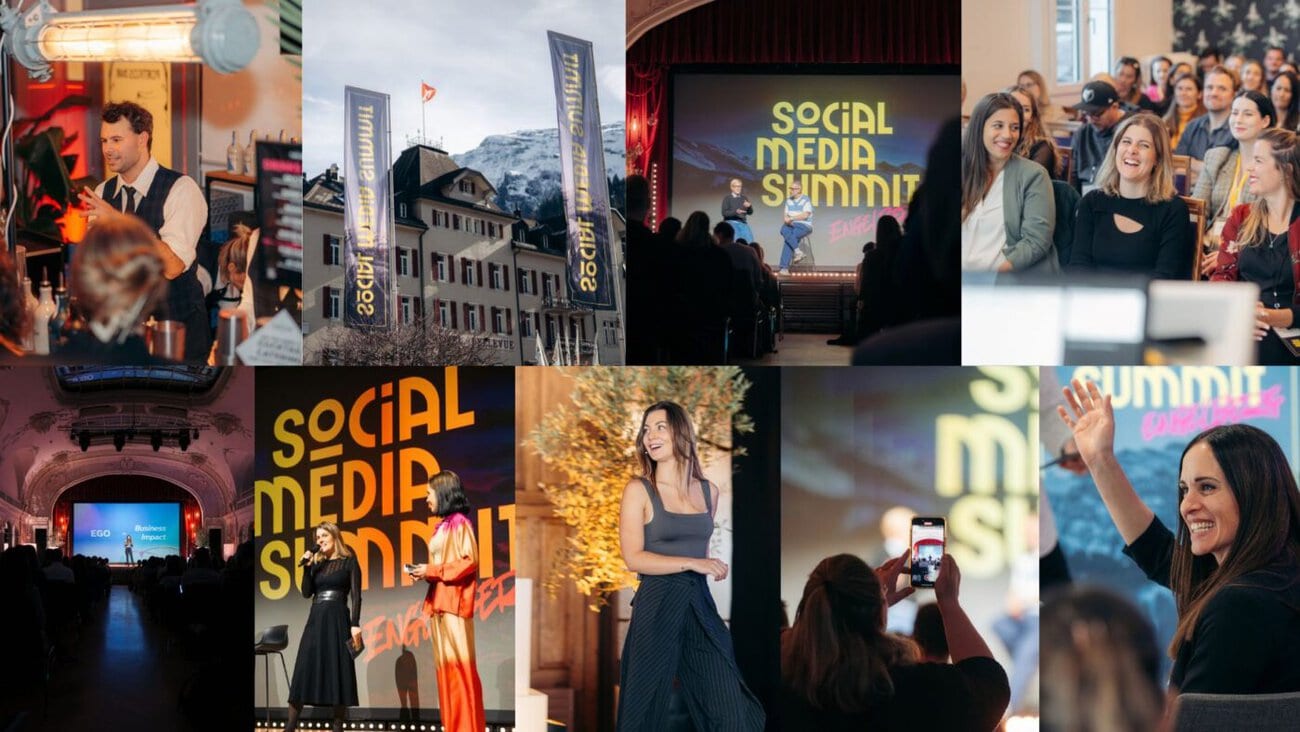
In November, the Social Media Summit will take place for the ninth time, once again over two days in Engelberg. Brands and platforms will take the stage across four venues, accompanied by new studies and, for the first time, industry roundtables. Managing Director Tanja Herrmann explains how what started as a casual event has become the meeting place for Switzerland’s social media industry. She also reveals why brands now need clear strategies and a paid advertising budget.


 m&k The Social Media Summit will take place for the ninth time in November. What has changed since its inception, and what topics will be on everyone’s mind in 2026?
Tanja Hermann Nine years ago, we were still getting several inquiries asking if people could just drop by, because they thought it was more of a «selfie with a ball pit» kind of leisure event. People weren’t yet aware that social media was a marketing discipline in its own right. But there was also a lot going on behind the scenes. At first, I organized the event mostly on the side while working my main job at the agency. Now, an interdisciplinary team works on the event, which has grown to two days. We also changed locations—from the X-Tra in Zurich to the Dolder and finally to Engelberg, with four stages and various side events spread throughout the village. And last but not least: At the beginning, nobody knew who we were. It was almost impossible to get access to the platforms. After nine years, a professional Swiss social media community has developed where everyone knows each other.
Coop, Rivella, SBB, and PostFinance are sharing their case studies. What criteria do you use to select these examples, and what do you want the participants to take away from them?
For all speaking slots, we first have a one-on-one conversation with me. During that conversation, we explore which topics the speakers could cover and what kinds of case studies or research they have to support them. This ensures that we can cover a wide variety of industries, platforms, and topics. With nearly 70 preliminary discussions, a clear picture quickly emerges of what’s driving the industry. While one year the focus is on storytelling, the next year it’s all about AI. This year, we’re seeing a strong emphasis on data and intelligent performance campaigns that can hold their own in a sea of AI-generated content.
Meta, TikTok, Pinterest, YouTube, and Reddit are providing firsthand accounts of their platform updates. What does this mix reveal about the evolution of the social media landscape?
This, too, shows how the social media landscape has changed in recent years. When we started out, TikTok wasn’t even on the radar. Pinterest surprises its audience year after year, as the platform remains massively underestimated even all these years later, and Reddit is our newest addition. Just a few years ago, it was dismissed as an irrelevant niche channel, but now everyone is trying to figure out how Reddit works for them.
The Industry Round Tables are a new initiative that bring together industries ranging from B2B to tourism and finance. What works better within the confines of one’s own industry than in a large plenary session?
Everyone knows the feeling: you’re sitting at a conference, someone on stage is presenting a really great case study, explaining that anyone can implement it this way, and you think to yourself: but not in my industry, not with our customer journey, and certainly not with our regulatory requirements. That’s why we want to make it even easier for our participants to exchange ideas within their own industries and talk specifically about the things that work a little differently for them. To do this, we looked at which industries were most represented during ticket sales and created the Industry Round Tables specifically for them.
With the ZHAW, the Bern University of Applied Sciences, and Media Focus Switzerland, there are also new studies in the program. What question do you hope they will answer?
The academic articles are certainly critical—and that is by design. They are intended to stimulate thought, to put the media usage statistics into proper perspective, and at the same time to show how our activity on social media influences the consumption behavior of younger people.
Yoga in the mountains, country-style meals, pub quizzes, fondue with strangers, and Gin Night are all part of the Social Media Summit. What role does the supporting program play in what’s taking shape in Engelberg?
Every year, we’ve continued to expand the supporting program. Since most people stay overnight in the village, this gives us the opportunity to develop entirely new concepts. Yoga before the second day gets underway, or a group fondue at the Alpenclub—because no one has to rush home, but just has to waddle across the street to bed with a belly full of cheese. This creates space for interaction, and that’s just as much a part of the event as the traditional educational sessions on stage.
Social media has come of age, and advertisers are planning differently today than they did during the hype years. How do you perceive brands’ approach, and where do you see the greatest potential for them right now?
We see that social media (and influencer marketing) functions countercyclically to a certain extent. When large advertising budgets are cut, the remaining funds suddenly shift to social media, because there’s still a lot that can be done with them there. And for almost all companies, social media is now part of their media mix. But I see the greatest potential in companies realizing that the days of «social media is free» are long gone. It’s an advertising channel that requires a paid budget. That’s why the greatest potential lies in performance marketing and clearer strategies. There’s more than enough content out there. So anyone who isn’t absolutely clear about who they’re creating content for, what they’re creating it for, and with what goal—and who doesn’t know how to measure it—is wasting their resources.
Anyone visiting Engelberg for the first time will find 16 master classes, 22 lectures, and four stages. What's your tip for getting the most out of these two days?
Personally, I would sort the posts based on two criteria: which topics are most relevant to my work right now, and which topics are completely new to me. I would focus most on the topics where I absolutely want to stay up to date. And then I would pick out a few «wild cards.» Platforms, approaches, and studies that inspire me with new ideas.