Why and why?

In the coming year, new courses have been announced at various technical schools and universities. Training in the field of "marketing and communication" is apparently about to boom. Werbewoche has done some research on this in advance.

Unbenannt-1_14
Peter Felser (l.) and Max Meister are leading a first CAS for "Brand Leadership" at the HWZ. Peter Felser founded Spillmann Felser Leo Burnett and has just been appointed Chairman of the Board of Serviceplan Suisse. Max Meister is a lecturer in strategic communication and brand management at the HWZ and a board delegate of BV4. Info: www.fh-hwz.ch/brandleadership

WW: Who is the training aimed at?
Peter Felser: To executives with an affinity for brands, i.e. people who are intensively involved with brands, who bear or aspire to bear responsibility for demanding brand-related decisions. Whether this is a CEO, a marketing manager, communications manager or a manager from brand management and corporate communications departments is secondary. Our participants want to shape brands holistically.
 
 "Brand Leadership" is the first course of its kind. Why was there this gap until now?
To be fair, there are various offerings when it comes to brand management. But we claim to have a special approach for this CAS. On the one hand, it is positioned differently in terms of philosophy. We place the brand core and the brand mission at the center of our considerations and say: The most successful companies today are shaped by personalities who primarily lead through the power of the brand. In this sense, brand management is not something that the advertising department can tweak and optimize. We are convinced that brand leadership shapes the entire organization of a company through the power of the brand. That is a holistic approach. On the other hand, we are trying to position the CAS more upscale - in the premium segment. I hope you can feel that in the selection of lecturers. We have a fantastic crew and really the crème de la crème in terms of brand leadership.
 
Will premium also show up in course costs?
Difficult to say, as there is no comparable offer. The absolute prices are slightly higher than other CAS courses. That is legitimate. The price-performance ratio is unbeatable!
 
On the new approach: What does that mean in concrete terms?
I have to backtrack a little. Over the past year, I've read a lot of specialist books and looked at the latest literature on brand leadership. The result is a personal bestseller list with ten fascinating books. One of them is "Grow" by Jim Stengel. In this book, the former Global Marketing Officer of Procter & Gamble shows how brands grow. He has proven that brands which have a clear mission and really do something for people grow much stronger and are also much more profitable in the long run. That's one approach, which informs my understanding of brands. The other is from Simon Sinek, who says, "Start with Why." For him, the conviction of the brand and the raison d'être, i.e. the question of why the brand exists in the first place, is at the heart of brand management. Many brands know what they do and how they do it - but very few know why they do it. And this "why" is what really matters. These books have shaped my understanding of brands and form an essential part of the foundation of the new course of studies.
 
Were these philosophies also formative in the establishment of Spillmann Felser Leo Burnett?
No, at least not so consciously. My brand philosophy has evolved. It's nice to find the time now and then to evolve in terms of content as well. In this sense, I'm now more relaxed about my previous philosophy, "Differentiate or die," or this absolute urge to distinguish myself as a brand from the competition. "Positioning means being different from the others," used to be the motto. Today I'm convinced that the "why," the conviction and the mission are much more important than positioning. I've really evolved in that respect and try to set new accents.
 
Is there also an intention behind the involvement as co-study director for you to satisfy a certain curiosity?
Absolutely. That is my basic motivation. I want to force myself to develop on a subject. Otherwise you run the risk of saying the same thing over and over again. When I ask around in the advertising industry, I get the feeling that many people have something like a "jump in the plate" and keep telling the same thing for twenty years. I fight against this inertia by trying to develop myself further, also on the subject of brands.
 
What will be your role in this project at HWZ?
On the one hand, I will design the course together with co-director Max Meister, determine the content, evaluate and brief lecturers. On the other hand, I will be active as a lecturer on the topic of brand mission and brand communication.
 
What can you personally contribute?
Practical experience in brand management and as an entrepreneur. You have to be careful that you don't see the brand story too much as a philosophy, but are aware: This is a commercial business, success is what counts in the end, and the whole thing has to be financially viable. I find the combination of new findings from science and practical experience exciting. I try to bring both worlds into the course and make it possible to experience them at the HWZ.
 
What motivates you for this commitment?
Such a study course lives not only from the offered teaching material, but also from the discussion among each other. I hope that quite interesting people will come forward here as participants and that they can also benefit from each other. Exchange of experience is something valuable. I could well imagine that this exchange will continue and that we will meet regularly after the course. I am also looking forward to the exchange with the other lecturers. They are all interesting personalities with exciting and successful concepts.
 
Does the program include joint travel?
Yes, we will visit individual companies and talk to the brand leader, the top boss, on site. Due to time constraints, we will stay in Switzerland for the trips.
 
What credentials are needed to participate in the course?
In order to benefit optimally from the study course, participants should have a university degree, several years of management experience and preferably have already been working in marketing for several years. If you are unsure, the study management will be happy to help.
 Interview: Andreas Panzeri


University of Bern: Marketing Management

Unbenannt-2_18
The team of professors of the Institute of Marketing: Prof. Lucia Malär (l.), Prof Harley Krohmer, Prof Bettina Nyffenegger.

In September 2014, the first CAS in marketing management and sales will start at the University of Bern. Professor Harley Krohmer, Head of the Institute for Marketing and Corporate Management at the University of Bern, explains the key features.
 
WW: What was the impetus behind this new course at the University of Bern?
Harley Krohmer: First, the current discussion about the strengths of Swiss in-service training has made it clear to us that the University of Bern should also contribute something here. Secondly, we were able to strengthen our team of professors at the Institute of Marketing with two new colleagues - Prof. Lucia Malär and Prof. Bettina Nyffenegger, so that we are well positioned for such new tasks. Furthermore, our advisory board member Prof. FH Hasenböhler and his team support us with their many years of experience in the field of academic continuing education.
 
Can this course fill a gap in the overall offerings in Switzerland or does it basically mean rounding out the offerings in Bern?
We want to specifically expand the range of further education courses in business administration in Berne. In order to be successful in the market, we are striving for an independent profile. We combine the strengths of university research with a very high practical orientation, i.e. we want to bring together the best of both worlds. In terms of content, in addition to standard fundamentals, the focus is on current and future challenges in marketing and sales practice - for example, topics such as marketing return on investment or digital marketing.
 
New training opportunities are springing up everywhere almost like mushrooms. Is your CAS also a bit about the prestige of the University of Bern?
These examples illustrate that the sports industry no longer only has to convince the fan or sports enthusiast, but must also win over other stakeholders such as opinion leaders, politicians, the media, NGOs, and society as a whole. Holistic stakeholder management in all areas of sports marketing is important for both sports organizations and commercial partners.
 
Which target group is the certificate course aimed at ?
The CAS "Marketing Management and Sales" is aimed at people who hold or aspire to hold a responsible position in marketing or sales. Several years of professional experience are required for participation. In somewhat more detail, this means that our graduates are confronted with marketing and sales issues and problems in their everyday professional lives. These professionals work on markets, develop marketing concepts, decide on pricing, implement advertising measures and plan online marketing activities. The CAS is also useful for people who work in sales themselves. For all these interested parties, the CAS can provide a sound theoretical and practical basis so that they can perform their functions better and more successfully.
 
Which faculty members will be teaching?
Lecturers include renowned marketing professors and successful practitioners from Germany and abroad. These personalities promise an attractive combination of theoretical foundation and illustrative case studies from management practice.
 
How can the contents be paraphrased?
The content corresponds to the modules Marketing Management and Sales of a university Master. All aspects of modern marketing and sales management are covered, with a special focus on marketing implementation, sales, marketing return on investment, digital marketing, with the latest trends in online marketing, e-commerce and social media.
 
What diplomas can be obtained?
The CAS is compensated with 15 ECTS credits. After completing the CAS, participants can attend an advanced module at the University of Bern and thus earn a university diploma (DAS). Our CAS is also recognized by a number of universities and universities of applied sciences in Switzerland and is credited in their diploma programs (e.g. Master), so that our CAS is definitely connectable. We therefore offer an entry module for the Master in Marketing.


New ways in sports marketing are in demand
 
 
Two experts who stand for many years of success in sports marketing did the honors during a theme evening at the ZHAW School of Management.
 
E on the other hand, Willy O. Hoffmann (former president of FC Bayern Munich) discussed the topic "Future needs origin - the commercial development in international football using the example of FC Bayern Munich". He used the success story of FC Bayern Munich to illustrate that playing good football "alone" is not enough to run a successful football club. With the personnel decisions made by Uli Hoeneß and coach Udo Lattek, FC Bayern München also showed pioneering spirit and innovation, and thus went from being a second-division club to one of the most successful football clubs in the world. This pioneering spirit, in both the sporting and business fields, has become the club's long-standing trademark and the secret of its success. The second guest of the evening, René Stammbach (among others President Swiss Tennis and Executive Council Swiss Tennis), emphasized the importance of passion and emotion in sports marketing. The classic ways are no longer sufficient to attract sponsors today. Creativity and a better understanding of sponsors' needs on the part of sports organizations are needed. The two guests agreed on the point that a lot has changed in the field of sports marketing and that more and more professional workers are in demand.

 
New expectations for sport

Marco Casanova (main lecturer CAS Sports Marketing, see box) also sees new challenges for the sports industry. A key point is that society is demanding more and more from the sports industry. Pure entertainment events with sports are no longer enough; active contributions to society are required. As an example, he cites the recent referendum in Bavaria, where citizens clearly spoke out against the 2022 Winter Olympics in their region. This decision is not unique, but is part of a series of protests against mega sporting events this year: Zurich is rejecting a new soccer stadium, the electorate of the canton of Graubünden is speaking out against a 2022 Olympic bid, and not to be forgotten are the mass protests in Brazil against the enormous investments in the FIFA World Cup in 2014 and the Olympics in 2016. These examples make it clear that the sports industry no longer only has to convince the fan or sports enthusiast, but must also win over other stakeholders such as opinion leaders, politicians, the media, NGOs, and society as a whole. Holistic stakeholder management in all areas of sports marketing is important for both sports organizations and commercial partners.

Breaking new ground in sports marketing education, too

The new continuing education course CAS Sport Marketing supports participants in facing these new challenges. It emphasizes integrated stakeholder management, emotionalization of customer relationships, and deals with topics such as sponsoring or event management from the perspectives of marketing with sports and marketing of sports in order to promote professional cooperation between the various stakeholders.

Lucia Comolli and David Kübler
 

Rubber Love Makes Aids Disappear

The nonprofit organization Gummi Love held an event at Zurich's Bellevue to mark World AIDS Day.

To effectively showcase Gummi Love on World Aids Day, a two-meter high and three-meter wide billboard was placed at Zurich's Bellevue. Almost 350 condoms formed the lettering "Aids" on it. With each condom that passers-by took from the wall, they helped to symbolically make the word "Aids" disappear, according to a statement on Thursday.

Responsible at Gummi Love: Daniel Rietmann (Founder), Corinne Kurz (Co-Founder & Prevention Manager). Responsible at Statement: Philipp Brunner (overall responsibility), Renato Auer (consulting, implementation). Responsible at Aroma: Yves Thommen (Consulting), Urs Blöchlinger (Production Planning, Head of Atelier). Responsible in Ferrari fights: Luc Kämpfen (director, film, editing).
 

//vimeo.com/81097115

Hot as vodka, dumb as bread

Anne-Friederike Heinrich, a freelance contributor to *Werbewoche*, on television at its best. 

In good times, when evening passed the regimental baton to night, I sat in front of Reich- Ranicki's "Literary Quartet." You know, "And so we see affected / The curtain closed and all questions open." Those days are over. Not only because the bibliophile book round has lost its bite since Ranicki's departure, but - Ranicki rest in peace - because today I watch the "Bachelor." Not because of lowered intellectual standards, which mommies like to be accused of: dada, gaga, lala. On the contrary. The current Bachelor, Vujo Gavric, is at least as literary as the old Pole and a little better built than Ranicki. One of the star moments of the high Bachelor muse, for example, is Vujo's "I've come up with something romantic, and it's a super-beautiful sunset." This is not totally plemplem, but pure blue flower, the zenith of romanticism. If this had occurred to Goethe's Werther, he and Lotte might have had a less tragic ending. But it didn't occur to HIM, we had to wait for Vujo first. The footballer's statement also testifies to his pronounced brain and heart formation: "In the Jacuzzi, without bathing suits, lots of foam and a little champagne, that's very intimate. You can really talk to each other better there." Yes, if Effi Briest had had a Jacuzzi ...

And to all those who don't (recognize) the bachelor's enchanting aphorisms: You're just jealous - or has your beloved ever organized his own sunset for you? Or told you that he was created to love [you]? Exactly!

Vujo is Voodoo

The fact that 20 Minuten compiles the most stupid quotes of this ingeniously clever bachelor (Vujo's "bachelor" is NOT a university degree!) proves that the editorial colleagues of the quality paper once again didn't get it. Vujo is clearly a misunderstood genius. But luckily he has 20 true "ladies" around him who recognize exactly how stunning the Zurich native is. "You're as hot as vodka!" found candidate Olga, for example. That is finely observed. And precisely formulated.

Fortunately, the smart rose cavalier has surrounded himself with a number of denta lassistes. So after the Bachelor season, he can have his chosen one renovate his gruesome T-Rex carcass. But that's just a side note. Ranicki's teeth weren't pretty either. What matters is what comes out from between the teeth - no, I don't mean the tongue, but the evidence of the highest mental activity.

Blade cavity

"As you call [...] in, so it resounds out," says the popular saying. Actually, "into the forest," but this is especially true for hollow spaces. So Vujo is the optimal projection surface for literary wisdom and the whole wealth of the melodious, a second, even better Ranicki. Because it really doesn't get any more hollow than that.

Perhaps the literary imprint of "The Bachelor" would simply have to be elaborated a bit more in the next season, so that it would also be accessible to simpler minds, so that 20 Minutes would also catch how ingenious the format and its protagonists are. How about, for example, a snappy closing sentence a la Reich-Ranicki or Bertold Brecht: "Have now met 20 ladies / Close the curtain and they're all drunk."

Unbenannt-3_12

Design alone is not enough

Optimally structuring websites also means intervening in internal communication processes. By Oliver Reichenstein

A company that already communicates inefficiently internally can no longer make up for this externally. If you want to improve the basis for external communication, you should therefore start with the company's internal communication. Those who structure websites sometimes intervene deeply in internal company processes. Where do the sources of future communication originate? How do the streams of current internal communication flow? What does the editorial process of corporate communication look like and who checks it? How do we talk to the customer? Where are the results stored?

Interaction design is not a question of video, carousel or HTML5. Interaction design concerns the use of an interface. Interaction designers create interaction processes. A movie is not interactive. Films are passive. Alongside email, social media and the telephone, the website is a central interface between internal and external communication. Serious problems in the information architecture of a website are usually due to the fact that communication within the company does not work. Form without content, without structure, creates empty spaces. Stable form has inner stability.

Improving communication processes from the ground up is anything but an easy task for a small design agency. When questioning communication processes, it is quite possible to raise problems that make clients nervous. If you want to stabilize the information architecture of a company, you are tinkering with the brand architecture, tapping into the procedural backbone and thus the basic structure of a company. "You're meddling in things that don't concern you!" or "You're a designer, not a business consultant!" are reactions you have to expect.

Of course, as a simple web designer, you could just do what you were asked to do: Add carousels, movies, multi-megadropdowns and pretty pictures, colorful infographics, games, and, whoa, parallax scrolling. You could.

Thorough design, however, is not a prettification. Interaction designers are not façade builders. Thorough design changes the form from the inside, it shapes structures and processes. Quality is associated with effort, risks and a lot of patience.

Oliver Reichenstein is an information architect who lives and works in Tokyo.
 

Pretending that everything remains the same

A persistently uncertain economy and, above all, the change in methodology for reach and circulation surveys led many publishers to keep their advertising rates the same as in 2013. Nevertheless, some of these decisions are questionable to say the least.

 Something is striking: Of the 150 titles listed here, only a quarter are changing the rates for entire advertising pages: 36 titles - mainly newspapers - are increasing the page price, 11 are reducing it. The 7 supplements make no changes at all, and only 2 of the 44 magazines do so. In addition, there are hardly any adjustments in French-speaking Switzerland, with only 4 titles (Journal du Jura, Journal de Morges, Lausanne Cité, GHI) raising their rates slightly and 2 (Avant Première, Bilan) lowering them. All this shows: Publishers are more cautious than ever before. For three reasons: Firstly, the majority of their advertising revenues were down in 2013. Secondly, they know that this is unlikely to change much even if the economy picks up - for structural reasons. Thirdly, their readership and circulation figures, which were collected using a new methodology for the first time in 2013, mostly show lower figures. However, some are also taking advantage of this change: As the new figures are not comparable with the old ones and a comparison of the old and new thousand-reader price (TLP) is therefore neither permissible nor possible, it is possible to give the impression that everything is more or less staying the same by keeping prices the same. 

Hardly conducive to the print genre

This latter tactic is more pronounced and more common in German-speaking Switzerland than in other parts of the country. But at least in some cases it raises questions. For example, it is difficult to understand why the NZZ Folio is leaving its rates at the previous level, even though it has 242,000 fewer readers than before according to the new measurement methodology. The Beobachter, Schweizer Illustrierte, Das Magazin and Gesundheits-Tipp are similarly problematic, each reporting around 80,000 to 100,000 fewer readers. Weltwoche, Annabelle, NZZ am Sonntag and Bilanz (-60,000 each) and Basler Zeitung (-40,000) are not much better. To be fair, however, the opposite is also true: Titles such as Télétop Matin, the Migros and Coop press and Touring have increased their readership by six figures - and yet have not raised their prices. Even Le Matin semaine, which has 72,000 more readers than before, has not raised its rates.

Much that is new in (southern) eastern Switzerland
 
However, in addition to the many unchanged prices, there are also a few steep surcharges or discounts this year. Some of them are understandable. For example, 20 Minuten, Blick, Blick am Abend, Nordwestschweiz and the free out-of-home magazine 20 Minuten Friday are all increasing their prices. However, it is interesting to note that the Powerday combination of Blick and Blick am Abend is lowering its rates by 5% at the same time.

The St. Galler Tagblatt (SGT) is also raising its rates by 15%. The reason: SGT is integrating three former partner newspapers of Südostschweiz (SOCH) - Werdenberger & Obertoggenburger, Rheintalische Volkszeitung and Liechtensteiner Vaterland. The SGT circulation will therefore increase by 21%, the readership by 15%. The situation is similar for the Neue Luzerner Zeitung: it is replacing its Neue Schwyzer Zeitung edition with the Boten der Urschweiz and now has 10% more readers and a circulation increase of 12%. Zentralschweiz am Sonntag is also likely to benefit from this. However, its price increase is justified differently: According to the new measurement, it has 24% more readers than before and is therefore asking for 13% more money. The loser of the new constellations in eastern and central Switzerland is, of course, Südostschweiz: four of its partner papers have turned their backs on it, which is why it is now reducing its rates by around 30%.

Standard tariff still on the rised

4 titles - Aargauer Zeitung, Il Caffè, SonntagsZeitung and Anzeiger Luzern - are charging significantly more for their b/w ad pages than for 4c prices, by up to 58%. They are thus following the general trend and introducing a uniform rate for b/w and 4c ads. This simplifies their rate structure. 21 other newspapers took this step earlier. Another newspaper is about to introduce the standard rate: the young Ostschweiz am Sonntag has already reduced its 4c rate by 5%, making it just 230 francs higher than that for a b/w ad. Incidentally, the steepest price cuts were made by the cinema magazines Avant première (-38%) and Film demnächst (-22.5%). The reasons are interesting: In German-speaking Switzerland they are reacting - despite significantly higher readership figures - to competition from 20 Minuten Friday, and in French-speaking Switzerland, where they have a few fewer readers, they have "adjusted the rate to the market", wrote advertising manager André Cristin.
 
Like every year: hidden surcharges

Of course, there are also hidden rate increases: These include newspapers that leave the price per page unchanged but increase the price per millimeter. This makes small-format advertisements more expensive. The most "cheeky" in this respect is the Liechtensteiner Vaterland: it is raising its b/w millimeter price by 8.5% and the color millimeter rate by as much as 3%, while leaving the page price untouched. The Basellandschaftliche Zeitung is hardly inferior: although it is increasing its page rate by 6%, it is raising its millimeter rates by 10 % to 14%. Le Temps uses another variant of hidden price increases: The title lowers page prices by 3%, but the millimeter price remains unaffected. But the reverse is also true here: The Aargauer Zeitung is lowering its color millimeter rate by 9%, but not the page rate - which leads to a discount on small-format 4c ads.

Reasons and excuses

Precisely because the survey methodology for circulation and reach figures changed this year, Werbewoche asked the publishers what criteria they used to make their rate decisions this year. By no means all publishers provided information. AZ Medien even said quite directly: "We do not comment on this in detail." Tamedia stated that the new readership figures were "generally" not included in the pricing". La Liberté, La Gruyère and the Ticino newspaper publishers said similar things. However, Kimedia, which is raising the rate for Bon à savoir by 8%, took a completely different view: "As always, circulation and readership figures are decisive. " Freiburger Nachrichten also relied on "our stable circulation figures". Weltwoche, which has around 60,000 fewer readers, justified the unchanged rate with a single word: "continuity". Was the wish the father of the thought?

Migros was different: it commented on the fact that it did not decide to increase prices despite the higher reach of Migros Magazine and Saisonküche with the "keyword: market acceptance". Other titles gave concrete reasons for their decisions: "The price increase at the post office" was the decisive factor for Lausanne Cité and GHI, for example. The Zürcher Oberländer cited the rising price of paper, the Zuger Presse more households in its distribution area. The Zofinger Tagblatt pointed to the negative taxation in Switzerland, which did not impose a surcharge if circulation remained the same. And Le Temps cited a strategic argument: the aim was to maintain the gross CPM level below CHF 120. "The CPM level must be kept as low as possible."

However, the most honest argument is probably made by Zeitlupe: "The new survey method only shows 144,000 readers for Zeitlupe. However, as it is no longer possible to compare with the previous studies, an unchanged advertising price remains the most obvious pricing option for 2014."
 
Markus Knöpfli

All tables in the article can be found at this link (PDF)

printausgabe-2


The smart makers

With its real-time personalization software, Boxalino is making e-commerce smarter and easier for customers. And, if former Google executive Andreas Schönenberger has his way, it will soon do much more.

Unbenannt-6_20
in a nutshell
Boxalino is a high-tech company that produces software for real-time personalization in mobile and e-commerce. Its customers include Pfister, Fujifilm (Switzerland) AG, FashionFriends, Geschenkidee.ch, World of Games, Redcats, Mode Bayard Gruppe and Qualipet. Founder and CTO is Michael Ammann. Andreas Schönenberger, who headed the Swiss branch of Google from 2006 to 2010, serves as Delegate of the Board of Directors and, since October 2013, also as CEO.

The days when people could browse through a web store while enjoying a glass of wine and hit the jackpot are over. "Today's users don't want to be bamboozled, they want to reach their destination relatively quickly," says Matthias Fröse, Vice President Sales & Marketing at software provider Boxalino. Anyone who searches for "brand X shampoo" on a search engine and is redirected to an online store that displays brand X, but not the shampoo, but a deodorant, is quickly gone. Even if the store would have had the sought-after hair product on offer.

E-commerce has grown significantly in Switzerland in recent years (online retail sales 2012: CHF 10 billion, University of St. Gallen; retail sales Switzerland 2012: CHF 97 billion, GfK). However, individual e-retailers benefit from this only to a limited extent. "Online retail is highly competitive," explains Andreas Schönenberger. The former Google Switzerland boss has been involved with Boxalino as a delegate of the board of directors since May and as CEO since October. "If customers don't feel well served, they switch to the next store." Purchased traffic is thus dearly gambled away. This is where the high-tech company pulls the lever. Boxalino has set itself the goal of optimizing its customers' mobile and e-commerce solutions and improving the customer experience, respectively. To this end, the company has developed personalization software that combines artificial intelligence (the system learns itself) with semantic intelligence (context is taken into account) and neuromarketing (users are assigned personality profiles). All in real time.

Put simply, it's about recognizing the needs of online customers, learning from their behavior and responding to them promptly. Nothing different from what happens automatically in the offline world. After all, the fashion salesman doesn't suggest the same thing to the 60-something gentleman who enters the store in a suit as he does to the 40-year-old who walks in dressed sportily. In the same way, customer A searching for "jackets" in a web store should not receive the same search results as customer B.

Like in the store

Just as the salesperson in the store assigns the incoming customer to a certain type ("older gentleman in a business outfit"), Boxalino's software also categorizes the user. Based on online behavior, for example, it determines whether the user is a "keeper" (reacts to the familiar/secure) or an "explorer" (wants to try out something new). The former is later offered the tried-and-tested classics, the latter the new collection.

And just as the salesperson in the store learns more about the customer's needs during the sales talk, the technology is also constantly learning. Depending on how the user behaves, other products are recommended as search results. If it is recognized that the customer does not like the color blue, she will not be shown a blue sweater in the top results. If the desired jeans are no longer available, an alternative is suggested. Once the customer has selected an item, other products in a similar style are suggested. "It's like in an ordinary store: You look for a shirt, at the end you have the complete outfit," says Schönenberger. The customer goes to the checkout with a full shopping cart, and the e-retailer is happy about more sales.

From A to Z

With various modules, Boxalino covers the entire customer journey - from the landing page to the product search, the app to email marketing. Thanks to real-time personalization, the user is already received individually on the landing page. Instead of always displaying the same page, a personalized landing page is created according to the available information (e.g. cookies, search behavior, information from the CRM, etc.) - in real time - which is tailored to the user's profile in terms of design and content. As a result, Boxalino demonstrably succeeds in keeping users on the site longer.
If the customer leaves the store without having bought anything, he or she is retargeted. However, not according to the "last product seen" principle, which is often used in trigger campaigns. "This is what often happens in retargeting," explains Fröse. "If I look at baby cribs in an e-shop for a long time and click on some diapers at the end, diapers are presented everywhere afterwards. Our software recognizes what the customer's actual need was."

Similarly, the app "Chocogreets" by Myswisschocolate, which was shortlisted at the Best of Swiss App 2013, tries to understand the user. While consumers send a "photo kiss on chocolate," the app analyzes user behavior, and the data thus obtained can be used to improve the customer experience. For example, individually good time windows for push messages are determined or the ordering process is personalized so that the user can move forward more quickly.

Passionate about Technology

Behind the different modules is a central engine at Boxalino. What happens on one channel can be used on the other. The information about the usage behavior in the web store is merged with that from the CRM and is finally played out again in the newsletter campaign.

Boxalino promises e-retailers simplicity of use and transparency of impact. The supporting tools keep the administrative effort or that of the IT low. The reporting also makes the effects of the optimization comprehensible for the customer. How much was the bounce rate reduced and the conversion rate increased? How high is the ROI per AdWords and SEO customer visit? So far, Boxalino has targeted stores with at least 2000 products or a turnover of 0.5 to 1 million Swiss francs per year. This limit is to be dropped as soon as possible. Currently, the provider is developing modules for smaller and medium-sized stores as a cloud service, so-called SaaS solutions (Software-as-a Service). This enables companies to use e-business products on a reduced scale without having to procure or operate the expensive software and infrastructure themselves. At Boxalino, we are convinced that intelligent websites are increasingly becoming the standard. Not only in the area of e-commerce, as Schönenberger says. "Google has the intelligence to bring customers to the right page. We make sure that from then on they reach their destination as quickly and easily as possible."

Isabel Imper

Unbenannt-7_20
 

PR-Com: Twelve tips for PR on Wikipedia

Wikipedia ist echtes Social Media und verträgt sich mit PR-Arbeit wie Feuer mit Wasser. Wenn Unternehmen die Online-Enzyklopädie aktiv nutzen wollen, ist ein Scheitern meist vorprogrammiert. Mit zwölf Tipps zeigt PR-Com, wie es trotzdem klappen kann.

The online encyclopaedia Wikipedia is also interesting for corporate communications, as many web users use it to find out about companies, their products and topics. However, PR experts who try to become active in Wikipedia themselves must be prepared for bitter disappointment: New articles are often mercilessly deleted, changes made by other users are discarded and, at best, the end result is a text that looks completely different from what corporate communications had in mind.

The reason for this is obvious: the mechanisms of PR do not work in the online encyclopaedia, because Wikipedia is hardcore social media: The community's swarm intelligence reigns supreme here. Nevertheless, corporate communication does not have to capitulate - the following tips provide a guide for a successful entry into Wikipedia.

1. adopt a neutral point of view

Neutrality is a basic principle of Wikipedia and a high hurdle for many companies that like to think they are the center of the world. If you want to write something for Wikipedia, you should be sure that this text is absolutely and uncompromisingly neutral, otherwise you can expect it to be deleted within a few minutes. The principle of neutrality applies from the introduction of a topic to the presentation down to the level of individual terms and words: phrases commonly used in marketing and PR, such as "world leader" or "innovative", have no place here. Especially at the beginning, it is advisable for companies to consult a neutral, Wikipedia-experienced third party.

2. ensure transparency

Even if the temptation is great: companies should never operate undercover in Wikipedia. If you want to write here, you should register as a user. You can register either with your real name, with any nickname or with your company name; verified company accounts are also possible. Either way, you should always disclose your company affiliation; if the Wikipedia community finds out the company background of an account, trouble is inevitable.

3. ensure relevance

Wikipedia has relevance criteria, especially for companies, which should be carefully considered. Not every company that is close to the heart of a PR expert is also relevant in the sense of Wikipedia. The relevance of your own article requests should therefore be checked self-critically and topics that do not meet these requirements should also be rejected internally. The idea of "We're putting our CEO on Wikipedia for his birthday" is a very bad idea.

4. start slowly

You should not start with a new article, but rather familiarize yourself with the Wikipedia world by improving existing articles. Of course, this works best with topics that you know particularly well.

5. use aids

Wikipedia newcomers should familiarize themselves with the author portal and its topics. But that doesn't mean working through the author portal - otherwise you won't start your first article for at least two years.

6. seek guidance for formal design

Wikipedia has quite complicated formalisms, such as linking, assignment to categories, the structure of tables or the use of standard boxes. Wikipedia newcomers should use articles on similar topics as a guide and make generous use of cut-and-paste in the formal design.

7. search for receipts

From the outset, you should look for and record evidence for everything you want to write in Wikipedia. The German Wikipedia in particular is notorious for the fact that nothing works without evidence. You don't have to prove that the earth is not flat - but it would be better if you could cite a source for this too. Restraint is required when selecting sources: Other Wikipedia articles, internal company documents, your own website or even personal experiences do not count as evidence. The author portal provides information on what is accepted here and what is not; if in doubt, you can inquire about the usability of certain sources here.

8. consider discussion pages

If you want to edit Wikipedia articles, you should always read the relevant discussion pages and join in the discussion there if necessary. Here you can, for example, clarify open points, but also possibly reject nonsensical changes to an article together with other community members.

9. practicing writing

As a Wikipedia newcomer, you should first create and edit new Wikipedia articles on a draft page.

10. drawing on experience

As a Wikipedia newcomer, you should not be afraid to get in touch with experienced Wikipedia authors; Wikipedia also has a mentoring program for this purpose.

11. stay on the ball

A Wikipedia article is never finished. The community continues to work on it without asking for permission. Companies should keep an eye on the development of relevant articles and also participate in the relevant discussions. It is helpful to have an internal "expert" who can react at short notice.

12. persevere

Very important: Don't despair! Don't throw in the towel if you run into difficulties. Wikipedia can be a world that takes some getting used to; you can't expect everything to work at the first attempt.

Further information on using Wikipedia in corporate communications can be found in the new Whitepaper from PR-Com available.
 

Goldbach: Holiday microsite for Coop

A microsite designed and developed by Goldbach Interactive helps users keep track of the best Coop Advent deals. It also offers inspiration for the pre-Christmas season.

In terms of content, the focus is on a festive offer that changes daily until December 31. To ensure that no one misses out on a product promotion, this offer can be subscribed to as a newsletter. In addition, the Holiday microsite with recipe and pastry ideas to linger and browse. Using the filter option, you can navigate between aperitifs, main courses and desserts. Wine tips, craft suggestions and a competition with Coop shopping vouchers to be won round off the offer.

Goldbach Interactive conceived, designed, wrote and technically implemented the microsite and the associated digital advertising media for desktop and mobile. The online measures complement an offline campaign by the Valencia agency (Werbewoche.ch reported).

1.goldbach.weihnacht

E-book platform for Swiss book trade

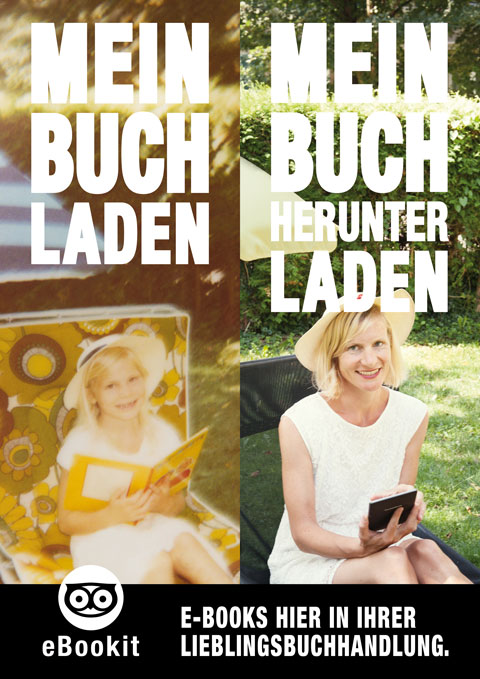
The Swiss Book Center has launched the e-book store Ebookit. The download platform supports smaller bookstores while also bridging the gap to the digital reading experience. Republica was responsible for the overall communications strategy.

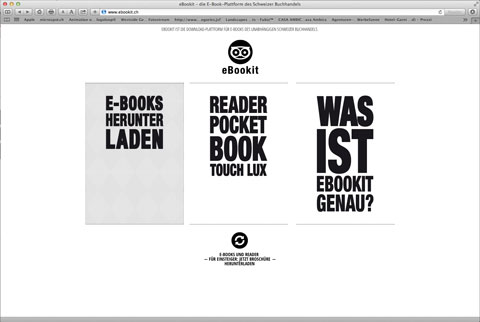
The Swiss book trade is changing. Independent bookshops in particular are struggling against increasing digital competition. The download platform launched in the fall Ebookit of the Swiss Book Center offers the opportunity to download e-books from a range of 500,000 books and support your favorite bookstore at the same time. Although books are purchased online on Ebookit, they are still credited to the desired store.

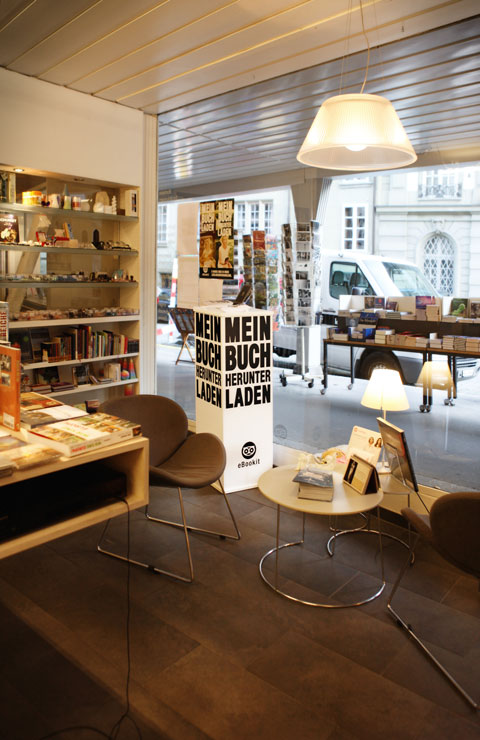
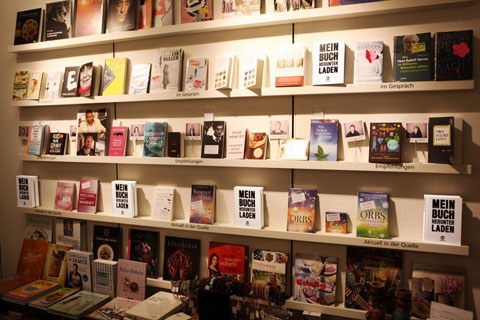
Republica designed the entire launch campaign. It is visible at the POS with posters, bookmarks, books and brochures as well as online with a landing page before entering the online store optimized for ereaders.

Responsible at Buchzentrum: Monika Scherrer (Head of Field Service & Product Management), Cordelia Speich (Sales Promotion). Responsible at Republica: Simon Muster, Michael Holzgang (overall responsibility), Linda Trachsel (production), Mike Krüll (creative direction), Kasper Kobel (art direction), Tugba Kirac (art direction, graphics), Anne Boxleitner (text), Joëlle Lehmann (photography).

1.bookit.1
1.bookit.2
1.bookit.3
1.bookit.4
1.bookit.5
 

Pretending that everything remains the same

A persistently uncertain economy and, above all, the change in methodology for reach and circulation surveys led many publishers to keep their advertising rates the same as in 2013. Nevertheless, some of these decisions are questionable to say the least.

Something is striking: Of the 150 titles listed here, only a quarter are changing the rates for entire advertising pages: 36 titles - mainly newspapers - are increasing the page price, 11 are reducing it. The 7 supplements make no changes at all, and only 2 of the 44 magazines do so. In addition, there are hardly any adjustments in French-speaking Switzerland, with only 4 titles (Journal du Jura, Journal de Morges, Lausanne Cité, GHI) raising their rates slightly and 2 (Avant Première, Bilan) lowering them. All this shows: Publishers are more cautious than ever before. For three reasons: Firstly, the majority of their advertising revenues were down in 2013. Secondly, they know that this is unlikely to change much even if the economy picks up - for structural reasons. Thirdly, their readership and circulation figures, which were collected using a new methodology for the first time in 2013, mostly show lower figures. However, some are also taking advantage of this change: As the new figures are not comparable with the old ones and a comparison of the old and new thousand-reader price (TLP) is therefore neither permissible nor possible, it is possible to give the impression that everything is more or less staying the same by keeping prices the same. 

Hardly conducive to the print genre

This latter tactic is more pronounced and more common in German-speaking Switzerland than in other parts of the country. But at least in some cases it raises questions. For example, it is difficult to understand why the NZZ Folio is leaving its rates at the previous level, even though it has 242,000 fewer readers than before according to the new measurement methodology. The Beobachter, Schweizer Illustrierte, Das Magazin and Gesundheits-Tipp are similarly problematic, each reporting around 80,000 to 100,000 fewer readers. Weltwoche, Annabelle, NZZ am Sonntag and Bilanz (-60,000 each) and Basler Zeitung (-40,000) are not much better. To be fair, however, the opposite is also true: Titles such as Télétop Matin, the Migros and Coop press and Touring have increased their readership by six figures - and yet have not raised their prices. Even Le Matin semaine, which has 72,000 more readers than before, has not raised its rates.

Much that is new in (southern) eastern Switzerland
 
However, in addition to the many unchanged prices, there are also a few steep surcharges or discounts this year. Some of them are understandable. For example, 20 Minuten, Blick, Blick am Abend, Nordwestschweiz and the free out-of-home magazine 20 Minuten Friday are all increasing their prices. However, it is interesting to note that the Powerday combination of Blick and Blick am Abend is lowering its rates by 5% at the same time.

The St. Galler Tagblatt (SGT) is also raising its rates by 15%. The reason: SGT is integrating three former partner newspapers of Südostschweiz (SOCH) - Werdenberger & Obertoggenburger, Rheintalische Volkszeitung and Liechtensteiner Vaterland. The SGT circulation will therefore increase by 21%, the readership by 15%. The situation is similar for the Neue Luzerner Zeitung: it is replacing its Neue Schwyzer Zeitung edition with the Boten der Urschweiz and now has 10% more readers and a circulation increase of 12%. Zentralschweiz am Sonntag is also likely to benefit from this. However, its price increase is justified differently: According to the new measurement, it has 24% more readers than before and is therefore asking for 13% more money. The loser of the new constellations in eastern and central Switzerland is, of course, Südostschweiz: four of its partner papers have turned their backs on it, which is why it is now reducing its rates by around 30%.

Standard tariff still on the rise

4 titles - Aargauer Zeitung, Il Caffè, SonntagsZeitung and Anzeiger Luzern - are charging significantly more for their b/w ad pages than for 4c prices, by up to 58%. They are thus following the general trend and introducing a uniform rate for b/w and 4c ads. This simplifies their rate structure. 21 other newspapers took this step earlier. Another newspaper is about to introduce the standard rate: the young Ostschweiz am Sonntag has already reduced its 4c rate by 5%, making it just 230 francs higher than that for a b/w ad. Incidentally, the steepest price cuts were made by the cinema magazines Avant première (-38%) and Film demnächst (-22.5%). The reasons are interesting: In German-speaking Switzerland they are reacting - despite significantly higher readership figures - to competition from 20 Minuten Friday, and in French-speaking Switzerland, where they have a few fewer readers, they have "adjusted the rate to the market", wrote advertising manager André Cristin.
 
Like every year: hidden surcharges

Of course, there are also hidden rate increases: These include newspapers that leave the price per page unchanged but increase the price per millimeter. This makes small-format advertisements more expensive. The most "cheeky" in this respect is the Liechtensteiner Vaterland: it is raising its b/w millimeter price by 8.5% and the color millimeter rate by as much as 3%, while leaving the page price untouched. The Basellandschaftliche Zeitung is hardly inferior: although it is increasing its page rate by 6%, it is raising its millimeter rates by 10 % to 14%. Le Temps uses another variant of hidden price increases: The title lowers page prices by 3%, but the millimeter price remains unaffected. But the reverse is also true here: The Aargauer Zeitung is lowering its color millimeter rate by 9%, but not the page rate - which leads to a discount on small-format 4c ads.

Reasons and excuses

Precisely because the survey methodology for circulation and reach figures changed this year, Werbewoche asked the publishers what criteria they used to make their rate decisions this year. By no means all publishers provided information. AZ Medien even said quite directly: "We do not comment on this in detail." Tamedia stated that the new readership figures were "generally" not included in the pricing". La Liberté, La Gruyère and the Ticino newspaper publishers said similar things. However, Kimedia, which is raising the rate for Bon à savoir by 8%, took a completely different view: "As always, circulation and readership figures are decisive. " Freiburger Nachrichten also relied on "our stable circulation figures". Weltwoche, which has around 60,000 fewer readers, justified the unchanged rate with a single word: "continuity". Was the wish the father of the thought?

Migros was different: it commented on the fact that it did not decide to increase prices despite the higher reach of Migros Magazine and Saisonküche with the "keyword: market acceptance". Other titles gave concrete reasons for their decisions: "The price increase at the post office" was the decisive factor for Lausanne Cité and GHI, for example. The Zürcher Oberländer cited the rising price of paper, the Zuger Presse more households in its distribution area. The Zofinger Tagblatt pointed to the negative taxation in Switzerland, which did not impose a surcharge if circulation remained the same. And Le Temps cited a strategic argument: the aim was to maintain the gross CPM level below CHF 120. "The CPM level must be kept as low as possible."

However, the most honest argument is probably made by Zeitlupe: "The new survey method only shows 144,000 readers for Zeitlupe. However, as it is no longer possible to compare with the previous studies, an unchanged advertising price remains the most obvious pricing option for 2014."
 
Markus Knöpfli

Subscribers can find all the tables in the article at this link (PDF at the end of the article)

printausgabe_3
 

Customers recruit customers - illegal?

The marketing concept is both simple and clever: customers refer customers. Existing customers are satisfied with a product and therefore provide the provider with the name and address of someone they know. The provider then contacts that person as well.

However, if the address is made by e-mail, the concept is no longer clever, but illegal, because such e-mails are spam according to Art. 3 Para. 1 lit. o of the Fair Trading Act. Recently, I received an advertisement by e-mail from a traditional Swiss textile company. Once again, I was interested to know where the textile company got my e-mail address. When I contacted the company, the owner spontaneously told me that an acquaintance had probably given my e-mail address to the company during a customer-acquiring-customer campaign. The boss was taken aback when I told him that such e-mails are illegal per se. Why is that?

Actually quite simple. According to Art. 3 para. 1 lit. o of the Unfair Competition Act (UWG), commercial e-mails may only be sent if the addressees have explicitly given their consent to commercial e-mails from the company in question (so-called opt-in principle) or - as an exception - if they are existing customers of the company. Neither is the case with e-mails generated via a customer-acquire-customer campaign. Thus, the sending of such e-mails is punishable under Art. 23 of the Fair Trading Act. The same applies to e-mails sent to the European Union. A brief Internet search using the keyword "customers recruit customers" shows that the traditional Swiss textile company is not alone with its illegal practice, and is even in "good company". Well-known Swiss companies from a wide range of industries also use the "customers recruit customers" concept to generate e-mail addresses.

What is to be done? The "E-mail" field in the corresponding form must be deleted immediately. And, if a telephone number is also asked for, check whether it is marked with an asterisk (*) in the telephone directory (www. local.ch). There are corresponding databases for such a comparison. This is because, according to Art. 3 Para. 1 lit. u Lauterkeitsgesetz, anyone who "fails to observe the note in the telephone directory that a customer does not wish to receive advertising communications from third parties and that his data may not be passed on for the purposes of direct advertising" is also acting unfairly and is therefore also liable to prosecution under Art. 23 Lauterkeitsgesetz. On the other hand, what is likely to be permissible under Art. 3(1)(o) of the Fair Trading Act is the possibility for existing customers, but also simply visitors to a homepage, to forward information about the relevant provider directly to acquaintances by e-mail. However, with such a tool, the e-mail address used by the customer must not be registered. This is also in accordance with the data protection principles of proportionality and purpose limitation.

"Customers recruit customers" is therefore a simple and clever marketing concept - if you observe the guard rails of the Fair Trading Act, it is also quite legal.

Ueli Grüter, LL.M., Attorney at Law, Grüter Schneider & Partner AG, Zurich/Lucerne, is a lecturer in communications law at the Lucerne University of Applied Sciences and Arts and co-editor of the book Kommunikationsrecht. ch. He comments once a month in Werbewoche on practical legal issues in advertising. Questions can be sent to the Werbewoche legal expert at [email protected].
 

Despite all the optimism for 2014

The agencies' profitability has reached its limit due to the ever-increasing demand for speed. There have been hardly any changes in the BSW agency rankings. 

Print increases. Print is decreasing. This is how one could summarize the future analysis of the BSW Leading Swiss Agencies. In order to provide a forecast for 2014, the association, in collaboration with the Research Center for Customer Insights at the University of St. Gallen, surveyed over 1,200 communication managers in 500 companies and all CEOs of BSW agencies about their expectations for the first time. Two thirds of all advertising clients expect a generally positive economic development in 2014. Over 60 percent of clients stated that turnover had increased in the last five years, and a good half reported slight to strong increases in profits. Only 5 to 6 percent complained of a significant drop in turnover and profits. Nadine Borter, President of the association, wanted to venture a positive forecast for the future based on the new study. 80 percent of all clients stated that marketing and communication is of great to very great importance and will continue to be in the future.  

Accordingly, two thirds of all clients plan to maintain or even increase their communication investments in 2014. Also for the first time, the total marketing communication investments of Swiss clients were analyzed according to the individual areas in which the money is spent. Just under a third is spent on traditional advertising, i.e. media such as TV, radio, newspapers, magazines, outdoor/posters and cinema, 15 percent on digital communication, 11.6 percent on direct advertising, 8.1 percent on sales promotion, while the areas of strategy consulting and efficiency measurement already account for around 5 percent. 82% of all advertising clients stated that they intend to invest even more money in online communication in the coming year. pan

PDF (Ranking of media and advertising agencies)


get_footer();