Studio Geissbühler creates a fairytale for the National Museum

Studio Geissbühler developed the advertising campaign for the fairytale exhibition at the National Museum.

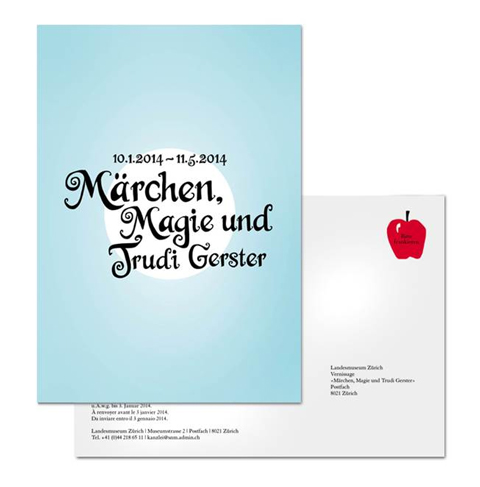
Fairy tales whisk us away to enchanted worlds and enchant our senses. This will be shown in an exhibition staged for children and adults at the National Museum Zurich from January 10, 2014, focusing on the origins, history and current relevance of fairy tales - and featuring the unforgettable Trudi Gerster with her unique voice. Precious manuscripts, pictures and objects will also be on display. Flying carpets and a fairytale forest invite the little ones to play. The exhibition shows that "storytelling" has been a basic need for us since time immemorial.

The visual realization plays with the symbolism of fairy tales, uniting good and evil, near and far, young and old. The reduced visual language provides quick access to the multifaceted theme and at the same time leaves room for the viewer's own imagination.

maerchen
maerchen-3
maerchen-4

Responsible at the Landesmuseum Zurich: Andreas Spillmann (Overall Management), Marco Castellaneta (Head of Museum Operations), Peter Krebs (Head of Marketing), Juliette Wyler (PR/Media), Eliane Burckhardt (Publishing), Carole Neuenschwander (Project Management Marketing). Responsible at Studio Geissbühler: Nadine Geissbühler (Creative & Art Direction).


Rod: Employee film created for Laax

Rod created a corporate video for the Laax winter sports region, which won a Bronze Edi award in November and is now being presented to the public.

How do you get employees at a winter sports resort like Laax looking forward to the season? How do you remind them that they can be proud of their destination and their work? As the lead agency for Laax, Rod was commissioned by the Weisse Arena Group to design and produce a film that reminds employees of the "Happy Up" promise. In the black and white look of the campaign, the film shows how much work and team spirit it takes to keep this promise to guests. The film celebrated its premiere at an internal event in Laax in the run-up to Christmas.

The employee film was awarded a Bronze Edi back in November, with the jury stating that the film impressively demonstrates what motivated employees can achieve together. The perfect unity of camera, editing and music achieved the goal of making employees proud of their employer and their destination.

//www.youtube.com/watch?v=2cePi9oloH0

Responsible at Weisse Arena Group: Reto Gurtner, Katja Kamps, Sarah Philipp. Director & film production: Humbi Entress / MMP Films. Camera: Ralph Bätschmann. Editing: Wolfgang Weigl. Postproduction: Ultra Images. Sound: Jingle Jungle.

Watson team set up

Since Friday, Watson has been introducing the future team in a YouTube video and also sharing information about where the new employees were recruited from.

Almost 60 people will work for Hansi Voigt's new news portal. Most of them previously worked at 20 Minuten.

//www.youtube.com/watch?v=9SBctXE0S6I

Why are you reading this message?

Question marks in headlines are frowned upon by many newsrooms—on the grounds that an article that asks questions deters readers. But this attitude is wrong, as a Norwegian study shows, according to the NZZ am Sonntag.

Standardized messages on Twitter and on an electronic auction platform were read more frequently over two months if they contained a question mark in the headline. This was found by Norwegian researchers. The content was best perceived when it addressed the reader directly. So: "Power corrupts" loses out to "Is your boss corrupt?".

The results of the study can be found here.

(Teaser image: Keystone)

Last but not least: Language confusion at Migros

The Swiss retail giant has its Italian pasta manufacturer produce a commercial in which a German man mispronounces the name “Migros.” This has drawn criticism from the media. Those who don’t deal with language professionally find the fuss overblown.

At Blick.ch Migros is now being accused of pseudo-dialect and Germanization and of not using its brand name consistently. But it is not quite that simple. Can one speak of pseudo dialect in a High German text? And is it Germanization at all if the brand name is pronounced with a voiced s in the Italian commercial, or is it not rather poorly dubbed Italianità, which in itself would suit Italian pasta? After all, a uniform pronunciation of the French brand name Migros does not exist in multilingual Switzerland, because the Ticinese articulate it as in the criticized spot.

//www.youtube.com/watch?v=pyEVDcgM2aA

The articles on 20minuten.ch and Blick.ch have triggered a flood of comments. What annoys customers, however, is neither the Germanization nor the internationalization of "their" Migros brand, as Migros spokesman Urs Peter Naef told 20minuten. The majority of the comments and evaluations are not directed against the company's slip-up, but against the media hype of a topic that is far too banal for that. (sis)
 

Swiss watched TV for less time

People in German-speaking Switzerland watched 121 minutes of television per day in the second half of 2013—16 minutes less than in the first six months of last year.

Publica Data and Mediapulse published the semester figures for TV usage for the second time on Friday. The new figures can be compared with the old ones for the first time. Previously, a new measurement system had made a meaningful comparison impossible.

TV consumption also declined in French-speaking Switzerland and Ticino in the second half of 2013, as the analysis shows. In French-speaking Switzerland, people sat in front of the TV for an average of 135 minutes a day (first half 148 minutes), in Ticino 156 minutes (first half 176 minutes).

With a 20 percent market share in German-speaking Switzerland, SRF 1 is in first place. The station increased its market share by 0.5 percent over the first half. SRF zwei follows in second place, with a market share of 8.1 percent (first half 9.2 percent).

Germans ahead of Swiss private broadcasters

The German channels follow behind. At 5.6 percent and 5.3 percent respectively, the public stations ARD and ZDF were more popular than the private stations RTL (4.9 percent), Sat 1 (4.0 percent), Vox (3.5 percent), Pro Sieben (3.0 percent) and RTL II (2.6 percent). The Swiss private stations 3+ and 4+ had market shares of 2.3 and 0.7 percent, respectively, in the second half of 2013. The local station TeleZüri had a share of 1.0 percent.

Among young viewers between 15 and 29, the German private stations Pro Sieben and RTL are even more popular than the programs of SRF1 and SRF zwei.

More time-shifted television

For the second time, time-shifted TV consumption in Switzerland was also included in the measurement. In German-speaking Switzerland, more than one in twenty minutes of television is already watched time-shifted, as the results show. The share of total viewing time rose from 5.3 to 6.1 percent. In French-speaking Switzerland, the proportion of time-shifted viewing is 7.2 percent, and 5.8 percent in Ticino. (SDA)
 

Mediapulse measurement method still controversial

To verify its newly introduced TV audience measurement system, Mediapulse conducted a watermarking test. According to Mediapulse, the test shows that the tracking of viewership is functioning as intended. However, this conclusion is being questioned.

On January 1, 2013, Mediapulse introduced a new system for determining TV usage, which uses audiomatching to identify stations based on the sound of the TV signal being used. However, the reliability of audiomatching has been called into question. Mediapulse and Kantar Media, together with their client Goldbach Media and with the support of a German broadcaster, then conducted a watermarking test. It was intended to prove the validity of audiomatching technology in direct comparison with watermarking technology.

"If we compare the results of the audio matching with those of the watermarking test now carried out, the differences in the use and allocation of the tested station are within half the confidence interval" explains Manuel Dähler, Director of Mediapulse. The previously defined quality criterion would thus be fulfilled.

In a statement from Goldbach Media, however, it says that further tests are necessary to make a definitive statement about the Audiomatching measurement method. It is confirmed that the results are mostly within the half confidence interval. However, the quality criterion could not be met in every case. In particular, on one of the days investigated, an excess of several hours was found during the prime time. The test had also shown that there were some misallocations in the country signals. Goldbach Media is therefore calling for a broader watermarking test.
 

Symposium: Passion for Packaging

Unique packaging takes center stage at the «Passion for Packaging – Conference.» The conference will be held in conjunction with the easy Fairs trade shows on March 26–27, 2014, in Halls 3 through 6 at Messe Zürich.

Packaging innovations are only successful as innovations when they persuade consumers to buy. How these can become a success at the POS is one of the central topics of the "Passion for Packaging - Conference 2014". On both days of the trade show, speakers will provide food for thought on tomorrow's goals and strategies. They will thus deepen the range of topics covered at the easy Fairs industry events "Packaging Innovations Zürich" and "Verpackung Zürich".

The focus of the "Passion for Packaging - Conference" is on packaging and design, branding and future & trends. The main focus will be on luxury goods and luxury products in the high-priced to luxury segment - for example with regard to brand, branding, rebranding, image, positioning, differentiation or product appeal.

At the start of the "Passion for Packaging - Conference" on Wednesday, March 26, 2014, Philippe Dubois, President of SVI Swiss Packaging Institute, and Martina Hofmann, Exhibition Manager Packaging Innovations Zurich, will welcome the participants at 8:30 a.m.. Olivia Bosshart from Kion, the event platform for zeitgeist topics from the worlds of business, politics, culture and society, will lead through the program of the "Passion for Packaging - Conference".

The detailed conference program and online registration can be found at here.

PR-KFS reorganizes management

In early 2014, Christian Schneider handed over the management of PR-KFS to his wife, Silvia Schneider-Klimesch.

The soon-to-be 59-year-old PR consultant will continue to work at the communications agency he took over in 1988 and has headed ever since. Commenting on the staff handover, he says in a statement on Friday, "At my age, it's time to think about succession. A good reason to pass on the management of the agency founded by Karl Schneider in 1965 to younger hands."

Certified PR consultant and editor Silvia Schneider-Klimesch has been working in the communications industry for over 25 years - and always on the agency side. She is 47 years old and a partner in PR-KFS. Her husband Christian Schneider holds the majority of the shares.

1.pr-kfs.bild_

Last but not least: PR 1.0

"Kassensturz" celebrates its 40th birthday. The Bart contribution shows that not only Roger Schawinski, but also advertising and public relations have changed significantly.

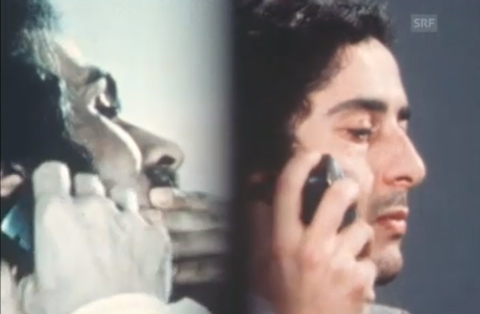
The program was only a year old in 1975 and "Kassensturz" was already exposing the advertisement as misleading whitewashing. In a commercial, Philips demonstrated that it only takes a few seconds to shave half of the face. Cleaning the razor included, of course.

bart-1

The young Schawinski could not and would not accept this and unsuccessfully recreated the process. Even if it was more lazy and less technical - but such details were of interest at a time when "Kassensturz" reported the results of non-standardized Detergent tests by housewives ("I think everyone is white"), nobody.

bart-vergleich

With the help of advanced slow-motion technology, the program then unmasked the commercial: the beard was pre-shaved! The actor's well-intentioned attempts to cover up the "bit" by skillfully using his hands ended in the editorial offices of Swiss television.

What was considered outrageous back then no longer attracts attention today. Or when was the last time you asked yourself whether the advertised cleaning agent really removes millimeter-thick limescale deposits with a single wipe without leaving any residue?

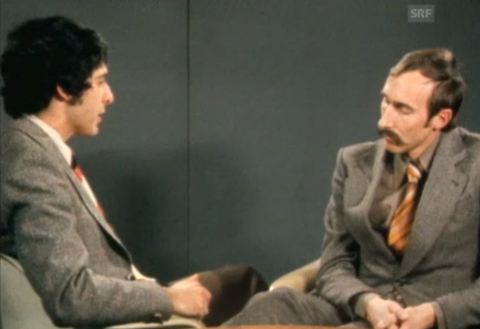
The segment becomes really amusing when Philips representative Wehrli has to justify his miracle shave on camera. Schawinski - whose voice can only be attributed to the current Radio 1 boss with the utmost concentration and a little imagination - takes the gentleman to task with stoic composure and within the scope of his abilities at the time: "Why do you let the viewer believe that they are shaving... when the whole thing is taking place on skin that has already been shaved?" The way Wehrli then tried to get his Philishave head out of the noose should make today's media spokespeople and public relations officers blush. Excuses that still deserve to be called that.

According to Wehrli, they simply wanted to show the many Philishave owners how to shave in the best possible way. The film fulfills this "demonstration purpose". Schawinski wants to know why the before-and-after effect with the beard was used. Now Wehrli shoots the excuse bird: a beard is part of shaving. The "pre-shave" is explained by the fact that the scene was filmed several times and the beard consequently became shorter and shorter. In the end - purely by chance, of course - the last scene was used.

wehrli

This nostalgic awkwardness seems charming today. Back then, however, viewers were sold for being dumber than they were. Today, according to Schawinski 40 years later ("Colon", 15.12.13), the "Kassensturz" guests are so media-trained that they say "nothing clever" in the first five minutes if possible, so that they can get through the seven-minute interview unscathed. From the viewer's point of view, this is perhaps still better than being sedated with an overly clumsy robber story. (hae)

The contribution:
 

Statement makes zeppelin float for Ricardo.ch

Statement and Ricardo.ch let a remote-controlled zeppelin float through Zurich HB. Passers-by were able to connect to the blimp's wifi network and win prizes such as the new iPad Air in a raffle.

Statement was commissioned to design and implement a pre-Christmas BTL campaign as part of Ricardo.ch's ongoing "Sofort geht so!" campaign, to support the campaign with an immediate experience alongside the TV ads. The campaign draws attention to fixed-price offers for immediate purchase - these, along with auctions, account for around half of the offer. The campaign, which will run until the end of December 2013, should lead to targeted interaction with consumers and make Switzerland's largest online marketplace tangible for consumers offline, according to a statement.

With a five-meter-long zeppelin - the largest remote-controlled one in Switzerland - passers-by at Zurich's main train station were amazed for a good three hours. A prompt on the airship encouraged people to connect to the "Sofort geht so!" wifi network installed on board. Passers-by were taken to a competition microsite with a slot machine and could win 15 iPad Air, 100 ski tickets and 7,500 heat bags on the spot and collect them directly. The campaign took place in Zurich and Lausanne.

//www.youtube.com/watch?v=yxiDV0s0LOM

Responsible at Ricardo.ch: Yves Mäder (Managing Director), Michel Noverraz (Head of Brand & Advertising), Simon Marquard (Head of Communications). Responsible at Statement: Renato Auer (overall responsibility, consulting and implementation), Philipp Brunner (conception). Responsible at Ongoing: Roger Wicki (design, programming).

Exaggerated advertising: criminal complaint against Novartis

In addition to criminal charges in the U.S., Novartis is also facing trouble in Japan. The Japanese Ministry of Health announced on Thursday that, following months of investigations, criminal charges had been filed against Novartis.

The company is accused of over-promoting the antihypertensive drug Diovan. Clinical studies conducted by two Japanese hospitals were cited in the advertising. These contained manipulated data. The Ministry of Health said Novartis was suspected of using the advertisement even after the company was already aware that the data had been manipulated.

Novartis denies knowledge of the manipulations and maintains that studies have confirmed the safety and efficacy of the drug. Several Japanese hospitals had stopped prescribing the drug. Novartis' Japanese subsidiary, Novartis Pharma K.K., published an apology on its website in which it apologized for "annoyance and
Concerns" in connection with the advertising asks for forgiveness. The company is taking the matter very seriously and is cooperating with authorities, it said. Diovan, also known as valsartan, is a major revenue generator for Novartis and is sold worldwide. About a quarter of revenue from the drug most recently came from Japan. (SDA)

get_footer();