Mobile dominates
According to Zenith, 75 percent of global internet usage will take place on mobile devices in 2017.


The first edition of "Mobile Advertising Forecasts," released Friday, takes a closer look at mobile advertising and mobile technology in 60 major countries around the world. It forecasts the increasing amount of time consumers are spending on the mobile Internet, the growing adoption of smartphones and tablets, and rising mobile advertising investment.
Spain, Hong Kong and China lead in mobile Internet consumption
The countries with the highest mobile Internet consumption are in Western Europe, Asia and North America. Mobile Internet is already the preferred form of Internet use in Spain. Zentih expects mobile Internet consumption here to reach 85 percent in 2016. Hong Kong is in second place with mobile Internet use of 79 percent, followed by China with 76 percent and the United States with 74 percent. Fifth place is shared by Italy and India, each with 73 percent.
Hong Kong is expected to lead the world in 2018 with mobile Internet usage of 89 percent. It is followed closely by China in second place with 87 percent and Spain in third place with 86 percent, then the USA and Italy with 83 percent each and India with 82 percent.
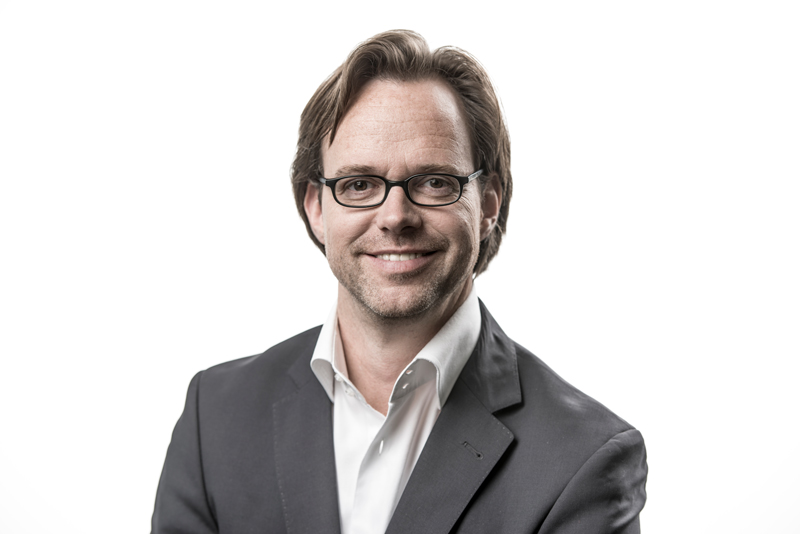
"In Germany, too, the greater proportion of Internet use is now via mobile devices," states Dirk Lux, CEO of Zenith in Germany. "Mobile Internet consumption is 63 percent in the current year and 66.6 and 68.4 percent respectively in the coming years. Instead of a sharp increase, we see primarily a shift from stationary to mobile Internet."
Smartphone penetration increases 2.4-fold between 2012 and 2016
The main reason for the rise in mobile Internet usage is the rapid spread of mobile devices. In 2012, only 23 percent of the population in the 60 markets we surveyed owned a smartphone, and just 4 percent had a tablet.
Smartphone penetration now holds at 56 percent, a 2.4-fold increase over the past four years. Zenith forecasts a further increase to 63 percent by 2018. Tablets are still more in the luxury space and thus nowhere near as prevalent: Currently, 15 percent of consumers in our 60 markets have a tablet. This figure is expected to rise to 17 percent by 2018.
Smartphones most widespread in Western Europe and Asia
The highest smartphone penetration is found in Western Europe and Asia. According to Zenith's estimate, Ireland has the highest smartphone penetration this year at 92 percent, followed by Singapore at 91 percent, Spain at 88 percent, Norway at 86 percent and South Korea at 84 percent.
According to the forecast, Ireland looks set to remain in first place in 2018 with a penetration rate of 94 percent, followed by the Switzerland and Singapore with 92 percent each, and Norway and Taiwan with 91 percent each. In Germany, 79 percent of mobile surfers use a smartphone.
Tablet penetration varies extremely across markets. In ten of the 60 markets studied by Zenith, there is a penetration rate of over 50 percent, and in another ten there is a penetration rate of under 10 percent. In China, only 3 percent of the population owns a tablet, which pulls the average down sharply, as 27 percent of the population in these 60 markets is from China. In India, which accounts for another 26 percent of the population in these 60 markets, 6 percent have a tablet. The highest tablet penetration is in Singapore, at 75 percent. China and Thailand share last place with 3 percent each.
60 percent mobile internet advertising in 2018
As published in "Advertising Expenditure Forecasts" in September 2016, the share of Internet advertising worldwide will rise from 44 percent this year to 52 percent next year, meaning that for the first time more money will flow into mobile advertising than into fixed-network media in 2017. In 2018, the authors see mobile advertising accounting for 60 percent of all Internet advertising. In 2017, mobile media ad spending is expected to total $134 billion - more than is spent on advertising in newspapers, magazines, movie theaters and outdoor advertising combined.
"In Germany, 1.6 percent of online advertising will be delivered to mobile devices this year," Lux said. "This corresponds to an equivalent value of 317 million euros. For 2017, we expect an increase to 2.4 percent and 483 million euros, and in 2018 it will be 3.5 percent and 736 million euros. This boom in mobile advertising should be understood by advertising companies as a signal to work on a targeted mobile and mobilizing consumer approach. True mobile advertising that plays with the possibilities of the mobile device is still rare."
What this means for advertisers
Zenith advises that all brands prioritize mobile in their digital communications: All areas - from brand websites to video ads should be designed to achieve the best possible results on mobile devices. However, it is also important for advertisers to consider not only mobile devices but also the mobility of customers. In the course of a day, consumers switch back and forth between tablet, desktop and smartphone, sometimes even while watching TV, meaning advertisers need to generate brand messages that are coherent and consistent across different media and devices.
Zenith also recommends that advertisers leverage the extensive mobile ecosystem, including smartwatches, activity trackers and other smart devices, when planning their communications strategy. Since consumers tend to use these specialized devices for very specific occasions, this gives advertisers the opportunity to target their advertising message precisely.
"Globally, most access to the Internet already occurs on mobile devices," explains Jonathan Barnard, Head of Forecasting at Zenith. "Countries in Western Europe, Asia and North America are leading the way in this shift, but mobile technologies are surging worldwide. Next year, mobile devices will also become the most important medium for Internet advertising."