Swiss in favor of minimum age for social media
A new, representative survey conducted by the online research institute Marketagent among 1,001 people in German-speaking and French-speaking Switzerland shows that the public views social media for children and adolescents far more often as a risk than as an opportunity, and a large majority supports establishing a legal minimum age.


On average, respondents would like to see an age limit of 15, but at the same time doubt that platforms can reliably verify the ages of their users.
Majority Sees Social Media as a Threat
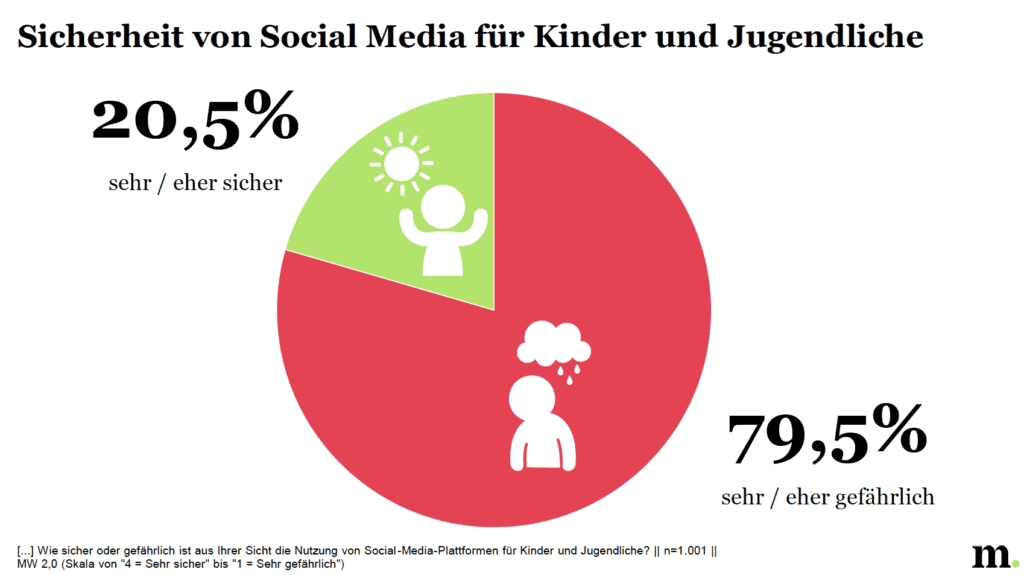
Today, children and teenagers naturally spend time on TikTok, Instagram, or Snapchat, but the Swiss public views this digital world with a critical eye. Eighty percent of those surveyed believe that social media is somewhat or very dangerous for young people, while only one-fifth consider these platforms to be safe.
The study shows that opportunities such as access to knowledge and education (37 percent), the acquisition of digital skills (35 percent), and social networking (34 percent) are certainly recognized, but they take a back seat to the perceived risks. In particular, cyberbullying (69 percent), addiction and excessive use (63 percent), and sexual harassment (62 percent) shape the public’s perception of risk.
Call for a statutory minimum age
Alongside international regulatory efforts—such as Australia’s ban on social media for children under 16 or the planned restrictions for children under 15 in France—the call for age limits is also gaining traction in Switzerland. Eighty-three percent of respondents support a legal minimum age for social media, with the desired average age being 15.
It is noteworthy that support is high across all generations: both 14- to 19-year-olds and those over 60 are equally vocal in their support for a legal age limit. For many, a minimum age is seen as a key component in better protecting children and adolescents and enabling them to use social media responsibly.
Responsibility of Parents, Platforms, and Policymakers
When considering the question of who should ensure compliance with a minimum age requirement, a nuanced picture emerges. 43 percent of respondents believe the primary responsibility lies with parents, 23 percent with the platforms themselves, and 19 percent with the government.
At the same time, a clear majority of 64 percent does not believe that social media providers can reliably verify users’ ages. The public expects parents to guide their children, set rules, and monitor their activity, while platforms and policymakers create a framework that effectively supports the protection of minors.
TikTok as the riskiest platform
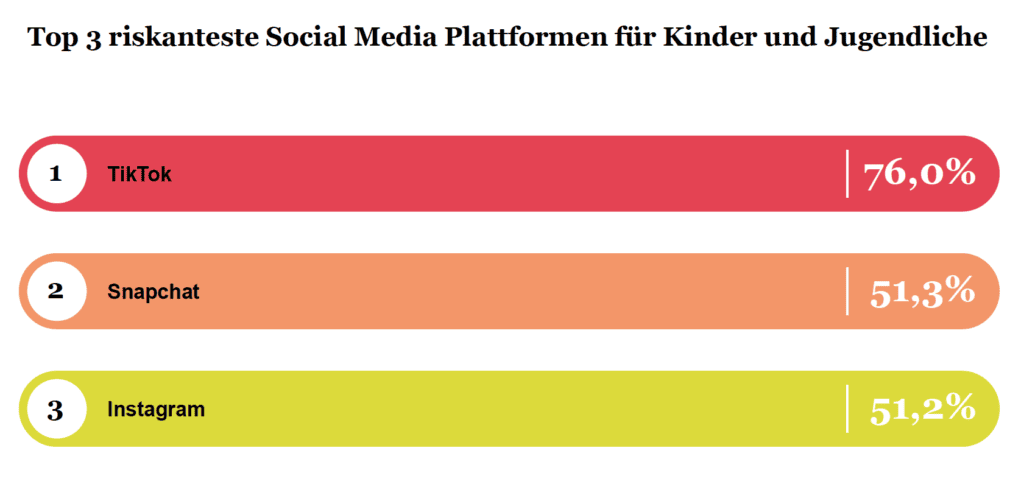
The assessment of individual platforms is also clear-cut. TikTok is rated by 76 percent of respondents as particularly risky for children and adolescents, placing it well ahead of Snapchat and Instagram, which are each classified as problematic by 51 percent of respondents.
X/Twitter and Facebook (39 percent each), as well as YouTube (24 percent), are also facing criticism, albeit to a lesser extent. It is striking that younger people in particular are more likely to perceive Instagram as risky (70 percent of 14- to 19-year-olds) than older respondents (42 percent of 60- to 69-year-olds).