
"The business magazine "Eco" is perceived as very competent. That is our capital"
Girl Power at SRF. Journalist and TV producer Alexandra Stühff has been appointed the new editor-in-chief of the business magazine «Eco.» Werbewoche.ch profiles the economist, who has roots in northern Germany, in an interview.


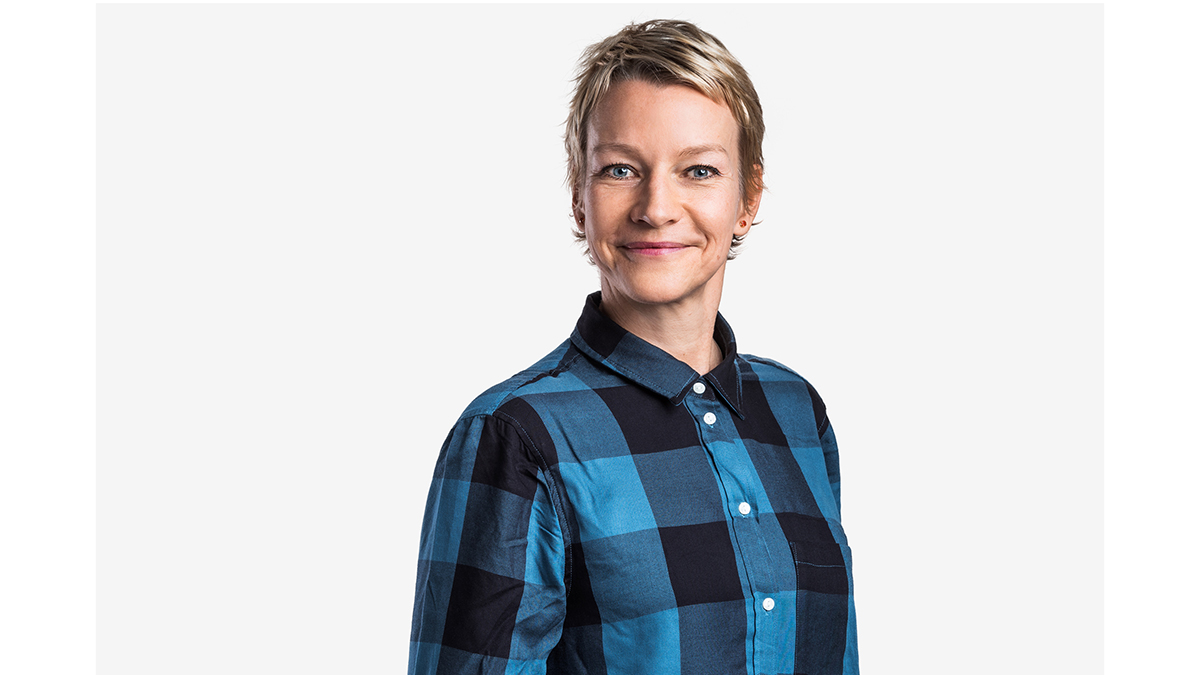
Werbewoche.ch: Alexandra Stühff, when exactly did you become the new head of "Eco"?
Alexandra Stühff: Since we moved to the SRF newsroom at the beginning of November, I have been in this new role.
How did you come to take on this new role and was it a surprise for the team that you took over the management?
I was asked by my line manager. We have open and honest communication throughout the team. So it was probably not a big surprise to anyone.
Do you have respect for the new task?
Above all, I have the utmost respect for the colleagues I work with. You can't fool them with an X for a U. They are all experienced magazine journalists. They work hard on the content before it goes on air. Not only are they all very competent, they're also great people. That's why this struggle is for the good of the show, but never at the expense of cooperation. We have a really good culture of discussion. That is by no means a given. I consider it a privilege to be part of this team.
What will change for the TV audience with you as head of "Eco"?
"Eco" is an established brand. The business magazine is perceived as very competent and taken seriously both within the Swiss economy and beyond. In times of fake news, this is crucial. That is our capital. I'm often appalled at how quickly people now have an opinion on everything and everyone, whether it's on social media or out at night. There is far too little listening now, let alone thinking. It's our job to question the quick answers, to probe deeper, to be even more critical. As a weekly magazine, SRF gives us the time we need to do this. And we use it. Our audience appreciates that. For me, that is extremely worth preserving. At the same time, we want and need to reach a younger audience. This is mainly possible via social media. We are working on that.
How many people do you manage in total?
"Eco" is made by eleven people. Our face to the outside world is our presenter Reto Lipp. He is our figurehead and a very important source of input for the program.
Your position didn't exist before. How was the editorial team organized before?
The specialist editorial team for economics consists of the colleagues who cover economic reporting in SRF's news programs and the "Eco" team. Roman Mezzasalma heads the specialist editorial team. The news team used to have a manager, while "ECO" was led by the head of reaction. Now it's the other way round: Roman wants to focus more on the news team and has therefore handed over the management of the "Eco" team to me.
The "Eco-Talk" program will soon be discontinued. Will the editorial team be downsized as a result?
The "Eco-Talk" was supervised by Reto Lipp together with an "Eco" colleague, not produced by an additional team. That is why there will be no cutbacks. Reto will be seen more often in the news programs. "Eco-Talk" is expected to be broadcast twice more.
You are a northern light, how long have you been in Switzerland?
I have lived in Switzerland for half of my life now. I studied economics in Fribourg and Geneva and have been a naturalized Swiss citizen since 2012.
Why were you drawn to Switzerland?
Honestly? On a whim. At the age of 22, I really wanted to leave Hamburg. I already had a place to study in Dijon. But what about Switzerland? I have no idea how I came up with the idea. I didn't know anyone here and had no connection to Switzerland apart from a few vacations. Then I read in a study guide that you could attend all lectures in Fribourg in German or French. Three months later, I took the night train from Hamburg to Fribourg with two suitcases. It was the decision of a lifetime. The university is small, the students come from all over the world, the professors know you by name. The academic standards are high, the parties legendary.
How did you start your career?
I trained as a banker and learned the trade from the bottom up.
After your studies, did you go on to train as a journalist?
Exactly. I was at Gruner + Jahr in Hamburg, Dresden, Berlin and Cologne. My main editorial office was the Morning mailso I come from tabloid journalism. After my traineeship, I went to the business press in Cologne, to Bizz Capitala weekly business magazine aimed at readers in their mid-20s to mid-40s. At some point, however, I wanted to go back to Switzerland and signed up for the weekly newspaper Cash from Ringier. I started there in 2001, in the "Invest" department, which dealt with investments. After just one year, they offered me the head of the department. I was at Ringier for almost six years. That was a very formative time, which I really enjoyed - to be challenged and supported in such a way at a young age is incredibly great and, of course, enormously motivating. But at some point it was time to go. After a short stint at the news magazine "Facts", I joined "Eco" at the beginning of 2008.
What's interesting is that after five years at "Eco", you set up your own business and founded "Pressekontor Stühff".
Yes, that's right. I had wanted to go freelance for a long time. Instead of working exclusively for one editorial team, I wanted to work for many different editorial teams and be able to do very different stories. I also increasingly missed writing. So I resigned from SRF. "Eco" then became my first client, which of course made me very happy. I repeatedly worked for the program and also for "10 vor 10" for several weeks. I also worked for the Handelsblatt and had a money column in the Focus. At some point, the Burda publishing house approached me and asked me to develop a business magazine for them. The concept was well received, and then I was allowed to realize it myself in Munich together with the editorial team. That was an absolute highlight.
Have you never worked for companies outside the media industry?
I kept getting requests to edit texts, especially from the fund industry. These were specialist texts aimed at a specialist audience. But even experts prefer to read well-written texts rather than bulky ones.
In 2016, "Eco" brought you back as a producer and since then you have been working 90 percent for SRF again. Does "Pressekontor Stühff" still exist today?
That still exists. However, I've already reduced my commitments almost completely. "Eco" is not a nice side job, I have to have my wits about me for that.
You've been with "Eco" almost since its inception. You started at SRF in 2008, and the business magazine was launched the previous fall. What were your best "Eco" stories that you were able to realize over the years?
There wasn't the best one, but one that was special for me: as a native of Hamburg, I grew up with the port and its container ships. There are also family reasons for this. When the financial crisis broke out in 2008/2009, container shipping was also plunged into a crisis that threatened the existence of many shipping companies. I was able to do a report with many important players in Hamburg and bring a part of my home country closer to the Swiss public. That was a highlight for me here at "Eco". One of my hobbies is also the topic of sustainability. I've been following it intensively for 20 years and report on it time and again.
Will we continue to see contributions from you in the SRF business magazine?
My job now is different from being a contributor. But the great thing about our job is that journalism is a craft. And you never lose it. So never say never.


