Two languages - one event spirit!
Street names and public buildings are labeled in both languages, giving Biel an intercultural atmosphere. These are ideal conditions for creating memorable seminar and event experiences.


The Kongresshaus Biel is very popular as a conference and event venue.
What do Bern, Basel, Zurich, Lausanne and Geneva have in common? The five largest Swiss cities are all not really far from Biel/Bienne. The bilingual watchmaking city can be easily reached from all of the country's major cities in plus/minus an hour's drive, a little more from Zurich and Geneva. "This central location is an important advantage for us," says Oliver von Allmen.
The director of Tourismus Biel Seeland knows exactly what he is talking about. Over the years, Biel has built up an excellent reputation in Switzerland and even in neighboring countries, particularly in the field of congress and conference tourism. The short distances within Biel itself - the congress center and the hotels are within walking distance of the train station - as well as this mix of French and "Schwyzerdütsch" give the second-largest city in the canton of Berne its very special, unmistakable charm.
Every year, Tourismus Biel Seeland organizes between 80 and 100 events of all sizes. "From small seminars to events with over 2000 participants, the entire MICE range takes place in Biel and the Seeland. We can put together and model the right offer for every event and request in close cooperation with all local partners," explains Oliver von Allmen. The Kongresshaus Biel, located in the center of the city, is particularly popular for larger events. It offers a huge congress hall with 1200 seats, which can also cater for up to 700 people in restaurant seating. There is also a club room with a capacity of up to 220 people and five other smaller rooms for workshops etc.
A range of other infrastructures await the Biel event audience. For example, the Centre S with a 400 square meter hall with high ceilings and large windows, which can be divided into two halls. Then there is the Farelhaus in the middle of the city, an important architectural witness from the late 1950s. It is considered a particularly successful early work by architect Max Schlup. At the heart of the Farelhaus is an atrium-like garden courtyard, around which the Farel Bistro, an adjoining garden hall and a concert and event hall are arranged. The lakeside Residenz Au Lac, a seminar house with four rooms equipped to a high technical standard, also offers a comfortable setting even for larger event groups.
In addition to the events officially organized via the tourist office, there are also numerous direct bookers of events and occasions. For example, they make arrangements with the operators of the Tissot Arena sports and cultural center (ice rink, football stadium, curling hall, shopping center, cinemas, restaurants), where events of any size can be held, as well as with the hotels bilaterally. The tourism director names the Hotel Mercure, the City Hotel Biel, the Art Déco Hotel Elite, the Hotel Florida Studen and the Klosterhotel St. Petersinsel as the most important conference hotels in Biel.
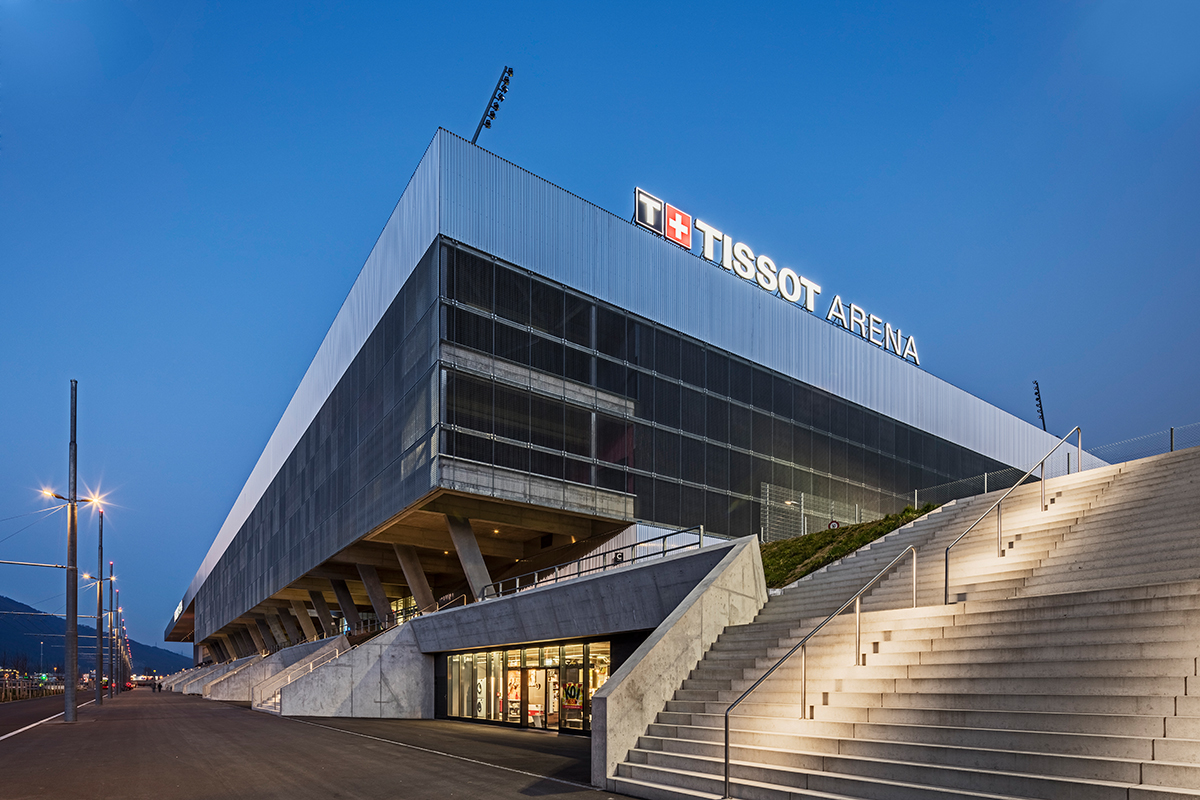
The Tissot Arena
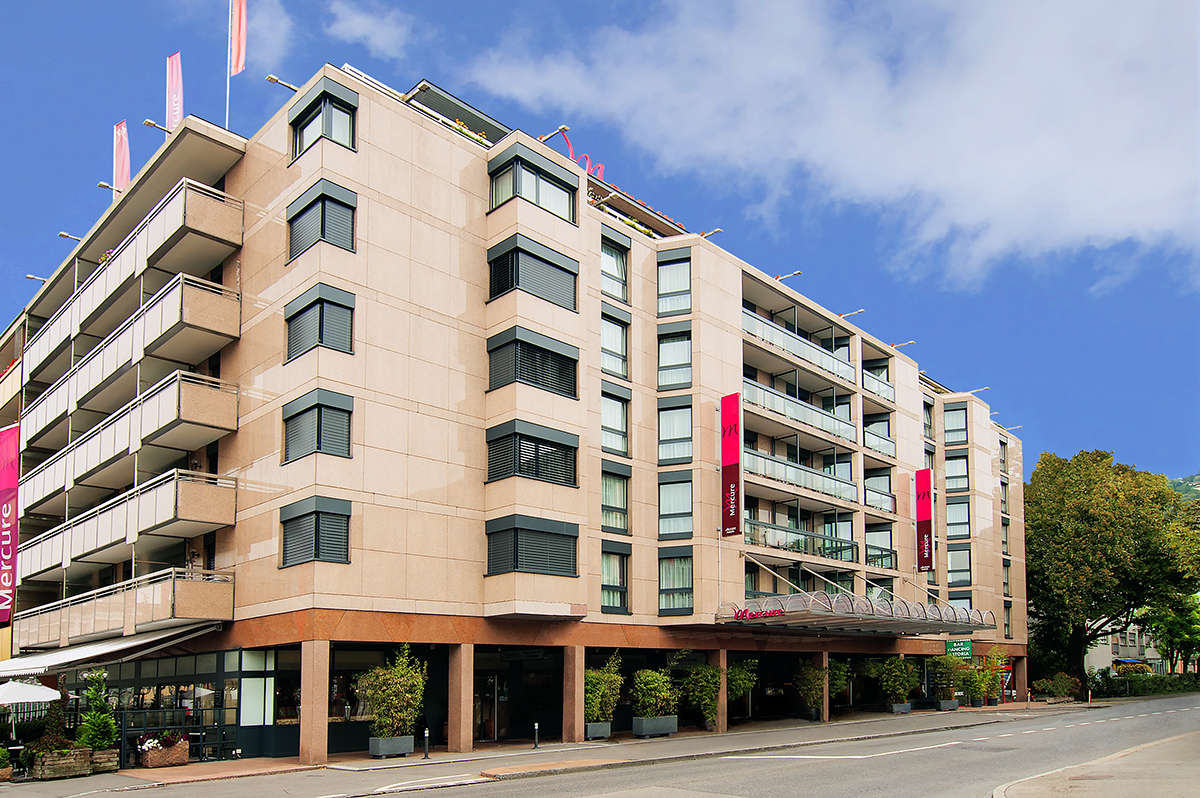
The Hotel Mercure Plaza
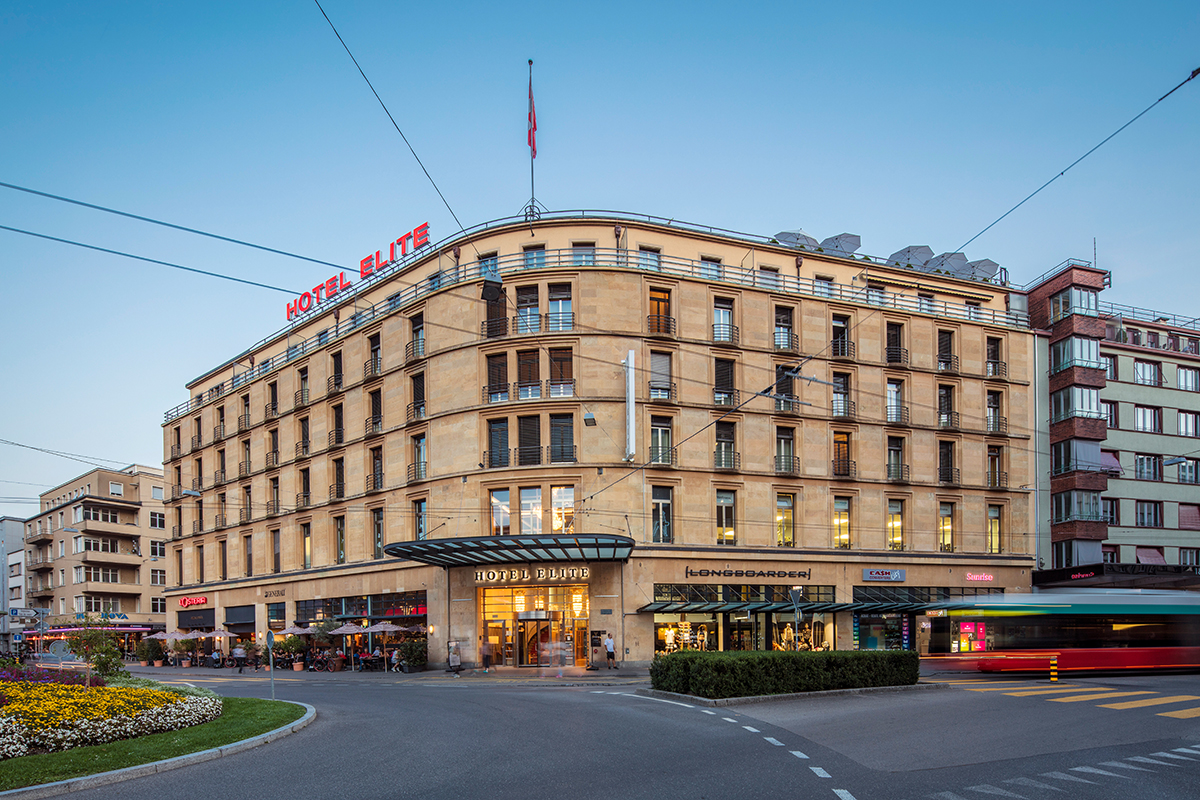
The Art Déco Hotel Elite
In addition to centrally located event infrastructures of all sizes and specialized seminar hotels, all-round successful events naturally also require exciting supporting programmes. In this respect, too, Biel naturally doesn't need to be asked twice, says Oliver von Allmen. Various adventure and team-building activities have been created, put together and continuously expanded on site over the years.
Visits to the Cimier Watch Academy, for example, have become very popular. In a seminar that lasts around six and a half hours and can be booked for groups of up to 15 people, participants build a Cimier watch themselves in the best Swiss watchmaking tradition. "Our local master watchmakers let the event participants in on the secrets of their trade and always earn a lot of applause," says von Allmen. The watch industry certainly plays a beneficial role for the MICE business, not least in the form of such offers. However, the effect on the number of actual event bookings cannot be precisely measured.
A visit to the Römerhof Bühl has also proven to be a great alternative to watchmaking for event groups from Biel. The farm has a rustic event hall with a capacity of up to 180 people, where guests can enjoy a high-quality dining experience surrounded by nature and animals. A "seminar on the farm" has also developed a solid clientele on site. The snacks are of course prepared using local and home-made products.
Another highlight of the supporting program is an amusing scooter ride through the vineyards on Lake Biel. First, the funicular takes you up 400 meters in altitude from Ligerz to Prêles. A guide then accompanies the event participants on the scooter ride along the vines. Although it is advisable to keep your eyes on the road, especially at higher speeds, there is an impressive view of St. Peter's Island and the Seeland as far as the Bernese Alps. "If you prefer not to ride a scooter, you can listen to the village guide on a walk through the winegrowing villages and learn a lot about the region," says Oliver von Allmen. A wine tasting at the vineyard, a fish menu on the lakeside terrace and a boat trip make this group event a highlight. Weather permitting, of course.
The view of the water while eating fish is, of course, the motivation for another activity that should not be missed in Biel. The Bielersee Schifffahrt cruises to attractive excursion destinations along the Aare, Lake Biel and in the Three-Lakes Region. "The world's largest solar catamaran, the MobiCat, is unique and we are proud to present it to our guests," says Oliver von Allmen. The Lake Biel fleet comprises a total of eight ships with catering services that operate throughout the year. "A good choice for successful seminars, workshops or team-building courses."
The tourism director is confident that he will be able to expand the conference and event business even further in the future. For example, there are plans to build two more seminar hotels. He admits that new investments in infrastructure, congress centers, etc. are also being considered and are necessary. It is also important to focus even more on French-speaking Switzerland. "Our bilingualism undoubtedly opens up the market in French-speaking Switzerland. Nevertheless, around 80 percent of events still come from German-speaking Switzerland. Not infrequently with international companies," explains Oliver von Allmend.
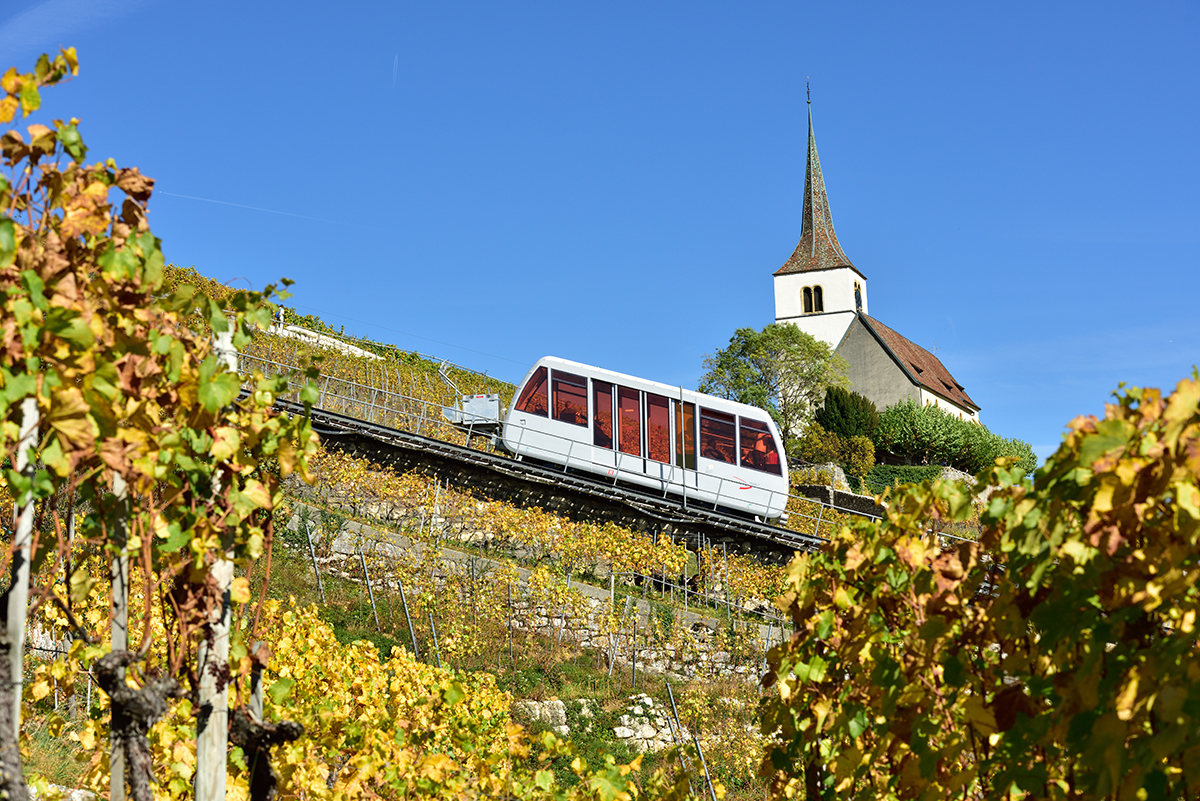
The funicular offers a magnificent view.
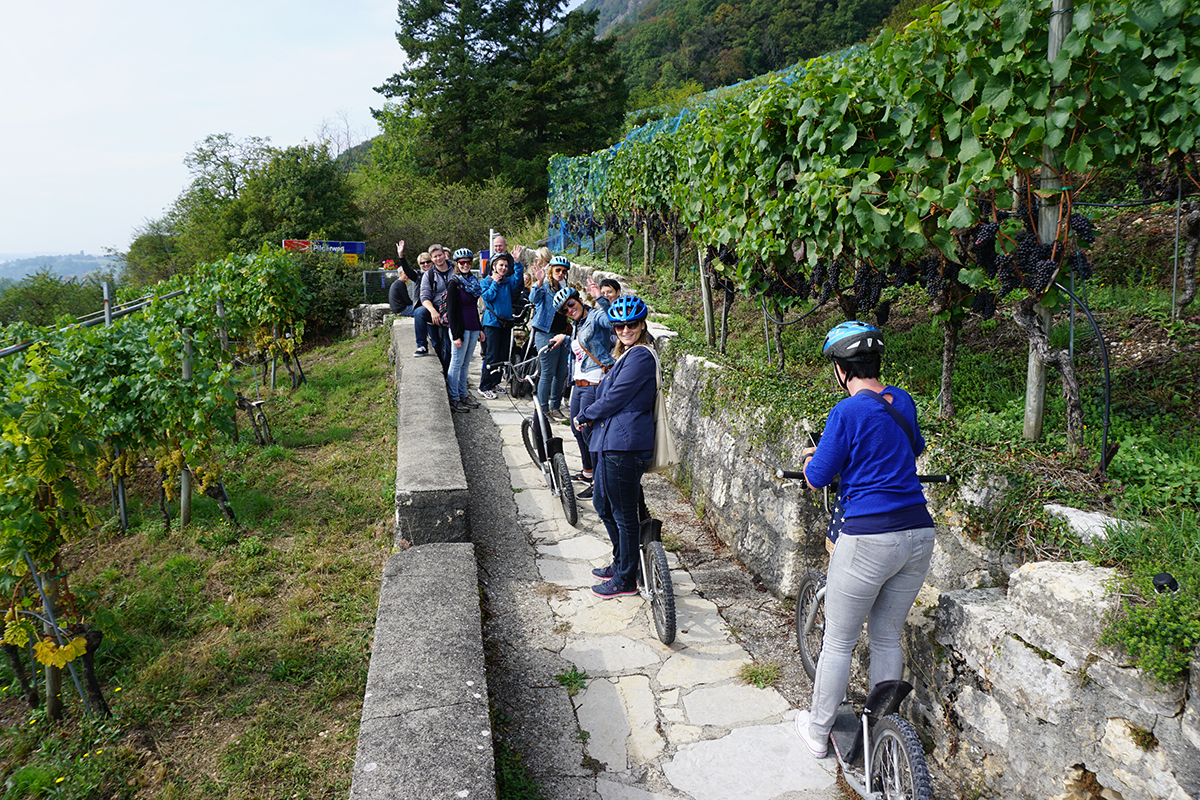
A welcome change from the seminar - a bike tour through the surrounding countryside.