How brands come into the children's room
There it is, the little train, nestled between a stuffed animal and a favorite book. And as the child plays with it, something happens that hardly any traditional campaign can achieve: brand loyalty grows a little.


Early childhood brand experiences shape trust long before purchasing decisions are made. Those who manage to appeal to families emotionally and credibly through their children gain more than just attention, they create lasting brand loyalty. What do companies need to consider when addressing children with promotional products?
Whether on a plane, train or visit to the doctor: when children receive a small gift, it creates a special moment. For the parents it often means relief, for the children amazement and for the brand an emotional connection. Especially in times when we are constantly confronted with advertising messages, such real points of contact are effective. They create memories that last - in the mind and in the children's room.
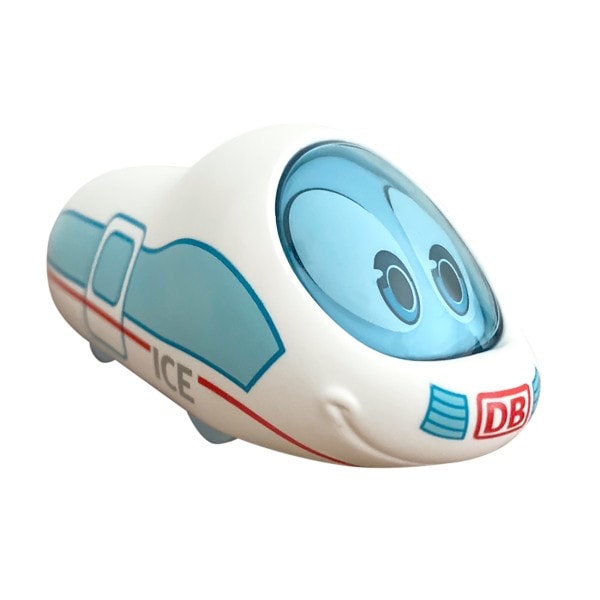
 Children don't think in terms of brands, but in terms of characters and stories. Whoever manages to package their message in their own little world wins. That's why characters like Deutsche Bahn's "Little ICE" are so successful: he doesn't just travel through children's rooms as a toy, but as a hero through books, radio plays and comics. Children collect, play, tell stories and make the brand part of their imagination.
Other institutions also use this emotional logic: a small gift in a fast-food restaurant or a colorful bouncy ball after a visit to the dentist. When a product or figure conveys the brand values in a playful way, loyalty is created without any advertising pressure. Instead of interchangeable give-aways, what counts is the feeling of recognition - something that people want to see again.
Behind every successful children's figure is a clear brand image. Whether it's a teddy bear, train or robot - it is crucial that the shape, color and story match the identity of the company. If the character is lovingly developed and consistently narrated, a world is created in which children play and experience brand values as a matter of course.
The foundation: quality, safety and sustainability
For such products to be effective, they have to do more than just look cute. Anyone who appeals to children has a special responsibility. Products for the youngest target groups are subject to strict safety and advertising guidelines. As soon as an item is used for play, it is legally considered a toy and must comply with European safety standards such as EN 71. Among other things, this stipulates tests for harmful substances, mechanical strength and flammability. Ethically, too, restraint counts for more than sensory overload. Successful children's marketing therefore does not mean arousing desires, but creating trust - with products that show attitude and take parents and children seriously.
The quality must also be high. A promotional gift that looks cheap or breaks quickly not only damages the toy, but also the brand image. Quality is therefore not an optional extra, but a must: tested materials, child-friendly shapes, high durability.
Sustainability has also long been a key criterion. Families are increasingly paying attention to what things are made of and what happens to them when they have served their time. Products that are recyclable or manufactured in a way that conserves resources signal values that parents also share. A brand that acts credibly here communicates on a deeper level, it shows responsibility. And that is precisely what builds trust.
The moment decides
Just as important as the product itself is the moment it is given. Whether a plush train can be a distraction on a long train journey or a small beach ball on an airplane can awaken anticipation for the beach - it is crucial that the gift fits the moment. If it is handed out casually, the effect will fizzle out. If it is deliberately staged, it will stick with parents and children alike.
A successful brand moment is created when brand, situation and emotion intertwine. Then a promotional item becomes a shared experience; and a brief encounter becomes a long-term memory.
Small things, big impact
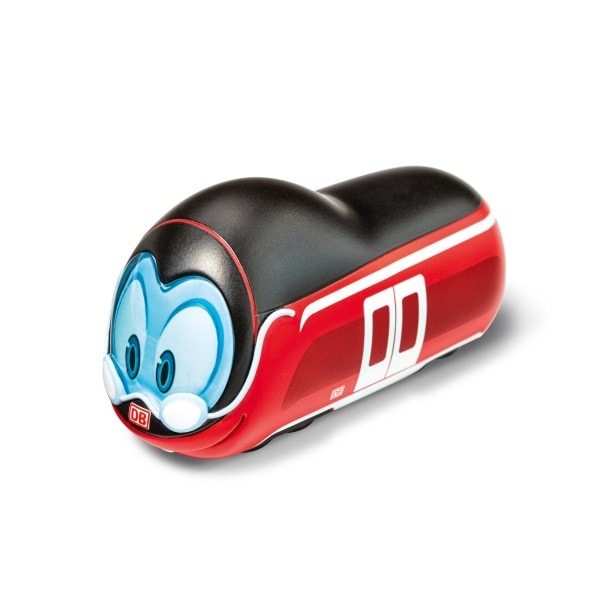
When children play with a product that feels good, lasts a long time and tells stories, the brand becomes part of their world. And that is exactly where loyalty is created. Not through advertising, but through experiences. Because sometimes a small plush train is enough to send a brand on a long journey.
Haptic children's marketing works because it combines what otherwise rarely comes together: Proximity, trust and emotion. It brings brands to where they mean the most - into the heart of the family.

Guest author Steven Baumgaertner is co-founder and CEO of cyber-Wear.