WE ARE VERY: Polaroids become a platform
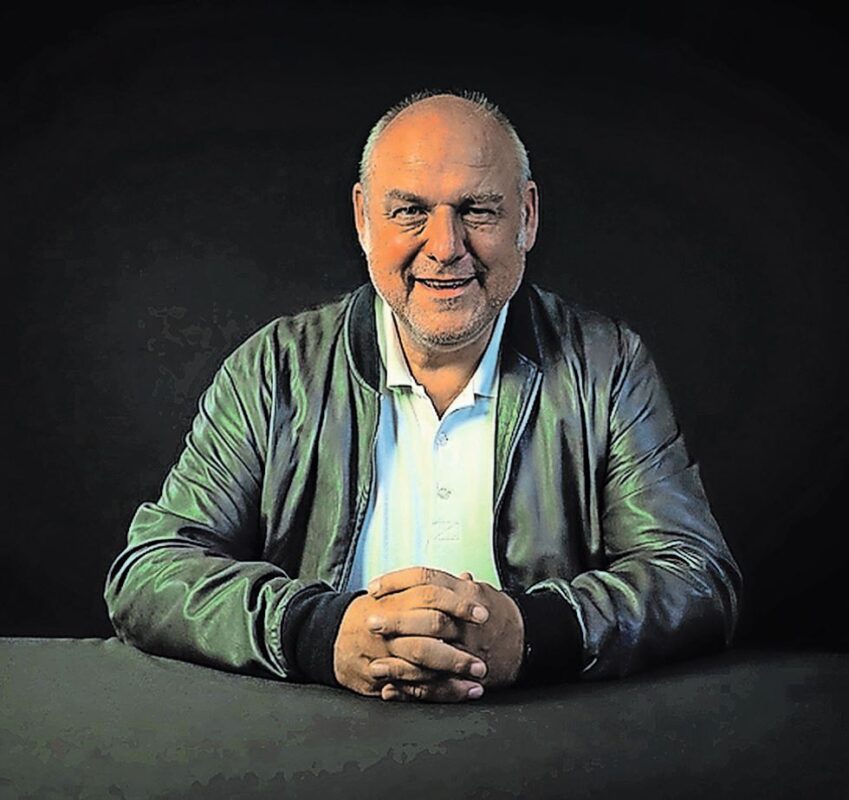
An exhibition booth, Polaroids, and a seemingly simple question: «What are you very?» What was intended as an engagement activity at the LocWorld54 localization conference in Monterey ended up sparking the creation of a community app. Behind the project is Rinaldo Dieziger, a former Zurich-based advertising executive.


Very bilingual. Very caffeinated. Very lost in translation. Very into spreadsheets
What was intended as an icebreaker at LocWorld54 in Monterey suddenly developed a dynamic of its own. Visitors wrote down their answers, posed for Polaroid portraits - and stayed. They got talking. Strangers found each other over a few words. In the end, there were almost 100 portraits. Eight weeks later, the app was there.
A stand experiment with surprising gravity
This scene is the real heart of the story. Not just because it's pretty to tell, but because it shows what "WE ARE VERY" is based on: language as a door opener for identity and belonging.
Rinaldo Dieziger describes the moment like this: people didn't just write a clever sentence and move on. They became more personal. And it was precisely there that it became clear that there was more to the question than just a trade fair gimmick.
This is a remarkable observation - especially from the perspective of the communications industry. Because many activations briefly generate attention. Few generate resonance. Even fewer become a product.
From the brand to the question - and back
The question "What are you very?" did not come out of nowhere. It's already in the name. When Dieziger repositioned the company in 2024 after the takeover of the US subsidiary by the Swiss parent company Supertext, he apparently looked at his team and collected descriptions: very into cats, very guitar players, very opinionated, very multilingual.
In the end, the common denominator remained: "WE ARE VERY".
CEO Kristy Sakai makes an important point: the name immediately worked internally. What was surprising, however, was how quickly other people picked up on the term - on merchandise, at events, on the website. Suddenly, a brand name became an open question that everyone wanted to answer for themselves.
The team has now translated this dynamic into a platform.
Social, but with a different goal
The app itself is based on a deliberately simple mechanism: Anyone who says what they are "very" at finds a community. Groups can be joined or founded, conversations can take place and meetings can be organized.
The break with familiar social media patterns is interesting. There are no follower numbers. No classic like logic. Instead, people react more contextually - for example with "VERY Cool", "VERY Interesting", "VERY Sad" or "VERY Nice". At first glance, this seems like a detail. In fact, it is a cultural signal: more nuance, less reflex.
The role of events is even more striking. Real-life meetings are not an accessory, but a core function. Communities can organize meet-ups, workshops or joint activities. The goal is therefore not maximum screen time pressure, but connection - online and offline.
From localization to identity
The fact that a localization and content company is building a community app, of all things, sounds like a side trip at first. At second glance, it makes sense.
"WE ARE VERY" was founded in Zurich in 2005 as Supertext, expanded to the USA in 2016 and is now based in Los Angeles. The company works on multilingual content creation, localization and multimedia services and recently launched a multilingual editor platform for content teams.
The company formulates the bridge to the app coherently: Anyone who has been helping brands to say who they are across languages and cultures for years is ultimately always working with identity. The community app now transfers this principle to individuals. Not brand to person, but person to person.
For m&k readers, this is precisely the exciting point: here, language is not just understood as packaging, but as product logic.
Copy thinking meets product development
The story of "We Are Very" can also be read as a signal to the industry. Creatives and content specialists have been talking about communities, belonging and brand meaning for years. Here, a team is trying to turn these topics into a functioning product - self-financed, independent and without venture capital.
Whether the platform will scale remains to be seen. But the starting point is remarkable: not a tech bet from the investor foil, but an insight from a real moment of encounter. A trade fair stand. A question. A few Polaroids. And suddenly an app.
It's not just a great story. It's also a reminder that good ideas sometimes arise when people stop thinking about reach for a moment - and start really listening to each other.
The WE ARE VERY Community App is free:
-
LocWorld54 Polaroid gallery: https://wearevery.com/locworld54