
Practical training - even more so today
She’s 24, he’s 44. She graduated in 2011, he in 2004. Seven years, as sales experts Andrea Preid and Daniel Käch know, is a long time. For Swiss Marketing, these two talented professionals are looking back on their careers. And they agree: The training period was tough. But the hard work was definitely worth it.


Daniel Käch went back down to the cellar. He found folders and loose sheets of paper, neatly arranged in a carrier bag. There they are again, all the case studies he wrote during his time at school in 2003/2004. Back then, when (in addition to a 100% workload) two evenings a week and the whole Saturday belonged to SAWI Dübendorf. "I underestimated this training," summarizes Käch. "But it was a positive kind of drill. I'm still proud of what I achieved back then."
The Stäfner decided to train as a sales coordinator (VKO), as today's sales specialists were called at the time, because he wanted more background knowledge on sales topics. "And because at the time everything was moving in the direction of marketing planners (now marketing specialists), I deliberately chose the other path."
University of Applied Sciences: Not practical enough
When Käch sweated through her exam in 2004, Andrea Preid from the Zurich Oberland was just in her second year of her commercial apprenticeship. Ambitious even then, she embarked on further training as a sales and marketing specialist at the Zurich Swiss Marketing Academy in 2010. "I didn't want to lose touch and wanted to complete further training that was federally recognized and worth something in the business world." The double training package seemed suitable to her, "because it allowed me to further improve my understanding of the interrelationships in sales and marketing". A university of applied sciences was out of the question: "I wanted a practical qualification in a short space of time."
New name, new disciplines
A lot has changed since Daniel Käch graduated eight years ago - and not just the different name. "Instead of eight, we now have 13 examination subjects," adds Hans-Jürg Gehri, who has been president of the examination board for 18 years. "But the examination time still lasts 13 hours." The result: more work for the experts. They also have to stop working when they reach retirement age: "It's not acceptable for a 22-year-old candidate to be questioned by a 68-year-old expert." This is also because the field of information technology (IT) has developed rapidly and is now integrated into all subjects. Topics such as self-management, rhetoric and personal leadership skills are much more important today than they were at the beginning of the millennium.
High hurdles for practical specialists
The requirements for practical knowledge have been significantly increased. The MarKom hurdle is also new: Only those who pass the pre-test are allowed to take the professional examination at all; and those who have not acquired 24 to 36 months of experience in sales with customer contact are not admitted. But one thing, says Gehri, has remained the same: "The case studies are based on daily business, because we want to train specialists from and for the real world."
Since 2004, around 400 candidates have taken the exam each year. Of these, around 1750 sales coordinators, or sales specialists, have been newly certified since Käch's year.
On the right pile thanks to training
Seven years is a long time. A lot has changed - new topics and terms have been added. When Käch and Preid talk - they met for the first time for the Swiss Marketing Talk - the similarities still outweigh the differences. Even today, people still write by hand at school - especially in preparation for exams. Even today, you still sharpen your business sense with case studies. And even today, school is still a slog: "It's all work and study. You give up your hobbies almost completely. And for a year, I practically only shopped via LeShop," says Preid. Both agree that the diploma counts for a lot. "Without this paper, I wouldn't have had many career opportunities," says veteran Käch. "The diploma helps you land in the right pile when applying for jobs," says Preid.
Personal, technical and professional benefits
In view of the new disciplines of rhetoric, self-management and personal leadership skills, Käch almost feels a little envious: "That didn't exist back then. But of course these are subjects that make perfect sense." Like the entire training, they both agree. They have been able to fill their personal knowledge backpacks: "A complete package of sales knowledge, a more profound understanding of market research," says Käch. "I now know exactly what the professionals are talking about and understand the interrelationships in marketing and sales," adds Preid. Or to put it more succinctly: it was a tough case study for life.
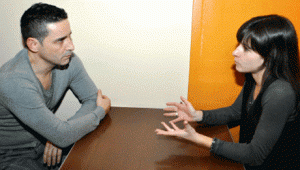
Sales experts Daniel Käch and Andrea Preid are convinced that they made the right choice with their further training.
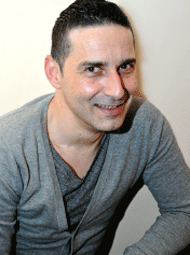
Daniel Käch, Stäfa ZH, age: 44, career: Apprenticeship as a cook and service specialist, then in the event and catering sector, call center supervisor, event sector, currently customer advisor at a cantonal bank, sales coordinator certificate (VKO) obtained: June 2004
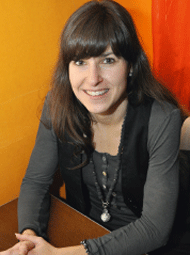
Andrea Preid, Dürnten ZH, age: 24, career: commercial apprenticeship with vocational baccalaureate, then in event management, currently key account manager at a business travel specialist, specialist certificate for internal sales specialists (VFL) and marketing specialists (MFL): June 2011 and September 2011


