Mobile World Congress 2019: Five lessons for the mobile marketing world
Digital Trust, Immersive Content, and AI were three of the eight topics on the conference agenda at this year’s Mobile World Congress (MWC) in Barcelona. Mobile advertising specialist WeQ was there. Managing Director Sven Lubek summarizes the five key takeaways he gained for the future of mobile marketing.


We live in a time where there is a lack of trust, whether it is trust in politics or the media. Many consumers around the world are also expressing concerns about data protection. The fact that internet users have less trust is not fundamentally the fault of technology, was emphasized at the MWC. Capital has long been made from user data. The problem lies in the fact that the technology came first and the regulations have only now - much later - followed. Experts appealed to technology providers, service providers and supervisory authorities to work together to raise awareness. Consumers should have control over how much data they disclose and to whom they make it available.
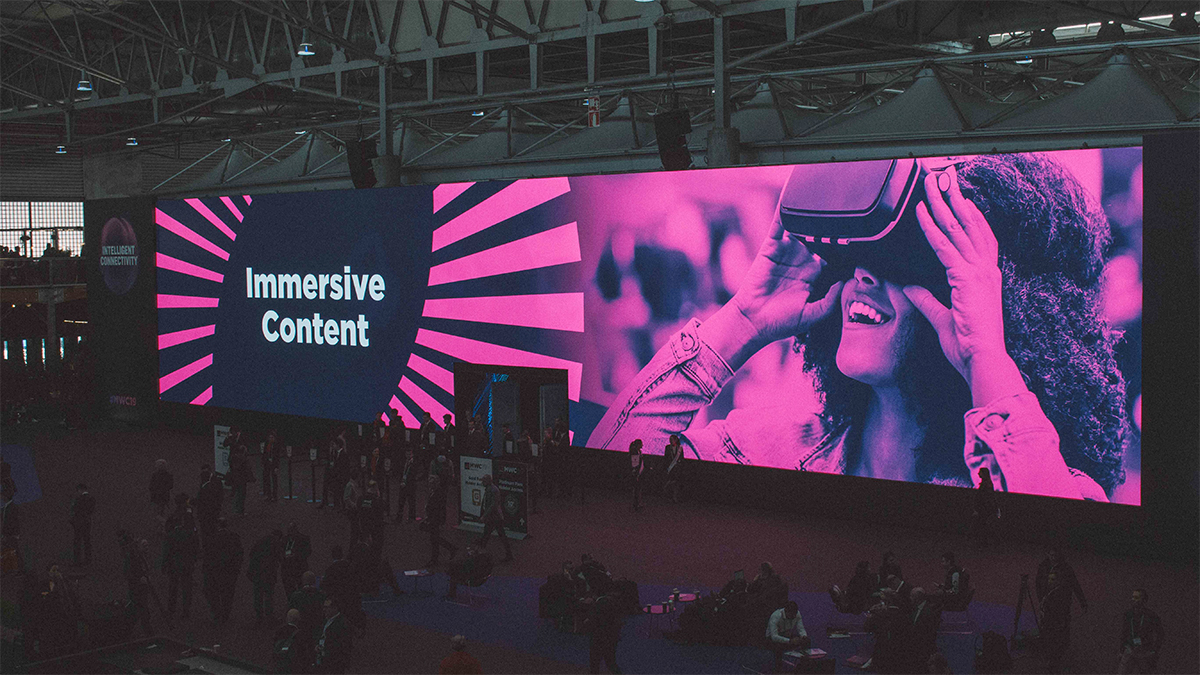
Technologies such as virtual and augmented reality create completely new ways for consumers to immerse themselves in brand worlds and interact with content. In technical terms, this immersion is known as immersive experience or content. This not only wins the hearts of consumers, but also creates successful business models. Technology developers from the fields of games, AR and VR discussed the possibilities of 5G. With this generation of mobile communications, it will be possible to make the fusion of the virtual and real world look even more real in AR games. Players will also be even more authentically integrated into the game and will be able to interact better with other players. Motion capture technology also makes it possible to create 3D videos in real time. This will give avatars a completely new meaning for internet users in virtual worlds. 5G will also give a boost to AR glasses such as the Microsoft HoloLens or MagicLeap. For example, they can be used to superimpose objects or screens in a room. Games and events will be transformed into new virtual mass experiences. Users experience websites in a new way in 3D. And communication with friends or colleagues is also increasingly taking place in virtual spaces thanks to AR glasses.
Gaming functionalities in ads manage to involve consumers and get them excited about a product. However, advertisers have not yet recognized the potential of gamification or games. According to gamification experts at the MWC, those who quickly gain experience now will be ahead of the game when it comes to customer acquisition and customer loyalty. In the future, we will therefore see more ad games (also known as playable ads) from brands that do not sell games at all. M&M's product campaign for its pretzel range is seen as a pioneer. In the online advertising medium, users had to find a hidden pretzel among M&M chocolates. The game went viral. So the first rule is: the simpler and more entertaining the game, the better.
Companies will increasingly use gamification in apps in the future. Whether brand companies, online stores, retailers or app-based business models - in principle, anyone can usefully implement playful elements in their app. Gamification works on the reward system: it makes people happy, motivates them and strengthens brand loyalty. The Turkish mobile phone provider Turkcell not only uses gamification successfully in its app to sell products or upsell. Thanks to augmented reality, it sends its customers on a gift hunt across Istanbul until they end up in a store. The company's motto: the more customers consume, the more they can win. Due to the high level of smartphone use, gaming is the perfect tool for customer activation. The experts at the MWC emphasized how important it is to know the living environment and motivation of your target group before developing playful elements or a game. For some target groups, there are other motivators than winning, such as improving the world or communicating with others. Speaking of communication: Gamification will also become part of our working world in the future, according to one prediction.
Artificial intelligence will change marketing and advertising. It predicts consumer needs before product development, makes relevant advertising infinitely scalable, enables a hyper-personalized customer approach or completely takes over customer service communication. Discussions about AI always raise questions about the human aspect of the technology and ethics. Experts at the MWC said that there is no one-size-fits-all recipe for how human a chatbot based on AI should be, for example. Not all chatbots need a personality. The question marketers should ask themselves is: does the technology feel credible to the user? In general, the marketing experts agreed that companies need to communicate to consumers where and how AI is being used. AI must either benefit or protect the consumer. As is the case with the application of anti-fraud technology. With the help of a sophisticated database and the knowledge of how human internet sessions differ from those of bots, machine learning makes it possible to recognize ad fraud and block it before damage occurs.
The Author: Sven Lubek is Managing Director at WeQ Global Tech. WeQ specializes in mobile advertising. Headquartered in Berlin, the company implements mobile branding and mobile performance campaigns for media agencies and brand companies. In addition to Berlin, WeQ has another location in San Francisco and is also represented in Tokyo and Seoul.