McDonald's CMO: "Transformation is an ongoing process".
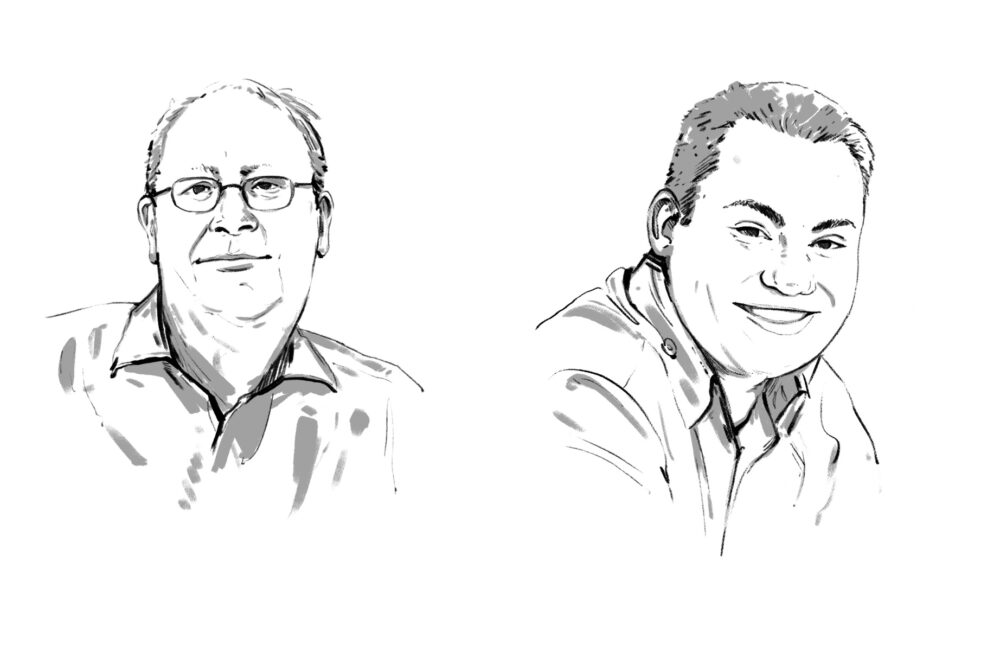
McDonald's is regarded as an impressive example of how brands succeed in making themselves fit for the challenges of the future and are equipped for transformation. Jean-Guillaume Bertola, CMO McDonald's Switzerland, and Matthias Kiess, CEO TBWA, in an interview with m&k.


m&k: Mr. Bertola, Mr. Kiess, McDonald's is a brand that is exemplary for brands that also communicate to the outside world that they are always moving with the times: in 2009, the logo was colored green, there are more and more vegan alternatives, and in 2022 there was a major CSR campaign - milestones in brand transformation. What's behind it?
Jean-Guillaume Bertola: As McDonald's, we want to be close to our guests and make their lives easier. But the lives of our guests are constantly changing, which means we have to keep up with and ahead of these developments. And we have to do this in all areas: from the product range to our responsibility as an employer and purchaser to marketing. To sense and understand these trends, we listen carefully - to our guests and employees. What remains the same are our values: Service, Inclusion, Integrity, Community and Family. A quick look back: About 15 years ago, our ambition was "Good Food Fast." At that time, the focus was more on the products and on the quality of the ingredients and the restaurants. This should also be reflected in the brand, so the background color of the logo was changed from red to green. The eye-catching red-yellow no longer matched the value of the restaurants and the range of products.
For more than 3 years, our ambition has been "Delicious feel-good moments easy for everyone". The focus is on the comprehensive guest experience - no longer on the products. Guests should feel good when they eat with us. Topics such as more sustainable packaging, regional origins, and social commitment are relevant to guests - in addition to enjoyment. For this reason, we have further developed our communication and brand identity.
What are the next steps, what measures are still planned?
Jean-Guillaume Bertola: If we want to remain close and relevant to our guests, we have to constantly develop our brand and ourselves. We can only do this if we listen carefully to our guests and employees. They are our source of inspiration and constant questioning.
Adapting the product range also requires courage. Why is it worthwhile for brands to be brave here and take this step?
Jean-Guillaume Bertola: From my point of view, it's not so much about courage, but about the willingness to listen, the will to constantly improve, and the focus on the guest. The brand must never be an end in itself, but must give the guest orientation and emotions. Two examples from the product range: McDonald's Switzerland has had a veggie burger on offer for more than 25 years. Of course, its raison d'être has been discussed over all these years, but we have listened to the small, loyal fan base. Due to the flexitarianism trend, a change was announced three years ago: Now we offer all our chicken burgers as a veggie version.
The second example: spicy products that were always a huge success in our neighboring countries flopped with Swiss guests. That's why we stopped experimenting with them 10 years ago. Until last year, when new insights showed us that tastes in Switzerland had changed. Today, our Spicy Chicken McNuggets and Spicy Burgers are real hits.
As mentioned, today it's no longer just about enjoyment, but about the experience. When we opened the first McDonald's restaurant in this country more than 45 years ago, takeaway and eating with your hands was the big sensation. Today, guests have new needs for convenience and availability. That's why we've evolved our service concept over the last five years. In two directions: First, with service to the table, where guests are served at their seat, and second, toward digitalization with ordering via smartphone or McDelivery. These changes have taken courage and collaboration and are now central to the brand experience.
What role does the agency play in transforming the communications of a brand like McDonald's? What is important here, and what are or were the biggest challenges?
Matthias Kiess: McDonald's stands for fine burgers and crispy fries, and at the same time for so much more. In recent years, we have therefore been able to shift the balance between product and brand communication with McDonald's more in favor of the brand. That's fun and challenging at the same time, because McDonald's business goals are ambitious. But they are also geared to sustainability. Mutual trust was needed to live out a long-term brand and communications strategy. And, above all, trust that sales targets would not be jeopardized by brand-oriented communication, but would be promoted in the long term. Even if in the medium rather than the short term. This mutual trust is based on our many years of cooperation in a spirit of partnership.
Our daily work is characterized by a focus on cultural change and innovation. A central component here is the stronger focus on social media as a channel, which is the direct line to the coveted young target group that is particularly relevant for McDonald's. We wanted to and have brought McDonald's closer to the people by communicating less from company to consumer and more from person to person. Of course, it helps that McDonald's plays a strong role in this target group.
Added to this is the increased use of brand experiences such as branded gaming, which we implemented for the third time this year. Our great success proves us right: People are very willing to engage with the brand beyond the consumption of burgers if we offer them more than just burgers and fries. And that applies both on and offline.
How do you manage the balancing act between familiar brand values and new social trends?
Matthias Kiess: The McDonald's values - Service, Inclusion, Integrity, Community and Family - are still highly relevant today. Possibly even more than ever. That's why linking the McDonald's brand with social trends is anything but a balancing act. Fortunately! Only together with its guests can the McDonald's brand make a difference: for example, for less packaging and against littering. McDonald's engages with its guests on Clean Up Day or does without tubes and plastic lids in the restaurant. Here, we as TBWA\ can activate the guests through inspiring communication and create understanding for change.
Another example. Everyone is welcome at this brand: from young to old, with a big or small wallet and singles as well as families. Films like "The Family Restaurant," which we conceived and implemented for McDonald's, are not only at home in today's zeitgeist, but also take a clear stand on equality and position McDonald's - analogous to the brand core - as the restaurant for everyone.
To what extent do you test in advance how changes are received by the target groups?
Jean-Guillaume Bertola: For us, the focus is on the guest. That's why we not only use surveys, observation, and evaluations of user behavior to gain insight, but also before the market launch of new recipes or experience promotions. In doing so, we combine different formats: From discussion formats on concept approaches to analyses based on neuromarketing to real tests directly in the restaurant. This combination of insights brings us closer to the guests. The tests can take place at the beginning of the project to determine the direction we want to take, or later in the process to validate the final solution we want to implement.

The motto of our campaign around our commitment "Making a difference together" we have developed and tested in this way. Important adjustments along the way: from English to the national languages, from the appeal "Let's change" to collaborative action. This communality between McDonald's, the partners, the employees and the guests was quite decisive for Switzerland.
Matthias Kiess: The backward-looking measurement of success is central for us: With McDonald's, we monitor how the campaign is working in relation to the various goals and derive insights for the next campaign. One experience away from the tests: As long as we think from the perspective of the zeitgeist, and thus from the guests' point of view, we can be pretty sure that the activities work.
When is it even time for change in the form of rebranding?
Jean-Guillaume Bertola: Rebranding is a one-off activity where a particular brand has to make a radical change in the way it resonates with its target audience, with the aim of changing the perception of the brand. At McDonald's, we don't think of the evolution of our brand experience as rebranding. Rather, it is an ongoing process in which we continually examine how we can inspire our guests even better or anew, while making a difference for people and the environment.
There is also more on the topic here (Subscription+).