Edelman Trust Barometer 2026: Trust is retreating
The 2026 Edelman Trust Barometer reveals a profound shift: trust is increasingly concentrated in people’s immediate circles. 81 percent of respondents are hesitant to trust people with different values or backgrounds. With a trust rating of 74 percent, one’s own employer is the only institution that falls within the “trust” category.


The Edelman Trust Barometer 2026 shows a profound shift for Germany: trust has not disappeared, but it is retreating. Instead of abstract social institutions, people increasingly trust what they experience directly - their own environment, their workplace and specific personal relationships. With a Trust Index of 44 points, Germany will remain in the lower range of institutional trust in 2026.
Isolation shapes the climate of trust
The data shows a clear shift in the climate of confidence. Optimism about the future has fallen further: only 8% of people in Germany believe that the next generation will be better off than today - a drop of 6 points compared to the previous year. At the same time, there is less discussion about political differences and many people report growing concerns about economic uncertainty and social division.
81% of people in Germany say they are reluctant or unwilling to trust people whose values, sources of information, problem-solving approaches or cultural backgrounds differ from their own. This makes compartmentalization a defining characteristic of the climate of trust. Trust is focused on one's own circle and becomes rather unlikely beyond that.
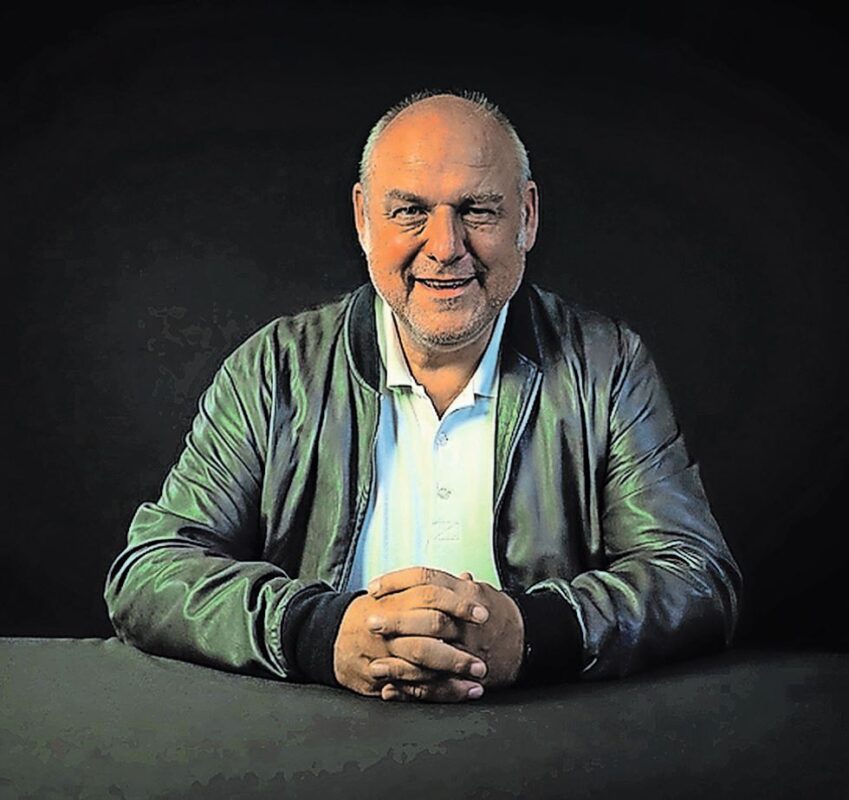
"The Edelman Trust Barometer 2026 is not a look ahead, but an unsparing picture of the situation. It shows how deeply rooted pessimism about the future is in Germany and the extent to which economic uncertainty, technological upheaval and concerns about stability are already eroding trust. When 81% of people allow trust to exist primarily within their own circle, isolation is no longer an abstract debate, but a social reality," says Nils Giese, CEO of Edelman Germany.
Differences in income shape trust
A key finding of the German Trust Barometer is that the largest trust gap runs along the income lines. The difference in trust between high and low income groups in Germany is 18 points.
Employer as an anchor of trust
With 74% trust among employees, their own employer is the only institution in Germany to achieve a clear majority of trust. In contrast, the economy (48%), media (46%), government (42%) and NGOs (41%) are in the area of distrust. Companies are therefore places where trust is experienced in concrete terms - through leadership, culture and daily cooperation.
Expectation of mediation
The Trust Barometer 2026 shows a clear expectation: institutions and organizations should actively promote trust between different social groups. In Germany, 81% see the government, 73% the media, 69% the economy, 69% (among employees) their own employer and 61% NGOs as having a duty to actively bridge social divides and build trust between groups that distrust each other.
"In times of isolation, trust is created where both people and institutions succeed in bridging differences. Trust brokering means not covering up differences, but translating them and making common interests visible. Today, companies, especially their own employers, have the greatest responsibility and at the same time the greatest opportunity to build trust across social divides," says Nils Giese.
Implementation gap at institutions
At the same time, there is an implementation gap: In Germany, only 33% say that the government is effective at bridging divides and promoting trust, compared to 39% for the media, 42% for business, 33% for NGOs and 55% (among employees) for their own employer.
Companies can strengthen trust by facilitating encounters and exchanges across differences - for example, by purposefully bringing together employees from different backgrounds (73 percent of Germans consider this effective) or by partnering with unexpected organizations to promote intercultural or cross-party dialogue (68 percent).
Politics and public administration have a responsibility to set the tone and ensure civil discourse: In Germany, effective measures include politicians' commitment to respectful discourse (80 percent), refraining from rhetoric that accuses or defames groups (79 percent), and local mediation or dialog programs run by NGOs (69 percent).
The media is expected to have a de-escalating effect and to contextualize fairly - for example, by giving equal consideration to different perspectives on key issues (83 percent) and by using precise rather than exaggerated or fear-mongering headlines (81 percent).
About the Edelman Trust Barometer 2026
The Edelman Trust Barometer 2026 is Edelman's 26th annual global trust study. The survey was conducted by the Edelman Trust Institute and is based on 30-minute online interviews conducted between October 23 and November 18, 2025. Almost 34,000 participants in 28 countries were surveyed.