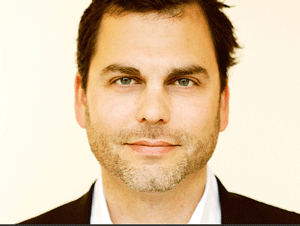
"Permanent employment is (not) antiquated" - A dispute
Trend researchers such as Matthias Horx and David Bosshart see more flexibility and fewer permanent positions as the working model of the future. Pascal Geissbühler from Branders takes a closer look at their ideas.


WW: What do you have to say to David Bosshart's theories?
Pascal Geissbühler: I found the core thesis that permanent employment is antiquated a very exciting hook to take a closer look at whether this is also true in our industry. I am referring less to the advertising industry than to my working environment in branding and corporate design. Current trend research with David Bosshart predicts a profound change for the future of work: the shift from an industrial to a knowledge and service society is blurring the boundaries between the home and working worlds, while mobility and flexibility are replacing the idea of the physical workplace. In Bosshart's view, lifetime employment is disappearing, as is permanent employment in general. A catchy thesis, but I experience the current reality differently.
How specifically different?
A look at the ten largest branding and design agencies in Switzerland, each with between 20 and 40 employees, shows that many companies still rely mainly on permanent staff. Yet these branding and design agencies are all companies at the interface between business and creativity. They are knowledge companies and bring strategies to life visually and communicatively. We are therefore precisely the representatives of this knowledge society that Bosshart and other trend researchers are referring to. Nevertheless, permanent employment with us is by no means antiquated. Part-time work is also only partially widespread in our company.
Where do you see the reasons?
The tenor in most cases is: Under 60 to 80 percent, the development and management of demanding customer projects can only be guaranteed to a limited extent. Increasing customer requirements demand more presence and only allow companies to provide part-time positions to a limited extent. Practice may vary from company to company. However, the majority of providers still seem to be convinced by the permanent employment model. A good number of permanent employees are also needed to be able to deliver the required quality in the required time - despite increasing competition.
The opposing theses come from trend researchers. So are design agencies moving against the trend?
No. The point is not to refute the thesis completely, but to mirror the trend thesis against reality. The developments described are not wrong in their basic tendency. But we should not forget that, in addition to buzzwords such as mobility and flexibility, at the end of the day we also need solid ground under our feet. The permanent employment model is still the reality for the majority of our industry and a dominant element. Of course, there are many companies that work with freelancers. Especially to respond to the volatility of the industry. They use freelancers to help out. But in the long term, this is only of limited interest to a company.
Isn't it also an economic consideration that it is cheaper to pay a fixed wage than to have to fly in expensive freelancers?
More importantly, it is incredibly costly for a company to build up knowledge. A lot of time and effort is invested. It can take around a year before new employees are well "on board". That's why the company is interested in retaining this knowledge and thus the employees. This is one of the main reasons why permanent employment is still attractive.
What else speaks in favor of a permanent position?
Standards and quality. We speak the same language. Quality is also due to a certain continuity in the composition of teams. This cannot be established again and again over a short period of time. Companies not only live from their services, but also with and thanks to the values they live by, which are shared by their employees. A permanent position makes it easier to create identification with the company. A corporate culture cannot be created with freelancers alone. Finally, at project level, permanent positions help to ensure operational management more easily. The people are on site and present. There is a faster flow of information. In addition, the customer prefers to deal with people who are a permanent part of their partner's team.
Is it different for advertising agencies?
Working with freelancers has long been established there. However, the permanent employment model is far from obsolete in advertising agencies too.
Google has permanent people - but in a completely free environment. Is this a model for the future?
It's an exciting model: freedom is celebrated there as part of work design. But it is also a different business. It involves a lot of research, development and new technologies. Whereas we, as a people business, have a lot of direct customer contact.
Where can freelancers be useful?
They are useful when specific tasks need to be solved and the expertise is not available in-house. For tasks that are not commonplace and where specialist knowledge is required. Or for a short-term peak in orders.
Interview: Andreas Panzeri
Is permanent employment a discontinued model? Is the "patchwork employer" coming soon?
David Bosshart, CEO of the Gottlieb Duttweiler Institute for Business and Society in Rüschlikon since 1999, has already presented interesting theories about our working world in various presentations. "International influences are changing our working world, flexibility and mobility, but also the merging of work and leisure are shaping the future of work," says Bosshart, for example. "We have changed from an industrialized nation to a laptop society. More people than ever are now doing their work on the move and are no longer dependent on a physical workplace," Bosshart also predicted at an anniversary event organized by the Swiss Employee Association KV Schweiz. In such a laptop society, the boundaries between home and work, between leisure activities and physical presence at the workplace will become increasingly blurred. Working time models that are already flexible today will become even more variable. According to Bosshart, the proportion of people who work in the same job for their entire lives or work in the same job for a very long time will decrease. "In future, we will have several jobs, not one after the other, but in parallel. There is nothing more antiquated than saying you have a permanent job," was also written in an article in the newspaper "Der Arbeitsmarkt".