
The best winter in years could mean a turnaround for ski resorts
Die Prognosen lagen richtig: Nach teils katastrophalen Jahren erleben die Schweizer Skigebiete aktuell die beste Saison seit langem.


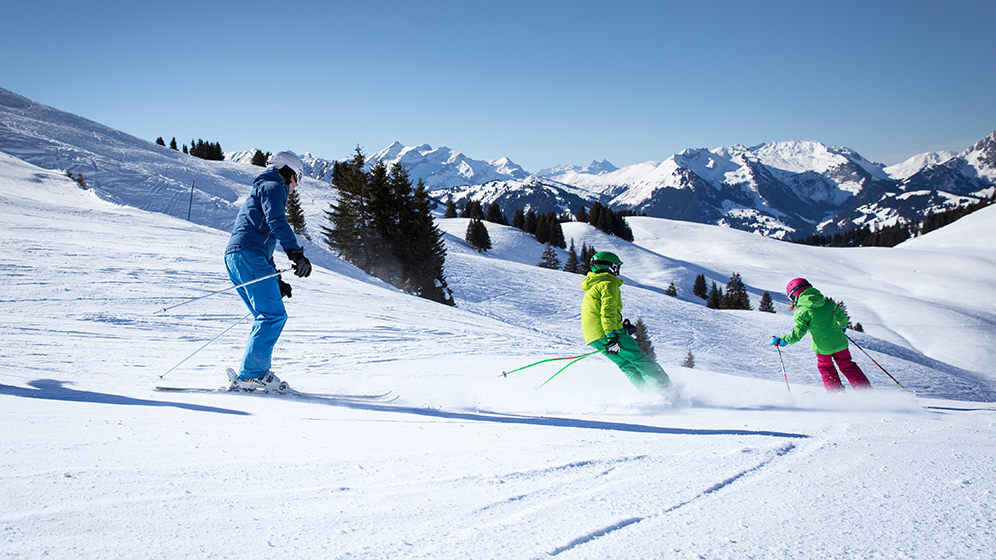
Swiss mountain railroads recorded 36 percent more guests over the festive period up to the end of December 2017 compared to the previous year, according to figures published by the Swiss Cableways Association on Friday. The fact that this positive development is not only due to the disastrous last season becomes clear when compared to the five-year average: The increase amounts to 13.6 percent.
While the number of guests in the Engadin St. Moritz area remained unchanged compared to the previous year (+0%), Central Switzerland recorded an increase of 73 percent and Vals even an increase of 130 percent.
A study published in the SonntagsZeitung by Philipp Lütolf, economics professor at the Lucerne University of Applied Sciences and Arts, says that the economy has bottomed out and will continue to improve. The reason for the hope: The weaker franc makes Switzerland competitive abroad and the meteorological conditions can hardly get any worse than in the past two or three years.
Upswing could enable investments
The upswing in guest numbers has a significant impact on the financial situation of mountain railroads: According to Lütolf's research, just 10 percent more skiing days would mean that numerous ski resorts could once again make the necessary investments - something that in many places was not even remotely possible on their own in recent years. The current winter could mean a turnaround here and bring the ski resorts back to the necessary return on investment of at least 3 percent.
However, it is difficult to attract the targeted 10 percent more guests. Guests no longer come for a whole week, but for a few days at a time. This increases the dependence on weather and snow conditions. Storm Burglind, for example, ensured that the start of the season was not "fantastic", but merely "good", according to Gstaad manager Matthias In-Albon, as he explained to the SonntagsZeitung.
In-Albon calls for threatened ski areas to work together, such as the four large Bernese Oberland regions of Adelboden-Lenk, Jungfrau-Region, Meiringen-Hasliberg and Gstaad-Zweisimmen, which launched a joint season pass for CHF 666 this winter. According to In-Albon, however, the willingness of many regions to cooperate is still low - the need and the pressure of suffering are probably not yet great enough, he suspects.
Price dumping is not a solution
However, there is unanimity in the industry regarding the rejection of campaigns such as that of Saas-Fee two years ago, when a season pass could be purchased for 222 francs via crowdfunding. Samuel Rosenast of Davos Klosters Tourism told the SonntagsZeitung that this is detrimental to all mountain railroads. More guests would only be useful if the growth was not bought by price collapse. According to Philipp Lütolf, a good 2017/2018 season could ensure that the pressure for further price reduction campaigns decreases. (hae)


