The CMO Dilemma: Early Retirement or Back to School


CHIEF MARKETING OFFICERS This year's US event "The Premier Business Leadership Series 2014", under the patronage of the SAS Institute, was entitled: Innovate, Optimize, Transform. Christoph Oggenfuss* spoke with SAS Institute founder and CEO Dr. Jim Goodnight.

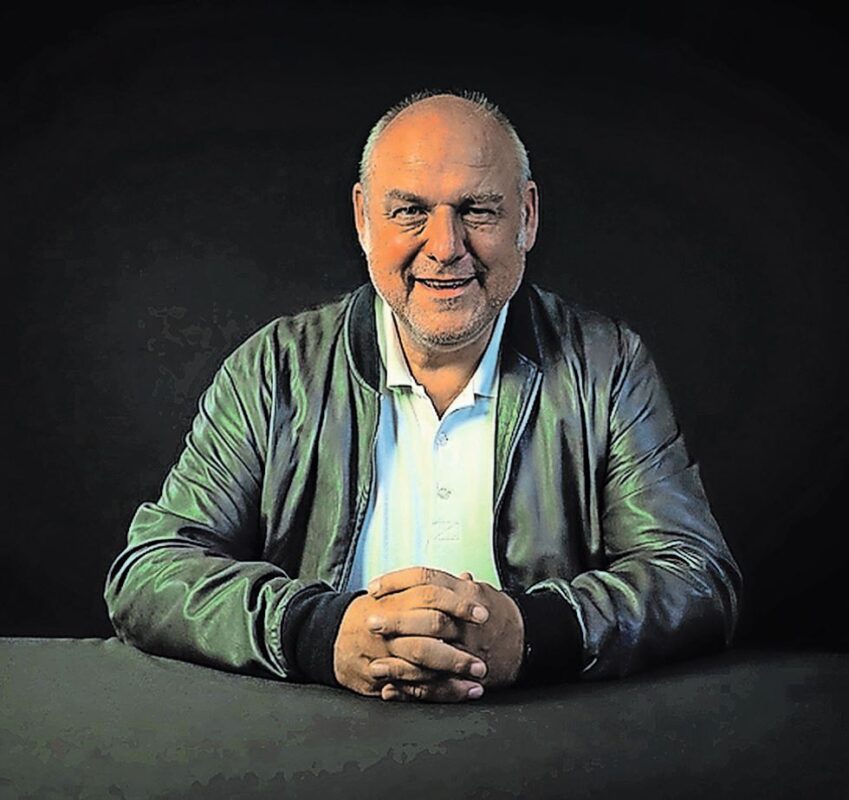
Dr. Jim Goodnight, CEO SAS Institute.This article looks at how the role of the Chief Marketing Officer is changing in the digital world. I had the opportunity to talk to the founder and CEO of SAS Institute, Dr. Jim Goodnight. Right at the beginning of the conversation, he makes it clear that customer data should clearly be classified as a strategic resource. With this statement, he implicitly says that marketing is entrusted with a great responsibility - namely, to generate marketing benefits from customer data and thus increase corporate value.The days when this "data task" could be assigned to IT are definitely over. In the discussion with Goodnight, however, it also becomes clear that the data is worthless in itself - only when it is used to solve a (marketing) task is value created.Talent missingFor the SAS CEO, the topic of "social" is also of great importance. This is because a generation is entering the social and work process that is making ever more intensive use of the social tools available. This development, in turn, will shape the task of networked communication and listening ("social listening") in marketing. He goes on to say that, in his view, the key limitation of digital transformation is the lack of talent. SAS Institute has made a virtue of this need and launched a global cooperation program with universities to promote "digital talents"."Role of the CMO must be redefined"And now I want to know from Jim Goodnight what the critical skills are for the CMO of the future: "The role of the CMO needs to be completely redefined. Digital is a key topic and so CMO's need to have a broad and good basic understanding in this discipline." He elaborates that in marketing, tweet analytics are becoming the norm and, more generally, "social information" is becoming an integral part of marketing information basics. He uses another example to illustrate his reasoning: Marketeers will have to unlearn one-dimensional thinking in "address lists" and instead be able to grasp and implement analytics thinking. He estimates the probability that CIOs will increasingly take on such new marketing tasks as small, since they have their hands full in their traditional area. In the future, CMOs will not be called upon primarily on the classic creative design side in order to survive in the digital competition. Rather, it will be technical-analytical topics, process optimizations, software evaluations, assessment of customer data quality, customer journey designs, front office architectures, etc., that will have to be addressed.CMO's are challengedCMO's can expect various disruptive forces to massively challenge their function. Digitization (social, mobile, big data, cloud) is coming unbidden and will be more disruptive than we think today and will require a lot of agility in our actions. So there is no time for thoughts of early retirement, given the many exciting topics to learn and apply. And then I conclude the conversation with Dr. Jim Goodnight, who is well into his seventies, and am impressed by his open-mindedness regarding the digital world and the predicted impact on marketing.We marketeers can use this as a yardstick.Another article on the "Premier Business Leadership Series 2014" by Christoph Oggenfuss is available at here.