
Day wants to democratize creativity
Marcel Walzl and Annette Häcki have left Jung von Matt Limmat and are now striking out on their own: «Day Partners» aims to help companies develop their own communication solutions using a systematic creative process, input from experts, and AI tools.


At the "Do-Ad-Yourself" agency, the name says it all. In a detailed planned process, the newly founded company guides teams to actively help shape campaigns and communication solutions. And this is independent of conceptual experience. Because everyone is creative and can unleash this potential with the right approach - that's Day's conviction.
Agency experience meets innovation mindset
Annette Felicitas Häcki, previously Managing Creative Director at Jung von Matt Limmat, and Marcel Walzl, previously Client Service Director at the same agency, have jointly launched Day. Annette Häcki is one of Switzerland's strongest creative strategists and, before Jung von Matt, served on the business and creative boards of the Rod and Wunderman Thompson agencies. She is also co-founder of the Gisler Protocol and a keynote speaker. Marcel Walzl comes from a top sports background and worked at WWP Group before Jung von Matt. Both combine many years of agency experience with an innovation mindset.
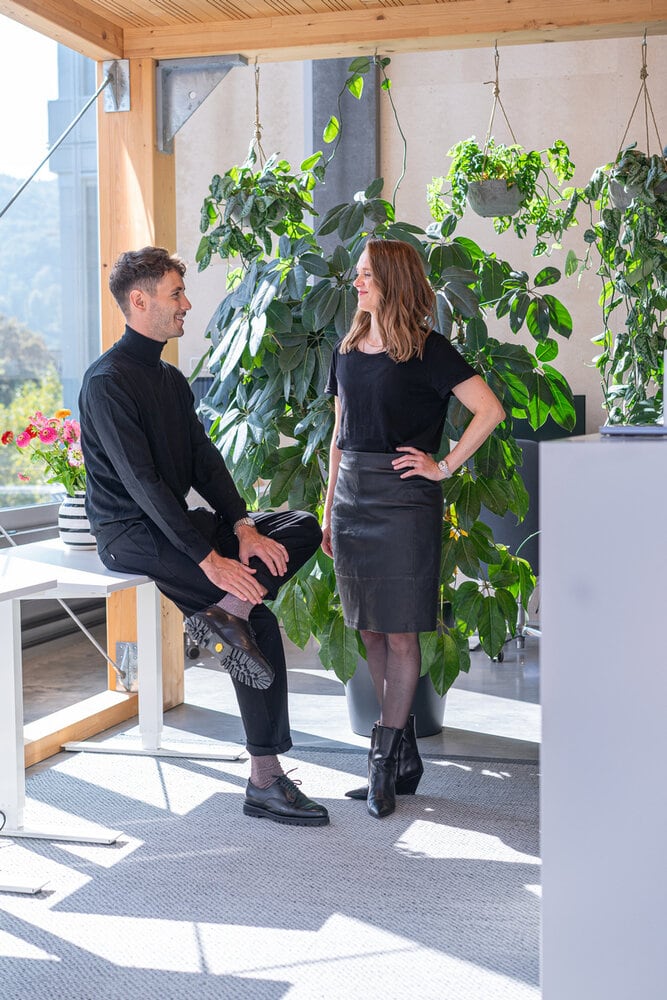
Focus accelerates the process
While Day offers the same range of services as an agency, it is not one. This is because marketing teams are empowered to trust their own creativity and develop communication solutions themselves instead of outsourcing the creation process. With this approach, the company's internal know-how flows directly into the conception, the brand fit is ensured and misunderstandings are prevented. The focus is central: "We work with our customers live and on site for several days," explains Marcel Walzl. "This focus fuels creativity and accelerates the entire process."
AI as co-pilot
Day involves experts from various disciplines in the creation process. With their perspective, they contribute to developing a comprehensive understanding of the respective issue and making well-founded decisions. The network includes people such as Philipp Zutt from Zutt & Partner, expert in neuromarketing and emotionalization, AI expert Sophie Hundertmark, 18-year-old Amélie Galladé, Gen Z, social media and content expert, and many more.
AI is also an important co-pilot: it is used in the ideation phase as well as in testing. In addition to the focus module, in which complex questions are answered, the Day method can also be used selectively and even independently of projects with sprints, sparring sessions, and training. The content is as diverse as Day's network. Behind everything is the philosophy of empowering people. Annette Häcki explains, "Our approach democratizes creativity and puts it in the hands of the many instead of the few."
INTERVIEW
"We consistently and uncompromisingly implement what we have in mind".
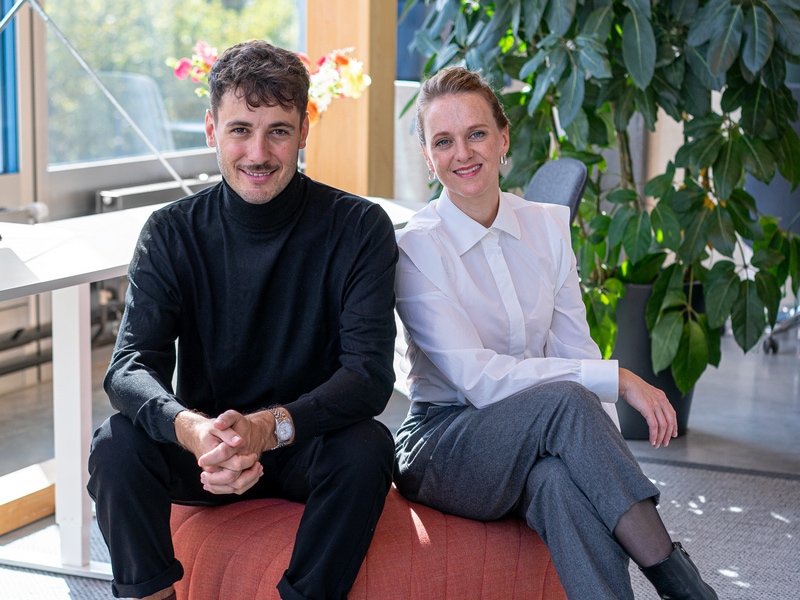
In an interview with Werbewoche.ch, Annette Felicitas Häcki and Marcel Walzl reveal why they left their positions at Jung von Matt Limmat to start their own business model and why Day is not an agency.
Werbewoche.ch: How did the idea to start your own business with Day come about?
Marcel Walzl: We both worked in agencies for many years. And we were always thinking about what we could optimize and do better. How are customer needs changing, how is technology changing? These questions have been with us for a long time
Annette Häcki: Three things struck us in the process. First, that the answers from both of us are the same. Secondly: If an agency's processes are what they should ideally be for us, it's a completely new business and work model that doesn't yet exist. And finally, the rapid development of AI fits in with our vision.
Rollzl: So it was obvious not to continue working in the existing, quite comfortable positions and to initiate changes there. Instead, we wanted to start something new and implement what we had in mind consistently and without compromise. Day is therefore not an agency.
Häcki: Although we cover the same range of services. But the approach is completely different. We see Day as Creative Consultancy or Creative Coaching - if you want a label.
You have both left a secure position in a large and renowned agency. How does that feel?
Häcki: We look back with a lot of gratitude. Of course, there is also a bit of melancholy, because we worked there with people we really appreciate - both in the agency and on the customer side.
Rollzl: For example, I appreciate you very much. Fortunately, we are now moving on as a couple.
Häcki: Haha, thanks the same!
Rollzl: Seriously, the people are central. The size and importance of the agency, on the other hand, as well as the secure position there, do not play a role for us. Neither of us is driven by prestige or security. What unites us is an innovative mindset and a positive and optimistic attitude.
Häcki: That's why we are now full of anticipation. The foundation feels liberating. And walking the path together is the absolute dream scenario for both of us.
Rollzl: We know each other very well, have worked together for many years, trust each other 100 percent and have an optimally complementary profile. And, importantly for us, the same values.
Please explain the concept of Day.
Rollzl: At Day, we believe that everyone is creative. And that with the right approach, this potential can be unleashed. That's how the name of our company came about: Day stands for Do-Ad-Yourself.
Häcki: When we receive a brief, we empower our clients with a meticulously planned and orchestrated creative process to become creative themselves and work out solutions.
Rollzl: It's actually absurd: marketing experts know their own company very well, as well as the needs of the market. And yet the conception of communication solutions is often outsourced.
Häcki: At Day, marketing experts are encouraged to trust their own creativity and to use it in a meaningful way. In this way, their know-how flows directly into the development of solutions and the brand fit is ensured.
Rollzl: We also work with a network of renowned experts and companies. They bring a perspective that is central to the task at hand.
Häcki: We work closely, for example, with Innoarchitects in Bern, which supports companies in innovation and transformation, Zutt & Partner, which is dedicated to neuromarketing and the scientific control of emotions, or with Weirather, Wenzel & Partner (WWP), one of the leading European sports marketing agencies. In addition, our network includes people such as the moderator Annina Campell, with whom we offer presentation training, the AI specialist Sophie Hundertmark or the 18-year-old Amélie Gallade, who is involved in tasks relating to Gen Z.
Rollzl: Day's philosophy is to empower our customers to learn, understand and develop as much as possible on their own. And who better to learn from than the absolute professionals in a field? Of course, the network also includes experts in UX/UI, design, media, etc.
What are the biggest differences from the work you previously managed in your day-to-day agency life?
Rollzl: All it takes is one word: focus.
Häcki: This is truly a game changer. Focus is central to our process and focus changes everything. Although paradoxically it feels more relaxed, focus brings acceleration. Less hustle and bustle, more focus and impact.
Rollzl: The larger an organization, the more complex and time-consuming the communication and processes within it. That can hardly be prevented. Now we are both close to the customers and the tasks. We can get personally involved instead of spending a lot of time in overarching meetings, which is what our positions entailed.
Häcki: In Day's orchestrated creation process, focus is also the overarching principle. This contributes significantly to releasing one's own creativity, especially for people who have not worked conceptually before.
Rollzl: In everything we do, we ask ourselves how we can empower our customers to do as much as possible themselves. The entire company is based on this philosophy. And of course we are very different from agencies in this respect. The business model is completely opposite.
Starting your own business takes courage and involves risks. Are you sometimes afraid of your own courage? How do you deal with it?
Annette: We are aware that we can fail. You accept that when you start a company. But we focus on the opportunities that present themselves and on the joy of our shared vision. We are therefore not afraid of our own courage, I would even say we are proud of it.
Marcel: We benefit from the fact that we are two very positive people and have confidence in life. We can't do without it. In addition, the shared exchange is very valuable for us. And of course we have a family and professional network that encourages us on our way.
Annette: That sounds a lot like just going for it. And the chutzpah to quit and start running was certainly at the beginning of our journey. In the meantime, we have added extensive calculations and a business plan. In addition, we have closely exchanged ideas with entrepreneur friends and marketeers, which has been enormously valuable in validating and concretizing our vision. All of this helps us not only to have the courage, but also to keep it.
Do you both come from entrepreneurial families or is it completely new territory?
Marcel: My parents are entrepreneurs from the tourism industry. Their service mentality has shaped me, and this is also important for our industry. When I told them that I was founding a company together with Annette, they opened a bottle of Prosecco and toasted us.
Annette: The fact that our families stand behind us and encourage us is perhaps even more important than the fact that they are entrepreneurs themselves. Although I have to admit that I also come from an entrepreneurial family... Maybe that is indeed crucial, good question.
Marcel: That alone probably isn't, but it is an important factor. Because we learned to think entrepreneurially from an early age. But in principle it's quite simple: Either you want to be an entrepreneur:in, or you prefer to be an employee. One is not better than the other, it's a matter of personal preference.


