
Voting posters on tobacco advertising: Yes camp has the lead
On Sunday, Switzerland will vote on the tobacco advertising initiative. According to opinion polls by 20 Minuten and others, the tobacco advertising ban is receiving strong support from the public. And a survey by Diemarktforscher.org also shows that the “Yes” camp’s poster designs are rated more positively.


 In recent weeks, posters about the tobacco law have been omnipresent in Switzerland. But what effect do the posters have on the German-speaking population of Switzerland?
And how effectively are the advertising budgets used in the voting campaign? The team at Diemarktforscher.org has launched an OOH ad test to examine the impact of these posters.
No camp with significantly higher spendings
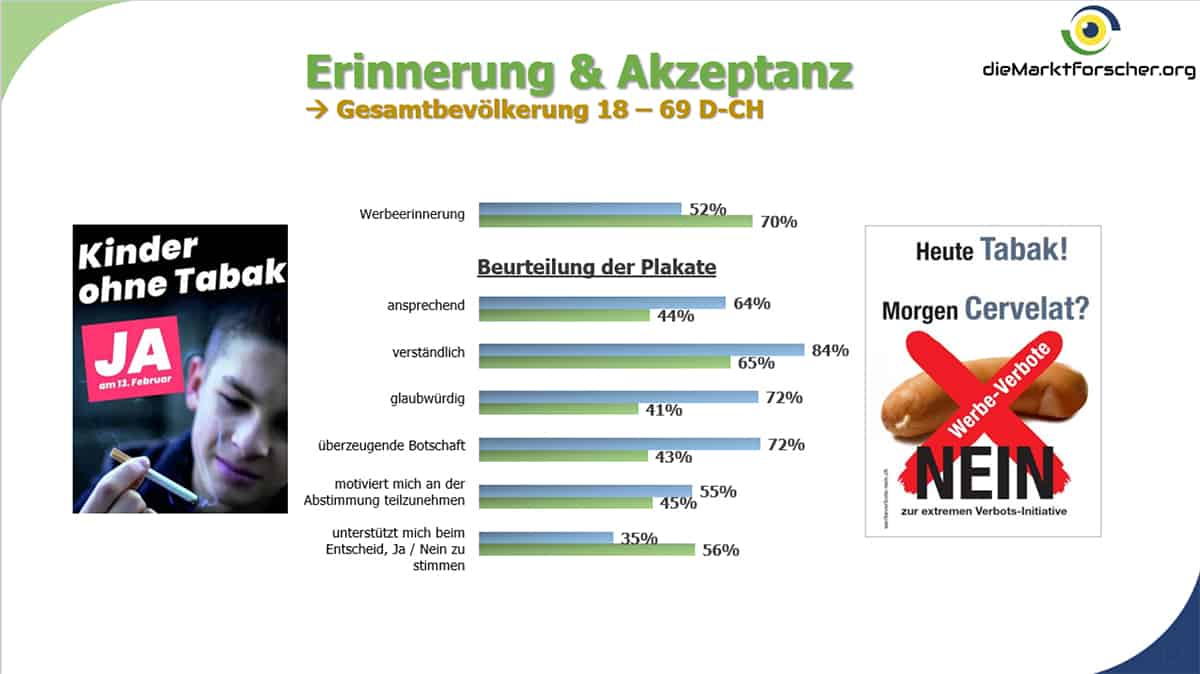
Of those surveyed, a total of 70 percent remember the Cervelat motif of the No camp. Only 52 percent, on the other hand, remember the Yes posters. The recall results give the researchers reason to believe that the No camp's budget was about 40 percent higher. The benchmark for advertising recall in the private sector is 42 percent.
Yes subjects rated more positively
Furthermore, the researchers conclude that the subjects of the Yes camp were rated much more positively. The main criticism of the posters of the opposing party is the lack of credibility and the unconvincing message - in other words, the most important criteria for persuading voters.
Yes campaign more efficient
The value "Influence on voting decision" shows what percentage of the total population was motivated by the posters to vote yes or no. This is the total number of people who remember the advertising and are supported in their decision. This is the total number of people who remember the advertising and are supported in their decision - and thus the most important factor for measuring the effectiveness of the campaigns.
Based on the results, Diemarktforscher.org concludes that the Yes camp's campaign was more efficient due to higher acceptance and credibility of the campaign, although significantly less budget was used.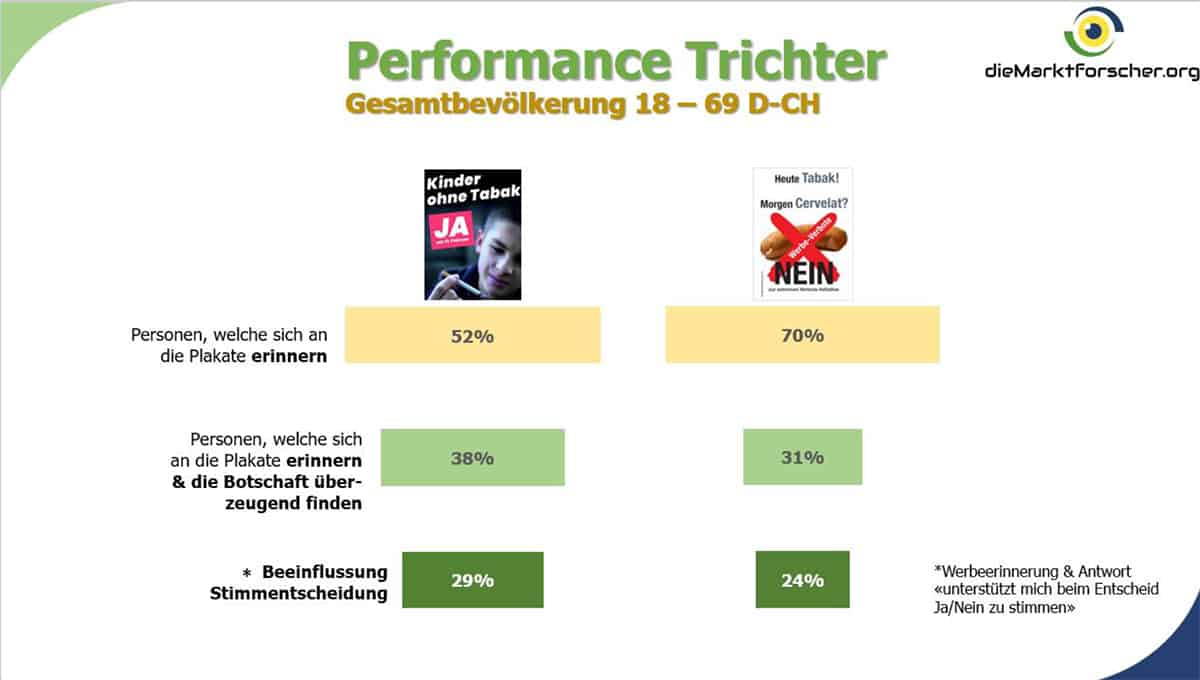
Demographic differences in the camps
In terms of voter groups, according to the survey, it is mainly women aged 30 to 39 who have children who are in favor of the initiative. Among the opponents of the initiative are especially men aged 60 to 69. At this point, the researchers note that in all votes, women vote differently than men.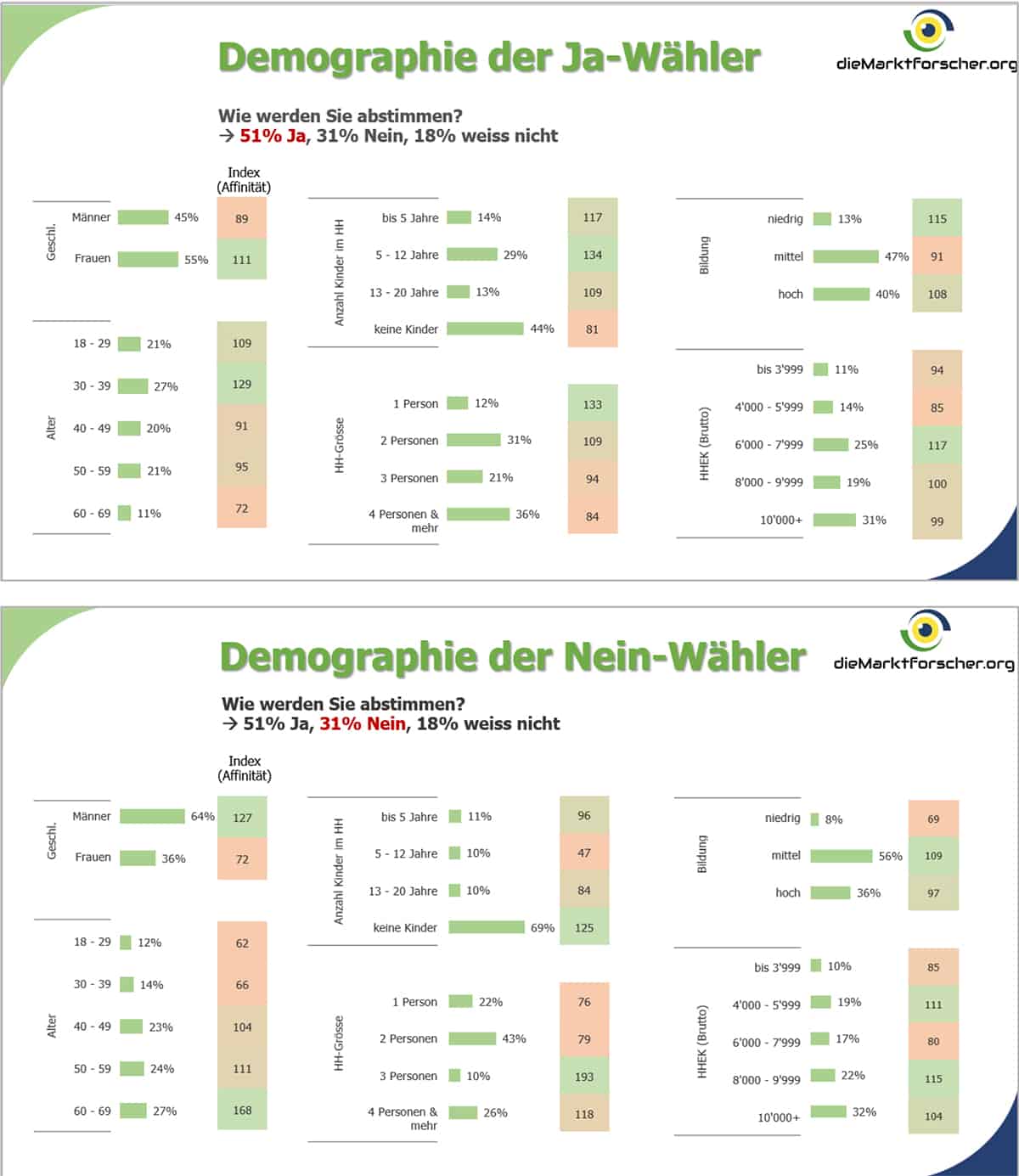
Not all No voters convinced by the poster
Since the subjects of the YES camp were rated as much more positive, credible and convincing, the researchers took a closer look at the opinion of the No voters on the advertising subject of their own camp.
Here, different opinions emerge: At only 55 percent, just over half of all No voters surveyed found the poster appealing, while a similarly large percentage found the subject credible (53%) or even convincing (60%).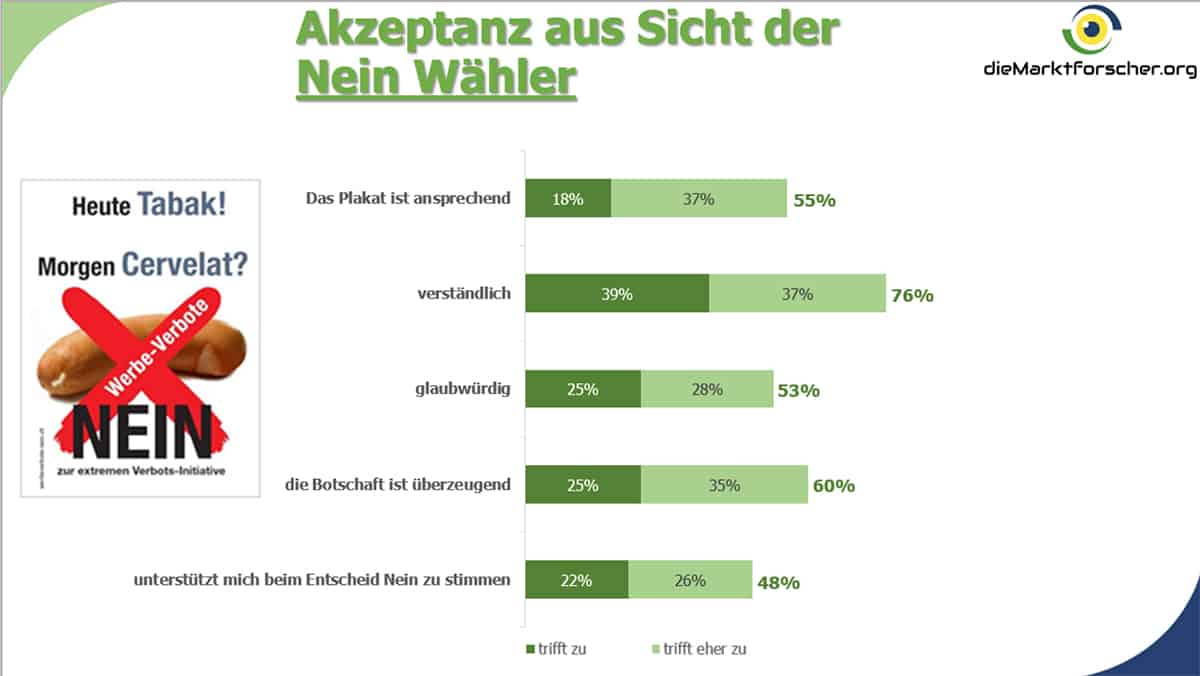
Communication needs a makeover
The team of Diemarktforscher.org concludes that "it would be time for the SVP to rethink communication". Parties such as SVP, Die Mitte and FDP - together with a broad alliance from various industries, including VSM, SWA, SDV and KS/CS Kommunikation among others - reject the initiative (Werbewoche.ch reported).
The results of the survey by Diemarktforscher.org are based on 455 online interviews of German-speaking Swiss aged 18 to 69.


